On a balmy June evening, the Sierra Madre Playhouse with its loyal theater supporters, complimentary wine, and warm greetings created an atmosphere of friendship, anticipation, and genuine delight. It was the kind of evening that reminds us why live performance remains such an essential part of community life.
This particular event promised an ambitious fusion of poetry, music, movement, and theatrical storytelling—each an art form that is powerful in its own right but not always seamlessly combined. Sierra Madre Playhouse’s presentation of Haunted, a one-act dance opera with music by Paul Salerni, libretto by former California Poet Laureate Dana Gioia, and staging and choreography by Jamila Glass succeeded in bringing these elements together to create an experience that lingered long after the final note had faded.

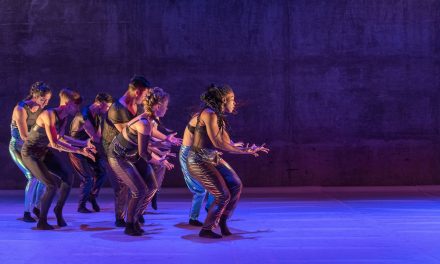
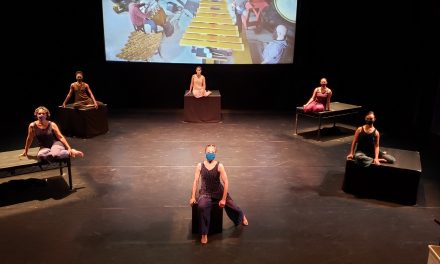
HAUNTED – Ghost – Photo Courtesy of Paul Salern.
As the house lights dimmed, onstage the audience was treated to an intimate conversation and reading featuring Gioia and Salerni, offered insight into the creative partnership that brought Haunted to life. The two Harvard grads, whose collaboration spanned nearly four decades, spoke with warmth, intelligence, and humor about their shared artistic journey. A reading of Rainer Maria Rilke’s Love Song set the tone for the evening, while the projected words, “When my soul touches yours a great chord sings!” seemed to foreshadow the emotional landscape the audience was about to enter.
At the center of the work was baritone Rod Gilfry, whose commanding performance anchored the production. More than a magnificent singer, Gilfry is a gifted storyteller. Arriving fresh from New York’s Metropolitan Opera, he brought both gravitas and nuance to the role, creating an atmosphere of suspense and wonder that drew the audience into the unfolding narrative. Throughout, he maintained an emotional immediacy that made the opera’s supernatural elements feel profoundly human. His final moments onstage delivered a conclusion few could have anticipated, leaving the audience stunned and deeply moved.

HAUNTED – Bed duet – Photo Courtesy of Paul Salern.
On stage the composer and conductor Paul Salerni led an excellent chamber ensemble featuring Aron Kallay on piano, Nick Terry on percussion, and Shalini Vijayan on violin. Salerni’s score pulsed with imagination, color, and dramatic tension. Richly musical, it supports Gioia’s poetry without overwhelming it, creating a seamless partnership between text and sound.
The choreography by Jamila Glass proved to be a great strength in this piece. While credited as choreographer, Glass’s contribution extended well beyond movement to the design of the piece. She staged the psychological and emotional conflicts at the heart of the opera, revealing the undercurrents of obsession, seduction, and loss with remarkable clarity. Her work demonstrated not only choreographic sophistication but a keen understanding of dramatic storytelling.

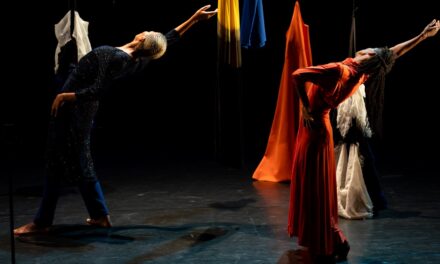
HAUNTED – Michael and Bartender – Photo Courtesy of Paul Salern.
Glass, known for her groundbreaking work as a filmmaker, choreographer, and former Artistic Director of the Los Angeles Contemporary Dance Company, brought a cinematic sensibility to the production. Every movement felt purposeful, every interaction deepened the narrative. The piece unfolded as an act of remembrance, where longing, memory, and supernatural forces existed in delicate balance.
The dancers were equally compelling.
Dawson Walker portrayed the callow young lad whose innocence left him vulnerable to forces he could not fully comprehend. Walker brought an appealing sincerity to the role, making the character’s descent into obsession all the more poignant.
Avery Zerr was mesmerizing as the seductive enchantress. Both alluring and dangerous, she embodied the character’s irresistible attentions with confidence and sensuality. Zerr possessed compelling qualities needed for one who entrances, manipulates, and ultimately abandons her unsuspecting admirer.
As the warning spirit, Ayesha Orange delivered a performance filled with gravitas and mystery. Her presence seemed to exist between worlds, offering caution even as the story moved toward ultimate nullification.

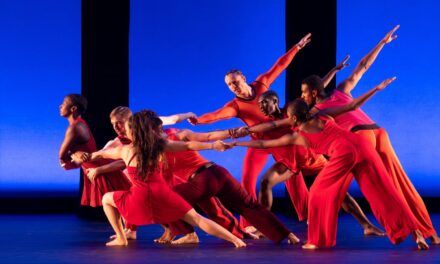
HAUNTED – Photo Courtesy of Paul Salern.
Part of the evening’s success can also be attributed to the venue itself. The Sierra Madre Playhouse, over a century old, possesses a rare intimacy that serves chamber works beautifully. Historic without preciousness, the theater allows audiences to experience performances at close range, creating a connection between artists and audience that larger venues often cannot achieve.
What makes Haunted so effective is its willingness to embrace multiple artistic languages simultaneously. Poetry, opera, dance, and theater merge into a single expressive form. Gioia’s evocative text, Salerni’s richly textured score, Glass’s insightful choreography, and a cast of accomplished performers combine to create a work that feels both timeless and contemporary.
In an era when artistic disciplines are often siloed, Haunted reminds us of the power of collaboration. It is a ghost story, a love story, and ultimately a meditation on longing and memory. A most important reminder, it is an example of what can happen when gifted artists from different disciplines come together in service of a compelling story. Haunted casts its spell quietly, completely, with its echoes remaining long after the theater lights come up.
For more information about the Sierra Madre Playhouse, Please visit their website.
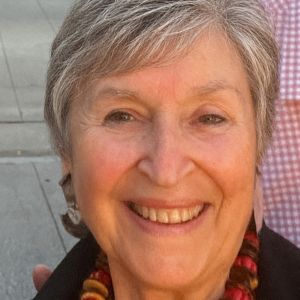
Written by Joanne DiVito for LA Dance Chronicle.
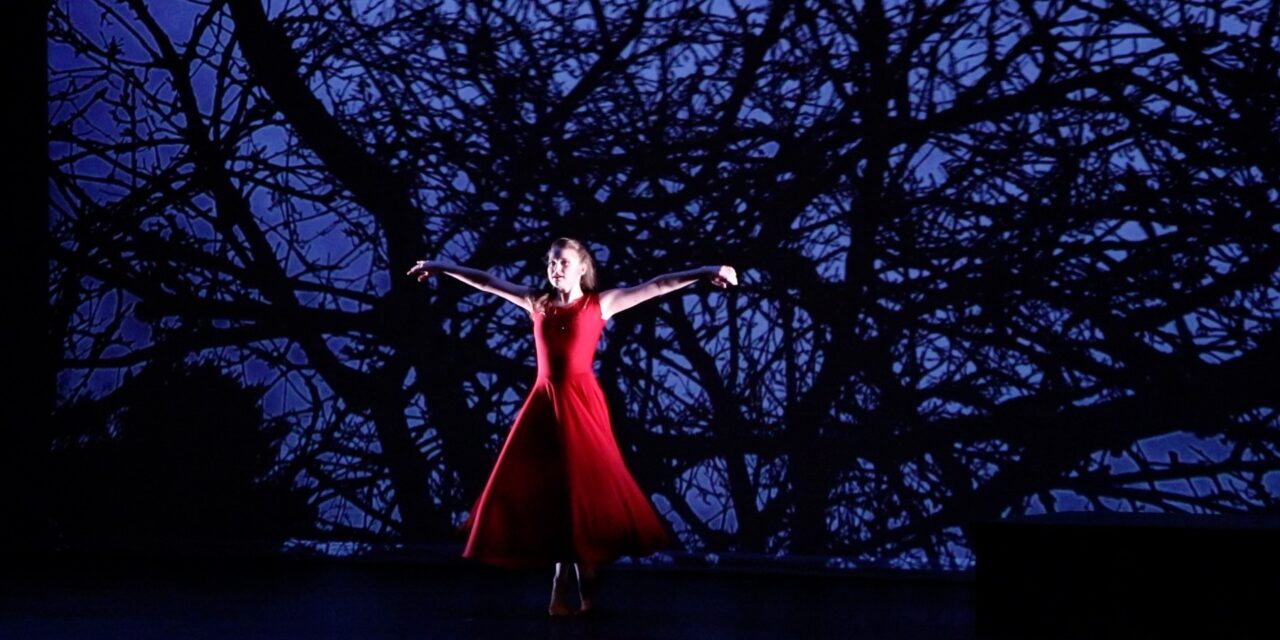
Featured image: HAUNTED – Mara – Photo Courtesy of Paul Salern.