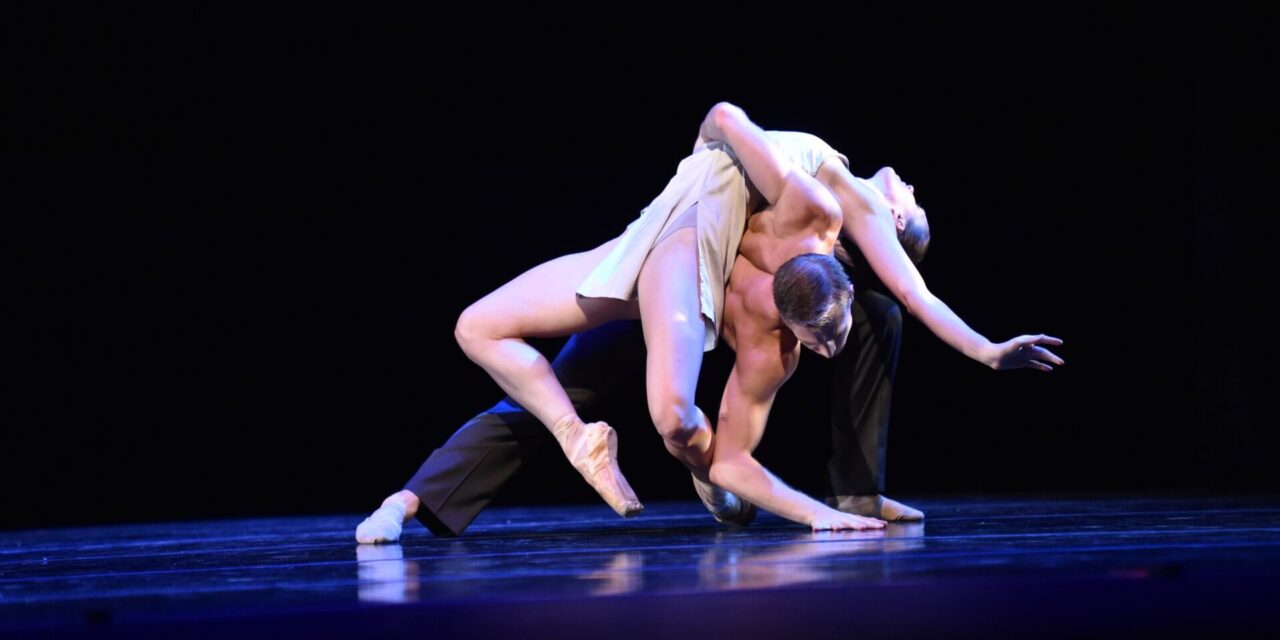
A bittersweet curtain rings down this Saturday at The Last Dance, the performance ending the National Choreographers Initiative and its annually changing, four course menu of new ballet choreography. As of press time, NCI tickets at the Irvine Barclay Theatre are close to sold out, a sign of how this Saturday is a not-to-be-missed event.
Earlier this year, NCI founder/artistic director Molly Lynch announced that after 35 years cultivating new ballet choreography, she and her Board had decided the 2026 NCI would be the last. At that time, Lynch spoke with LA Dance Chronicle about the painful decision and plans for the final NCI March 9, 2026 Molly Lunch on Ending NCI.
Molly Lynch, Artistic Director of NCI – Photo courtesy of the artist.
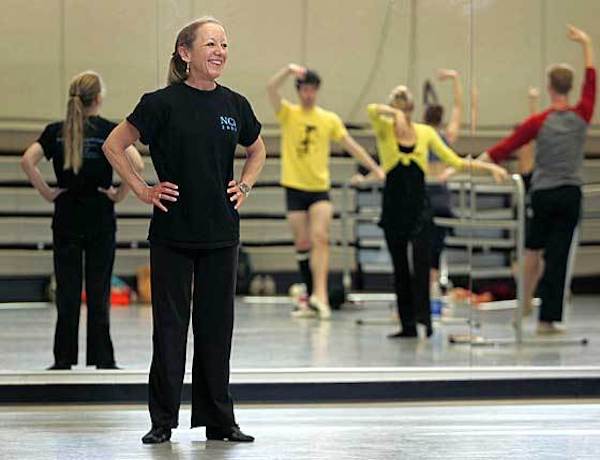
Molly Lynch, Artistic Director of NCI – Photo courtesy of the artist.
What is National Choreographers Initiative? Since 2005, Lynch has assembled 16 professional ballet dancers and four choreographers for three weeks of unrestrained choreographic opportunity, offering freedom to choose music, style, subject. At the end, a performance gives the choreographers and an audience intriguing evidence of the alchemy generated when choreographers are given adventurous dancers, time and freedom to explore. A finished ballet is not the goal, though some works come close even after such a short time. More significant is NCI’s afterlife. More often than not, dances begun at NCI later have gone on to full productions at national and international ballet companies. Even if never seen again, an NCI exploration or an enticing experiment that unlocks a new direction for the choreographer, has its own cachet.
For this final NCI, Lynch invited back four women choreographers–Emily Adams, Julia Feldman, DaYoung Jung, and Sarah Tallman, underscoring NCI’s long commitment to female ballet choreographers who are often overlooked. Drawn from ballet companies across the U.S., the final 16 dancers are Iori Araya, Nicolas Bierwagen, Gabrielle Collins, Alyssa Eyster, Julian Goodwin-Ferris, Amelia Grubb Hillman, Logan Hillman, Rhys Hudson, Lucia Lorenzo, Marco Lorenzo-Giguere, Alyssa Manguiat, Darcy McLoughlin, Gabrielle Mengden, Trevor PinterParsons, Ian Rotheroe, and Michael Stadtherr.
Lynch began cultivating new choreography while artistic director of Ballet Pacifica. For 13 years, she brought choreographers through the Pacifica Ballet Project to work on new choreography with company dancers.
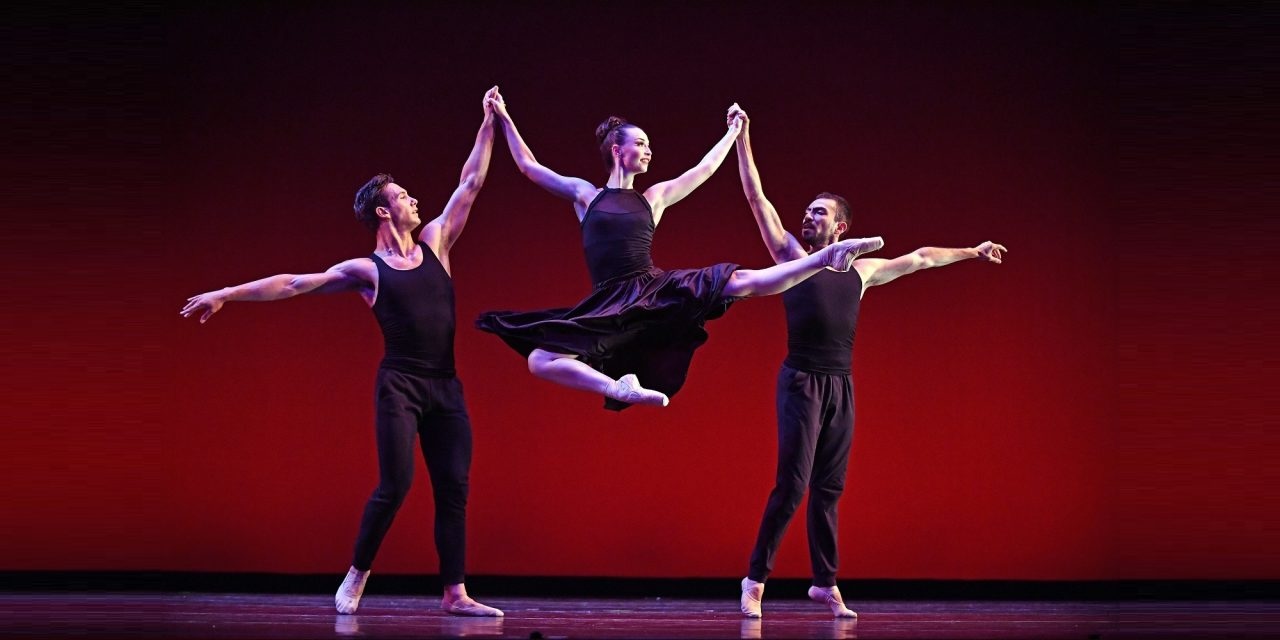
National Choreographers Initiative – Photo by Dave Friedman.
In 2004, Lynch launched National Choreographers Initiative, forging a partnership with UC Irvine to use dorms for housing and the dance department studios for rehearsal space during summer break, and also with the 750 seat state of the art Irvine Barclay Theatre for the final performance. Instead of company dancers, Lynch recruited dancers on summer lay off from professional ballet companies and selected four choreographers ranging from emerging to established.
Lynch’s numbers over the 35 years are impressive: 136 choreographers and 185 dancers, representing 60 dance companies. Beyond the numbers, her singular assemblage of choreographers and dancers has had ripple effects throughout the national dance diaspora.
As the last NCI looms, choreographers and dancers who participated over the years, have offered backstage perspectives on Lynch’s efforts and how NCI’s impact extends beyond their individual careers with ripple effects throughout ballet. To learn more about the NCI that the audience does not see, I spoke with several California-based choreographers who participated at different stages of their careers and several dancers who participated in NCI for the maximum three years, including one who returned as a choreographer.
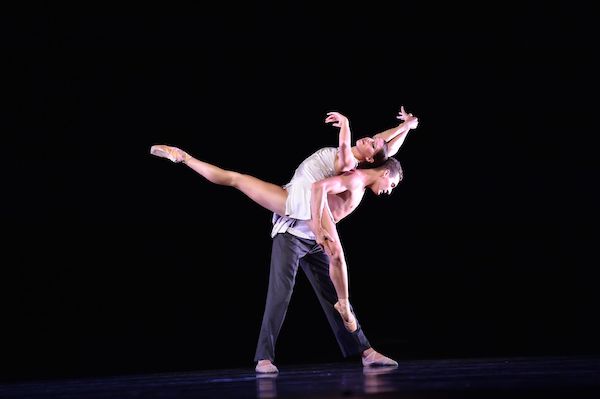
National Choreographers Initiative – Photo by Dave Friedman.
In 2005, Val Caniparoli was an established choreographer as well as character dancer, teacher and ballet master at San Francisco Ballet when Lynch invited him for NCI’s second year.
“Many, if not most commissions for choreography involve instructions such as to the length, whether it is the opener or middle or close on a mixed bill, which dancers can or cannot be used, how many or how few dancers can be used. Molly doesn’t do that,” Caniparoli said. “She explained it was really up to me what I wanted to do. There were no parameters. Also, other than discussing it with the audience after the performance, it was not judged. There were no critics. I had no idea what it was about when I accepted. It was one of the best things I’ve done, it’s so rare to have that opportunity,” Caniparoli recalled.
Caniparoli, whose career spans ballet, theater and opera, found NCI’s workshop model provides something unusual in ballet.
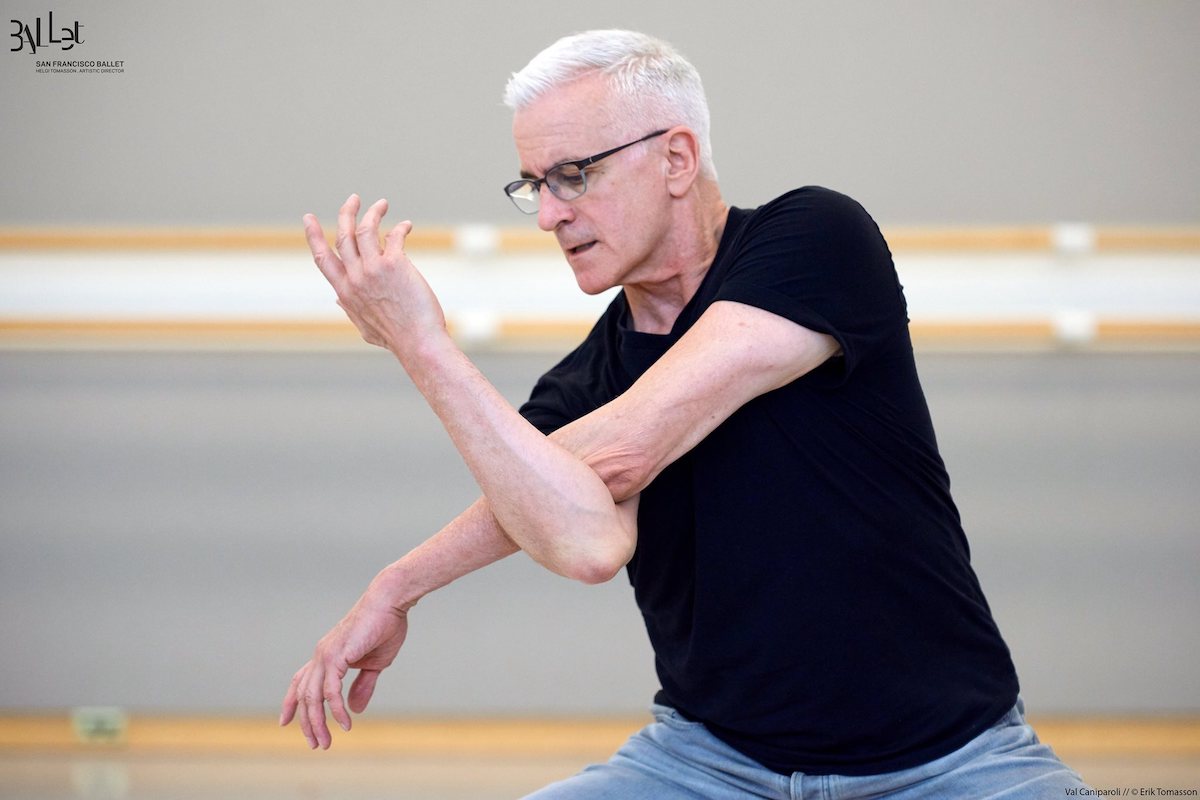
Val Caniparoli – Photo by Eric Tomassen.
“Ballets don’t get try outs like theater productions. We’re supposed to be geniuses right away, so it was so rare to be able to have what I considered a workshop on ideas, creating and not being judged. Afterwards it could be used as a stepping stone if you want to take it further with another company. As much as I had already been choreographing, it was an opportunity I’d never had before,” Caniparoli admitted.
Caniparoli later expanded his NCI workshop piece, Violin, which went on to full performance by ballet companies, including San Francisco Ballet’s second company and school. Earlier this year, he retired after 50 years with SF Ballet to concentrate on his choreography. He is in more demand than ever and remarked that he still draws on his NCI experience.
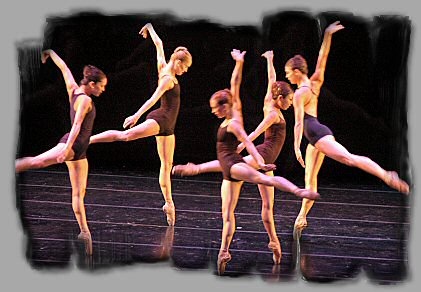
Val Caniparoli’s “Violin” for National Choreographers Initiative – Photo courtesy of NCI.
While Caniparoli came to NCI after invitation, Lynch selected many emerging choreographers after they submitted videos of their early work, something sometimes difficult to obtain.
When LA based choreographer Kitty McNamee was selected for the 2013 edition of NCI, she primarily was known as a contemporary choreographer for her company, Hysterica, and as a regular choreographer for LA Opera. Trained in ballet, its ethos informed McNamee’s contemporary choreography, but her first venture creating for ballet dancers was a 2012 Los Angeles Ballet commission for its Next Wave series. The video of the LA Ballet performance proved her ticket to NCI.

Kitty McNamee – Photo courtesy of LA Opera.
“I had that material to share with Molly to show I could do this. It was great that Molly would take a chance on somebody who wasn’t a ‘ballet person.’ It was a challenge, she conceded. “Working with dancers who were primarily classically trained was really different than say dancers trained at Edge studio or who do a mixture of styles or who work commercially. But I had learned a lot when I worked at LA Ballet and I had all this experience with other dance and the opera.”
McNamee echoed other choreographers’ praise of Lynch’s willing to experiment.
“I did two shorter pieces, because I thought, when am I going to have this opportunity again? Let me try two different approaches. One thing I did, that Molly was open to, was I had two guys partnering. This was what, 2013? It wasn’t overtly romantic, but within the context of my piece, two guys were partnering. Molly was super open-minded about my process and about using the dancers in that way, which was a little less accepted or expected at that time.”
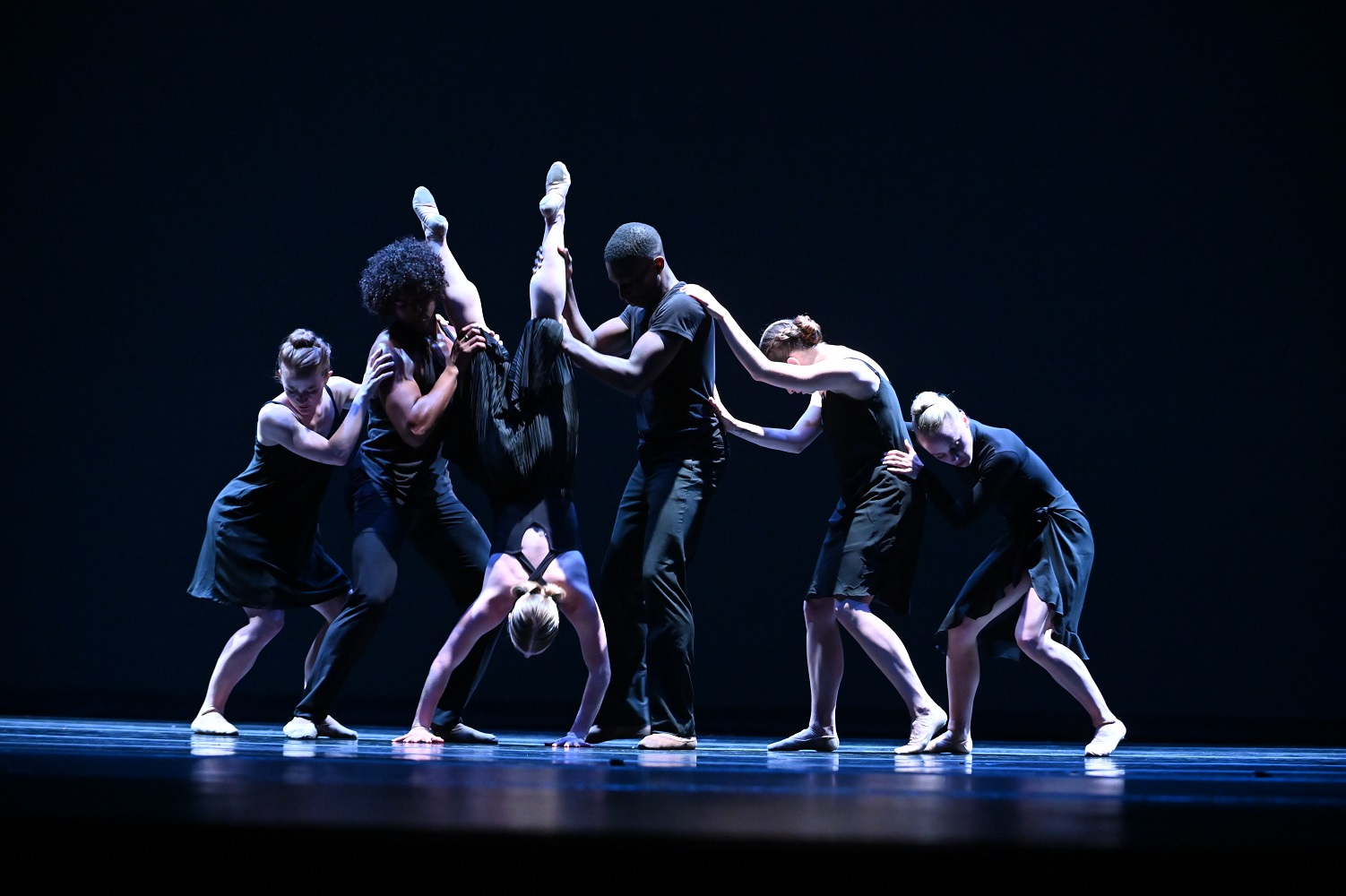
National Choreographers Initiative – Photo by Dave Friedman.
McNamee praised Lynch’s unique ability to support choreographers and dancers while also creating dance in her own right. “It’s very unusual for someone who is creative to also be really supportive of other creatives without feeling threatened or competitive.”
McNamee continues to choreograph for LA Opera and last year directed the opera’s production of Romeo and Juliet. Her work with dance films will involve a partnership with Dance Camera West later this summer.
Several choreographers noted that in recent years, more workshop situations resembling NCI have sprouted, inspired in part by NCI’s reputation and companies seeing the benefit of encouraging new ballet choreography by its own dancers. Few have drawn on NCI’s model recruiting a mix of dancers from different companies during summer layoff dancers turn to temporary summer employment, dancing in operas and teaching. After it began in 2004, word quickly spread that NCI was not just a place, but THE place for dancers on summer hiatus looking to work with choreographers on new choreography.
Kelly Ann Sloan danced with NCI for three years starting in 2007 but first heard about NCI while she was dancing at Cincinnati Ballet in 2005.

Kelly Ann Sloan – Photo courtesy of the Colburn School.
“Being in the room with work created on you was always my favorite part of company life. I enjoyed learning new choreography and being a part of that process. NCI sounded like a dream,” Sloan explained.
When she joined Los Angeles Ballet in 2006 she was close enough to audition.
“The audition was on a Sunday, right after an LA Ballet show. I was pretty exhausted but drove down to Irvine and did an in-person audition. Molly taught a ballet class, then we learned a piece of rep from an outside teacher and performed that. I heard back pretty soon and I didn’t hesitate to accept. I was so excited to be a part of it,” Sloan remembered.
Lynch has a reputation for finding technically proficient dancers who were hard workers and also “good humans”, as one choreographer put it. Sloan concurred “Because of who Molly picked, there was very little ego or drama. Everybody was excited to be there, to work hard and to just be in that play process.”
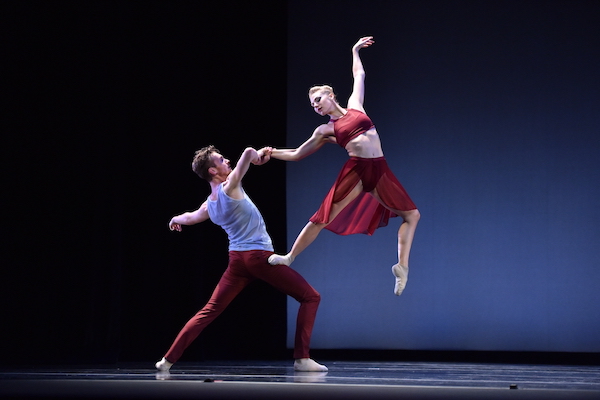
National Choreographers Initiative (NCI) – Photo by Dave Friedman.
While a company may absorb a few new dancers each season, NCI assembled a three week company with 16 dancers drawn from different companies, often with different styles. Sloan admitted there were adjustments and a learning curve.
“Especially in a pas deux, dancers who had not worked together sometimes had to figure out difficult movement the choreographer wanted. Also, it took a little time to build the bonds needed for unison sections. Still, it was a lovely working environment.” Sloan recalled. “It was really such a magical experience all three years. I always felt very, very fortunate to be in the room. It didn’t matter who I was working with or what I was doing, I felt really lucky that I got my foot in the door with that, that I got to be a part of the process. And I’ve watched the successes enjoyed by choreographers I worked with at NCI, three of whom are now artistic directors of ballet companies–Edward Liang at Washington Ballet, Amy Seiwart at Smuin Ballet, and Melissa Barak now at LA Ballet.
In addition to dancing for Los Angeles Ballet and other companies, in 2014, Sloan joined the Colburn School where she is now Ballet Chair at Colburn’s Trudeau Zipper Dance Institute.
In 2019, Sacramento Ballet dancer Julia Feldman was an emerging choreographer at NCI and she is one of the four Lynch invited back for the Last Dance. But Feldman began with NCI as a dancer.

Julia Feldman – Photo courtesy of Sacramento Ballet.
“NCI was my first time dancing somewhere away from Sacramento Ballet. I remember being really nervous in the beginning, but those nerves instantly went away as soon as we were working and creating. NCI is a very welcoming environment and a really safe environment for creativity,” Feldman said. “Sarah Tolman was a choreographer I danced for my very first year at NCI. I loved her process. I had what felt like a breakthrough moment, because she was one of the first choreographers to feature me. Sarah is one of the other choreographers this final time around which makes coming back for the final NCI and choreographing alongside Sarah feel very, very full circle.”
After her third year dancing for NCI, Feldman was an emerging choreographer when she was selected to choreograph for summer 2019.
“I was choreographing on other company members through Sacramento Ballet’s Beer and Ballet and Capital Dance Project, our dancer-created summer project in Sacramento. I had videos of those efforts, but I had not received any kind of outside opportunity like NCI. That first opportunity from Molly gave so much validation and affirmation. Once you have some more experience under your belt, more happens.”
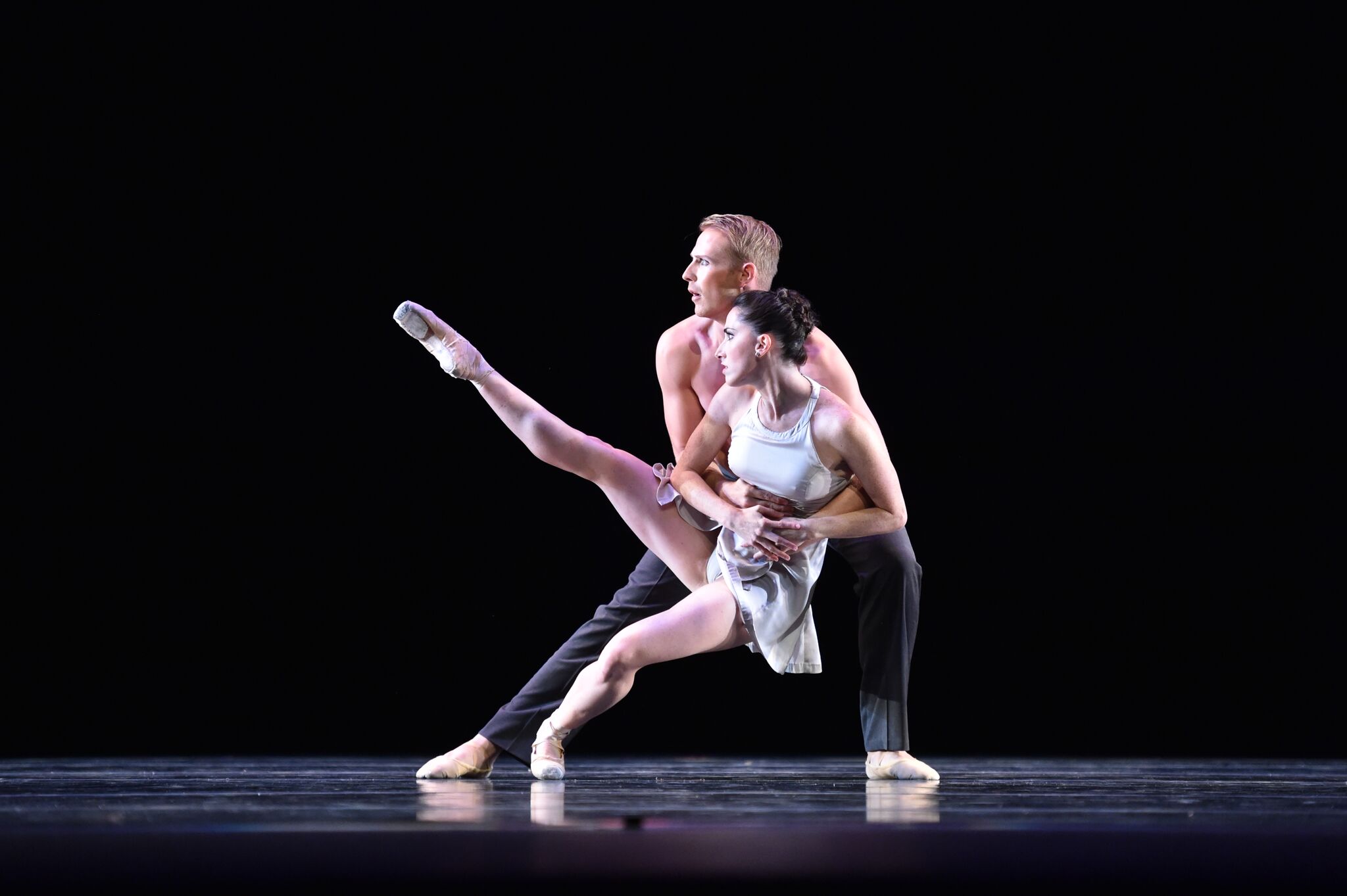
National Choreographers Initiative – Photo by Dave Friedman.
Feldman and Caniparoli both remarked that NCI offered an unexpected opportunity for interaction with the other choreographers. Usually with a commission, a choreographer is in the studio and then in the hotel, essentially on their own. At NCI, the four choreographers can mingle, have time with each other, and make connections.
“It may seem obvious, perhaps, but choreography can be a very isolating experience. Even if their style was very different, and their creative goals were very different, I found the NCI experience, the creative discussions with the other choreographers, built connections that have lasted long beyond the three weeks of NCI,” Feldman said. She added that a choreographer she met at NCI in 2019 recently recommended her for a choreography opportunity he wasn’t available for.
While the general rule limited dancers to three years, Feldman returned fourth in summer 2021, part of an atypical NCI structure coming out of the pandemic. With Covid rampant and the March 2020 statewide shutdown, the 2020 NCI was cancelled. In deciding to reopen NCI for summer 2021, Lynch took steps to maximize protections. Dancers were selected only from two California companies–San Francisco’s Smuin Ballet and Sacramento Ballet. Each company was kept in a separate pod and did not intermingle, with separate classes, rehearsals, and housing. Feldman was among the Sacramento Ballet dancers.
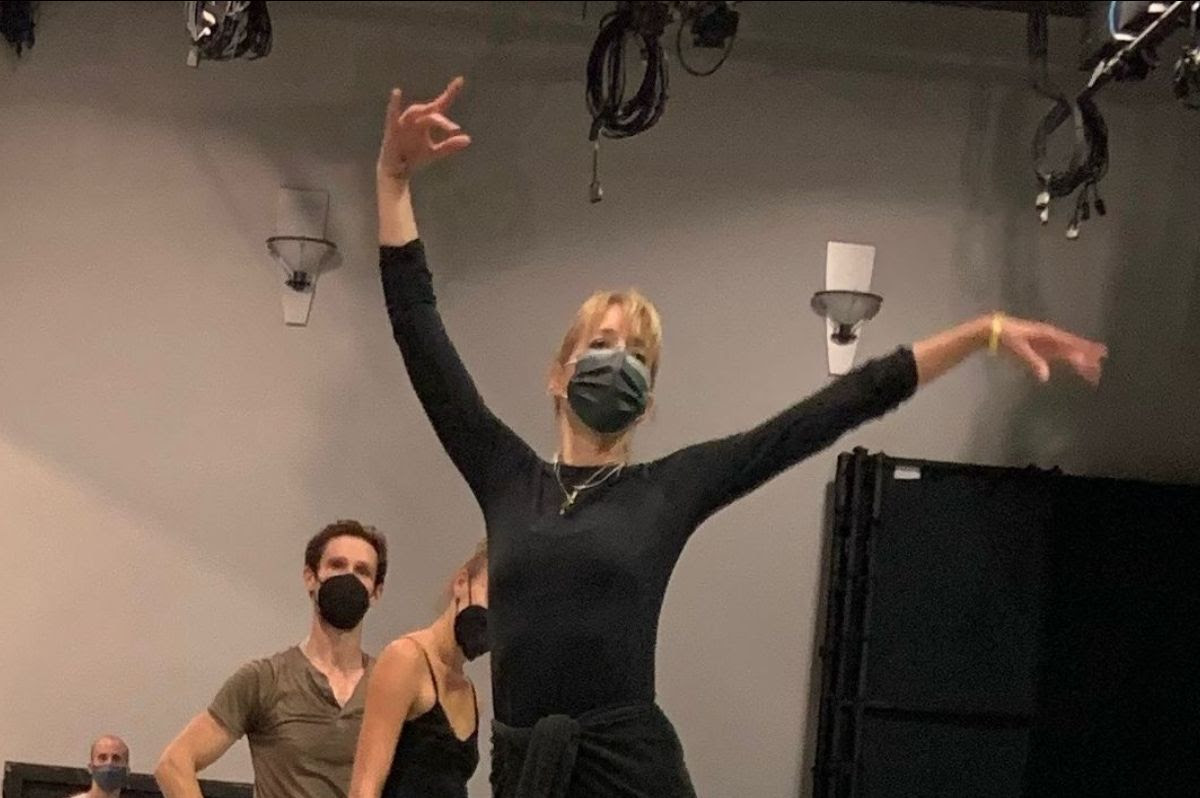
National Choreographers Initiative in 2021 – Photo courtesy of NCI.
“That year was socially different. Such a big part of the NCI culture is getting to meet and intermingle with artists that you’ve never met or worked with before. That pod year was different because we were with artists that we work with year round at Sac Ballet or Smuin. Still, other than that, the experience of working with new choreographers and the actual creative process was very much the same and stayed true to what NCI is all about.”
Feldman continues with Sacramento Ballet and Capitol Dance Project, as well as pursuing choreography commissions.
Beyond the three week experience and connections, the culminating performance with professional staff led by NCI’s award winning lighting designer Monique L’Heureux is presented in the state of the art 750-seat Irvine Barclay Theater. The professional photography and video record of their performance can further boost emerging choreographers’ careers. Another unexpected consequence for choreographers has been dancers returning to their home companies with reports about their NCI experience that led to commissions for the NCI choreographers the dancers worked with.
As ballets initiated at NCI have gone on to become full productions at ballet companies, workshop situations resembling NCI have sprouted. Inspired in part by NCI’s reputation and the dance it has incubated, companies have seen benefits in encouraging new ballet choreography by its own dancers.
As a three-year NCI dancer who danced with multiple companies, who also choreographs, and who now runs a ballet department, Sloan views NCI from multiple perspectives and has particularly high praise for how Lynch structured NCI.
“The daily class was amazing. We would start the day with a really, really good company class with great teachers. Rehearsals were in the UC Irvine dance department, a great facility, a wonderful floor situation. Molly surrounded us with encouraging people, the chance to try new things, open our minds to different styles, and have that practice of having to pick up choreography quickly, get it in your body, and then turn it into art within a short deadline. For dancers and choreographers, that chance to experiment from day one to day two with a different way of moving or a different way to approach a work is rarely possible in a company setting, and makes NCI such an invaluable program, and I hope that something like it can continue in the future.” Sloan is not alone in that hope.
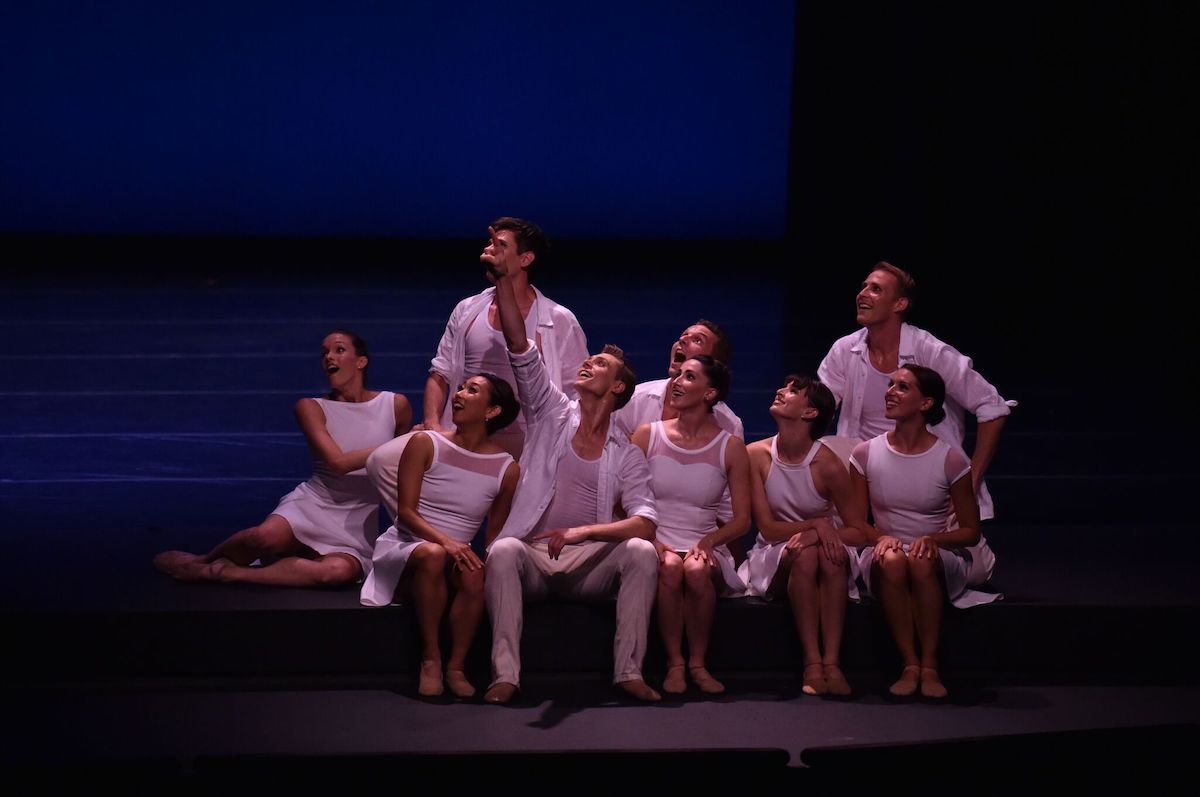
National Choreographers Initiative – Photo by Dave Friedman.
National Choreographers Initiative (NCI) – The Last Dance at the Irvine Barclay Theater, UC Irvine, 4242 Campus Dr., Irvine; Sat., July 25, 8 pm, $28-$105.
For more information and to purchase tickets, please visit NCI-The Last Dance.
For more on the 2026 choreographers: Emily Adams, Julia Feldman, DaYoung Jung, and Sarah Tallman.
For a complete list of the choreographers who have participated in NCI since 2004 NCI choreographers now & past
Written by Ann Haskins for LA Dance Chronicle.
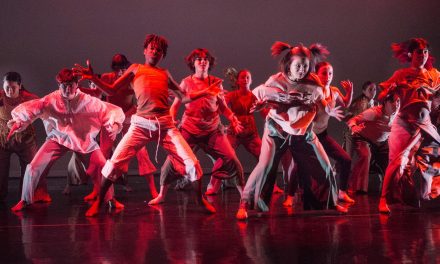
Featured image: National Choreographers Initiative – photo by Dave Friedman.