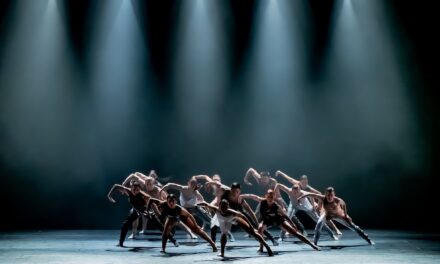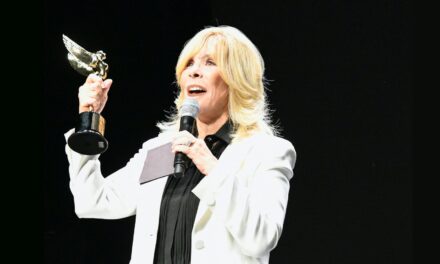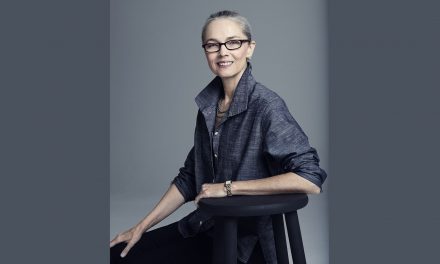
Only a handful of dance artists have managed to keep their companies afloat in Los Angeles for more than twenty years. All are women. Donna Sternberg is one. As a dancer, choreographer, and artistic director of Donna Sternberg & Dancers, Sternberg has now received statewide recognition with the Council of 100 announcement that she is their Distinguished Woman Artist for 2026. In the 37 year history of the award, Sternberg is only the second awardee whose art medium involves dance, the rest were visual artists.
The award is accompanied by a retrospective exhibition at the affiliated Fresno Art Museum and ancillary activities include her company performing. The exhibition titled Dancing Through Time: Donna Sternberg, a Retrospective, 1970 to 2026, opens August 1 and runs through January 10, 2027 in the Contemporary Gallery at the Fresno Art Museum. The museum was the first in the United States to devote a full year of their exhibition schedule (1986-1987) exclusively to women artists.
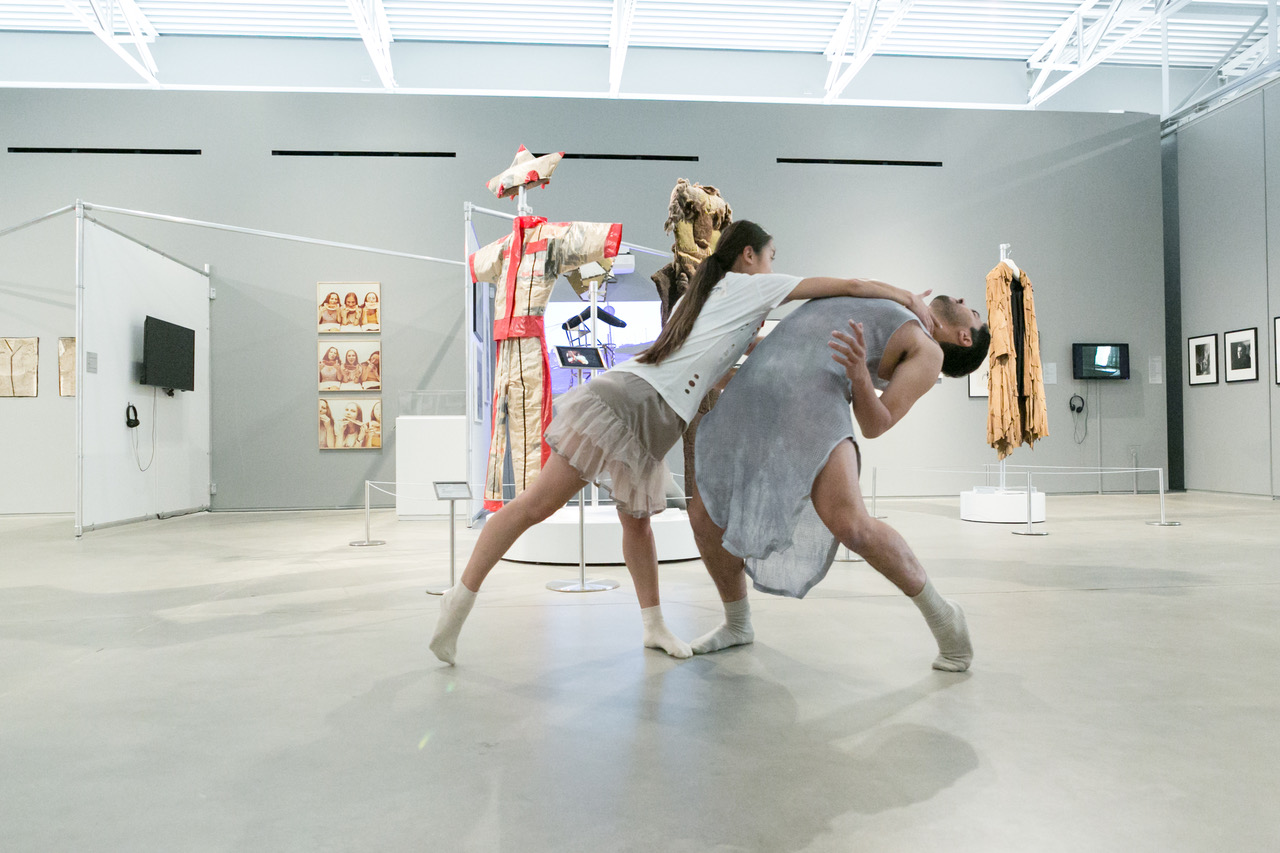
Donna Sternberg and Dancers Stephanie Cheung, Joseph Lister in “Iron Women” at the Wende Museum – Photo by Paul Antico.
Earlier in July, I had the opportunity to interview Sternberg on Zoom where we discussed her career, what it means to be awarded the Council of 100 Distinguished Woman Artist for 2026, and her current and future plans.
Sternberg said that it was her mother who put her in ballet classes taught by an elderly Russian woman who would whack the students with a wooden stick if they weren’t in the “correct” positions, and Sternberg was put on pointe shoes at the very young age of six. After refusing to return to that studio, she was sent to another one that taught ballet and jazz. Sternberg was much happier.
Sternberg’s ongoing choreographic collaborations with scientists have become a distinguishing aspect of her work. I asked if she was always interested in science.
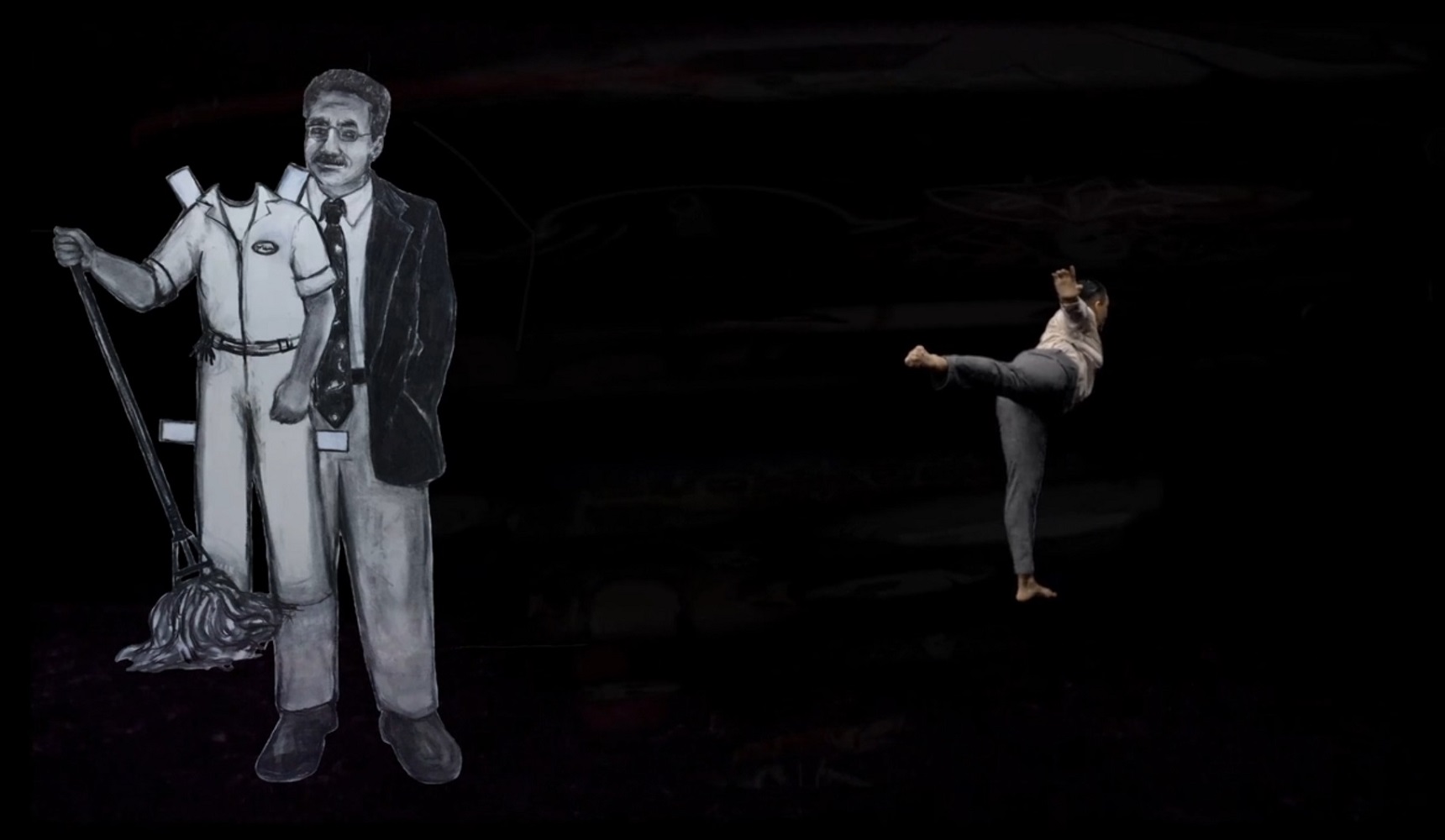
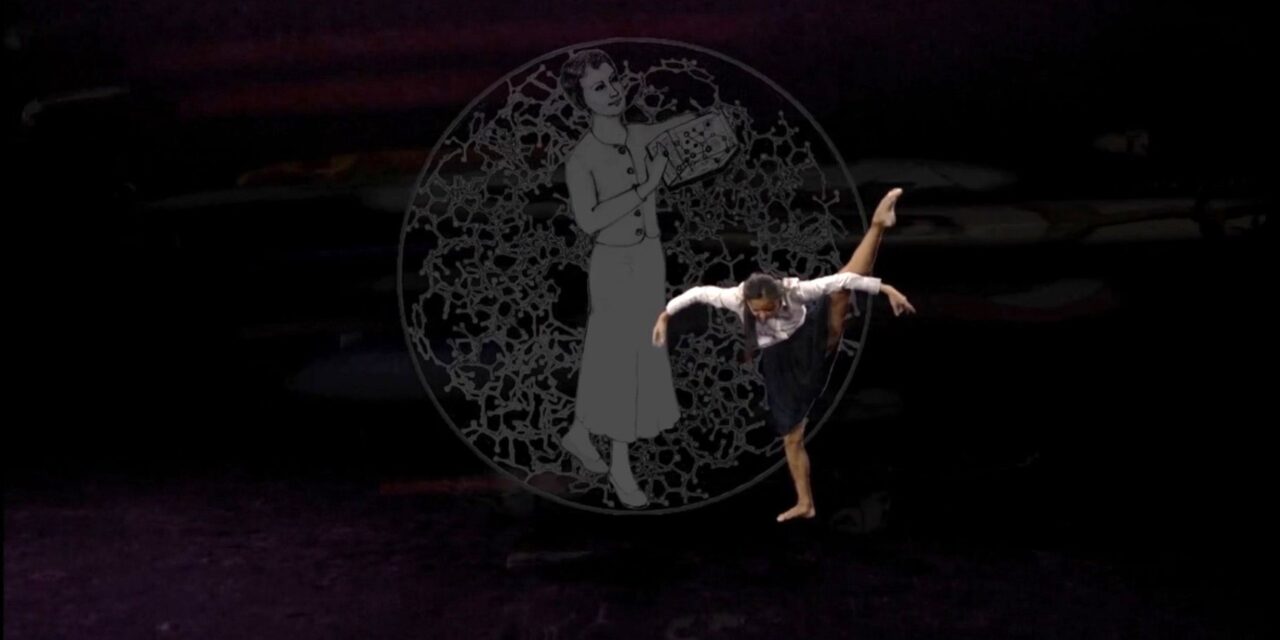
Donna Sternberg & Dancers – Moises Josue Michel in “The Vortex” – Artwork by Meredith Tromble – Screenshot by LADC
Although her father was a mathematics/science person, Sternberg was not interested in seeking a career in that field. She did want to be a criminologist and even thought of herself as a Clarence Darrow lawyer.
“I had a lot of things that I thought I was going to be,” she said. “I didn’t even think that I was going to be a dancer, but I think that dance chose me. I didn’t think that I had a choice at a certain point, yet I never felt as much myself as I did when I was dancing.”
Before forming her own company, Sternberg performed in the companies of Donald Byrd, Mary Jane Eisenberg, Yen Lu Wong and Dance/LA. Sternberg found work created by Mary Jane Eisenberg different, theatrical and contemporary with the way she approached things. Plus, she liked the way Eisenberg moved. Regarding performing Eisenberg’s work, Sternberg said, “You could take a bite out of it. It had depth to it.”
In 1985, she formed Donna Sternberg & Dancers. Since then, she has choreographed Thirteen full-evening works, most of which were inspired by science. Her choreography has been commissioned for the California Science Center, SIGGRAPH, Dance Moving Forward Festival, California Choreographer’s Festival, Catlin Gabel School in Oregon, Valley College, Descanso Gardens and the Alleluia Dance Theatre. In 2016, Sternberg was invited to create site-specific work in collaboration with LeeMundwiler architects as part of the Venice Biennale. She has received multiple awards and participated in residencies and dance festivals throughout the US and in Mexico and Costa Rica. For the Costa Rica residency, Sternberg traveled there to create work along with several other artists. She was the only choreographer among visual artists and a sculptor
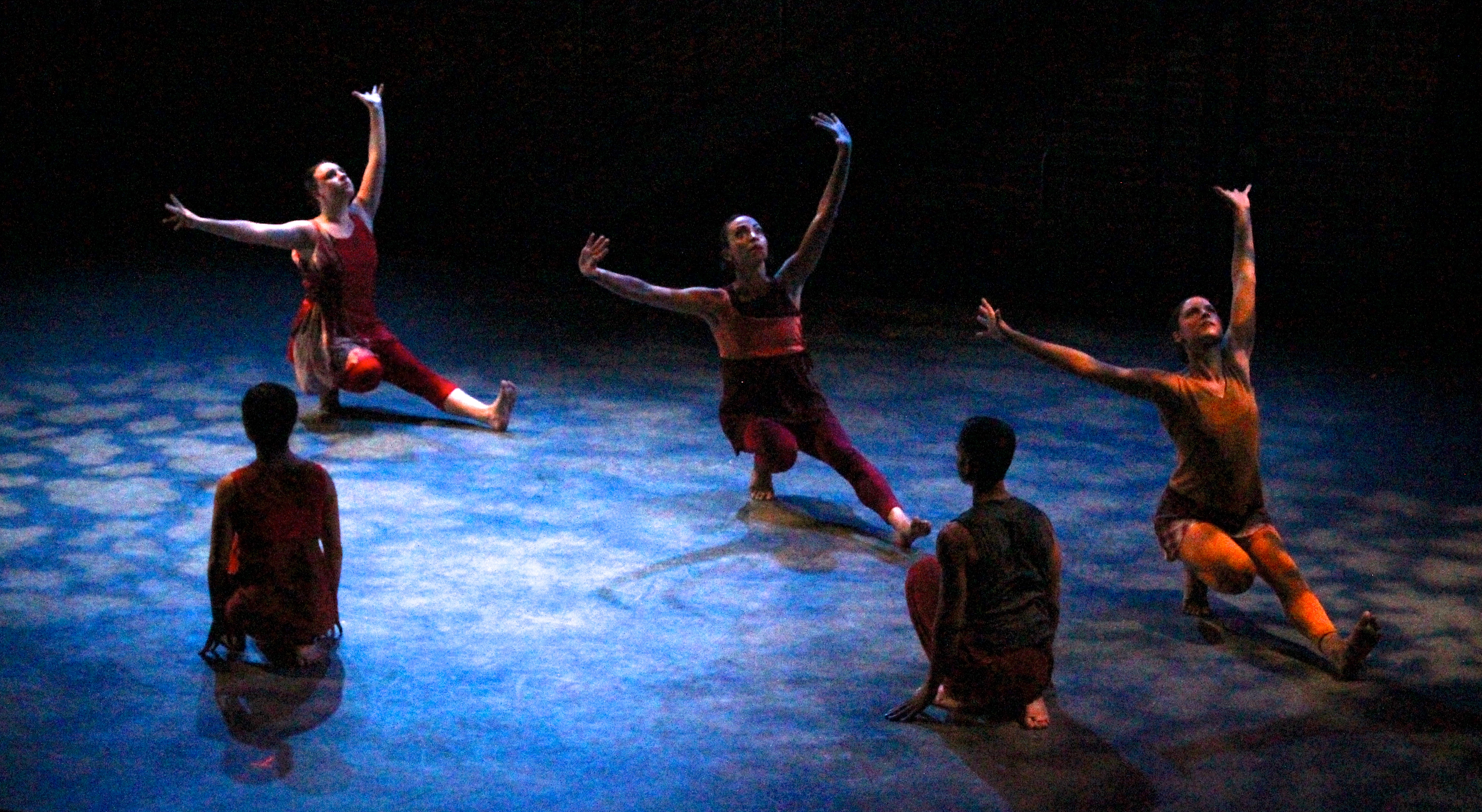
Donna Sternberg & Dancers – Photo courtesy of the company.
“That was an amazing residency,” Sternberg said. “It was a month in a little city that used to be a snake farm, so there were snakes.” One day she opened the washing machine where she was staying and a snake slithered out of the tub.
The unstructured residency had no particular project associated with it. The artists could do whatever they wanted within the month. Sternberg traveled around the countryside, mostly by herself. She described one surreal place, Tortuguero, that could only be reached by boat and was located in the jungle.
“Tortuguero was exactly what I wanted. I was doing my first big science piece on quantum physics and particularly on string theory,” she said. “In order to grasp the whole huge concept, I thought I had to really get myself out of my normal environment, into somewhere that was completely different.” The trip to Tortuguero helped her imagine string theory as our existing simultaneously on anywhere from 5 to 13 different planes of existence.
She also collaborated with Kathi Packer, a visual artist about man’s connection to the natural environment.
“We say that we love nature but we are also destroying it. And Costa Rica was a good place to see that because they were having a big political to do about a river that they were thinking of damming up, and the populace was up in arms about that.” Sternberg said. By the end, she created a full-length piece using the visual artist’s pieces as a starting point for the work.
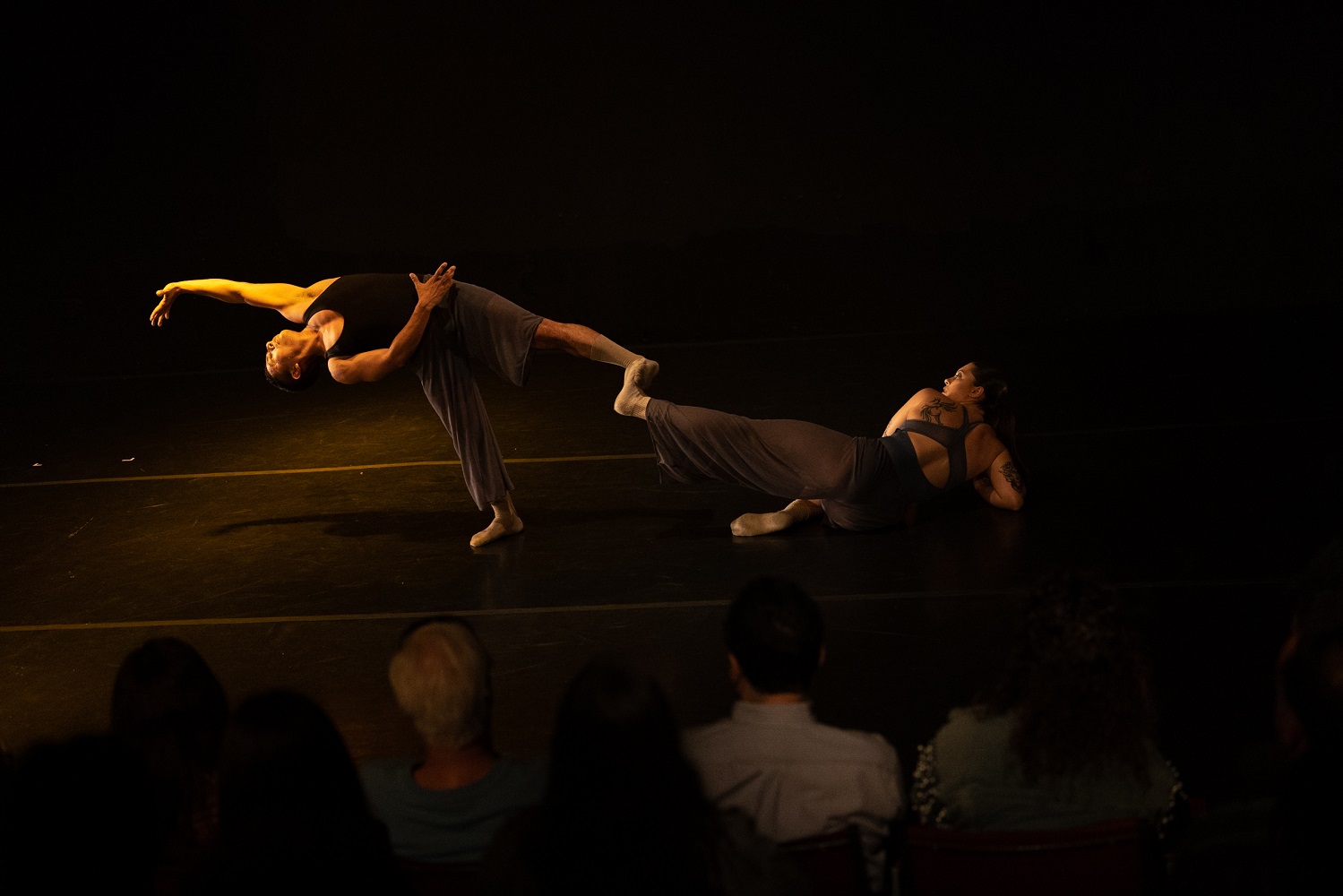
Donna Sternberg and Dancers in “Gravitational Waves” choreography by Donna Sternberg – Photo by Sarah Catania.
Dance artists often collaborate with visual artists, musicians, and poets, etc. but working with scientists is rare. For Sternberg, the spark came from one of the discussions that always follow her performances. After one, the videographer Michael J. Masucci approached her and expressed interest in collaborating if she ever wanted to create a work exploring her interest in quantum physics. That conversation inspired the long-running, highly praised Awe and Wonder series pairing choreographers and scientists to collaboratively creating dance about scientific concepts. The first scientists she contacted were at Caltech. Sternberg admits that some were not even interested in speaking with her.
“But the ones that do are really enthusiastic,” she said. They want to talk about their work because otherwise, who do they ever talk about it with but each other? Also, some of them are smart enough to figure out that their work needs to be known to a greater public.”
Sternberg thinks that one reason people do not trust science is because the work scientists do is not understood by the general public.
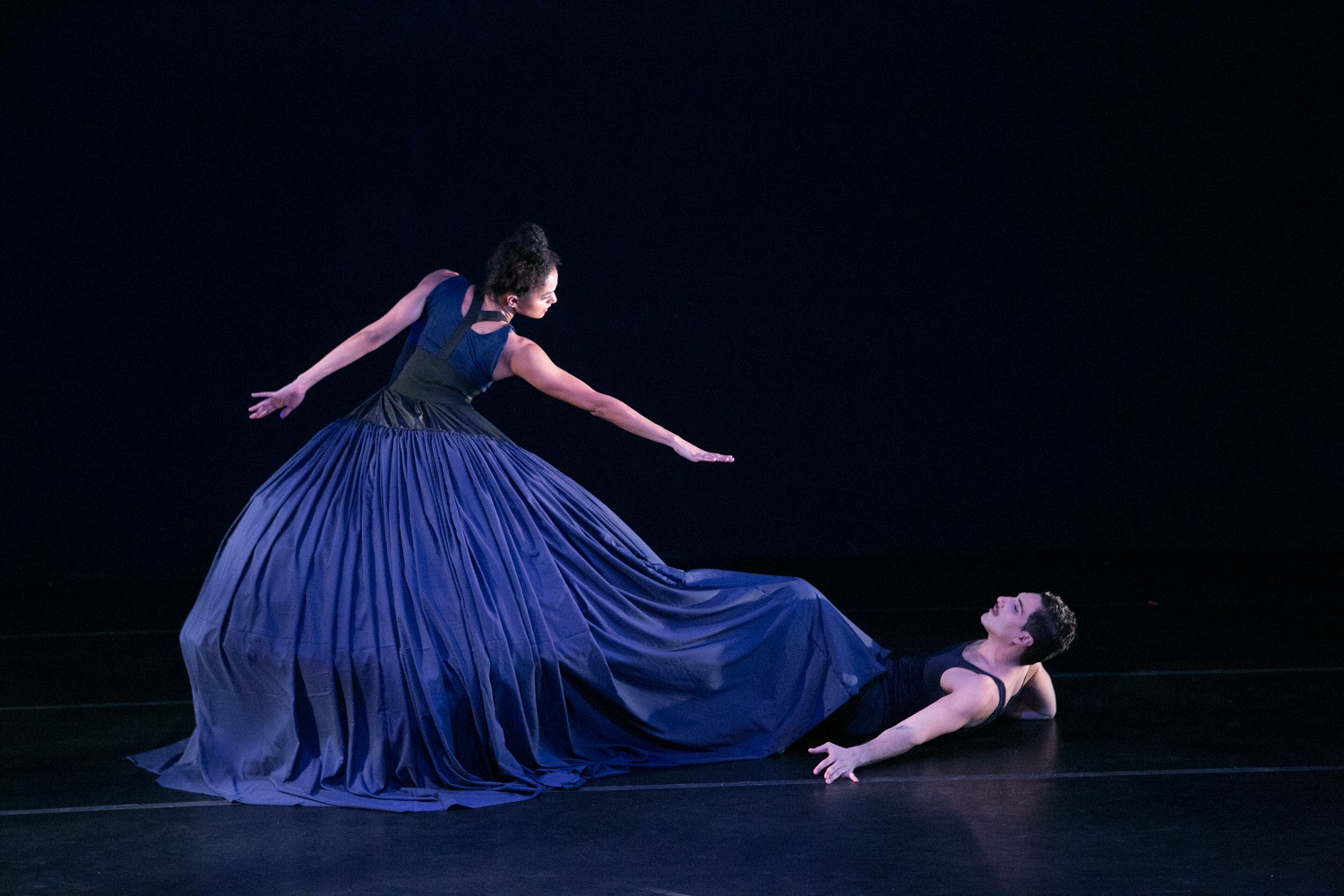
One – Choreography by Donna Sternberg – Photo by Paul Antico
“Once I started working with these scientists, I found such a connection between dance and the scientific thirst for discovery,” she told me. “I mean, that’s what a choreographer is doing. We’re just doing a bunch of experiments to find stuff out. One of my science friends said to me, ‘You know, most science experiments fail and then we learn how to fail better.’”
Sternberg thinks ‘learning to fail better’ is a great way to look at creating art.
Sternberg and Masucci have been working together for over 20 years, most recently exploring holograms and dance. They just completed their first holographic duet with one dancer in Los Angeles and another in Omaha.
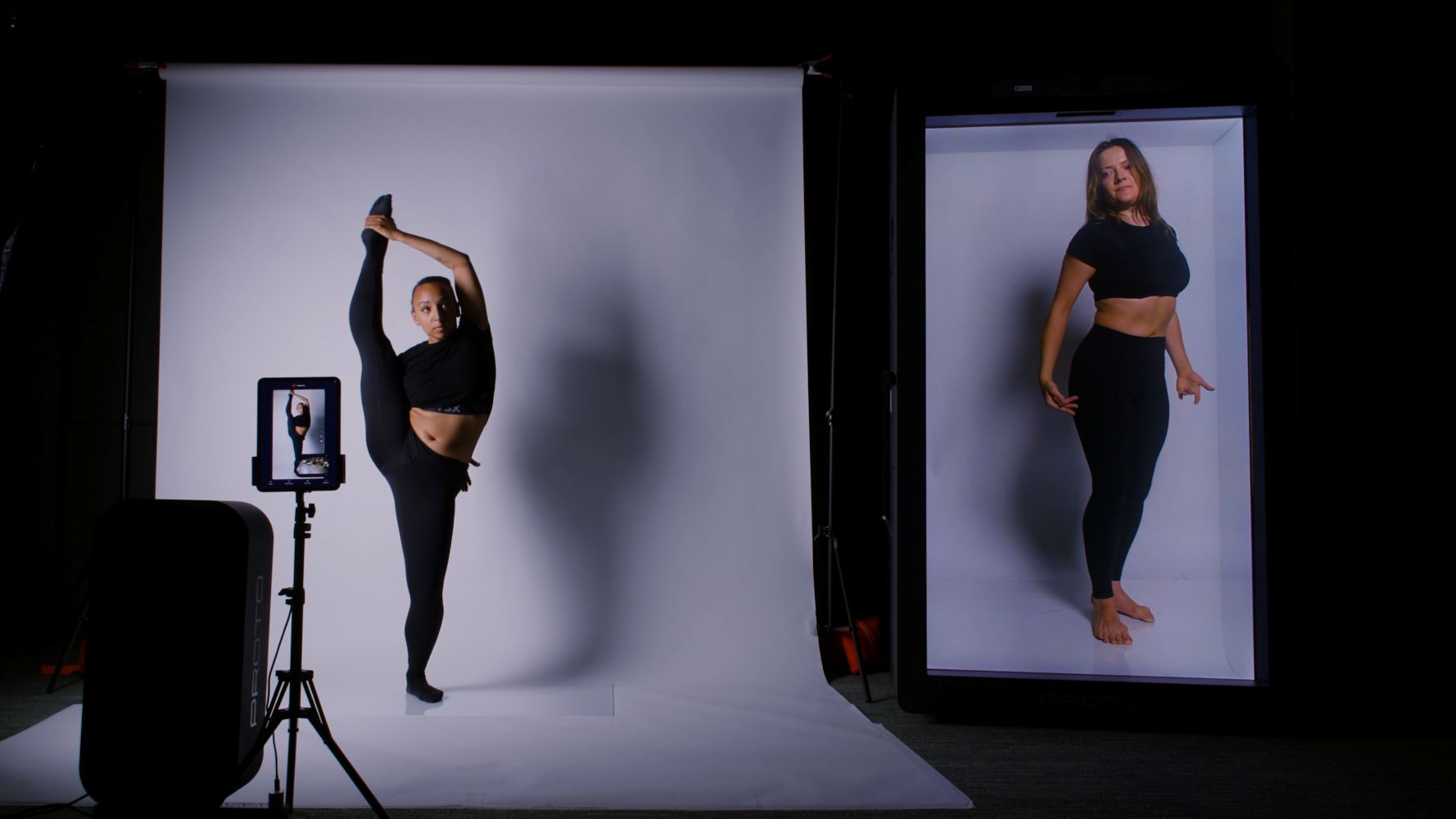
Members of Donna Sternberg and Dancers working on hologram duet – Photo courtesy of the company.
We discussed how some of the younger generation of artists have difficulty with receiving criticism about their shortcomings or failures.
“They think that criticism is abhorrent. Okay, criticism that is nasty is abhorrent. There’s no reason for that, but criticism, if you can digest it, is really a stepping stone to improving your craft,” Sternberg said. “You can’t get better if all you do is have success and surround yourself with sycophants who tell you that you’re the greatest thing since Swiss cheese. It’s not possible. You have to learn how to fail, the idea of ‘failing better.’ You won’t take a risk if you’re adverse to failure. I think in today’s society where they give kids trophies, whether they win or lose, it is hard for a lot of these young ones to understand the value of failing. In time they may understand.”
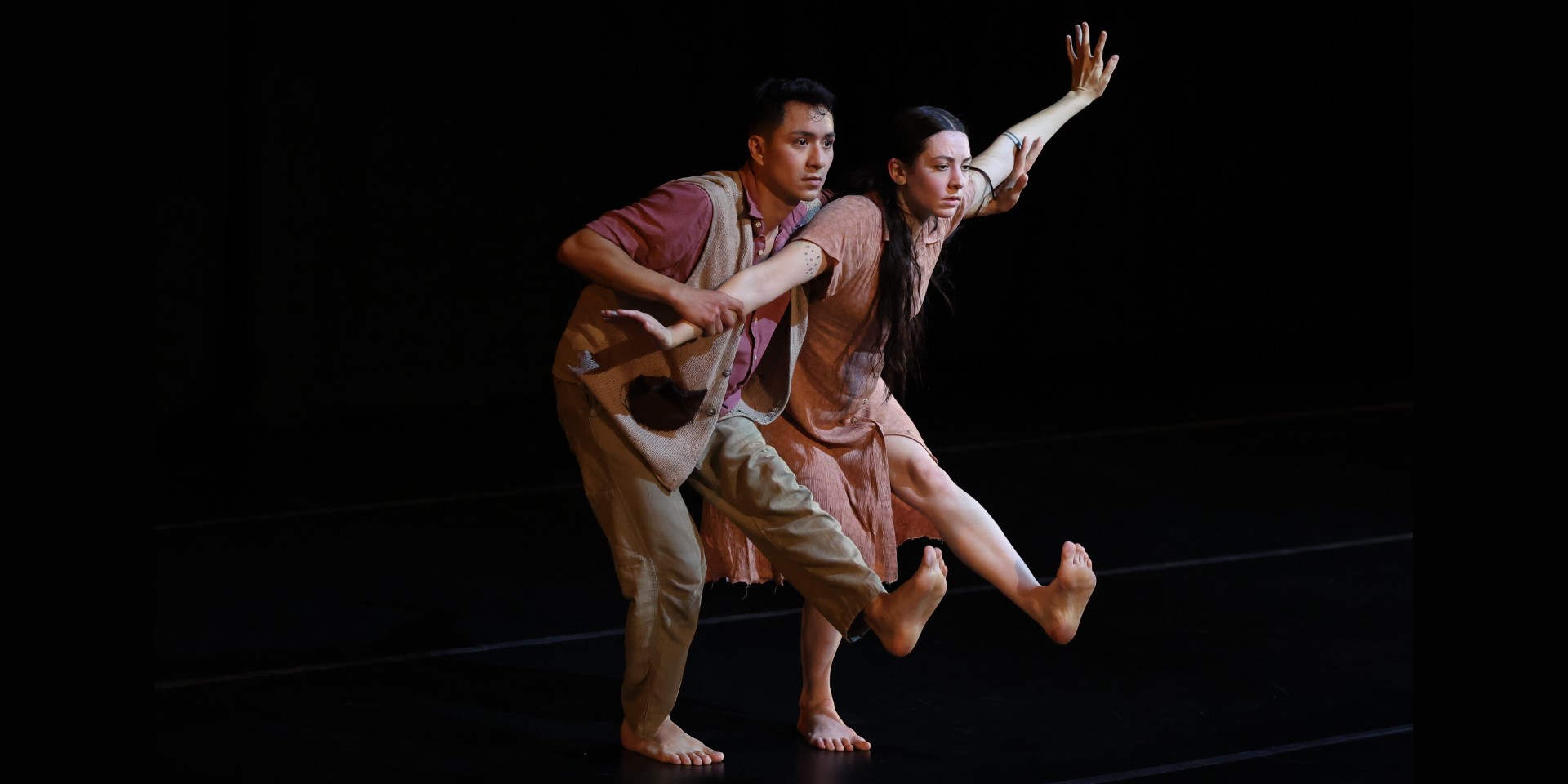
Donna Sternberg & Dancers in “Ancestors Voices” – Photo by Sarah Catania.
Sternberg confided that thinking rationally, she would not have chosen this path and is astonished that she is still dancing and creating dance works. She mused that Bella Lewitzky stopped when she was 80 and that she herself is ‘getting up there’, but with so many possibilities that keep on exciting her, she doesn’t want to stop. Her longevity was a factor in Sternberg’s selection for the award.
Designed to honor women artists who have lived an artful life for decades, the awardee must be a woman 65 years or older. Creativity over time provides a body of work the selection committee can evaluate in deciding among nominees deserving attention. A body of work also providing extended content for the retrospective exhibition that accompanies the award.
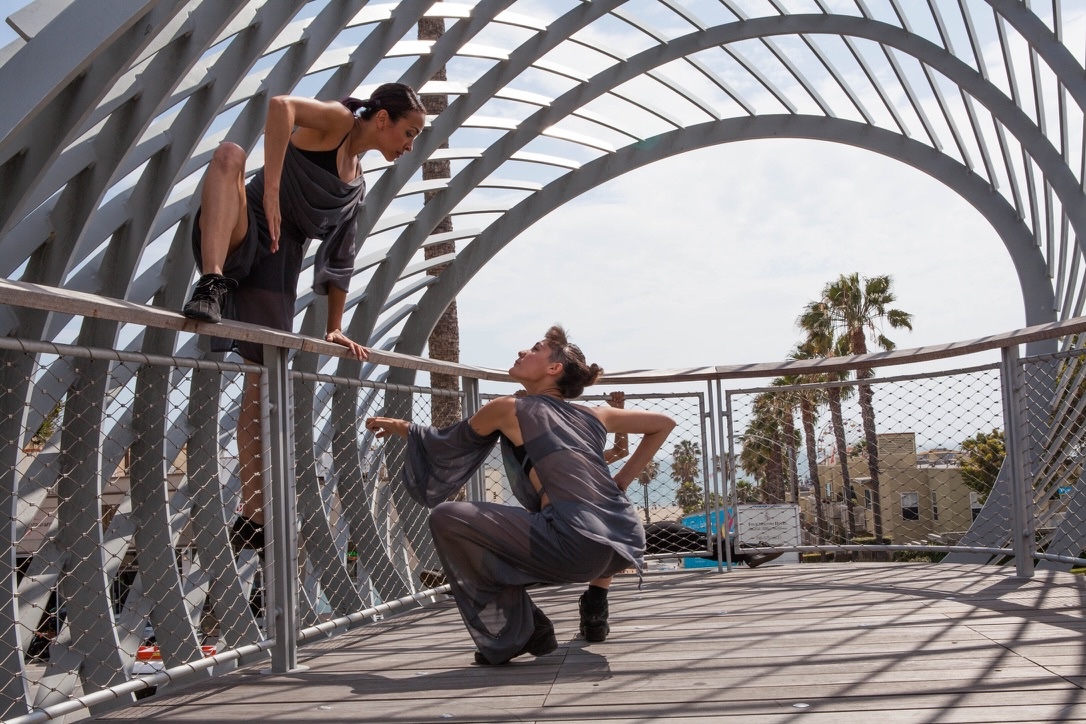
Donna Sternberg & Dancers – Tongva – Photo by Denise Leitner
The museum’s executive director and the chief curator, Michele Ellis Pracy oversees the retrospective related to the Council of 100 award. In this curator, Sternberg’s selection chanced upon a former dancer turned museum curator equipped to capture dance artist retrospective.
While not involved directly with the award selection committee, Ellis Pracy works closely with the Committee of 100’s selection process. Nominations come only from the members who have come from all over the state. Historically the award has gone exclusively to visual artists, although in 1994, the award went to the late Rachel Rosenthal whose wide ranging visual, performance, and other artistic endeavors included dance. In that context, Sternberg is regarded as the first to receive the award whose artistic medium is dance.
Sternberg said that she was floored by receiving this award. “I looked at the past recipients and I’m like, wow, these are some hard hitters here. I was surprised, let’s say.”
Ellis Pracy acknowledged the award to Sternberg broke new ground. “I think that the selection committee rose to a challenge in honoring Donna because she wasn’t a two or three dimensional visual artist. I felt very comfortable with it because I spent the first half of my life pursuing dance.
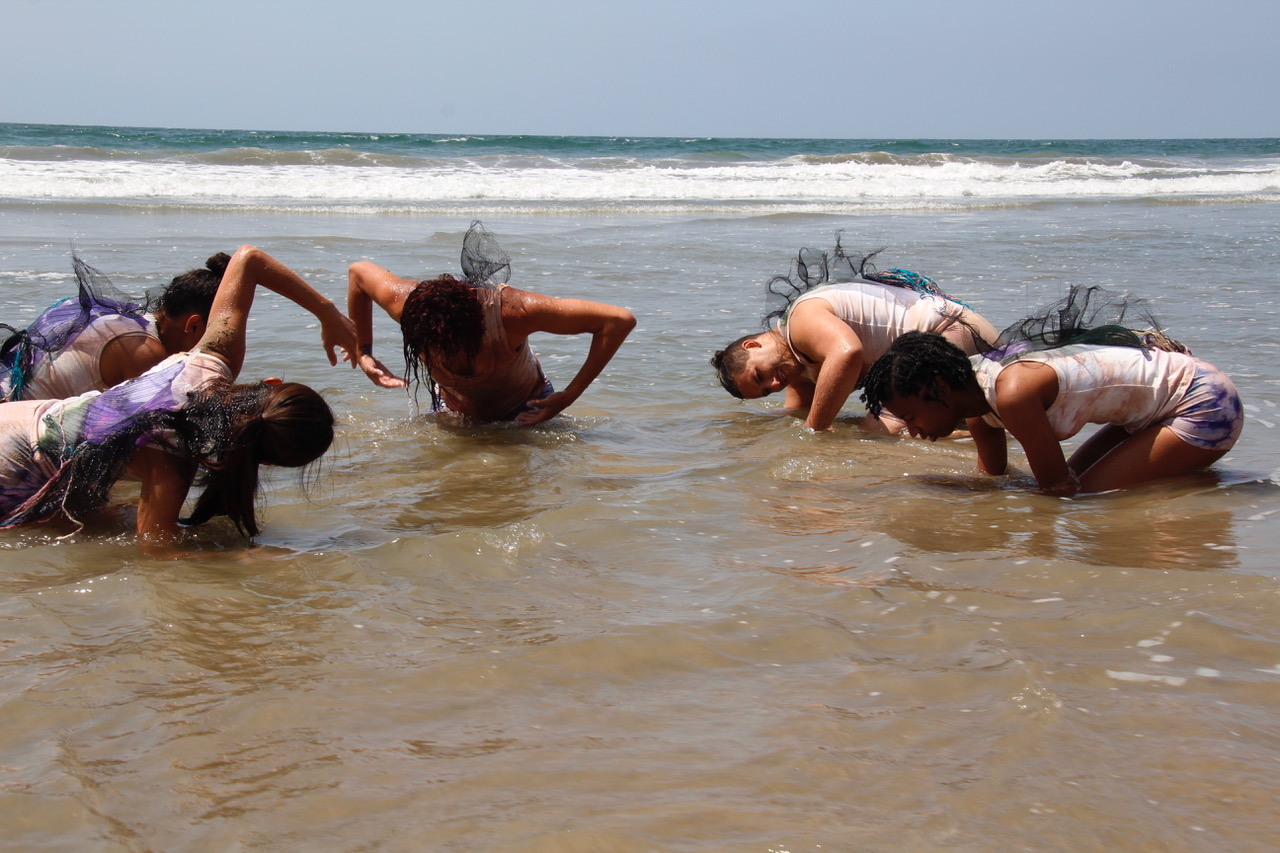
Donna Sternberg & Dancers in “Earth Body” choreography by Donna Sternberg – Photo by Mara Zaslove
Ellis Pracy began dancing in the San Francisco Bay area with aspirations and gifts and opportunities headed to a professional dance career. Merce Cunningham spotted her in a workshop and invited her to join his company in New York, until a knee injury intervened. The injury proved very serious and precluded a professional dance career. Unable to become a dancer, Ellis Pracy returned to college, pivoting to her second love, art history. She rose in the art curatorial world at the Oakland Museum, the Ojai Museum, and for the last 11 years at Fresno Art Museum’s Executive Director and Chief Curator. In Ellis Pracy, Sternberg’s award found a curator with the dance background as well as curatorial experience to mount an art museum exhibition effectively capturing artistic work integrally involved with four-dimensional live performance.
“Many artists at the age that we select from have never really had this kind of exposure before and want a retrospective. I gave Donna a couple of ideas. We talked about doing a photographic retrospective plus the performance,” Ellis Pracy explained. In addition to the static visual images, Ellis Pracy suggested a video component with the moving images enhancing the immersive nature of the exhibition.
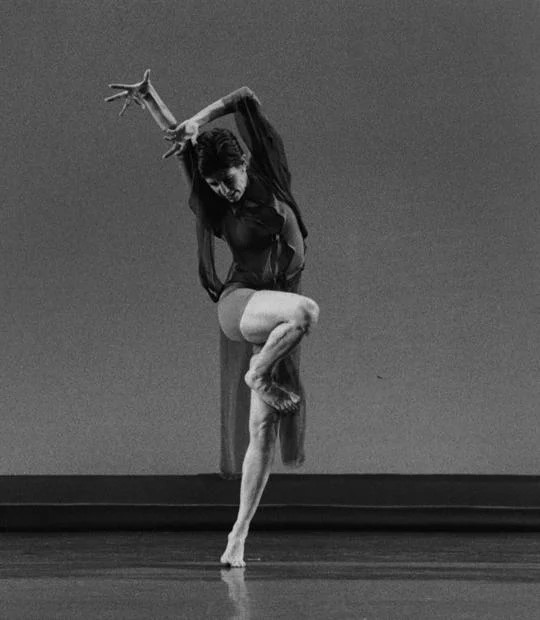
Donna Sternberg – Photo courtesy of the artist.
For the retrospective, the museum requested digital photos for a career covering more than 40 years. Sternberg had little from her earliest years, and starting in the 1970s there were negatives and some photos, many with low resolution. Museum staff applied current scanning and printing technology to those early negatives and photographs with the resulting revived photographs included in the exhibition.
For the video component, the curator installed a temporary, freestanding wall in the exhibition gallery. Videos capturing Sternberg’s dancing and choreography will be projected onto the back of the wall. A nearby bench allows visitors to sit for a while and watch the video loop.
“The photographs turned out beautifully,” Ellis Pracy reported. “We could only print some to a certain size because they were so old and so tiny. Yet everything has presence. As a dancer, I could select images that I felt were evocative of Donna’s movement as a soloist or with a group that would intrigue somebody who wasn’t familiar with the dance world. The photographs convey movement, although they are still. And then we’ll have the videos where they can see movement.”
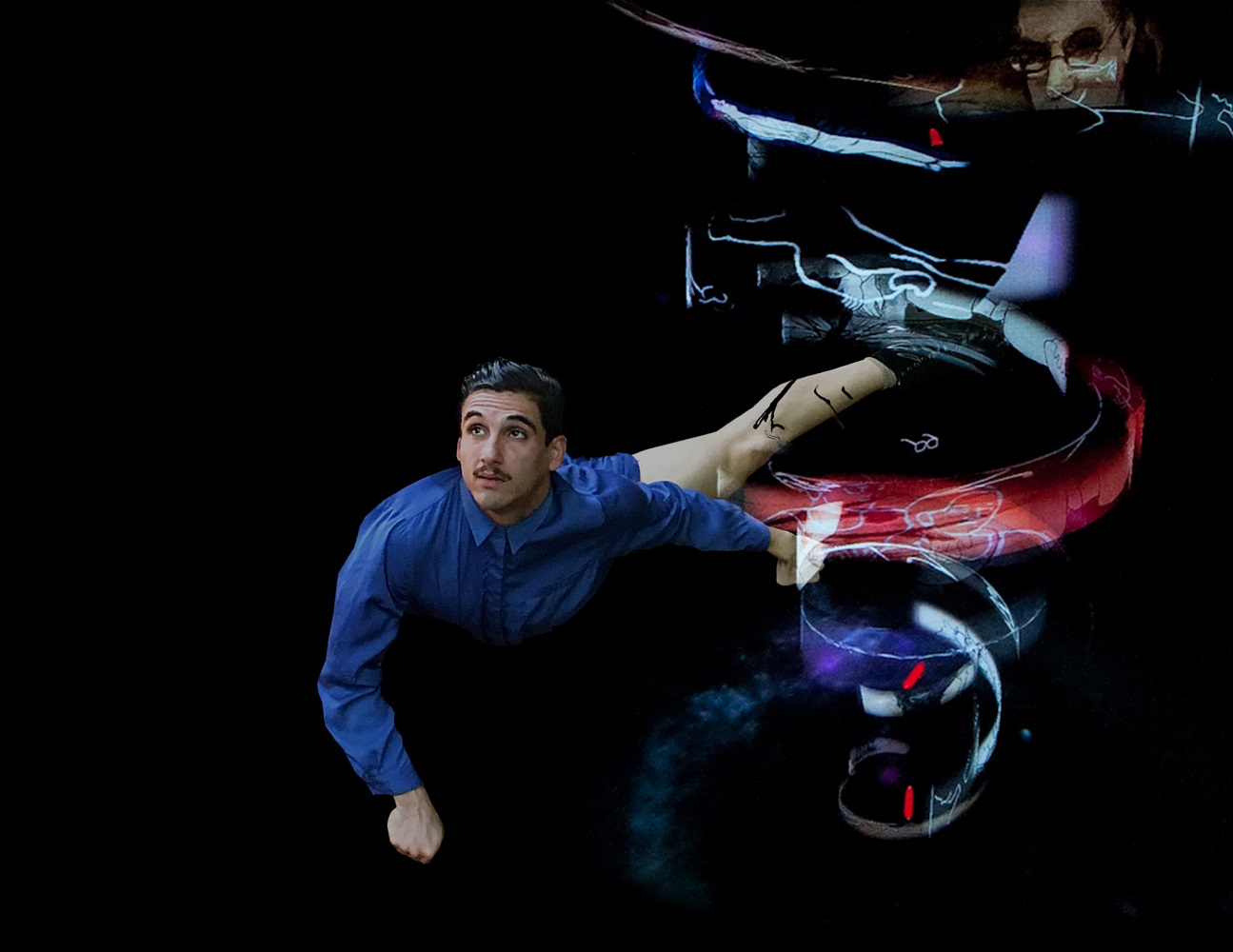
Donna Sternberg & Dancers – “The Vortex” – Photo courtesy of the company.
The museum will also host a performance by Sternberg’s company and she hopes to conduct a Moving Workshop, at Fresno State University and Fresno City College, both of which have dance programs. The Moving Workshop was instigated by Sternberg as an outreach to the community and another way to involve people who generally don’t have opportunities to see live dance performances. Sternberg also collaborated with a Meredith Tromble, visual artist and Dawn Sumner, geobiologist on The Vortex, a 20 minute film commissioned by the Mondavi Center for the Arts at UC Davis. The two Bay Area collaborators will take part in a showing and panel discussion about the film which investigates gender, sexual orientation and racial situations in the science community.
Sternberg shared that when the museum requested that the performance component be a retrospective, she thought about how Ohad Naharin put together a decade of his pieces into one work called Decadance #23.
“I like that idea. How can I do that?” she said.” So, I’m playing around with that idea.”
Ellis Pracy summed up the significance of the award going to a dance artist. “It is important for our audience to see the award going for a different one of the seven fine arts. Dance doesn’t get the same attention as painting or sculpture.”
While she values the award, Sternberg describes her ongoing focus as “trying to survive! In today’s climate where funding is extremely scarce, running a dance company is a true challenge. If I were starting off now, I don’t know if I would have a company,” she continued, “I still think that there are real reasons to have one. I think a company that works together presents work differently than a pickup company. I just think the many hours being together means something.”
Sternberg continues working with holograms, has a new work called Trash, and her next big work about female body image is titled How Do I Live In This Body? “I don’t know any women that are happy with their bodies. How do we break that thinking?” Sternberg challenged.
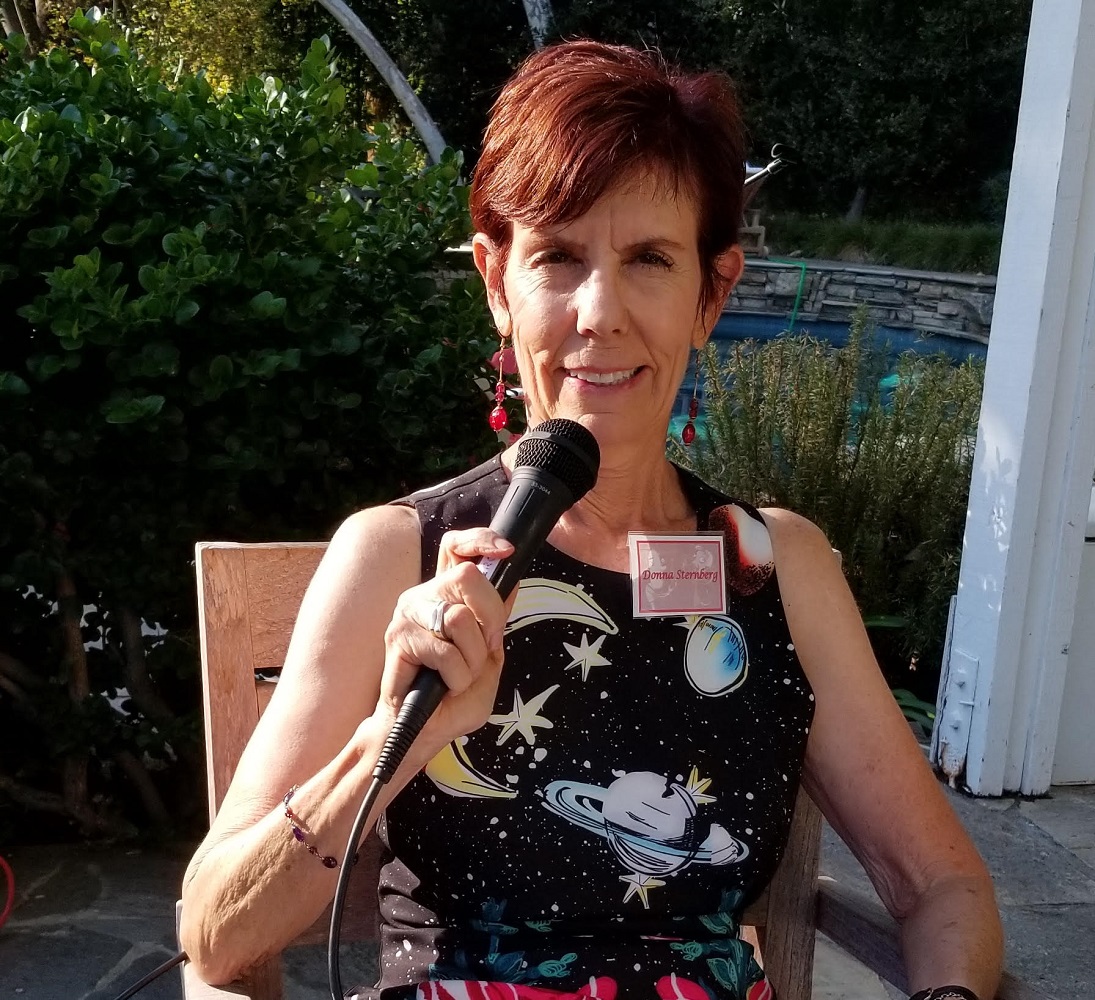
Donna Sternberg – Dancer, choreographer, Artistic Director of Donna Sternberg & Dancers – Photo courtesy of the artist
Dancing Through Time: Donna Sternberg, a Retrospective, 1970 to 2026 will be available for viewing in the Contemporary Gallery at the Fresno Art Museum , 2233 N. First St., Fresno, Sat., Aug. 1, 2026 through Sun., Jan. 10, 2027. Details on the exhibition, the performance, and other events are at the museum website.
To learn more about Donna Sternberg, her wide-ranging dance biography is HERE.
To learn about her company, Donna Sternberg & Dancers, please visit their website.
Written by Jeff Slayton for LA Dance Chronicle in collaboration with Ann Haskins.
Featured image: Donna Sternberg & Dancers – Stephanie Cheung in “The Vortex” – Artwork by Meredith Tromble – Screenshot by LADC.