I entered “Human Geography” by Elizabeth Yochim at her new multimedia performance space, YA!, on Saturday, July 18, 2026, without knowing what to expect. By the time I left, I felt that I had come to know not only Yochim and her work, but also more about myself. From the moment I entered her home and met her beneath the hanging crescent moon, the evening carried that strange feeling that I was meant to be there on that exact night, at that exact time. Through travel, relationships, grief, and emotional landmarks, Yochim used the evening to map the geography of a human life.
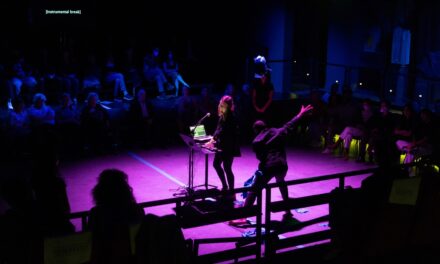
The YA! performance space is built out of Yochim’s home, which only added to the personal nature of the evening. The front room was set up like an art exhibit, displaying meaningful objects from Yochim’s past. These items included a pair of petrified children’s gloves, a lighter, and a stereoscope showing pictures from her past performances. We were able to pick up and examine all of the objects, and I quickly found myself drawn to certain ones, as if I could feel the connection between her stories and my own.

“Human Geography” Exhibition – Photo by Kate McCallum.
The audience soon discovered that many of these objects were related to her mother or were significant items in which she had found comfort during times of drastic change in her life. The one that stood out to me most was the front page of a newspaper showing birds flying away. It had been given to her on her way to Berlin to perform the first renditions of the work she would be showing that night.
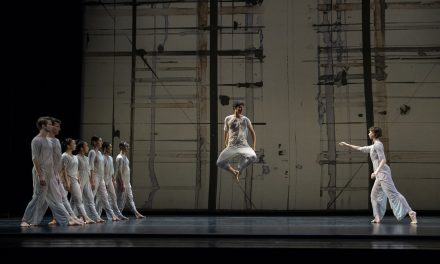
From there, we gathered in her backyard, where two videos were projected onto perpendicular walls. We sat in a variety of chairs, close together and close to Yochim, almost as if we were leaning in to hear a secret she could not wait to tell us. The visual effect of the dual screens was stunning, and I found myself wishing I had come up with the idea.
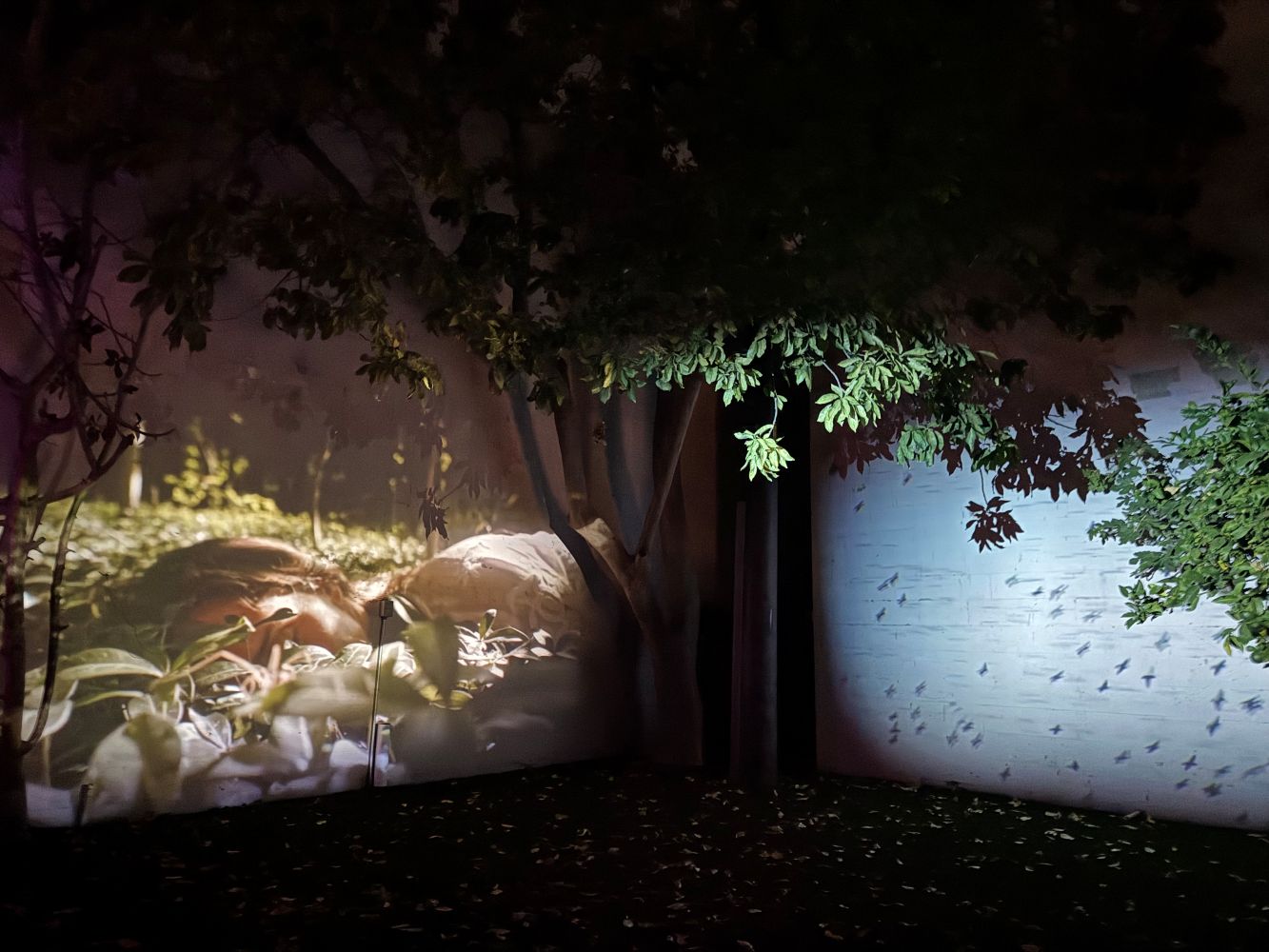
“Human Geography” – Photo by Kate McCallum.
On one side, a short film about the early death of her mother and her journey of self-discovery was playing, while a more abstract film of birds and sky played on the other. Silhouettes of tree branches lined the perimeter of the screens, and at one point, a plane overhead fit perfectly into the outward bound imagery of the evening.
The film was well produced, with strong pacing and thoughtful scenes enhanced by shifts between brighter and dimmer lighting. There were many standout shots, including one of a Polaroid picture that transformed into a moving scene. At times, however, the film translated its themes a bit too literally. An image of someone rising from an empty chair while loss was being discussed repeated an idea that the narration and surrounding imagery had already communicated. The work was strongest when it trusted its more abstract emotional images and poetic voice rather than relying on more straightforward descriptions.
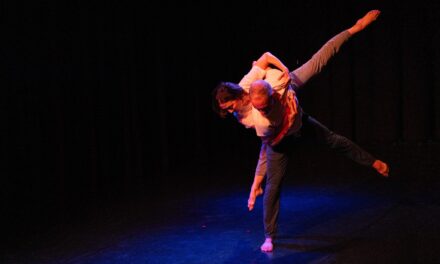
“Human Geography” – Photo by David Brownstein.
It wasn’t long into the film before I could hear the sniffles of people being brought to tears around me. It was heartbreaking to imagine a young girl losing her mother, and the story that followed was inspiring. I was surprised to find my own cheeks wet by the end as well.
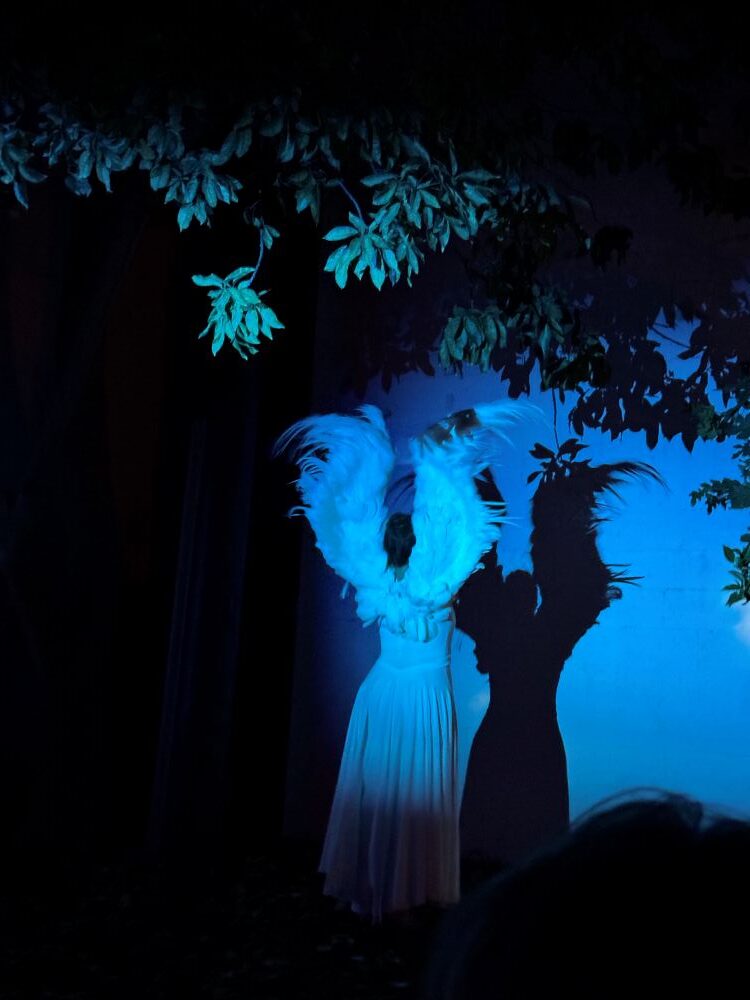
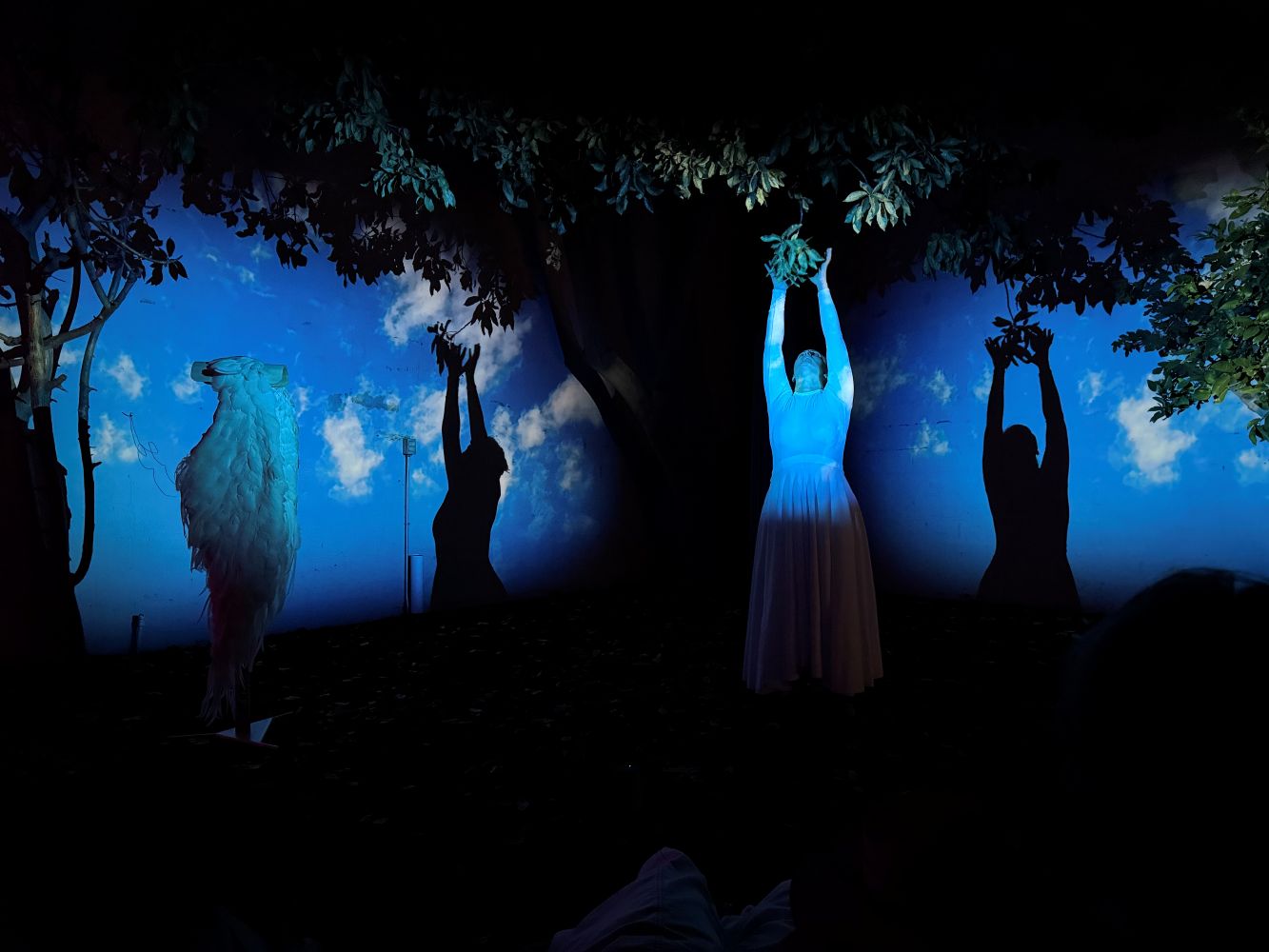
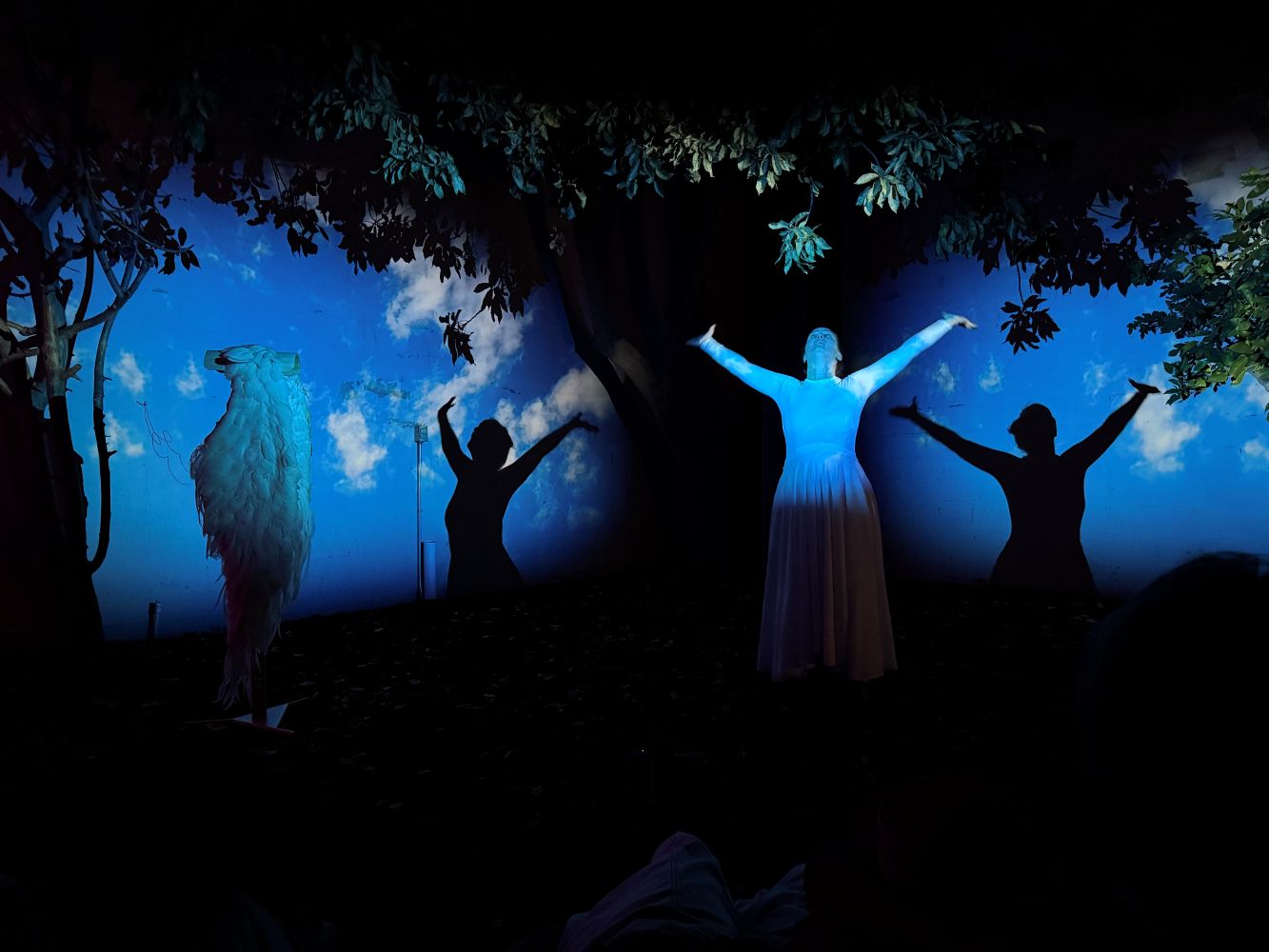
For the second half of the show, Yochim emerged glowing in the moonlight, wearing a long white dress and large white wings. As soon as she began moving, it was clear that these were not simply wings bought at a store. They were custom made and designed to replicate the specific muscular structure of birds moving their wings. As she extended her arm, the wing continued unfolding past her fingertips.
“Human Geography” – Photo by David Brownstein.
Yochim had clearly spent many hours studying the movement of birds. Although the movements were simple, they were extremely powerful. The performance demonstrated what dance theater can accomplish when movement, film, objects, architecture, and autobiography are carefully considered and brought together like pieces of a puzzle, forming a unified image. The artistic elements worked in perfect succession, creating a visually beautiful and deeply emotional evening.
“Human Geography” – Photo by David Brownstein.
By the end of the night, I felt as though I knew Yochim personally, and I felt as though she knew me too. She has a rare ability to connect with someone through a single glance. This was part of what made her work so powerful. If someone else had stepped into that role, it would not have carried the same weight. I am looking forward to seeing what Yochim and Ya! performance space does next.
For more information about Elizabeth Yochim, please visit her Instagram page.
Written by Denali Huff for LA Dance Chronicle.
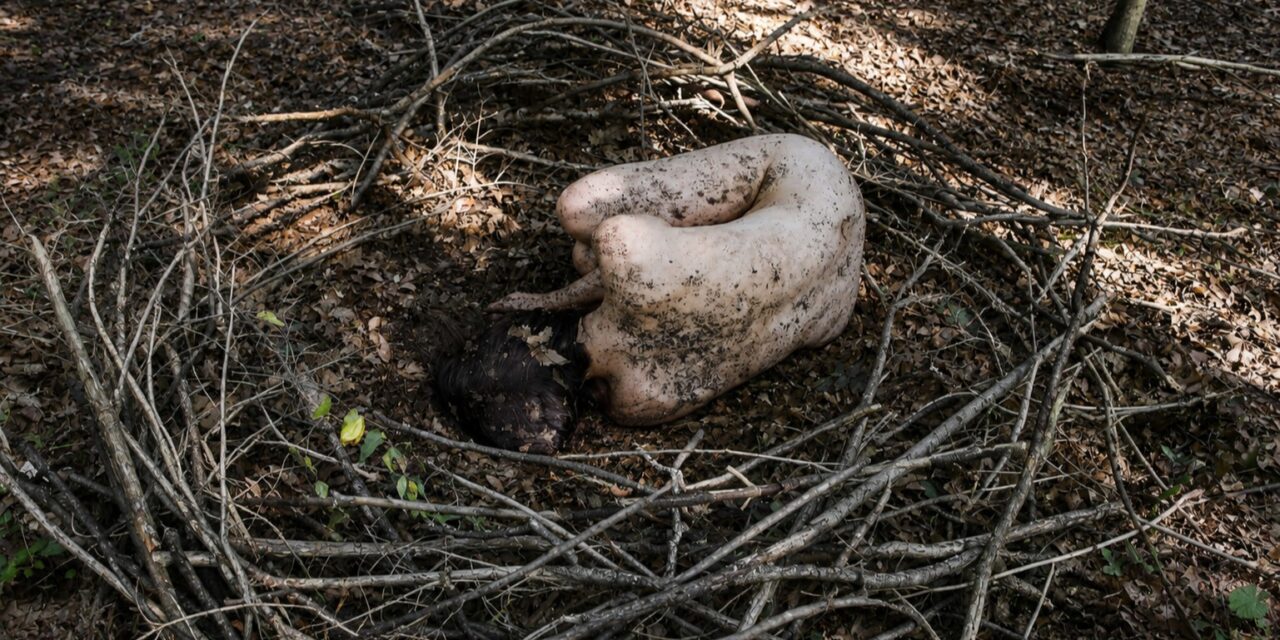
Featured image: “Human Geography” Exhibition – In the Nest – Photo by Kate McCallum.