The Eli and Edythe Broad Stage is a lovely 500 seat theater in which to view dance as the curve and elevation of the audience puts us a little higher than at eye-level with the stage, making for an excellent view of all the footwork and technical chops of any given performance; especially ballet. In this aspect with the Los Angeles Ballet (LAB), Artistic Director, Melissa Barak, Executive Director, Julia Rivera, we were not disappointed. LAB is moving forward with ambitious programming seen throughout their 2026/27 season. From their debut at the Bowl with excerpts from Balanchine’s “Who Cares?” and Barak’s “Kauyumari” to this evenings’ “Wavelength” by Barak, “The Cage” by Robbins, and “Dilly-Dilly” by Taylor, to their next show at The Wallis with “Polyphonia” by Wheeldon, “Carry Me Anew” by Ma Cong, and a World Premiere by Maté Szentes. All seem to fit perfectly with the company of thirty dancers giving everyone a chance to dance and find their place within the works.
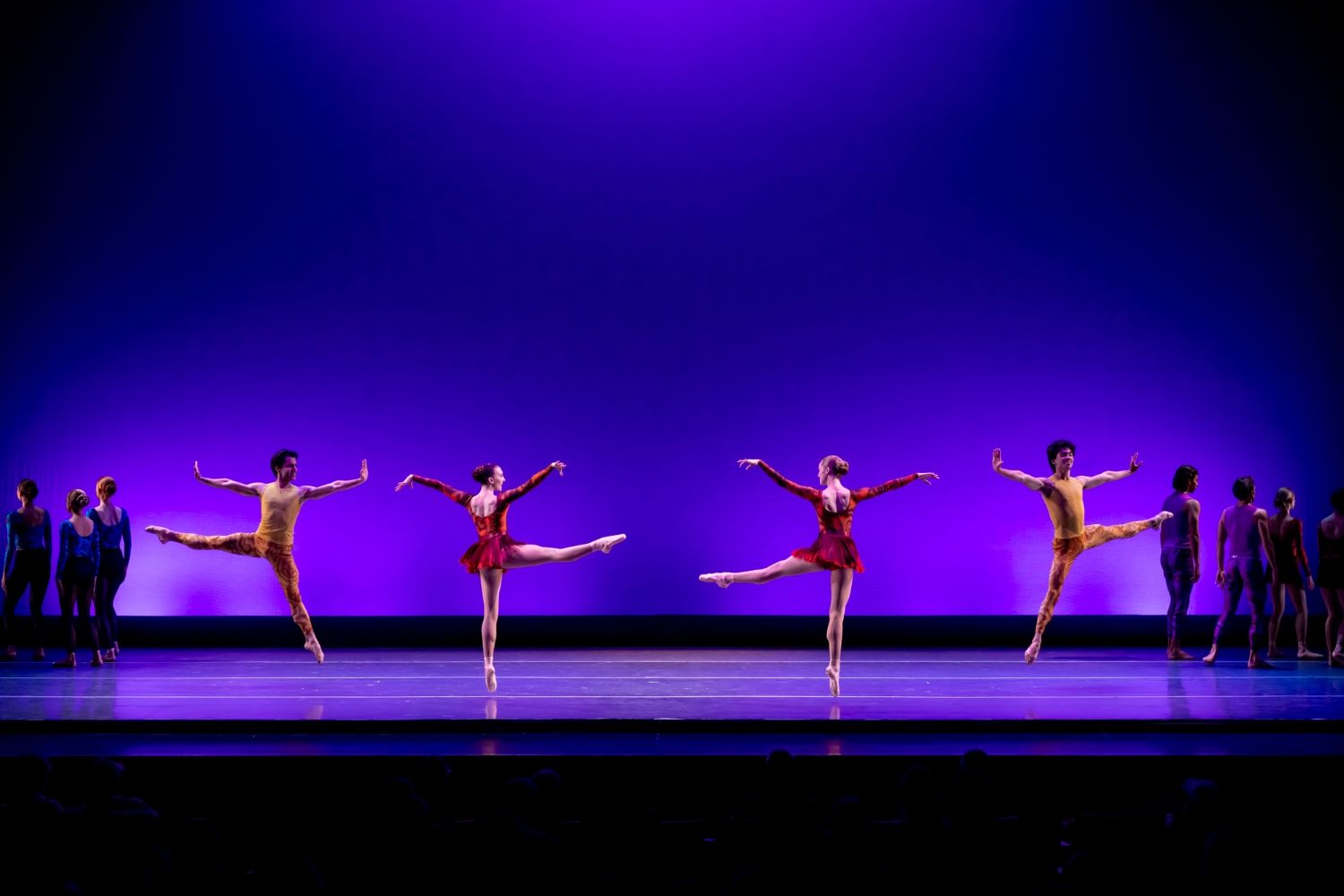
Los Angeles Ballet in “Wavelength” by Melissa Barak – Dancers (L-R) Marcos Ramiez, Abigail Gross, Lilly Leech, Jacob Soltero – Photo by Cheryl Mann Photography.
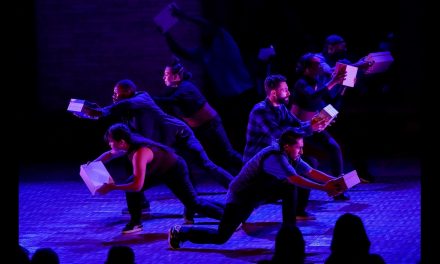
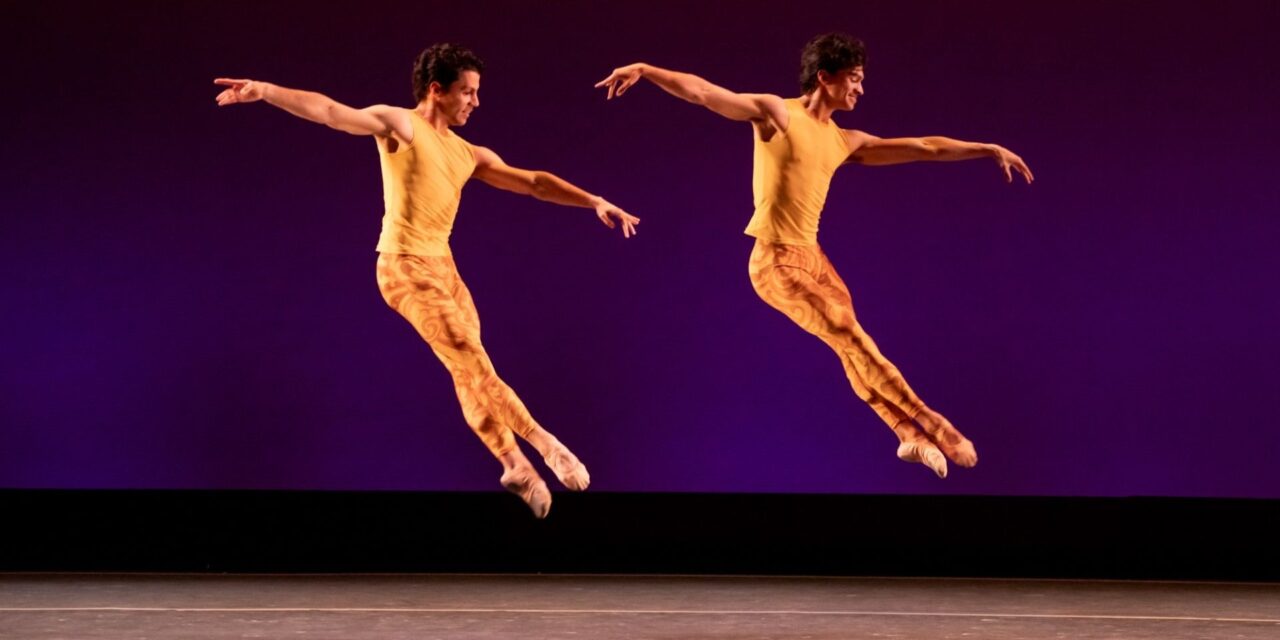
“Wavelength”, choreographed by Barak with music by David Lawrence was an excellent opener for the evening. The music was the driving force here, creating a rhythmic pulse that sustains itself throughout the entire piece. The dancers follow it, ride it, and help define it by sheer exuberance. There was an interesting visual created by the costumes as well, done by Chloée O’Hayon-Crosby and ETRO designer Marco De Vincenzo. Different groups were color-coordinated through blues and purples, reds and yellows. The men’s tights almost a tie-dyed effect with the strong primary colors of the tops made the movement pop against the beautiful lighting by Nathan W. Scheuer. The movement was constant and at times became a saturation of bodies but then, mercifully calmed down to a duet or trio, giving the eyes a break and allowing for the process of intake. I noticed that Barak utilized the three-quarter pointe a great deal which I find interesting. Especially in arabesque promenades I wonder if the difference between full pointe and three-quarter is speed? All was very clean and tight. The dancers were well-rehearsed. I want to comment on the two men in the yellow shirts and tights. I do not know their names as the program did not list individual dancers with the roles they performed. They immediately caught my attention through their mirth and delight in their dancing. They both were joyful and having the time of their lives flying around the stage. Their joie de vivre was infectious and made watching them an entertainment. I laughed to see their playful spirit and referred to them as Frick & Frack. They then reminded me of “Thing One” and “Thing Two” from “The Cat in the Hat” and could play those parts brilliantly. The piece breathed through the patterns the dancers made and came to a satisfying conclusion en masse.
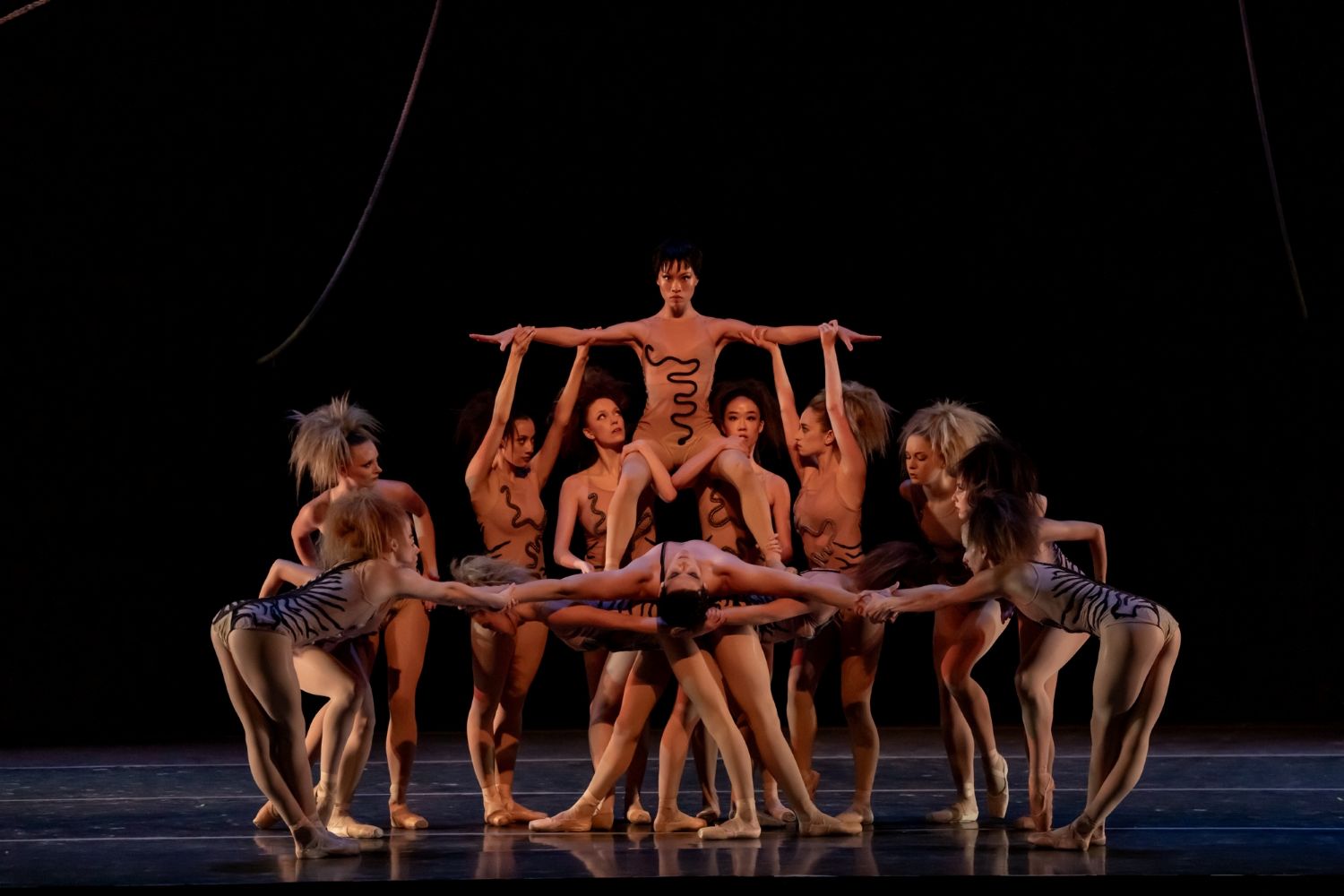
Los Angeles Ballet in “The Cage” by Jerome Robbins – Date Inoue (center top) – Photo by Cheryl Mann Photography.
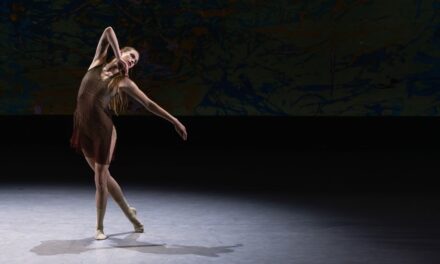
“The Cage” with choreography by Jerome Robbins and music by Igor Stravinsky was a successful romp. It’s message perhaps more in need now than ever before that the females of certain social species of insect and certainly the primate Homo Sapiens can indeed survive and thrive without the males of the species in the alpha positions. Read Edward O. Wilson for more in-depth clarity on the subject as it pertains to Termites, Bees, Wasps, Ants and yes – Primates. This piece is an elegant rendering of that quality in some females of certain species to kill their mates. There is a Mother/Queen of the tribe/hive and the daughter/novice and inheritor of that role which must learn their ways of survival. The movement is angular with cupped hands, and the pointe-work goes a long way to replicate the sharp movements of any particular insect as it fights or feeds. The lighting by Jennifer Tipton was evocative of a darker setting somewhere safe under a log or deep underground. The costumes by Ruth Sobotka were leotards with lined designs on them suggesting an outer coating or carapace. It is interesting that the piece was originally intended to be the Amazon warriors of ancient Greece, but as they actually used weapons it is much more effective to use the idea of social insect. The set from San Francisco Ballet was a huge web suspended from the ceiling and hanging down overall. There were two male intruders who entered the space. They were dealt with in quick fashion. The piece must have been seen as a shock in 1951 when it premiered. To utilize the vocabulary of ballet with pointe shoes in order to illuminate insect killing rituals is to say the least, avant-garde. It still stands today. The cast of women dancers were fantastic in their unfeeling focus and the two males also well-portrayed their masculine assumptions.
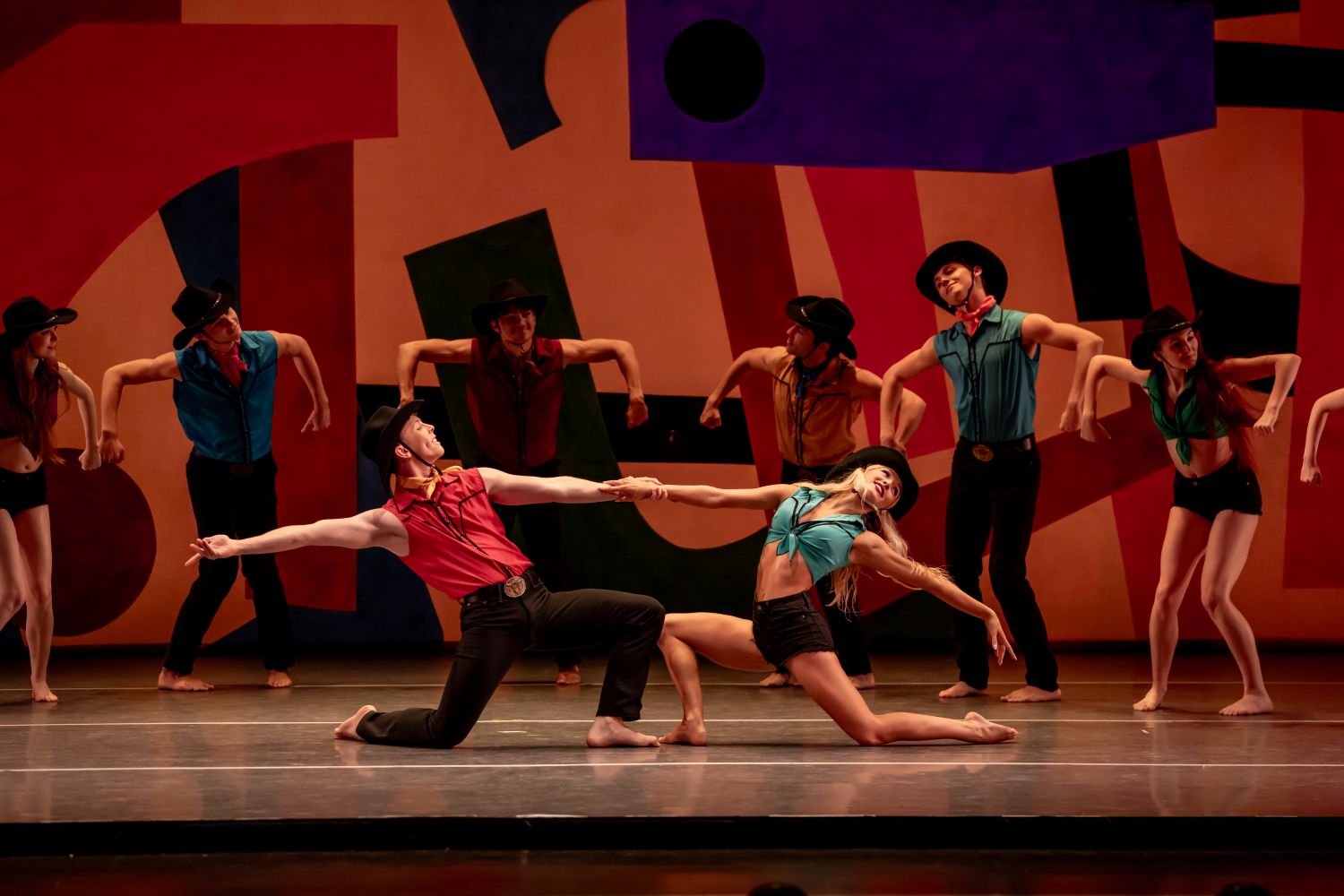
Los Angeles Ballet in “Dilly-Dilly” by Paul Taylor – Dancers in front (L-R) Benjamin Brown and Poppy Coleman – Photo by Cheryl Mann Photography.
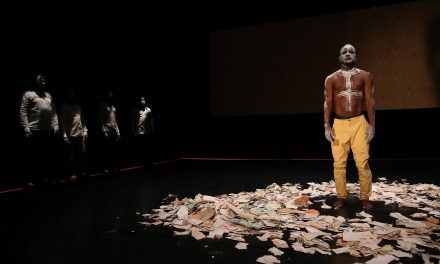
“Dilly-Dilly” is a little bit silly, although a clever little ditty, It hides behind “Pretty”. I was going to leave it at that, but I think, dear reader that you deserve more than a flippant response to a flippant piece. This piece was Choreographed by Paul Taylor and set to folk songs by Burl Ives and set on the company by Sean Mahoney. Let me say at the outset that this work has exactly the same body count as “The Cage”. Two people die in this piece matching the death of the two insects of “The Cage”. Through Taylor’s particular skill at layering the prosaic with the sublime, the audience actually chuckles at this and finds it amusing. And it is – given the context of the narrative. Some of the songs are “Lavender Blue”, “Foggy Foggy Dew”, “Frankie and Johnny”, and “Big Rock Candy Mountain” sung by Burl Ives giving them a folksy down home tone. The costumes and set by Santo Loquasto first conjure a western motif – but on closer inspection, although the cast wears black cowboy hats, I was reminded of “L’il Abner” or to be more precise Hillbilly folk. Lighting design by James F. Ingalls and created by Nathan W. Scheuer for this show was entirely clear and bright and also lent itself to the cartoonish aspect of “L’il Abner”. The women wear black booty shorts with sleeveless midriff tops while the men wear tight black pants with sleeveless colored shirts. The women are bare-legged and all are barefoot. There is a great deal of skipping to be had resulting in an over-all light-hearted humor to the piece. However, under the carefree attitudes was a mother dying and also in “Frankie and Johnny” a jilted girlfriend who hunts down and finds her lover with another woman and kills him. The heightened gestures and exaggerated movements tell us this is farce, yet there is a kernel of reality in the all-too-human behavior. One of Paul’s talents was getting us to see our own behavior onstage and to laugh at it.
This program along with the others mentioned above are perfect for the size and scope of LAB as it now stands. It is not important for it to be the “leading ballet company in Los Angeles” but is enough for it to be striving towards excellence as well as fostering artistic growth for its dancers through challenging repertory. Don’t tell me you are the best – show me.
For more information about the Los Angeles Ballet, please visit their website.
To learn more about The BroadStage, please visit their website.
Written by Brian Fretté for LA Dance Chronicle.
Featured image: Los Angeles Ballet in “Wavelength” by Melissa Barak – Dancers (L-R) Marcos Ramiez and Jacob Soltero – Photo by Cheryl Mann Photography.