I’ve sat in many audition rooms in my life—as a dancer, choreographer, teacher, and now, as a judge. I’ve watched young artists tremble with fear, their brilliance flickering under the weight of dread or injury. As former Director of CTFD (Career Transition for Dancers in Los Angeles), I often marveled at the artist processing through the challenges of a dream they thought they could not live without. I’ve watched in quiet awe as some careers unfold exactly as planned, while others fracture at the very moment they’re poised to soar—only to gather themselves again into something larger, deeper, and more enduring than the original dream.
Jeri Gaile, Director of the Spotlight Awards at The Music Center, tells just such a story.
For more than two decades, Gaile has guided the Music Center’s Spotlight program with an uncommon blend of rigor and compassion. Along with her staff, judges, and supporters, she has helped reshape the experience of young artists as they enter their fields with passion and purpose. But long before she became a cultural architect for thousands of Southern California students, she was a child who wanted nothing more than to dance.
In our conversation, she reflects on early aspirations, devastating loss, and the profound redefinition of what it means to live an artist’s life.
_____________________________________________________________________________________________________________________

Jeri Gaile with students – Photo by Danielle Klebanow.
JD: Jeri, I’m so glad we could finally do this after decades of watching your journey—and your bravery. You’ve influenced thousands of young artists through Spotlight, but I’m curious, how did it all begin?
JG: First, I have to say how much I love this full-circle moment. When I think about the people I’ve been privileged to dance for and with—you, Anita Mann, Vincent Paterson, Billy Goodson—and how many of them are now part of Spotlight as donors or judges… it’s extraordinary.
JD: It’s so wonderful for us also.
JG: I’m so grateful. It really ties into my whole journey. I was a serious ballet dancer from the very beginning; no years of being trees or flowers, I started in strict Cecchetti training.
JD: Really! Then how old were you when you decided to begin?
JG: Four! (She smiles) I can remember being on the playground in kindergarten and seeing little girls walking by in tutus on their way to a Joey Harris and Don Hewitt’s studio. I said to my mother, I want to be in that tutu. And… my mother registered me for classes.
Cecchetti was a fantastic foundation—alignment, head placement, arms, discipline. I fell in love with the art form immediately. And I had the physical facility—long legs, good feet, flexibility—everything that, at that time, was considered ideal for ballet.

Jeri Gail with Spotlight Finalists – Photo by Erin Clendenin.
JD: You started so young, did the hard work and sacrifice ever lose its appeal?
JG: Never. My training was incredibly rich—Cecchetti, Russian technique, Westside Ballet with Yvonne Mounsey from the New York City Ballet, and Rosemary Valaire from The Royal Ballet. When people talk about sacrifice, I didn’t feel that. I didn’t want to go to parties—I wanted to be in the studio.
By the time I went to Balanchine’s School of American Ballet, I had this extraordinary foundation. I have to say, I always felt like a Balanchine dancer—freer, more at home in a leotard than in a tutu. Some of my icons were George Balanchine, Gelsey Kirkland, Patricia McBride, … Suzanne Farrell. That was my world.
JD: So incredibly rich…that world was.
JG: Yes, I wanted it and worked very hard. I was on Ford Foundation scholarships from about age twelve. But before that, I cleaned studios and bathrooms to pay for lessons and pointe shoes. So expensive!
Then at fourteen, I went to a summer program at SAB (School of American Ballet), and at fifteen, I moved to New York alone, on a full-time scholarship.
JD: Well, that was a very brave move. What did your parents think?
JG: It was a different time. My father, a rocket scientist with a Mensa IQ, that I didn’t inherit, didn’t want me leaving traditional school. My mother was incredibly intelligent as well—but I grew up immersed in music, opera, and ballet. I practically lived at The Music Center… and the Shrine Auditorium. So going to New York was my next step and something I wanted and needed to do.
JD: Another full circle. So, how was SAB?
JG: Well…SAB was both extraordinary and difficult. The training was incredible, but it was very insular. I wasn’t part of that inner circle who had started training there.
As an example, before I left New York, I was told by one of the heads of the school that Mr. B liked me and would probably take me into the company—but that the year ahead would be very difficult because I was not favored at the school. At fifteen, that was devastating. It was like being given the gift you always thought you wanted and then …but don’t be so happy because it won’t be easy.

Jeri Gaile with students – Photo by John McCoy.
JD: Chilling, like a threat—emotional whiplash.
JG: So true, so that summer I came back to LA, met Irina Kosmovska and John Clifford, he was associated with her school. John was another person I idolized…along with Gelsey Kirkland. I knew all these dancers now…and John said, why don’t you stay. Mr. Balanchine wanted to start Los Angeles Ballet, and John had been given that mantel … with all the Balanchine ballets, anything he wanted, along with the dancers.
Even though I had offers from Ballet West —and Stuttgart. I chose to stay in Los Angeles; and it was an extraordinary year. Gelsey Kirkland came out to teach me Tarantella, Sara Leland was here. All these amazing dancers that I had idolized were here teaching me ballets… And it was wonderful! John created Firebird for me. Again, a wonderful experience. I felt so supported by John and the company. Mr. B was also coming out to watch this gala that we had with Firebird. John said, Mr. B was definitely going to be able to see you…

Jeri Gaile coaching student – Photo by John McCoy.
JD: Uh no! What …?
JG: I tore my ACL…but what we did not know then was that the Cruciate Ligament that ties the lower part of the leg to the knee was torn. At that time, sports medicine was not as sophisticated as it is today. The doctors were only used to working with the Rams and Lakers. But didn’t quite know how to treat ballet dancers.
One of the doctors showed me a massive device I’d have to wear and said, “You’ll be able to dance with this. We are going to put this on your knee…and you’ll be able to dance.” It looked like a microwave!!! I said, “I can’t dance with a microwave on my leg. That can’t hide under a tutu ”
Through all that, John was kind enough to take me back to New York when LAB went to perform at Lincoln Center. But I wasn’t healed, I just couldn’t dance.
I was just on the brink of everything I had dreamed of—and it was gone. The depression was profound. I remember thinking, If I wasn’t “Jeri the ballerina”, who was I? It was really really hard…here I was 17, going on 18…just at the start of the trajectory that I had planned for my entire life, and it was basically… Over. I tried getting back, but— it was just not going to happen.
I went through a very difficult time. I tried to continue. I went to community college and floundered. I couldn’t even watch ballet. It was just too painful.
It was at the time of disco. My mother encouraged me to audition for the Disco movie, “Thank God It’s Friday.” I did—reluctantly— and I got hired. I somehow managed to work around my injury.

Jeri Gaile with students – Photo by Will Yang.
JD: I remember, it was my movie—you clearly stood out. You actually sparkled.
JG: Ah, that means so much to me.
JD: True! Then what happened?
JG: Then from there, I joined the Screen Actors Guild, studied acting, and booked seven national commercials. I was on a roll. I was eventually cast on Dallas as a regular…I played a Tart…but then there was typecasting, and once again, I felt stuck. I kept looking.
Then I found Career Transition for Dancers (CTFD). The wonderful Paulette Fried was my counselor at that time. And that program changed my life.
At the time Paulette and I were working together, I was hired to produce the Dorothy B. Chandler Children’s Festival… and then I became a judge for Spotlight. Barbara Haig, Head of Special Projects for the Music Center, mentored me. When she left Spotlight, I was asked to interview to run the program.
I didn’t even know how to use a copy machine—but (smiles) I figured it out.
Over the years, we instituted some important changes. We eliminated entry fees. We added acting as a category. We removed the public ranking at finals. Instead of embarrassing kids in front of 3,000 people, we made the finale a celebration. Auditions became private and supportive.
And a very important change; we created much more detailed letters for each student, with real feedback, just like mini master classes. That is the meat and potatoes of the program. And over 57,000 kids have come through Spotlight.
Our focus is on helping students deal with nerves, presentation skills, comparison, competition with friends. I tell them: these are your colleagues. Not everything is meant for you. Support each other but don’t dim your light.

Jeri Gaile – Photo by Erin Clendenin.
JD: Such important advice Jeri. Now, I’m curious, in the last few years there’s been some difficult times; how has that affected you and Spotlight?
JG: Yes, some major hardships—COVID and changing how we operated. And… almost losing my home in the fires. But I’ve now built tools: therapy, meditation, gratitude…. I always ask, What can I learn from this? And I rely on my team.
JD: Life changing. Looking back would you have done anything different?
JG: Of course—I wish I hadn’t injured my knee. But now I believe I’m exactly where I’m meant to be. I feel deeply grateful.
JD: And passing this on, what would you say to young artists just beginning their career?
JG: I’d say, be kind to others and to yourself. Forgive yourself. We are all imperfect. Wake up each day asking what you can give. Live in gratitude.
If I retire and disappear, I’ll know I did the very best I could to help as many people as possible. That’s enough.
JD: Jeri, thank you so much for your generosity, your wisdom, and for the lives you’ve inspired and effected.
In a world that often measures success by arrival, you remind us that the truest artistry lies in transformation. Your life did not follow the straight, gleaming path of the original dream ascent, but something far more enduring where one dream gave way to thousands more. Sitting next to you, I am struck not by what was lost, but by what has been built in its wake: a legacy of care, of clarity, of young artists stepping forward a little braver because you stood beside them. And in the end, perhaps this is the greater stage.
For more information about the Spotlight Awards at The Music Center, please visit their website.
Written by Joanne DiVito for LA Dance Chronicle.
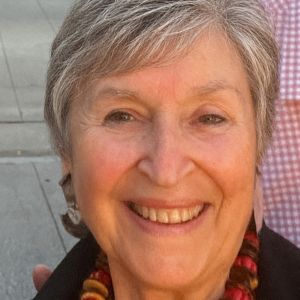
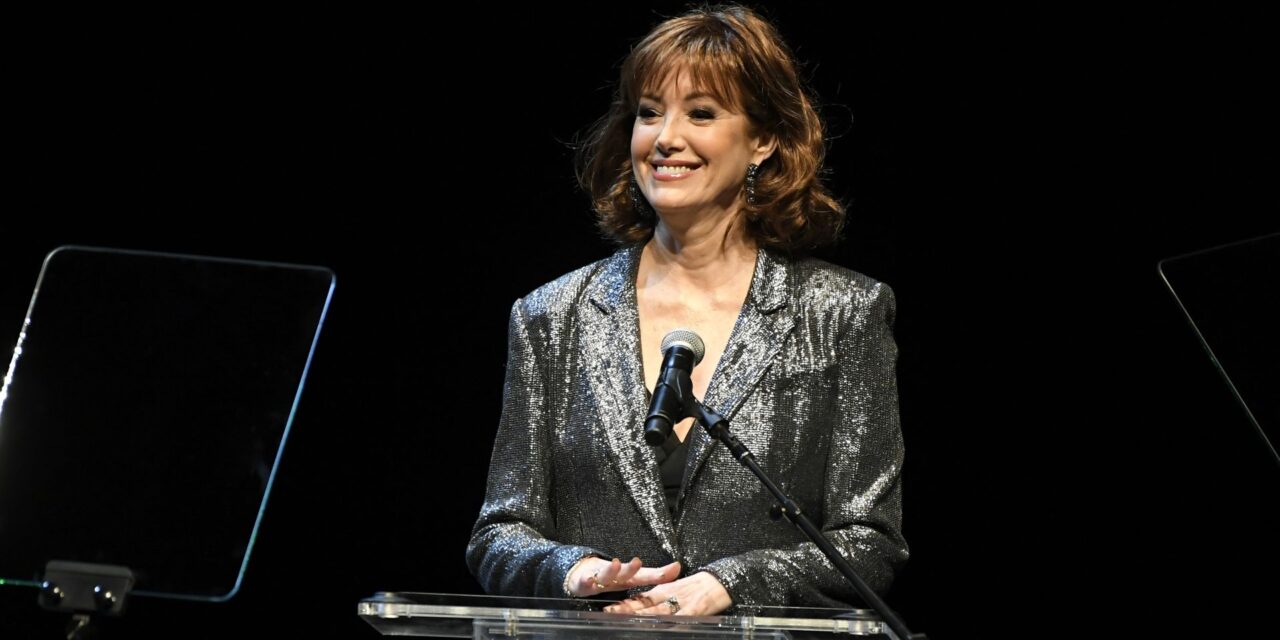
Featured image: Jeri Gaile speaking at the Music Center Spotlight Awards – Jeri Gaile speaking at the Music Center Spotlight Awards – Photo by John McCoy.
Please follow us on Facebook, Instagram, BlueSky, and LinkedIn.