On the afternoon of Sunday, February 2026, I attended “Healing Blue” at the Lineage Performing Arts Center. This show, in its 20th year, partners with the Living Beauty Cancer Foundation to raise money to support wellness programs for women with cancer. Artistic Director Hilary Thomas’ works were each created to share and tell the story of a patient. The afternoon was incredibly moving, featuring strong partnerwork and interconnected movements. The dancing was overall strong, but the power in this afternoon was the real life impact through bringing stories to life and the incredible amount of money raised for the Living Beauties.

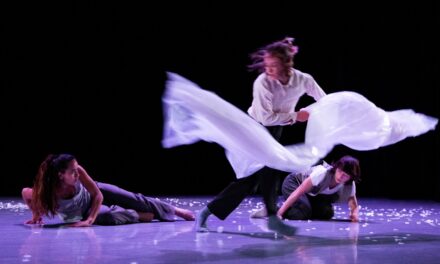
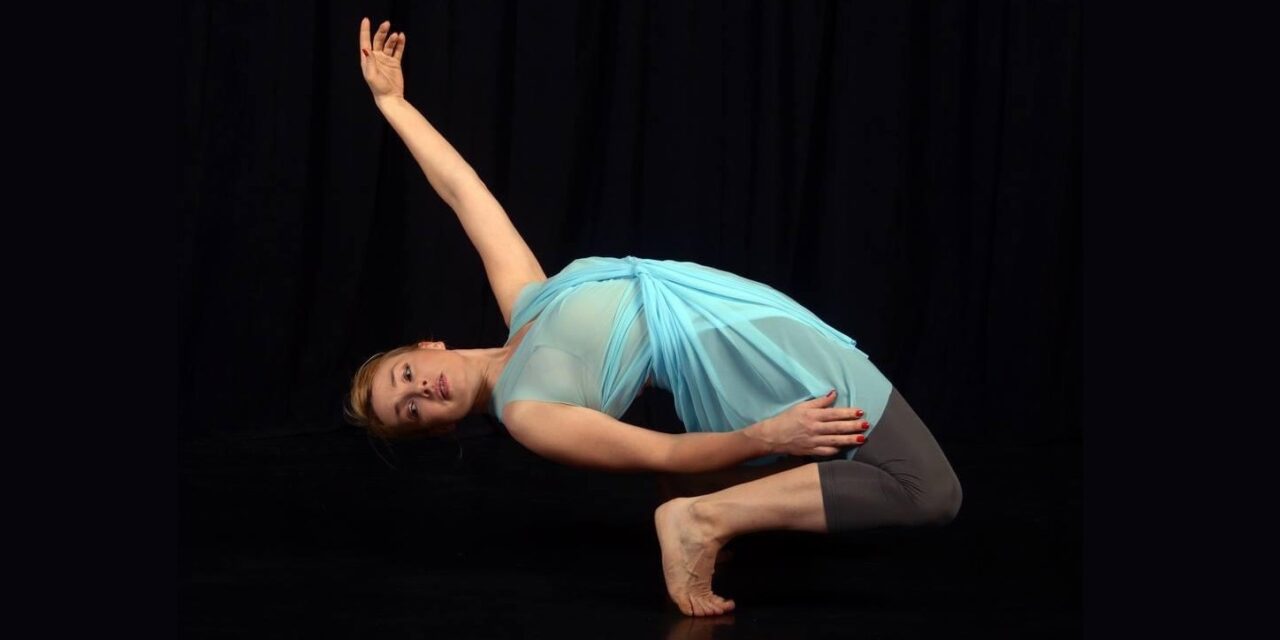
Lineage Dance – Meghann Zenor and Caterina Mercante in “Healing Blue” – Photo by Robert Kuntsmann.
We were welcomed to the performance by board member Austin Roy, who shared a touching story about his own journey with dance and Lineage. He was a science student of Thomas’ and came to see “Healing Blue” in 2009 to report for his school paper. He had never danced and was brought to tears by the performance and has worked with the company since then. This was one of many beautiful stories that graced the stage, and the dancing hadn’t even started!
The first piece, “Opening,” featured spoken word and gentle piano sounds. The dancers knelt on the floor with a single light coming from the corner. As each new voice joined, one of the dancers would start to move with ethereal gestures. The dancers didn’t see each other or perform to the audience; they seemed to be in their own worlds as they slowly moved. It felt like a representation of the dancers each finding and making sense of their own story.

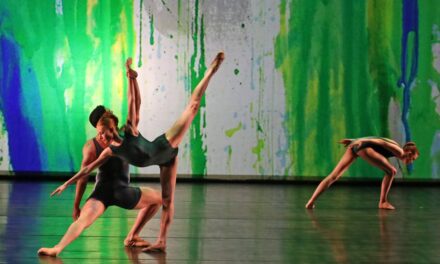
Lineage Dance – Brittany Daniels, Teya Wolvington, Ericalynn Priolo in “Healing Blue” – Photo by Robert Kuntsmann.
Mixed in throughout the afternoon were photos and videos, often interviews with survivors or those impacted by cancer. Thomas’ original inspiration for this show came from a film called “Heart of the Sea” about surfing champion Rell Sunn and her fight with cancer, and an excerpt of this film was shared. Sunn spoke about how when she was in a coma, she felt like she was in the water, waiting for a wave that never came, and this story led into the dance piece in her honor. Dressed in blue and utilizing large swaths of fabric, the three dancers swayed and shifted in wave-like patterns to music by Philip Glass. They stayed connected throughout and the fabric was used effectively to anchor the dancers to each other, and at times wrapping around the dancers. The performers had beautiful, fluid upper body movements. At times, there could be more clarity to the footwork as they made their pathways around the stage.

Lineage Dance – Jana Souza in “Healing Blue” – Photo by Robert Kuntsmann.
Next up, after a short video about the founding of Living Beauty Cancer Foundation, was “Portrait of a Living Beauty,” a duet done in front of a slideshow of portraits of women in their cancer journeys. The photographs by Cynthia Perez were beautiful and often featured women proudly posing with mastectomy scars. The duet featured soft undulating movements that matched closely with the instrumental music. The photos often displayed moments of joy, and it would have been nice to see the dancers move from more neutral faces to showing more joyful expressions.
“Monique Doyle Spencer” started with a video of Spencer speaking humorously about the stupid things people say to you when you have cancer. The matching piece, set to jazzy music by Caterina Mercante, with Spencer’s words mixed in, seemed to lean into the absurdity of things people say by having more random arrangements of dancers coming in and out. Spencer began to speak about the circles of people in your life that become clear when you have cancer, and the choreography shifted into showing these circles. It was cool to watch how the random formations took shape into these clear circles, bringing us along with Spencer’s journey to make sense of the circles of people in her life.

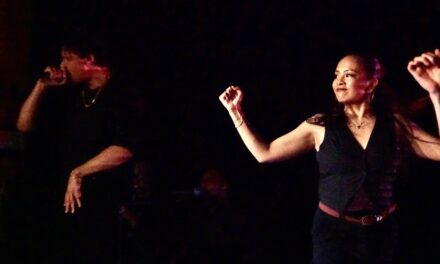
Lineage Dance – Teya Wolvington, Nola Gibson in “Healing Blue” – Photo by Robert Kuntsmann.
“Befriending Mortality” honored the recently departed poet Andrea Gibson with a duet performed to a live reading of one of her poems. The duet featured Thomas’ strong partnering and her knack for creating statuesque moments, and I loved the abstractness of the relationship between the dancers. When they entered, one carrying the other, it felt like perhaps the dancer being carried represented her tumor. At other moments they seemed to be systems of support for each other. The dancers executed connected movements, where they were uniquely connected at the shoulders or by the head as they rolled over and under each other, and these steps would often repeat a few times for a mesmerizing effect.
The last piece before the intermission, “Heather Williams” was one of a few pieces set to lyrical music that I found a bit less effective. Thomas’ choreography shone most strongly with more nuanced instrumental music, however given the context of the show, I’d be curious to hear if the musical choices had some connection to the patients whose stories were being told. After the intermission, “Tina Moya” was another piece that felt overshadowed by the lyrical music. The pieces still featured strong dancing and excellent partnerwork, clearly a signature of Thomas’.
“Elisa Perry” was a piece to drum music that started with Elisa talking jokingly about her “Top Ten” of breast cancer. In this piece, I loved the way the dancers often moved slowly as they did impressive lifts contrasting the faster drum beat.
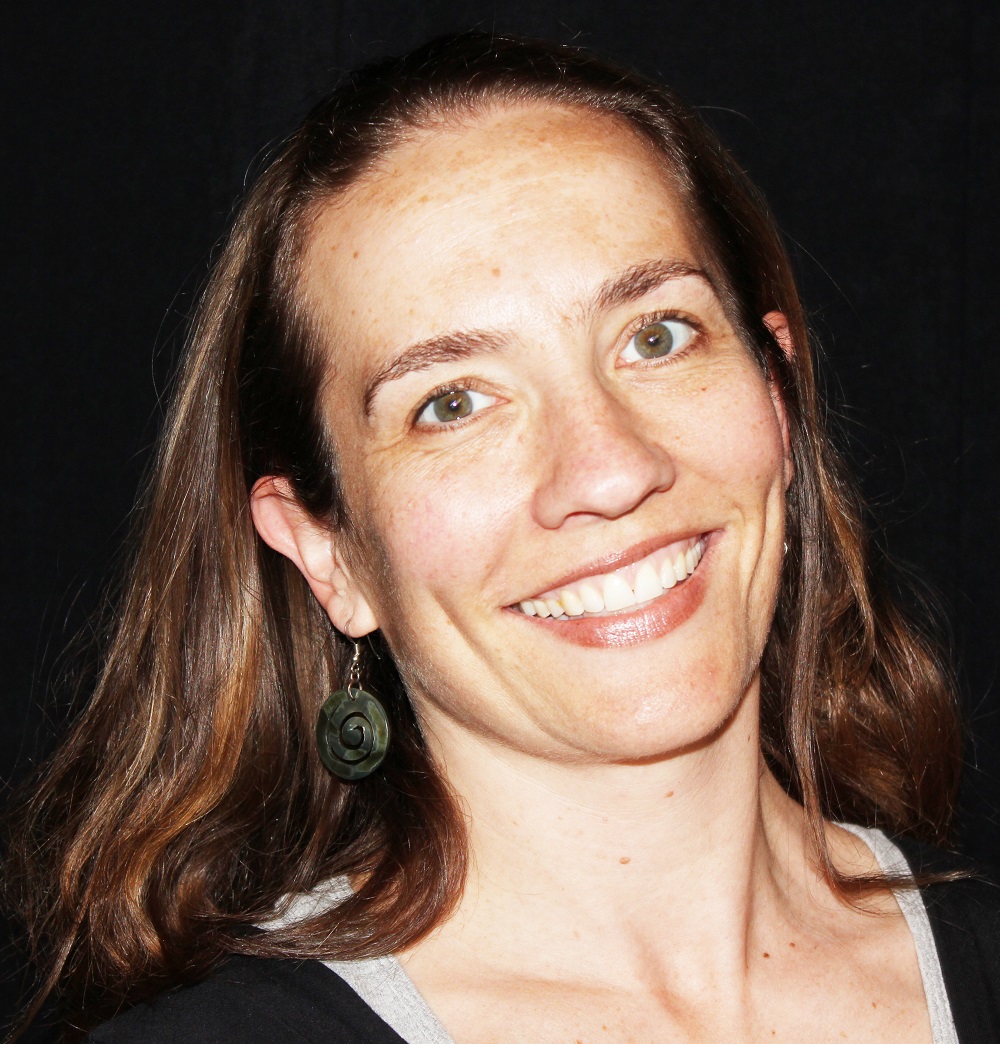
Hilary Thomas – Photo courtesy of the artist.
One of the most emotional moments of the show was hearing from survivor Annie Wells about her late sister Betsy. Annie and Betsy were both diagnosed with cancer at the same time, and unfortunately Betsy passed. Hearing from Annie about how beautifully Thomas captured her sister’s essence and their journey despite never meeting Betsy spoke to the true impact of this overall project. “She brought my sister back.”
The powerful duet was performed by two dancers (who, to my understanding, were the original cast from 2008) and utilized two chairs. Paul Siemens, Jana Souza, and Mike Testin performed a heartfelt rendition of Leonard Cohen’s “Hallelujah.” The dancers started side by side in the chairs, flinging and tossing their bodies in overlapping patterns. As the dance progressed, they seemed to reprise the starting movements in new arrangements: with the chairs laid on the floor, set side by side but facing different directions, and finally with one dancer in her chair and the other facing away from her on the floor. A subtle lighting choice near the end seemed to show the separation between the sisters, as one was lit by a warmer shade of white and the other was in a cooler pool of light.
Closing the show was “Onward,” which initially seemed to pick up from where the opening piece ended. Set to a similar mix of piano and voices, the dancers now moved more fully and the stage was more brightly lit. They began to come together as the music picked up and interacted as a full group with ripples and connected shapes. It was a lovely end to the powerful performance.
The dancers were not individually credited for each piece, but the strong cast was made up of Brittany Daniels, Nola Gibson, Catarina Mercante, Ericalynn Priolo, Hilary Thomas, Teya Wolvington, and Meghann Zenor. They worked together beautifully, particularly excelling in impressive displays of partnerwork and lifting. Thomas put together a beautiful performance that was celebratory, emotional, and thoughtful, and I especially commend her for the way she has used her art to have such a tangible impact by supporting the Living Beauty Cancer Foundation. I would encourage anyone to check out this show as it hopefully continues in years to come – and bring some tissues.
To learn more about the Living Beauty Cancer Foundation, please visit their website.
For more information about Lineage Performing Arts Center, please visit their website.
Written by Rachel Turner for LA Dance Chronicle.
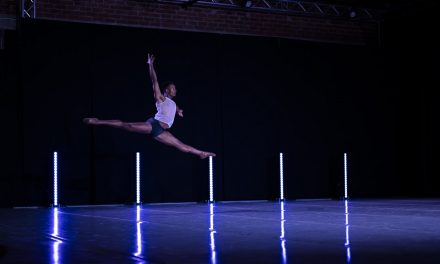
Featured image: Lineage Dance Company – Molly Mattei in “Healing Blue” – Photo by Sogomian.