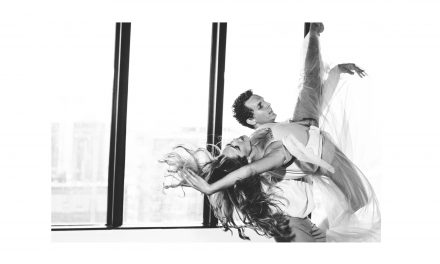
First of all, I want to say congratulations and kudos to Tiler Peck for her curation of a brilliant and intimate evening of Classical Ballet at the Ahmanson Theatre. Anyone familiar with the Ahmanson Theatre knows how difficult it is to present anything along the lines of “intimate” in that space. It is a large proscenium theater seating anywhere from 1,200 to 2,109 people. It has an orchestra section, front mezzanine, rear mezzanine, front balcony, and rear balcony as well as side boxes all the up to the back of the house. And yet, programming for the Jerome Robbins Ballet Festival called for a single pianist in three of the four pieces being performed and a few with only two dancers performing the piece. Yes! Intimate and simple, elegant and enough. This showed a sophisticated restraint in putting forth clear classical work performed well with no pyrotechnics or other bells and whistles to distract from the work – well done.
Ballet Festival: Jerome Robbins – Photo by Steven Pisano.
Friday evening, October 23, 2026 the program began with “Four Bagatelles“, danced by Emma Von Enck and David Gabriel of New York City Ballet. The curtain opened to a blue wash on the cyclorama and the dancers entered in pristine peasant garb with green overtones. Costumes by Florence Klotz were detailed and gorgeous against the blue, compliments of lighting designer Ronald Bates. Music was intricate and complex from Ludwig von Beethoven played beautifully by Elaine Chelton, that single pianist I mentioned above.
The choreography mixed aspects of peasant dance with classical ballet in a seamless whole requiring considerable skill and control not just for the ballet technique but also for the grounded folk steps. As I watched the piece unfold, I appreciated the clean lines and absolute control both dancers exhibited in their bodies and performance. I then became aware of just how outrageously difficult the choreography was. Although both dancers tossed off complex phrases with apparently little effort, I knew damn good and well that many of those phrases would have lesser dancers tied into knots. It seemed to me at one point that Mr. Robbins may not have liked the dancers he was working with, or they angered him at some point, and he simply made the choreography deviously difficult to perform in order to teach them a lesson. I now understood the famous story of the performers remaining silent as he harangued them over some rehearsal as he stepped back from the stage and fell into the pit.
Ballet Festival: Jerome Robbins – Photo by Steven Pisano.
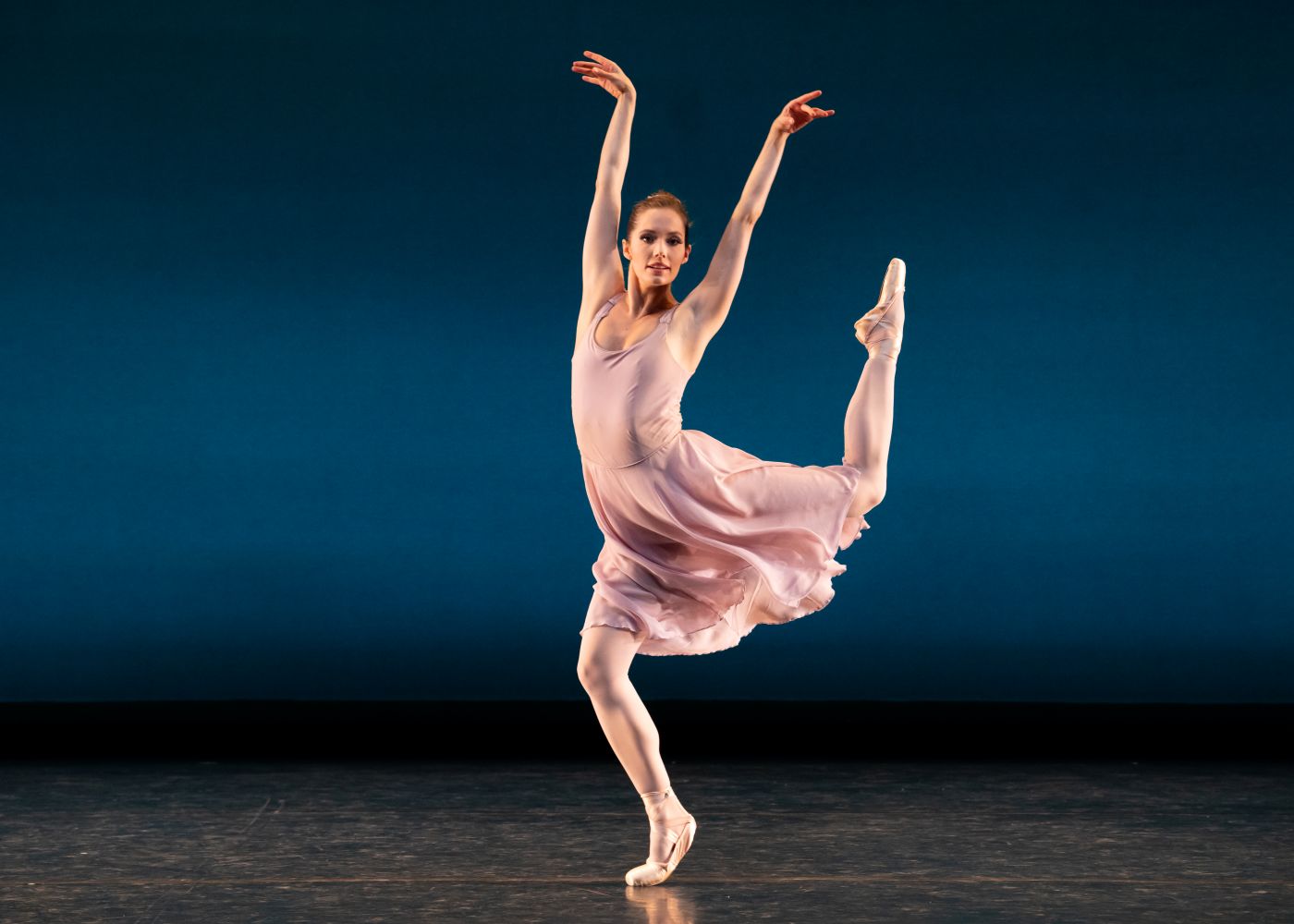
The piece follows the traditional 19th century classical pas de deux format, adagio, male variation, female variation, and coda. The adagio duet section had excellent partnering with a conversant ease palpable between Von Enck and Gabriel. They were natural and relaxed in the lifts and pirouettes. There was a difficult move where she does a fouette to arabesque and he catches her with his back to her and proceeds to promenade her on pointe without being able to see her shoulders or point shoe. This is a blind promenade and very hard to accomplish easily. They did. Gabriel’s variation is a study in exactitude. The moves and changes of direction after a jeté are enough to blow out any Achilles tendon, yet he breezed through it with élan. His control of every aspect of physical exertion was formidable, and although one goes to the ballet expecting this level of expertise one rarely sees it to this degree. He was absolutely lovely in his manner and form with no pretense of bravura or ego. He was simply dancing for the joy of it with Von Enck.
Ballet Festival: Jerome Robbins – Photo by Steven Pisano.
And Von Enck deserves a medal for her variation! It was an essay in precision, hard enough in flats but ridiculously difficult in pointe shoes. For many of the choreographic phrases she had to land in demi plié fifth and hold in the plié. Thankfully her suction cup feet accomplished this over and over with seemingly very little effort on her part. Kudos for her acting ability on that score. Then I saw her launch into a gargouillade landing in fifth and then into entrechat quatre (a classic vertical jump in classical ballet where the dancer rapidly crosses and uncrosses their legs in the air) landing in fifth plié and hold. What?! Wow! OK – give her the medal now and send her home. Brava! They then both wrapped up the coda with whip-like turns, pirouettes on a dime, and generous partnering with expressive épaulement. It was a joy to see them smile and enjoy each other onstage, their generosity a gift to the audience.
Ballet Festival: Jerome Robbins – Photo by Steven Pisano.
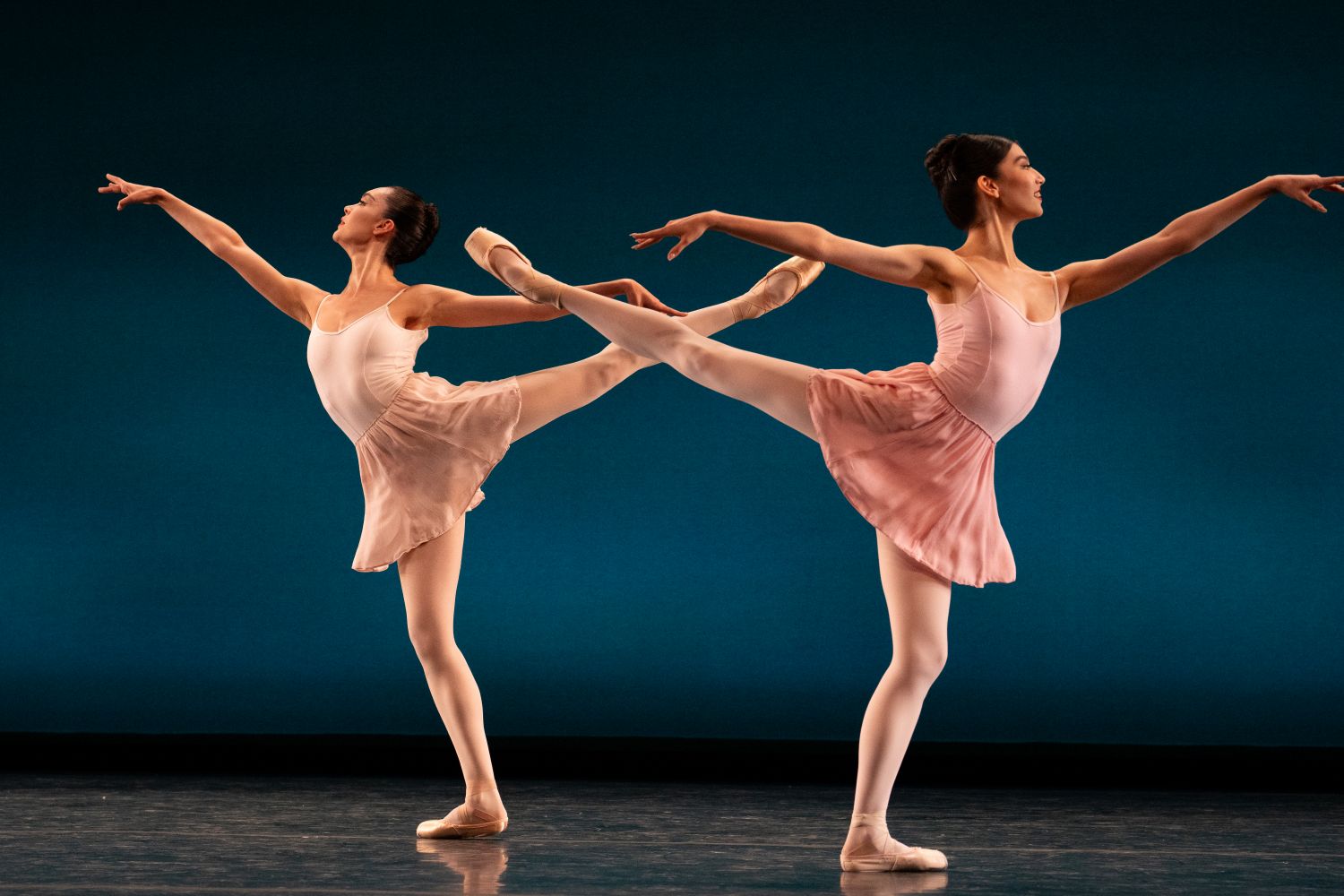
Next on the program was “Concertino” danced by Dominika Afanasenkov, Aarón Sanz, and Taylor Stanley of New York City Ballet. The curtain went up on a black backdrop making the three performers pop against the dark setting as they were costumed in very light grey tights and tank top leotards. The side lighting helped to make this effect, lighting again by Ronald Bates. Music was by Igor Stravinsky and every detail of it was plumbed during this piece. Music was performed by Danny Mui, Jeffrey Ho, Veronika Manchur, Adam Millstein, and Val Serrano.
This was an abstract piece which reminded me of a Geometry theorem or a theory proposed by Euclid or Pythagoras written on a blackboard and made physical by three physicists hammering out the inevitable conclusions given the parameters of the forces involved. The choreography was contemporary with a great deal of parallel work alternating with turn-out. This was not simple nor easy. Afanasenkov was on pointe throughout, at one time rolling over her points to do a grand plié in first, helped by the two electrons around her neutron. The choreography was so tightly knit that it did resemble the inner workings of the atom. Although they were moving slower than those particles to be sure. It was also an exercise in musicality. Every move and nuance in relation to the music, not leading it, not following but expressing it at the same time. Good on you Mr. Robbins.
Ballet Festival: Jerome Robbins – Photo by Steven Pisano.
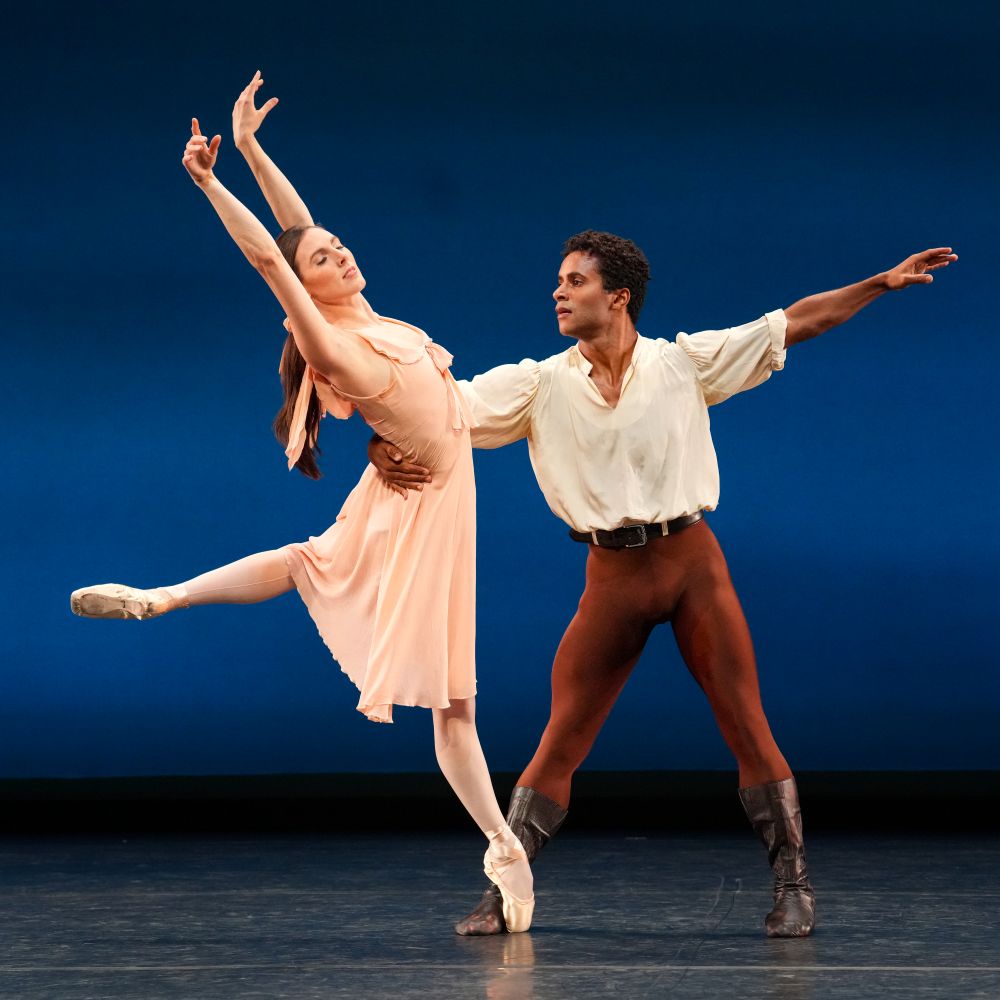
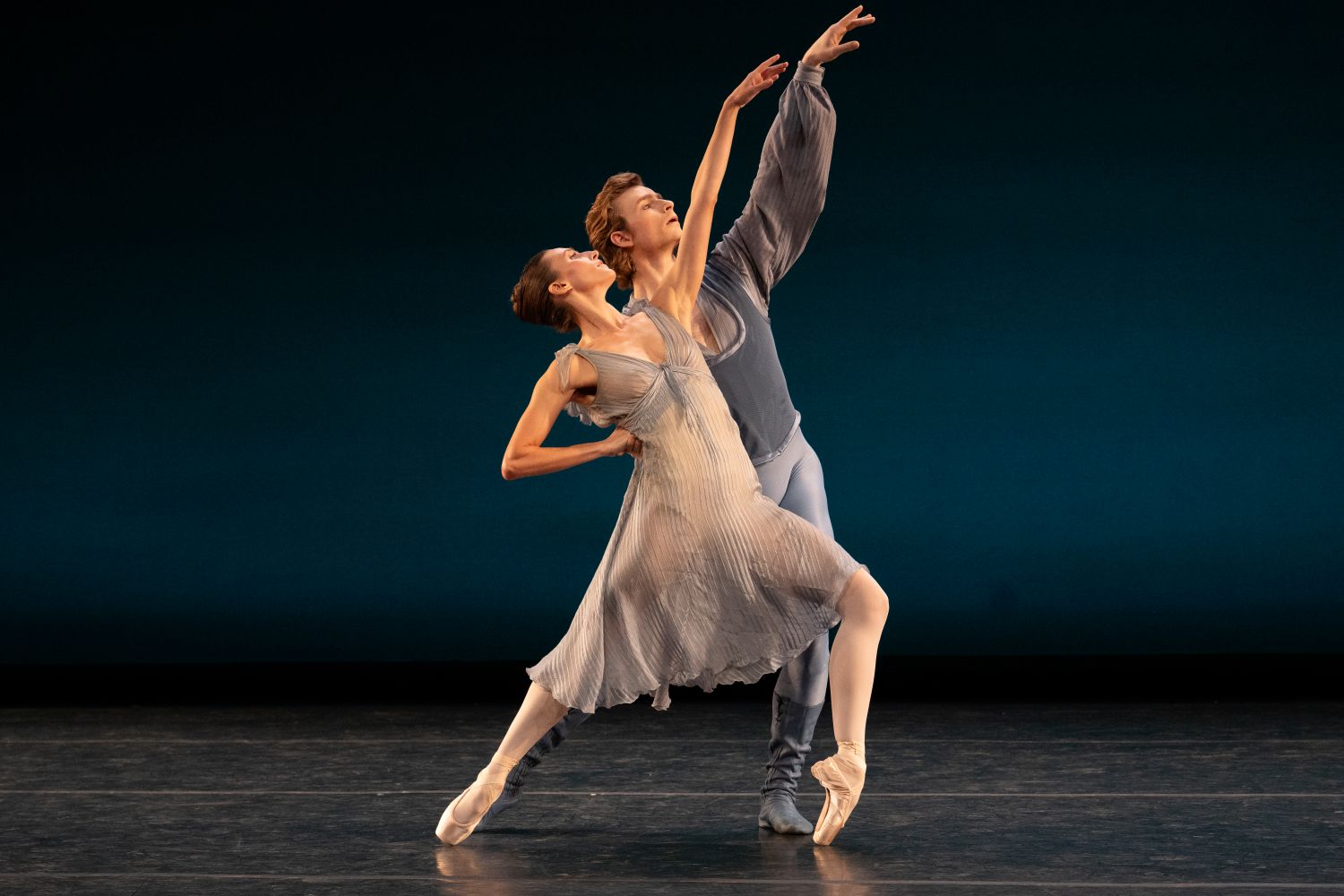
“Other Dances” followed, danced by Tiler Peck and Roman Mejia, both of New York City Ballet. The chemistry between the two of them was lovely. Both very strong and capable but what came out of the performance was their relaxed joy in each other. He was extremely careful partnering her and very attentive when lowering her to pointe. Again, the difficult choreography was delivered with apparently little effort and with generous grace. Surprisingly, a thing in short supply these days. Costumes by Santo Loquasto were gorgeous. He was in a grey bodice and matching grey ballet boots while her dress flowed and accentuated every change of direction she took. There were character steps woven into the ballet phrases, many from the Mazurka. These were given the appropriate weight differing from the classical steps. Music was Mazurkas by Frederic Chopin and played wonderfully by Elaine Chelton, the solitary pianist this time onstage who became the third performer in the intimate setting. Lighting by Jennifer Tipton was evocative of a Viennese salon and served to accentuate the easy camaraderie displayed by Peck and Mejia.
Mejia’s variation was an elegant show of complete control down to the smallest movement of clicking his heels together in relevé. His lightening spot was unerring even as he spoofed losing it during a final diagonal downstage left. It was lighthearted and fun. Peck’s variation was exacting and precise without ever becoming rigid. She flowed through the choreography and utilized great subtlety with her phrasing. To get to the point where you can play with the timing of Chopin is a luxury well earned. Both of their dancing was unhurried with excellent épaulement and port-de-bras. Their ease with each other set the tone for the intimacy which transpired in their dancing. So clear was it that their breath was musical.
Ballet Festival: Jerome Robbins – Photo by Steven Pisano.
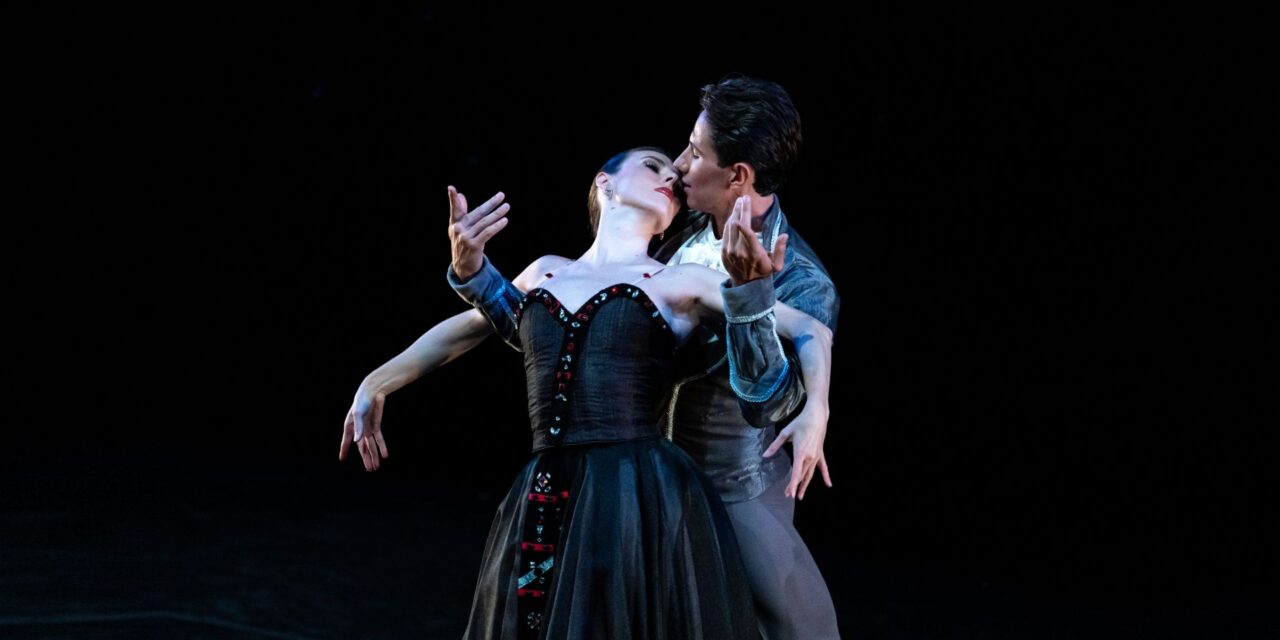
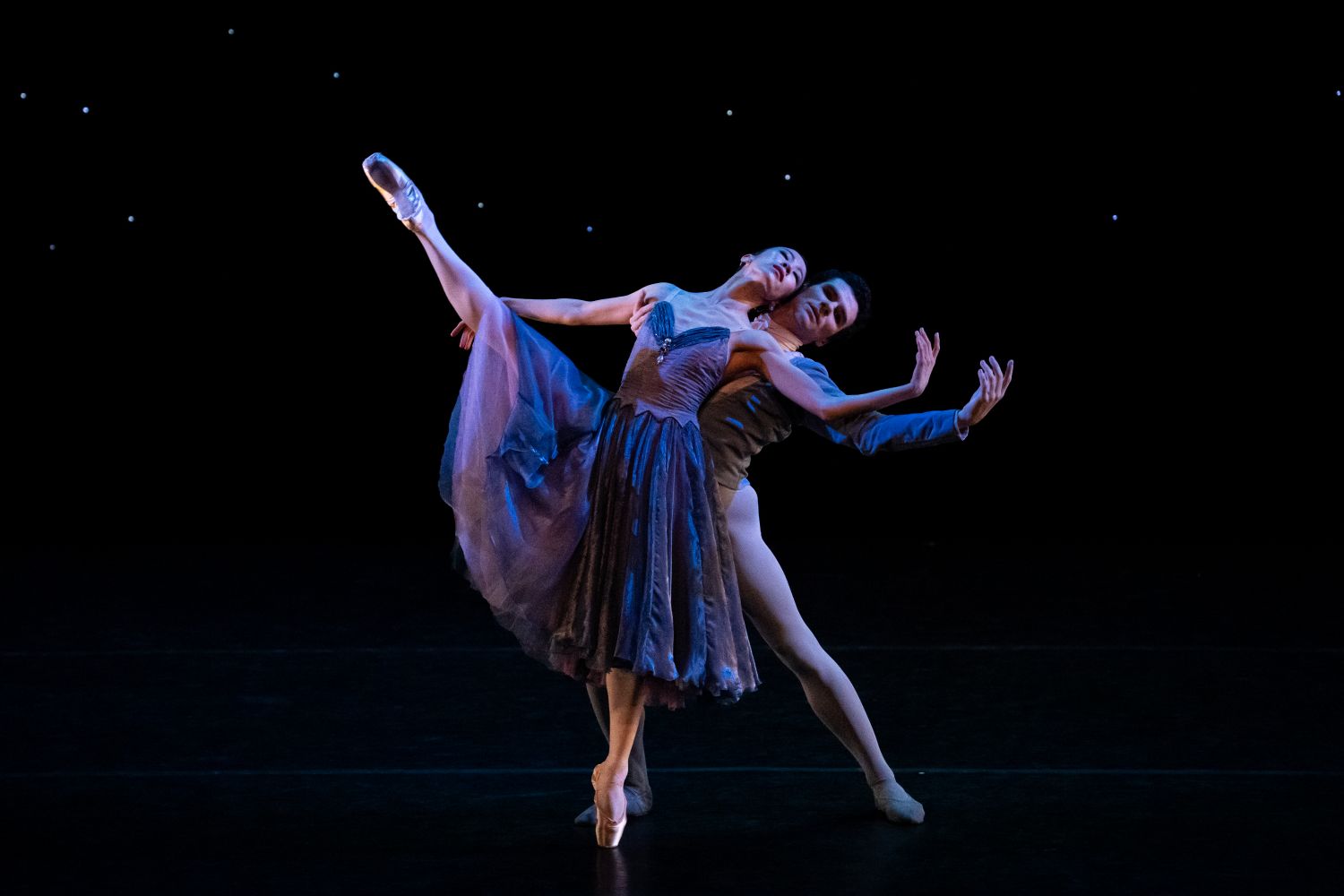
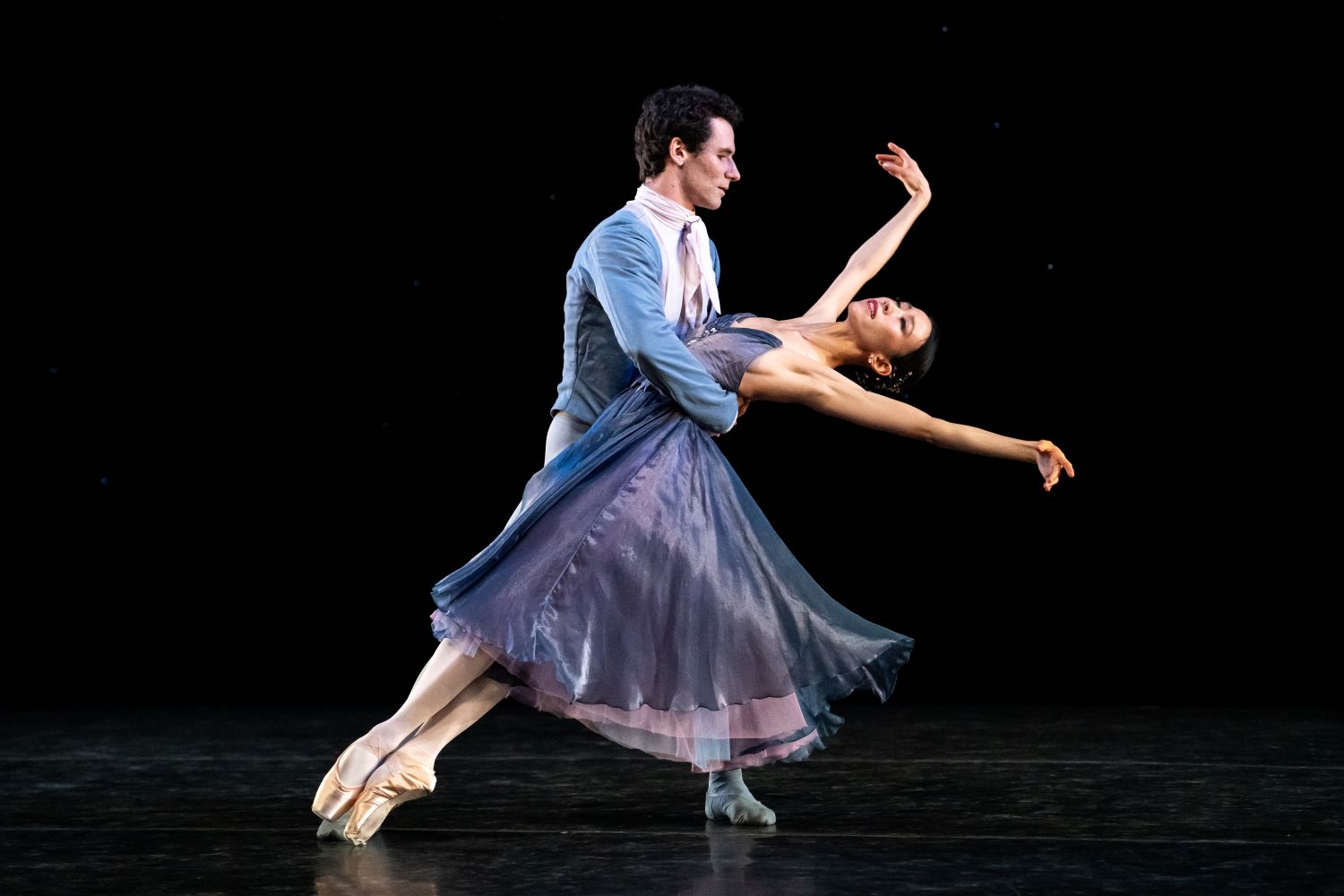
“In The Night” closed the program and was danced by Lauren Lovette, Joseph Gordon, Sasha de Sola, Aaron Robison, Mira Nadon, and Chun Wai Chan. Set to Nocturnes by Frederic Chopin and again played by Elaine Chelton, this piece described three different couples in various dynamic aspects of their relationships placed against a star strewn backdrop in the evening. The first couple of Lovette and Gordon was sensitive and attentive, youthful in their passion for each other. They showed the exuberance of new love. The second couple of De Sola and Robison was more serious and composed. They were settled with each other, and it read in their movement and comfortable expectation of the other. The third couple of Nadon and Wai Chan was passionate and exuded turbulent aggressive love. Their relationship was best embodied by the adage “I can’t live with you and I can’t live without you”. Even at one point both of them leaving the stage in despair only to return a moment later with regret in their movement. The Costumes for this ballet were by Anthony Dowell and moved incredibly well with the bodies. The women all had long dresses with tight bodices that flowed and caught the air when lifted but never encumbered the point work. The men wore tights with a vest and long sleeves over all giving the impression of a well-dressed evening out. The first couple was sweeping in their coverage of the stage, while the second couple was more formal. The third was the drama couple coming together and pushing away at odds with each other but inevitably drawn together again. This piece, through the choreography, was an acting exercise which all of the performers met head on. Their bodies and faces taking on their individual characters enabling us to see who they were to each other and the difference in time spent together. This was an excellent and provocative ballet to end the program and served to show just how expansive Robbins’ work could be. The women were showcased here and exalted, beautifully partnered, even when fighting as in the third couples’ antics.
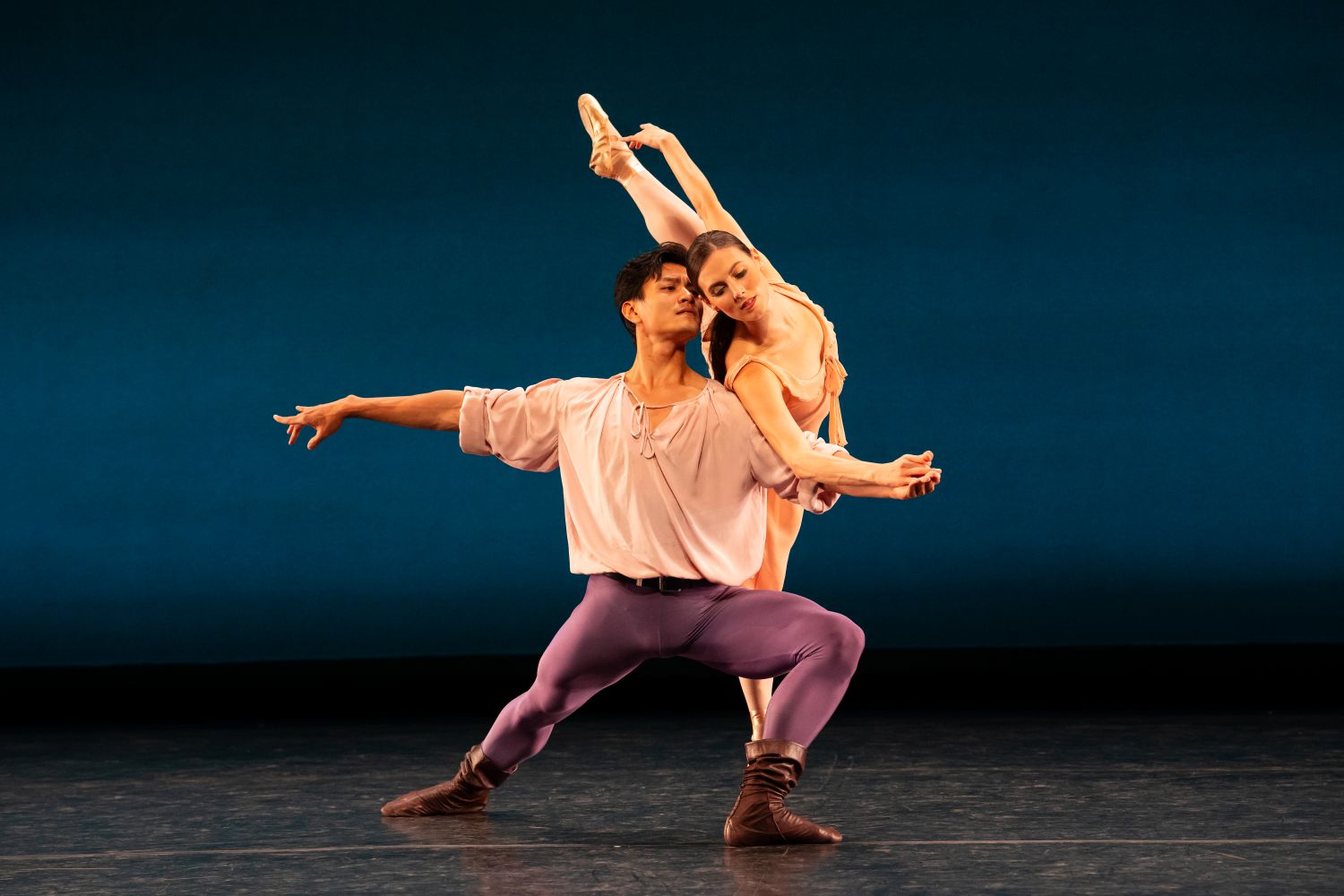
Ballet Festival: Jerome Robbins – Photo by Steven Pisano.
The intimacy of the program was created by showing a few ballets featuring two to six dancers accompanied by one to five musicians which more than sufficed to fill the theater with focused appreciation from the audience. It was a brilliantly subtle and tasteful way to display both the genius of Mr. Robbins and the formidable technique and artistry of the Dancers hand-picked by the astute Tiler Peck.
To see the full performance season at the Ahmanson Theatre, please visit their website.
To see the full performance season of Glorya Kaufman Presents Dance at The Music Center, please visit their website.
Written by Brian Fretté for LA Dance Chronicle.
Featured image: Ballet Festival: Jerome Robbins – Photo by Steven Pisano.