“Put a man and a woman onstage, and already you have a story.” This is a quote and sentiment that George Balanchine often posed to critics who dubbed his ballets plotless, or without narrative. It’s a sentiment that American Contemporary Ballet is attempting to ratify with “Pas de Deux,” a presentation of Balanchine duets, as well as original choreography by ACB founder and artistic director Lincoln Jones. On October 9, I attended the opening performance in Downtown LA, where a ballroom at the Bank of America Plaza was transformed into an elegant black box performance venue, complete with beautiful jazz piano by Christina Galisatus, enchanting lighting from Martha Carter, and complimentary champagne. Fellow attendees were dressed to the nines and all smiles, clearly excited to spend their Friday night enjoying professional ballet in a city with an ever-developing reputation for it.
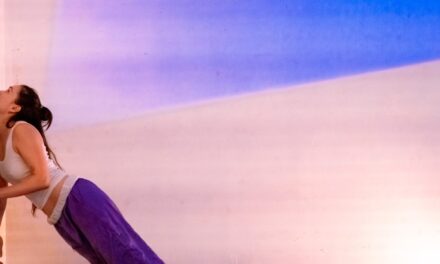
“Rubies,” from Balanchine’s iconic ballet Jewels, opened the show, performed by Mckenzie Lewis and Maté Szentes, outfitted in beautiful costumes courtesy of Pacific Northwest Ballet. It had been a while since I’d watched ballet choreography of this caliber this close-up. In a black box theater, nothing can be left to the imagination: any sickled feet, open fifth positions, and falls out of pirouettes are on view for all to see. As are all of the beautiful moments, like Lewis’ stunning extensions and Szentes’ powerful leaps. I did find myself missing some of the spunk and sauciness I’ve seen in other performances of “Rubies”; this one was performed with more solemnity, which read more to me as intense concentration from the performers.
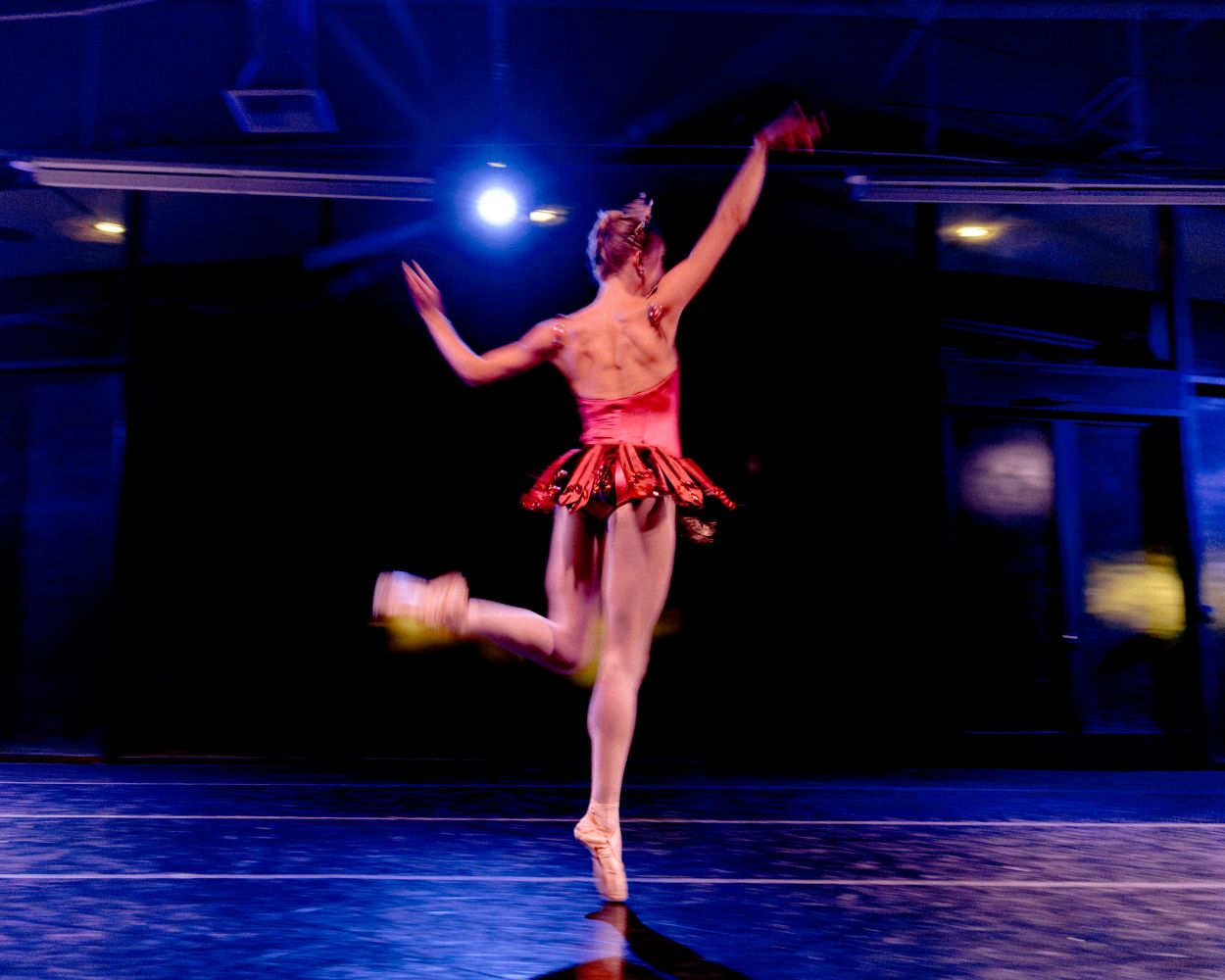
American Contemporary Ballet’s Madeline Houk in Balanchine’s “Rubies” – Photo by Caleb Thal.
This is a theme that I noticed across virtually all of the pieces: most of the dancers visibly thinking, something that might fly under the radar of ballet novices, but a look that’s all too familiar to a former performer. As I mentioned, ballet this close up requires the dancers to bare all. I also sensed some unfamiliarity with the performance space, which didn’t appear to have a sprung floor. Some dancers wobbled in their turns at the start of their pieces, but started nailing them midway through, likely after they got more comfortable with the Marley floor.
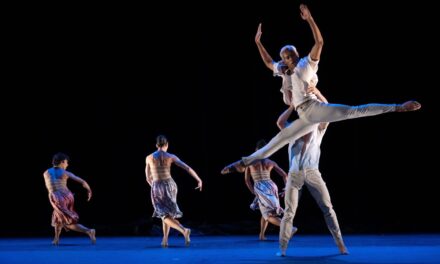
“Violin Sonata” by Lincoln Jones was a lovely ode to Balanchine, performed by lead dancers Cecelia Johnson and Marco Biella, and corps dancers Tatiana Burns, Ruthie Dalby, Victoria Manning Long, and Vanessa Meikle. Johnson and Biella had a sweet, assured connection as partners onstage, though I did sense some of this fatigue towards the end of the piece across the board, as one of the corps dancers struggled to get over her pointe shoe box.
American Contemporary Ballet’s Marco Biella and Biella McKenzie Lewis in Lincoln Jones’ “Violin Sonata” – Photo by Caleb Thal.
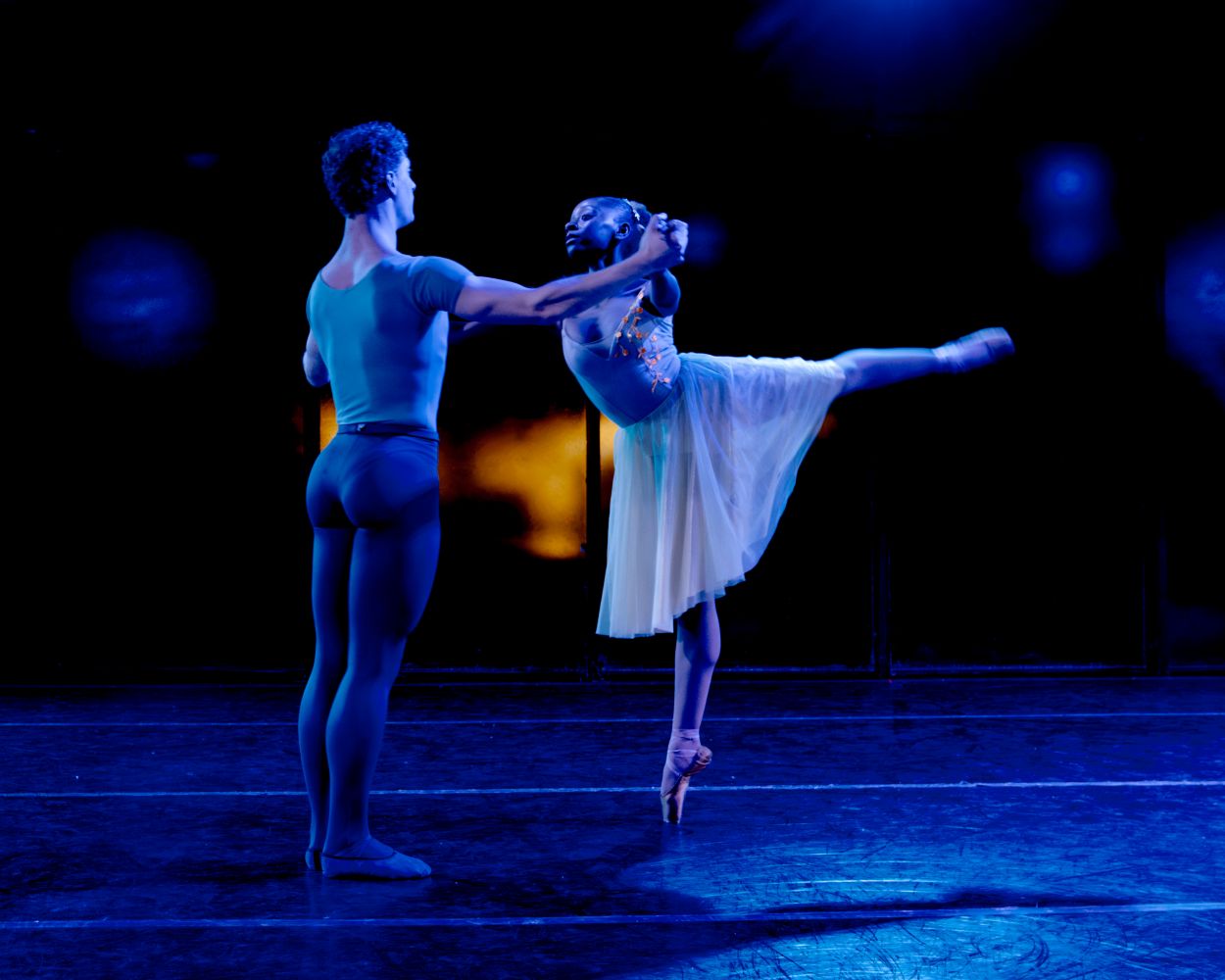
“Sonatine,” performed by Lulu Manzur and Maté Szentes, was the standout dance performance of the night, specifically Manzur’s stage presence. She had a confident lightness about her, beaming out at the audience and at Szentes onstage. The two were utterly enchanting together. When the piece ended, you could hear sighs of awe from the audience, snapping back into reality as if they had just woken from a dream.
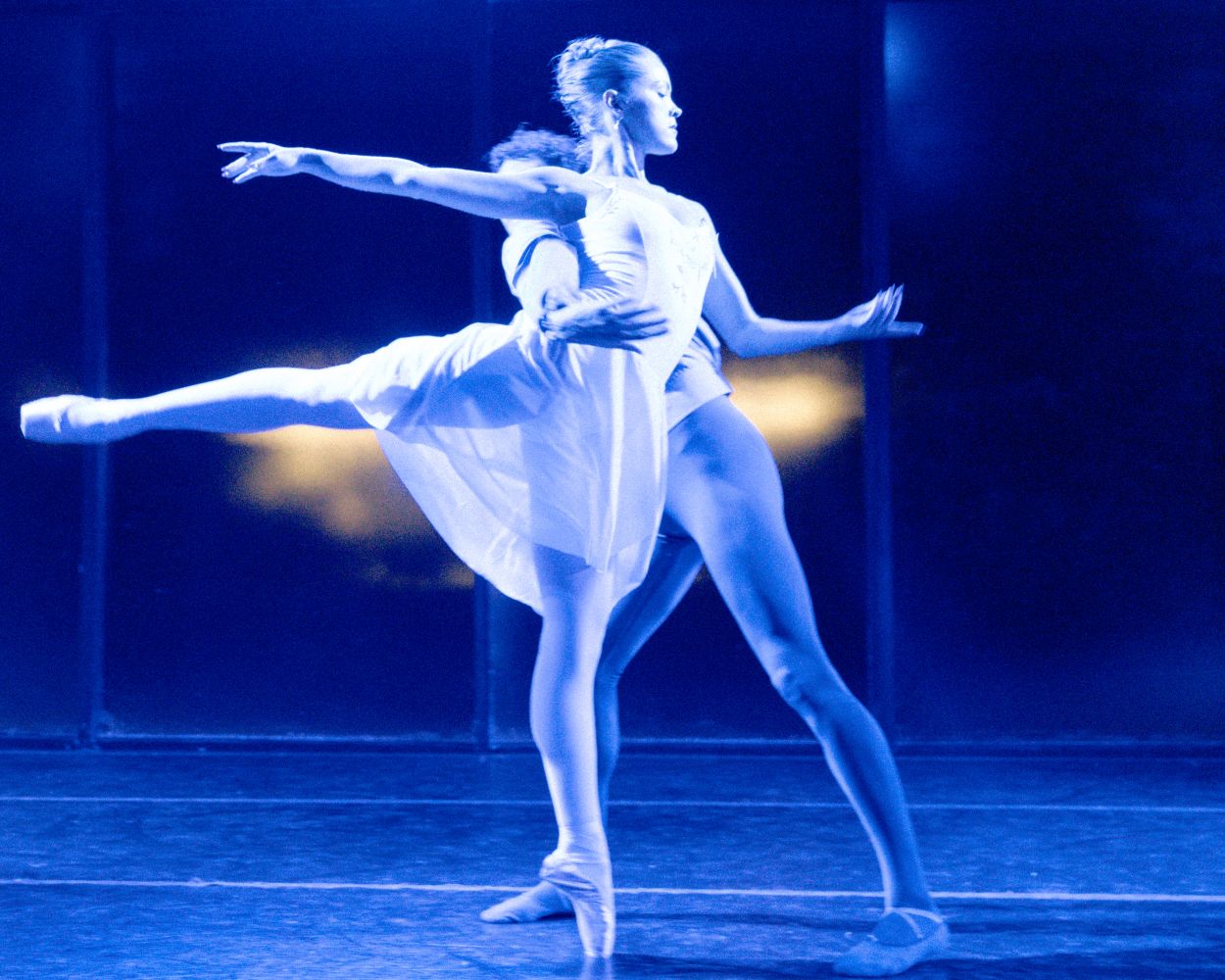
American Contemporary Ballet’s Cecelia Johnson and Maté Szentes in Balanchine’s “Sonatine” – Photo by Caleb Thal.
The second act was nicely punctuated with “Partita No. 3 in E Major,” performed by violinist Tereza Stanislav. This solo was utterly captivating and the highlight of the evening for me.
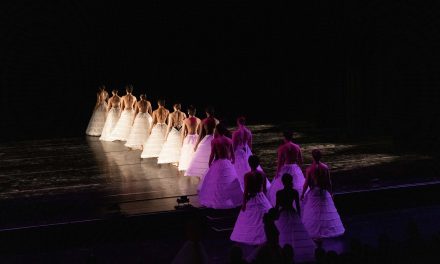
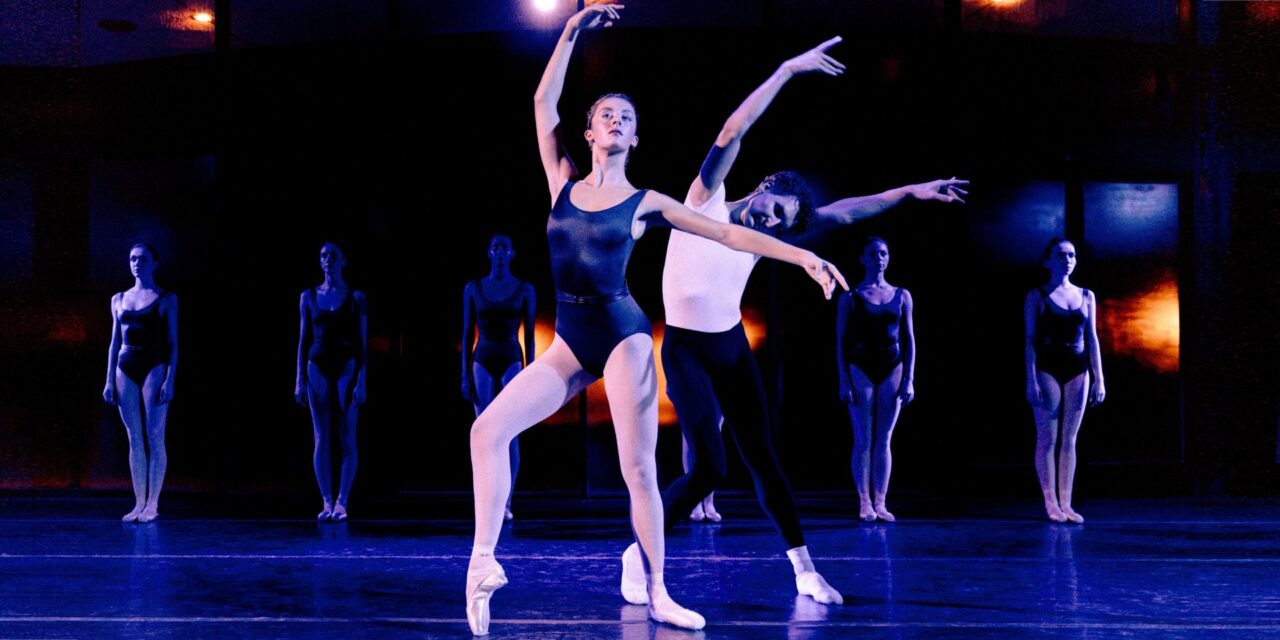
The show closed with “Episodes: Ricercata,” an avant-garde, rather brutalist Balanchine piece, performed by leads Annette Cherkasov and Maté Szentes, and corps Hannah Barr, Hayley Book, Daria Breslin, Natalia Burns, Tatiana Burns, Ruthie Dalby, Scarlett Learned, Mckenzie Lewis, Victoria Manning Long, Vanessa Meikle, Blair Mendes, Taylor Nichols, and Sarah Yoak. I found myself most captivated by the corps, who moved with tight synchronicity, as if they were soldiers. However, at times, my eyes spotted some visible stress, as some dancers struggled to get over their boxes here and there.
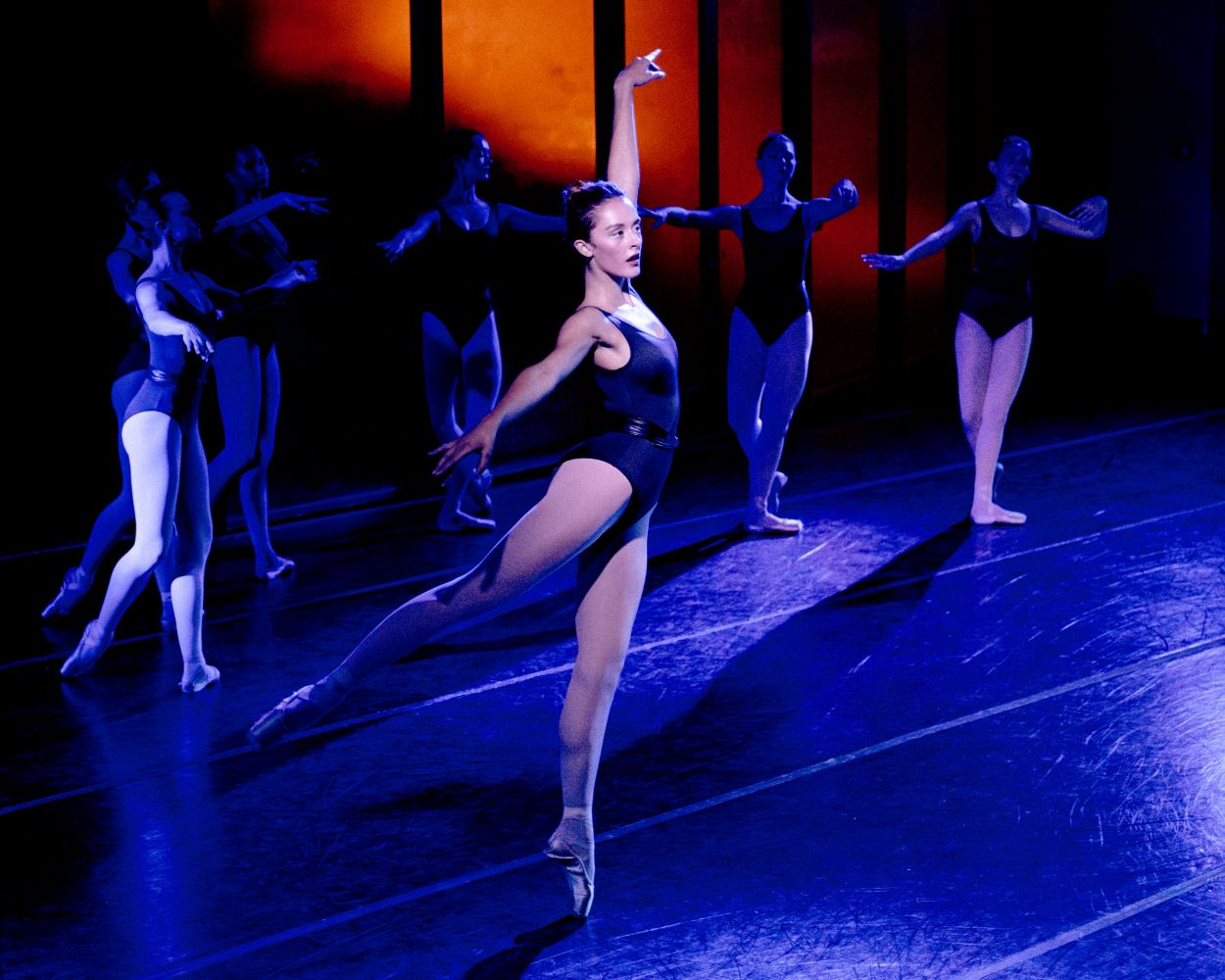
American Contemporary Ballet’s Lulu Manzur and ensemble in Balanchine’s “Episodes: Ricercata” – Photo by Caleb Thal.
Ultimately, I left the venue feeling most moved by “Sonatine,” which was a lesson in the importance of épaulement, or the relationship between eyes and hand placements in ballet. Even when a dancer has the finest technique in the world, unfocused eye contact or a visibly worried expression can easily detract from endless lines and flawless pirouettes. Light expressions and direct connections between partners not only put the audience at ease, but are ultimately what help bring life to Balanchine’s plotless works. It’s what can separate a moving piece of choreography from simply going through the motions onstage. And it’s what helps prove Balanchine’s theory about simply putting a man and woman onstage to be true.
Attending American Contemporary Ballet’s “Pas de Deux” is a fine way to spend an evening in Downtown Los Angeles, and will surely only get finer as the dancers refine their already-strong technique even more with more reps in the performance space. Live music from Tereza Stanislav on violin, Nathan Ben-Yehuda on piano, Makena James on organ, and Christina Galisatus on jazz piano truly took this performance to another level. The show runs through the end of October, and you can find more information on showtimes here.
For more information about American Contemporary Ballet, please visit their website.
Written by Madison Huizinga for LA Dance Chronicle.
Featured image: American Contemporary Ballet in Balanchine’s “Episodes: Ricercata” – Photo by Caleb Thal.