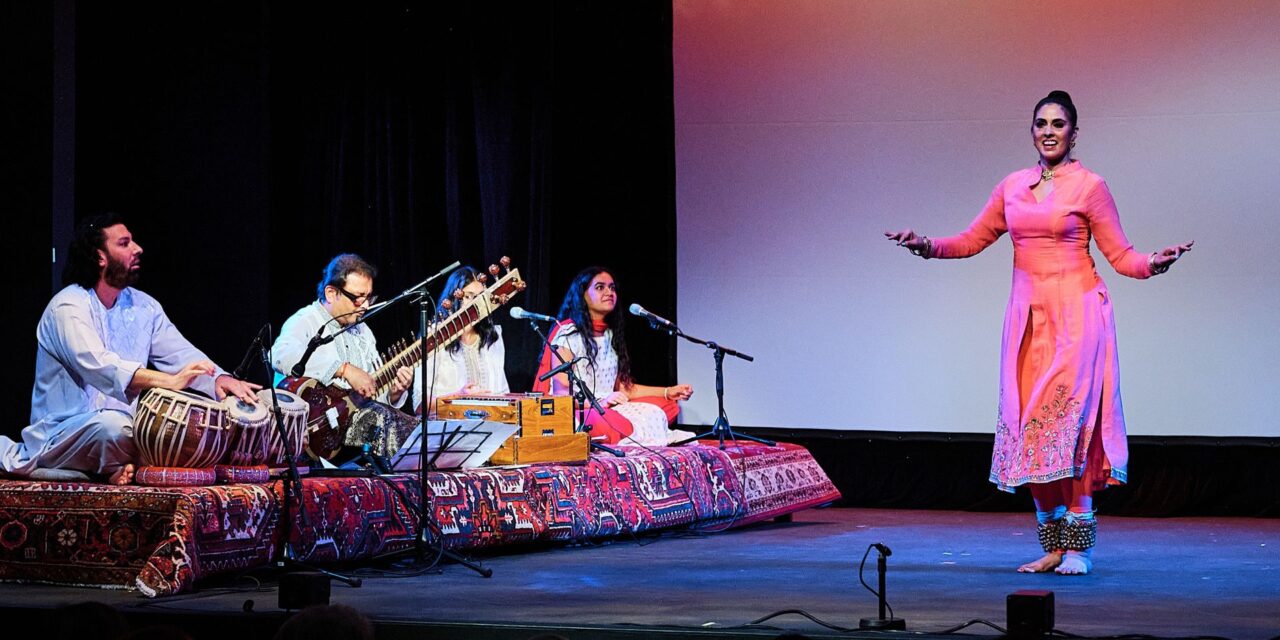
This past Sunday afternoon, the Sierra Madre Playhouse welcomed Rukhmani Mehta, Co-Artistic Director of Leela Dance Collective, and Artistic Director of Leela Dance Youth Company, for a solo engagement and demonstration of the history, legacy, and musical integration of Kathak Dance, a classical form of dance from northern India. Mehta explained that Kathak takes its name from katha, meaning “story,” and it was clear that its history as a storytelling tradition remains embedded in the lives of those who practice today, as much as it was centuries ago. I had very little experience or knowledge of Kathak, walking into the theater that Sunday, but was genuinely surprised by the passion, precision and extraordinary level of preparation evident in the performance. What began as an unfamiliar art form quickly became something deeply moving to witness.
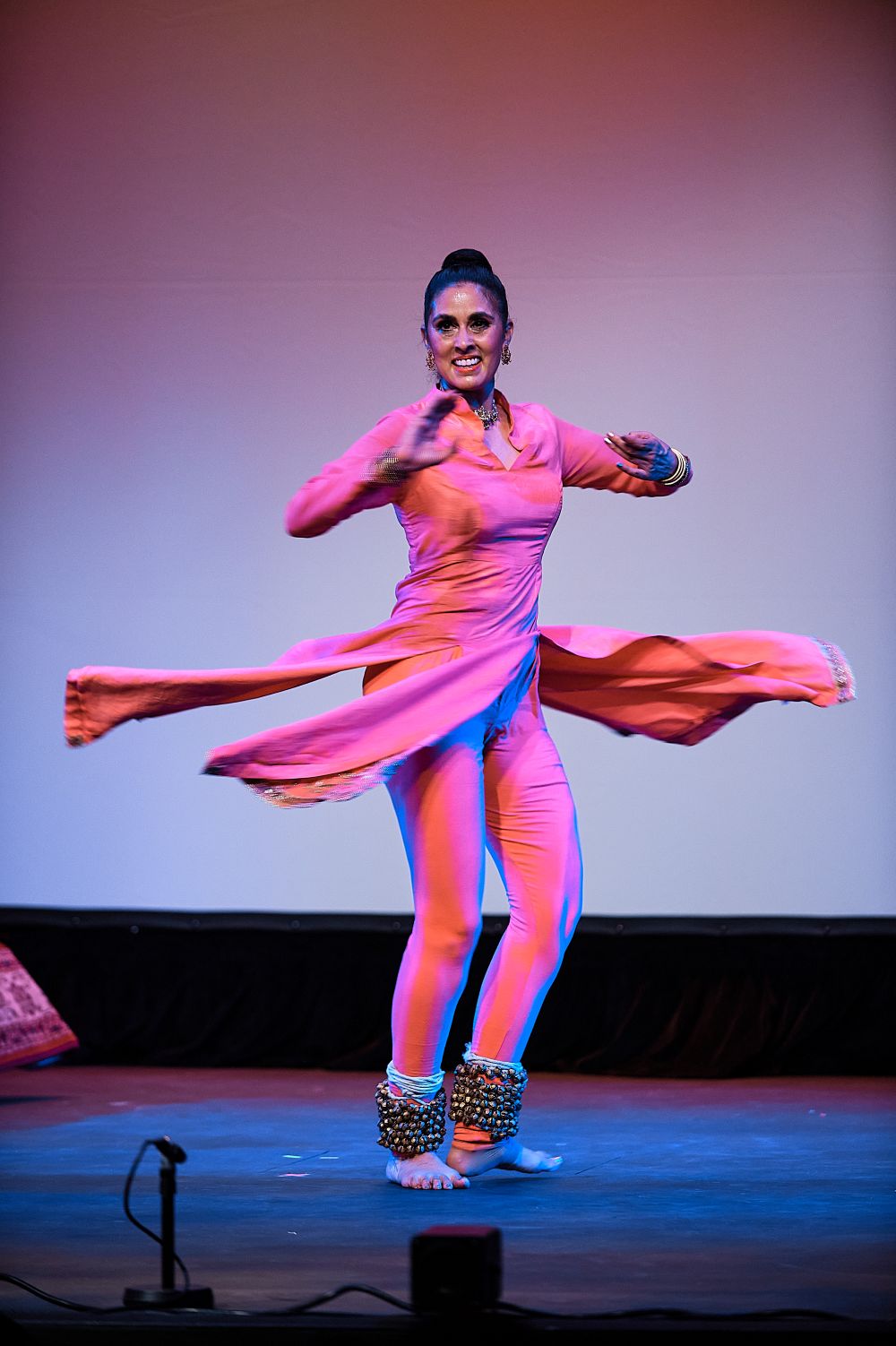
Rukhmani Mehta – Photo by Michael C. Palma.
One surprising element that you don’t necessarily get from dance performances today, was the educational aspect. Mehta paused between pieces, between moments of the performance, to educate the audience and explain not only what was happening, but why it’s done the way it is. I could learn, reflect, and see it happening in real time in front of me, which helped put the pieces together in real time. Sunday’s performance was less about sitting back and watching, but more of an invitation to learn and collaborate with the energy being given. Mehta, who performed solo throughout the evening, invited musical collaborators Jayanta Banerjee on Sitar, Salar Nader on Tabla, and senior members of the Leela Youth Dance Company on the stage with her. Varnika Bhat, 18 years old, as the vocalist/singer, and Shriya Patel, 17, on recitation. The musicians and vocalists sat perpendicular to the audience on a slightly raised platform on the stage with Persian rugs, giving the set up a familiar and also cozy feeling. Interestingly enough, they were set in a position that was more important for them to see one another in conjunction with Mehta than it was for the audience to see them. Something I learned very quickly after Mehta’s introductory movement was just how involved and intricate the music is with Kathak dance. Both woven within each other, they rely on the precision and practice of the craft to enhance the storytelling, while simultaneously leaving enough breathing room for improv.
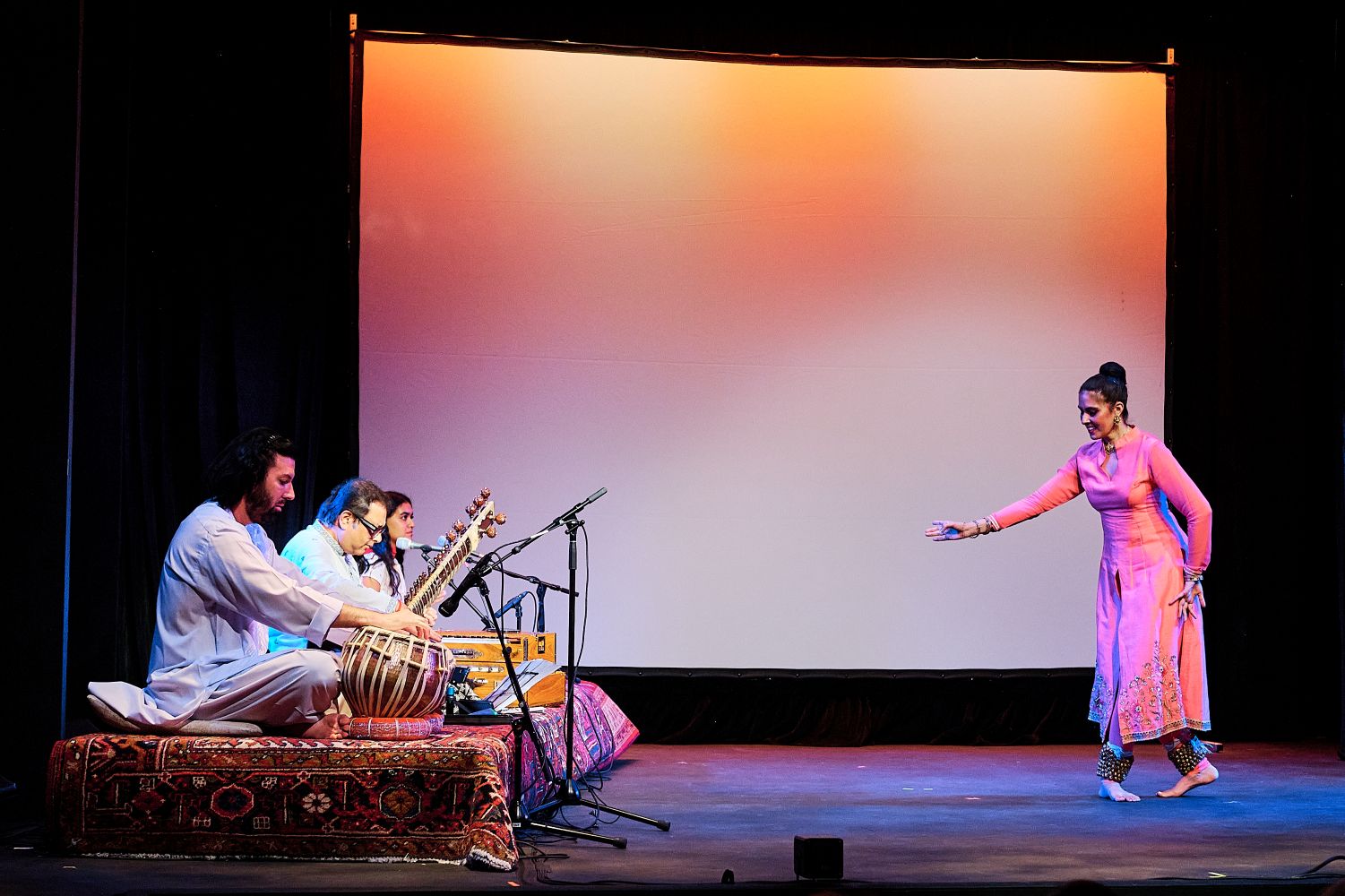
Rukhmani Mehta with Jayanta Banerjee on Sitar, Salar Nader on Tabla, and singer/vocalist Varnika Bhat – Photo by Michael C. Palma.
Mehta, actively articulated the rhythm with her feet, by beating her hand against her thigh, and by wearing ankle bells, called ghungroo. Simultaneously, she used gestures, spins and facial expressions to set the different rhythmic cycles, called taal. Watching closely, it was clear that one finger within a hand gesture could turn the story from tragedy to comedy. The specificity by which Kathak is practiced, was so accurate and precise, it became clear that an immense amount of passion for the craft is involved.
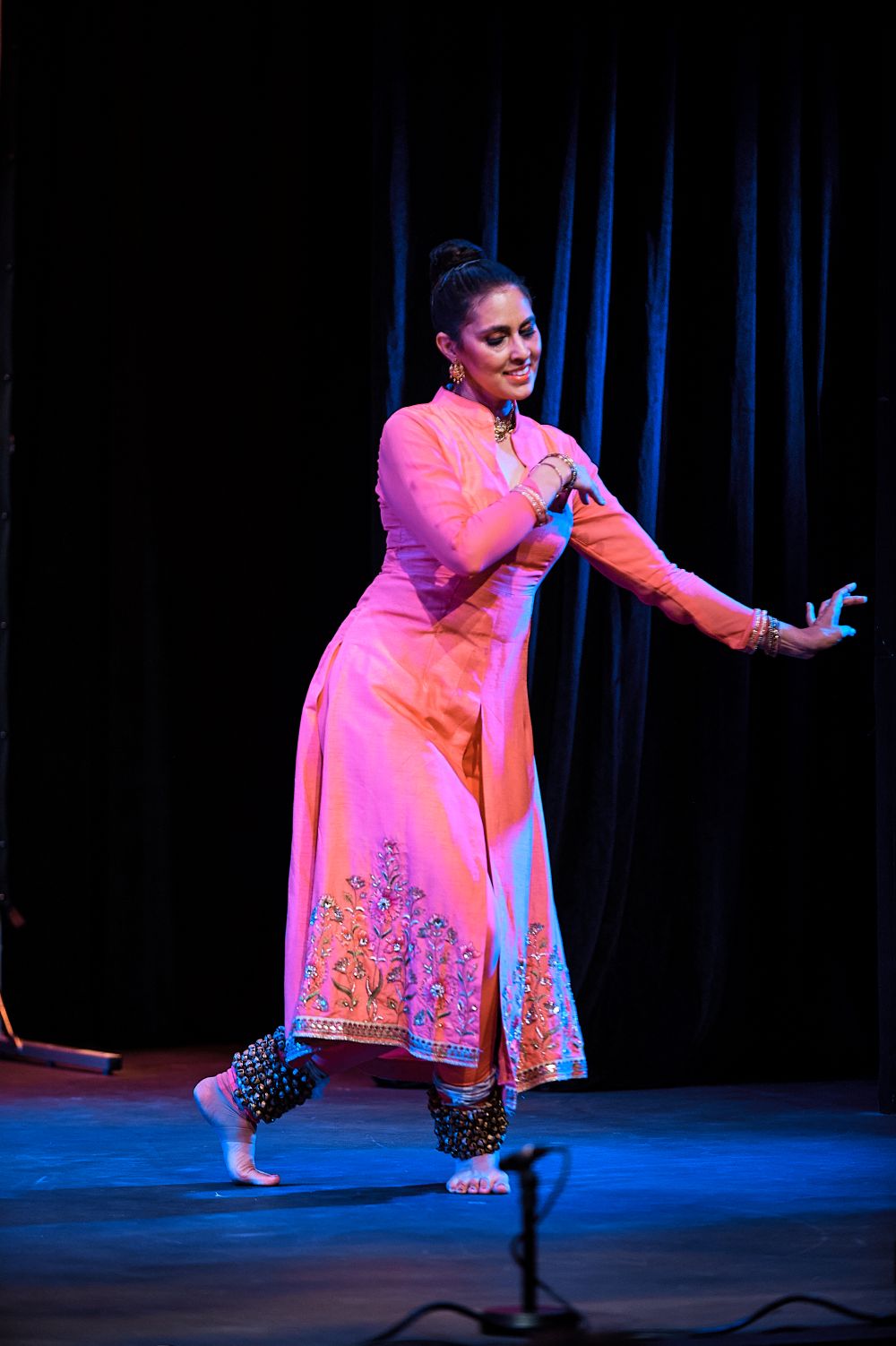
Rukhmani Mehta – Photo by Michael C. Palma.
The end of the performance recalled the epic Mahabharata, where Mehta reenacted the story: the Kaurava prince, Duryodhana, uses his uncle, Shakuni’s, rigged dice to trick the Pandava king, Yudhishthira, into gambling away his entire kingdom, his brothers, and himself. After losing all he has, Yudhishthira gambles away his wife, Draupadi. She begs and prays to Lord Krishna for this not to happen, as she’s dragged by her hair into the royal court. As the brother attempts to strip off her sari, it seemingly never runs out. Mehta recalled to the audience her own memory around this incredible epic, and what it meant for not only her own household, as a child in school, but for India at large. It’s in these little details that make the dance and production such a joy to watch. You are pulled into the real lives of the performers, where they were, and how they feel about the historical movement. It was a gift to be able to see the style through the context of her own family chronicles and apply the complicated and deeply affectionate feelings of this beautiful art form to the moves themselves.
To see the Sierra Madre Playhouse’s full season, please visit their website.
Written by Grace Courvoisier for LA Dance Chronicle.
Featured image: Rukhmani Mehta with Jayanta Banerjee on Sitar, Salar Nader on Tabla, singer/vocalist Varnika Bhat, and Shriya Patel on recitation- Photo by Michael C. Palma.