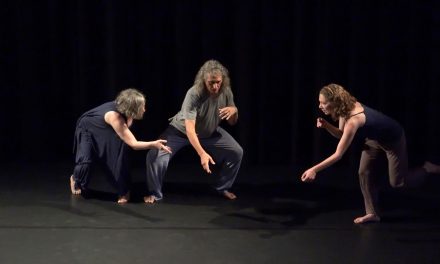
On Saturday, July 25, 2026, the Luckman Fine Arts Complex at Cal State L.A. welcomed twice awarded National Endowment for the Arts winner, Raiford Rogers Modern Ballet. A Co-founder of the Los Angeles Chamber Ballet in 1982 with Victoria Koenig, he has been noted for his approach to ballet, without the proverbial pointe shoes. In 2002, He founded his company and has inspired dancers worldwide to join in the celebration of ballet from a modern point of view.
This evening, fans, followers and the curious gathered for this special night after a scorching hot July day. A relief with breezy smiles, hugs and gatherings created a lovely evening of ballet fellowship.
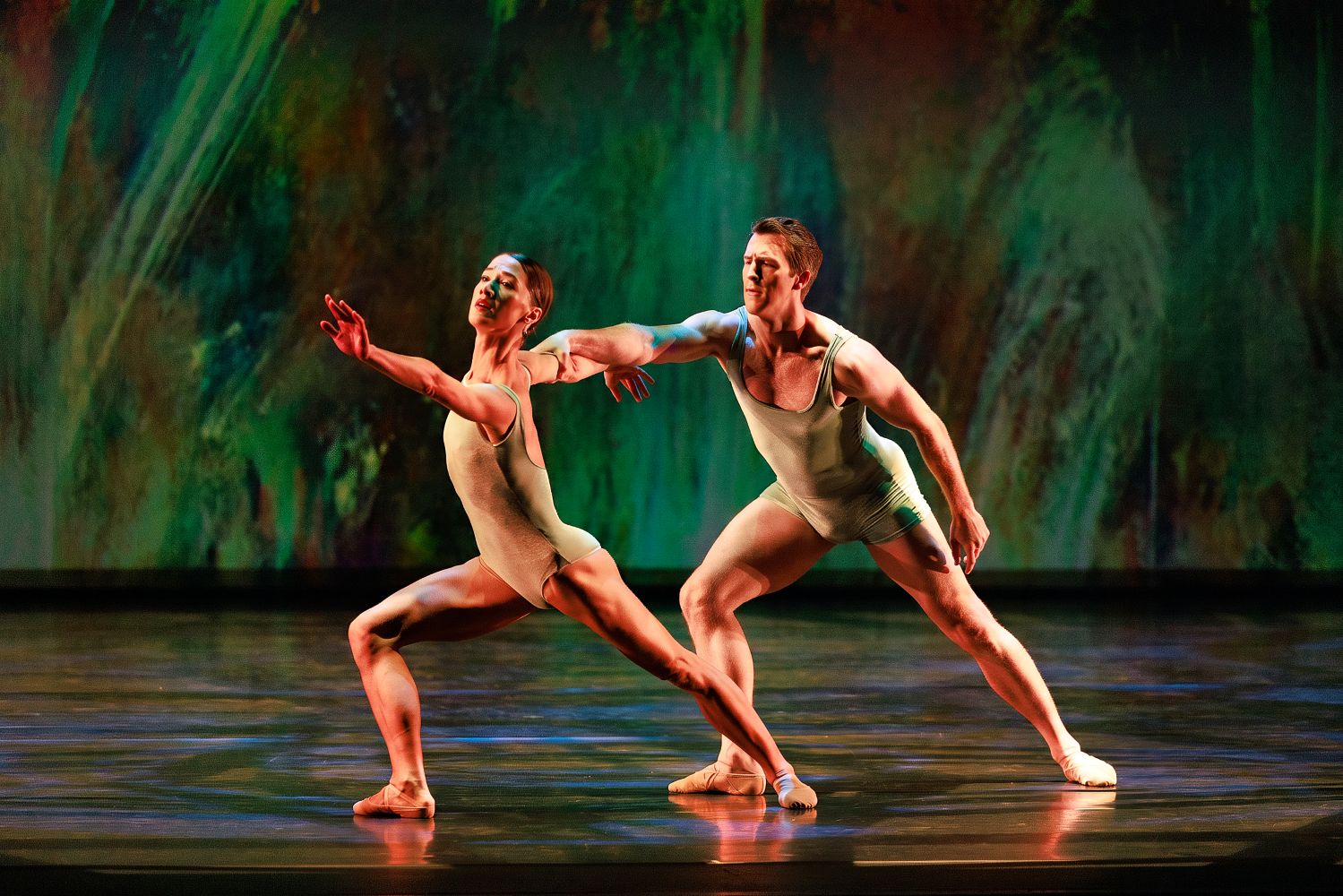
Raiford Rogers Modern Ballet – Tetyana Martyanova and Roddy Doble in “Who Can See the Wind?” – Photo Steve Cohen.
After settling into the intimate Luckman theatre, the curtain rose on Rogers’ first piece, “Who Has Seen the Wind?”, inspired by Christina Rossetti’s poem (1872) of the same name. Rogers chose to create four movements following the couplets of the poem. The first was to music by the Estonian composer, Arvo Pärt. His languorous Psalom Ettore Causa created lengthy musical statements…and silences… expertly played by Hui Wu on Piano. The moving painterly backdrop by artist Mike Nava, with lighting by John A. Garafolo, was both engaging and, at times, curiously unnerving with colors moving at a hardly noticeable pace behind the elongated lines of dancers.
At the opening, the piece began with a forest of slow-moving leg extensions with dancers in muted body suits and leotards. The women lithe and resolute were well matched with the strength of the male dancers who, in this section of the program, gave only a hint of what was to come.
In the second movement the strains of the wondrous Handel “Minuet in G Minor,” wove together both ballet technique and heart. It introduced the lovely Jasmine Perry (LA Ballet) in a difficult legato solo that challenged her to extend and lift her effortless arrowlike limbs, executing flawless circular promenades. She supplanted the sheer technical difficulty with her commitment to honor the powerful and moving mood of the piece.
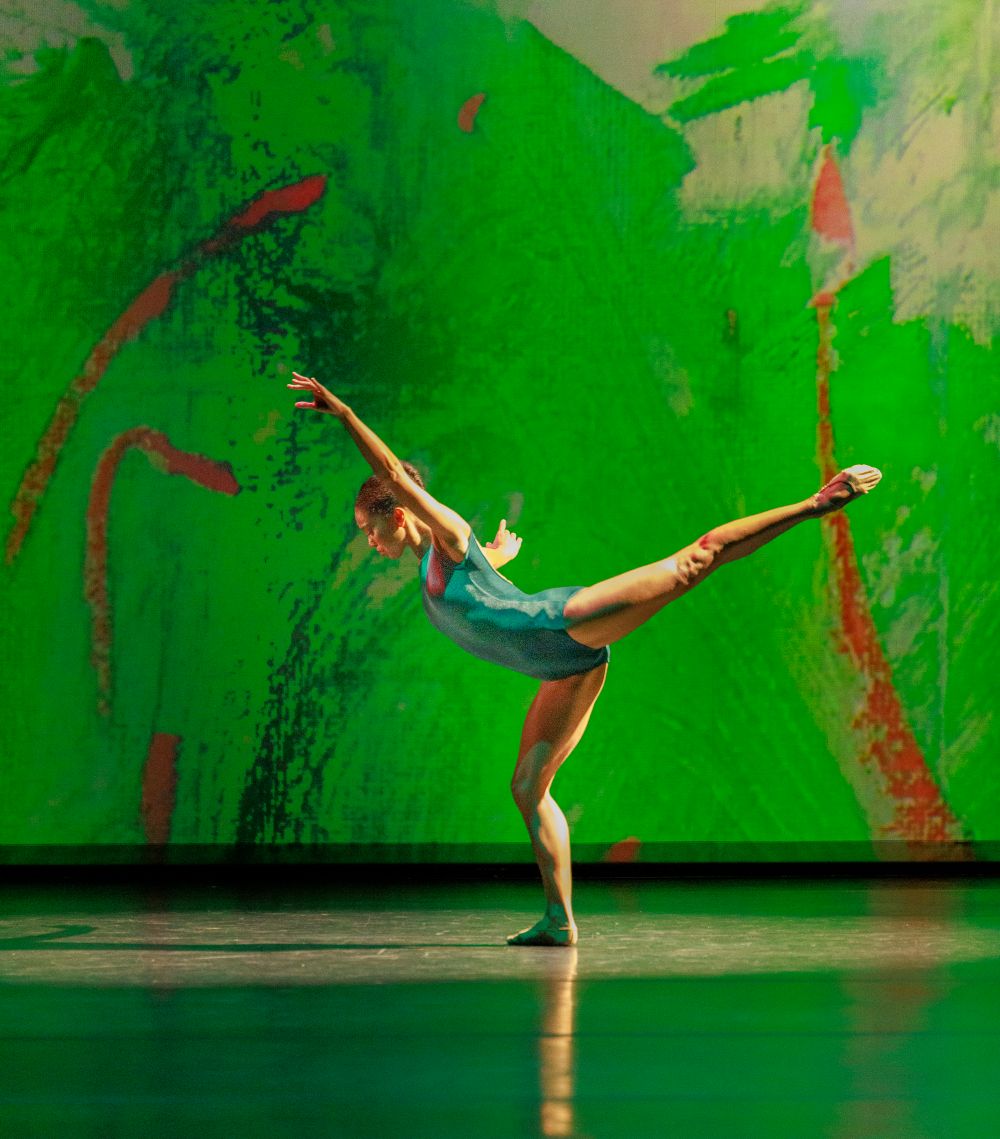
Raiford Rogers Modern Ballet – Jasmine Perry in “Who Can See the Wind?” – Photo Steve Cohen.
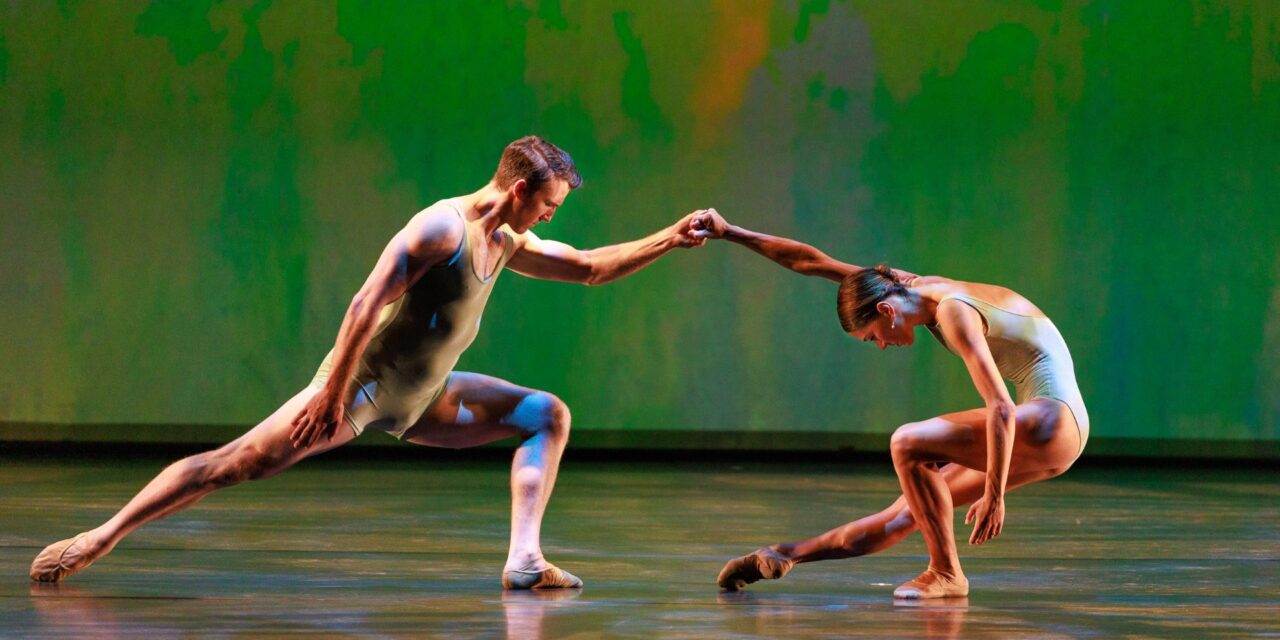
Pärt’s Da Pacem Domine (“Give peace, Lord”) was a stunning prayer-like challenge that lead to the final pas de deux, that unfolded as one of the highlights of the evening. The statuesque Tetyana Martyanova Zyla from Les Grands Ballets Canadiens was mesmerizing. Her fluid long limbs appeared to stretch way beyond her body. Her twists, turns and subtle undulations made one follow her every move. The generous partnering by Roddy Doble, from the same company, was a relief from an ungenerous world. Doble’s attentive and caring partnering signaled a familiarity that created moving lifts and drops that made their exquisite coupling a perfect ending of the first piece.
Next, “Landscape in Blue”, was a sublime reverie with Nava’s backdrop mirroring John Cage’s, 1948 piece “In landscape.” The dancers reflected the mood in leotards of deep ocean blue. The auroras of blues, greens, golds supported their effortless movements from floor to standing, to reaching, to gliding, pushing the moments on and challenging their control.
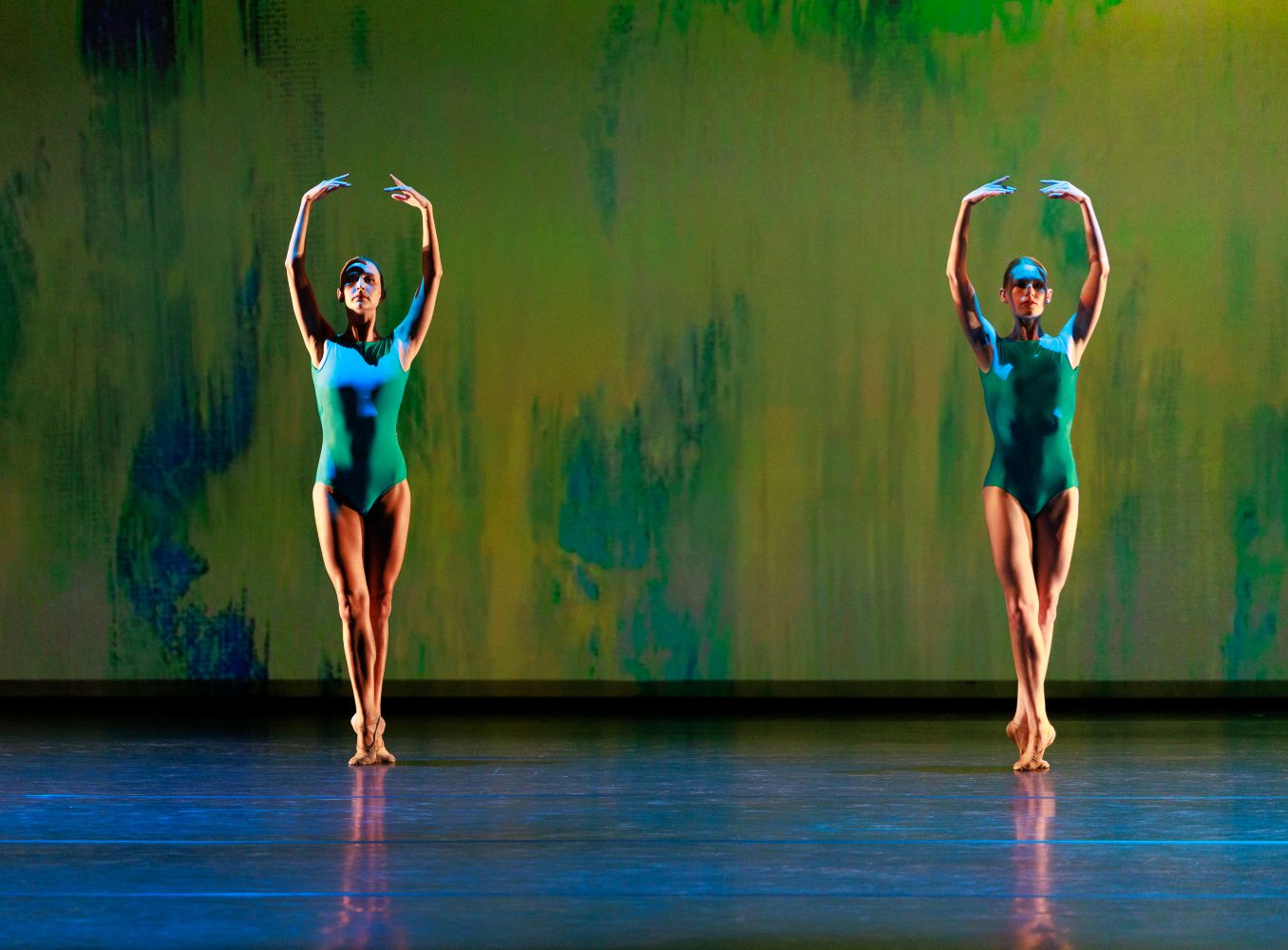
Raiford Rogers Modern Ballet – Brigitte Edwards and Lilly Fife in “Landscape in Blue” – Photo by Steven Cohen.
The background’s slow-moving trickle of color clearly matched the arpeggio’s of Cage’s musical phrasing with its continuous hills and valleys. The musical changes existed within a narrow band resting on Hui Wu expert playing. The uneventful ending gave no hint of breaking away until the lights faded and the curtain descended which sent us out into the world for an intermission and in wait for the third and final piece.
“Island in the Sea” (2025), the finale of the evening, was a tour de force that drove the dancers from meditation to kinetic perpetual motion. Rogers used themes, variation, and canon forms, stating and restating phrases. Each move taxed and challenged the dancers with combinations of intricately connected movements. Then they mirrored their fellow duos with exciting exchanges. It was daring! It dared the music, the phrasing, the intellect and the body.
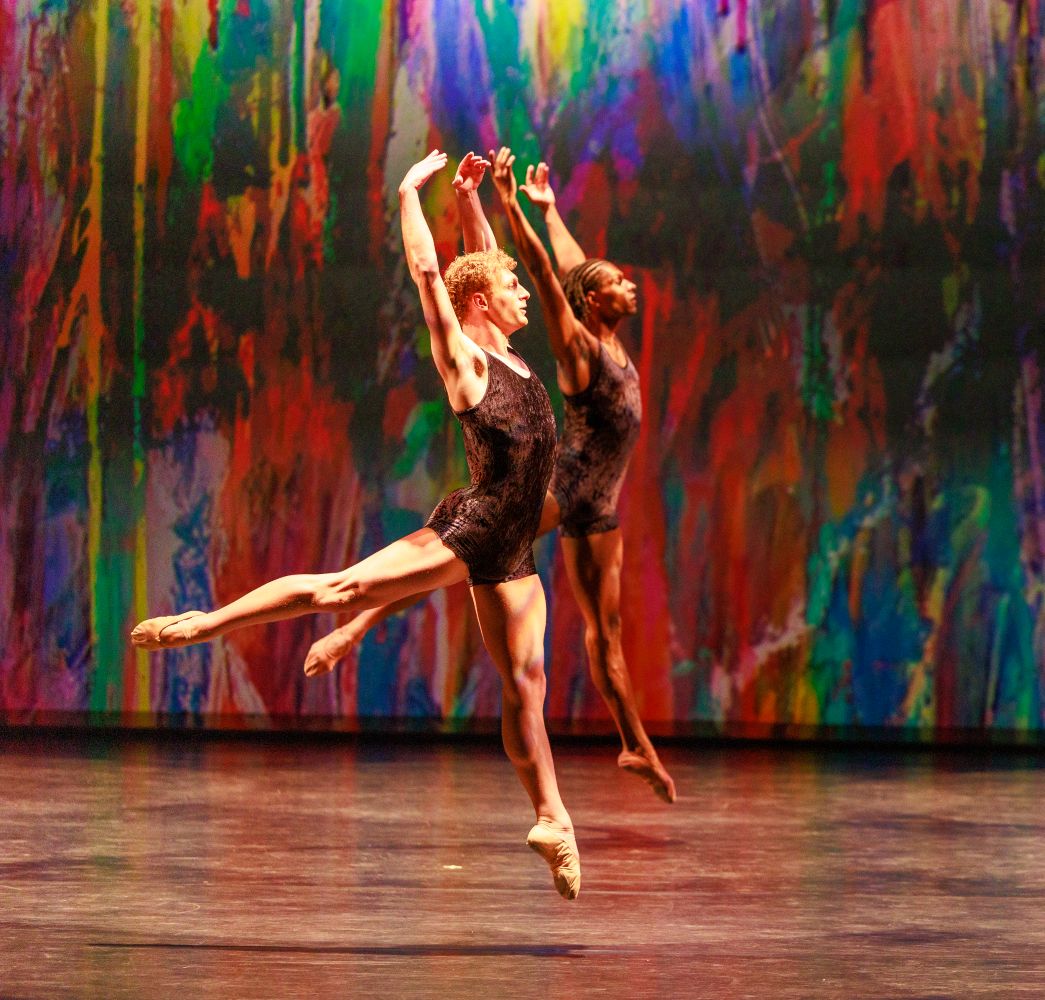
Raiford Rogers Modern Ballet – Thel Moore and Marco Biella in “Islands in the Sea” – Photo by Steven Cohen.
With such a connection to Pärt’s life and music Rogers then bridged from breathless action to prayer like unison, moving to a field of bodies —quiet, then undulating, then moving to fetal unison and ascending to kneeling positions, all in rush-less and unified motions.
The depth of each of Pärt’s pieces seemed to exist within his back story. Pärt’s “Pari Intervallo” (At Equal Distance) then lead to “Vater Unser” (Our Father) with Martyanova Zyla and Doble so beautifully filling the ethereal and aesthetic space.
Next, Für Alina, Pärt’s life-changing experience of separation of a child from the family, changing his life and art forever.
Für Alina’s pas de deux performed by Jasmine Perry and Thel Moore mined the emotion of the untold story. Rogers chose to express it in a stunning pas de deux. Together Perry and Moore found the power in their touch and silences. A stunning piece allowing two young dancers to pass on the depth of the loss so beautifully communicated in the music.
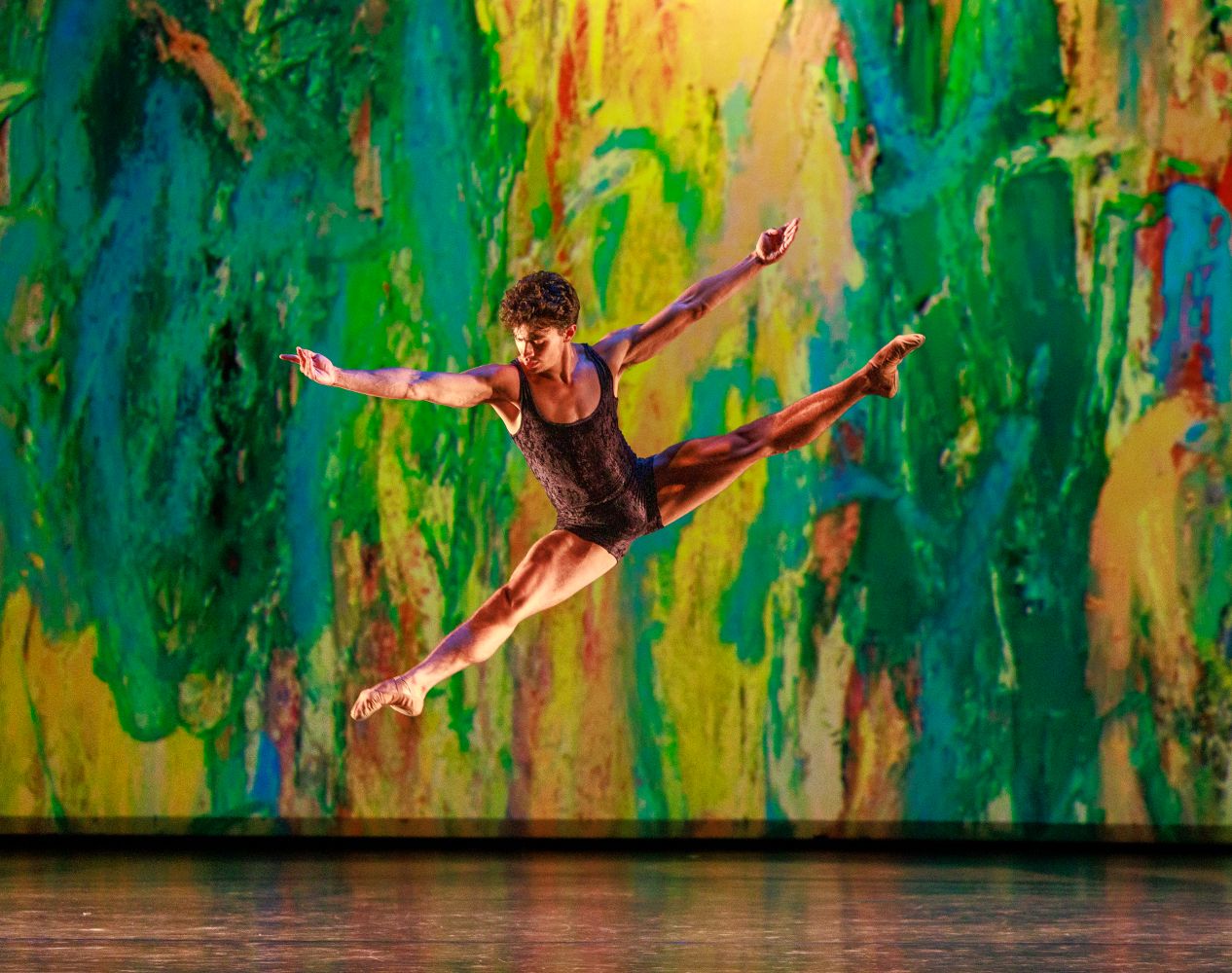
Raiford Rogers Modern Ballet – Jacob Soltero in “Islands in the Sea” – Photo by Steven Cohen.
The piece then ended with scarlet body suits, the male dancers had a chance to show their ballon, turns, and beats in moving succession simultaneously crossing the women with unifying joy. The excitement of colors paired with Piano, organ, Violin and Cello, (Hui Wu, Stephani Yu and Elizabeth Wright) supported and enhanced the inspired direction and choreography, truly proving its metal.
The full experience managed to inspire both performers and audience and ended a perfectly beautiful evening of dance, story and mythical journeys making it clear that the quality of art still very much exists. It is clear, Raiford Rogers Modern Ballet lives with an expectation of excellence. Such a refreshing message for all to live up to.
Dancers: Marco Biella, Sadie Black, Joshua Brown, Natalia Burns, Sarah-Ashley
Chicola, Poppy Coleman, John Dekle, Roddy Doble, Brigitte Edwards,
Lillyan Fife, Anna Jacobs, Julianne Kinasiewicz, Thel Moore, Jasmine Perry,
Jacob Soltero, Greg Trechel, Paige Wilkey, Tetyana Martyanova Zyla
To learn more about Raiford Rogers Modern Ballet, please visit their website.
Written by Joanne DiVito for LA Dance Chronicle.
Featured image: Raiford Rogers Modern Ballet – Roddy Doble and Tetyana Martyanova IN “Who Can See the Wind?” – Photo by Steve Cohen.