With the LA Phil ensconced at its summer home in the Hollywood Bowl, ballet takes over Disney Hall this weekend as The Music Center presents BalletNOW–Superstars of Paris for four performances featuring Etoiles (principal dancers) from the Paris Opera Ballet, led by Hugo Marchand.
The dancers arrive after performing in New York’s City Center to largely rapturous reviews. The LA program is a slightly different program, and some different dancers from the deep ranks of the Paris Opera Ballet. The dance card here is the same all four shows, including The Dying Swan, Roland Petit’s Carmen Pas de Deux, George Balanchine’s Sonatine, Hans van Manen’s Trois Gnossiennes, and the lip-lock kiss pas de deux from Angelin Preljocaj’s Le Parc.
Marchand took time after class and rehearsal to speak with dance writer Ann Haskins about bringing ballet to a concert hall built for music, the dynamics of choosing repertoire and dancers to invite, and what he did on his one day off here.
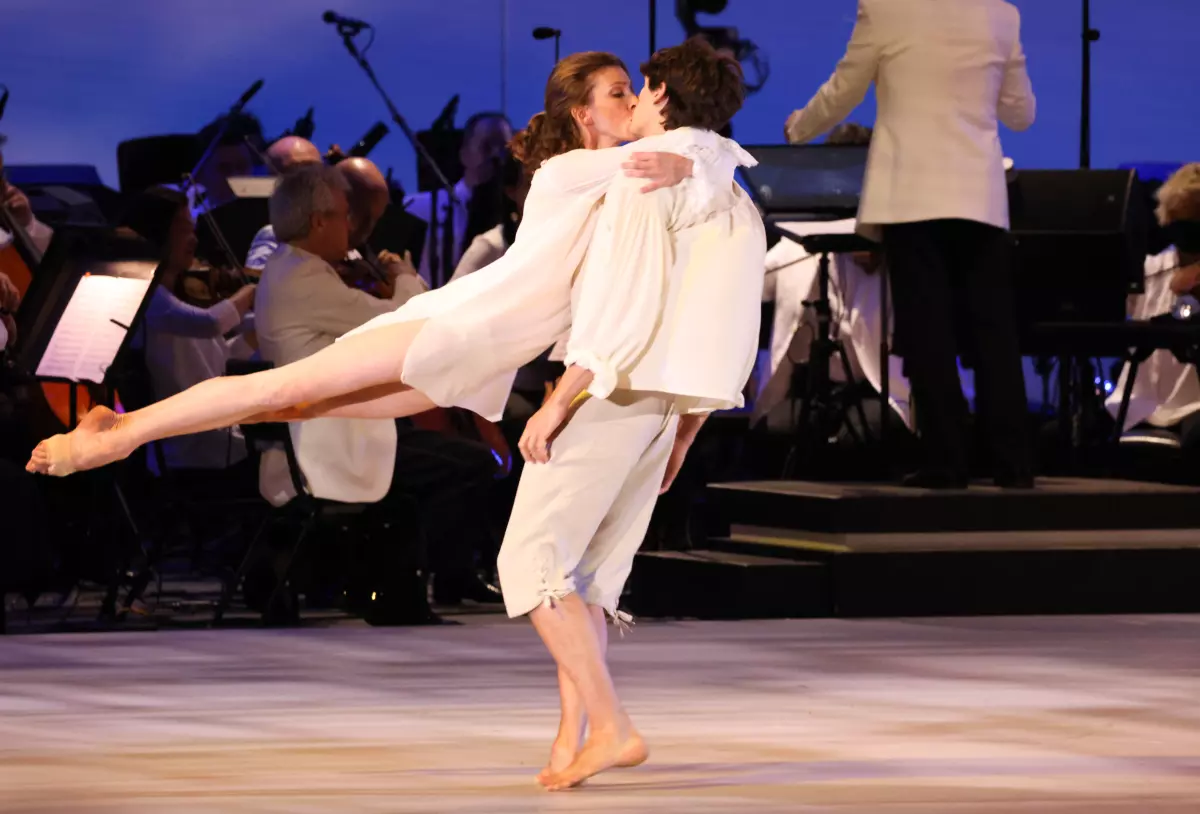
Dania Maxwell and Hugo Marchand in “Le Parc” – Photo courtesy of LA Phil.
Haskins: You are performing in Disney Hall which doesn’t have wings or a proscenium. How will you present ballet there?
Marchand: It is true that Disney Hall is not a theater that is usually used for dance. It is usually for big musical concerts and a symphony orchestra. But I like to perform in venues that are a bit different because it attracts another kind of audience. The Disney Hall stage is being adapted for this program, they have worked on the stage, so we have new wings. Also, they put in a dance floor, so that we don’t get injured jumping on the stage, and additional work on the lighting, which is very specific. It is all very interesting. Also, for us, it is a challenge not to be all the time in theaters that are very comfortable and made for dancing.
Haskins: Have you been on the Disney Hall stage yet?
Marchand: Yes. We have been working since this morning in the studio rehearsing and also on the stage. I have been very excited to discover this incredible venue. I mean, the architecture is just crazy. It’s beautiful. It is also part of the atmosphere of the show. When you get to discover incredible places like this Disney concert hall, then when you enter inside, you are already excited and happy to discover the program. That’s something that is also part of the show. We’ve been able to practice a little bit to find the different, how can I say? to feel the atmosphere of the theater and to feel how it’s going to be with the audience inside. It’s going to be a different adventure for us.
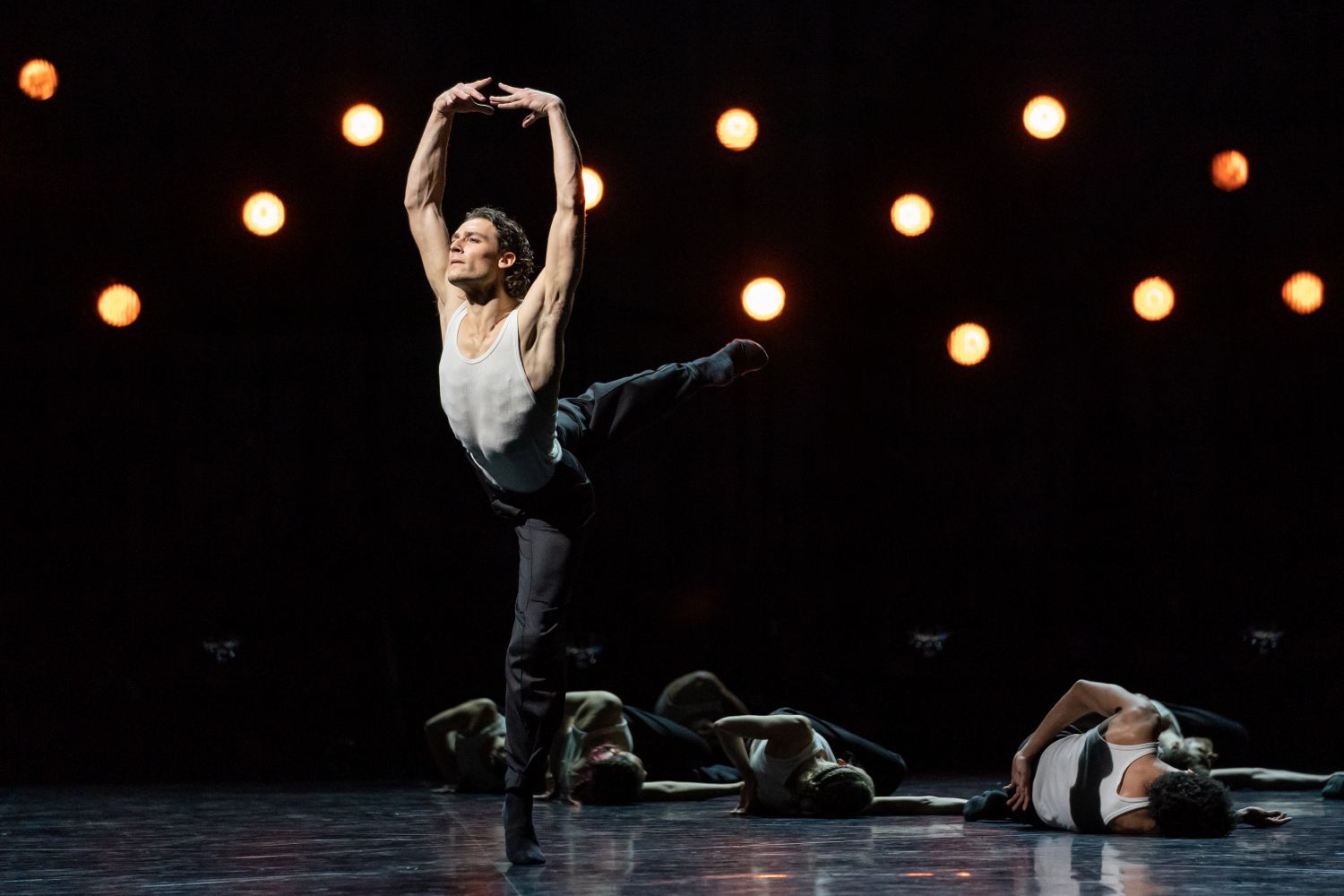
Hugo Marchand in “Body and Soul” Choreography by Crystal Pite – Photo by Yonathan Kellerman.
Haskins: You performed last week at New York’s City Center which is a more traditional proscenium theater and the program was somewhat different than here.
Marchand: City Center is a theater made for dance, where everything is about ballet or about contemporary dance or about musicals. Disney Hall is very different, so it’s a new adventure for us. The program is different from New York because in New York we had the Bejart Ballet Company, and they didn’t come with us to LA, but we have four more dancers from the Paris Opera that joined us yesterday. Two arrived from Shanghai because they were performing in China before, and two from Paris. We have eight dancers plus a cellist and a pianist. The program is going to be classical, neoclassical, and a bit contemporary as well, presenting a very diverse range of choreographers, going from George Balenchine to Roland Petit to Caroline Carson to Jean-Guillaume Bart. It’s interesting that we have another program to show to the American audience. Having these two different programs in two big, incredible cities like New York and LA, is a chance for us to show the diversity of repertoire that we can do and not only do the same thing all the time.
Haskins: Did you invite these dancers based on the choreography you wanted to show, or did you pick the choreography because you wanted these dancers to be part of this program?
Marchand: I actually did both because I really like to work with my friends. All the dancers on stage are my friends because I love to have this adventure and share it with people I love. It’s also part of the pleasure that we can take performing, but also of the nice atmosphere that we can create on stage. When people love each other on stage, that is shown also for the audience, and they get to understand the different relationships that we are having, and I think that really improves the quality of the dancing on stage. But there are also some pieces that I really wanted to have because I find them very singular and very strong and not very known in the U.S.
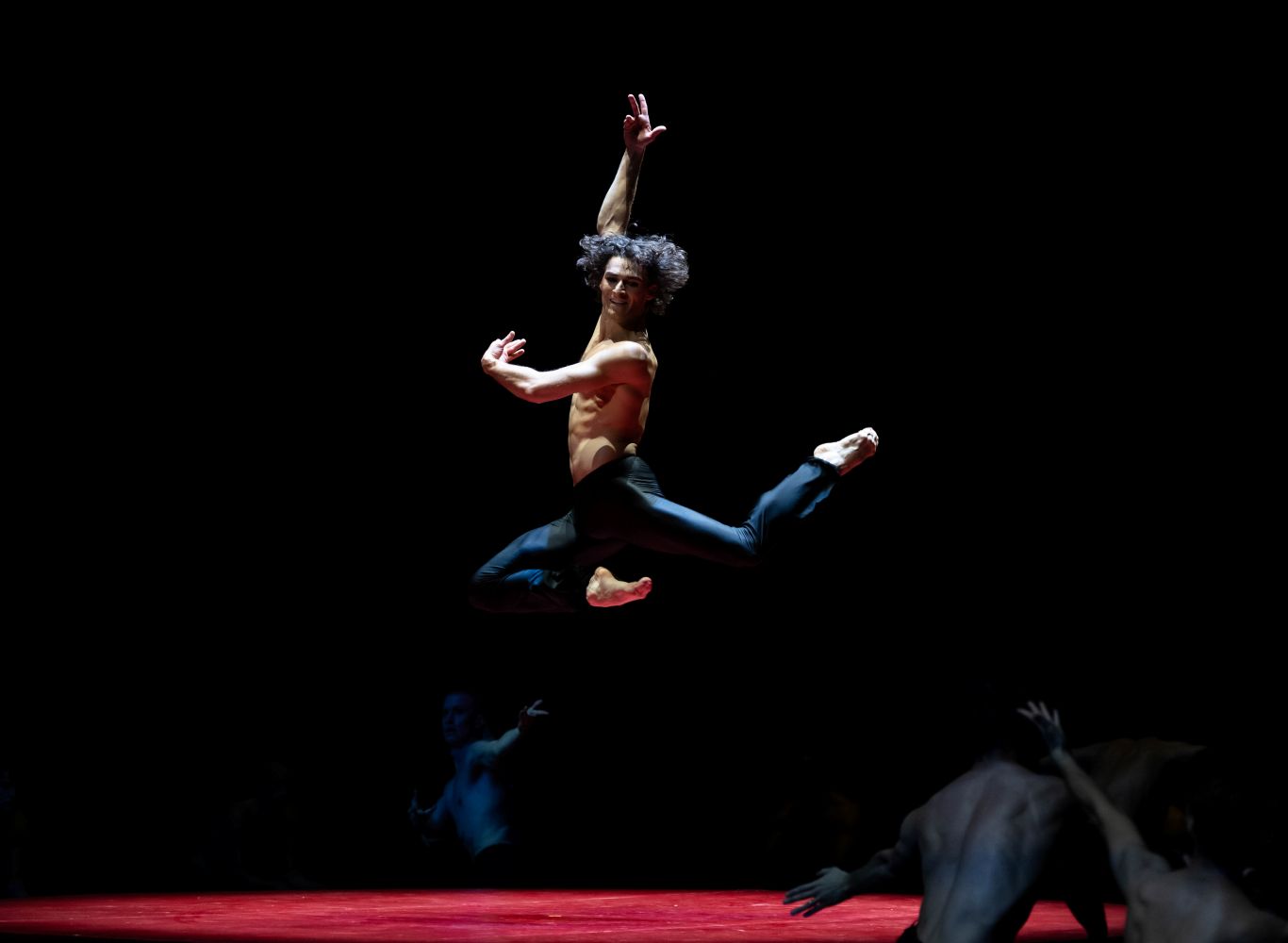
Hugo Marchand in Maurice Bejart’s “Bolero” – Photo by Julien Benhamou.
Haskins: And which ones are those?
Marchand: Well, for instance, the Roland Petit ballets–the pas de deux from Le Rendez-Vous and the pas de deux from Carmen are not known well in the U.S. I find it interesting because I guess everyone has seen the Lady Gaga performance for the Olympic Games when she opened the Olympic Games doing Mon Truc en Plumes”(My Thing With Feathers). That was actually a cabaret piece that was created by Roland Petit for his wife Zizi Zeanmaire, and she became world famous doing this solo in Europe and also in the U.S. But now everybody has forgotten about it, and everybody thinks that Lady Gaga created it, but it was made by Roland Petit. So, we are bringing back Roland Petit in the U.S. with two of his ballets.
Haskins: What are the other works that you particularly wanted to include?
Marchand: Well, the pas de deux from Caroline Carson. L’Esprit du Bleu from her Signes is very important because Caroline is an American. She was born in California. She studied dance in America, but she left and has been living in France since the 70s. She is an incredible choreographer. Nobody knows her in the U.S., but she has been working with the French, Italian, Spanish, all the European dancers for years. She creates poetry with the body, and so I’m very happy to show her work here to an audience that shares the same nationality, but who don’t know her at all.
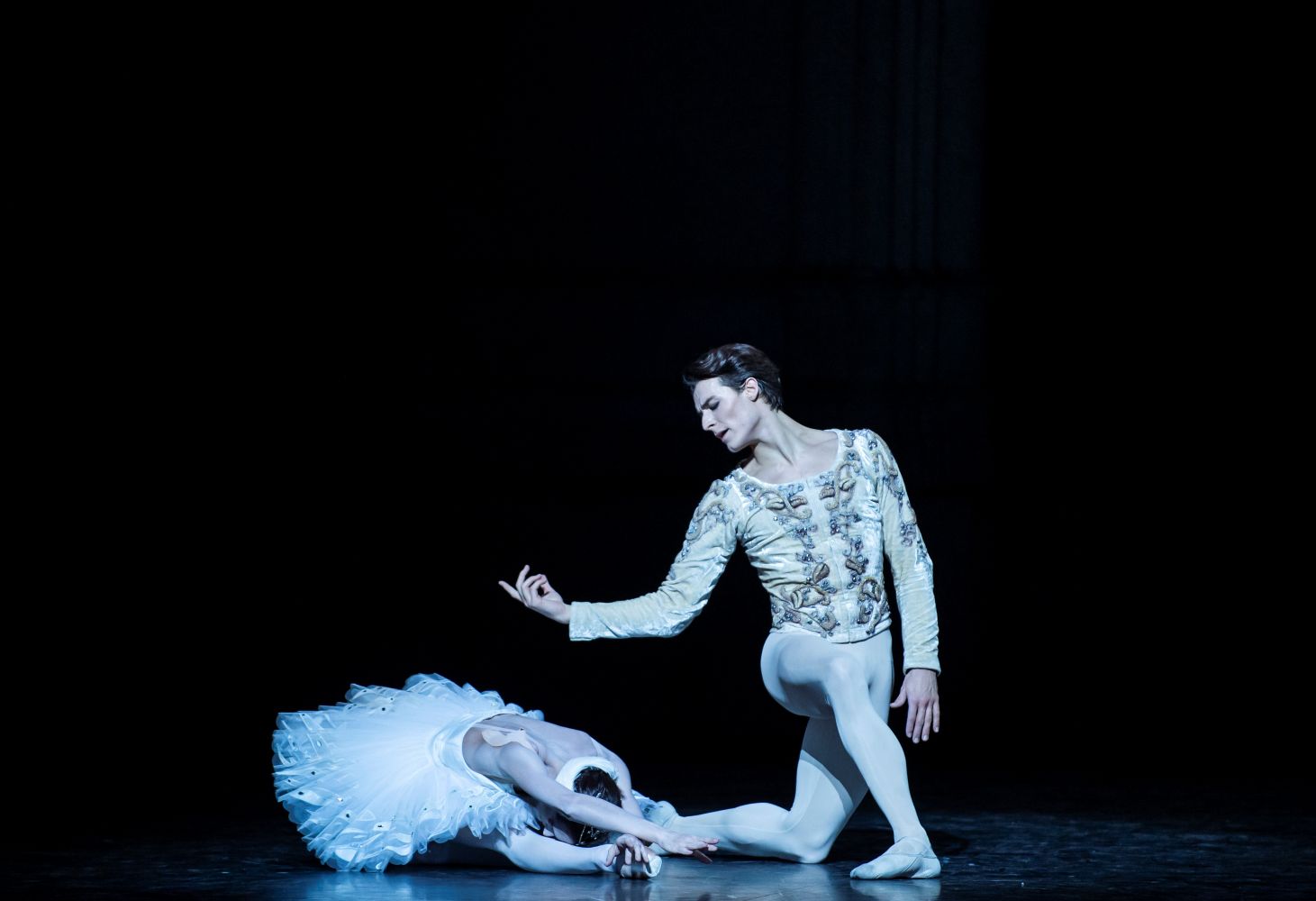
Hugo Marchand in Rudolf Nureyev’s “Swan Lake” – Photo by Ann Ray.
Haskins: Now, the Paris Opera Ballet, along with Britain’s Royal Ballet, the Bolshoi, the Mariinsky, are known as the singular, distinctive, top of their game ballet companies and styles. Here in the U.S., we don’t see French ballet dancers that much. There was a performance with the LA Phil at the Hollywood Bowl in 2022. But that was pretty short. For Americans who missed the Hollywood Bowl visit and haven’t made it to Paris to see you, how would you describe what is distinctive about the Paris Opera ballet. What is the signature of the Paris Opera at the Etoile level?
Marchand: I think the signature is the elegance. We don’t want to show off. We don’t want to be only entertainers. We want to offer an experience. We want to help people to reflect on what they are seeing, but we want to make it in a sober way. We are not there to be completely explosive dancers, throwing ourselves in the air or on the floor like crazy persons. We try to bring poetry. We try to bring elegance. We try to bring sensitive works that will help people to get in touch with their own feelings, with their own insights, their own inner worlds. That is something that I really find important. It is not about the dancers on stage. It is really about the people in the audience, how they can see the works on stage, think about their own life, and think about their own experiences, about their own feelings and emotions. When the audience comes to see a ballet performance, they don’t come to see dancers; they come to see themselves through the dancers, and that is something I really want the people to discover with the program that we’re going to show, because it’s an emotional journey. It’s not only just changing your mind and feeling better after the show. It’s really something about trying to get more in touch with your own feelings and your own intimacy, that is something that I hope people will feel, and they will leave the theater with joy, but also new thoughts in their minds, and maybe that will be that will help them to reflect on their lives and on their emotions.
Haskins: Is that something you’ve always thought, or has it evolved as you’ve danced and your career developed?
Marchand: I have always felt it deep down, but now I can use the words to say it. So now I can express this with words and talk about it, but before I was just feeling it in my guts, and now I can say it out loud, to find a way to express it.
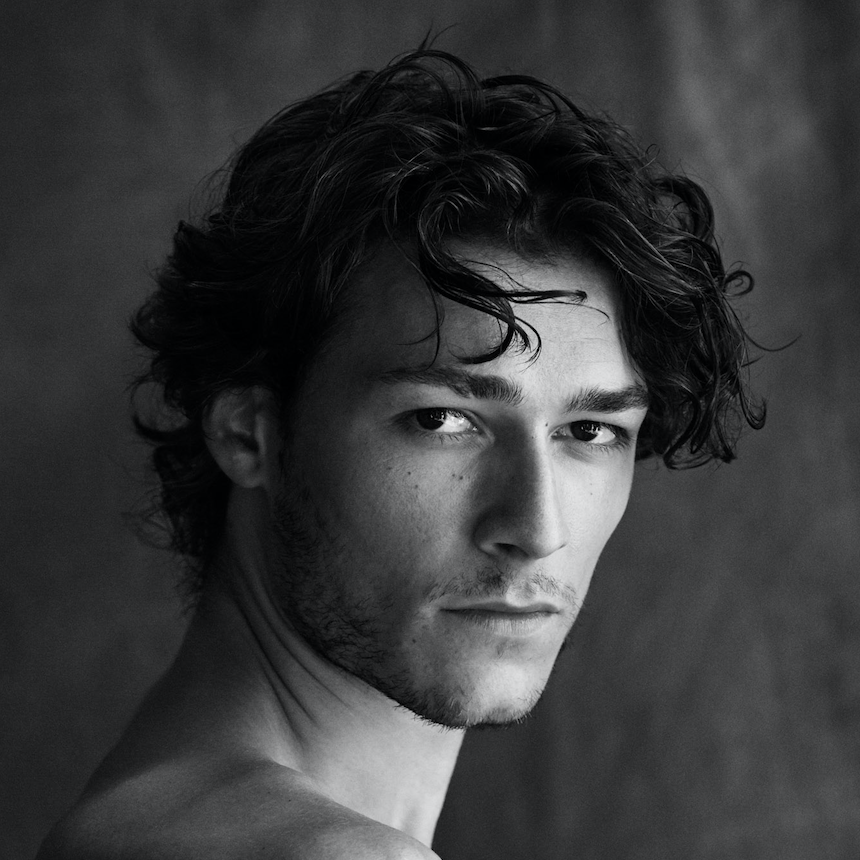
Hugo Marchand – Photo courtesy of The Music Center.
Haskins: It sounds like that perspective is very freeing.
Marchand: Yes, because the dance experience should be something that is healing, that is giving care to people, and that is not just a random performance, like a TV show or something that just you see and then you just change your mind to something else. I hope this program is bringing joy, depth, but also insightful meanings, things that you can really connect to your intimacy.
Haskins: Have you been in LA before?
Marchand: First time. It’s the first time.
Haskins: What do you think so far?
Marchand: Well, I spent my day at Santa Monica yesterday because we had a day off, so I could enjoy the beach, and it was absolutely delightful. I really loved it.
Haskins: I know you are juggling rehearsals and class and staging and everything else, but I do appreciate you taking time to talk about this visit.
Marchand: Thank you for your time, and I hope you will enjoy the performance.
The dancers appearing with Hugo Marchand are Hannah O’Neill, Germain Louvet, Leonore Baulac, Dorothee Gilbert, Antonio Conforti, Marc Moreau, and Letizia Galloni.
BalletNOW–Superstars of Paris at The Music Center, Disney Hall, 111 S. Grand Ave., Downtown LA; Fri., July 31, 7:30 pm, Sat., Aug. 1, 7:30 pm, Sat.-Sun., Aug. 1-2, 2 pm, $36-$163. BalletNOW: Superstars of Paris.
Written by Ann Haskins for LA Dance Chronicle.
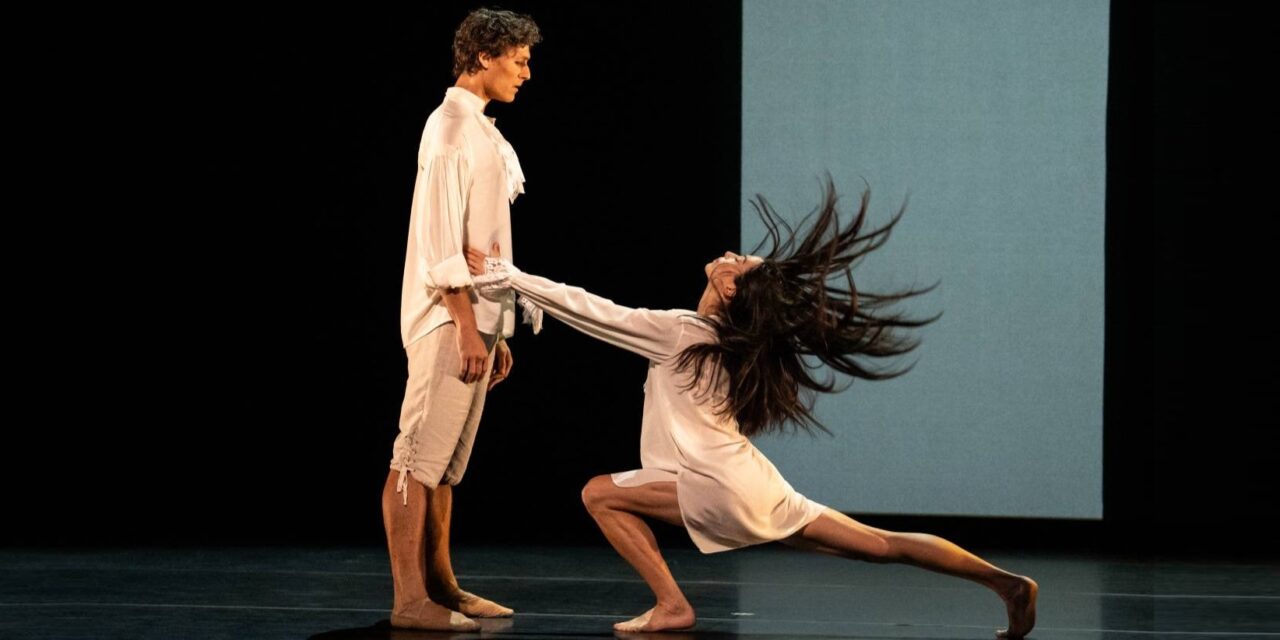
Featured image: Hugo Marchand and Hannah O’Neill – Photo by Steve Pisano.