Presented by East West Players and the Japanese American Cultural and Community Center, this was a newly revised version of David Henry Hwang’s 2002 production which was revised from the 1958 original with music by Richard Rogers and lyrics by Oscar Hammerstein II. The plot centers on Mei-Li, a refugee from China who makes a dramatic journey to the U.S. and joins the family of a friend of her fathers’ who is struggling with his Chinese Opera house while his son is set on a Western-style nightclub. Directed by Lily Tung Crystal with choreography by Janelle Dote Portman, this version made changes and updates to internal scenes and certain characters. These were all welcome additions and helped flush the story out for todays’ theater goers and certainly for today’s cultural climate as it stands at its current state.

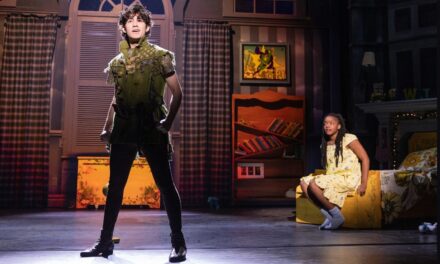
Krista Marie Yu in Rogers and Hammerstein’s FLOWER DRUM SONG – Photo by Mike Palma.
I was able to attend a talk-back with Lily Tung Crystal and Janelle Dote Portman which helped a great deal in seeing the how and why of those updates just mentioned. This is the 60th Anniversary of East West Players and they wanted to end on a special note which Hwang supplied by way of this new version of “Flower Drum Song”. In it there was an effort to update the power of the female leads which read very well. Just by having Krista Marie Yu sing the number “I enjoy being a girl” to Grace Yoo, one female to another, lifts it out of possible sexism and puts it in the realm of dreams and goals for an immigrant new to the ways of the U.S. via San Francisco. Also, the character of “Harvard” being Gay is a great departure from the original production and the movie version. Brilliantly played by Kenton Chen, he is a wonderful addition to the modern sensibility portrayed. He is also very funny.

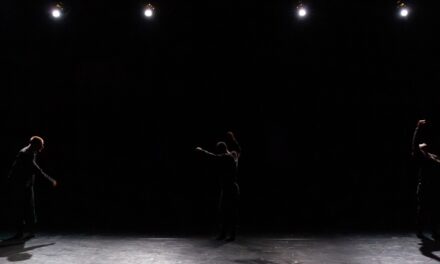
(Center) Marc Oka and (L-R) Esther Lee, Gemma Pedersen, Ai Toyoshima, Sally Hong, Hillary Tang, and Emma Park in Rogers and Hammerstein’s FLOWER DRUM SONG – Photo by Mike Palma.
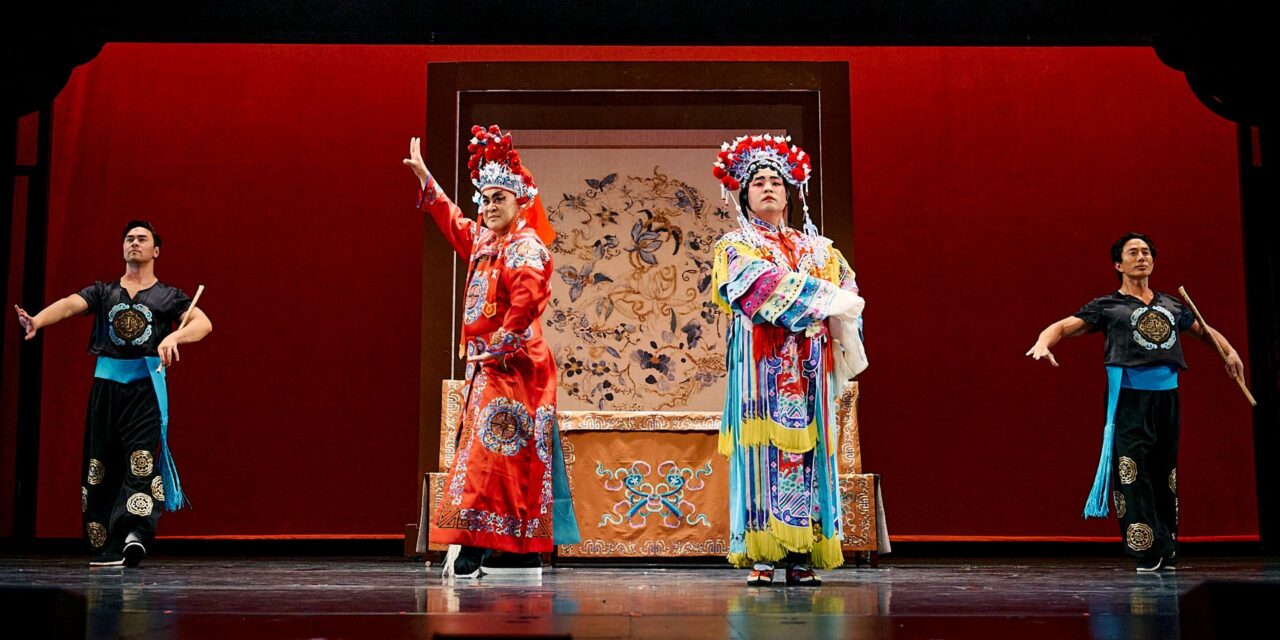
The lighting by Jiyoun Chang was beautiful throughout and began with a strong downspot on Grace Yoo as “Mei-Li”, creating the isolating atmosphere necessary for us to understand her plight in her home country. The lighting was responsible for underlining plot shifts and emotional responses during the show and was deftly done. There were powerful moments when the sidelight projected huge shadows on the set magnifying the emotional impact of a solo character. The costumes by Ruoxuan Li were fantastic and grounded us in China, then held our attention at the Chop Suey Club. The production numbers satisfied the requirements of the show but could have filled the stage more. The Aratani Theater in Little Tokyo, Los Angeles has a seating capacity of 880 and a wide semi-circular balcony with a deep stage making some of the choreography look sparse. The Beijing Opera choreography by Jamie Guan was gorgeous and read well, singled out by the lighting. Again, the costumes here were fabulous.

(L-R) Grace Yoo and Krista Marie Yu in Rogers and Hammerstein’s FLOWER DRUM SONG – Photo by Mike Palma.
The voices of Grace Yoo and Scott Keiji Takeda as “Ta” were perfectly matched for the telling of this story. They both beautifully embodied the characters with their hopes and fears and expectations. Emily Kuroda nearly stole the show as “Madame Liang” with her excellent timing and brash presence. This was very well-matched with the formal reserve of Marc Oka’s “Wang”, Ta’s father resistant to the ways of the West. Gedde Watanabe as “Chin” has a heartfelt scene with Ta and demonstrates why it is so important to honor and listen to your elders and those who have gone before. The care and sensitivity with which Hwang has updated this story is apparent from the very beginning. While in China during the fallout from the Cultural Revolution one man says, “I love my country, but I don’t recognize it anymore”, a sentiment that could be echoed today about the U.S. and its treatment of immigrants at the hands of I.C.E. Later in the production Madame Liang says to Wang, “Nothing in this country gets you respect like money!”. How prescient that her realization is truer today in this society than it was in 1958. And how sad. Hwang has illuminated a slice of life through the eyes of an Asian Immigrant at a time when it is most needed for any immigrant coming from anywhere. How difficult it can be to fit in and also to hold on to one’s own heritage and culture.

(L-R) Kenton Chen, Krista Marie Yu, Marc Oka, Gedde Watanabe, and Emily Kuroda in Rogers and Hammerstein’s FLOWER DRUM SONG – Photo by Mike Palma.
Spoiler Alert! At the end of the show, it is revealed that some of the people from the Chop Suey Club have migrated south from San Francisco to Los Angeles where they start a new theater group called…. East West Players. This brings the show home and full circle. Each cast member then gets to say where they are originally from and we hear: Irvine, Pasadena, Los Angeles, Ogden-Utah, Japan, and China proving that those that went before were successful in their hardship and laid the foundations for their families to thrive in their diaspora and for their heritage to survive in a new legacy. Kudos to East West Players and the Japanese American Cultural Community Center and all involved in this culturally powerful production.
For more information about the East West Players, please visit their website.
To learn more about the Japanese American Cultural and Community Center, please visit their website.
Written by Brian Fretté for LA Dance Chronicle.
Featured image: (L-R) Ai Toyoshima, Brian Shimasaki Liebson, Grace Yoo, and Scott Keiji Takeda in Rogers and Hammerstein’s FLOWER DRUM SONG – Photo by Mike Palma.