Dance/USA is a national organization whose core programs are “focused in the areas of engagement, advocacy, research, and preservation.” (Dance/USA press release) Dance/USA was established in 1982 by Bob Yesselman, who at one point in his long career of dance management, was the executive director of the Paul Taylor Dance Company. The organization has grown tremendously since then and continues to support the dance community via providing arts education and economy resources, international exchanges, conferences, fellowship grants, and more.
Most recently, Dance/USA announced their latest list of the 25 recipients of the Round Three Fellowships to Artist (DFA) program, which honors “dance and movement-based artists with sustained practices in art for social change. The recipients are selected by a national peer-review panel and through the support of the Doris Duke Foundation, each artist receives a $31,000 grant that “may be used at the artist’s discretion.” Also rare, this grant requires no specific project, work, or outcome.
“The Dance/USA Fellowships to Artists period is one year. One of the few regranting programs available to independent artists with an unrestricted financial award, DFA supports dance and movement-based artists from across the U.S. and its territories who work at the intersection of social and embodied practices.” (Dance/USA press release)
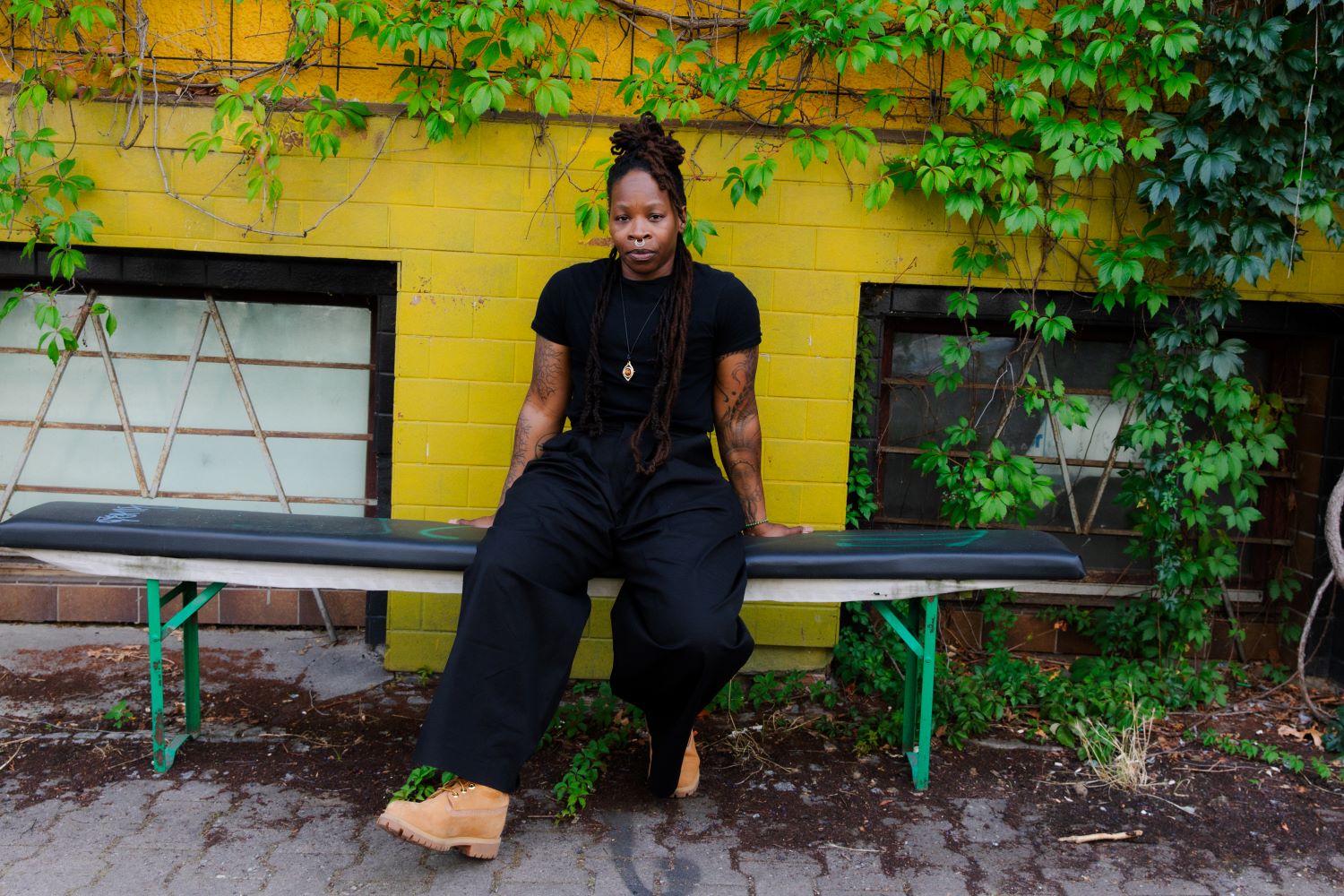
Sage Ni’Ja Whitson – Photo by Diana Pfammater.
The 2025 DFA Artist Fellows’ work in diverse dance genres and live in a variety of cities and regions from across the U.S. Some of the areas of dance that they practice have roots in Afro diasporic, African-Brazilian samba, Baladi, Ballet, Bailes de salón, Black American vernacular, body percussion, Bogle, Breaking, Bruk Up, Capoeira, Chinese, Contemporary, Contemporary Indigenous, and many more.
Three of this year’s recipients reside in California: Tonya Marie Amos (Oakland); Nadhi Thekkek (Danville); and Sage Ni’Ja Whitson (Riverside). To view all 25 of the recipients, please visit HERE.
The current round of DFA is facilitated by Haowen Wang, Dance/USA Director of Regranting, with thought-partnership support from Michele Steinwald and Mariclare Hulbert, and is administered by Dance/USA.
Previous California recipients of the DFA fellowship grants include:
Round 2 (announced 2022): Gabriel “MoFundamentals” Gutiérrez (Los Angeles), Gema Sandoval (Los Angeles).
Round 1 (announced 2019): Ana Maria Alvarez (Los Angeles), Marjani Fortè-Saunders (Pasadena, CA) Robert Gilliam (Woodland Hills).
Sage Ni’Ja Whitson (they/them) is a Queer & Transgender artist who conjures across media. Whitson’s anti-disciplinary constellation of art has received international awards and recognition, including a DAAD Visual Arts Award, Creative Capital Award, two Bessie Awards, and a United States Artist Fellowship. Via The Unarrival Experiments, Whitson’s multi-form epic on dark matter and dark energy, they exemplify a critical intersection of the sacred and conceptual in science, technology, art, ceremony, and text. Whitson’s project commissions include the Smithsonian National Museum of African Art, the California African American Museum, the Experimental Media and Performing Arts Center, New York Live Arts, and festival commissions Tanzkongress, BAM Next Wave Art, and the CCA Biennale. Whitson is currently a full professor at the University of California, Riverside, where they served as the inaugural chair of Black Study from 2023-2025. Whitson is the great-grandchild of a root worker and a proud legacy bearer, ritual leader, and practitioner of familial and ancestral Spiritual traditions. They are the conductor and ritual archivist of Illumination Catalogue, a national, site-specific ceremony practice honoring transcestors lost to violence and the stories of Black Transgender, Intersex, and Gender Nonconforming peoples across Turtle Island.
I reached out to Whitson who agreed to answer a few questions sent by email.
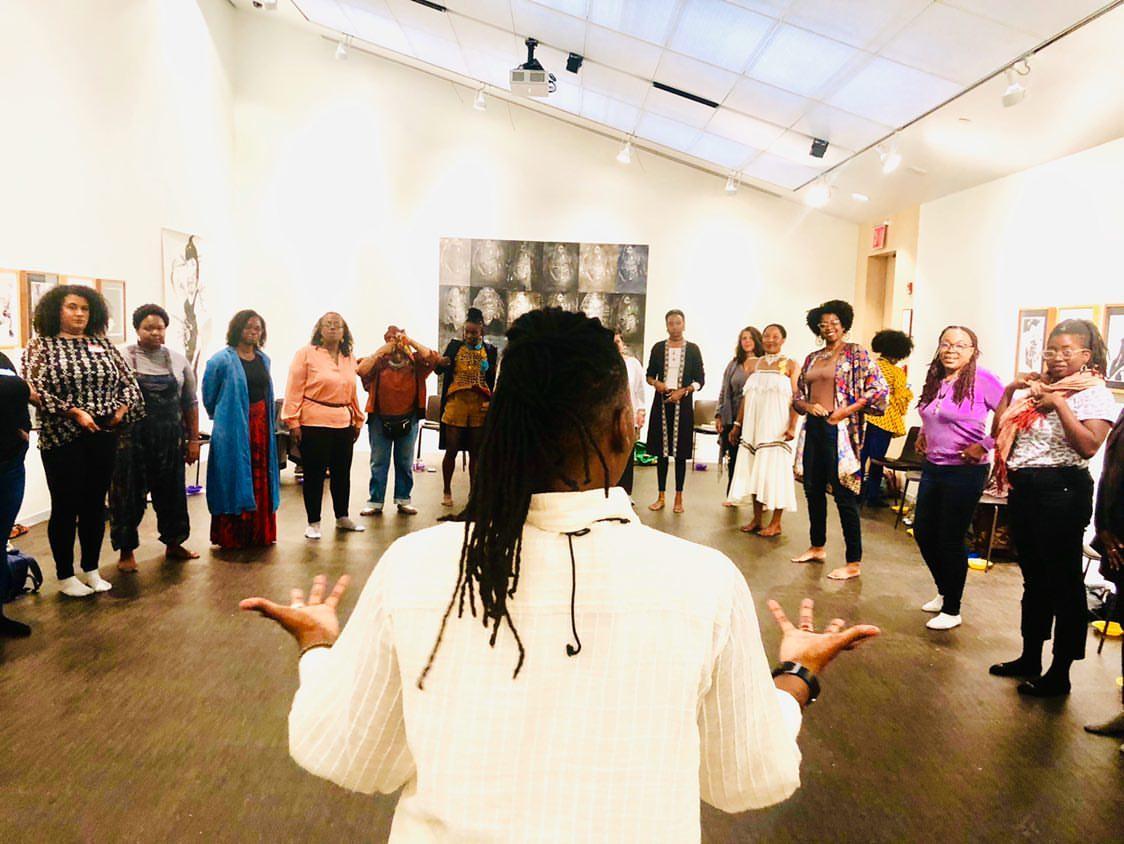
Sage Ni’Ja Whitson speaking to group in an art gallery – Photo by Dia Bui.
JS: The way that the artists are listed gave the impression that they were all of indigenous background. Whitson cleared this up.
“I do not identify as Indigenous. While I understand from familial oral history that my great-grandmother was a Black Indian (the language used by my ancestor to describe her), out of respect for the Indigenous community in the U.S. and the histories of people identifying as Indigenous for resources, clout, or unearned and performative belonging, I do not identify this way. Instead, I choose to honor the oral histories told to me and honor my ancestors and the knowledges they communicate through and to me until and unless I am able to confirm that oral history.”
JS: Regarding the fact that this Fellowship grant does not require naming a specific project, Whitson wrote.
“It is rare for artists to receive fellowships that do not require a project proposal, specific work, or an outcome. Thankfully, Dance/USA is one of them and centers the fellowship around this key principle. “
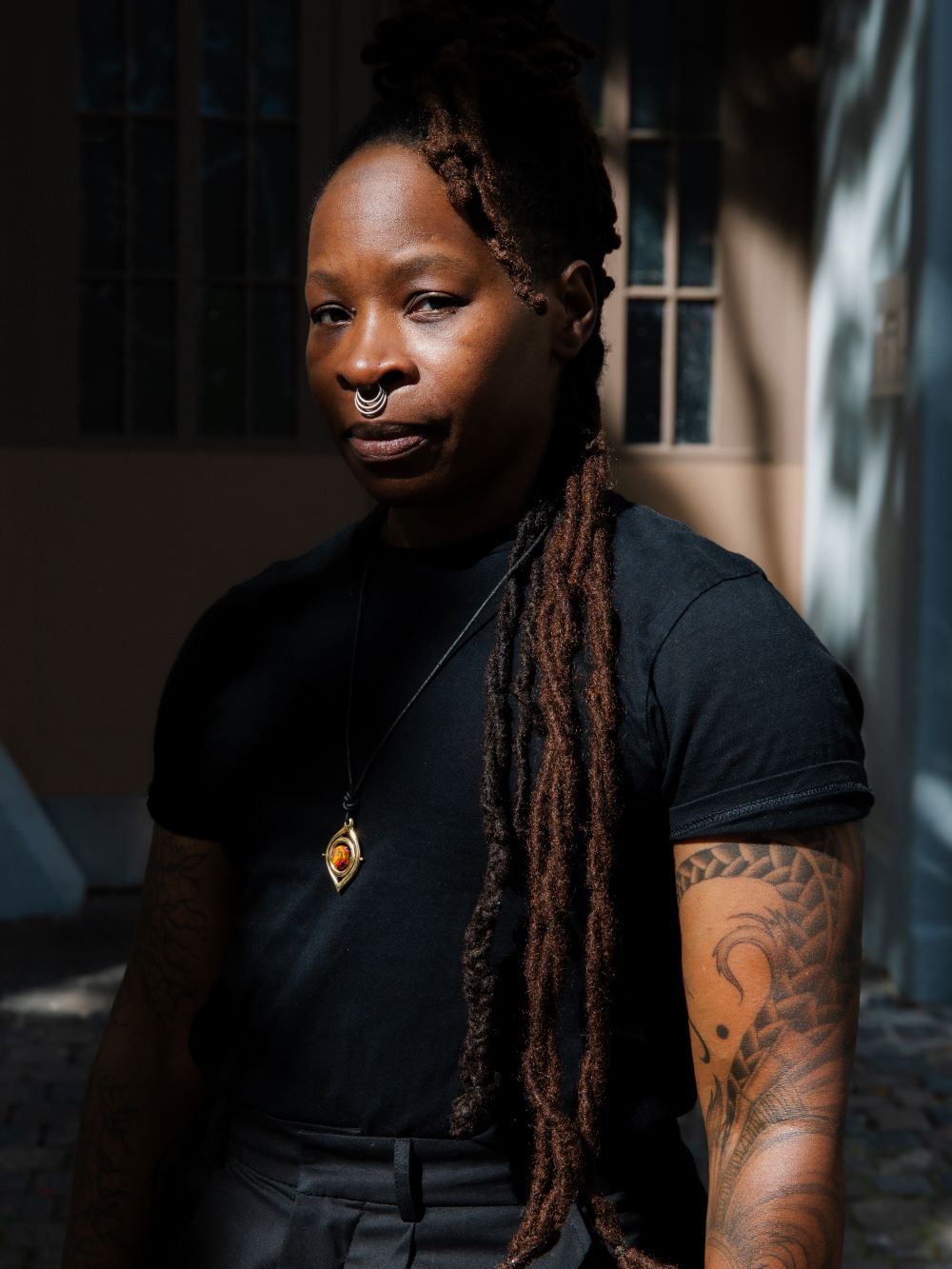
Sage Ni’Ja Whitson – Photo by Diana Pfammater.
JS: Talk about your work and process overall and how, if at all, this particular project is different from your other works.
“I didn’t propose a project, but I did apply, considering how, if awarded, it would support my art. My works these days are large-scale, process-based transdisciplinary projects that often include complex technologies or installation. At the foundation of my works is a critical call to be in service to Spirit and for the work to be a medicine. While the work I will be building over the year is not different from this, I am continuing to play with form in wild and new ways. For instance, I have just recently installed a large-scale multimedia exhibition at the California African American Museum and released a book with Wesleyan University Press, both informed by my research in dark matter and dark energy. My training as a choreographer supports my other/beyond/world-making as an artist while I communicate my practices through a range of media.”
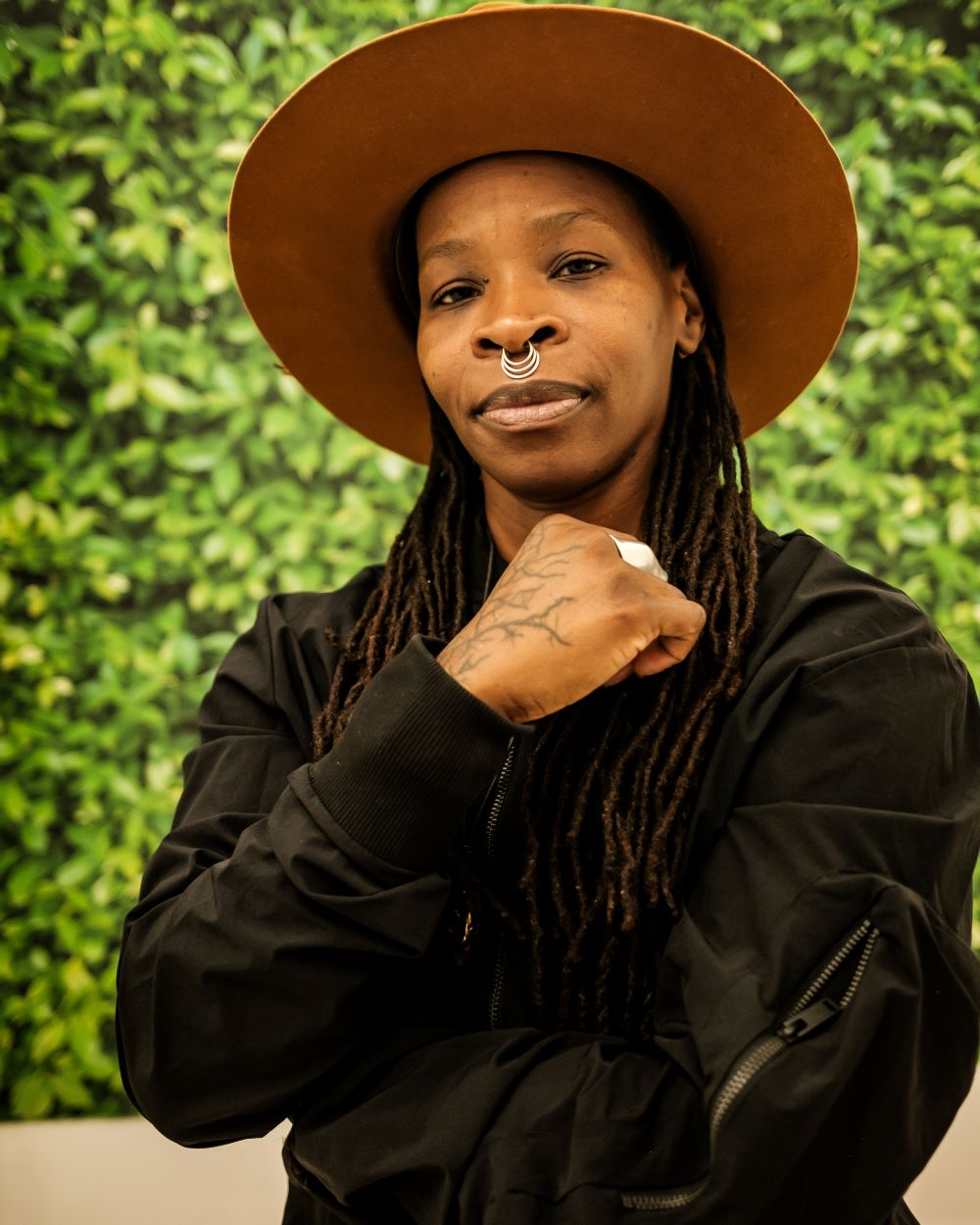
Sage Ni’Ja Whitson – Photo by Ryan Landell.
JS: Does your personal background and family’s history influences your work?
“I create from a very personal place. While my works are not autobiographical, I do draw upon ancestral knowledge and my lived experience in some way. My family’s history doesn’t influence my work in an obvious manner. In Oba Qween Baba King Baba (2018), for example, I explored Black spiritual lineages, and included overlaps in my family, although the work abstracted these intersections beyond the linear. In the series of works I am creating right now, I am focusing on ancestry broadly to include the communal, and even, the cosmic.”
“The artists recognized through these fellowships remind us that change often begins in creative practice,” said Ashley Ferro-Murray, program director for the arts at the Doris Duke Foundation. “Through their movement work, these artists reimagine how we connect, care and build community, and this program honors that vision by meeting them where they are and supporting the full scope of their creativity.”
To learn more about Dance/USA, please visit their website.
For more information on the DFA program, please visit https://www.danceusa.org/danceusa-fellowships-to-artists.
Written by Jeff Slayton for LA Dance Chronicle.
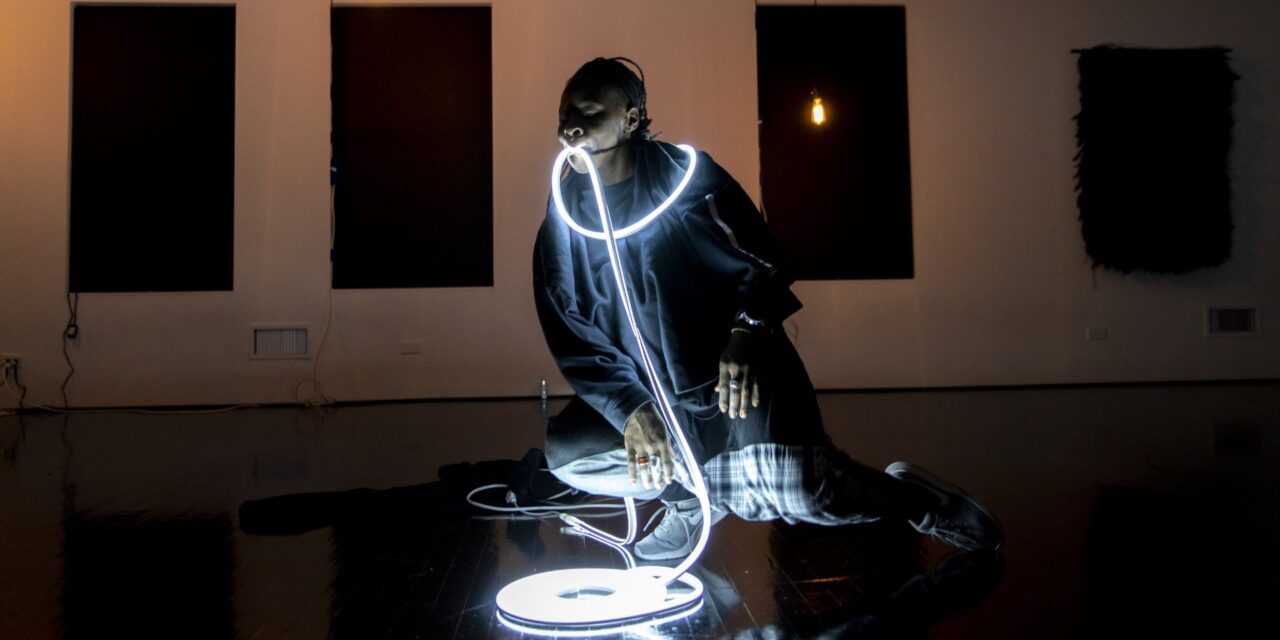
Featured image: Sage Ni’Ja Whitson in performance – Photo by Maria Baranova.