Perched on a hillside near LAX, Loyola Marymount University (LMU) commands breathtaking views of the landscape from the beach to downtown LA. From that perch, LMU’s respected dance department took a long look at the current dance landscape, then significantly expanded the dance curriculum and added new degree options for dance majors.
Implementation of those changes is overseen by the incoming dance department chair Taryn Vander Hoop. She led a New York-based contemporary company before joining the Loyola Marymount University dance faculty in 2019, just in time for the Covid-19 pandemic shutdown. Her arrival coincided with a six-year process that proposed the curriculum changes and new degrees.
Vander Hoop met with dance writer Ann Haskins on zoom to talk about the dance department today and looking to the future. (The interview has been editor for space and clarity)

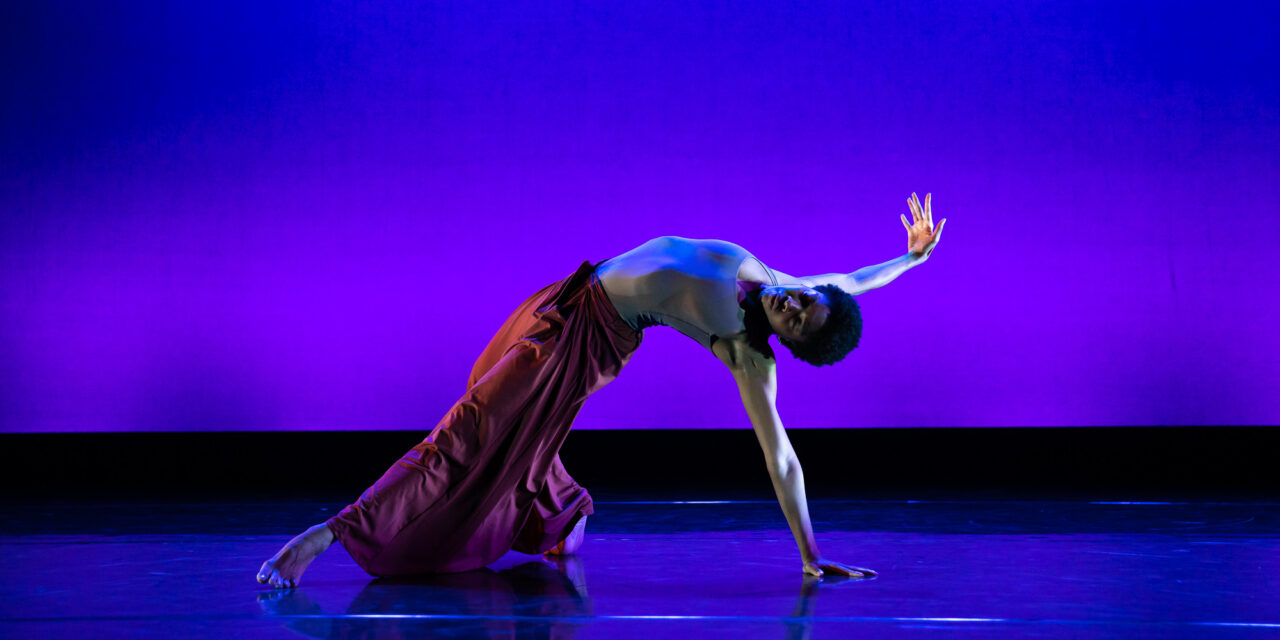
Loyola Marymount University Dance students – Photos courtesy of LMU Dance.
Haskins: First off, why did you want to be chair?
Taryn Vander Hoop: My background is running a professional dance company in New York, Summation Dance. And I love teaching. I love being a professor, but there are a lot of transferable skills from running a nonprofit in my professional life to running a dance department, so I was excited to take on the role.
I want to start by saying that my predecessor, Rosalynde LeBlanc, was an amazing chair, and I learned so much from her leadership. She did an amazing job and had a really tough job as chair during the pandemic and during a huge curriculum overhaul. Part of that overhaul that I am now overseeing really expanded our focus from ballet and modern, to be more inclusive of all forms. It took us six years to rewrite this curriculum, and every member of the team was really instrumental. I came in at the exact time that we were implementing it. So now we offer ballet, modern, contemporary, jazz and street dance styles, meaning our dancers are being trained in each style with equal representation, taking six semesters of each form.
Haskins: How is the revised curriculum being implemented?
Taryn Vander Hoop: What I really wanted to do was amplify those goals. I’m chair now, but I don’t have expertise in all of these areas. So we have three new, amazing hires. Dr. Laura Ann Smyth, an expert in jazz, is going to direct the jazz curriculum, steward it, and coach the part time faculty to make sure that our sequence of jazz classes are scaffolded, each building the basis for the next level. She also will advise me on what guests to bring in, who we want our students interacting with from the jazz world. Same with Kara Jenelle Wade, “KJ”. She’s the director of street dance styles. Willy Souly is handling our expansion with global dance, bringing his connections to Burkina Faso and his teaching of global dance history and West African dance. I think my leadership style is to empower others and their expertise, and by that, I can allow people to become leaders within the department in ways that they’re seen, so that not everything has to come to me, and I can really work on partnerships and pipelines and expanding student opportunities into the professional world.

Class with choreographer Phil Wright – Photo courtesy of LMU.
Haskins: What is the end focus for dance department graduates?
Taryn Vander Hoop: I think that there’s a couple main answers. The other exciting thing beyond our faculty expanding and our curriculum being revamped, is that we have three new degrees. Our first year class is almost at capacity at 27, and we can only take 29. They all come in as BA students in dance, that’s the general degree that allows for the flexibility to double major. At the end of the first year, a student can select one of two specialized tracks or choose to stay in the BA. One new degree is a BA in dance choreography and performance, and the other is the BA in dance pedagogy and social action. We are a Jesuit institution, so social action work is really important, and we have great ties to LAUSD and we’re one of the first schools in LA to offer the teaching credential in dance in partnership with the school board. If a student chooses to specialize, it unlocks all of these amazing opportunities.
Haskins: What are some of those opportunities?
Taryn Vander Hoop: There are our Career Catapult Initiatives, which introduce them to choreographers and networks in the commercial and concert world. We have a huge networking event in conjunction with our fall concert, where we invite choreographers to meet our dancers, and we really prepare them for that moment through class. In the spring, we have the commercial dance equivalent, a senior industry showcase where we invite agents to see our seniors.

Loyola Marymount University Dance students – Photos courtesy of LMU Dance.
Haskins: When I looked at the website and the three options, the number of units to graduate is different for each.
Taryn Vander Hoop: There’s a reason for that. The BA has the fewest, allowing for flexibility to double major. If you specialize and double major, it is going to be hard, maybe have to do summer school or take class at a community college. The reason there is a distinction in pedagogy versus performance is that with the pedagogy degree, there are several options. You can just get the pedagogy degree, or you can stay an extra year and graduate with a BA plus a masters, or you can get a teaching credential with the degree, and if you do that, you automatically get a minor in education. The fewer required credits allows for these other possibilities. Also, students who choose to do pedagogy still have access to all the performance opportunities and every single technique course.
Haskins: What part of this curriculum is new?
Taryn Vander Hoop: We always had a BA in dance, but it did not have these specializations, and we have over doubled the amount of productions we have. So we’re really creating all these opportunities for our students, which really necessitated these degrees that are more specialized.
Haskins: What was the trigger six years ago for these curriculum changes?
Taryn Vander Hoop: Well, part of it was institutional, and then during that time, there was the pandemic and the murder of George Floyd. There was a huge reckoning in the dance community about Western forms being upheld and not placing equal value on other forms. LMU is a Jesuit college and social justice driven institution. As part of that, we asked ourselves what are the forms that we believe will prepare a versatile dancer to succeed in today’s dance world, particularly a dancer in Los Angeles, because people come to us because they want to dance in Los Angeles. And not just the dance training. I think it is equally important that we have two history classes–dance culture and society, also dance criticism and theory. So they are writing, thinking about dance, getting exposure to other forms of dance.
Haskins: One of the things I hear from new companies and emerging choreographers is that dance departments did not offer anything to prepare them for the nuts and bolts– for marketing, sending media releases, budgeting, forecasting, etc. Does LMU’s curriculum offer such things for those headed toward performing or choreographing on their own rather than getting hired by others?
Taryn Vander Hoop: Being in this world, I know a lot of dance programs, and if they do offer that, it is typically in the senior year. In our new curriculum, it starts in the sophomore year and builds throughout their experience. The class on marketing, branding, and funding is offered in the sophomore year to start them thinking about who they are and how they might brand themselves while at LMU. They have time to start thinking, developing their style and artistry, and using time in the studio to get digital assets, which we all know we need. By the time I have them in the Career Catapult Initiative in their senior year, they’ve had two years to think and implement their ideas, and they’re so ready for the networking event where we all invite choreographers to the performance. We had an amazing turnout this fall. We had concert and commercial choreographers come to our show. Our seniors reached out to them, invited them personally, followed up, and then spoke to them at the event and had their materials ready to go. We’re doing a huge initiative on how to network, how to present yourself, what materials you need to have ready to go, how to find funding, how to develop your audience, how to develop yourself. And that starts in the sophomore year.

Loyola Marymount University Dance students – Photos courtesy of LMU Dance.
Haskins: It seems there has been an expanded emphasis on commercial dance.
Taryn Vander Hoop: One thing that we really wanted to offer in this curriculum change is commercial dance. Instrumental to this change is Geri Brown, who is the director of commercial dance and recruitment. She has two pivotal roles. She leads a program where she brings in the top industry decision makers, the people who are hiring people, to teach master classes every Friday. She also curates the senior industry showcase, where industry choreographers set work on the students, and then we invite the local agents to come watch them. About 70% of our majors are enrolling in that program. It’s a huge draw. Commercial dance is embedded into our curriculum, and this commercial dance elective is propelling our program forward. Geri also is out at events, talking about LMU dance, really getting the word out about all of these changes. She has made inroads to every dance agency in Southern California. The importance of her role in this curriculum shift cannot be overstated. The 30 or so department lecturers are a dynamic force expanding our ability to respond to the presence and the market for commercial dance in LA particularly.
Haskins: Does the new emphasis on commercial dance take away from other areas?
Taryn Vander Hoop: The thinking was that if we’re creating this commercial dance program, we need to have equal emphasis on concert dance, pedagogy, and other avenues, so that all of our students feel seen. I think this is an amazing sweet spot with the size of LMU. We don’t turn out a certain “LMU dancer.” Our incoming class has a max of 30 and we are close to that. We can work with the individual student to help them on their path. So to rectify concerns about neglect, in the fall, our dancers who are interested in concert dance are making connections locally and making connections with the local and national companies that they’re interested in. We’ve mitigated that tension by creating and elevating both commercial and concert dance.
Haskins: What is the advantage of going to a college dance program rather than taking class, auditioning, and going straight into the concert or commercial dance world?
Taryn Vander Hoop: Whichever route, dancers are presentational. We know how to improvise. We know how to collaborate. We know how to be creative, how to problem solve, practice discipline, manage time, and understand how to take and give feedback, which is a huge problem for non-dancers. We have so many soft skills that you can learn in the professional world through trial and error, but you certainly learn those soft skills at a university through mentorship and integration into the community. I think a reason for a college dance program instead of just going straight into the industry is the education to really understand the dance field at large. When our students come to us, they have an idea of what they want to do, and it’s usually quite limited, very myopic. They’ve had their experience where they grew up and what they were exposed to. Our faculty can expose them to the wide breadth of what dance is.
Haskins: Where is modern or contemporary dance and ballet with these new efforts?
Taryn Vander Hoop: Everything in our curriculum has been scaffolded and backwards designed, so the courses track from history, go back into the cultural context of the form, and then we expand upward into what it is today. Our modern program starts with codified techniques, and that might mean Horton, it might mean Graham, and then we’re going to build, and we’re going to look at the Judson era, then contemporary. Our top level of modern is taught by James Gregg, who works with Azure Barton a lot, and he’s also worked with Rubberband, but I would say his personal style is like contemporary, modern meets ballet and breaking hybrid fusion, really amazing esthetics. But we don’t start them there, right? Jazz starts at the vernacular social dance, right? Street dance style starts with West African, then it goes to understanding the bounce, then it goes to breaking, popping, and locking.

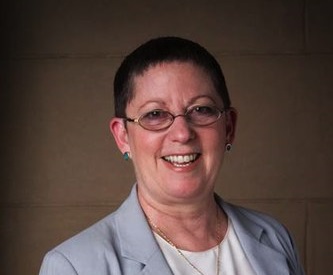
LMU Dance Chair and Associate Professor Taryn Vander Hoopt – Photo by Lee Gumbs.
Haskins: Where does ballet come into the mix?
Taryn Vander Hoop: I think we can be really honest about that. We don’t have a lot of students that are looking to go into ballet companies. Ballet as a dance form is so challenging and requires youth. Aspiring ballet dancers tend to go into a company and take college online. Our student population is mostly interested in concert or commercial dancing in LA or New York or being educators. But that doesn’t mean we’re devaluing the form, the technique, and what it can provide. With ballet, we’re taking them into what it is to own your practice as a ballet practitioner? How is it going to serve you? While we’re not offering connections to ballet companies, we’re offering connection to your anatomy, to how it can serve you.
Haskins: Is there anything else you’d like folks to know before I let you go back to all the things you have to do?
Taryn Vander Hoop: I think the thing that I like left off until too late is really emphasizing the importance of the commercial dance program, where a lot of the energy and development has gone with the new program. At the same time we’re trying to still give equal dignities to the traditional. When I think about what’s happened and what we’ve just launched, it’s the three things at the same time–new faculty, three new degrees that are very carefully curated and of the moment, and then the commercial dance program. It’s all three and happening at the same time. Already we’ve seen a 108% increase in applications and the double doubling of our productions, there’s a lot of opportunities, there’s a lot of growth, there’s a lot of excitement.
(This article is part of an ongoing series on college dance programs in SoCal.)
Loyola Marymount University Dance Department, One LMU Dr., Los Angeles, 90045. LMU Dance Department.
This article was edited on 2/24/26
Written by Ann Haskins for LA Dance Chronicle.
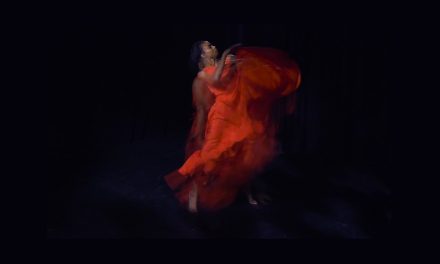
Featured image: “Strange Fruit”, choreographed and performed by Gabriella Alleyne – Photo by John Suhar, courtesy of LMU Dance.