On October 16, 2026, the Irvine Barclay Theatre presented an evening of dance with the Shanghai Ballet. The Butterfly Lovers was the chosen presentation that had premiered originally on December 1, 2001 at the Shanghai Grand Theatre. A simple Chinese Fairy Tale, based on the fable of The Butterfly Lovers by Liang Zhu, has a long past, deeply rooted in the Chinese culture. Very popular in the Asian community, there was a large contingency of children, parents and grandparents filling the theatre.
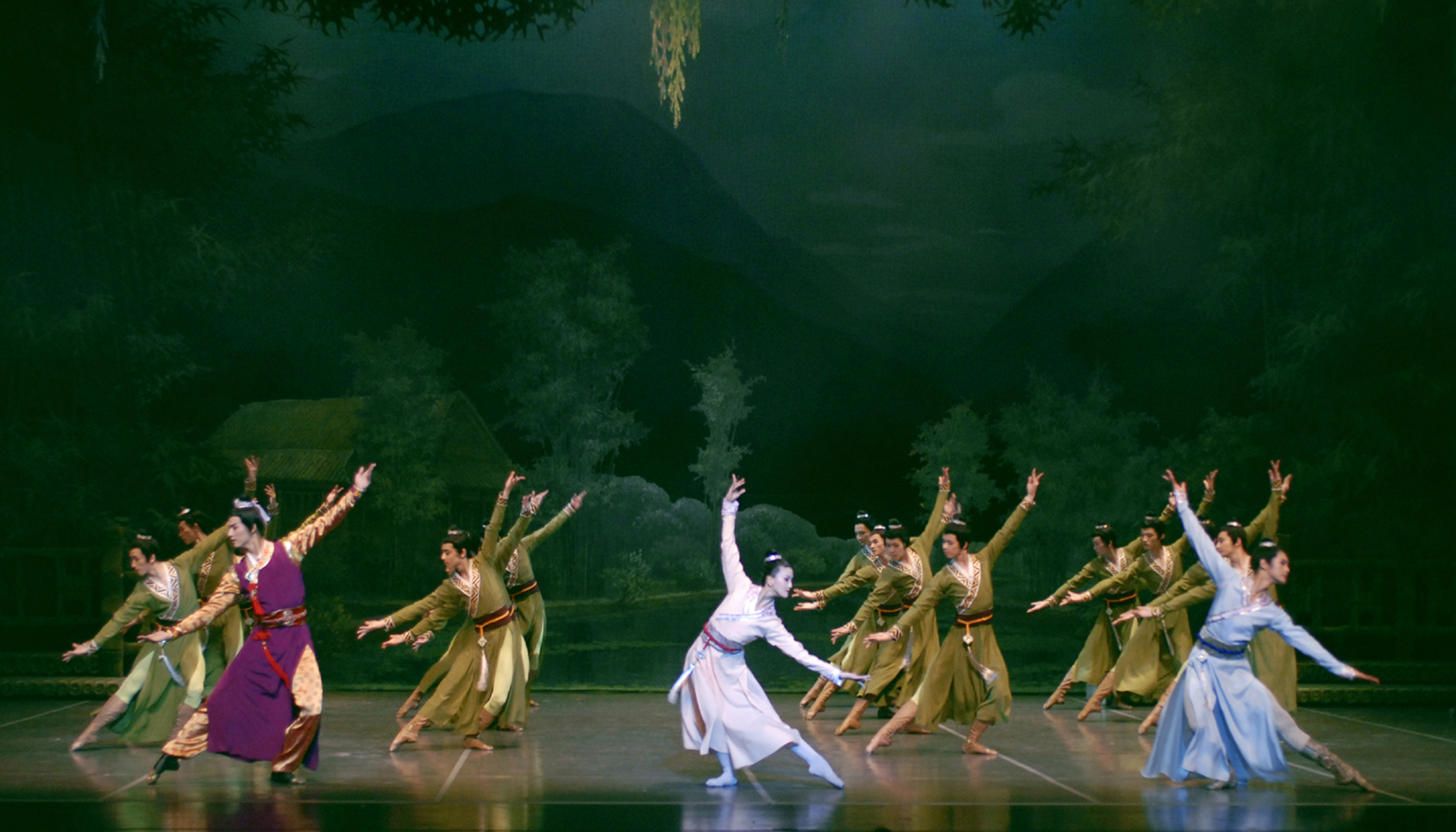
The story is set during the Eastern Jin Dynasty 300 to 400 AD and unfolds in a pastel forest and field filled with “butterflies”; which later transitions to the Grand Palace with its startling Rust and Red columns appearing to reach the sky.
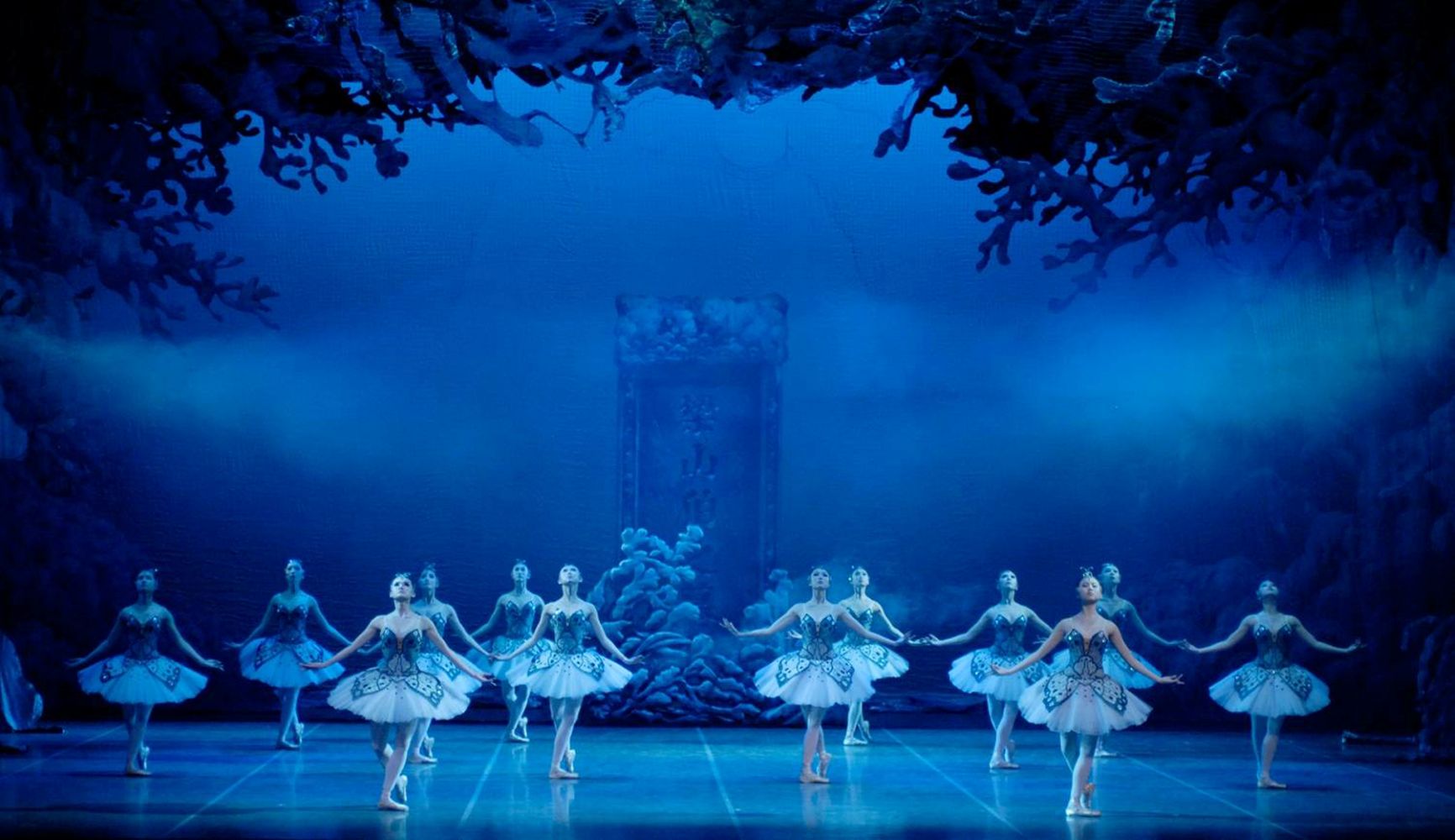
Shanghai Ballet in “Butterfly Lover” – Photo courtesy of the Shanghai Ballet.
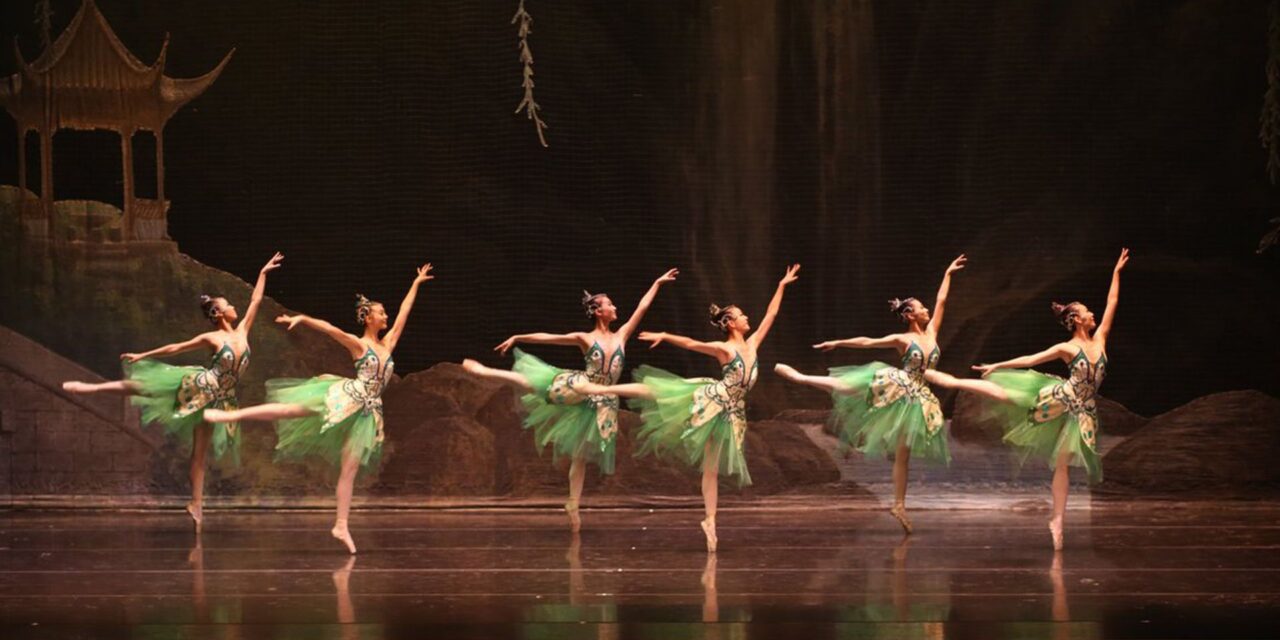
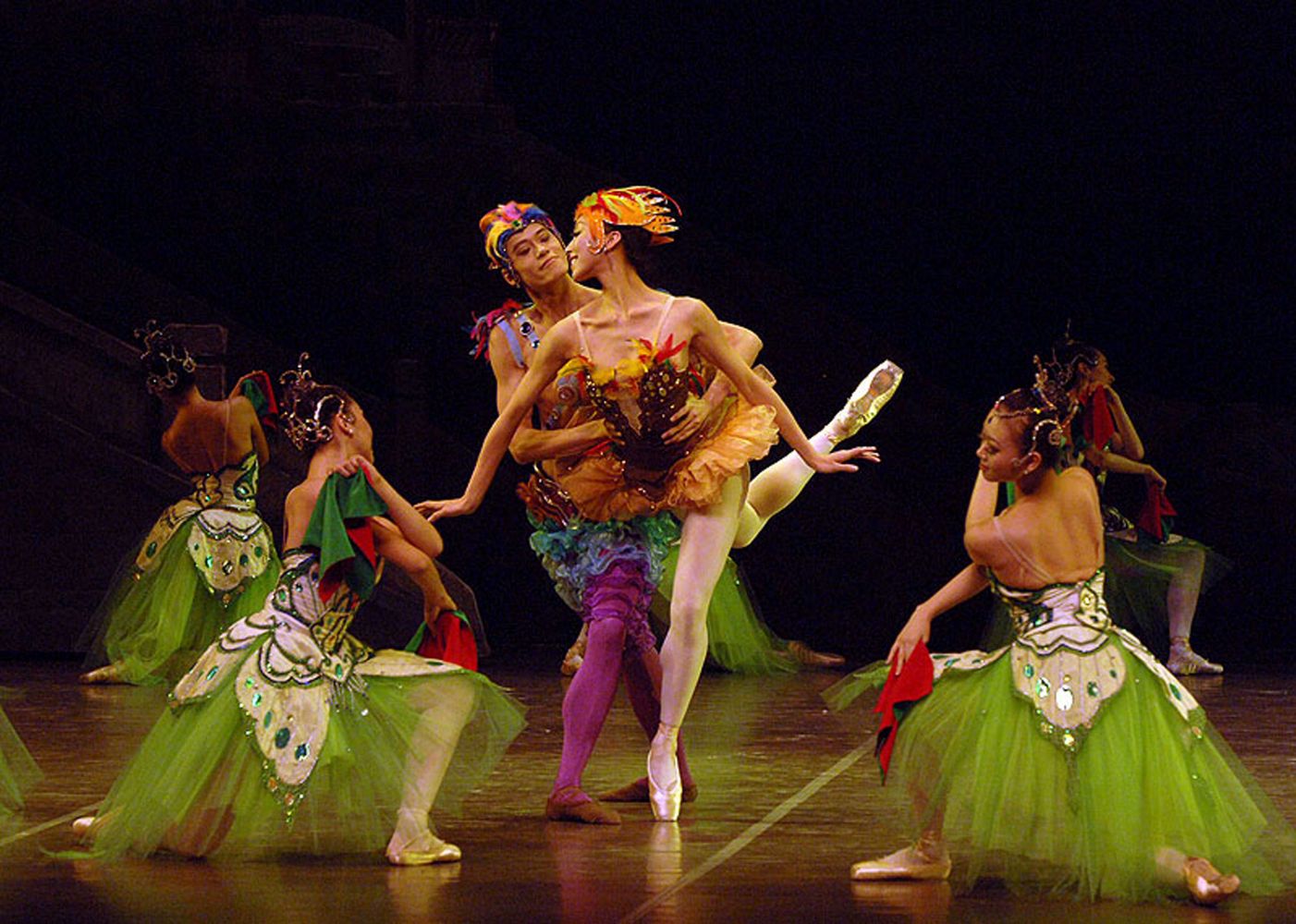
In its exposition, the corps represents butterflies in white classic tutus with colorful winged overskirts in blue, purples and yellows. They fill the stage in celebratory groups and lines. The dancers, confident, beautiful and highly trained work to set the fantasy with flawless precision. The lead couple ZHU Yingtai (Qi Bingxue) and LIANG Shanbo (XU Jingkun) are introduced, surrounded by the corps.
Young ZHU, the ingenue, is dressed as a young male student, costumed in a scholar’s traditional Eastern Jin-style cross-collar inner robe with an outer coat in white and muted pink with a thick sash around her waist. On her head, a hair wrap.
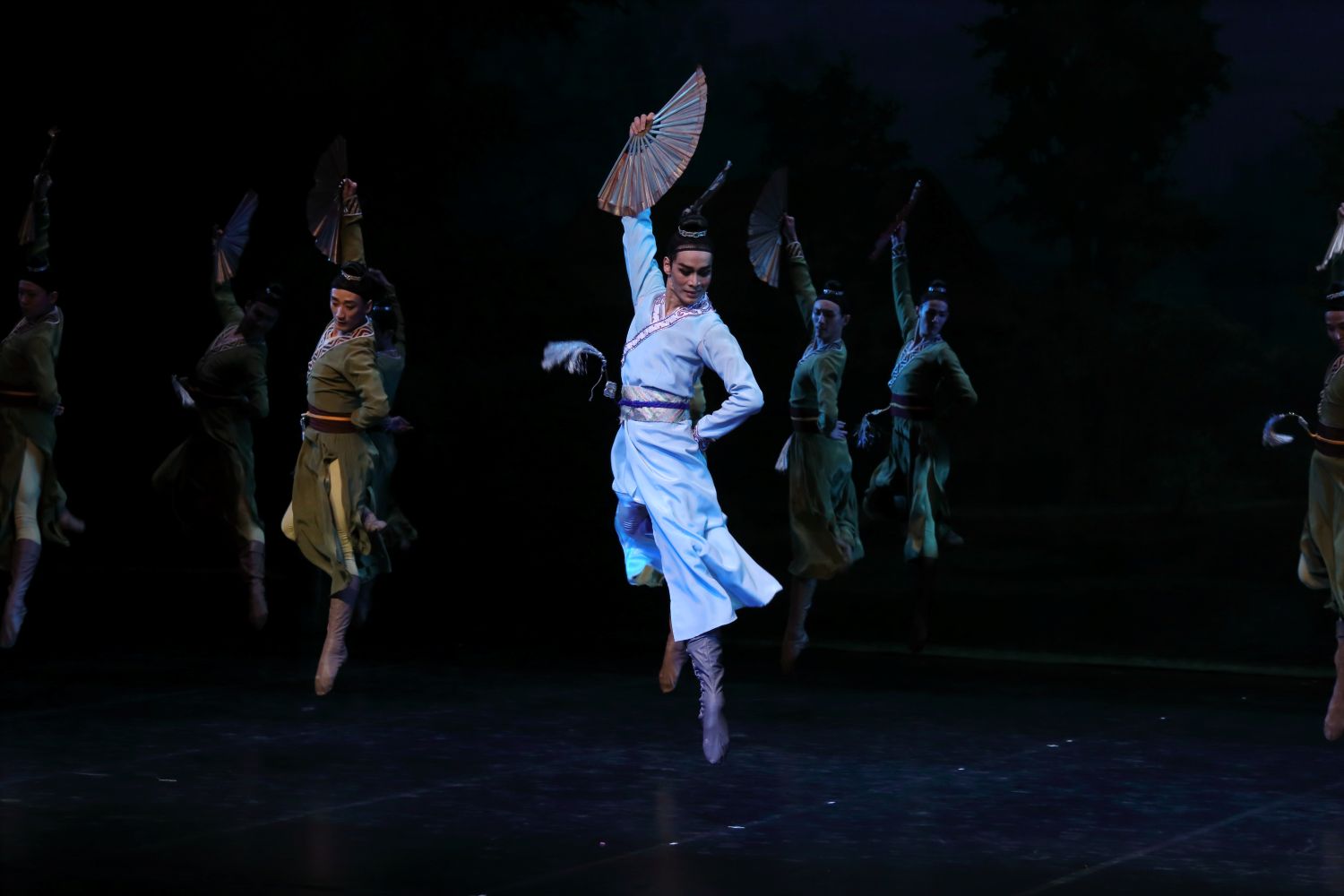
Shanghai Ballet in “Butterfly Lover” – Photo courtesy of the Shanghai Ballet.
Liang, the male scholar matches her with the traditional straight side cut robe, cross collar, light colored pants fastened close to the ankle with long sleeves and a waist sash, all in muted shades of white and teal green. His long dark hair is in a top knot with a scholar’s hat. Both individually show their joyful characters and technical prowess in their introductions.
The costumer, Li Ray Dung, combined traditional Chinese muted colors in diaphanous rich materials against the powerful robes of hand embroidered tapestry in crimson, teal, yellows, and gold, reflecting the rich elegance of the Ja court and its traditional dress. The Lighting Design by Lu Caigen lit the stage as though it was to be seen through rose colored glasses which gave it a fairy almost Disney-like ambiance until the court scenes.
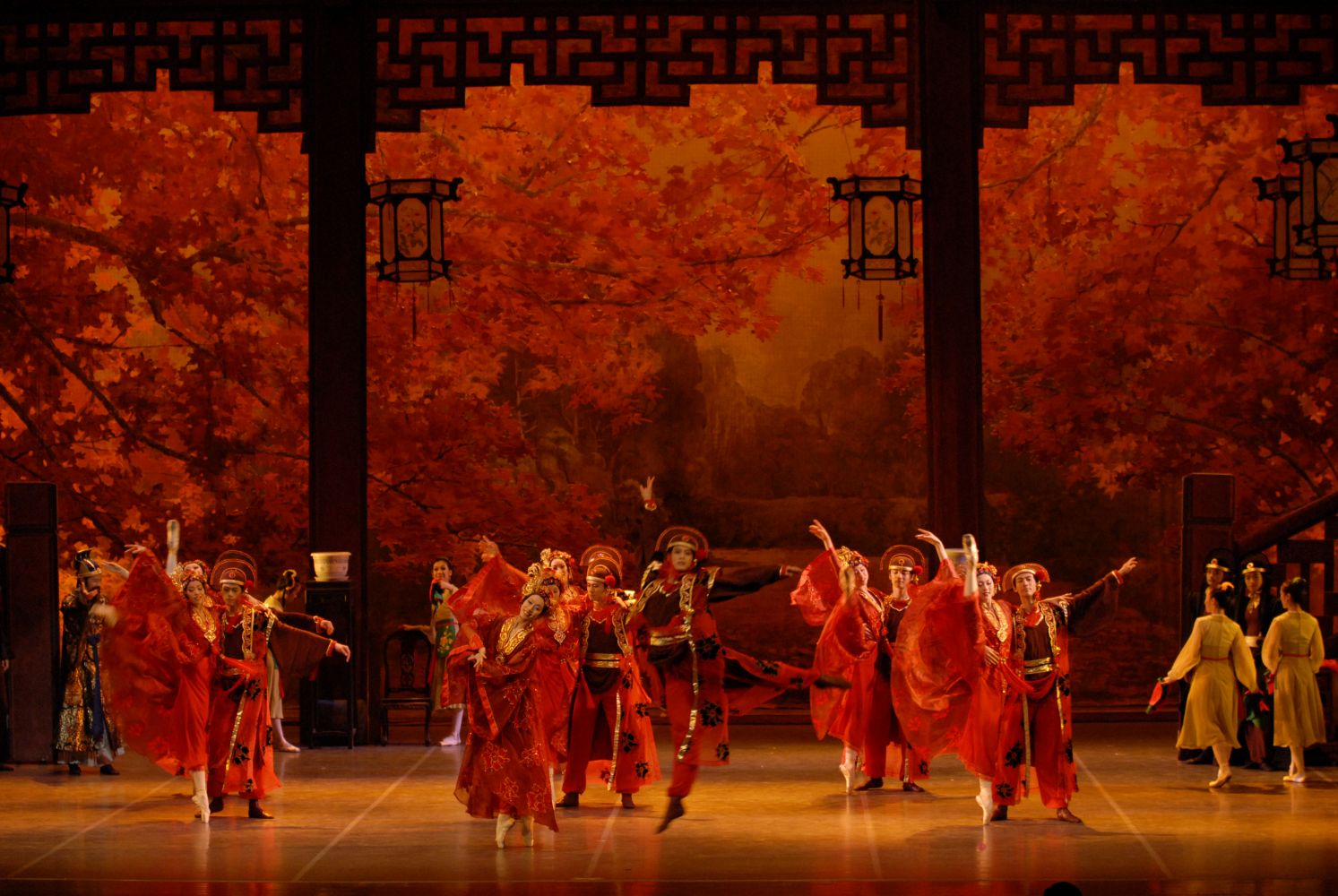
Shanghai Ballet in “Butterfly Lover” – Photo courtesy of the Shanghai Ballet.
The villain, the son of the emperor, MA Wencai (Zhang Wenjun), was clearly marked for reaction from the audience in his tall dark costumed presence. Yet, the onlookers responded with special reverence to this ancient tale, without much outward reaction. Traditionally, it is considered one of China’s great Folktales, it is often compared to Romeo and Juliet reflected in a MacMillan-like Dance of the Knights in the second act, or the star-crossed lover’s tragic and transcendent ending.
In the first act, we see ZHU’s, disguised as a young male student, a brazen act of disobedience. Not only dressing as a male, but wanting and attending school, was forbidden in those days for females.
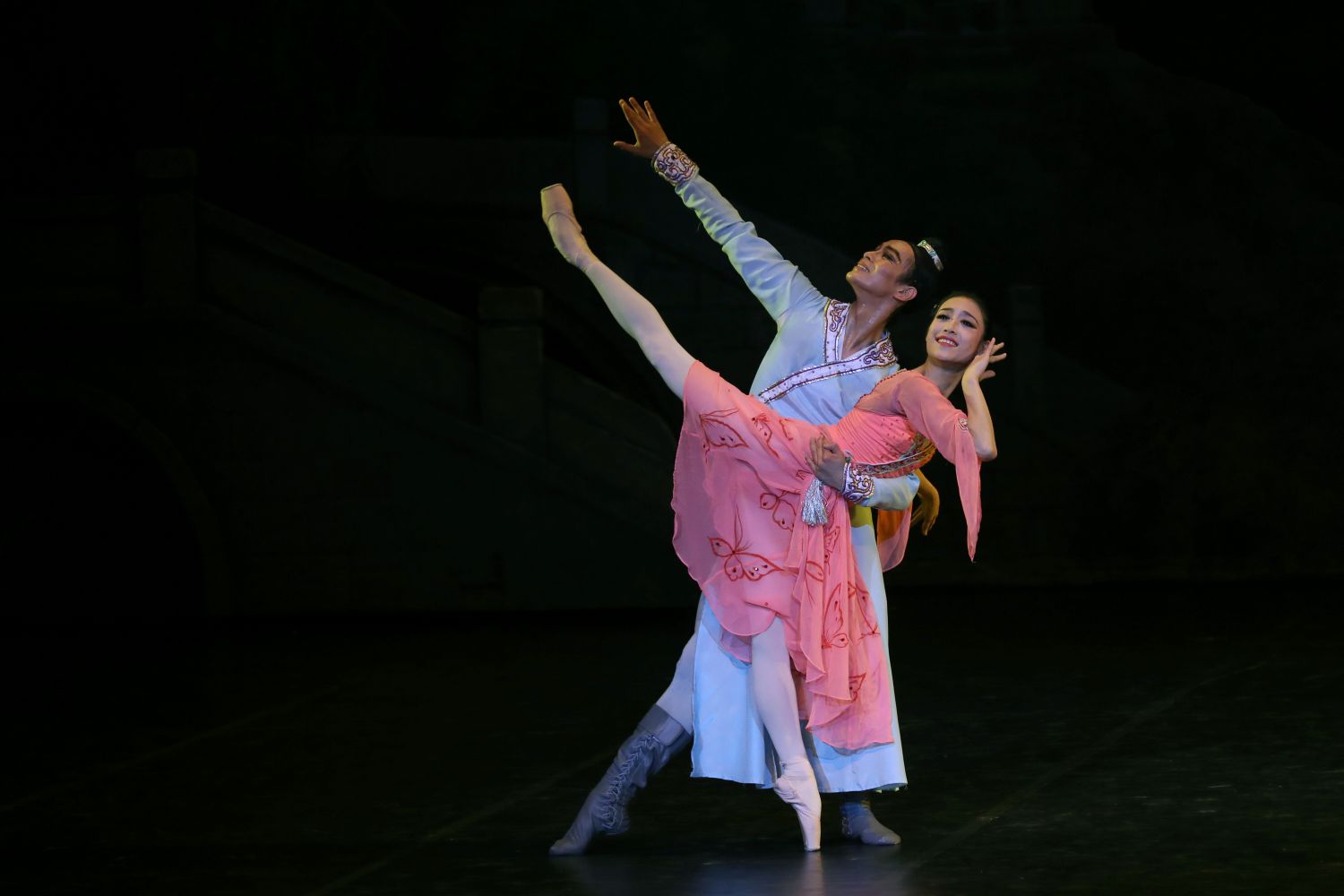
Shanghai Ballet in “Butterfly Lover” – Photo courtesy of the Shanghai Ballet.
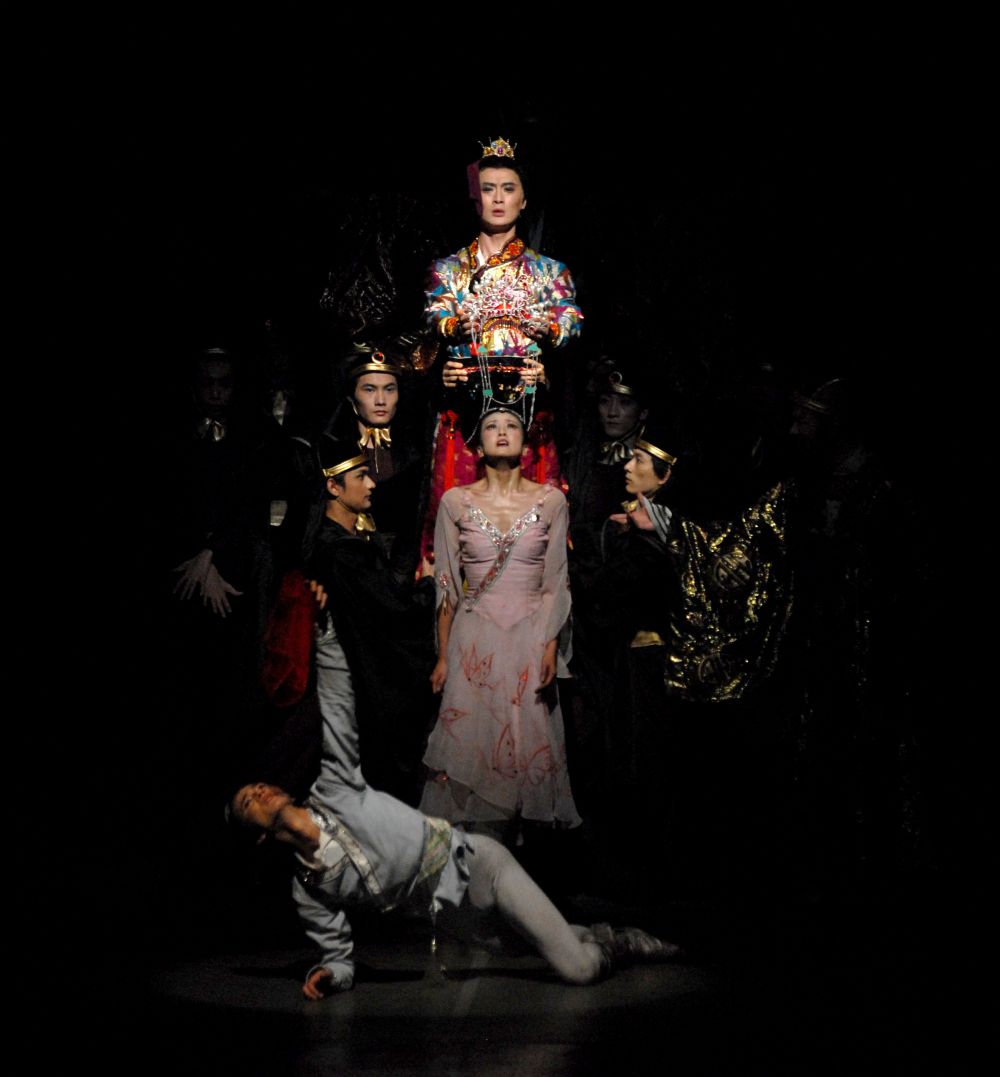
Both Zhu and Liang soon become aware of each other’s joy and friendship and as Liang discovers her secret he matched her love for him, but they are not allowed to marry. In the second act, he attempts to fight and resists. Yet, with twists and turns, discovery and betrayal, Liang is no match for a full court of guards.
Zhu, attempting to resist while being dressed in stunning rose pink wedding gown, white flowing silk robes and delicate hair ornaments, does not see a way out. She then dons a bridal veil of deep crimson, placed over her be-jeweled headdress. Her emotionally agonizing solo finally relents to her marriage to MA, the emperor’s son. Her forced marriage against her will requires Liang’s attempting to fight for her. His efforts are soon vanquished and he becomes deathly ill, dies and is thrown into a pit.
Shanghai Ballet in “Butterfly Lover” – Photo courtesy of the Shanghai Ballet.
This emotional encounter with the court guards, physically show the full ability of Liang as a dancer with his leaps in the air and impeccable foot work. And with Zhu’s agony, having to marry the arrogant son of the Emperor, she shows not only her dance ability but her wonderful character portrayal as an actress.
With Zhu’s resistance during the wedding procession they pass Liang’s grave and she sees her way out of the marriage as she leaps into the grave with him. Together in the final resolution for their love, they rise into the sky as Butterflies, a symbol of their freedom to be with each other.
Shanghai Ballet in “Butterfly Lover” – Photo courtesy of the Shanghai Ballet.
The performance bordered on a kind of perfection, with a surprising emotional effect. The leads, gorgeous to watch, excelled technically. The corps was beautifully rehearsed. The Choreography by Xin Lili, had many highlights; the pas de deux between the lovers, the grand court dances and the clean ensemble work. Although much of the movement tended to face flat front without exploration of angles.
The music by Xu Jianqiang, and librettist Luo Huaizhen was Western with Chinese influences: melodic, beautiful, and heroic and very powerful. However, it appeared much like program music not created to intersect with the dancers but it seemed to have been created separately. The choreography moved along another path with, in some cases, little connection to the score. Yet the movement and music, by virtue of creative happenstance, somehow managed to touch each other at points in the ballet.
Shanghai Ballet in “Butterfly Lover” – Photo courtesy of the Shanghai Ballet.
Despite the long drive from Hollywood, it was a pleasure to experience the lovely tradition, drama and soulful narrative of Shanghai Ballet’s finest. The beauty, worth seeing, played back as the dancers’ technical, emotional and spiritual commitment to the story and the tradition contributed a worthwhile evening of dance and drama.
To learn more about the Shanghai Ballet, please visit their website.
To see the full season at the Irvine Barclay Theatre, please visit their website.
Written by Joanne DiVito for LA Dance Chronicle.
Featured image: Members of the Shanghai Ballet in “Butterfly Lover” – Photo courtesy of the Shanghai Ballet.