Los Angeles Ballet (LAB) opened its 2025–2026 season with a program marking their 20th anniversary, January 29-31, 2026, at The Wallis. A significant milestone for the longest-operating professional classical ballet company in Los Angeles. Now, since 2022, under the direction of Artistic Director Melissa Barak, the company honors over two decades of fostering a loyal audience through its annual Nutcracker, its community outreach, and an increasingly ambitious repertory that challenges its dancers with stylistically demanding works.
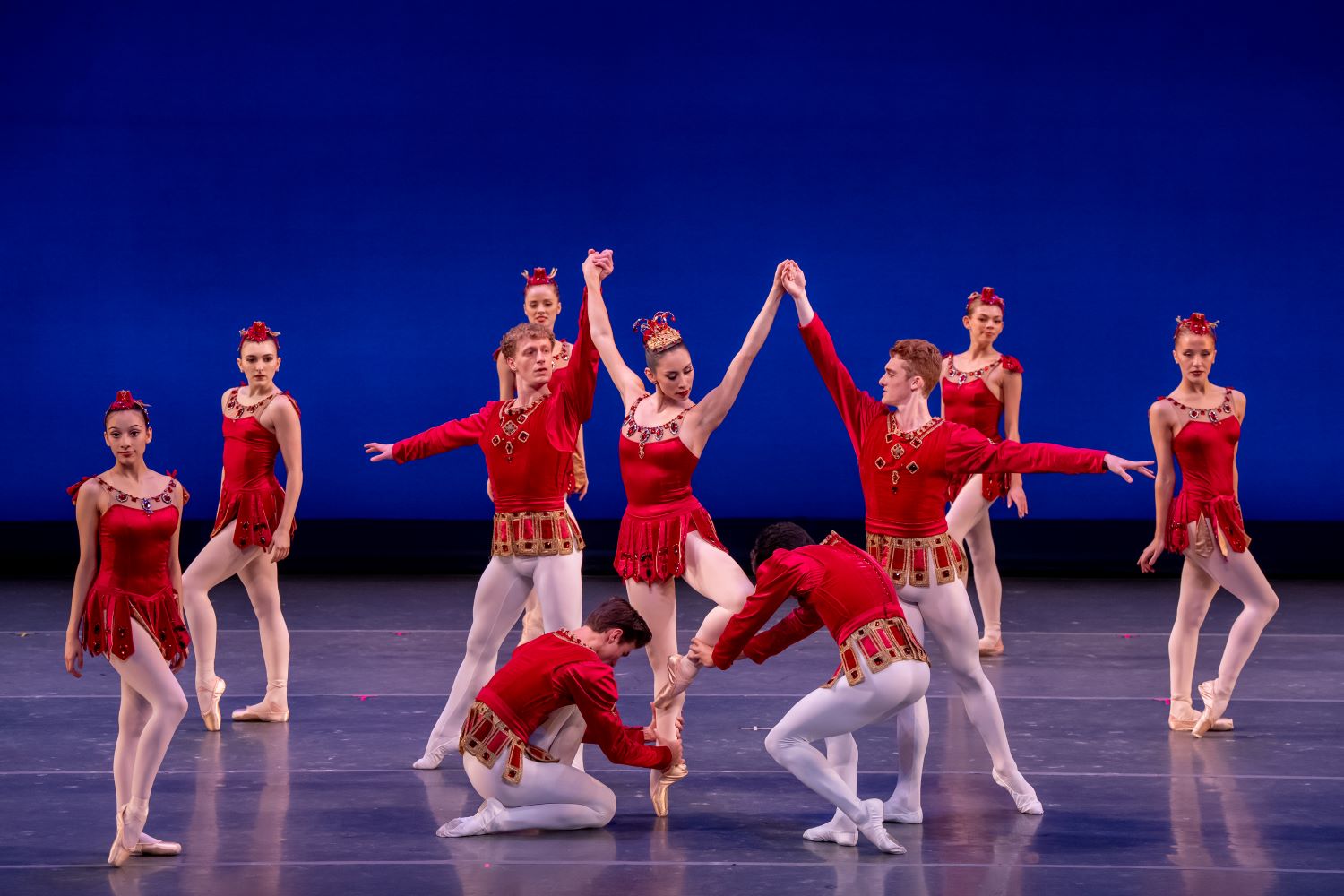
Los Angeles Ballet – Julianne Kinasiewicz and Ensemble in “Rubies” choreography by George Balanchine – Photo by Cheryl Mann.
This anniversary program traces a clear and thoughtful arc: from George Balanchine’s jazz-inflected neoclassicism, through Hans van Manen’s refined modernism, and concluding with a contemporary world premiere by Barak herself. The evening offered not only contrast, but a revealing portrait of a company navigating its history while articulating its future.
The program opened with Rubies from Balanchine’s Jewels (1967), a work startlingly ahead of its time. Sandwiched between the lyrical Emeralds and crystalline Diamonds, Rubies delivers an unmistakable New York edge. Igor Stravinsky’s Capriccio for Piano and Orchestra (1929) growls and teases—brassy declarations snap into sly lyricism before careening back into syncopated, off-kilter rhythms that demand both precision and attack.
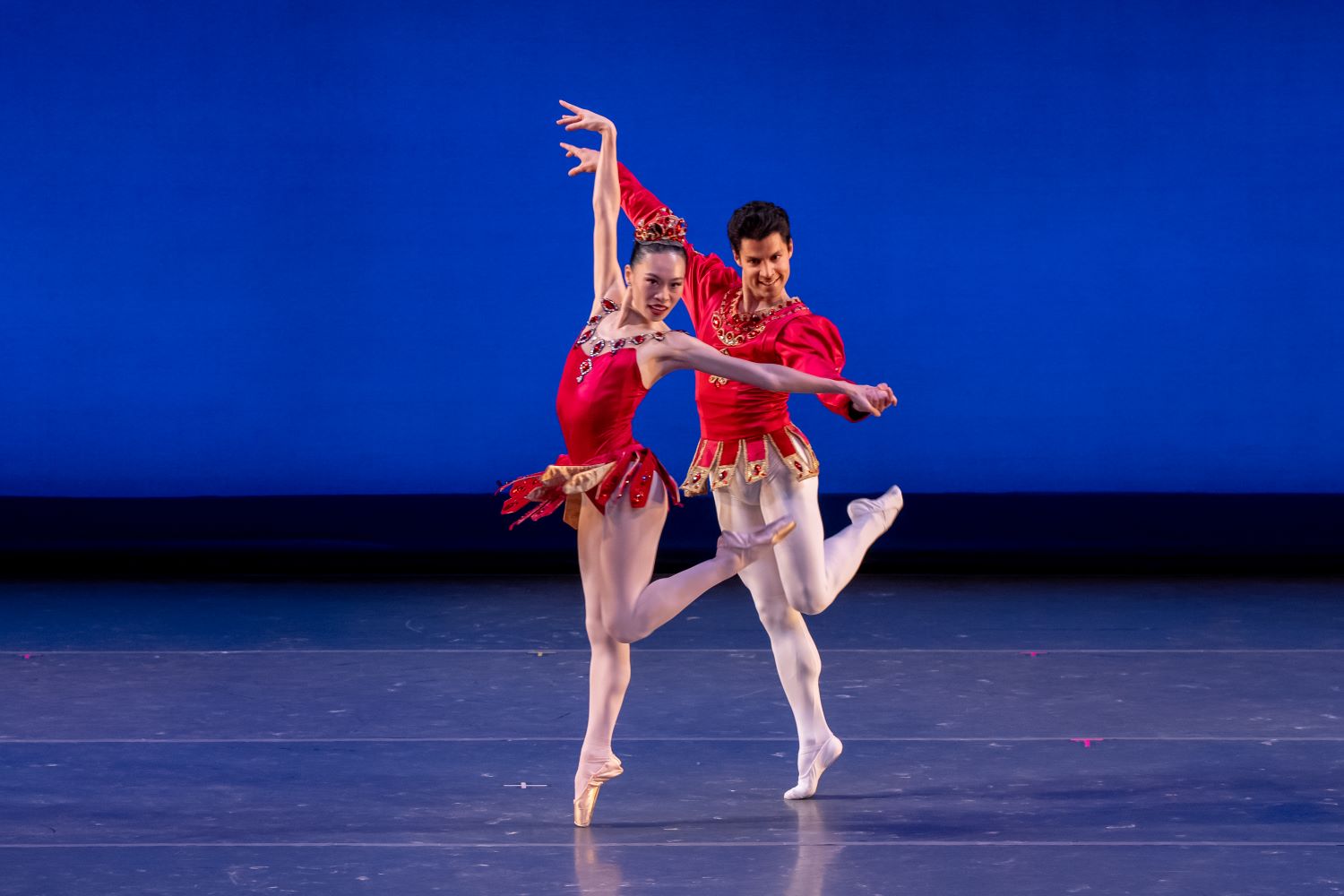
Los Angeles Ballet – Kate Inoue and Marcos Ramierz in “Rubies” choreography by George Balanchine – Photo by Cheryl Mann.
Restaged by Darla Hoover for the George Balanchine Trust, Rubies once again regains its sparkle. The slatted crimson Romanesque costumes—on loan from Ballet Arizona—made an immediate impression as the curtain rose at the Wallis Annenberg Center. Nathan W. Scheuer’s subtle lighting allowed the ballet’s angular wit and theatrical playfulness to register clearly, bringing Balanchine’s coy flirtations into sharp contemporary focus.
This choreography requires dancers to be on the music, not pulled along by it. Musical exactitude, athletic freedom, and rhythmic confidence are non-negotiable. There is no indulgence; every phrase must count.
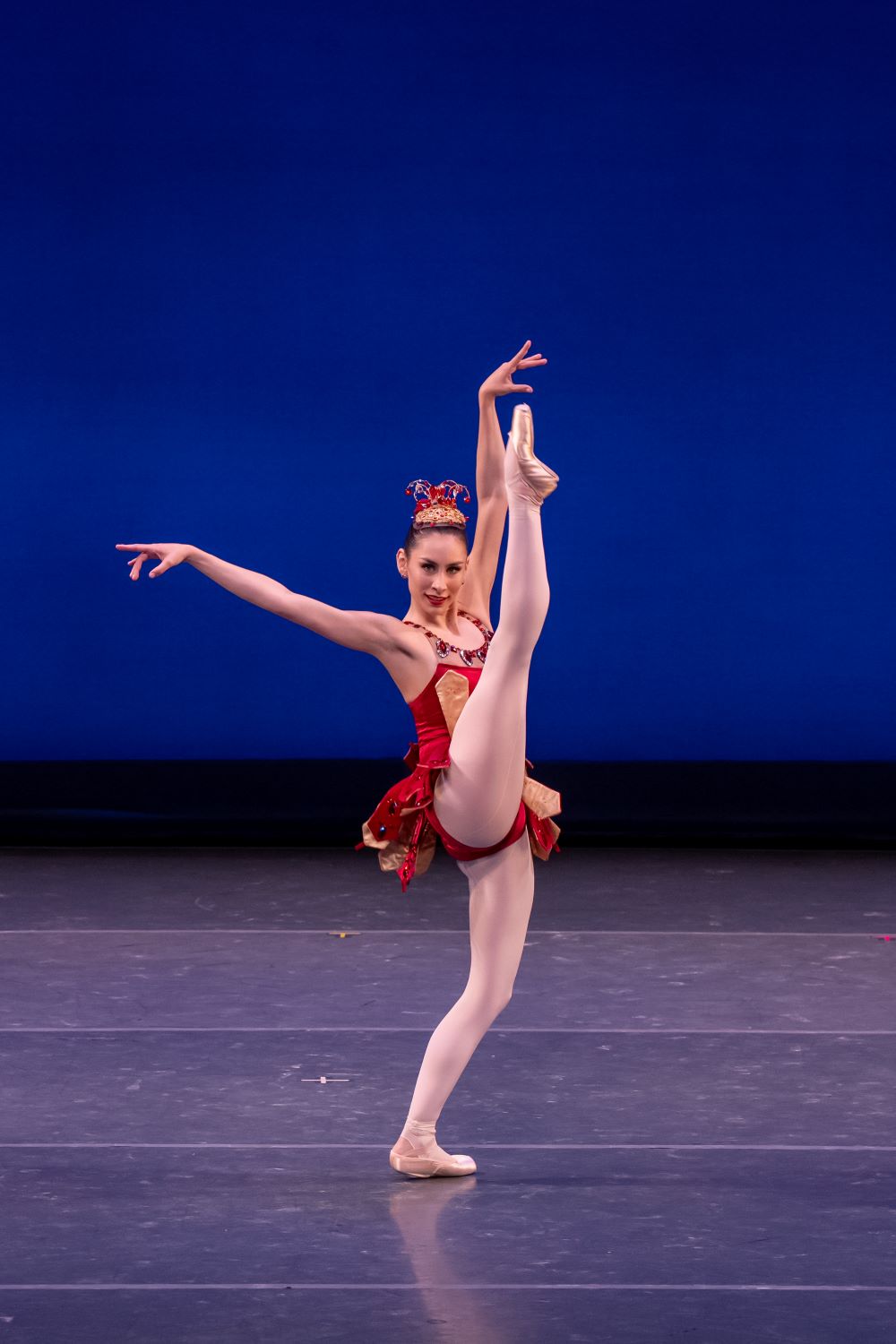
Los Angeles Ballet – Julianne Kinasiewicz in “Rubies” choreography by George Balanchine – Photo by Cheryl Mann.
Julianne Kinasiewicz, tall and leggy, looked ideally suited to the ballet and brought natural lyricism, though at times appeared to wrestle with the percussive bite the choreography demands. Kate Inoue, dancing what was originally Patricia McBride’s tour de force, was compact, sharply articulate, and fully there with the demanding allegro. Her partner, Marcos Ramirez, attacked the role with intensity and drive, revealing just how punishing the nonstop ballon and aggressive partnering can be—a reminder of the masculine bravura long associated with Edward Villella.
The ensemble: Marco Biella, Bryce Broedell, Jacob Soltero, Theo Swank, Natalia Burns, Cassidy Cocke, Poppy Coleman, Abigail Gross, Taylor Hugens, Lilly Leech, Chloe Oronoz, and Cleo Taneja, supported the principals with discipline and élan, meeting one of Balanchine’s most rhythmically unforgiving ballets with focus and commitment.
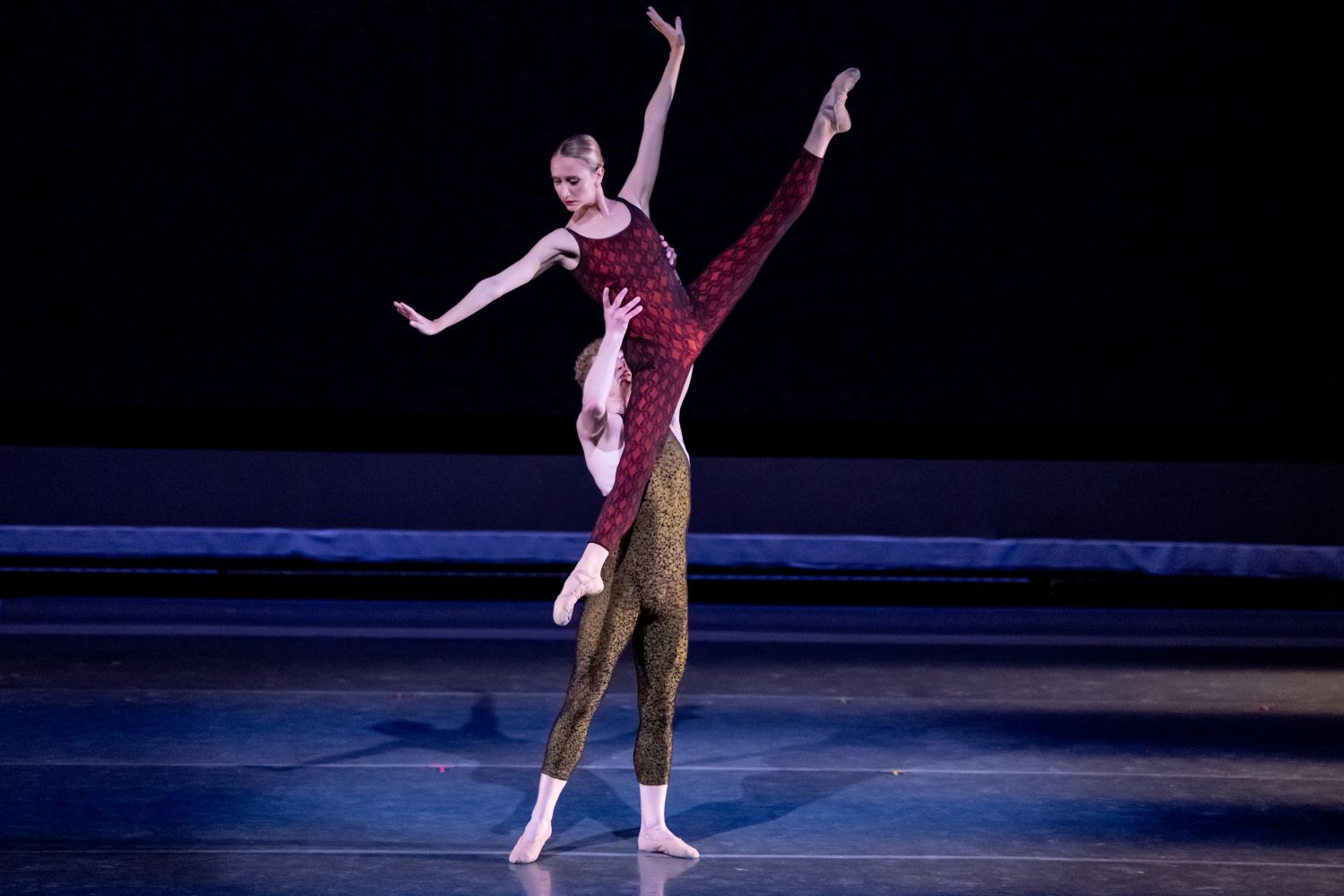
Los Angeles Ballet – Brigitte Edwards and Marco Biella in “Frank Bridge Variations” choreography by Hans van Manen – Photo by Cheryl Mann.
Hans van Manen’s Frank Bridge Variations, set to music by Benjamin Britten (1937), Bridge’s student, offered a striking and welcome contrast. Premiered in 2005 for Dutch National Ballet, the work is quietly absorbing, beautifully crafted, and emotionally grounded. Van Manen’s understated genius emerged through compelling performances by Brigitte Edwards, Lilly Fife, Marco Biella, and John Kekle.
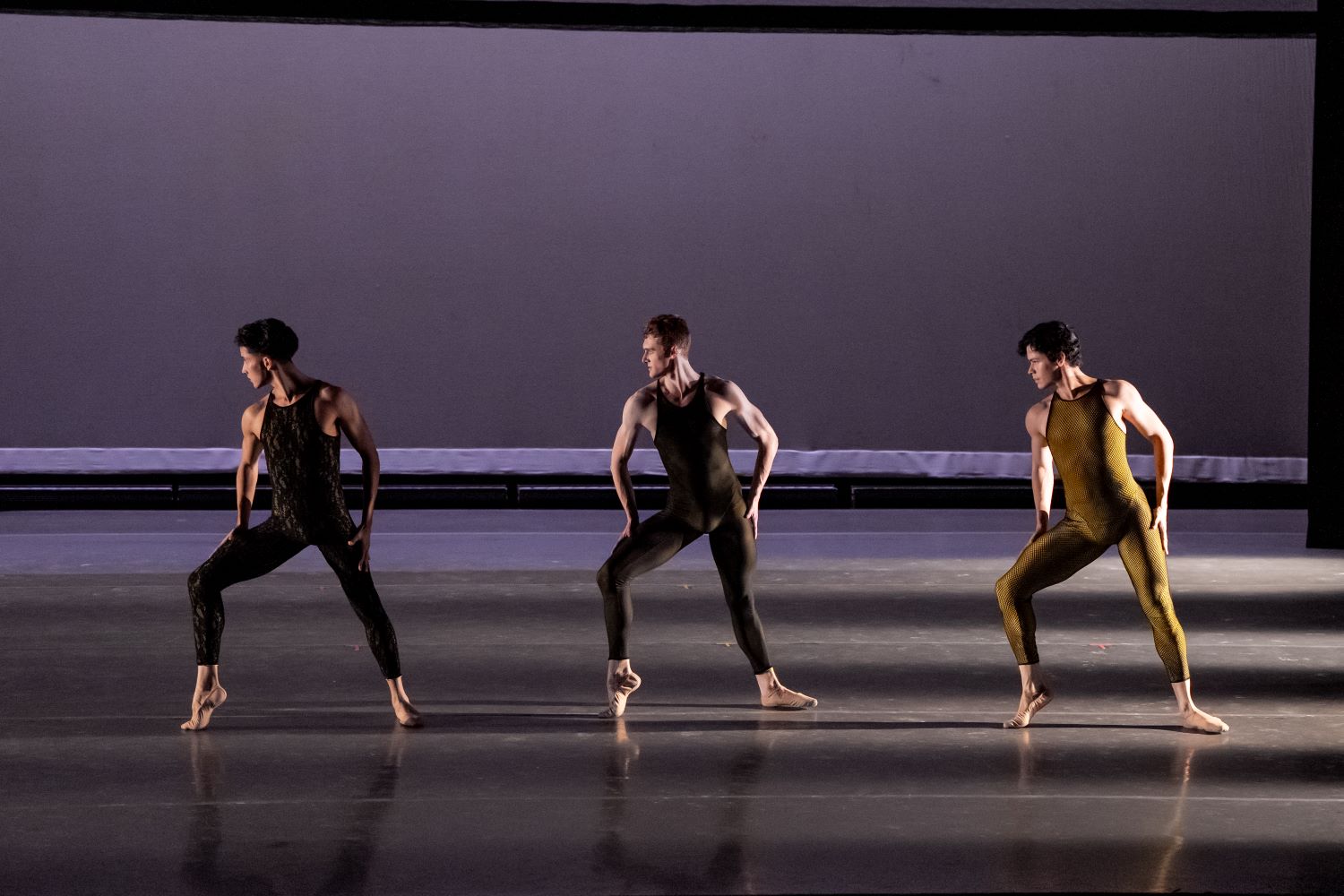
Los Angeles Ballet – (L-R) Felipe Zapiola,Theodore Swank, and Nick Sedano in “Frank Bridge Variations” choreography by Hans van Manen – Photo by Cheryl Mann.
The choreography unfolds with unhurried clarity, suggesting relationships that feel lived-in—as if each dancer carries a shared private history. Keso Dekker’s original costumes, iridescent cranberry bodysuits for the women and deep green and black paisley for the men, enhanced the ballet’s restrained elegance. The dancers’ comfort with one another allowed nuance to surface without force; the technical execution remained clean and unhurried, leaving space for musical phrasing and subtle human exchange.
Van Manen’s masterful use of symmetry and asymmetry shaped constantly shifting designs, creating a visual architecture that felt both precise and humane. His musicality, and his subtle, intoxicating sense of humor, was a delight throughout. Playful entrances and exits became statements in themselves. A tango, a waltz, or simply walking never lost its charge or relational awareness. Pedestrian patterns traced in squares, diagonals, and angular formations revealed layers of intention beneath their apparent simplicity.
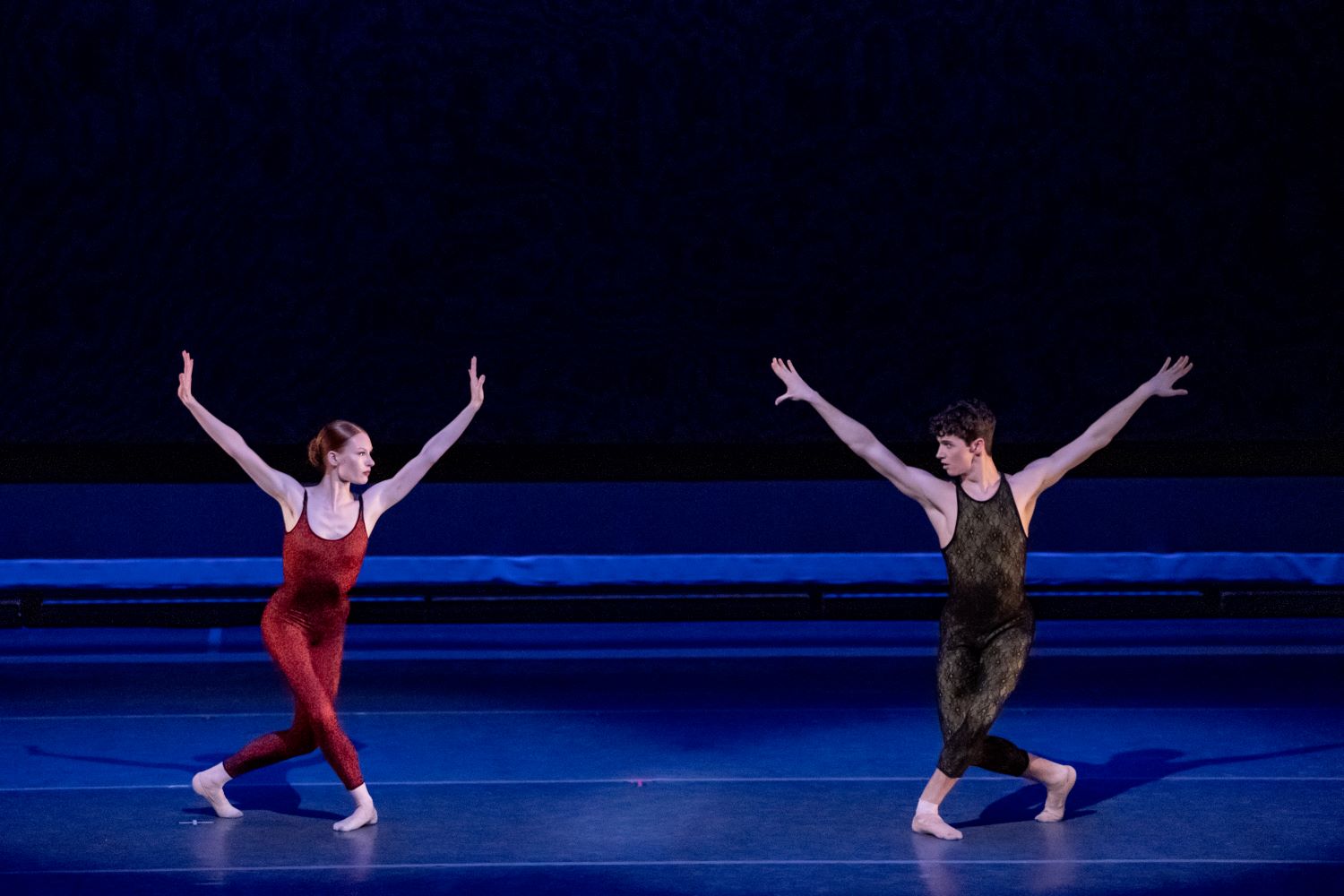
Los Angeles Ballet – (L-R) Lilly Fife and John Dekle in “Frank Bridge Variations” choreography by Hans van Manen – Photo by Cheryl Mann.
A particularly striking variation featured splayed hands, swinging arms, and shifting focus from front to back; movement that suddenly sharpened as partners found one another among the shifting lines. This blossomed into an exquisite pas de deux: recognition, a swoon, legs swinging freely. The male partner became a quiet fulcrum for the woman’s long, effortless circular motion as the duet continually reshaped itself.
A calm assurance permeated the work, making each variation quietly compelling. The soloists were outstanding, supported by fine performances from the LAB corps. The ballet stood as a fitting tribute to van Manen, who passed away in December 2025, and whose inventive wit, humanity, and love of movement will be deeply missed.
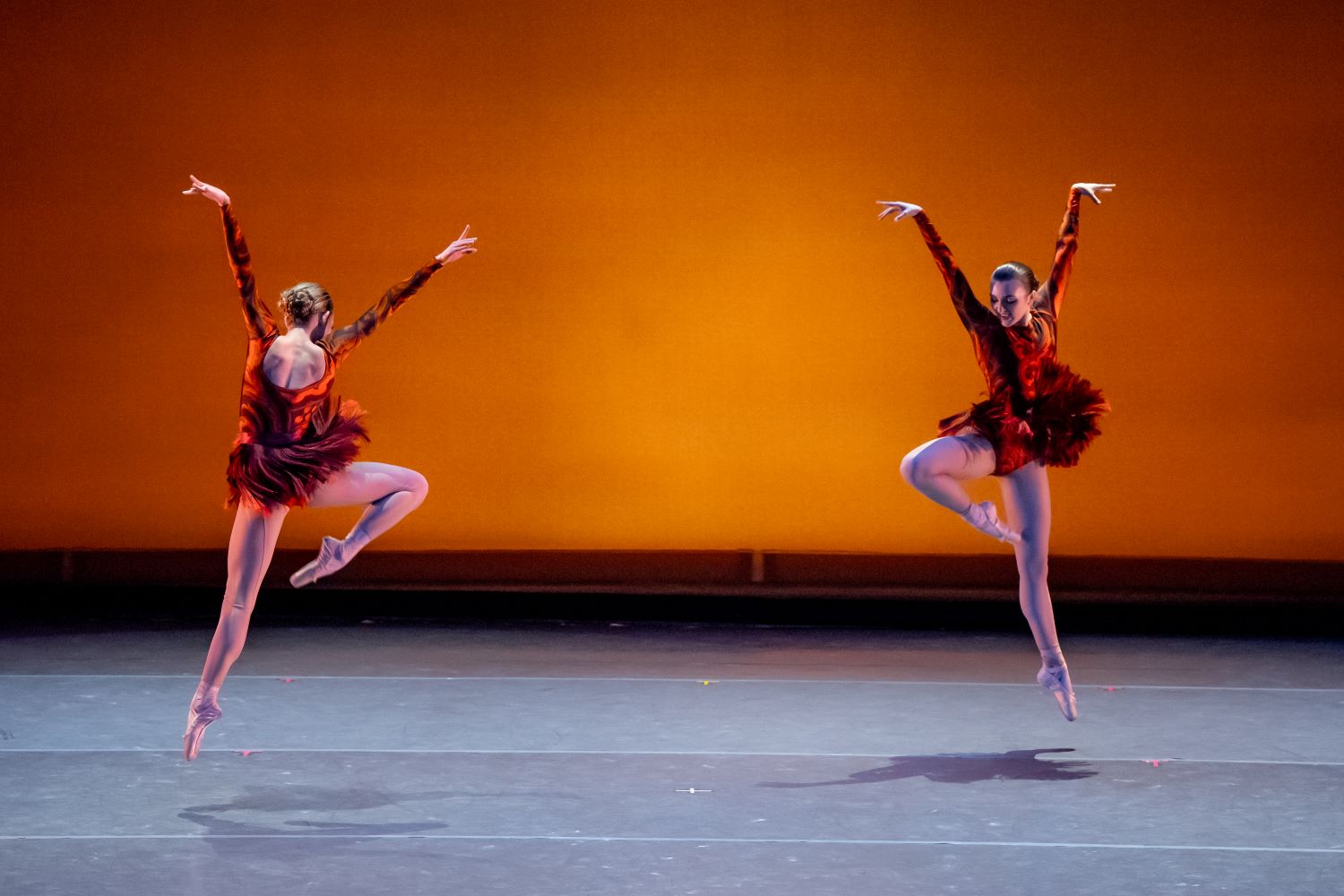
Los Angeles Ballet x ETRO – Taylor Hugens and Aigail Gross in “Wavelength” choreography by Melissa Barak – Photo by Cheryl Mann.
Barak’s Wavelength closed the program on a note of joyous contemporary vitality. The choreography moved with natural freedom, a buoyant, clear-eyed romp, while the dancers were fully engaged: responsive, collegial, and deeply invested in realizing Barak’s vision.
A palpable sense of collective ownership permeated the performance, as if the dancers were not merely executing steps but actively shaping the work’s internal rhythm. That generosity elevated the choreography, allowing its textures and phrasing to breathe.
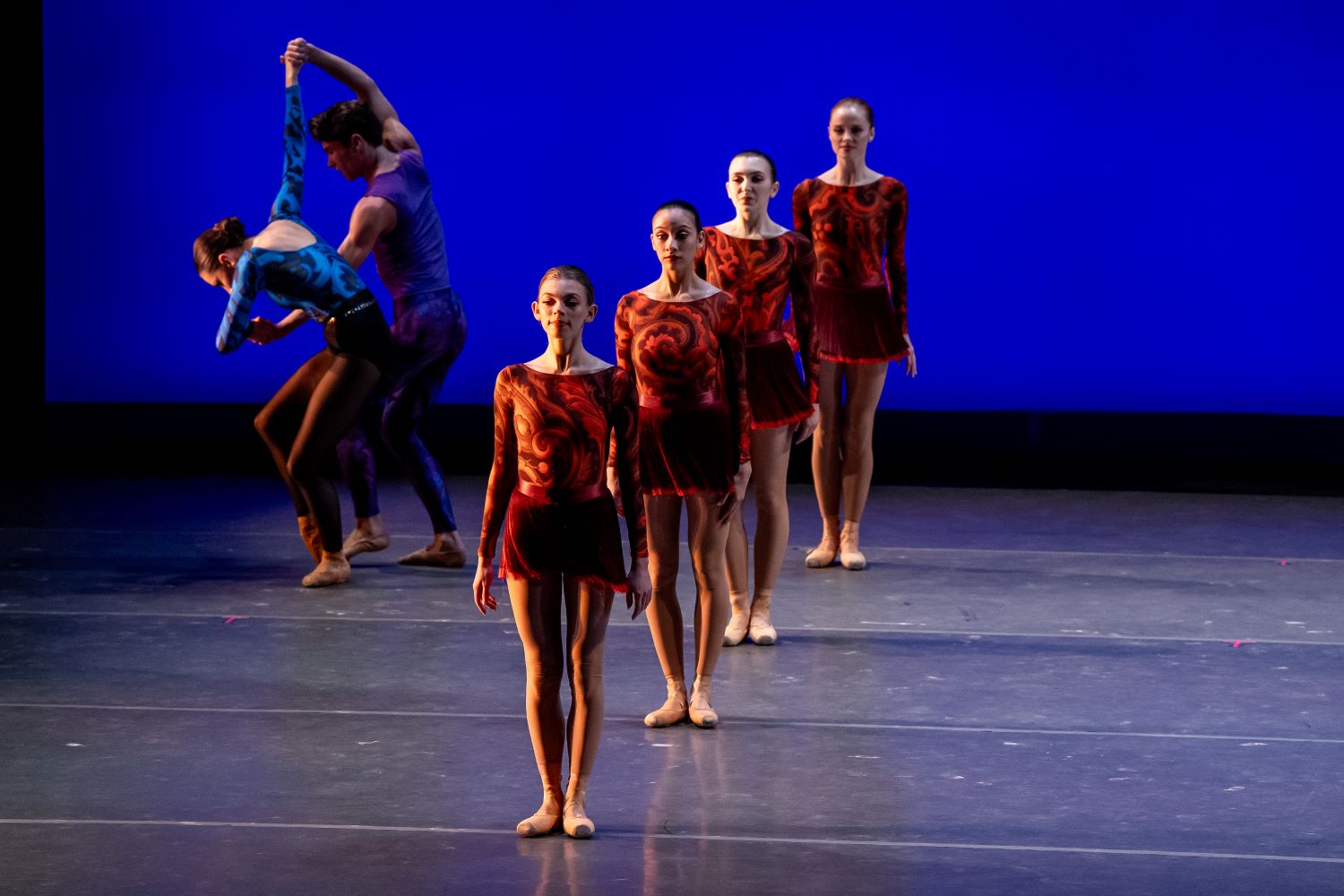
Los Angeles Ballet x ETRO – “Wavelength” choreography by Melissa Barak – Photo by Cheryl Mann.
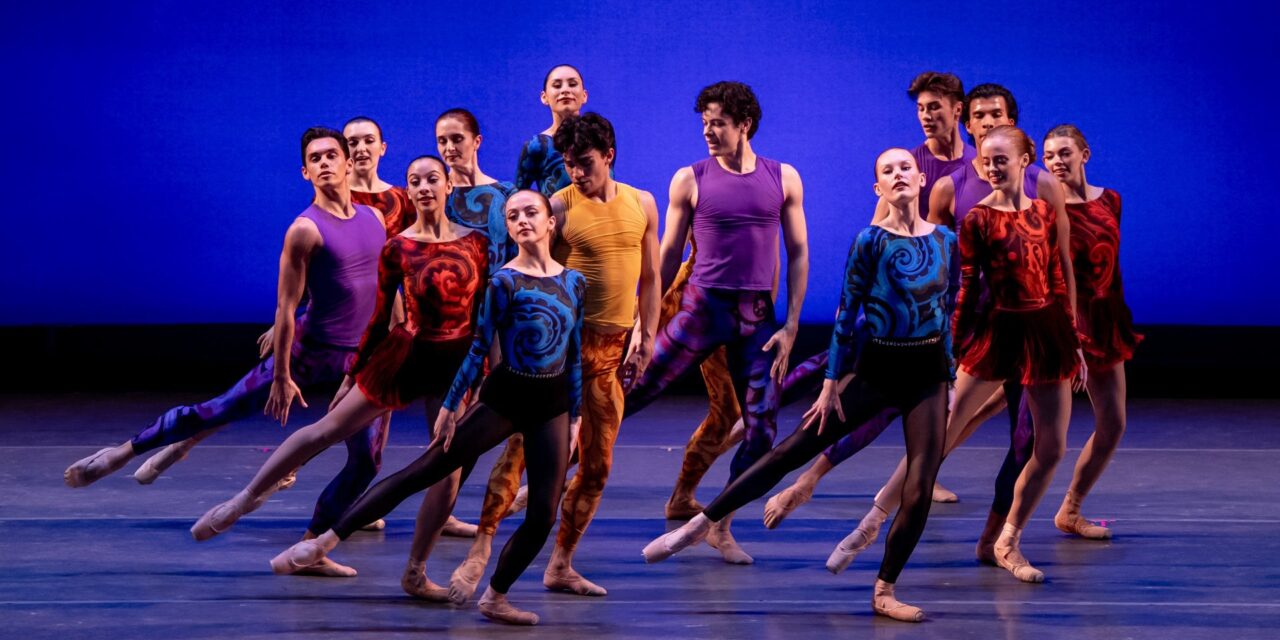
The costumes emerged as one of the performance’s highlights, thoughtfully supporting Barak’s choreographic architecture while amplifying movement, musical responsiveness, and group identity. The collaboration between ETRO designer Marco De Vincenzo’s ferocious sense of color and LAB’s Chloée O’Hayon-Crosby delivered bold theatrical palettes: unitards in deep grape, Mediterranean blues, and orange-citrus hues, animated by circular patterning enhancing the body. Most striking were the mauve-and-orange tasseled, skirted leotards, whose fringes seemed to take on a life of their own, swinging and countering the dancers’ outstretched arms and legs as they frolicked through space. Nathan Scheuer’s lighting worked in concert with the costumes, enhancing both movement and mood without overwhelming the stage picture.
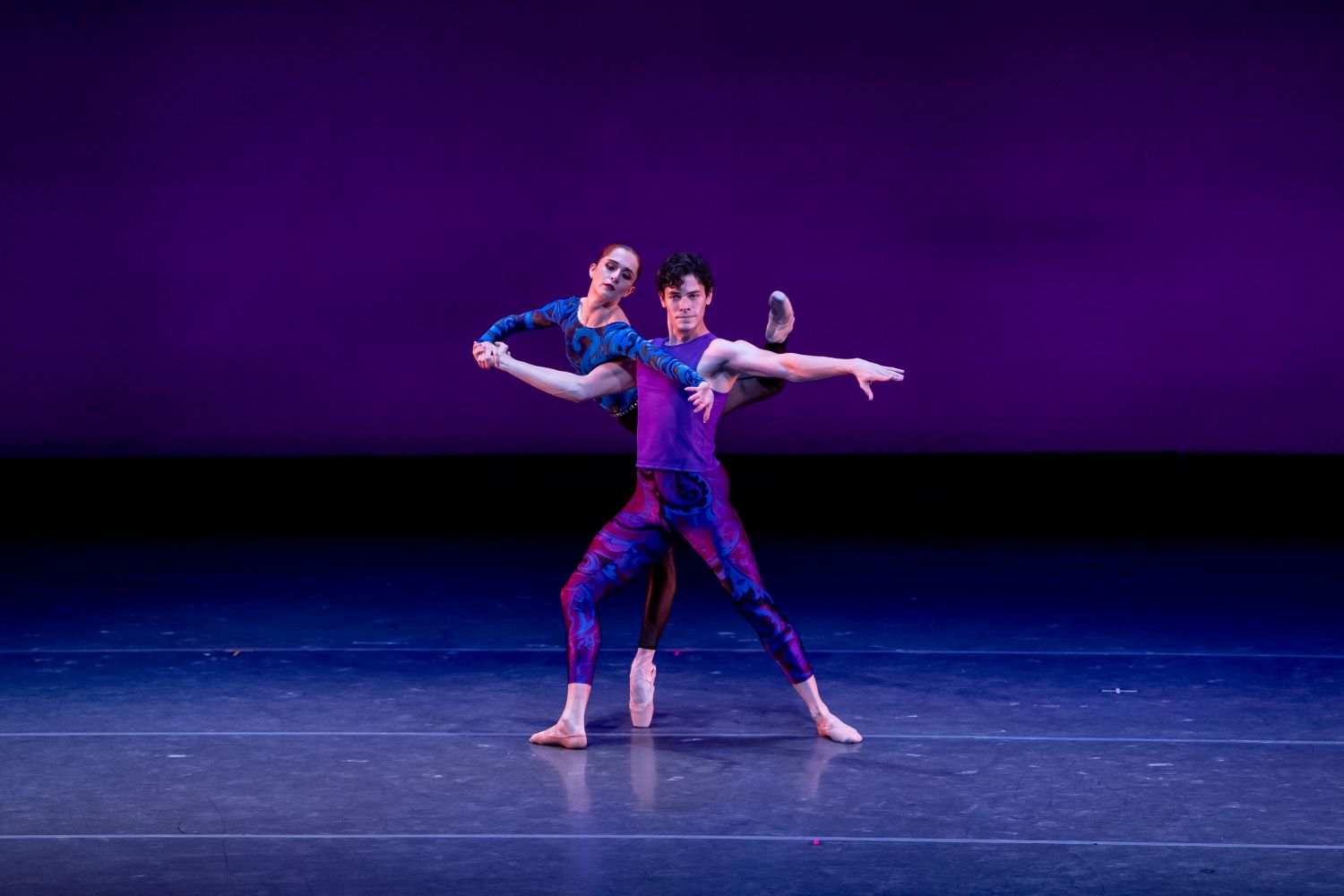
Los Angeles Ballet x ETRO – “Wavelength” choreography by Melissa Barak – Photo by Cheryl Mann.
David Lawrence’s expressive 2025 score, created in close collaboration with Barak, continually reshaped the atmosphere of each section. The music was expertly embodied by soloists Paige Wilkey, Nick Sedano, Sarah-Ashley Chicola, Lilly Fife, and Julianne Kinasiewicz, alongside a strong supporting ensemble.
Where van Manen felt sculptural and exacting, Barak felt fluid and deeply human—anchored in connection and musical responsiveness. The dancers’ ease within the work suggested a strong creative dialogue between choreographer and company, no small achievement given the stylistic leap required to close such a varied program.
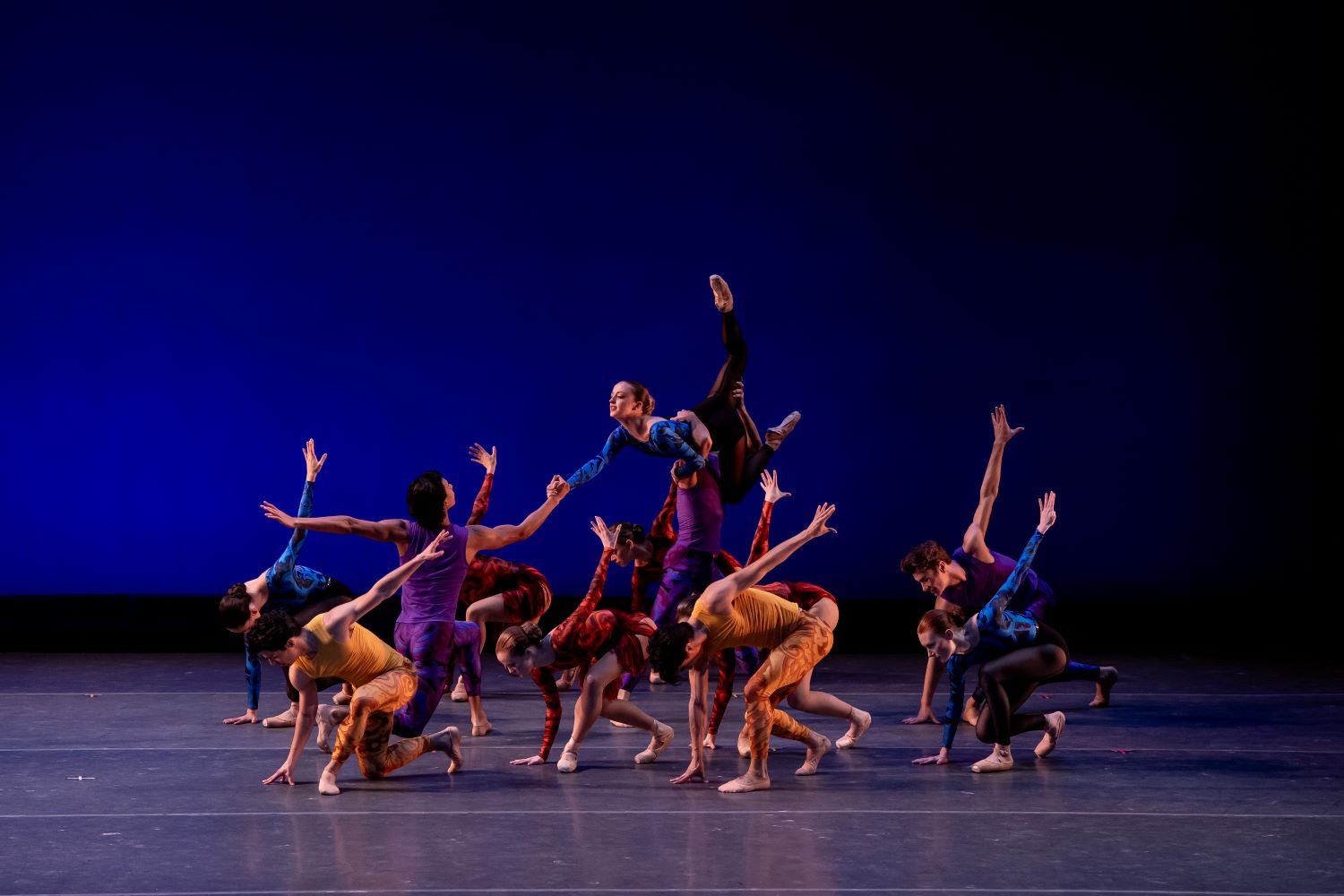
Los Angeles Ballet x ETRO – “Wavelength” choreography by Melissa Barak – Photo by Cheryl Mann.
Barak envisions Los Angeles Ballet as a home for innovative new works and exceptional talent, hoping to bridge the classical foundations with contemporary voices while cultivating its dancers and welcoming master artists. The long-held hope for a permanent home theater, a vibrant creative hub reflecting Southern California’s legacy of innovation, feels newly tangible.
This anniversary evening honored the company’s past while clearly articulating its future. Under Melissa Barak’s thoughtful leadership, Los Angeles Ballet continues to grow in ambition, intelligence, and artistic reach. Congratulations on twenty years, and on what promises to be an exciting path forward.
To learn more about the Los Angeles Ballet, please visit their website.
For more information about other performances at The Wallis, please visit their website.
Written by Joanne DiVito for LA Dance Chronicle.
Featured image: Los Angeles Ballet x ETRO – Wavelength, choreography by Melissa Barak – Photo by Cheryl Mann.