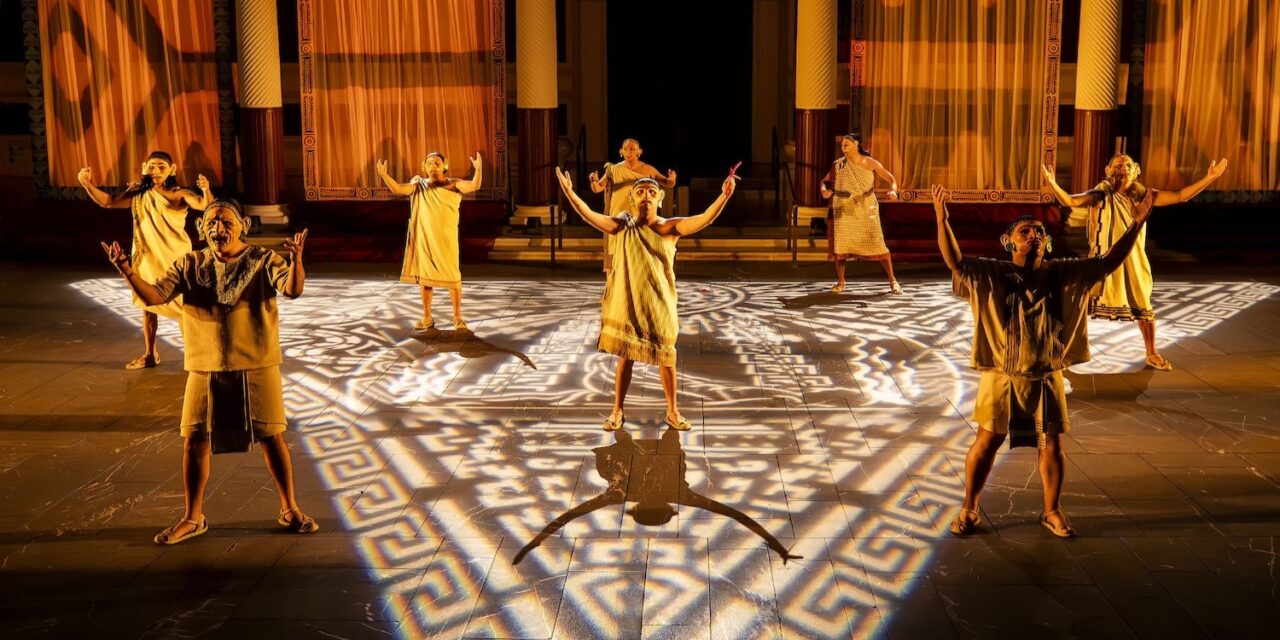
Exploring parallels between classical Greece and pre-Hispanic Tenochtitlan, Mexico, LA’s Latino Theater Company reimagines and adapts Sophocles’ Antigone, using dance to bring onstage the battles and other important actions that usually are offstage and only described. Set in the Getty Villa’s replica Greek amphitheater, Antigone: The Language of Kings employs subtitles as the actors move between English and the Aztec language Nahuatl to tell the timeless tale of a woman caught between a new emperor’s decree to leave a vanquished rival unburied and Antigone’s family and religious duty to observe burial rituals despite the penalty of her own death. And complicating matters, that emperor is Antigone’s uncle and that unburied body is her brother.
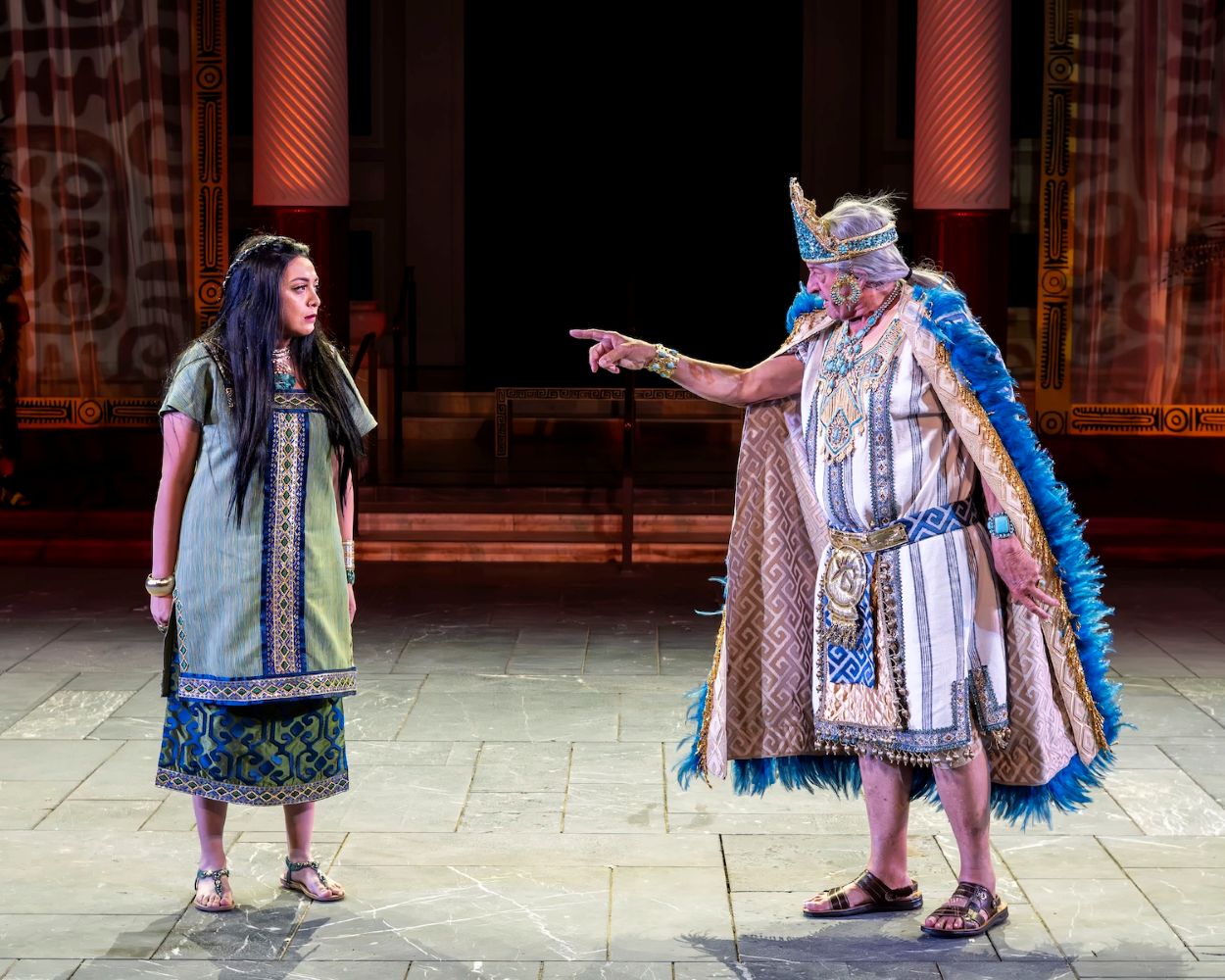
“Antigone: In the Language of Kings”. Photo by Craig Schwartz Photography.
The Getty Villa’s annual fall amphitheater events have a history of adventurous presentations of classical theater that capture the past, resound with today, and reconnect audiences with the communal experience and communicative storytelling power of theater.
Antigone: In the Language of Kings, is Latino Theater Company’s first time as the coveted amphitheater event, following two prior, well-received productions in the venue’s other traditional proscenium theaters. Over 40 years, the Latino Theater Company has established itself as a major player in the LA theater landscape. During the past 20 years, LTC also has managed the downtown Los Angeles Theater Center, helping to fill the need for theater space for dance and theater presentations, as well as presenting its own original and adapted work.
Following a press preview at the Getty Villa amphitheater shortly before the opening, director José Luis Valenzuela spoke with dance writer Ann Haskins about Evelina Fernández’s adaptation of Sophocles’ Antigone, how choreographer Urbanie Lucero’s movement extends beyond individual dances, and how the amphitheater’s open stage and marble floor became characters to be reckoned with in the choreography and movement. The interview has been edited for length and clarity.
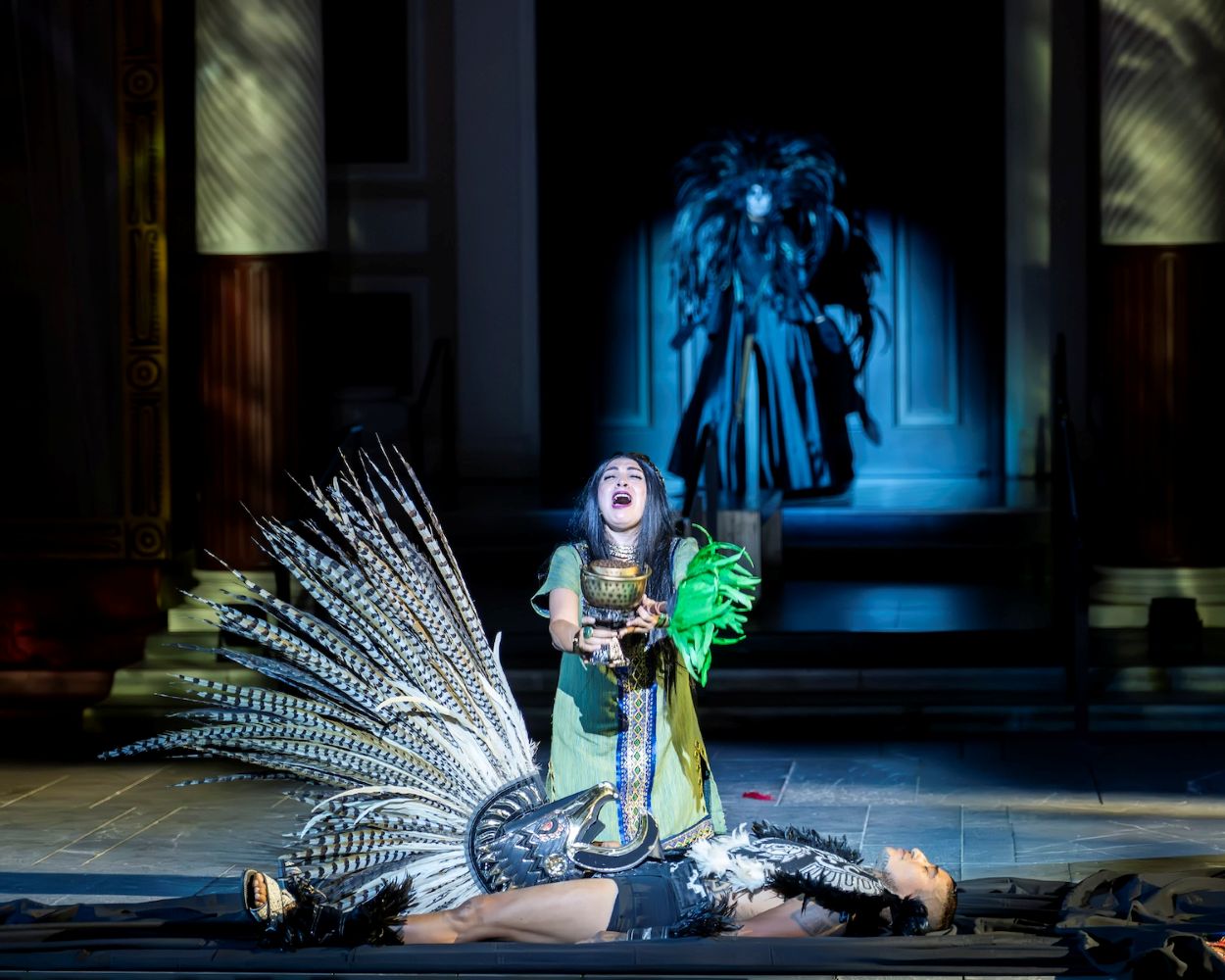
“Antigone: In the Language of Kings”. Photo by Craig Schwartz Photography.
Haskins: Please tell me about adapting the Greek classic Antigone to a pre-Hispanic era. Adaptations of ancient Greek plays is something the Getty Amphitheater has come to be known for.
Valenzuela: Evelina and I began talking about this a long time ago. We love the play Antigone. We wanted to do Antigone and kept asking how we were going to adapt it. We have been very intrigued by the Aztecs in Mexico in pre-Columbian times. The Aztecs were an empire and had an emperor, so there are similarities with the empire in Antigone structure-wise. The two empires are very similar in that they had specific times for dance and for ritual and for ceremony. We asked, how can we create a whole ceremony about this idea of Antigone? Evelina is very knowledgeable about their history, an amazing civilization at the time, and their amazing poetry. Many people don’t know how beautiful the language is.
Haskins: You incorporate choreography in many of your productions.
Valenzuela: Yes. We always work with choreographers. The one we do at the Cathedral every year, the story of the Virgin de Guadalupe, that has 130 people in the cast, and 60 of them are dancers. Urbanie is our regular choreographer, I work with her on many things,
Haskins: Greek tragedies generally don’t have choreography, where does dance or choreography comes into Antigone. How did you bring dance to this Antigone in Pre-Columbian Mesoamerica?
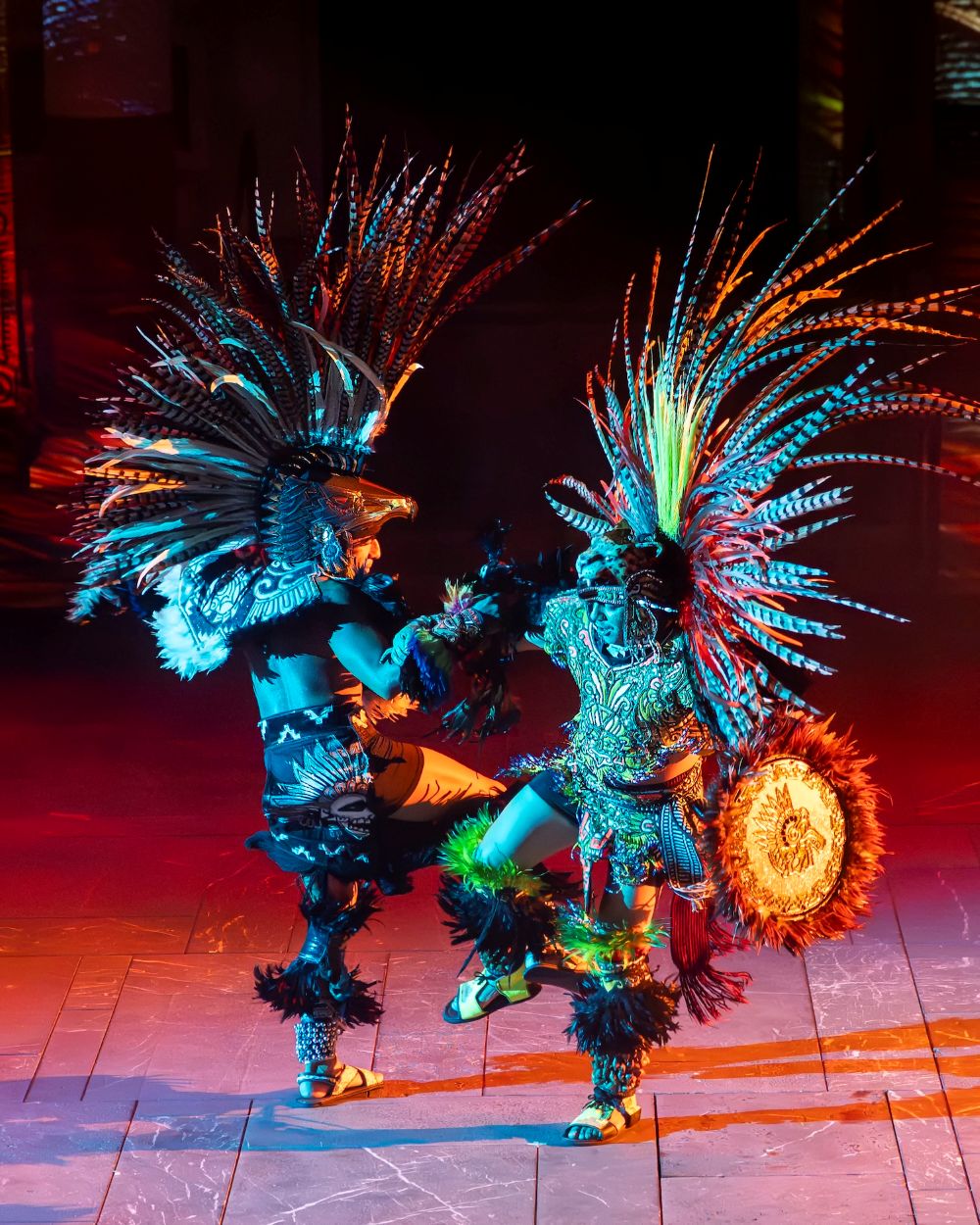
Valenzuela: The entire world acts through ceremony, through dances, through poetry. That world is so vast, and that’s what we wanted to do with Antigone, starting with the battle. The entire story begins with the two brothers killing each other. The Greeks always talk about what happened off stage in their plays, and we are more into showing it onstage, and talking about it less. How can you show the battle and the killing of each other? We do it through dance. The two brothers are two warriors dancing to kill each other. The battle has a lot of actors moving around. And as you know, it is a complicated space for dance because the floor is marble.
“Antigone: In the Language of Kings”. Photo by Craig Schwartz Photography.
Haskins: I was going to ask about that because that marble floor is not kind to dancers’ feet or knees.
Valenzuela: True. The battle has dancers who do Aztec dance in the streets and they can do the battle dance. What we had intended to be dance is really going to be movement, expressionistic movement, if you want to call it that. The entire thing is choreographed because of the chorus. We have a big chorus of 14 people who are telling the story, and their every movement, every exit, every entrance, has to be choreographed in a ritualistic way.
Haskins: The choreographer is Urbanie Lucero?
Valenzuela: Yes. She’s the choreographer of the company. She has choreographed many, many shows. When you come and see our shows, most everything is choreographed. She’s my partner in crime. We have to be able to help somebody see it. How does the character sit and how do they move? Usually, the first hour of a rehearsal consists of everybody dancing. Because they need to be able to move together, to look at each other at the same time, to gesture together in any other place that we do. So even the way the bodies are positioned on stage is choreographed many times,
Haskins: It sounds like you want actors to be able to move their body to tell the story and not just rely on the words.
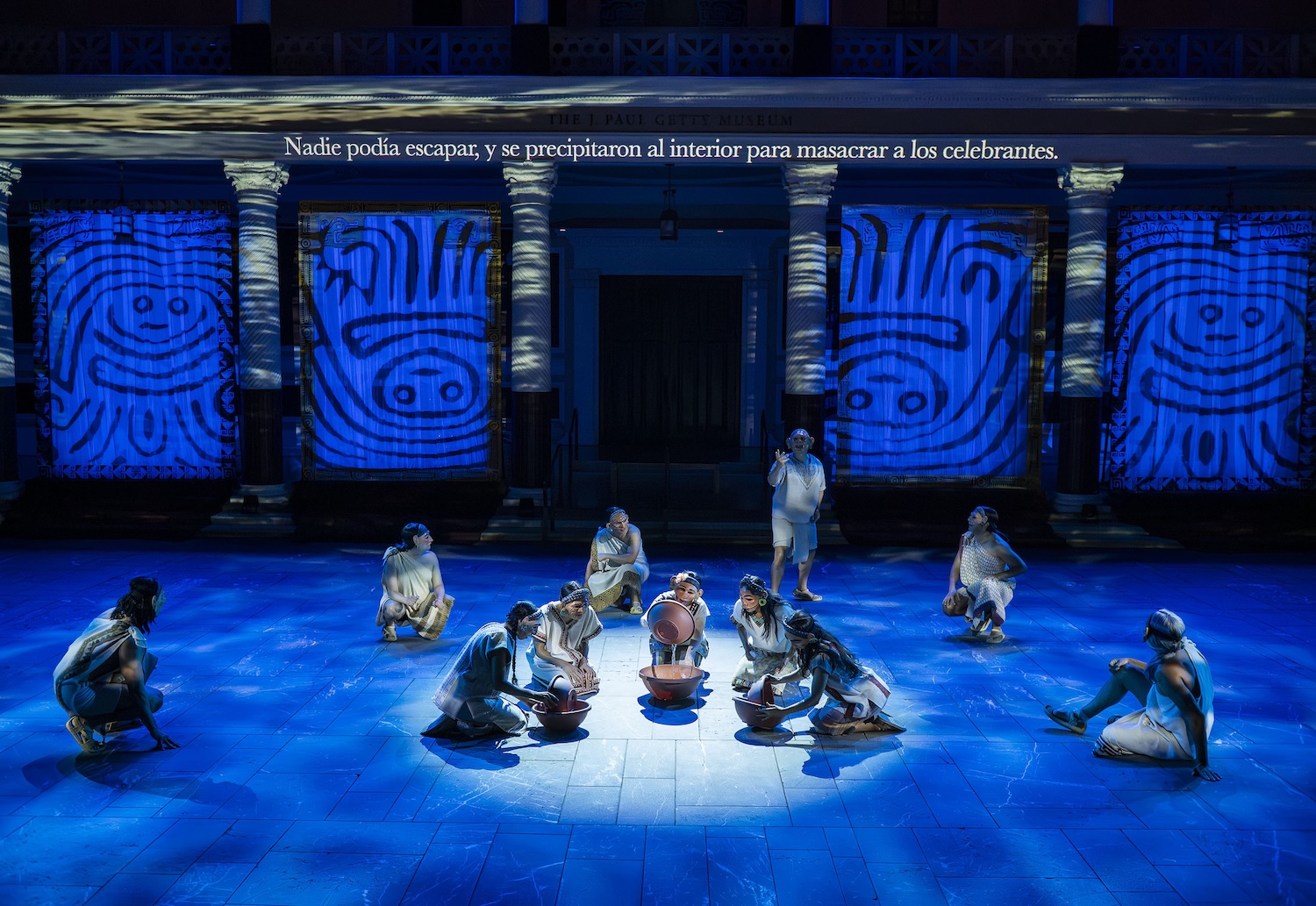
Valenzuela: It’s part of what we’re able to do. How the story can be created through images with their bodies and the composition of the stage, like you do in dance. It’s learning to create the image with their bodies to tell the story. I love dance as a form and a skill. Dancers are very disciplined. Many times in the theater, actors don’t move because it’s all about the words. Acting is a totally different type of discipline, and I bring dance into the discipline. I think it is very useful for the actor to be able to put the language in their body, not only in their head. That’s important to us as a theater company, because sometimes we speak in Spanish or we speak in English. If the language is also in the actor’s body, it’s easier for the audience to understand. We are not just relying only on language that not everyone may speak. Some people may only speak Spanish, and some people may only speak English. This time we have super titles, but the reason for clear movement remains.
“Antigone: In the Language of Kings”. Photo by Craig Schwartz Photography.
Haskins: How are you handling language and super titles in this Antigone?
Valenzuela: Well, we don’t speak Spanish because this is a time before the Spaniards came. So we speak in English and Nahuatl, which was the language of the Aztecs, a beautiful language, beautiful rhythms.
Haskins: Other than the two brothers who do battle, is there other, usually off-stage action that you’re bringing onto stage with movement?
Valenzuela: Several moments. For example, when Antigone commits suicide, when she hangs herself, it’s a very simple moment, but it is very specific movements and very expressive movements.
Haskins: At the press preview, I was watching the videos and the pictures of the costumes. One that caught my eye was a rather voluminous dark costume and it looked like the actor had to get on a ladder or be hoisted down into the costume. What is that all about?
Valenzuela: That is the character of death, La Muerte, who comes to announce the story of the dead. She’s on stilts. When all the soldiers die, she comes onto the stage, and that costume that you saw is her cape. As she crosses the stage, she embraces all the warriors underneath her cape and takes them with her.
“Antigone: In the Language of Kings”. Photo by Craig Schwartz Photography.
Haskins: Now that you are rehearsing on the amphitheater stage, has that prompted changes since there is no curtain or wings and the stage is marble and hard on knees and ankles?
Valenzuela: Sadly, we had a lot of dances that we planned, but cannot do because of the risk from the marble, but they may appear later on in a different venue with a different floor.
Haskins: We talked about some of the things you decided you couldn’t do. Have you found some things you’re able to do because you don’t have to worry about wings, and you have all that open space and being in an amphitheater?
Valenzuela: I love doing theater outside, mostly in Europe. They are into outdoor places. In 2017 in Norway by the beach, we were able to use 130 people all over that open beach. I think we’re trying to do that here, to use the architecture and use the space. The interesting part is in Norway they are so used to weather that you perform even with the rains, and the audience stays.
José Luis Valenzuela. Photo courtesy of the artist.
Haskins: Is there anything else that you’d like to tell me about that you’ve discovered about the movement and your plans for the show now that you’re actually in the theater?
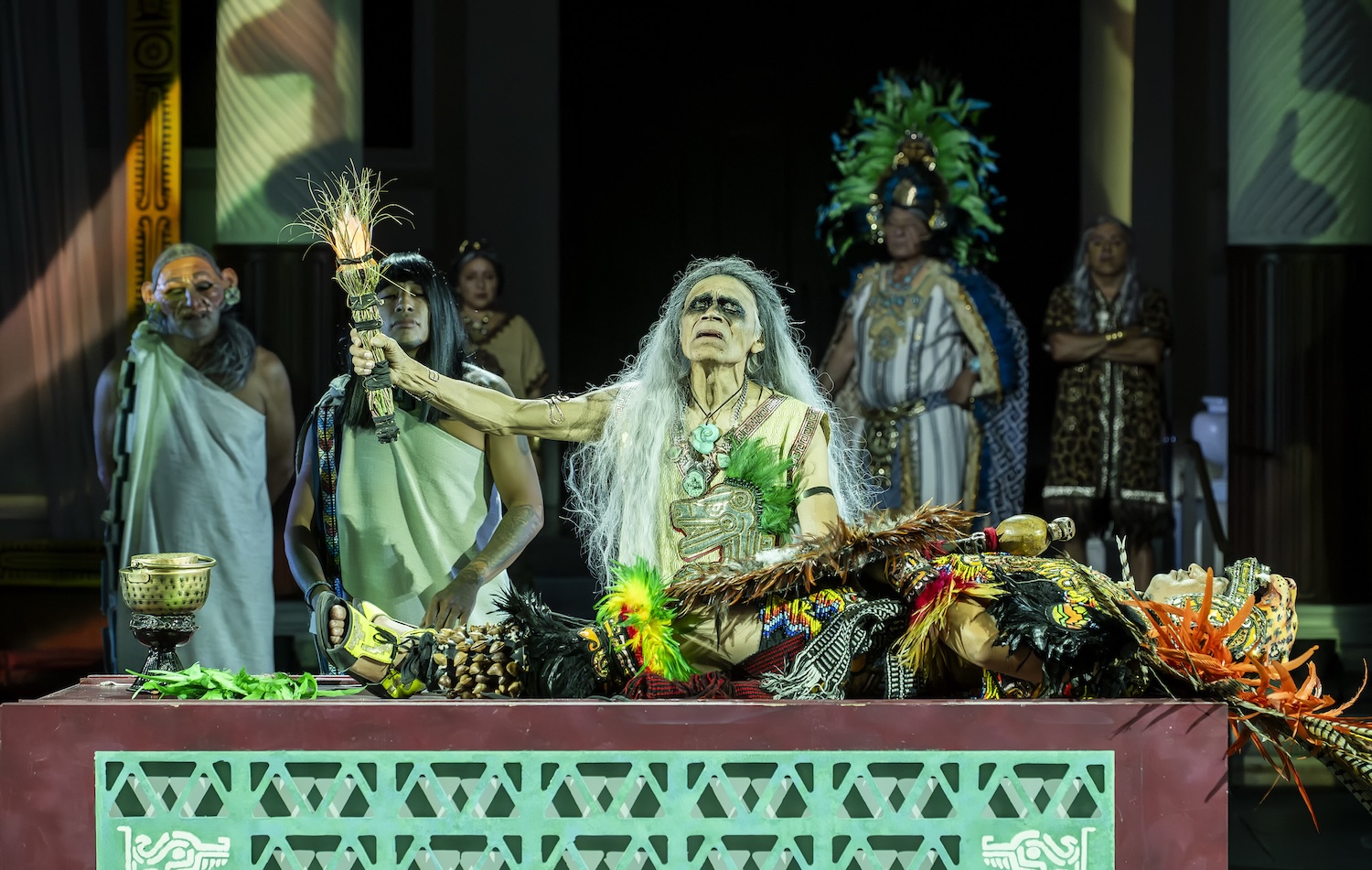
Valenzuela: How big movements have to be, how specific the actors have to be in the movement. The focus is really crucial. Also, the marble floor changes with the weather, heats up or cools down. That affected the scene when Antigone drags the body, steals the body to be able to give the rituals. The material used to drag the body had to be fireproof, not tear while she’s pulling the cloth holding the body, and work on the floor with temperature changes. Yesterday, we found the right material to do all that and create the movement, the image, the idea in that very important part of the story.
Haskins: So a piece of fabric comes into the choreography, and fortunately, you were able to rehearse, to audition different fabrics.
Valenzuela: That’s right, many different ones.
Haskins: I will watch that moment very carefully.
Valenzuela: Yes. Please think about how complicated it was to get here. The Greeks knew how to tell a story. We are so privileged to be able to continue telling this story in these times.
Antigone: In the Language of Kings at the Getty Villa Amphitheater, 17985 Pacific Coast Hwy., Malibu; Performed in English, Spanish, and Nahuatl (Aztec language), with English and Spanish supertitles available throughout the performance. Thurs.-Sat., 8 pm, to Sat., Oct. 3. $30-$45. Antigone: In the Language of Kings.
Written by Ann Haskins for LA Dance Chronicle.
Featured image: Latino Theater Company in “Antigone: In the Language of Kings“. Photo by Craig Schwartz Photography.