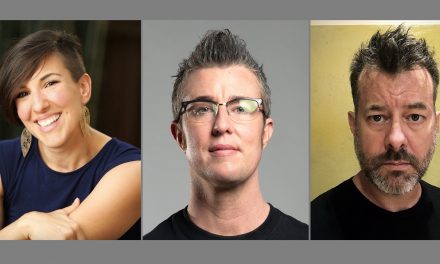
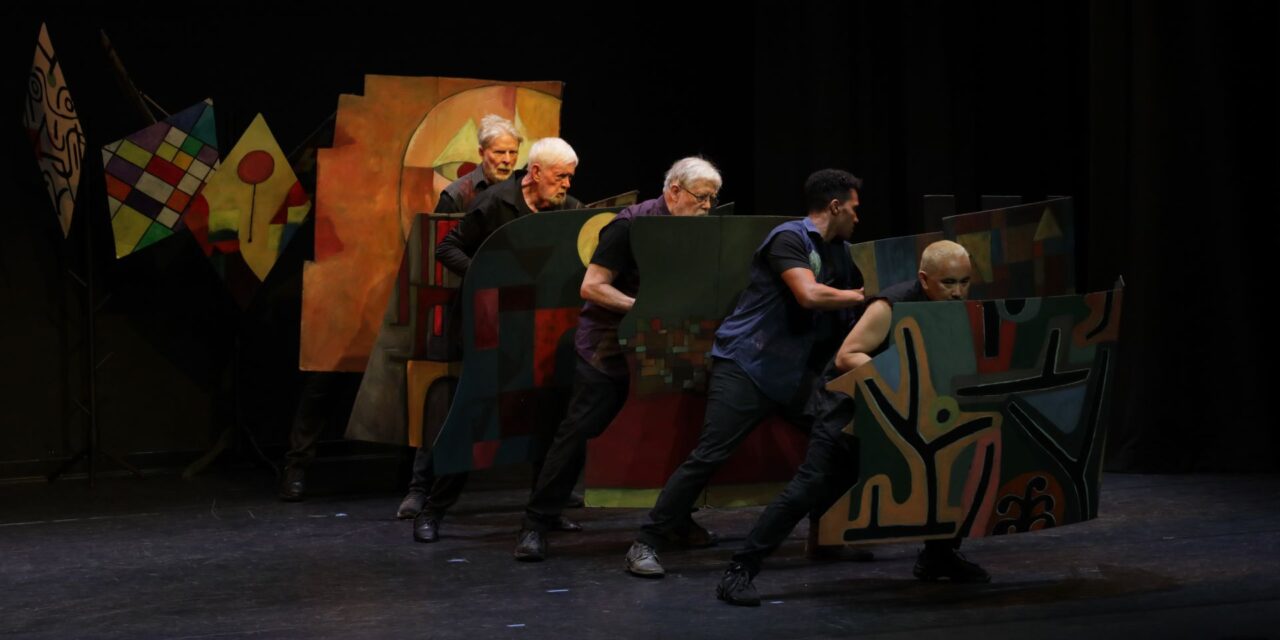
Linda Berghoff is an art educator, an exhibiting artist and someone who has danced recreationally for her entire life. In 2006, she was diagnosed with Parkinson’s disease and friend Laura Karlin reached out asking what she could do to help. A partnership with Invertigo Dance Theatre, Berghoff, Laura Karlin and her mother Fiona Karlin created Dancing Through Parkinson’s, a program that offers dance classes and performance opportunities to people living with Parkinson’s disease, their family members and care supporters.
Hosted by Invertigo Dance Theatre, On October 10 and 11, 2026, Dancing Through Parkinson’s will present Circe & The Gang at the Glorya Kaufman Performing Arts Center located at 3200 Motor Avenue in Los Angeles, CA. 90034. On Saturday, October 10th, the performance begins at 8 pm (PDT) and on Sunday, October 11th, showtime is at 2 pm (PDT).
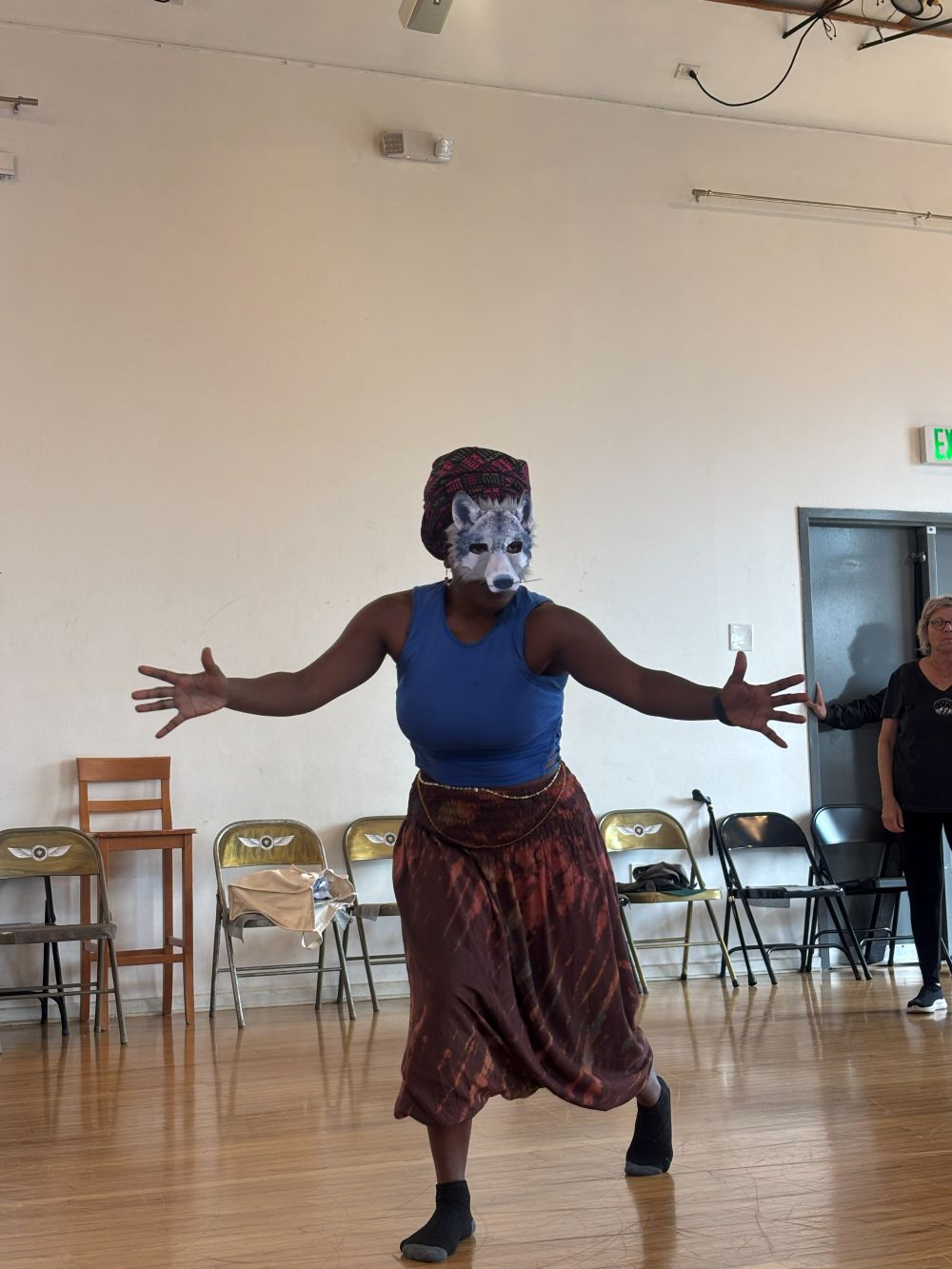
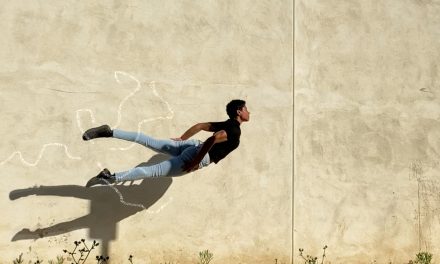
Dancing Through Parkinson’s – Rehearsal – Photo by Camilla Machado.
Being very moved by this program, dancer, choreographer and educator, Rachel Whiting joined the Dancing Through Parkinson’s faculty in 2015 and now serves as its Creative Director. There are currently four eight teaching artists on the faculty along with many volunteers who help keep the program alive and serve the community. Some of the faculty received their training to teach these classes through the pioneering program, Dance for PD in New York at the Mark Morris Dance Center.
Whiting and composer/poet/dancer Brian Tagomori who was diagnosed with Parkinson’s eight years ago, joined me on Zoom to discuss Circe & The Gang, the program and more. Sadly, I had to edit the article because of space.
Sometimes dance artists who teach or volunteer for Dancing Through Parkinson’s find out about it by accident, some have heard about it from their neurologist, while still others have friends or family who are living with Parkinson’s and want to help. Some teaching artists and volunteers do not want to perform anymore but miss that contact with people.
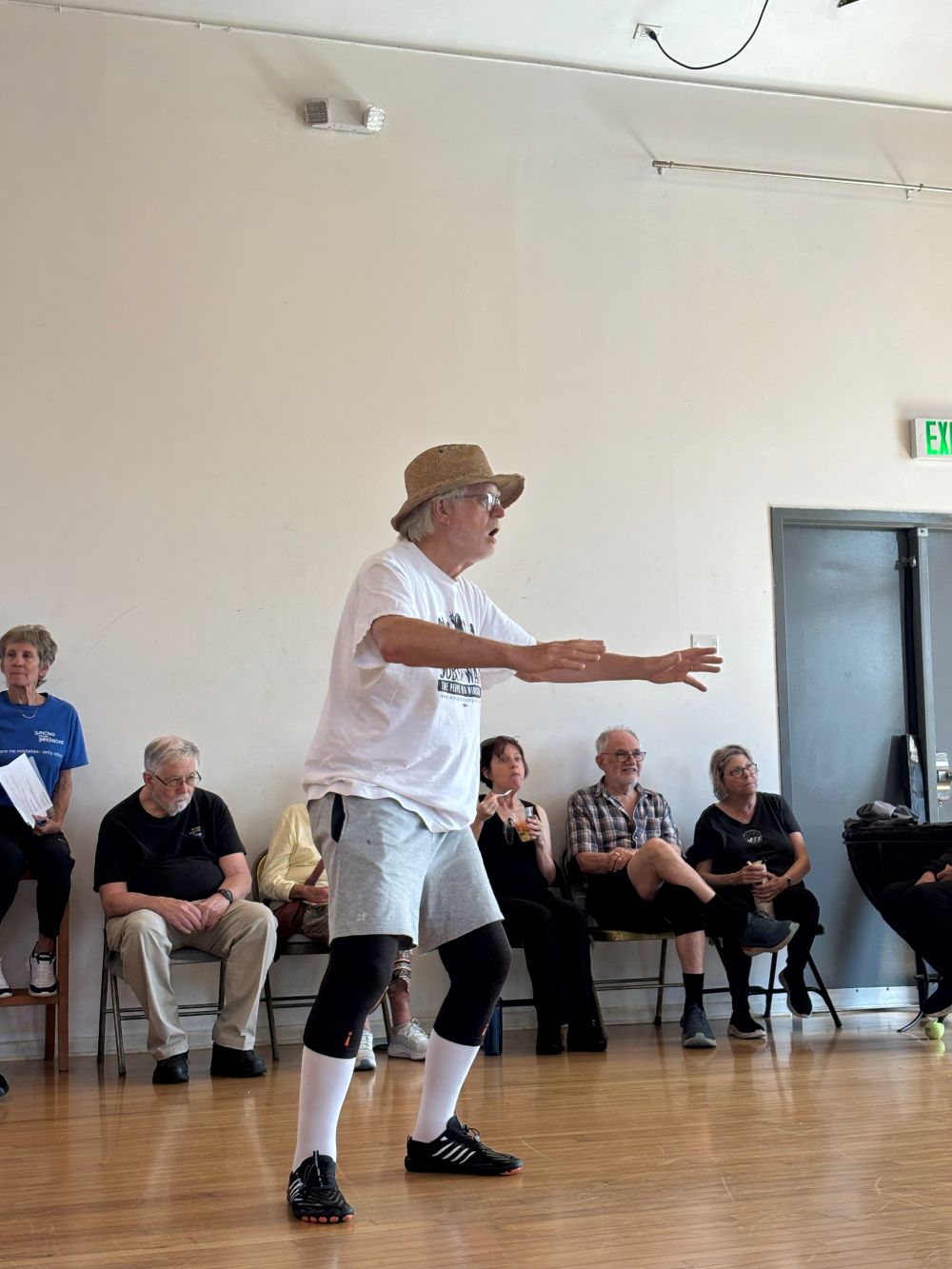
Dancing Through Parkinson’s – Rehearsal – Photo by Camilla Machado.
I asked if the program had always offered performance opportunities to those participating in Dancing Through Parkinson’s or if it had developed over the years.
“It kind of started along the way,” Whiting explained. “The first performance opportunity was [when] I convinced everybody to do Pina Bausch’s Nelken Line Community Dance Film. This was a project in 2018, for the Pina Bausch Foundation’s The Nelken Line where they asked communities around the world to learn the choreography from one of her most celebrated sequences. It was all based on the four seasons like spring grass growing and autumn leaves falling from trees.”
After demonstrating simple gestures that represented the seasons, Whiting went on to describe how beautiful and accessible the movement was and that she knew her class members could do that. “So we made a dance film and that started the creative process,” She added. The film was shot at the Santa Monica Pier and on the merry-go-round. Tagomori added that there was a drone overhead to film the piece. “What was really lovely is, it’s an archive of a time because many of those dancers are no longer with us, or that’s the last time we saw them. So, we get to have this memory of a time we danced together.”
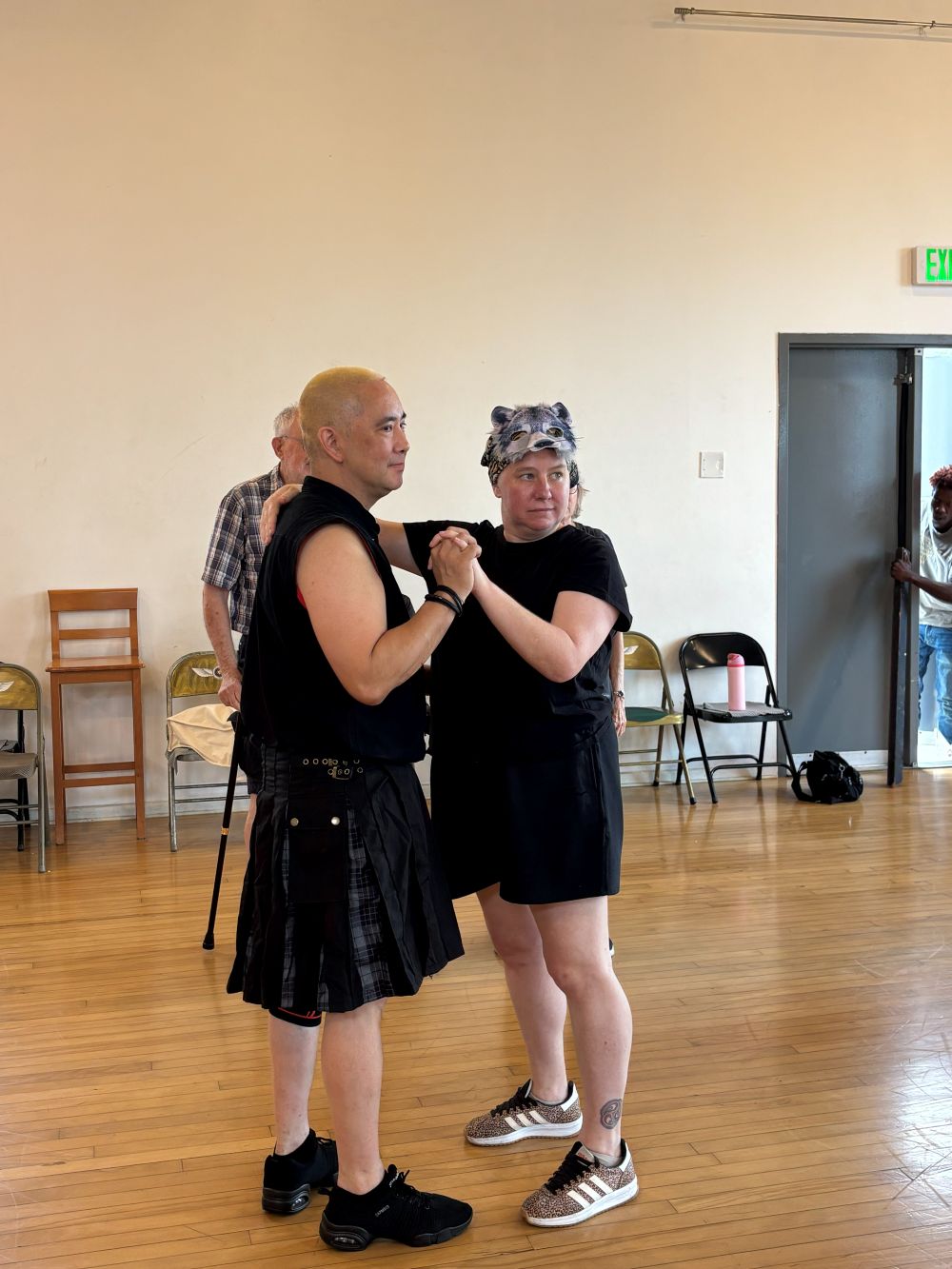
Dancing Through Parkinson’s – Brian Tagomori (L) and partner in rehearsal – Photo by Camilla Machado.
Circe & The Gang will be their third annual live theatre performance. The first live performance was in 2023 at Highways Performance Space in Santa Monica, CA. There was another show at the Electric Lodge, but that was part of Whiting’s Thesis show. Both Whiting and Tagomori consider the live performances to be an essential part of the program and the work that they do because it offers the participants to be seen beyond a diagnosis and witnessed as artists and storytelling.
“The performers get to shade in the colors of a life that was lived before we all arrived together into this community,” Whiting added. “It creates meaning and connection. For me personally, it teaches me that dance is essential to life and essential to staying connected, and it’s such a lovely means of storytelling. It’s such a juxtaposition working with dancers who are living with a movement disorder.”
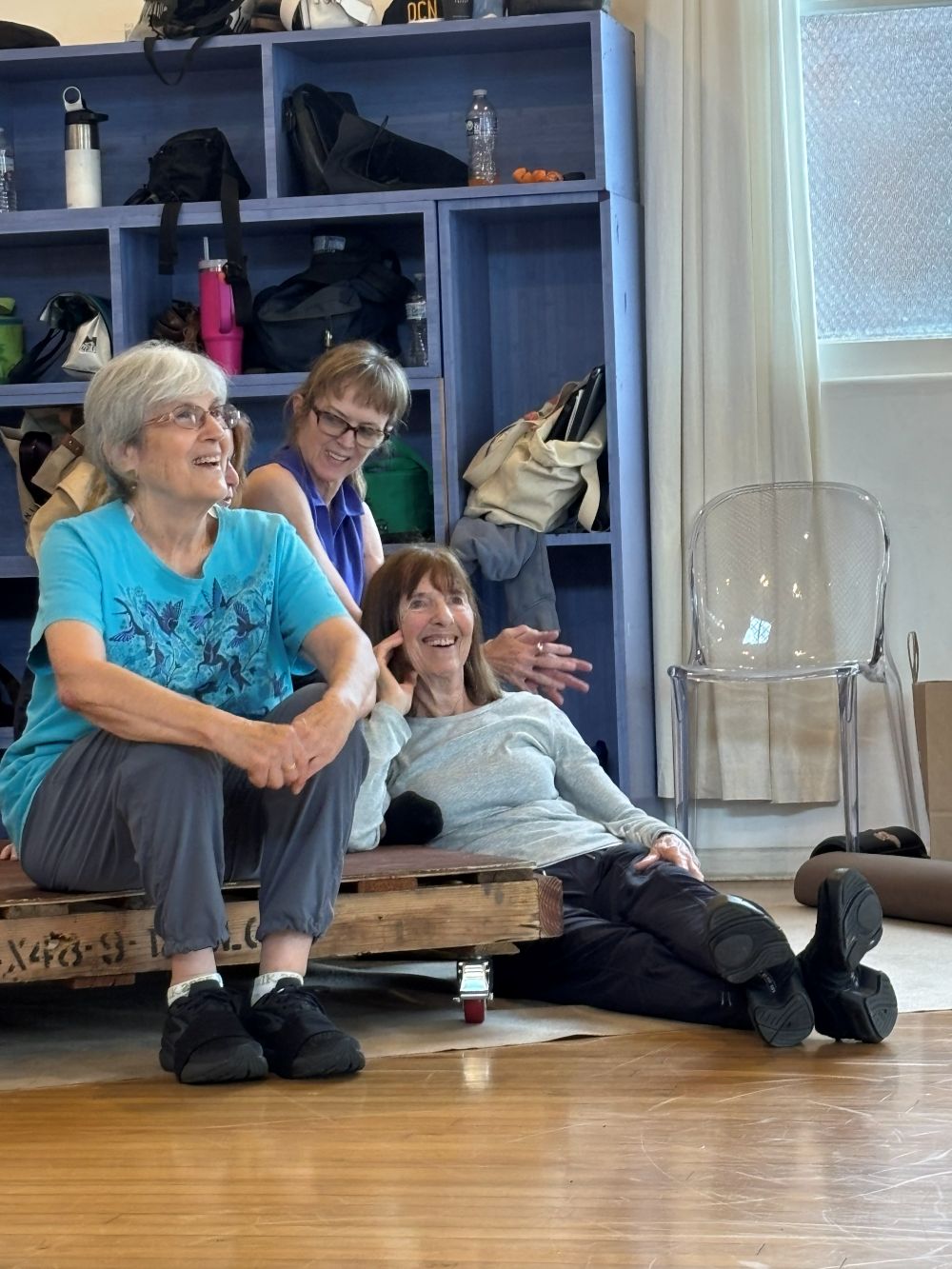
Dancing Through Parkingson’s – Rehearsal – Photo by Camilla Machado.
In an email to me, Whiting wrote: DTP seeks to shift the prevailing narrative of Parkinson’s as a progressive loss of mobility toward one that recognizes creativity, agency, and possibility. Live performance is an essential part of this work, offering participants the opportunity to be seen beyond their diagnosis and witnessed as artists.
The love and passion that Whiting and Tagomori have for this program was truly moving. None more so when Whiting talked about working with people living with Parkinson’s and their supporters in class, rehearsal and throughout the theater process. “As a dancer, we want the effort and rigor, and it just looks different with those new to that training, but it’s all very much there,” Whiting said.
When asked who the choreographer or choreographs was, Whiting said that she has taken on the title of Creative Director. Everyone involved takes part in the creative process and that her past training of “shut up and dance” is not what she does with these dancers. Because they are all adults, Whiting very lovingly said that there are a lot of opinions expressed. Each dancer is at different stages of their living with Parkinson’s and the movement is often amended to make it more accessible for them to execute. “So I’m directing but everybody’s voice is present,” Whiting said.
There is dancing, poetry, live music and dialogue spoken and sung by the performers in Circe & The Gang. The policy is that if you can commit to rehearsals, you can be in the show. For this concert there are 26 performers and a dog named Duffy. He always comes to rehearsals, and this will be Duffy’s third show.
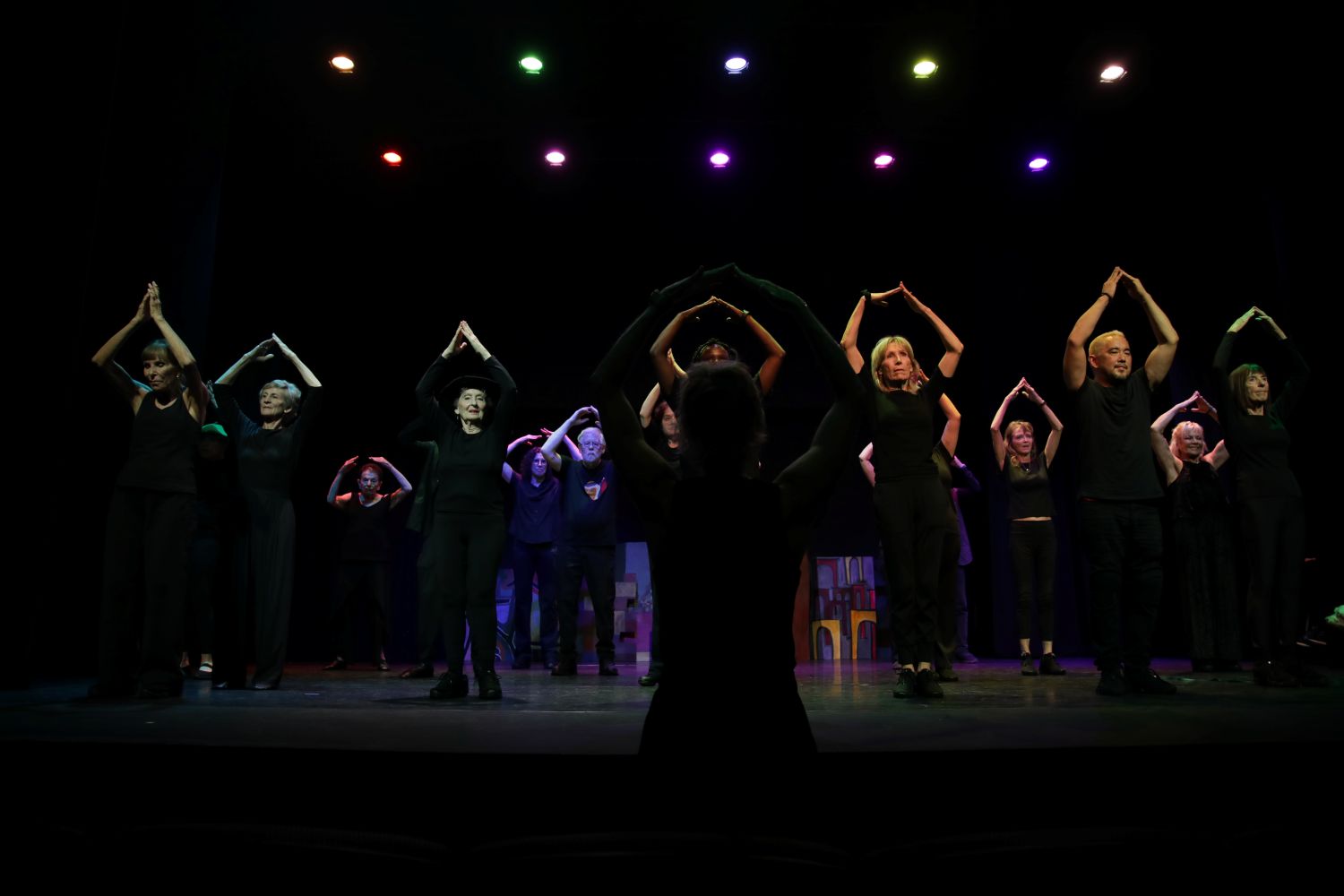
Dancing Through Parkinson’s – Rachel Whiting leading warmup – Photo by Jaya Kang.
Brian Tagomori is the composer for one section of Circe & The Gang. “I’ve composed pieces for every show we’ve done, for at least one segment in the past. Our (he and Whiting) first collaboration live together was a duet and I composed the piece for that,” he said. “We also coordinated with Francine Ringold who is our resident poet laureate.” Ringold is an American writer, author, actress, teacher and editor who was the 15th poet laureate of the State of Oklahoma. It was Ringold’s idea that led to the creation of Circe & The Gang.
“She is 92,” Whiting added. “She’s my dramaturge and a creative voice in this production.”
“Everything we’ve worked on, ”Tagomori said. “we’ve had this three-way working relationship where I’ve composed music, Francine helped develop thematic ideas and contributed poetry to our first dance together. We’re this seamless relationship where we each have our strengths and we contribute to them.”
Tagomori pointed out that one of the great things about Whiting is that she knows what his strengths are but also where his weaknesses lie. He has been a part of and composed music for every performance that Whiting has created as well as poetry that they have danced to in one work.
He is also performing in Circe & The Gang. Whiting stated that Tagomori is a crucial part of the show. Tagomori’s poem Wolf at the Door inspired an entire section in the work. It “explores the instinctive forces that emerge when we are confronted with vulnerability and change.” (press release)
Who is Circe? In Greek mythology, Circe is a witch, a seductress and a goddess who has been described as a daughter of the sun god Helios and the Oceanid Perse. If you saw Christopher Nolan’s film “The Odyssey”, Circe was the witch who turned men into pigs and back again.
“We’re using this as an idea of transformation,” Whiting said. “and how to not lose oneself in this diagnosis of Parkinson’s and how to perhaps live with it.”
It is the idea of turning into animals and back again, that nothing is permanent and will change. Parkinson’s Disease is progressive so this work investigates how during a time of deep transformation, people living with Parkinson’s are working toward not losing themselves – their identities.
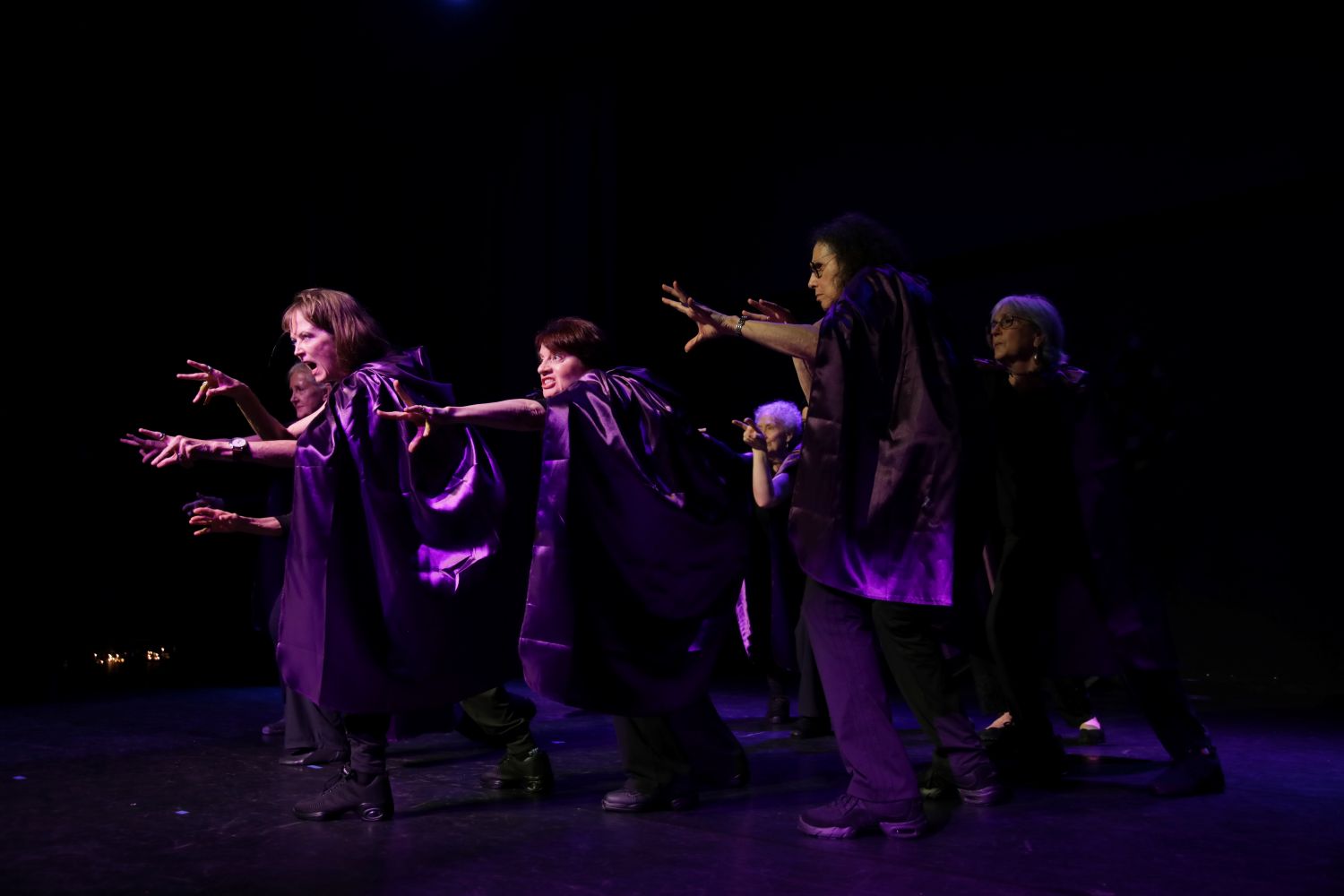
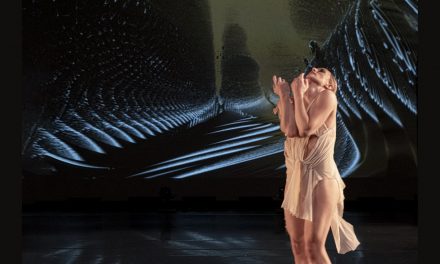
Dancing Through Parkingson’s – Performance – Photo by Jaya Kang.
“So that’s Circe’s kind of lens,” Whiting noted. “and we have three dancers that embody different characteristics of that.”
There are also family members and care partners performing in this work. Whiting said that she decided to have real couples dancing together in a section called Tango: Love Saves the Day. “We have a lot of couples where one of the partners is diagnosed,” Whiting said. “Sometimes family or friends just come to drop them off and then after seeing class and hearing the music, they’re like, ‘oh, that looks interesting.’ And then they start tapping their toes and the next thing you know, they’re on the stage with us” Like many diseases, Parkinson’s affects everyone around those who are living with it.
Tagomori said that he took his first class in Tarzana and as noted above, he has been extremely involved in the program. I asked how Dancing Through Parkinson’s has changed his life. “Where to begin,” he first said. Tragically he was diagnosed about three years after he lost his fiancé to brain cancer.
“That put me into a very closed off shell where I just wanted to stay in my room all day – that was about eight years ago – and so at that point I had a choice and I knew the choice was obvious. It was to rejoin the world and do something about it or continue to stay in my room and just waste away.”
The first step for Tagomori was to find a program to address his situation and while at his neurologist’s office he saw information flyers about Dancing Through Parkinson’s. His neurologist was uncertain if this program was right for him. “But something really drew me to want to check it out, which was strange because up to this point I had never danced. I thought that dancing was not in my genetics. So, when I walked in, as the story goes, I told the instructor ‘I don’t know why I’m here. To say that I have two left feet for dancing would be an insult to people with two left feet.”
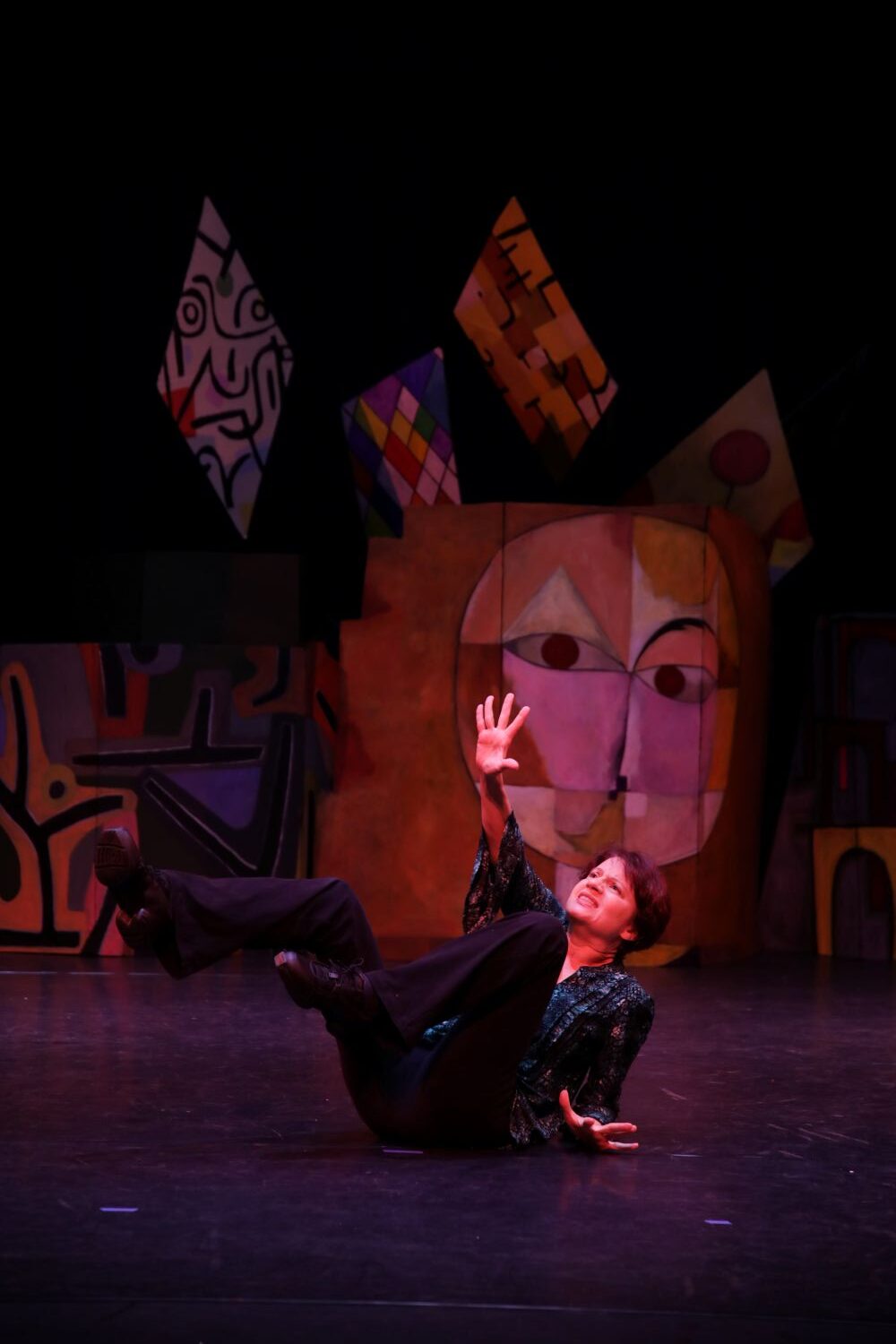
Dancing Through Parkingson’s – Performance – Photo by Jaya Kang.
Tagomori went on to explain that what everyone who takes these Parkinson’s dance classes understands is that it isn’t about crossing one’s t’s or dotting one’s i’s. “It’s about having fun, connecting and moving. Most importantly, moving! So what I came to find out was I had this unknown hidden joy for dancing. The only thing that was keeping that at bay was lack of confidence and just the belief that it wasn’t in my genes.”
Because of his Parkinson’s, if we looked at films of Tagomori dancing during his early time in the program, he said smiling, that he was very rigid, very stoic and very emotionless. “We’re still working on my emotions,” he said. “The amazing thing is, eight years later, this disease has progressed profoundly on me, but when it comes to dance, I move better now, by far, than I did eight years ago.”
Whiting agreed! Tagomori claims that these classes are magic but that one would have to attend them to believe it. Sometimes people living with Parkinson’s come in wheelchairs and are unsure and unstable when they start the classes. Each class ends a gratitude circle where the dancers take turns expressing themselves. “And I’ve seen some of the most beautiful gestures made by these people who literally cannot walk by themselves and it’s brought tears to my eyes….like weekly,” he said. “That’s where the magic is, because one of the things this disease does is it really disconnects, not just our physical connections, but also our cognitive connections. And so, one of the things that really keeps us zoned in is connecting and interacting, and what is more interactive than dance?”
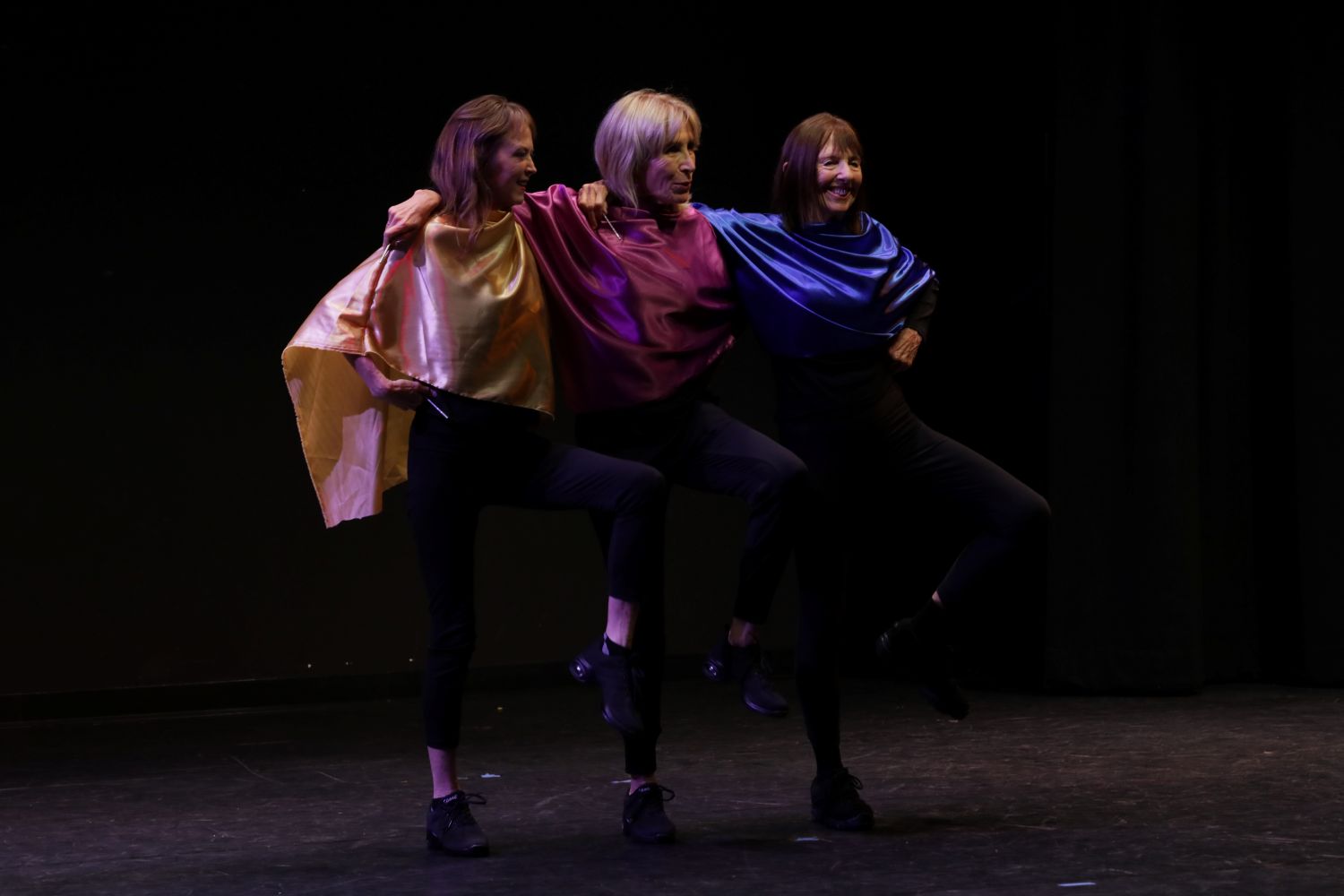
Dancing Through Parkinson’s – Performance – Photo by Jaya Kang.
We discussed how since the beginning of time, dancing has existed in every culture and in every era because rhythm and dance exist in everyone’s body. Their heart rhythm, brain rhythm. “Everything that equals life is rhythm,” Tagomori said. “So music and dance are just an interpretation of life.”
I asked Whiting the same question, how has this program changed your life?
“It’s given me a chosen family. I had injuries. I had two hip surgeries and I stopped dancing,” she answered. “I was trying to learn how to surf, but something was missing in my life.”
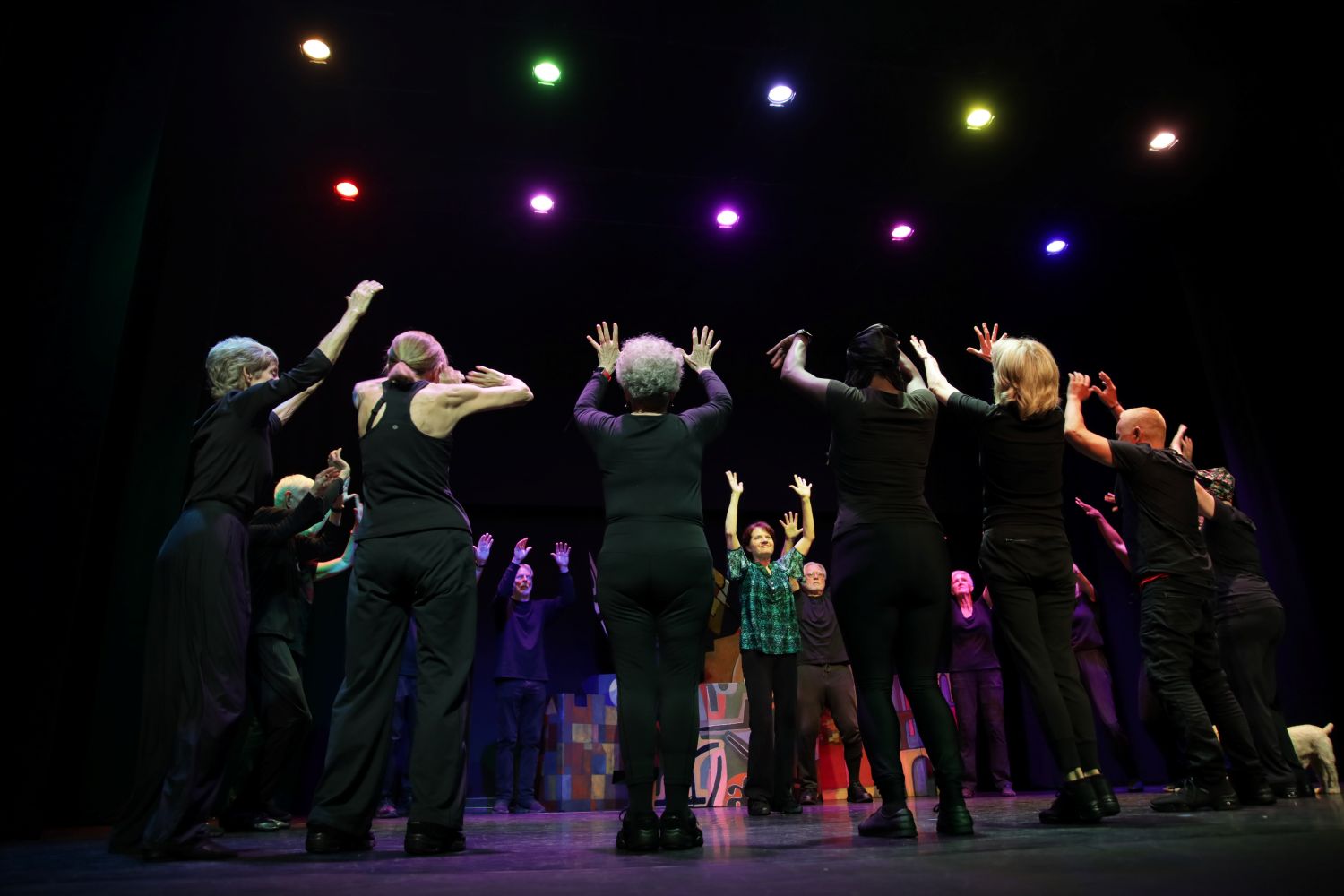
Dancing Through Parkinson’s in performance – Photo by Jaya Kang.
She volunteered for a year at Dancing Through Parkinson’s and kept attending Sophia Klass (one of the founding DTP teachers) class until she finally asked Whiting what was it that she wanted?
“I was like, I want to be here. This community has taught me what the essence of dance is,” she said. “The first section of class you’re sitting in these hard metal chairs, and you’re breathing and doing a port a bras and I was like, this is what was missing, this thing right here. It’s not being on stage. It’s not doing difficult choreography, its breathing a moving with others”
“Then I got to use my skills of being a dance teacher, but it really deepened my appreciation for having movement accessible and having somebody across the way teach me how to move differently. I say it’s the best hour of my week. If I can just get to class, then I’m okay.”
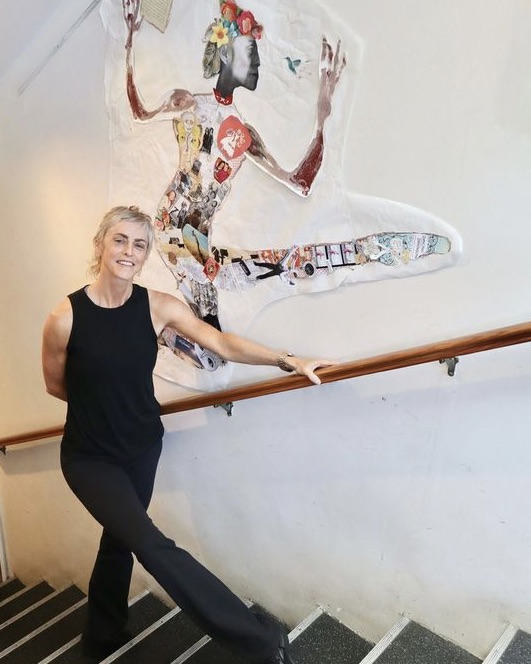
Rachel Whiting – Photo by @gingersolephotography.
Whiting has always loved the process of making dances more than the performing of them, so working with people with Parkinson’s fulfills that need and she loves watching people grow and improve. “While I see the progression of Parkingson’s Disease takes you in one direction, I see the artistic progression growing. There’s that opposition that I think is really profound.”
Dancing Through Parkinson’s has given Whiting a purpose as a dancer in the latter years because she gets to do the thing that she loves through a community that is so different than the one where she was first introduced to dance.
Tagomori wants our readers to know that one of the things that really sets this program apart is that the instructors are very much emotionally invested in the program. “They sincerely care about the welfare of us. Everyone in the class is an adult and would pick up on if the instructors were faking that they wanted to be there.”
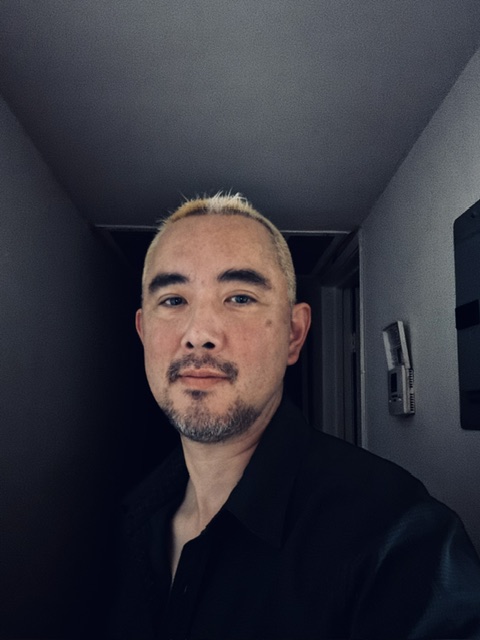
Brian Tagomori – Photo courtesy of the artist.
He said all the above with such love and gratitude, then add that each week when he sees a big smile on Whiting’s face, that it is something she cannot hide. Whiting’s joy of being there helps get the serotonin and dopamine in Tagomori’s brain working and his symptoms go away. Whiting added that she sees a creative force. “It’s fierce, fierce self-expression that is happening.
The teaching artists at Dancing Through Parkinson’s include Linda Berghoff- Founding Teacher, Rachel Whiting- Creative Director, Jessica Monea Evans, Chavia Blankenship, Rileigh Goldsmith, Rosa Lisbeth Navarrete, Haylee Nichele, and Conner Willing.
Every ticket helps sustain Invertigo Dance Theatre’s mission to create accessible artistic opportunities for people living with Parkinson’s, their care partners, older adults, and anyone seeking connection, creative expression, and the healing power of movement.
What: Circe & The Gang
When: Sat, Oct. 10 at 7 pm – 8:30 pm PDT
Sun, Oct. 11 at 2 pm – 3:30 pm PDT
Where: Glorya Kaufman Performing Arts Center, 3200 Motor Avenue, Los Angeles, CA 90034.
Tickets: $25 https://www.zeffy.com/en-US/ticketing/circe-and-the-gang
To learn more about Dancing Through Parkinson’s, please visit their website.
To learn more about Parkinson’s Disease, please click HERE.
Written by Jeff Slayton for LA Dance Chronicle.
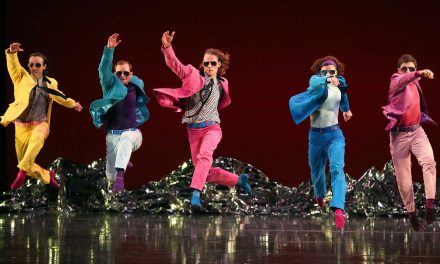
Featured image: Dancing Through Parkinson’s in performance – Photo by Jaya Kang.