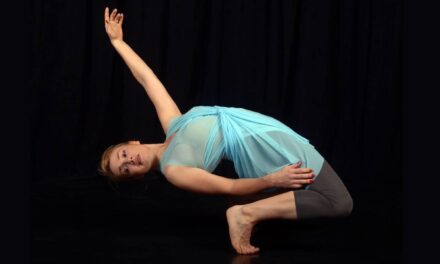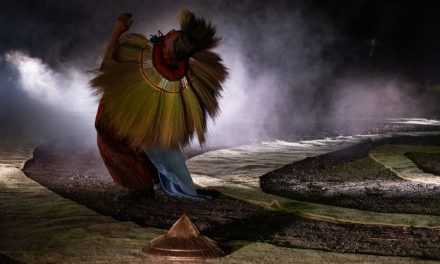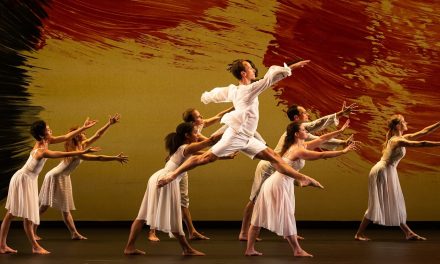
Celeste Lanuza Dance Theater did not just bring dance to the Brand Library & Art Center, they transformed the feeling of the space. Throughout the evening, I found myself forgetting I was at an art center at a park in Burbank and instead felt fully immersed in the world Celeste created. From the first notes of the live custom score, the outside world became less important. The giddy energy from prom photoshoots and the smell of DIY barbecues at the entrance of the park disappeared, replaced by a celebration of family, memory, and cultural lineage. Celeste’s choreographic voice reflects her upbringing, especially her experience dancing flamenco with her family, and this influence is clearly woven throughout the show.

Celeste Lanuza Dance Company – Photo by Jamie Nichols.
Jamie Nichols, curator of this Brand Associates Dance Series, offers a valuable platform for the arts community in Los Angeles that brings together a wide range of dance styles within a shared space. She opens the performance with a request to the audience to not overthink, but to allow emotions to arise naturally as they occur. Feel what you feel, whether you like it or not, and research and analyze later. It is a compelling approach and shaped how I chose to experience the work that evening. Entering a show without preconceived notions allows the performance to unfold with immediacy and with appreciation for the opportunity to be able to experience art at this specific time and place.

Celeste Lanuza Dance Company – Photo by Jamie Nichols.
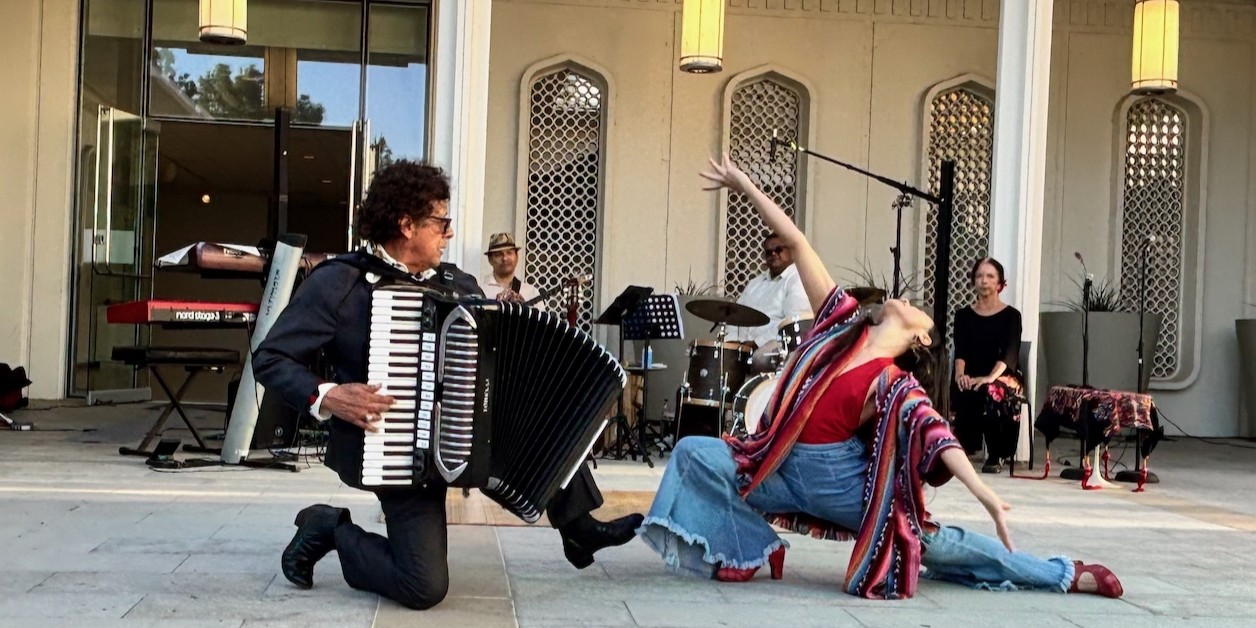
The moment that resonated with me the most was a duet between Celeste and her father, who accompanied her on the accordion. Their connection was intimate and one that we could all appreciate. It was not until the end that I learned of their relationship, yet due to the authenticity of their exchange, this did not come as a surprise. The duet established the foundation of the work, which centered on the enduring bonds of family shaped by history, love, and shared experience.
An altar of family photographs served as a recurring visual anchor, with dancers repeatedly reaching and moving toward it. A solo performed by Celeste’s mother, Cynthia Morales, was particularly moving. Her presence carried a quiet authority. Each gesture felt intentional and informed by lived experience. The simplicity of her interaction with the photographs, especially her focus and touch, communicated a depth of emotion that I often find missing in performers.

Celeste Lanuza Dance Company – Photo by Jamie Nichols.
At times, Celeste incorporated live singing while her company danced around her, creating moments that felt closer to a concert setting than to a traditional concert dance framework. I think there is a way it can work really well and while she definitely touched on it, at times it felt like the intention of the movement and focus was unclear. The dancers appeared less comfortable in certain movement styles, particularly in sections influenced by hip hop. This may have been affected by the limitations of the stone performance surface. Spatial constraints occasionally disrupted the choreography. Leaps were redirected into smaller movements, which resulted in a loss of intention and dynamic range.

Celeste Lanuza Dance Company – Photo by Jamie Nichols.
Later sections were more successful, with individual dancers performing solos in styles they appeared more comfortable in. The dancers seemed to have more ownership of their movements in these moments and it allowed them to connect more fully with the material. A trio stood out for its musicality and phrasing, though instability in lift transitions occasionally interrupted the flow. In many cases throughout the show, the lifts did not feel necessary to the storytelling and instead drew attention to technical inconsistencies in entrances and exits. There were however; some lovely moments of comfort and support through gestures and lighter weight sharing that felt more natural and helped to portray a sister relationship. The dancers that helped to share this story were Elizabeth Altamirano, Ashley Magaña, Sofia Martinez and Jessica Sanmartí.

Celeste Lanuza Dance Company – Photo by Jamie Nichols.
Ultimately, the performance fulfilled its central aim of rediscovering and celebrating joy across generations. A sense of comradery and shared history carried through the evening, culminating in a flamenco inspired finale filled with genuine energy and connection from the dancers and musicians. This was a section where Celeste singing and the dancers moving around her worked really well and still felt natural, even coming after a more classic contemporary trio.
There was something profoundly special about being invited into this familial world, its traditions, its memories, and its joy. Providing space for this kind of cultural expression is not only meaningful but essential to the vitality of the Los Angeles dance community. The talented musicians were Federico Lanuza, Giancarlo Anderson and Angelo Salazar.
To learn more about the Celeste Lanuza Dance Theater, please visit their website.
For more information about the Brand Library & Art Center, please visit their website.
Next on the Dance at the Brand series is Deborah Rosen and Dancers, Saturday, May 9th at 6pm and LA Swing Dance Posse on Saturday, May 16th at 6pm.
Written by Denali Huff for LA Dance Chronicle.
Featured image: Celeste Lanuza Dance Company – Photo by Jamie Nichols.