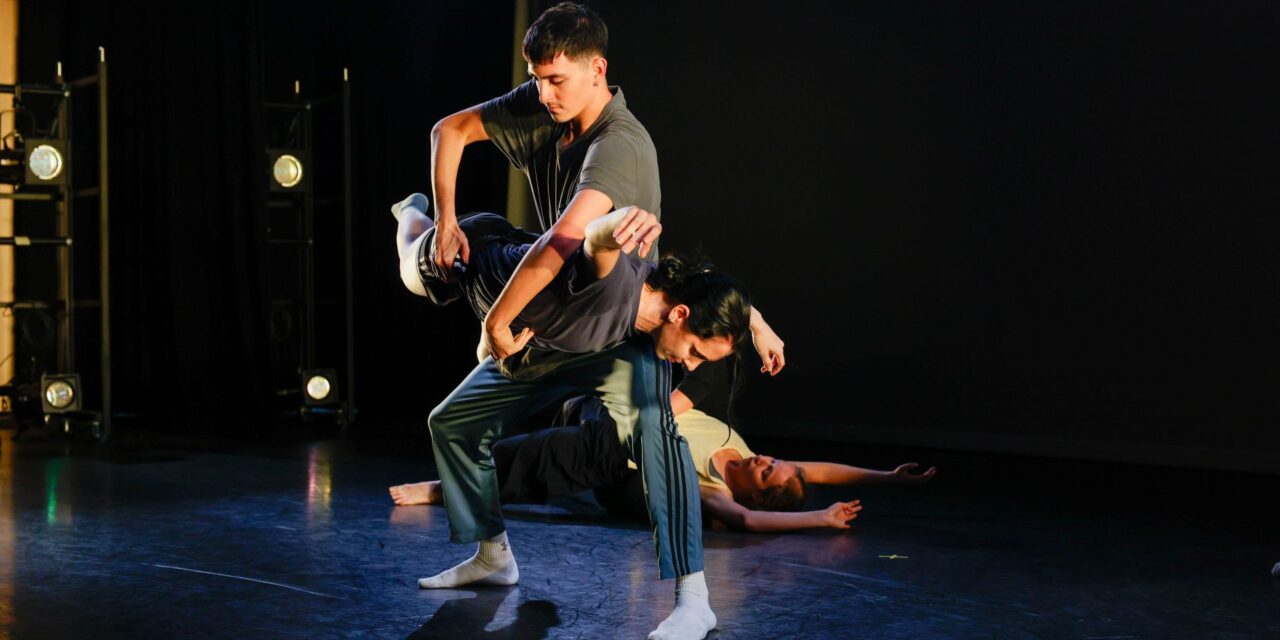
On Friday, July 24th, 2026 I attended Backhausdance’s presentation of “HIVE” at the Sandi Simon Center for Dance, Chapman University. The programming was a wrap up of Backhausdance’s annual summer intensive in partnership with Chapman. The evening included demonstrations, video footage of the intensive, as well as the performed work, and I was able to learn about the educational offerings of this program and see the company members in action alongside aspiring professional dancers, ranging from ages 12 to college-age.
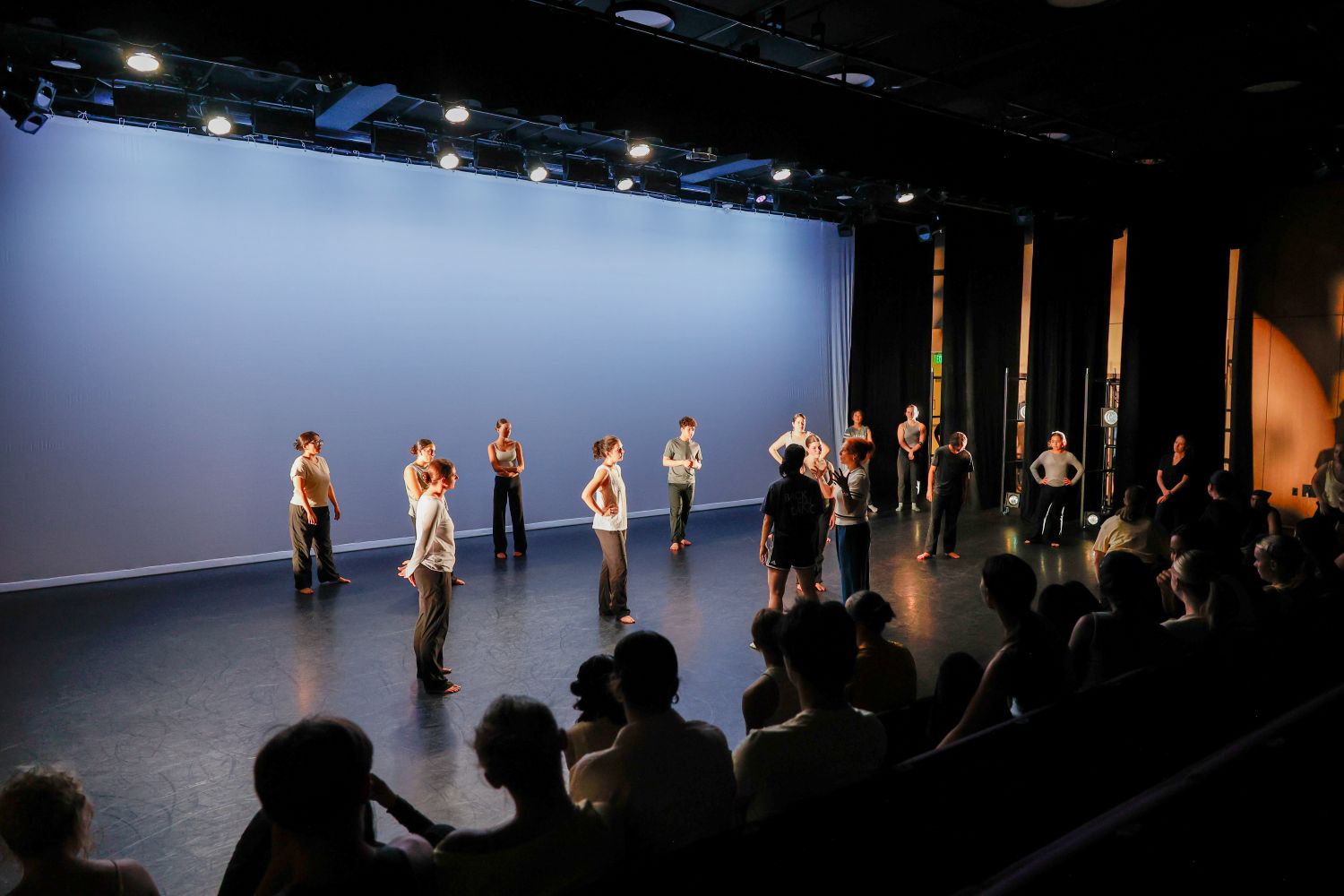
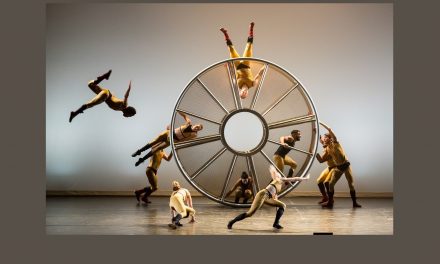
Backhausdance Summer Intensive 2026 – “Hive” – Photo by Adrien Padilla.
As a dance teacher, I was already familiar with the intensive and enjoyed seeing the high-level work these students are doing. There are so many ballet summer programs across the country and various commercial and competitive dance-focused intensives in the Los Angeles area, so I loved that this program really focuses on concert dance. While this was not mentioned in the show, I know that the program does not have an audition process for acceptance, which makes the professionalism and skill exuded by the dancers in the demonstrations and performances even more impressive.
The presentation of “HIVE” was split up into three segments and in all the performances, the company members were mixed in with students. Company dancers Kira Bartoli-Lemon and Kaitlin Regan were introduced as repertory captains who were in charge of adding the student dancers into the piece. The program also credited Associate Artistic Director Amanda Kay White, Anne Elise Garrison, Mo Goodfellow, and Sammi Waugh as part of the group that adapted the choreography. They did well managing the many entrances and exits so that smaller groups could be featured and different strengths shown. The concept of the piece surrounds a hive of bees, and the various connections and collective movement patterns. I think this lends itself well to an expanded cast because there can be contrast between a few bees flying around and the entire hive crowded together.
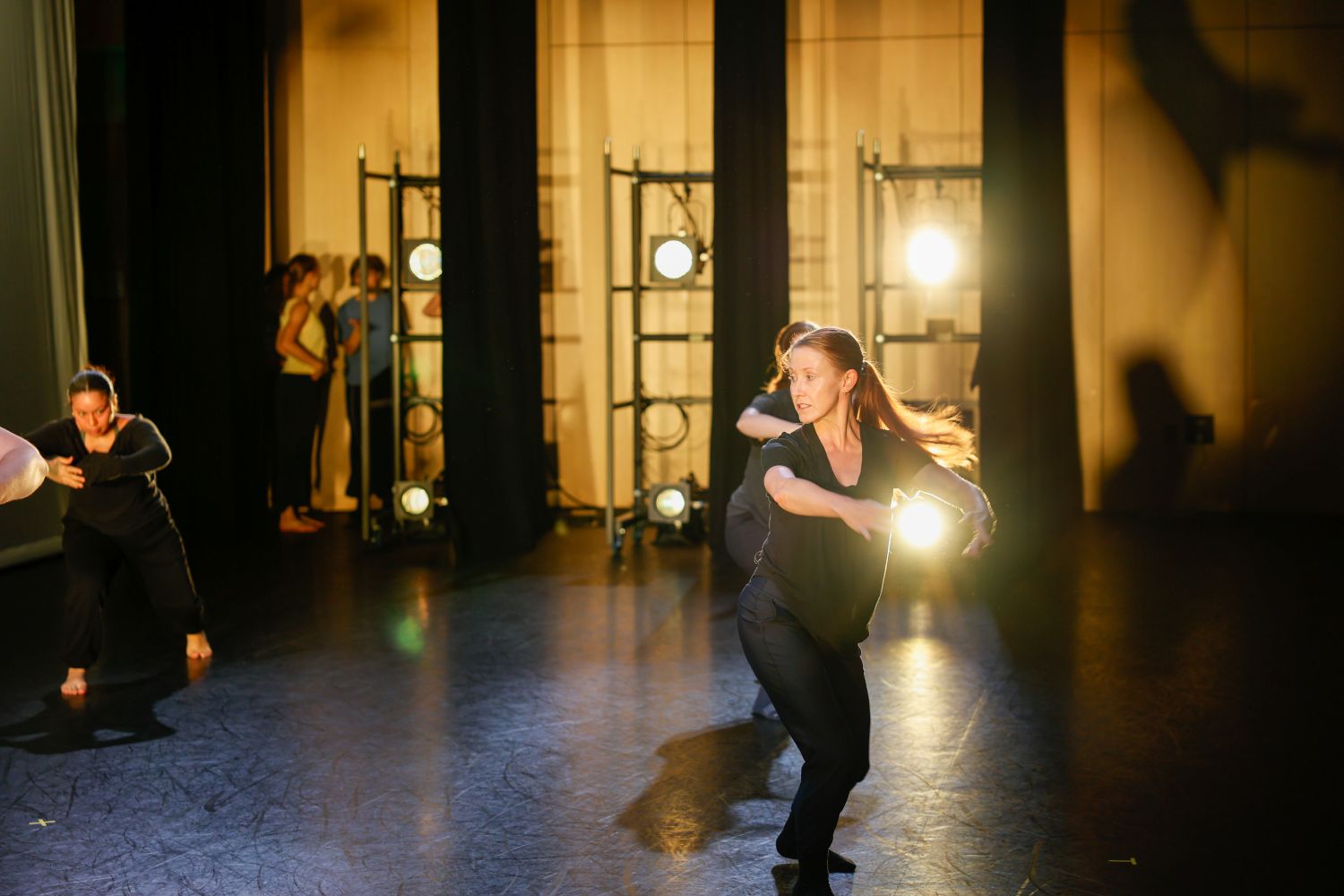
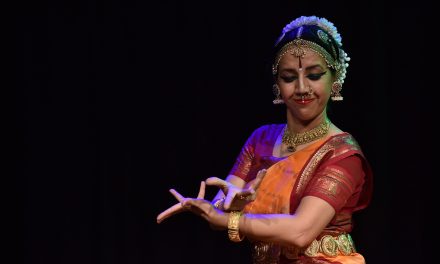
Backhausdance Summer Intensive 2026 – “Hive” – Photo by Adrien Padilla.
The movement throughout was ballet influenced in the footwork, often featuring sharp, sweeping arms contrasting the direct actions of the legs. There was a lovely fluidity to their torsos and collarbones, which also brought more dimension to the movements. I was able to identify the company members by their different costuming. Sometimes one or two dancers were placed near the front to help anchor the group, but often they were mixed in behind or between student performers. I was sometimes distracted by plastered smiles on some of the company members’ faces. In a larger theater, these facial expressions may have been just right, but in an intimate studio theater, it felt too artificial and not fully connected with what they were doing.
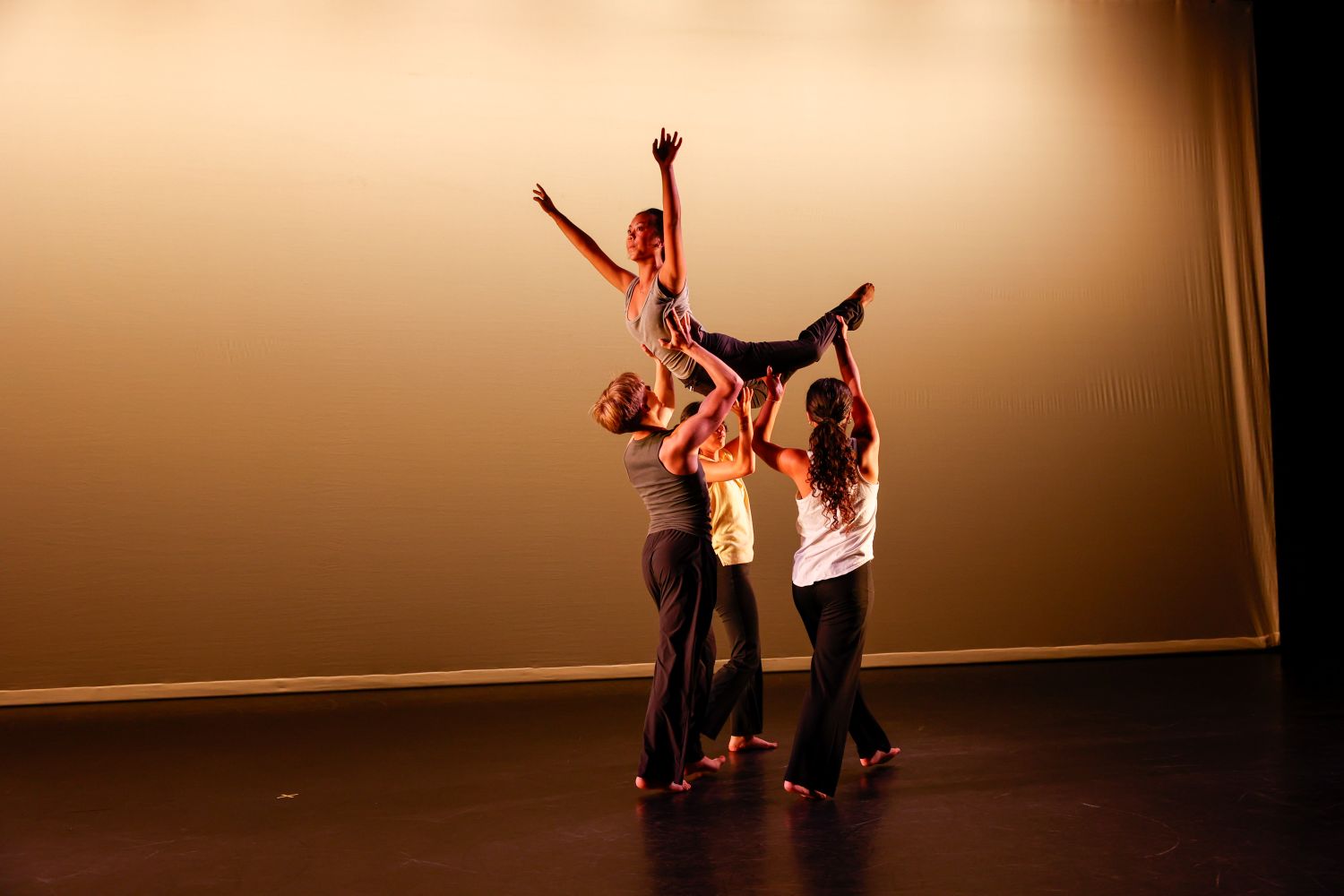
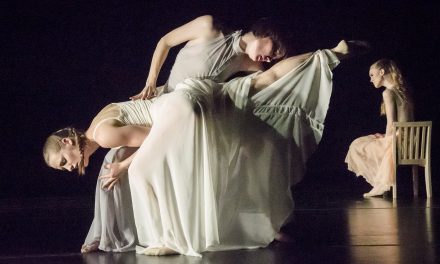
Backhausdance Summer Intensive 2026 – “Hive” – Photo by Adrien Padilla.
The insect-like behavior was captured well through sharp direction changes and weaving patterns as dancers entered and exited in different groups. In one beautiful moment in the first section, one dancer walked slowly from the back of the stage as dancers flurried around her. This was a moment that was amplified by the presence of a larger group.
Prior to the first portion of the performance, Jennifer Backhaus, shared how the music by the Kronos Quartet had been the inspiration for this piece. I enjoyed that at moments when the music would suddenly shift, the dancers would react to this change. It felt like they were interacting with the music, not just dancing on top of it. At the end of some of the sections, the dancers kept the echoes of the music alive as they continued to move in silence, offering a calming soundscore of brushing arms and feet on the floor.
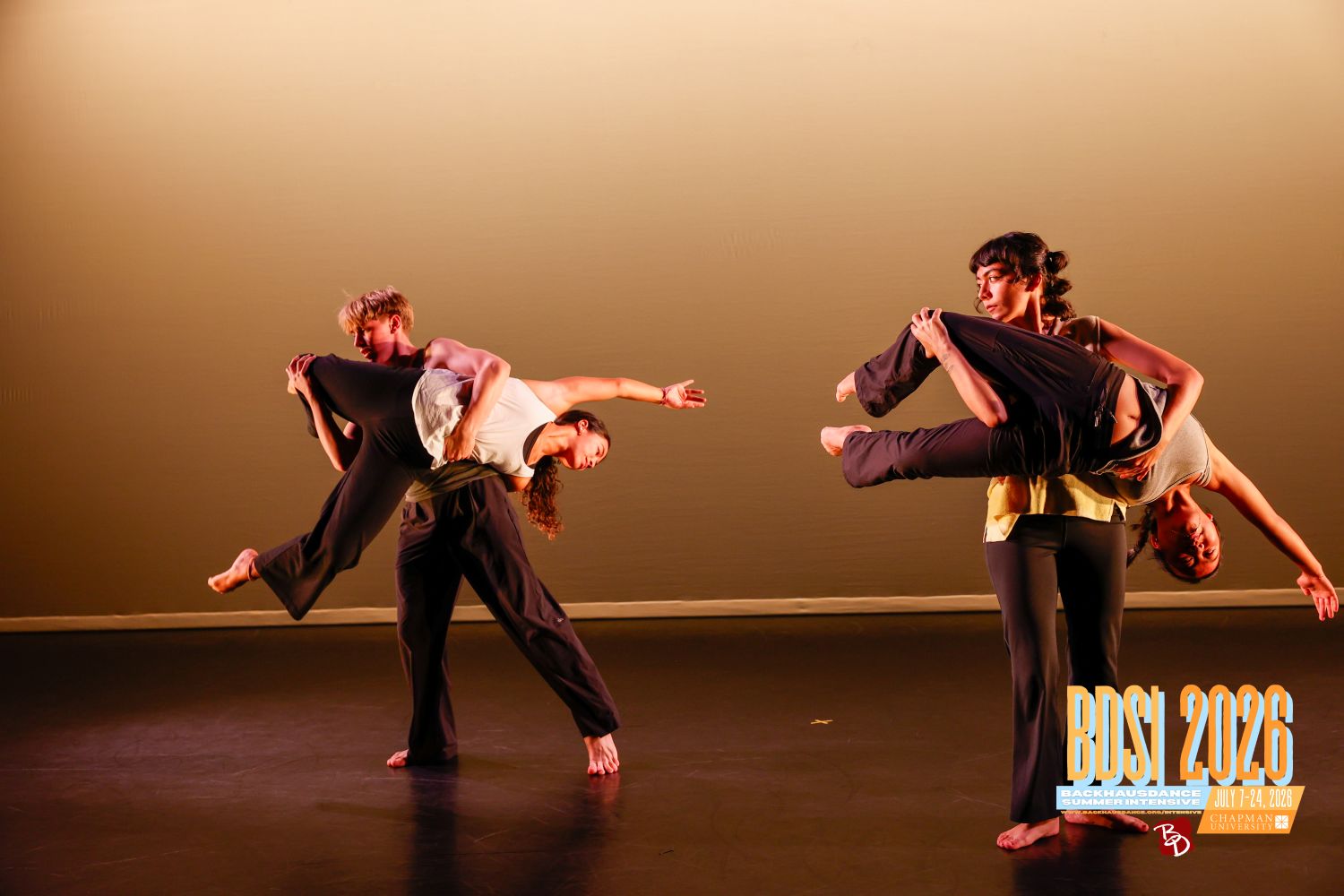
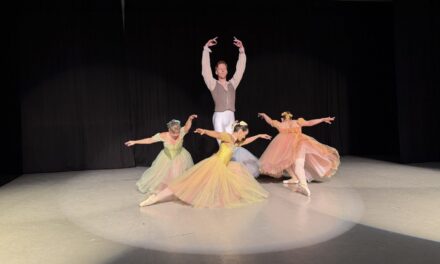
Backhausdance Summer Intensive 2026 – “Hive” – Photo by Adrien Padilla.
Some of my favorite aspects of the piece were the choreographic layering and use of contrast in the different things happening. There was a randomness to the various entrances, exits, paths, and layers that felt fitting to the theme of a hive of bees. I also enjoyed moments of intertwined partnering, particularly in the third section of the dance, which took a slower pace and focused on connection. Pairs of dancers entered and interacted before leaving the stage or parting ways. We learned that the students took part in creating their interactions as part of the program.
In the final section, when almost everyone was on stage dancing full movements, sharing the space was more challenging. There was a motif of gathering together and bursting out with movement. The company was centered in their own clump, with other clusters of students filling the space and replicating the movement. I would have loved to see everyone gather in one large mass or hive, and I was intrigued by the idea of a large cast interpretation of this work that didn’t also have to consider showcasing the student performers.
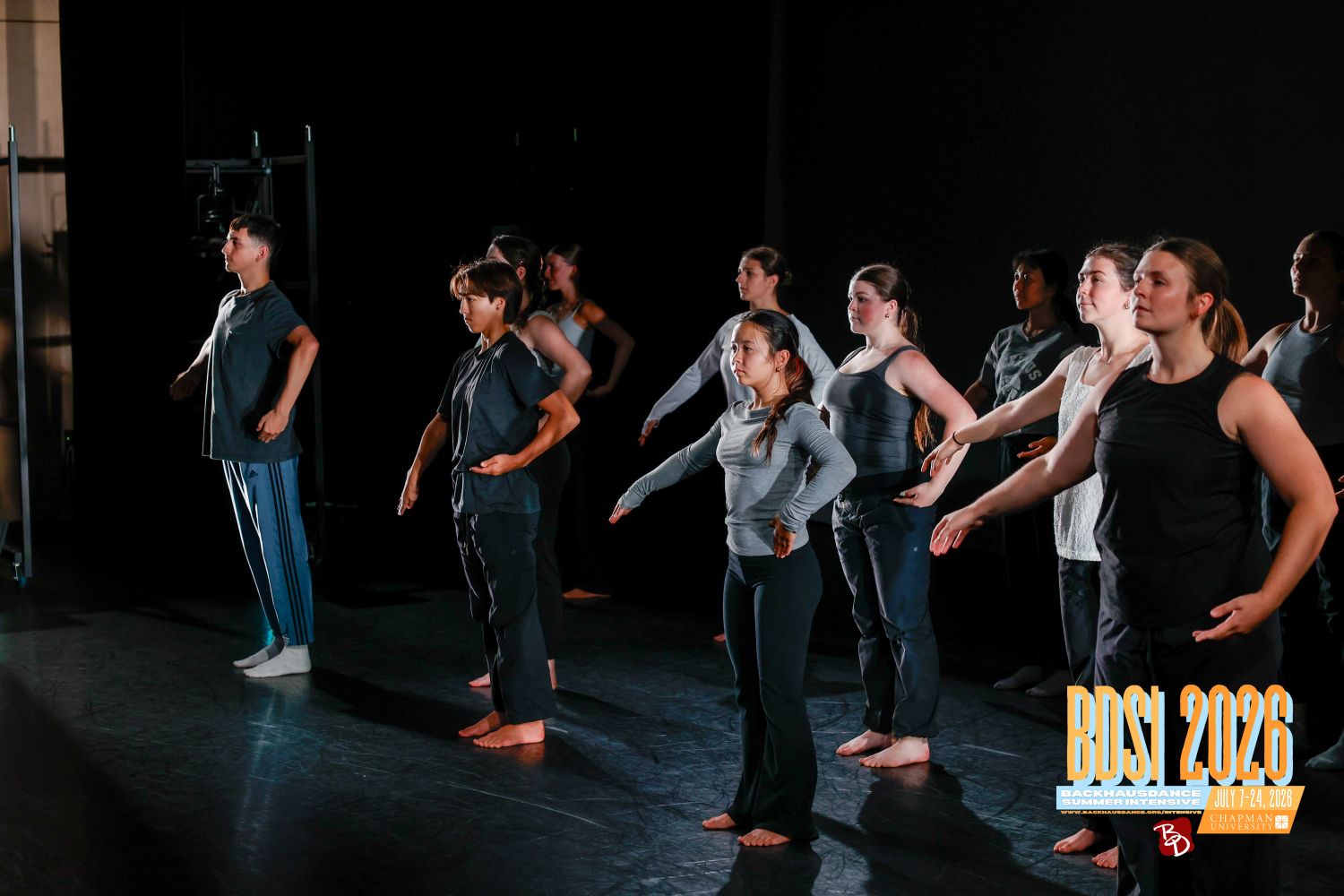
Backhausdance Summer Intensive 2026 – “Hive” – Photo by Adrien Padilla.
Kudos to Backhausdance for bringing this fantastic learning experience to students. It was uplifting to see aspiring dancers dance alongside professionals and to see the moments of connection between the two groups. The company dancers in “HIVE” were Kira Bartoli-Lemon, Samuel DeAngelo, Anne Elise Garrison, Mo Goodfellow, Sophia Lang, Zachary Medina, Dakota Merritt, Katie Natwick, Kaitlin Regan, Chihiro Sano, Kyle Schrader, and Sammi Waugh.
To learn more about Backhausdance, please visit their website.
For more information about the Chapman University Department of Dance, please visit their website.
Written by Rachel Turner for LA Dance Chronicle.
Featured image: Backhausdance Summer Intensive 2026 – “Hive” – Photo by Adrien Padilla.