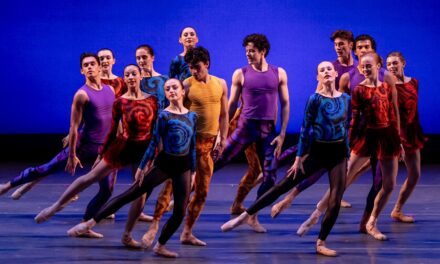
This small ensemble of dancers from the Paris Opera, presented at The Music Center’s Walt Disney Concert Hall July 31 – August 2, 2026, is a force to be reckoned with! Hugo Marchand has assembled a wonderful company. It is an ensemble composed of 6 Étoile Dancers and 2 Soloists from the renown Paris Opera Ballet Company. An étoile dancer is the highest rank a dancer can achieve at the Paris Opera Ballet and signifies exceptional technical skill, artistic interpretation, and dramatic presence in performance. A Paris Opera Ballet Company Soloist is a dancer demonstrates exceptional skill and artistry performing featured roles and solos between the corps de ballet and principal dancers and may also serve as understudies for leading roles in productions. Although this distinction was noted in the program it did not appear to be a factor assigning roles in this production. Everyone had an opportunity to shine in this beautifully curated, intimate evening of ballet featuring Hugo Marchand.
One cannot overestimate the impact of seeing the company in the Walt Disney Hall with live accompaniment as well as recorded music. The impeccable sound is a testimony to the architect, Frank Gehry’s commitment to producing a building that would promote the best acoustics possible. The pianist, Elena Bonnay and cellist, Julie Sévilla – Fraysse were outstanding. The music seemed to surround the movement. The hall has an intimate feeling to it with minimal lighting design and the proximity you are to the dancers and stage. The person who attended with me wanted greater production values while I loved the intimacy and being able to see the dancers, their facial expressions, and movement nuances up close and personal.
I was lucky enough to secure a very short interview with Mr. Marchand in between rehearsals and press demands. During our short interview Mr. Marchand made it very clear that he selected this team of dancers for their technical prowess, personalities, and showmanship. As he talked about working with them at Paris Opera Ballet, his deep respect and appreciation for their tremendous talent, work ethic, and commitment was palpable. When asked to describe each dancer with one word he quickly rattled off, “charisma, elegance, poetic, fresh, depth, pureness, and entertainer” to describe each of the 7 dancers.
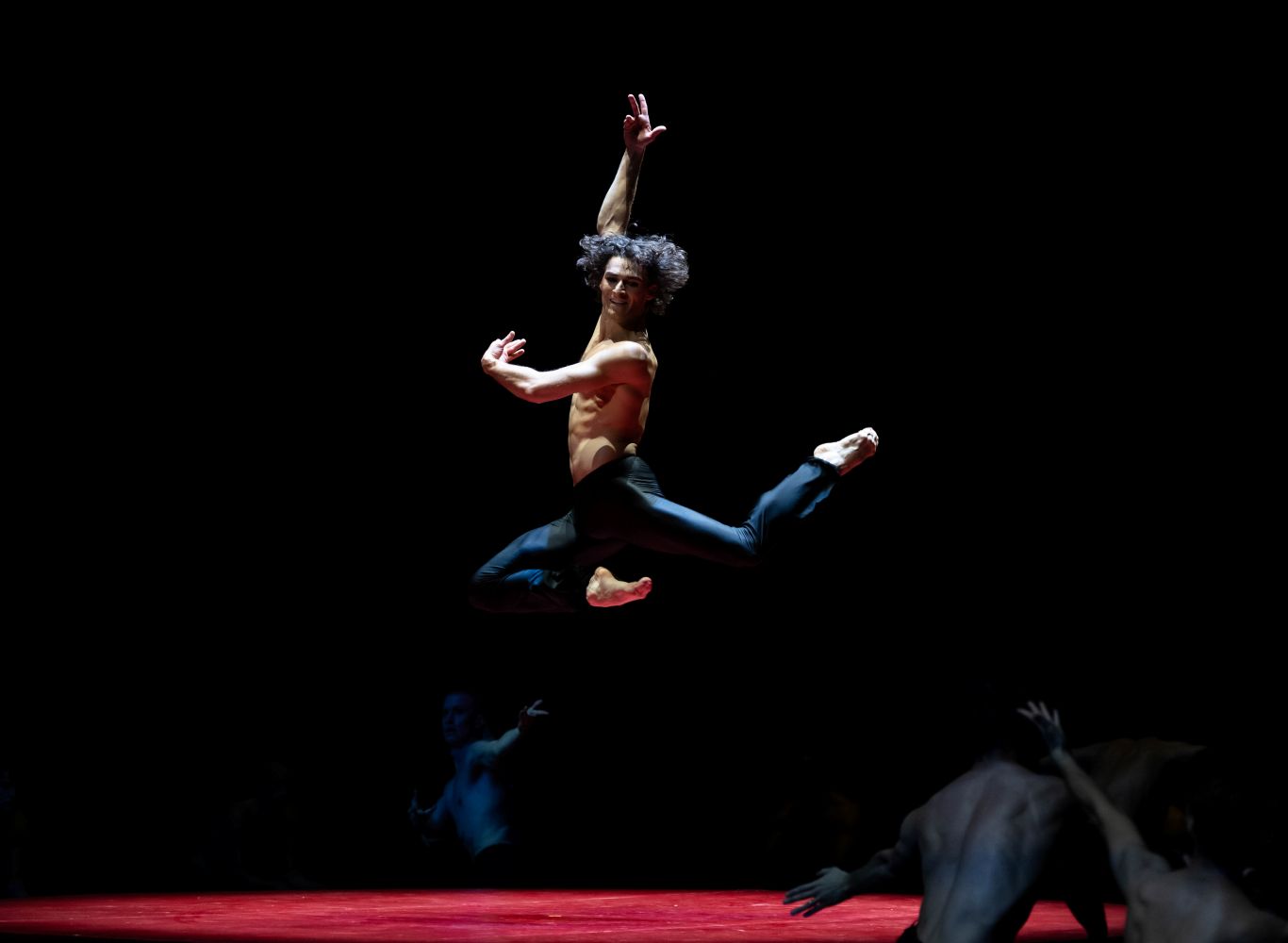
Hugo Marchand in Maurice Bejart’s “Bolero” – Photo by Julien Benhamou.
The program opened with the classical French ballet Delibes Suite performed by Letizia Galloni and Antonio Conforti. The lines were sharp and clean throughout the pas de deux. The musical phrasing was delicate perfection. The male solo was beautifully executed jumps and turns while the woman’s solo featured expressive arms and excellent technique.
The Dying Swan, performed to live accompaniment was amazing. It is an iconic solo fueled by nuance, gesture, and sheer artistry that transcends technical prowess. Etoile, Dorothée Gilbert, was magnificent. When she bourrées across the floor it is as if she is skimming across water. Her feet move so quickly, and effortlessly without a sound. Her sinewy, fluid arms and hands communicated a profound emotional depth that was complimented by the exquisite musical accompaniment provided by pianist, Elena Bonnay, and cellist Julie Sévilla-Fraysse.
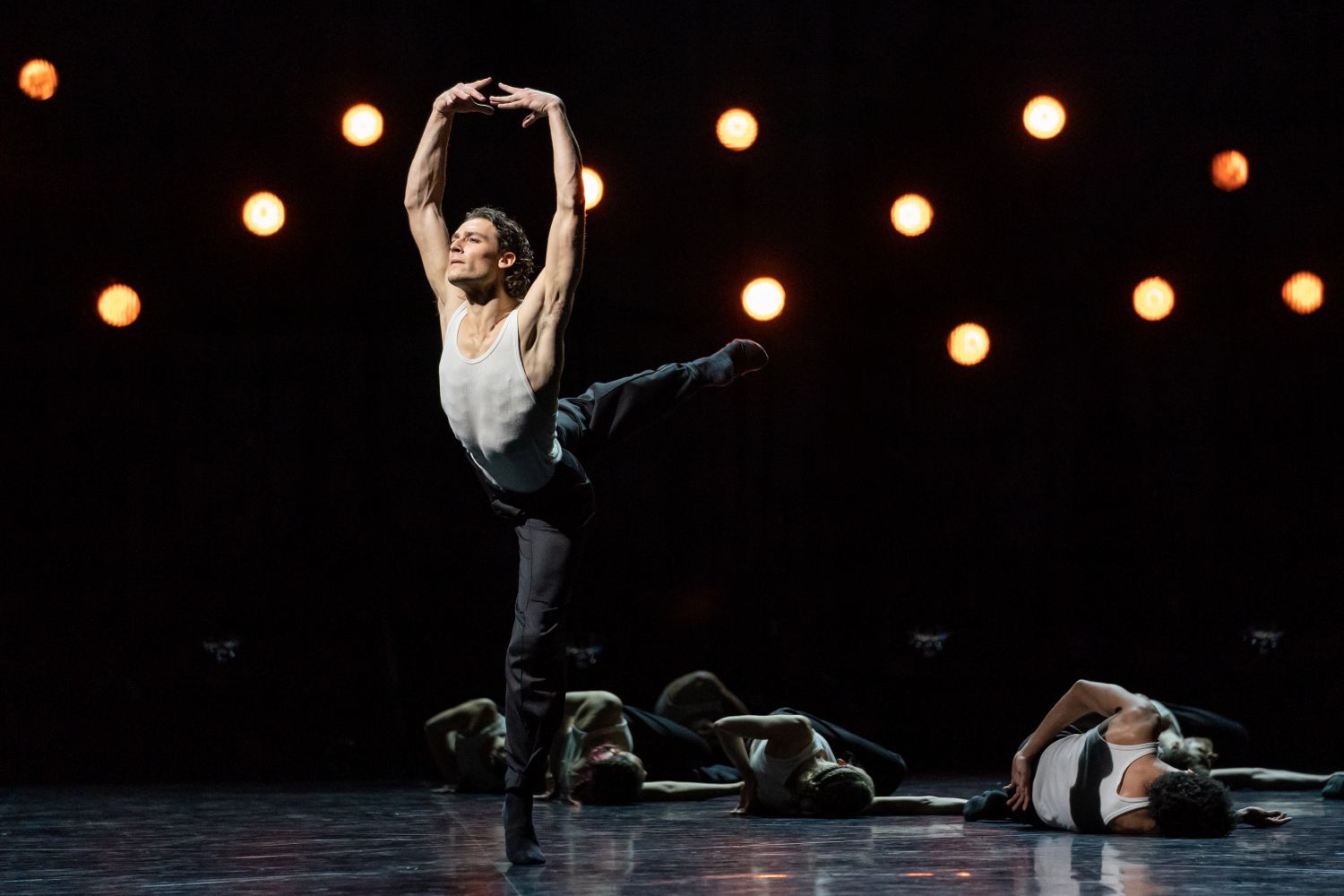
Hugo Marchand in “Body and Soul” Choreography by Crystal Pite – Photo by Yonathan Kellerman.
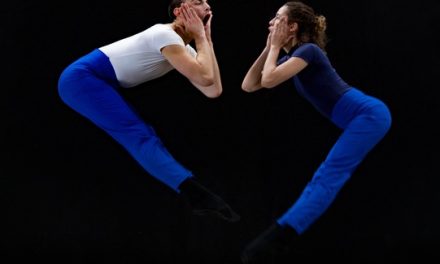
A change of pace comes with À corps ouvert, a contemporary ballet and tour de force performed by Hugo Marchand. His charisma is undeniable the moment he sets foot on stage. The music and dance become one. It is as if they were created together. The choreography includes beautifully executed floorwork, interesting long lines that flow from one phrase to the next effortlessly. Languid, luxurious port de bras and never-ending turns characterize various sections of the ballet. Mr. Marchand has the ability to communicate a myriad of emotions throughout the dance and at one point his movements take on a flirtatious quality that elicited a positive response from the audience. It is clear that his movements are visceral and driven by emotions.
Carmen Pas de Deux performed by Hannah O’Neil and Antonio Conforti is all about the accents. A flick of the wrist, sharp turn of the head, articulate footwork matching the well-known music of Bizet. Through nuance, gesture, and movement quality, the dancers tell the story of two volatile characters, sultry, sexy Carmen punctuating the image with a cigarette elegantly held in her long fingers and the matador, broad shouldered, strong, commanding with sharp, sharp, sharp movements. The highpoint of the dance is the beautiful love duet that communicates an almost forbidden attraction that exists between the two.
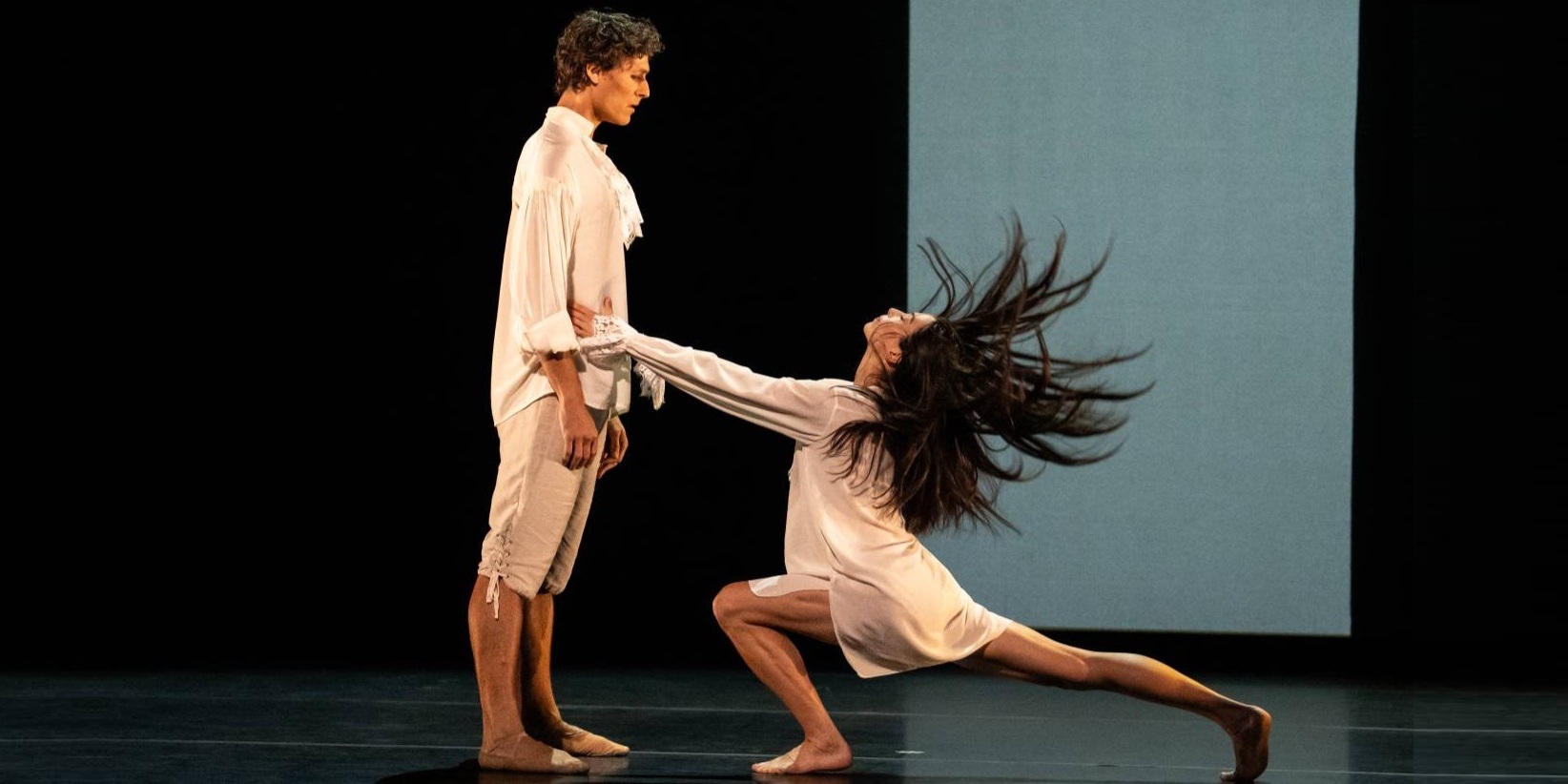
Hugo Marchand and Hannah O’Neill – Photo by Steve Pisano.
Hugo described his early introduction to dance at 9 years old, “You discover you have 10 fingers and you have 10 toes and you have two arms and two legs and then you discover that you are in the studio but there are other people around you. … you get to learn how your body works and how your body can work with other bodies. You get to know which space you can take and which space you have to give to the others.” This statement is the essence of Pas de Deux from Le Parc performed by Dorothée Gilbert and Hugo Marchand. It is a contemporary love story that shows a young couple surrendering to one another passionately. Bodies are continually intertwined as the dancers move as a couple and then as individuals giving space and taking space. Then there is the kiss that happens as the couple is turning and the woman is amid a lift. It is a deep, passionate kiss. It is breath-taking. The ballet shoes are gone, and this helps create a sense of freedom. There are moments when the intimacy and trust between the two made me feel like a voyeur. The closing sequence where the dancers melt into each other’s arms and onto the floor is one of those moments. This was a truly unforgettable performance that immediately brought the audience to their feet in a thunderous standing ovation.
Sonatine performed by German Louvet and Léonore Baulac is accompanied by the pianist, Elena Bonnay. It is the quintessential Balanchine classical ballet complete with a pas de deux featuring elegance, control, and exceptional technique from both dancers. This is followed by both dancers’ solo turns demonstrating their technical prowess with turns, jumps, and amazing petite allegro.
Hugo stated during our interview that he had chosen to feature the work of French choreographers. Le rendezvous pas de deux was one of two pieces choregraphed by French choreographer, Roland Petit. Dorothée Gilbert and Marc Moreau performed this charming ballet beautifully. Artistry shines as the dancers effortlessly perform beautiful lifts and combinations that highlight the technical skill and virtuosity of both dancers, the joy, elegance, and technical mastery that remain central to ballet’s enduring appeal.
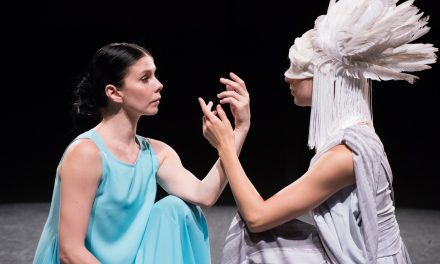
Esprit du bleu from Signes, performed by Hannah O’Neil and Germain Louvet, brought an abrupt change in mood. It is a contemporary ballet, with a foreboding atmosphere, danced by two dancers who communicate with their entire bodies—-arms, head, fingers, beautiful extensions, light jumps all create a mood. Every movement communicates an emotion. The dancers have command of ballet and modern technique and fuse them seamlessly. It was choreographed by Carolyn Carson, a self-proclaimed contemporary artist who is an American born French nationalized citizen of Finnish descent. The movement is fluid and ethereal in quality. It is in the perfect place in the evening’s program.
Léonore Baulac and Hugo Marchand did a marvelous job with Trois Gnossiennes. Pianist, Elena Bonnay, gave the Erik Satie piano compositions a sense of mystery. The duet was the antithesis of the freedom seen earlier in the evening in Pas De Deux from Le Parc. It was a study in restraint yet the way he partnered Ms. Baulac communicated a level of intimacy. Ms. Baulac’s wonderful extensions and tremendous control are stunning. She can repeatedly perch on one leg in attitude with a perfectly turned-out flexed foot without any extra movement or preparation. There is a sequence at the beginning of the piece that includes a roll to the floor by Ms. Baulac and it has a poetic quality to it that communicates a letting go or releasing. She has a doll-like quality for much of the dance and Mr. Marchand effortlessly lifts her and moves her through space. As the dance progresses it becomes more like a conversation between two people with moments when they move in perfect unison and although side by side the elicit a feeling of oneness.
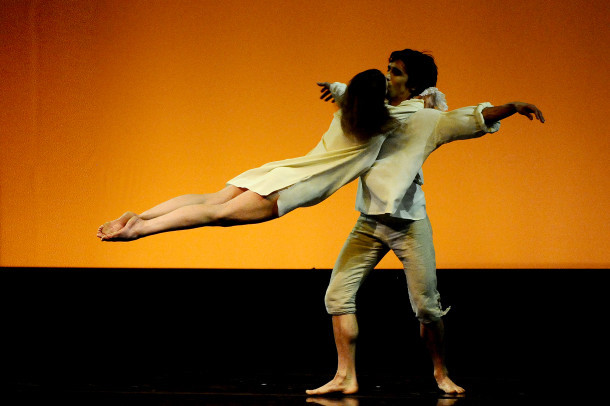
Aurelie Dupont and Benjamin Perch in “Le Parc” – Photo courtesy of the artists.
The evening closed with Marc Moreau’s Adage en blanc which moved into a beautiful finale that was pure unadulterated fun! The costuming in genteel white created a truly beautiful picture of pure elegance. It was a celebration of classical ballet highlighting the gifts of each dancer and the exceptional ensemble work. The choreography was clearly designed to demonstrate classical technique at its best. Interesting poses, clean lines, and truly intricate partnering executed effortlessly. The men exuded athleticism as they soared through the air in grand jetés and executed clean, precise batterie that finished in a perfect fifth position or on one knee. The women displayed endless grace, musicality, and control as they perched in perfect arabesques and extensions that seemed to be reaching for the sky.
“We all dream about becoming a lead dancer but in the end what we truly want is to be alone on a stage in front of an audience to deliver the best of our talent.”
—Hugo Marchand, Principal Dancer Documentary (2020)
When asked if the statement above still captured his feelings, he quickly said a firm “No, it’s not true anymore.” then went on to explain that he was very young when the documentary was made. Our short interview was made even shorter due to technical difficulties and a late start but in minutes it was clear that his vision is far beyond being a “lead dancer” wanting to be alone on stage. He has clearly grown into a mature artist with a vast vision. He has spent time reflecting on art and psychology and acknowledges that he has changed a lot and makes note of the impact of the pandemic and life moving fast. In his own words,
“I want to use dance to make people feel better. I want the audience to experience something about themselves coming to see the performance through the dancers.
I want them to get in touch with their own emotions about their own life… to get in touch with their own intimacy through the pieces that we are showing on stage.”
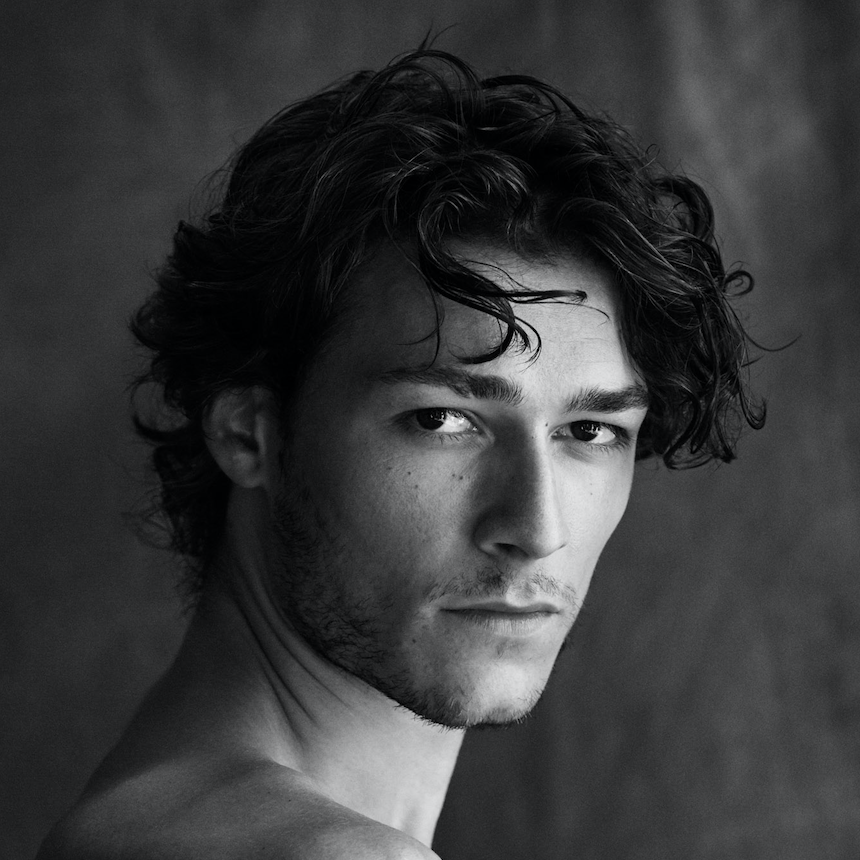
Hugo Marchand – Photo courtesy of The Music Center.
As I left the Disney Hall I stopped in the vestibule to say “hi” to a friend and we immediately became engaged in an animated conversation about the experience of seeing Hugo Marchand and Superstars of Paris. Congratulations Mr. Marchand! Your vision is coming to fruition.
For more information about the Superstars of Paris, please visit their website.
Written by Leah Bass-Baylis for LA Dance Chronicle.
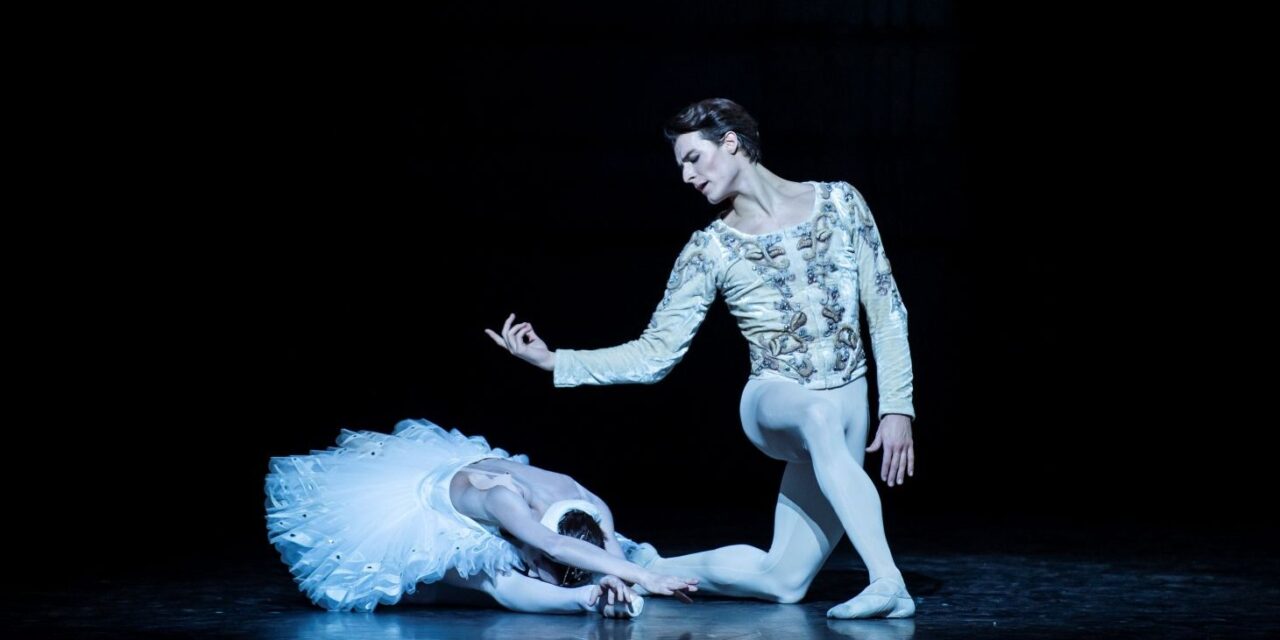
Featured image: Hugo Marchand in “Swan Lake” by Rudolf Nureyev – Photo by Ann Ray.