
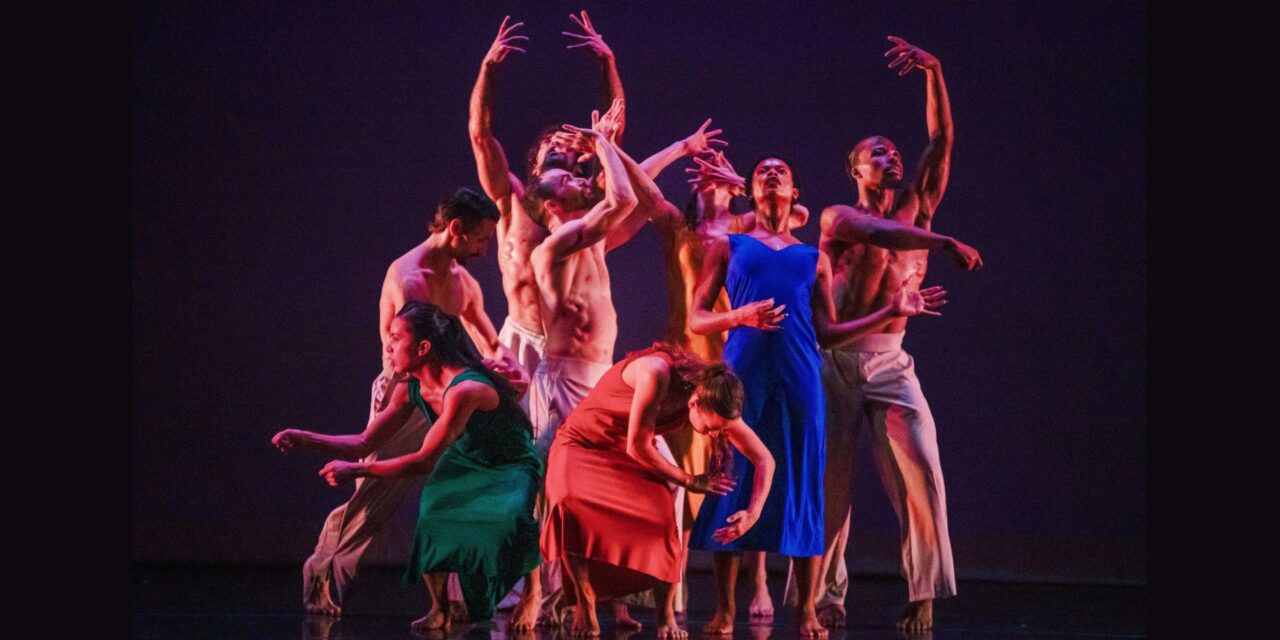
Sitting in the audience at The Wallis on June 6, 2026, I found myself wondering how I was going to write a critique of the final performance of a company I have loved and admired for years.
How do you critique a goodbye?
As the house filled with supporters and fans, anticipation seemed to mingled with pathos. On stage, a screen showing video vignette of smiling and snuggling company members writing love notes to their audience…and finally ended with a simple message: “Thank you, L.A.”
A farewell that seemed to sneak up on us.
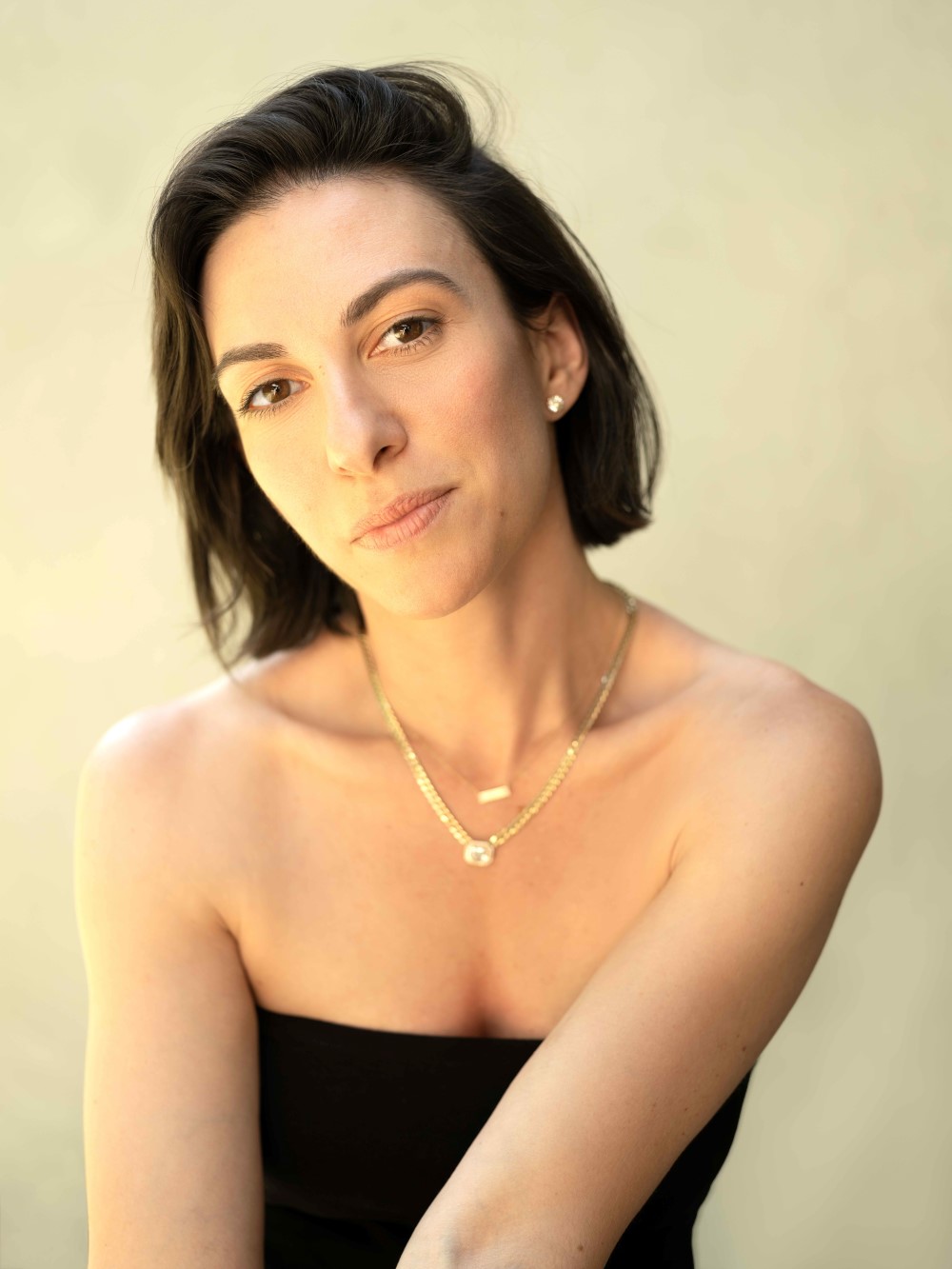
Tina Finkelman Berkett – Photo by Trey McIntyre.
Then co-founder and Artistic Director Tina Finkelman Berkett stepped onto the stage. Smiling, graceful, yet visibly emotional, she spoke about the difficulty of saying goodbye.
At that moment, I was no longer a critic.
I was a witness.
I was someone who had watched this company grow, mature, evolve, and ultimately arrive at its final Los Angeles performance. The emotion was genuine. The sadness unmistakable. Tears followed naturally.
What remains foremost in my mind is not simply a review of the choreography, but a commemoration of the remarkable work BODYTRAFFIC created over the years—work that made the company beloved not only in Los Angeles, but far beyond it.
BODYTRAFFIC was never a company devoted to a single style. Under the leadership of Tina Finkelman Berkett and Lillian Rose Barbeito, it became a home for artistic possibility—equally comfortable with humor and heartbreak, athleticism and vulnerability. Their dancers were asked to be more than technicians; they were asked to be artists. That combination made the company unique.

Chandler Davidson with dancers of BODYTRAFFIC in “Blue Until June” Choreography by Trey McIntyre – photo by Christopher Duggan, courtesy of Jacob’s Pillow.
This afternoon opened with Trey McIntyre’s Blue Until June, set to the soulful voice of Etta James. McIntyre has always possessed a gift for revealing the humanity beneath movement, and here the dancers inhabited the work with warmth, ease, and generosity.
The performers embraced every nuance. Brenan Gonzalez brought youthful spirit, strength, and vulnerability. Jordyn Santiago radiated joy, her movement alive with imagination and infectious energy. Pedro Garcia displayed the quirky brilliance and masterful musicality that have long made him a company standout. Chandler Davidson combined technical excellence with an engaging theatrical presence. Joan Rodriguez brought endless strength and a generosity of spirit that reached beyond the choreography. Becky Garcia was long, lyrical, and lovely. Katie Garcia was mesmerizing—beautiful, intelligent, lyrical, fierce, and utterly compelling, with a rare ability to combine emotional transparency with technical command.
Together they moved through the work with a sense of familiarity and trust that felt deeply personal—an ensemble not simply dancing together, but celebrating one another.
Next came the premiere of Fernando Hernando Magadan’s Shared Ground. Magadan’s choreographic voice is architectural and emotionally charged. The work begins in seeming chaos before gradually revealing its underlying order. Set to the relentless pulse of Ravel’s Boléro, the piece gathered momentum and tension, weaving relationships together before arriving at moments of striking clarity.
The choreography reflected much of what BODYTRAFFIC represented throughout its existence: complexity balanced by humanity, structure infused with feeling.

BODYTRAFFIC – “oJoy” choreography by Richard Siegal – Photo by Christopher Duggan.
Then came Richard Siegal’s exuberant o2Joy.
If ever a work captured the spirit of BODYTRAFFIC, this was it.
Set to music by Oscar Peterson, Billie Holiday, Ella Fitzgerald, and Glenn Miller, o2Joy radiates musicality. Siegal’s choreography is jazz improvisation made visible. The dancers ride the music as though carried by it, responding to every riff, accent, and rhythmic shift with movement that feels spontaneous yet exquisitely crafted.
It was nearly impossible not to tap your foot, move to the rhythm, or resist dancing along.
This was a special company—exceptionally trained, endlessly curious, and fearless in its willingness to embrace new voices. The dancers moved effortlessly between technical virtuosity, theatrical storytelling, musical sophistication, and pure joy. Watching them together, one could not help but feel their affection for one another.
And perhaps that is what made this farewell so difficult.
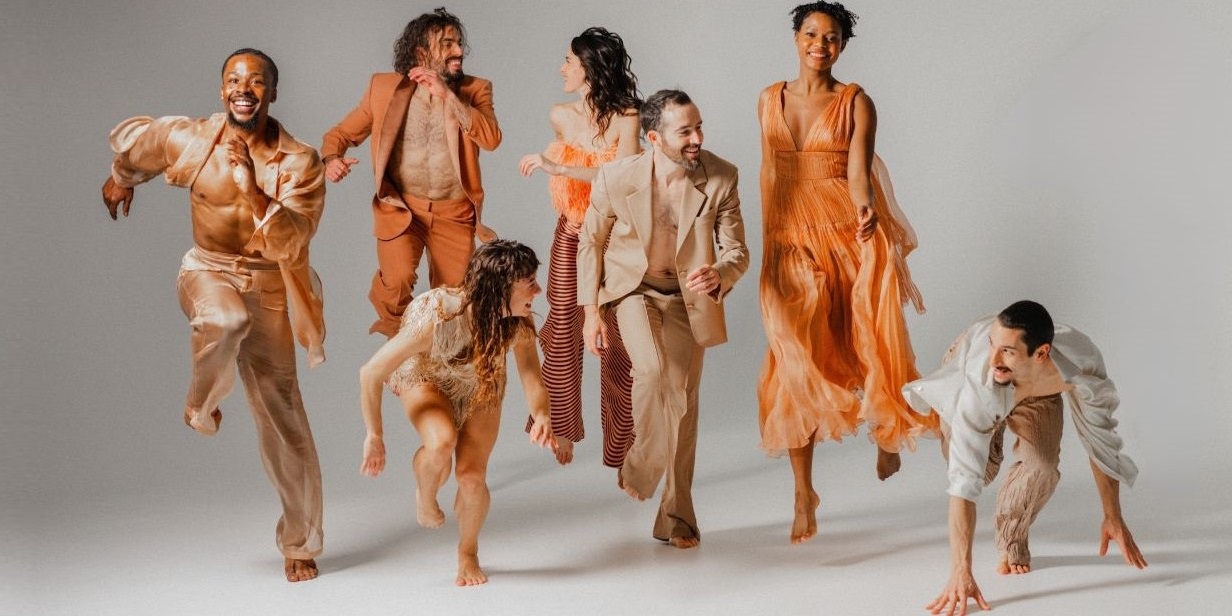
BODYTRAFFIC – Photo by Guzmán Rosado.
The loss is not simply of a dance company. It is the loss of a familiar artistic voice. A company that consistently reminded us that contemporary dance could be intelligent without being inaccessible, sophisticated without losing its humanity.
Maybe they are leaving too early. Maybe it is exactly the right moment to begin another chapter. Time will answer that question.
What cannot be questioned is the legacy they leave behind. Moments that seemed to stop time even as they unfolded before our eyes.
No one can say BODYTRAFFIC did not make us fall in love.
Perhaps that is the greatest achievement any dance company can bequeath.
For those fortunate enough to witness the journey, the company may be taking its final bow.
But the love it created will continue long after the stage has gone dark.
For more information about BODYTRAFFIC, please visit their website.
To learn more about The Wallis, please visit their website.
Written by Joanne DiVito for LA Dance Chronicle.
Featured image: BODYTRAFFICE in “Bloquea’o” choreography by Joan Rodriguez – Photo by Trey McIntyre.





You are such a vivid imagist. I sadly missed this company, whom I really have admired, but lived the experience through your emotional descriptions and profession of loving support. Thank you.