I caught up with Brianna Mims in order to get a more thorough picture of who she is and what she is doing for this performance at the Audubon Center in Debs Park in Los Angeles on May 9th. According to her press release material, “The performance is part of Marooning Bodies, Mims’ ongoing practice of building spaces and tools to rehearse future histories. It unfolds in three movements, each guided by an herbal tincture created in collaboration with Botanica Cimarron and housed within the leg of the Collective Prayer Stool, drawing on the symbolic and material properties of these herbs to trace a passage through grief: opening, grounding, and return. The Collective Prayer Stool was created in collaboration with McBog Design and serves as both sculptural object and living site of ceremony throughout the work”.

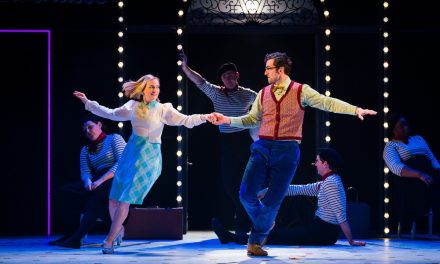
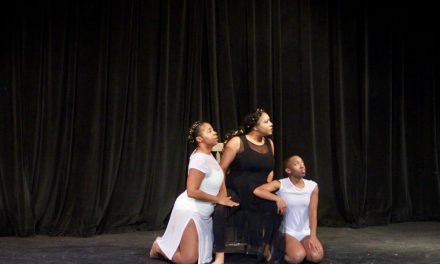
Brianna Mims – Photo by Alima Lee.
She also included a brief bio about herself as an artist, “Mims is an artist, abolitionist, and facilitator based in Los Angeles, and the founder of Marooning Bodies. Her work spans performance, public art, social practice, and object-making, grounded in the body as a site of liberation and inquiry. Through an exploration of the relationships between self, others, land, and more-than-human life, she creates spaces for collective reflection, imagination, and transformation”. The work will include herself, Cody Perkins for live music, and the Prayer Stool collaboration was with McBog Design. Admission is FREE.
I asked about the background to Marooning Bodies. Marooning Bodies is a 5-year interdisciplinary ecosystem that began as a physical game about creating and archiving future histories. The game can accommodate up to 66 players (6 per box, 11 boxes total). It guides players through decision-making, resource distribution, community rituals, and responses to harm. It incorporates multisensory elements including scent vials corresponding to biome cards, and asks embodied questions like, What body part reflects your community? in order to engage whole-body wisdom rather than purely intellectual dreaming. This project then developed and expanded beyond gameplay into Future Relics (art objects inspired by generated future histories), educational programming, and installations. Mims has conducted playtesting across diverse settings including USC, Norco Prison, Morocco, Senegal, Ghana, L.A. County libraries, and the Feminist Center for Creative Work.

Brianna Mims – Photo by Alima Lee.
BF: So, what can we expect for your performance on May 9th?
BM: It is based around a collective prayer stool that will live on afterwards. There’s a collective prayer book that goes with it that the audience gets to write in, and a prayer stone that they get to use to pour their prayers into the earth. All of those things will continue to live beyond the performance, which I’m excited about. It’s not saying that prayer looks a certain way, it’s making space for all of the different ways that people want. The prayer stool is a collective prayer stool, and it’s one of the objects of Marooning Bodies, one of what we call, what I call future relics. It’s coming from a future history in which people are practicing grief collectively.
So, what I’m doing through my performance feels like a whole-body prayer in which I am processing my own personal grief, and I am shape-shifting and people are bearing witness to that. And then the invitation opens up for this to be a collective experience, for multiple people to join, for them to write their prayers in the book, to give their prayers to the earth, to sit on the stool together.

Brianna Mims – Photo by Alima Lee.
BF: How does the Marooning Bodies game work? You get a box with the game inside and then what?
BM: You open it up, and you get a future histories textbook, and the book guides you through gameplay, with which you’re building this ideal community. It takes players through sections of Decision-making, resource distribution, community rituals and practices, and responses to harm in their community. And they engage in conversation and the creation of one art-based artifact. This could be a song, a story, a letter or a dance. 6 people can play per box and so, I can host workshops of up to 66 people. All of the senses are involved in the world-building process and in the dreaming process. I worked with a scent designer, so the first card that players pull, they get their biome, and they get a correlating scent vial. It allows people to tap into wisdom within the whole body, as opposed to just dreaming with their minds, and that felt really important to me as a dancer.
BF: OK, thank you for explaining that. It is a fantastic concept. We then spoke about the Performance Concept that will be in action on May 9th at Debs Park. The piece creates a rehearsal space to practice collective grief within a future history where communities grieve collectively. Prayer as a non-religious practice: opens space for all forms of prayer without attachment to specific religions; text states, “My prayer might not look like your prayer, but my prayer is only possible because of your prayers”. Full-body prayer: Mims performs improvised movement as personal grief processing and shape-shifting, with the audience bearing witness. Audience Participation: attendees write in a collective prayer book, pour prayers into the earth via a prayer stone and share sitting on the prayer stool. And there is the mystic material from Mim’s great-grandparents Savannah, Georgia home, the Spanish Moss. It is mixed into the legs of the stool with shells, rocks and acorns from that ancestral home.

Brianna Mims – Photo by Alima Lee.
We touched on the reason for the focus on grief and discussed that grief was simply a part of growing and change and should not be avoided or feared. Mims frames grief as a portal for shape-shifting and metabolizing change, rejecting negative connotations. Improvisation as spiritual practice: The performance structure allows spontaneous play between dancer and musician rather than set choreography. Mims likes the idea of questions and curiosity leading the improvised movement. A core tenet that “remembering is a part of imagining” connects ancestral wisdom to future visioning. The Spanish Moss serves as through-line between the ancestral realm and the present. The questions presented through the improvisation engage all senses and body parts rather than purely intellectual responses.
BF: What part will improvisation play in your piece?
BM: I like the idea of questions and curiosity. Questions and curiosity are what I’m always interested in. I think for this specific performance it’s a space for us to collectively grieve. I don’t think culturally, we don’t have enough space for that. But from my artistic perspective I would like to live in a part of a future community in which we practice grief collectively.

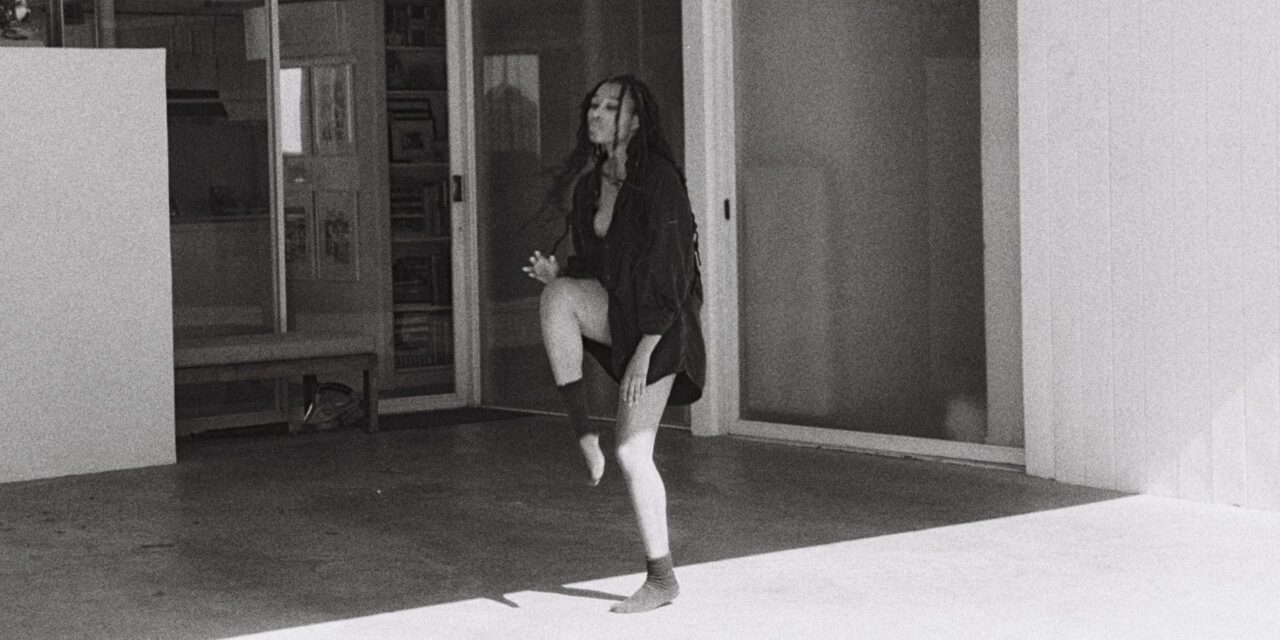
Brianna Mims – Photo courtesy of the artist.
BF: That would be amazing and transformative. I wish you a great performance for your May 9th show and thank you so much for sharing with me today.
BM: All right. Well, it was nice talking to you, Brian.
BF: It was great talking to you. good luck.
Brianna Mims performs “What hangs, What Shapeshifts Between Worlds and Time” on May 9, 2026 at the Audubon Center in Debs Park, 4700 North Griffin Avenue, Los Angeles, CA 90031. Admission is FREE.
For more information on Brianna Mims, please visit her website.
Written by Brian Fretté for LA Dance Chronicle.
Featured image: Brianna Mims – Photo by Alima Lee.