
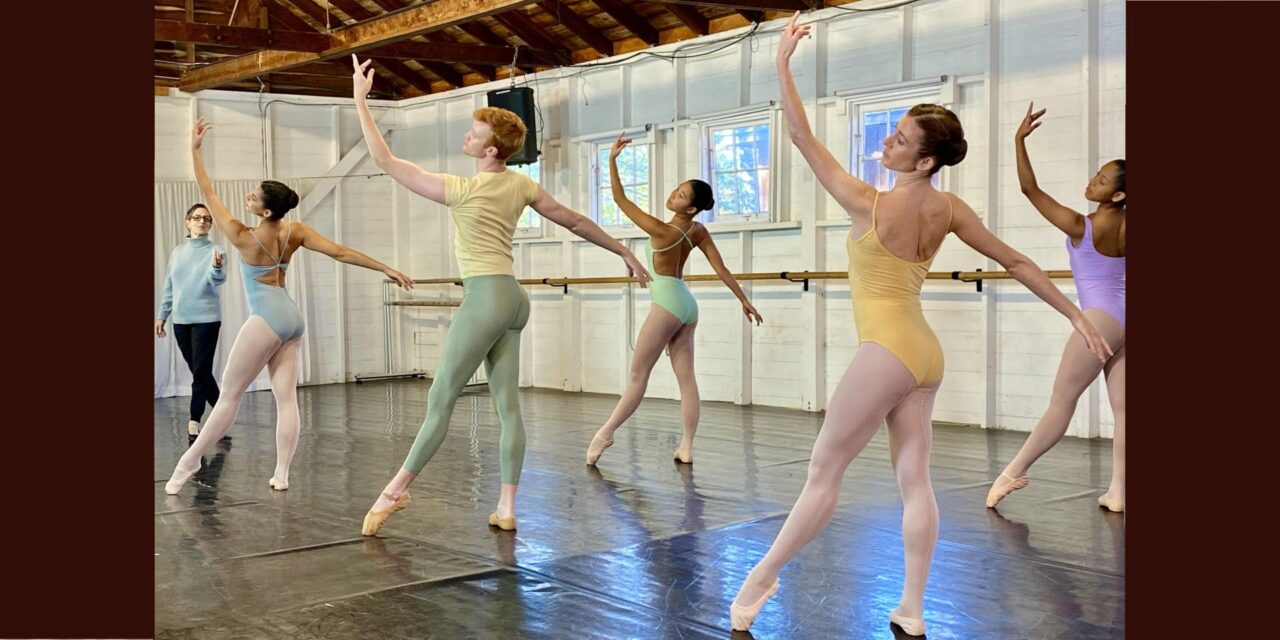
Diana Byer studied extensively with the superb teacher Margaret Craske, a pupil and disciple of Enrico Cecchetti. Byer has become a highly sought-after teacher with over 45 years of experience working with ages eight through professional. She is also the Founder and Artistic Director Emerita of New York Theatre Ballet company and school. In October of 2025, Byer initiated Teaching Cecchetti “a new channel meant to educate today’s dancers via social media. Through posting engaging and relevant content, Teaching Cecchetti highlights forgotten steps, Cecchetti fundamentals, and teaching methods passed down from Margaret Craske.” To date, over 2 million people have visited the Teaching Cecchetti site on Instagram. Byer will soon begin teaching online classes.

Diana Byer teaching Cecchetti movement – Photo courtesy of artists.
Ballet dancer and mime, Enrico Cecchetti was born in Italy in 1850, the son of two dancers from Civitanova Marche, Italy. Trained by ballet teachers Giovanni Lepri, Cesare Coppini and Filippo Taglioni, Cecchetti experienced a brilliant career as a principle dancer with the Russian Imperial Ballet performing throughout Europe and Russia. By 1888, Cecchetti was considered one of the greatest ballet virtuoso in the world. He was, of course, the creator of the Cecchetti Method of teaching ballet. Cecchetti died in 1927.

Diana Byer teaching Cecchetti – Photo courtesy of the artists.
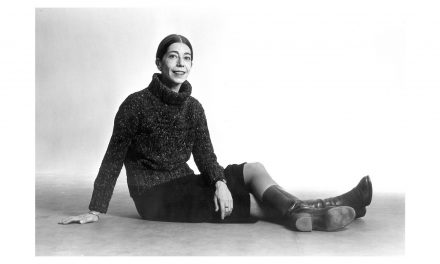
Margaret Craske was a British ballet dancer who studied extensively with Cecchetti. When Cecchetti retired to Italy in 1923, Craske took over his West London studio where she taught and developed the Cecchetti method in England. After living in India from 1939 to 1946 as a follower of Meher Baba, Craske moved to the United States where she taught at the Metropolitan Opera Ballet School and the Manhattan School of Dance. Among the long list of famous dance artists who studied with her are Sir Frederick Ashton, Dame Margot Fonteyn, Sir Robert Helpmann, Cyril Beaumont, Sallie Wilson, and Antony Tudor.
All forms of dance are passed down from teacher to student. Cecchetti took what he learned from his mentors and taught it to his students; one of which was Margaret Craske. Byers studied extensively with Craske and has been teaching the Cecchetti Method to her students. The Teaching Cecchetti videos demonstrate to viewers that process in action.

Diana Byer teaching Cecchetti – Photo courtesy of the artists.
Diana Byer took time out of her busy schedule to answer a few questions sent to her via email.
LADC: Where did you begin studying ballet?
I started dancing in Trenton, NJ when I was three years old. I was so overweight at the time that my pediatrician told my mother I needed more exercise or I would be an obese adult, so she took me to dance class. The class was called modern interpretive. I started ballet when I was 7 years old with Francis Kiernan in Trenton, NJ.

Diana Byer teaching Cecchetti – Photo courtesy of the artists.
LADC: When did you first meet Margaret Craske?
I met Miss Craske at the Juilliard School in 1964. I wasn’t put into her class though. In 1968 I was guesting with Christopher Lyall who was her pupil. He took me to her class at Manhattan School of Dance. For me, I saw the light after that one class. I understood the truth in dance, its purest essence was being taught in the simplest, most straightforward manner by a true master and an extraordinary woman. She became my mentor, my inspiration, and my dearest friend. I studied with her for nearly 20 years until she passed away. When Miss Craske turned 90 and the Manhattan School of dance was closing she asked me if I thought 90 was too young to retire. I promised her that I would open a school so she would always have a place to teach and that’s what I did.

Dancers demonstrating Cecchetti – Photo courtesy of the artists.
LADC: Did you have to become certified in order to teach Cecchetti Ballet?
Miss Craske did not believe in the exams and I have never taken them. My mission has always been to keep Miss Craske’s legacy alive, and it has never been necessary for me to take the exams. This is a quote from Miss Craske: “Before he (Cecchetti) died he wrote me a letter saying I was the only person who not only knew his work but also knew how to teach it.” She also said “The Cecchetti technique was divided into graded examinations, and I think we made a mistake there. Because you have to know the whole thing. So often a person would come in from North Cumberland or somewhere to study and pass the first two exams, then leave and start a school. Well, you can’t do that. It became commercial. It was too fast.”

Diana Byer teaching Cecchetti – Photo courtesy of the artists.
Do you still have your own studio in NYC?
I taught in Viola Farber’s old studio at the Madison Avenue Baptist Church for 33 years until the building was torn down. New York Theatre Ballet is now at St. Mark’s Church. I’m still on faculty and use the studio as I need it, but since I am no longer Director of the School it is no longer my studio.
What led to teaching classes online and what technology is required to produce them?
I want to expand the reach and impact of Margaret Craske’s Cecchetti training to more students worldwide. The online classes haven’t begun yet. I’ll start teaching online in about 4 weeks. Technology is actually just using zoom and a mini microphone.

Diana Byer teaching Cecchetti – Photo courtesy of the artists.
Are you teaching all levels of ballet?
I’ll start with open classes for adults and depending on need I will break the classes into different levels, from beginner adult through advanced/professional level. I’m teaching children at New York Theatre Ballet School and the Paul Taylor School right now. I doubt very much that I will include classes for children online. I don’t think that online training is beneficial for children.
Regarding space, clothing, and a barre: what do dancers need in order to take these classes online?
Dancers should have a barre or a chair, something to hold on to. They should be dressed in clothing that shows the body so I can see the spine, hip joint, etc. It helps to have a small piece of Marley floor. There’s nothing else needed.

Diana Byer – Photo by Betti Franceschi.
What else would you like to say to potential students?
I would like to point out that training in the Cecchetti tradition actually does allow a dancer to move in and out of many styles. It trains muscle strength that is supple strength from practicing vocabulary. The system gives students a wealth of vocabulary even if it takes time to master. Classes are taught to skill and not talent. Technique is more than jumping and turning. It’s used to reach the audience and move them in new ways.
I was blessed to study with Margaret Craske because she made it real and not just from the manual. I feel that my job as a teacher from the direct line of Cecchetti, Craske, to me is to preserve the essence of teaching and not give into current fads. After all it’s about dancing.
You can also take class with me from Dancio. The Diana Byer Legacy Project, is a collection of 16 classes representing the Cecchetti Tradition through the linage of Margaret Craske. Beginning with the youngest dancers learning elementary ballet, through professional level classes, the collection includes rare steps and skill development. These classes were produced in collaboration with Jacob’s Pillow.
Diana’s classes can be found online through Dancio and The Diana Byer Legacy Project: Preserving Cecchetti As Taught By Margaret Craske. Produced in collaboration with Jacob’s Pillow, this collection brings to today’s dancers the tradition of Cecchetti through the modern eye of Diana Byer. Her classes bring fresh insight to a technique that dates back to ballet’s roots in classicism and make it accessible and relevant to all bodies and ages of the present.
Follow @teachingcecchetti on Instagram and Facebook for style, musicality, and skill taught through the modern eye of Diana Byer.
Written by Jeff Slayton for LA Dance Chronicle.
Featured image: Diana Byer teaching class – Dancers: Giulia Faria, Charlotte Anub, Julian Donahue, Monica Lima, and Emely Rivas – Photo by Caitlin Trainor.




Diana Byer is an extraordinary teacher, dancer, and human being. The foundations of dance today and of the generosity in dancing are due partly to her… The”extraordinary” in that statement has made the world a better/richer place. Brava!!