February brought another luminous gift from Pacific Northwest Ballet under the leadership of Artistic Director Peter Boal. Kent Stowell’s Cinderella is far more than a retelling of a familiar fairy tale; it is a memory-play wrapped in theatrical splendor. First staged in 1994, the production remains a defining work in the company’s history, its emotional architecture still resonant. Sergei Prokofiev’s rapturous score, performed by the PNB Orchestra under conductor Emil de Cou, provides a sweeping and deeply expressive foundation.
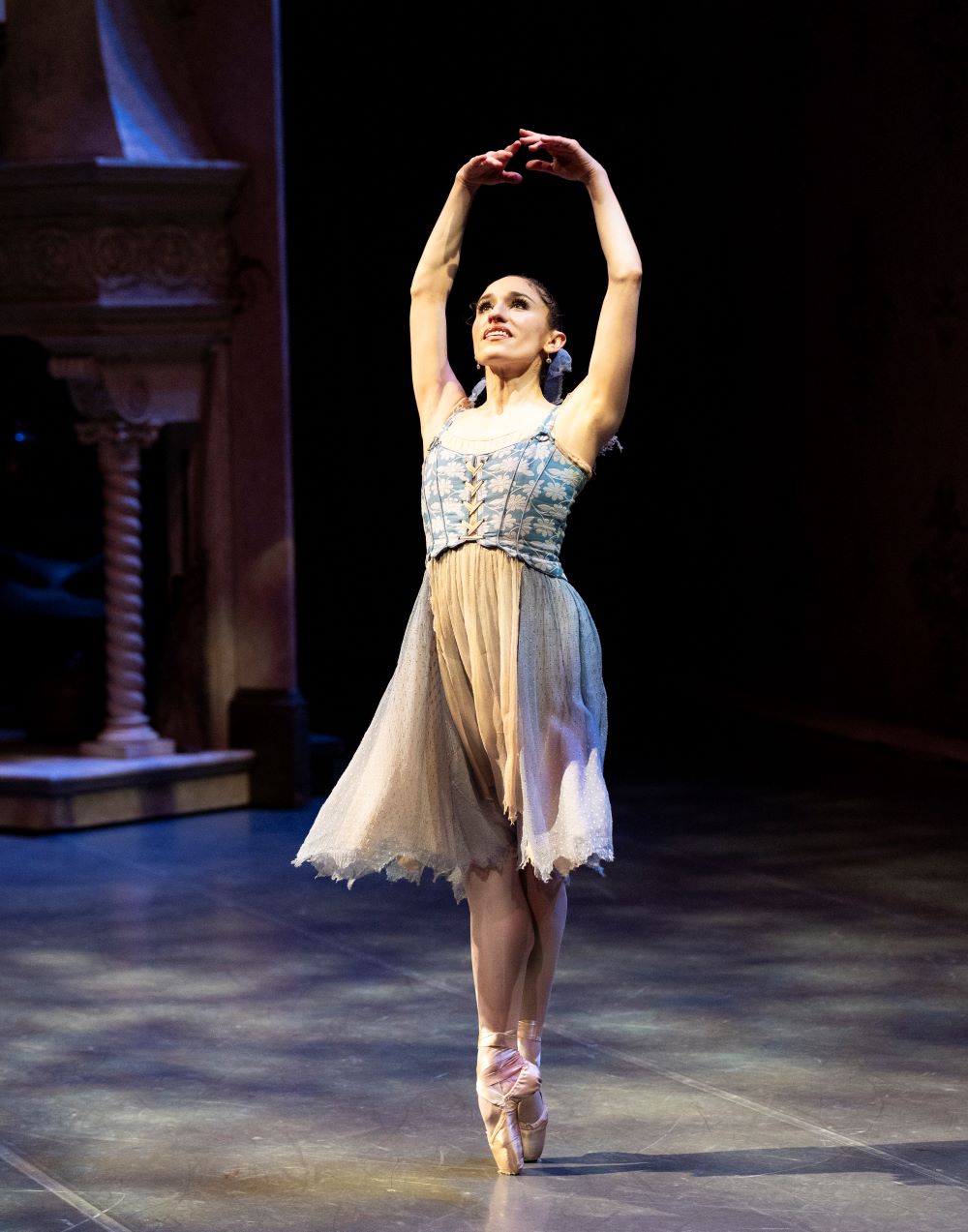
Pacific Northwest Ballet principal dancer Leta Biasucci in Kent Stowell’s “Cinderella” – Photo by Angela Sterling.
Stowell’s most poignant invention is framing the story through Cinderella’s reveries. The ballet opens not in cruelty, but in tenderness. Leta Biasucci’s luminous Cinderella sits quietly at her hearth and is drawn into a delicate pas de deux with a man in white—perhaps a memory of her father, perhaps a vision of parental love and protection. This early gentleness establishes emotional stakes often absent in traditional productions, grounding the fairy tale in lived experience.
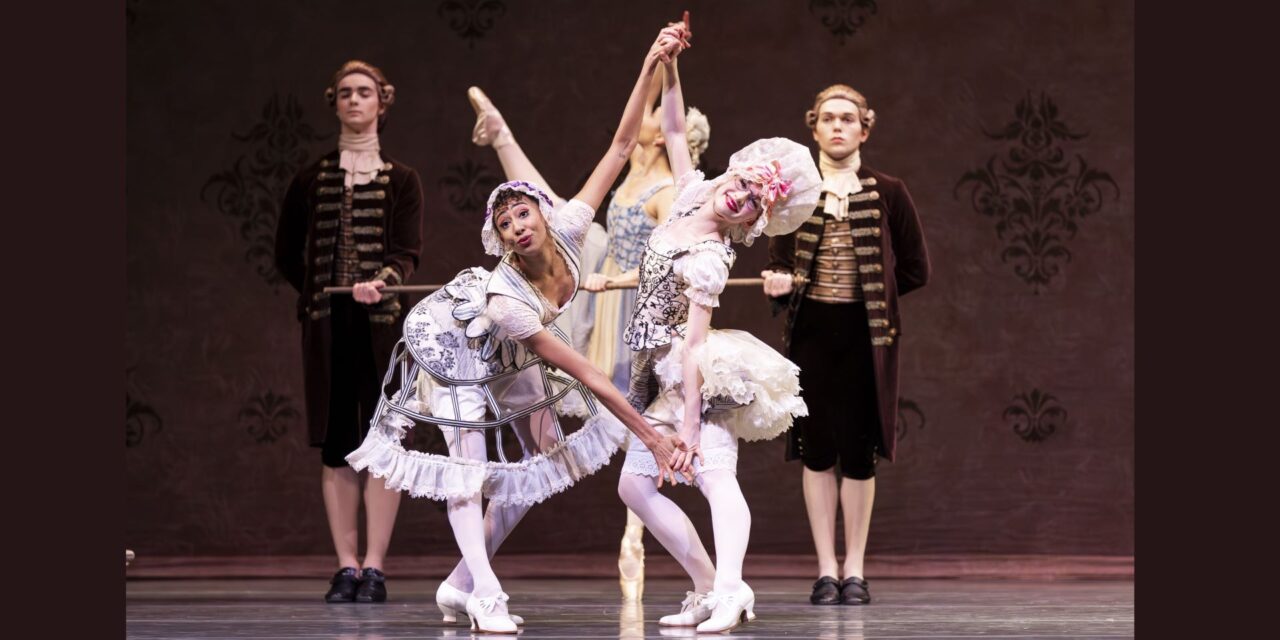
The domestic world that follows is delightfully off-kilter. Amanda Morgan’s towering, imperious stepsister and Kali Kleiman’s quick, ferret-like sibling conspire and preen under the sharp authority of their domineering mother, played with crisp theatricality by Melisa Guilliams. The dance lesson scene erupts into organized chaos; barre exercises colliding with bustling dressmakers, fluttering fans, circling screens, and a bouncing gamely persistent pianist. Bustles, wigs, and hatboxes whirl in comic crescendo. Through it all, Cinderella practices quietly, her innate grace shining through absurdity. Stowell’s comedic sensibility nods to the grand tradition of character satire, where romance and buffoonery coexist to the audience’s delight.
Yet Biasucci anchors the ballet in sincerity. Holding her late mother’s necklace, she kneels and cradles memory to her chest, her phrasing fragile and inward. A wistful duet with her father gives rare depth to the family narrative, enriching what might otherwise remain archetype. These early scenes lend weight and consequence to everything that follows.
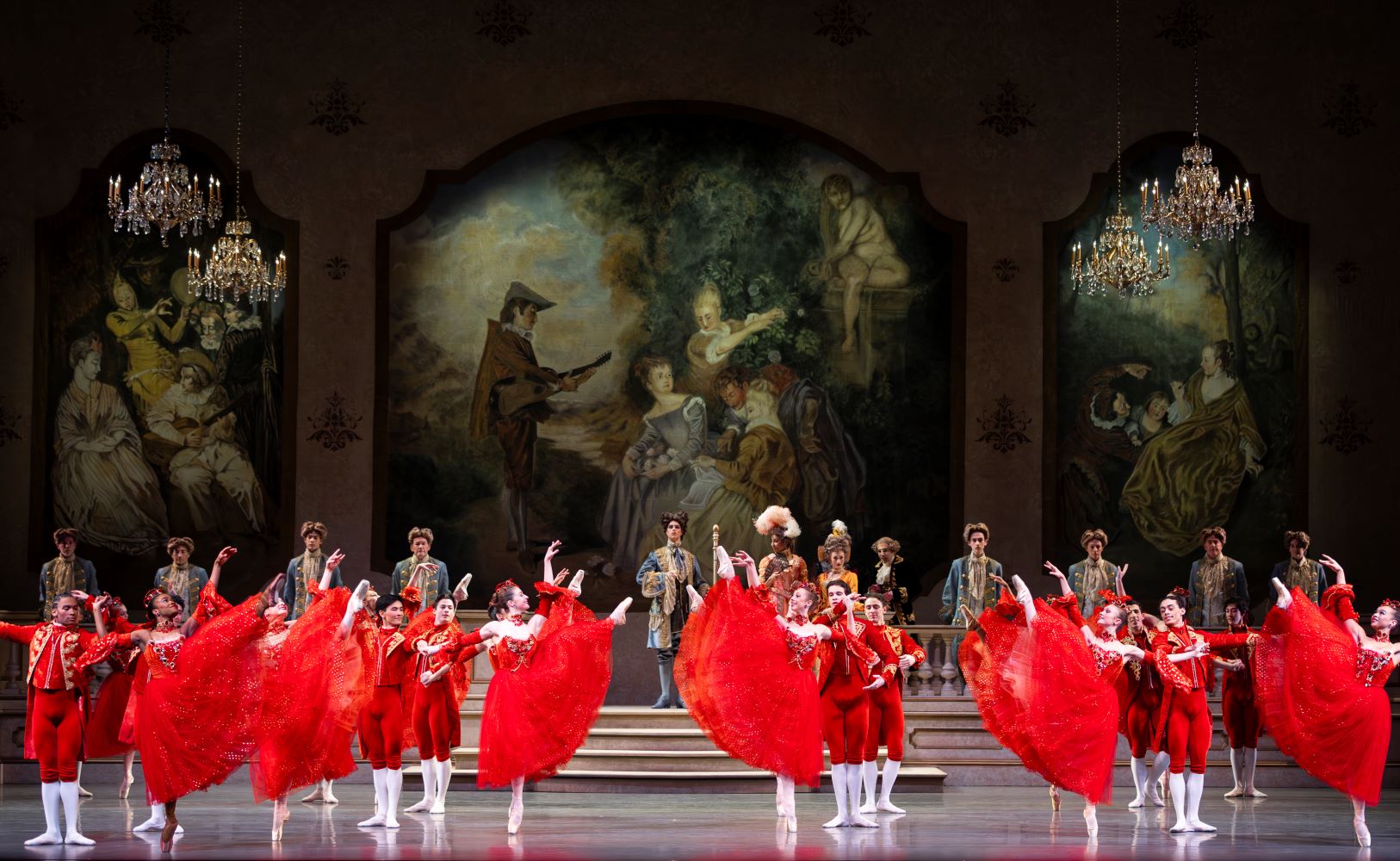
Pacific Northwest Ballet company dancers in Kent Stowell’s “Cinderella” – Photo by Angela Sterling.
Stowell has long acknowledged the essential artistry of his collaborators. Lighting designer Randall G. Chiarelli shapes atmosphere with painterly sensitivity—warm hearth-glow in intimate scenes, crystalline brilliance at the ball, and haunting shimmer in dream sequences. Tony Straiges’ whimsical 18th-century French sets frame the action in storybook elegance, while Martin Pakledinaz’ lavish costumes—more than 120 in total—overflow with color and character. Cinderella’s gown alone required over 100 hours of detailed trim work, and the hand-built white-and-gold carriage, stretching 23 feet across the stage, feels like a character in its own right. Yet spectacle never eclipses heart.
In a moment of exquisite hush, Cinderella imagines the ball. A single shaft of light isolates her as she sways to Prokofiev’s aching lyricism before returning reluctantly to her broom. The Fairy Godmother appears in lavender lyricism, surrounded by fairies shimmering in jewel tones. Spring (Yuki Takahashi) bursts forth in buoyant allegro; Summer (Ashton Edwards) unfurls velvety adagio lines; Autumn (Juliet Prine) grounds the stage with muscular precision; Winter (Madison Rayn Abeo) moves in seamless, glacial arcs. Stowell structures their dances as communal magic—a shared invocation rather than a single wand-wave.
The transformation scene delights, especially with the participation of more than sixty PNB School students, many from the DanceChance scholarship program, who bound across the stage as pumpkins, bugs, and clock children. Their choreography sparkles with youthful precision and joy. When Cinderella emerges crowned and caped, encircled by fairies before departing in her magnificent coach, the theater audibly sighs.
Act II opens in crimson and gold grandeur as Prokofiev’s waltz fills the palace. Sweeping skirts and tailed jackets animate elegant geometric patterns across the stage. The nimble Jester, Kuu Sakuragi, brings quicksilver wit and affectionate protection to the Prince. Comic intrigue deepens with Harlequin (Mark Cuddihee), Columbine (Takahashi), and the darkly charged Evil Sprite (Zsilas Michael Hughes), countered by the benevolent Fairy’s watchful presence.
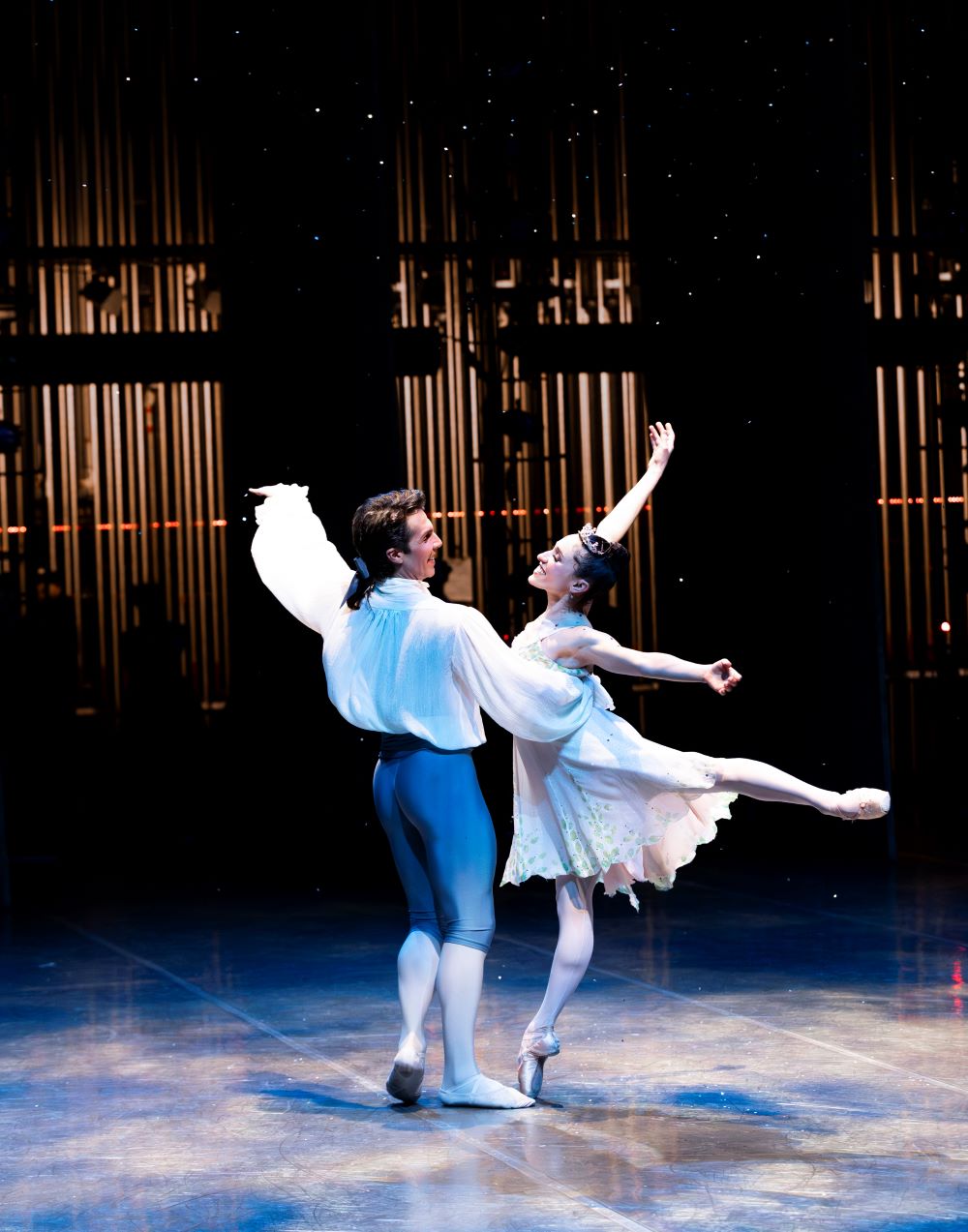
Pacific Northwest Ballet principal dancers Leta Biasucci and Lucien Postlewaite as Cinderella and her Prince in Kent Stowell’s Cinderella – Photo by Angela Sterling
When the lighting shifts, Cinderella glides into the hall luminous in white. Lucien Postlewait’s Prince approaches with restrained awe. Their introduction is masterfully paced—glances withheld, hands extended then withdrawn, breath suspended between them. When they finally waltz, the duet unfolds in rapture. Lifts float effortlessly; pirouettes bloom into suspended promenades. Postlewait’s classical line and generous partnering meet Biasucci’s vulnerable openness in palpable chemistry. Their musicality is breathtaking—two artists listening deeply to each other and to Prokofiev’s expansive score.
At midnight, the clock strikes. The music turns urgent, yet Biasucci’s Cinderella does not panic, she aches to stay. The Jester retrieves her fallen slipper as she flees into the night in her glittering carriage, leaving behind not chaos, but longing.
The final act restores intimacy. Back at her hearth, Cinderella holds her remaining shoe to her heart, dancing to music only she can hear. Biasucci’s expressive use of head and arms; reaching, swaying, remembering—creates an interior landscape that draws us into her quiet hope. Comic chaos resumes as the Prince tests the slipper on the flailing sisters, who collapse in exaggerated despair. When the shoe fits, Cinderella steps forward not in triumph but in quiet certainty, presenting the match. She embraces her father before turning toward her Prince.
The wedding tableau gathers the fairies in elongated, interweaving lines; gliding, arching, reaching skyward. The Fairy Godmother presides as Cinderella and the Prince circle, lift, and waltz in breathless serenity. The final image—two figures suspended in light as Prokofiev’s score swells and expands the soul. With the poignancy and artistry of the couple’s beauty and concern for each other, one becomes aware that Postlewait’s princely brilliance and generosity will soon conclude with his departure from the company. The thought brings an unexpected welling with the reminder that the dance, like memory, is fleeting.
Stowell’s Cinderella balances grandeur with humanity. Lyricism and choreography, buoyant comedy, and heartfelt pas de deux coexist seamlessly within a production as technically dazzling as it is emotionally generous. For the children onstage, for longtime PNB audiences, and for those encountering it anew, this Cinderella endures; not because of spectacle alone, but because beneath the tulle, wigs, and gilded carriage lies something tender and lasting: memory, hope, and love given choreographic form.
To learn more about Pacific Northwest Ballet, please visit their website.
Written by Joanne DiVito for LA Dance Chronicle.
Featured image: Pacific Northwest Ballet soloist Amanda Morgan and corps de ballet dancer Kali Kleiman as the Stepsisters in Kent Stowell’s Cinderella – Photo by Angela Sterling.