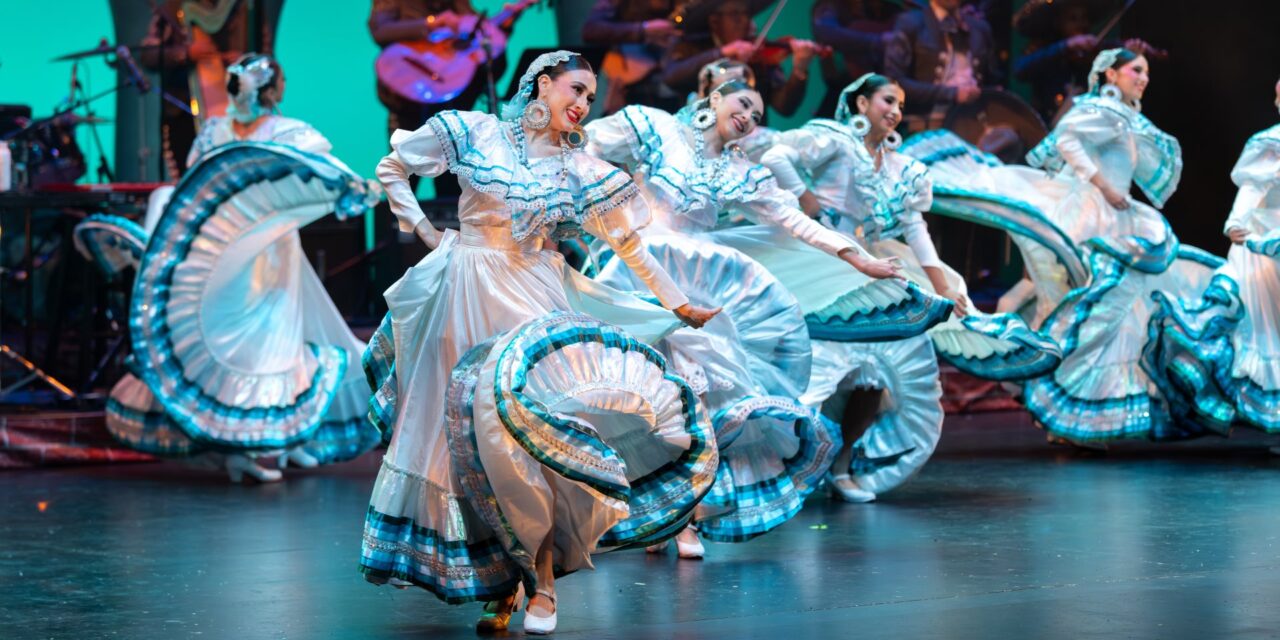
As an L.A. transplant from the Midwest, I sometimes have trouble getting fully into the Christmas spirit without frigid temperatures and icy sidewalks. This year, Nochebuena: A Christmas Spectacular gave me some extra help in the festivity department with live music and vibrant dancing. I attended this upbeat event on Monday, December 22, 2025 at The Soraya. The event, in its 10th year, has clearly built up a strong following, as the unusually timed Monday matinee had a large audience. The show featured Ballet Folklórico de Los Ángeles, with fantastic Mariachi sounds from Mariachi Puebla Viejo from Tucson, Arizona, and additional musical appearances by multi-nominated Grammy and Latin Grammy vocalist Ximena Sariñana. The intro promised to transport us to different regions of Mexico, and it absolutely delivered on showcasing different styles and atmospheres with dancing, music, lighting, and costuming coming together to set each unique tone.
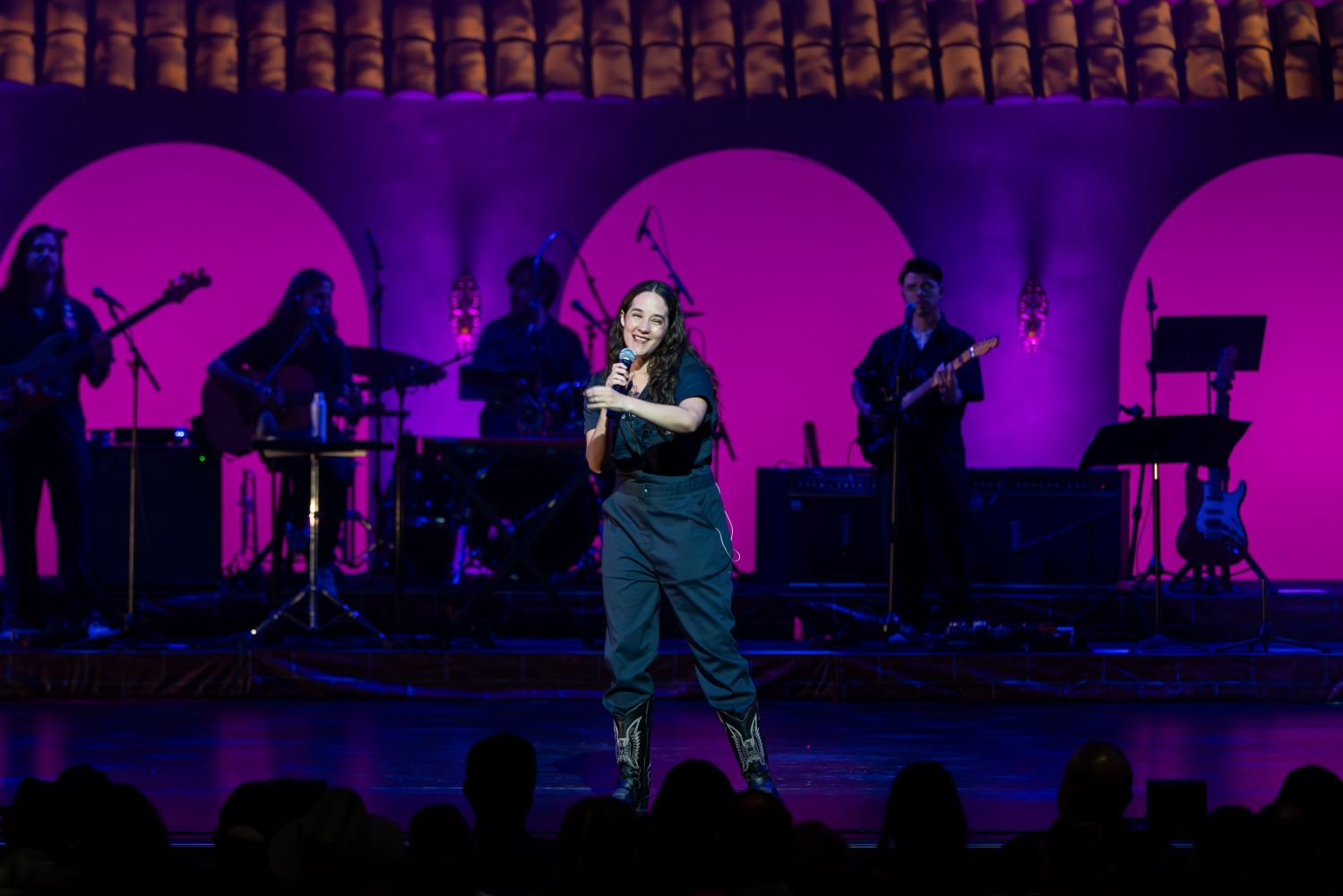
Ximena Sariñana performs with her band – Patricio Dávila (Musical Director/Drums), Max Ulyses Romero (Guitar), Luis de los Monteros (Bass), and Lulú Bulos (Keyboard/Vocals) in The Soraya’s 10th edition of “Nochebuena: A Christmas Spectacular” Dec. 20, 2025 – Photo by Luis Luque, Luque Photography.
As the curtain rose, there was a set piece with arched doorways and a low terracotta roof, making it feel like we were in the central plaza of a village. The twelve members of Mariachi Puebla Viejo stood on small steps, dressed in their traditional garb. In addition to the typical violin and horn players, there was even a harpist, something I had never seen in my admittedly limited Mariachi experience. This first main dance scene, Polkas Navideñas, was a fantastic kick off to the show, featuring child and adult performers showing off strong footwork and impressive linear formations. After the youth and adult performers each had their own section, they all danced together. At times, they would all stomp to the same rhythm, but with the adult dancers doing something more complex, showing the range of ways the same sounds could be achieved. All the beautiful dresses varied slightly in colors and styles rather than being identical, so it felt like an animated party rather than a performance. The choreography for this section was done by Kareli Montoya and Luis A. Mariñelarena Amparaná.
The next dancing section was Ballet Folklórico de Los Ángeles’ take on another December tradition: The Nutcracker. El Vals de las Flores, choreographed by Stephen Woodruff, set to a Mariachi-infused take on Tchaikovsky’s score, was an enchanting take on this classic. The dancers wore dresses with bold pink floral tops and colored skirts with lace. Compared to the first number, there was less footwork and more swishing of skirts, matching the lilting feel of the waltz music. Their épaulement, or the use of shoulders and heads in classical ballet, seemed to be a component of Folklórico style as well and was used beautifully in this section. The choreography knowingly referenced classical ballet in moments, like a canon section where each dancer sat down into a dying swan pose. There were a few moments where the dancers did a traveling grand allegro-esque phrase that felt a bit clunky and out of place. The dancers executed the swirling formations and swaying arms as well as any ballet company director could hope for in a traditional Waltz of the Flowers, but the attempt to put in these borrowed classical ballet steps felt a bit out of the range of the dancers or difficult to do with proper ballon in the Folklórico costumes and footwear.
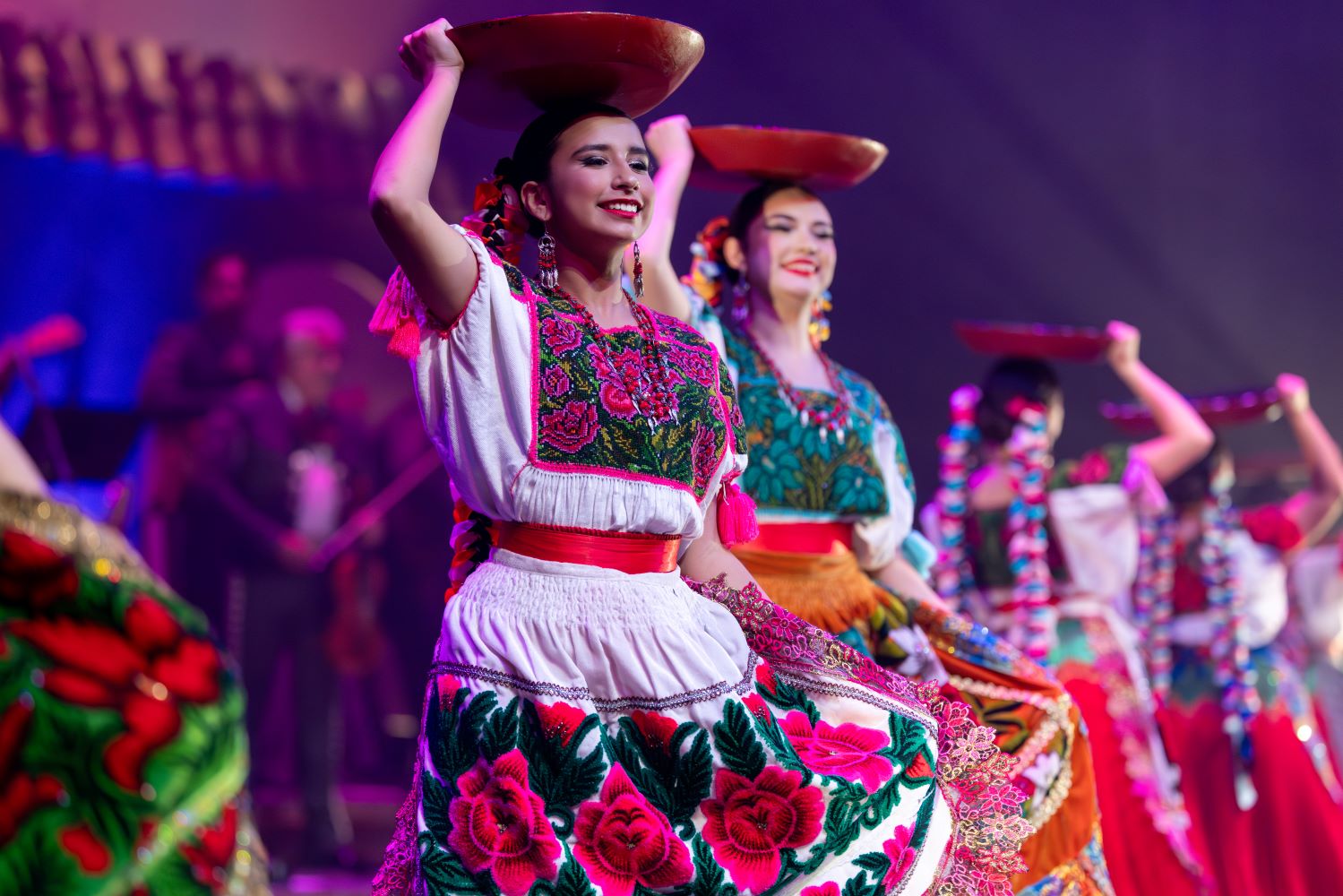
Ballet Folklórico de Los Ángeles performs “Retablo Purépecha, Michoacán” with Mariachi Pueblo Viejo in the 10th edition of The Soraya’s “Nochebuena: A Christmas Spectacular” Dec. 20, 2025 – Photo by Luis Luque, Luque Photography.
As we traveled to the state of Michoacán for Retablo Purépecha, we were treated to a more indigenous style of dancing with choreography by Ignacio Sánchez Verdusco. The female dancers had beautiful long braids woven with colorful fabric and long red skirts, and the male dancers wore layers of colorful sequined tunics and scarves with white masks. The costuming was overall looser, and the lack of heels and boots indicated that rhythmic footwork was going to be less of a feature. The women carried bowls and gently swung their skirts in a more demure way compared to the fast whipping of the skirts in other sections. The men wore sandal-like shoes that made loud noises, and as they jumped and stomped, the energy was more upward, with lighter hops, higher jumps, and knees lifting up as they did their footwork. There was definitely some story happening between the men in masks, as they chased and teased each other in a silly manner. I could not follow at all but was totally delighted by what was transpiring.
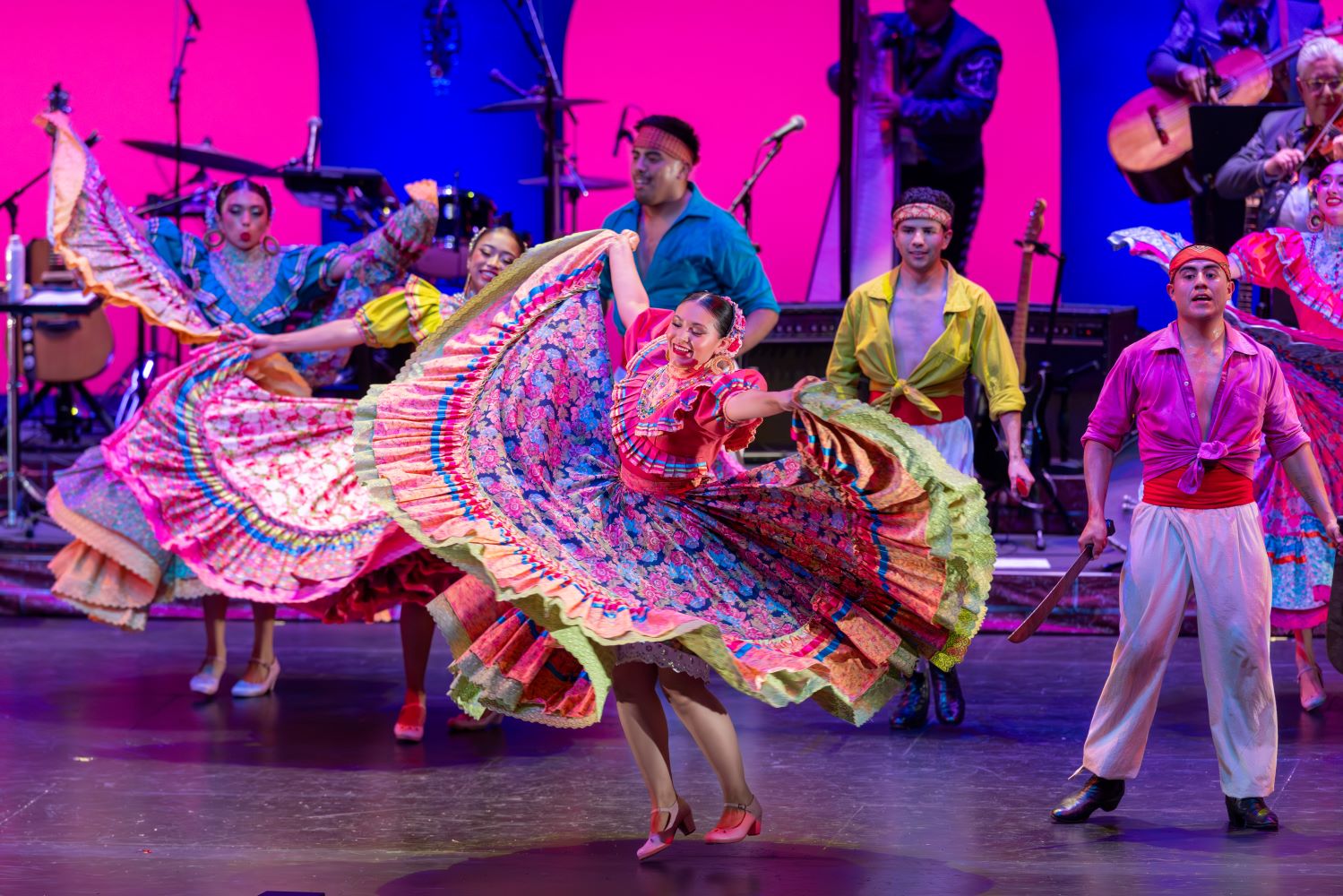
Ballet Folklórico de Los Ángeles performs “Algarabía Mestiza, Nayarit” with Mariachi Pueblo Viejo in the 10th edition of The Soraya’s “Nochebuena: A Christmas Spectacular” Dec. 20, 2025 – Photo by Luis Luque, Luque Photography.
After intermission, we traveled to Nayarit for a dance involving knives and lassos. Algarabía Mestiza was choreographed by Sanchez Verdusco and Montoya. The men expertly clanged their knives over their heads and under their legs, adding another percussive element. I loved the choreographic layers in the piece – the memorable knife work was first performed just by the men and then later in arrangements with female dancers doing other movements for an impactful visual effect. Here, the women moved with subtle footwork that created the appearance of gliding across the stage, though at times some of the formation changes felt a bit tight with the width of their costumes. As I read through the program while writing, I translated some of the titles to get further context and was alarmed that “El M*yate,” the name of one of the sections here, is a word often used as an offensive slur. This may be the name of the song, and there can be other meanings, but I felt like an asterisk or note in the program would have been appropriate to explain this further. If the song or dance do reference or connect to any stereotypes, its inclusion might be worth reconsidering in the context of a performance in multi-ethnic Los Angeles.
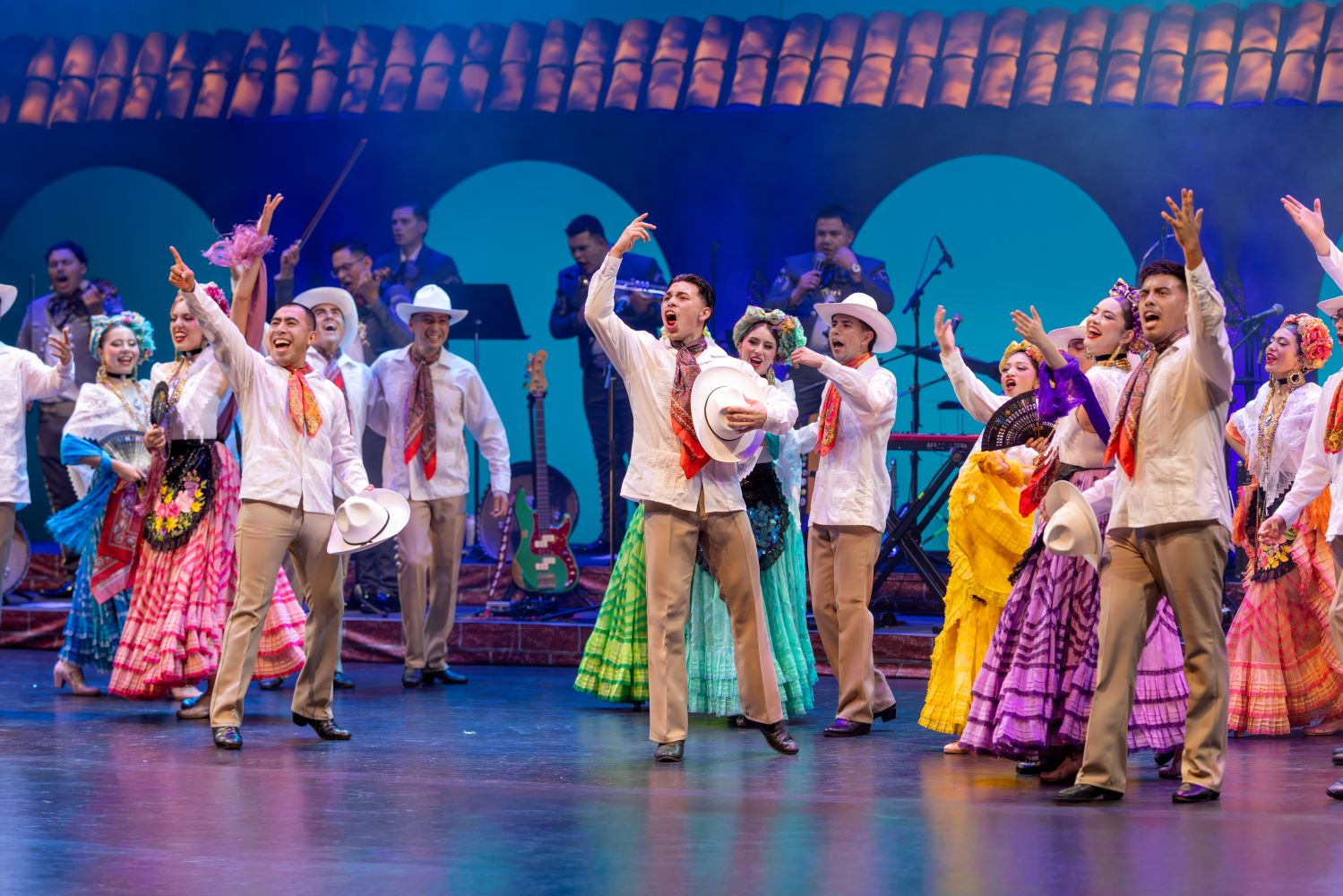
Ballet Folklórico de Los Ángeles performs “¡Viva Veracruz!” with Mariachi Pueblo Viejo in the 10th edition of The Soraya’s “Nochebuena: A Christmas Spectacular” Dec. 20, 2025 – Photo by Luis Luque, Luque Photography.
The energy built even more for the final two dance sections, both choreographed by Montoya: “¡Viva Veracruz!” and “Fiesta Ranchera.” Montoya showed off his strong dancers, as well as his ability to arrange complex formations and traveling patterns. “¡Viva Veracruz!” featured an incredible a capella section, showing the precise musicality and synchronicity of the dancers. Here, and throughout the show, I was impressed by how the dancers were able to execute dynamic formation changes while keeping up the footwork. Often, a group of dancers would do the same movement, with some staying still and others traveling half the stage, but as a viewer, they looked perfectly synchronized despite needing to adapt movements to their travel patterns.
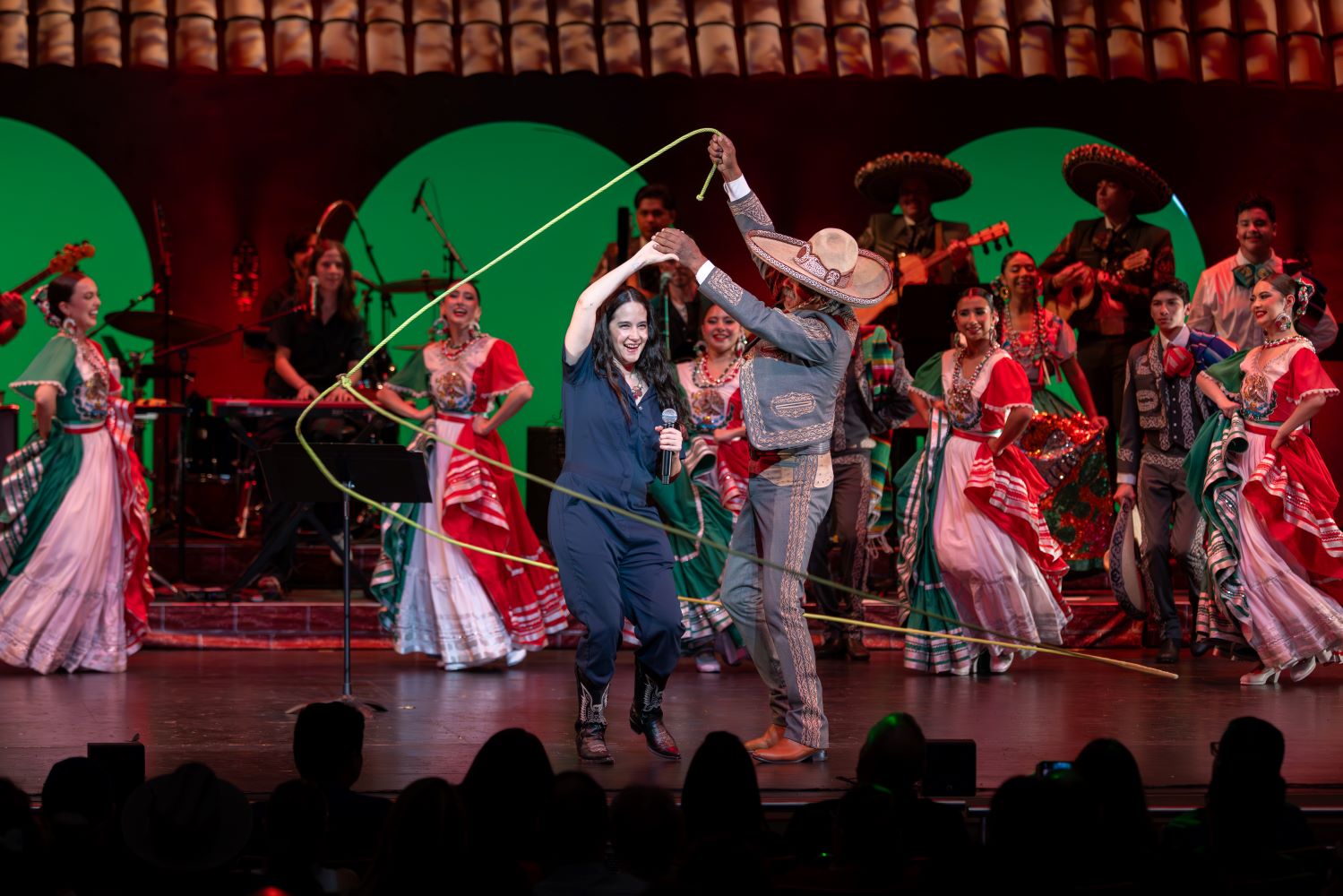
Ximena Sariñana performs “Viva Mexico” with Ballet Folklórico de Los Ángeles and Mariachi Pueblo Viejo as the final piece of The Soraya’s 10th edition of “Nochebuena: A Christmas Spectacular” Dec. 20, 2025 – Photo by Luis Luque, Luque Photography.
“Fiesta Ranchera” featured dancers in beautiful satin dresses that looked like the Mexican flag. Montoya used simple formations to highlight these costumes, with the end pose creating a giant flag from one side of the stage to the other. The colors also created a mesmerizing effect as the dancers spun. The costuming and simplicity of this section felt more formal and regal, creating a decadent grand finale.
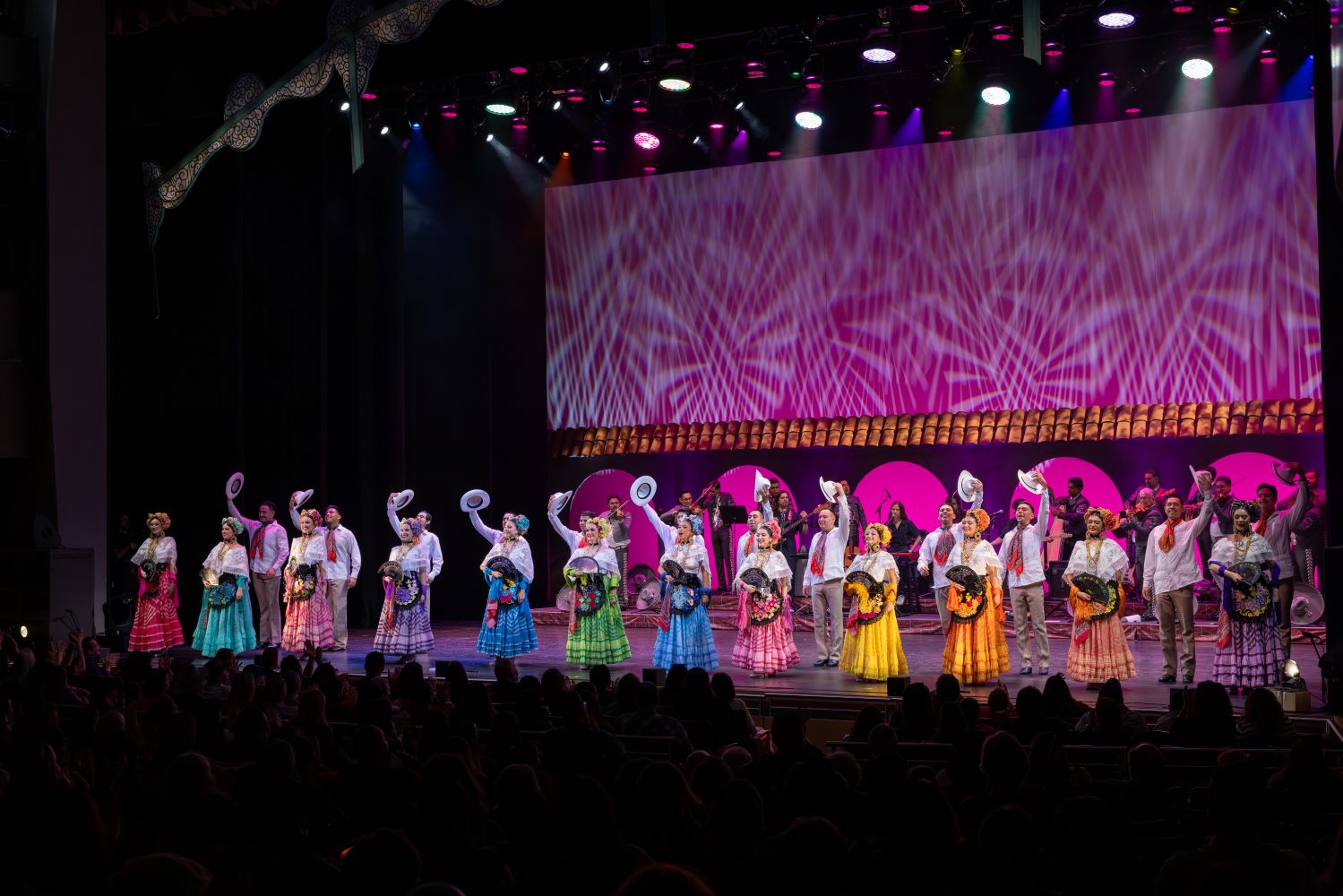
Ballet Folklórico de Los Ángeles performs “¡Viva Veracruz!” with Mariachi Pueblo Viejo in the 10th edition of The Soraya’s “Nochebuena: A Christmas Spectacular” Dec. 20, 2025 – Photo by Luis Luque, Luque Photography.
Having only ever seen shorter excerpts of Ballet Folklórico dance, I loved being able to see different styles of dancing and costuming to show the diversity of cultures across Mexico. I would have loved to get a bit more information either from the program or through announcements introducing various sections to help guide me through the journey and honor the regions being celebrated even more. The dancers and musicians were all charming performers, interacting with each other and engaging the audience for cheers or shouts at moments. Next December, this show is a worthy consideration for a festive holiday celebration amidst the plethora of Nutcracker options available.
For more information about Ballet Folklórico de Los Ángeles, please visit their website.
Written by Rachel Turner for LA Dance Chronicle.
Featured image: Ballet Folklórico de Los Ángeles performs “Las Olas” with Mariachi Pueblo Viejo in the 10th edition of The Soraya’s “Nochebuena: A Christmas Spectacular” Dec. 20, 2025 – Photo by Luis Luque, Luque Photography.