On Wednesday, February 11, 2026, the renowned Martha Graham Dance Company celebrated their 100 year anniversary tour at the Musco Center for the Arts at Chapman University with live music played by the talented members of The Chapman Orchestra. The program featured several historic works choreographed by Martha Graham, along with newer pieces by contemporary choreographers, celebrating not only the company’s legacy but also its future.
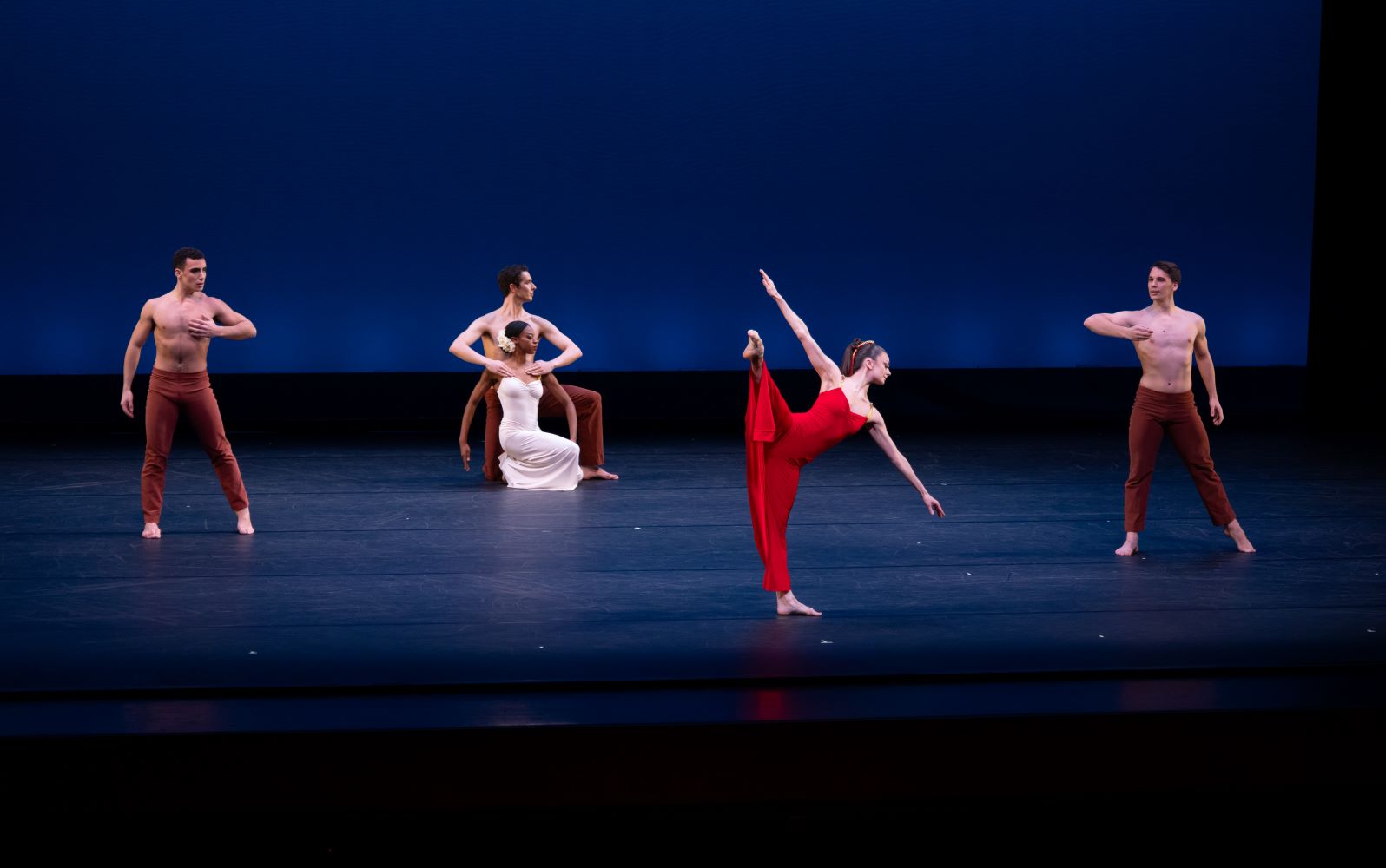
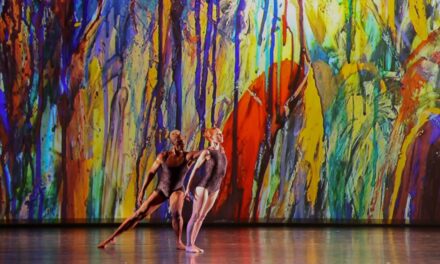
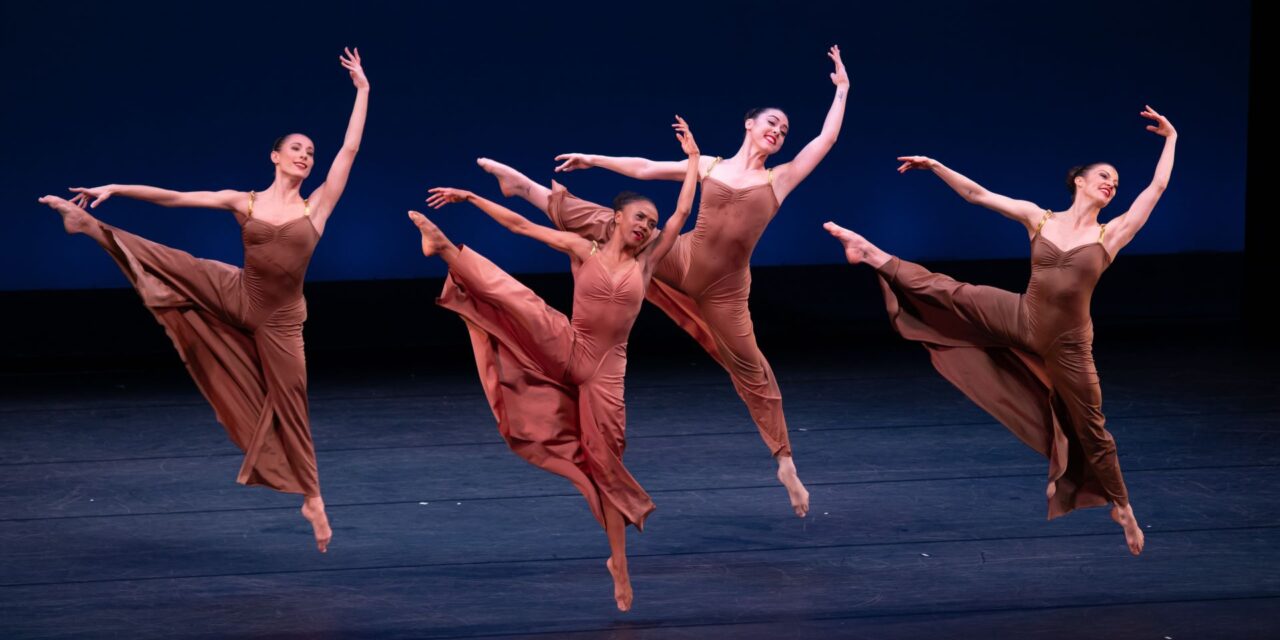
Martha Graham Dance Company in Graham’s “Diversion of Angels” – Photo by Mackenzee Osborne.
The first piece, Diversion of Angels, premiered on August 13, 1948, in New London, CT. This emotional work showcased classic Graham technique with side tilts across the stage, sparklers and gravity defying jetés and of course original costumes. The piece explores three different types of love: mature love in perfect balance, red erotic love and yellow adolescent love. Dancers Leslie Andrea Williams, Devin Loh and Marzia Memoli represented these varying forms through distinct movement dynamics. Mature love was expressed through slow, sustained and controlled movement; erotic love with quick shifting dynamics, using contractions to quickly change direction and sharply start and stop; and adolescent love portrayed by bouncy, lifted movements that sprang the dancer across the stage in the glee of young love. This piece explored themes of love that will always be relatable across decades and was a beautiful way to begin the evening and pay tribute to 100 years of Graham. The other dancers that made this piece possible were Ethan Palma, Antonio Leanoe, Zachary Jeppsen-Toy, Ane Arrieta, Laurel Dalley Smith, Meagan King, Amanda Moreira, and Jai Perez.
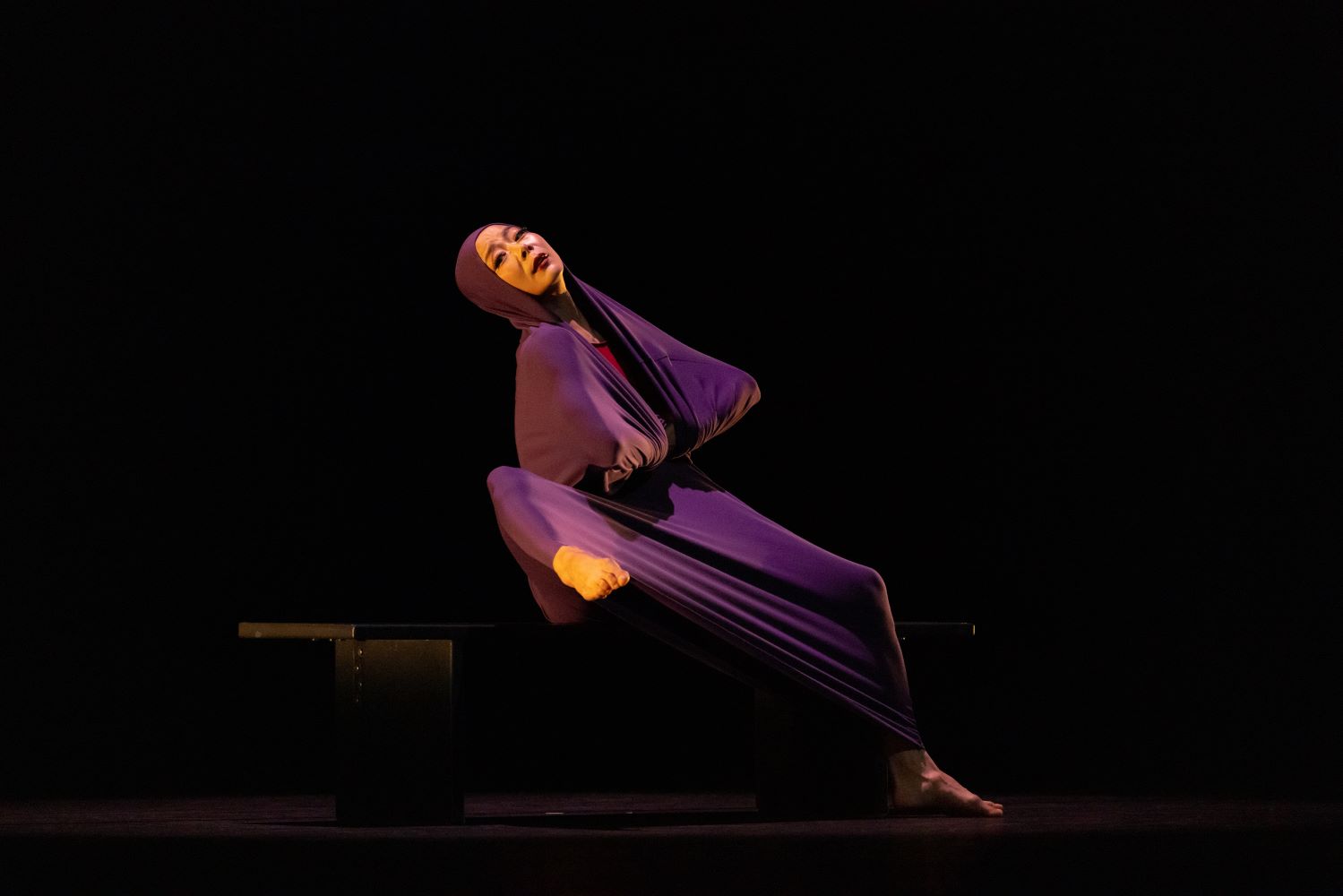
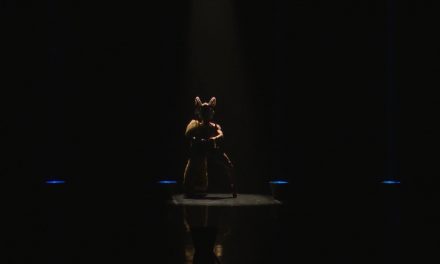
Martha Graham Dance Company – Xin Ying in Graham’s “Lamentation” – Photo by Mackenzee Osborne.
Choreographed and performed by Martha Graham in 1930, the second piece was a classic: Lamentation, stunningly performed by Xin Ying. The work represents the grasps of grief and is always a deeply emotional experience to view live. Experimental for its time, the dancer never leaves the bench on which she is seated, performing the entire piece in place, mirroring a sculpture or statue one might encounter in a gallery. The tension created as the fabric stretches into diagonals and twists, like wringing out a rag, evokes the sensation of suffering pulling and twisting at one’s insides. The subtlety of the choreography ultimately heightens its power.
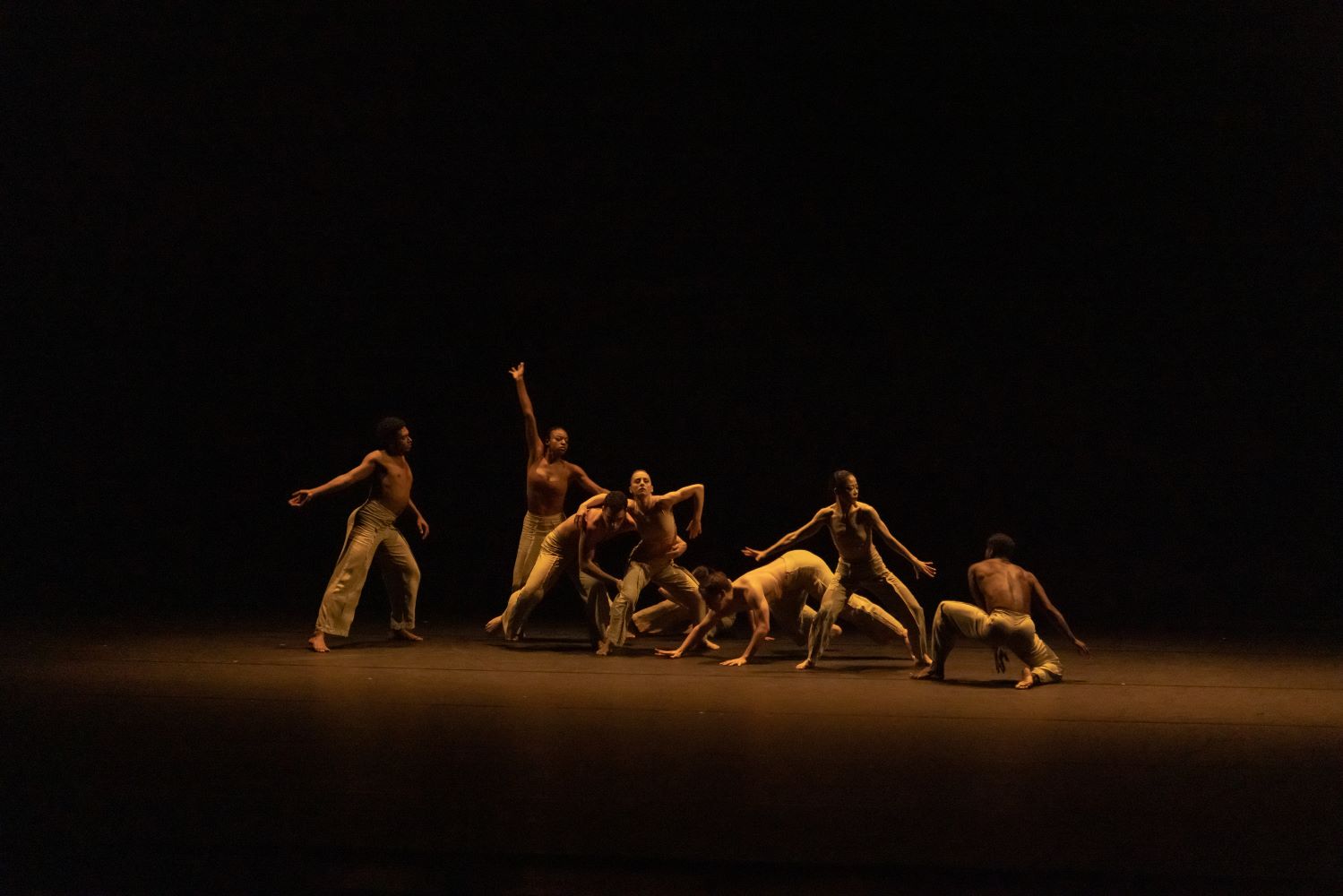
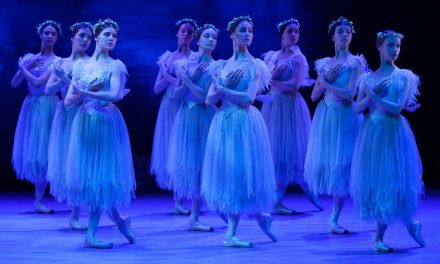
Martha Graham Dance Company in “Cortege,” choreography by Baye and Asa – Photographer Mackenzee Osborne.
A powerful and more contemporary work of the evening was Cortege, choreographed by Baye & Asa. Inspired by Martha Graham’s Cortege of Eagles, the piece reexamines the original work through a present day lens, reflecting on communities and groups who continue to face persecution and attack in our current time. The piece began with the dancers standing still in a diagonal line, gradually uncovered by fabric as they assembled into vignettes, finding moments of stillness under spotlights in poses of both suffering and comfort. The work featured quick, volatile partnering, and one by one, the dancers put on shirts symbolizing their ascent into battle. By the end, they stood once again in the same diagonal as at the beginning, all wearing shirts and covered by the fabric, as if they were no longer human but weapons of war. Used and broken, they were cast aside and forgotten until called upon to fight again. The piece powerfully illustrated that no one escapes war unscathed. The dancers featured in this work were Laurel Dalley Smith, Zachary Jeppsen-Toy, Lloyd Knight, Antonio Leone, Jai Perez, Anne Souder, Leslie Andrea Williams and Xin Ying.
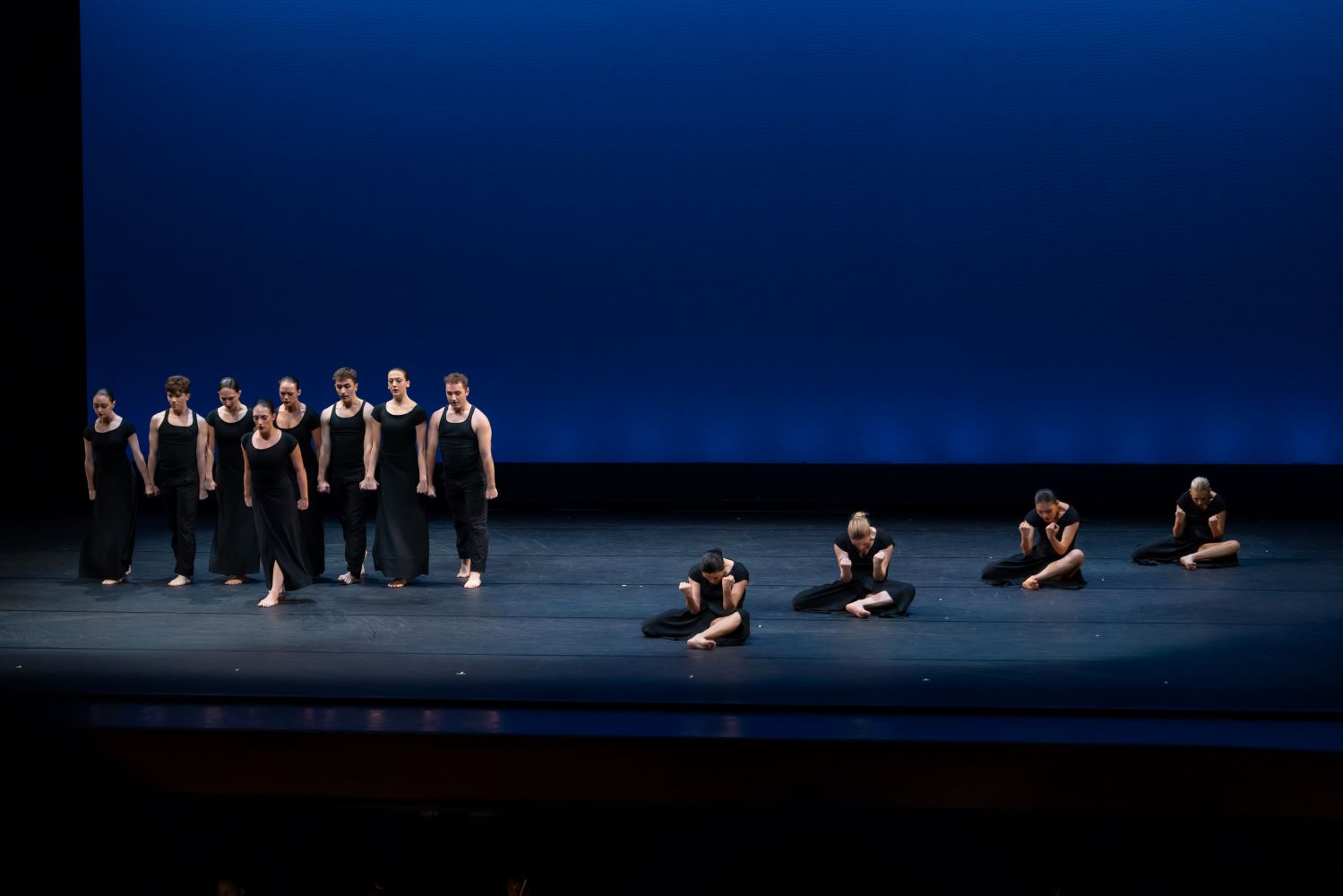
Martha Graham Dance Company – Chapman University Dance Department students in Graham’s “Steps in the Street” – Photo by Mackenzee Osborne.
The evening was also a big moment for Chapman student dancers as they performed Steps in the Street which Graham created in response to declining an invitation to perform at the Olympic Games hosted by Nazi Germany. The audience enthusiastically supported the students in their efforts in this classic Graham work from 1936. Over the past week, company members had been assisting the dance majors as they prepared to perform this notable work. The student dancers were Jackson Adkins, Davin Burn, Sydney Centeno, Mandy Fang, Ava Gazzilli, Max Gravell, Grace Gontarek, Gabby Keeler, Rosie Huntley, Mary Luyster, Sloane Ritterbush, Charley Teltschik, America Sanchez and Cierra Zoller.
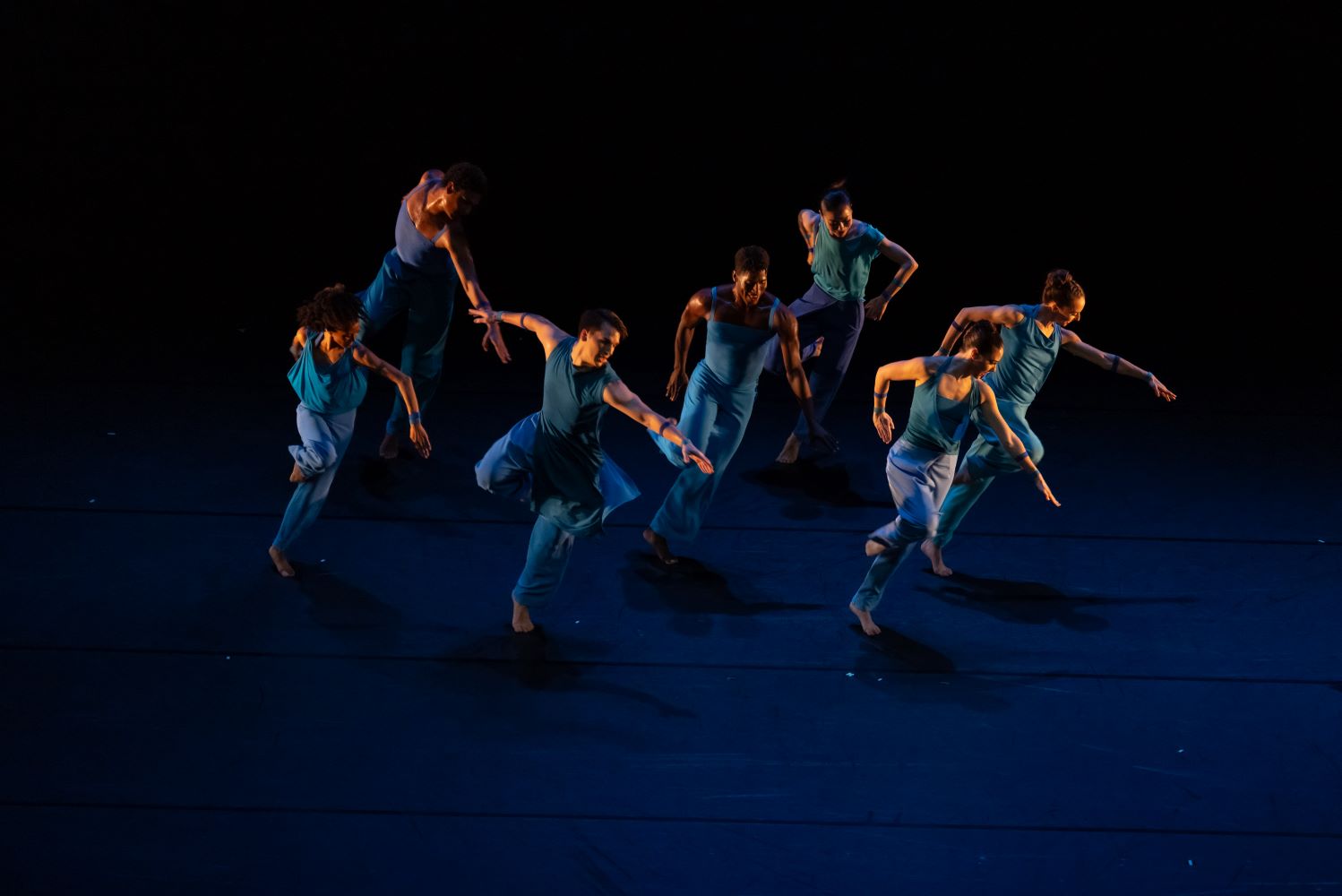
Martha Graham Dance Company in Hope Boykin’s “En Mass” – Photo by Mackenzee Osborne.
The final piece, premiered for only the second time, was En Mass, choreographed by Hope Boykin and set to music believed to have been created by Leonard Bernstein exclusively for Martha Graham. This work was performed by Ane Arrieta, Zachary Jeppsen-Toy, Meagan King, Lloyd Knight, Jai Perez, Anne Souder and Xin Ying and featured a series of vignettes separated by moments of blackout lighting. Although the music was joyous, the movement carried an ominous tone, as precise group work often excluded one dancer who would perform a solo or reach towards a light, as if trying to grasp something higher and greater than their current reality. As the piece continued, the dancers changed from tight, form fitting costumes to looser tops and pants, and the movement became increasingly exaggerated, as if a restrained animal had finally decided to fight against its confinement.
In celebrating a century of groundbreaking artistry, the Martha Graham Dance Company demonstrated not only the enduring strength of Graham’s technique but also its continued relevance in today’s world. From the timeless emotional landscapes of Diversion of Angels and Lamentation to the urgent political resonance of Cortege and the tension of individuality or conformity of En Mass, the program honored the past while not being afraid to boldly step into the future. By pairing historic masterworks with new creations and involving the next generation of dancers, the evening served as a reminder that Graham’s legacy is not static, but living and evolving. One hundred years later, her movement vocabulary still speaks with the same clarity, urgency and profound humanity.
To learn more about the Martha Graham Dance Company, please visit their website.
To learn more about the Musco Center for the Arts, please visit their website.
Written by Denali Huff for LA Dance Chronicle.
Featured image: Martha Graham Dance Company in Graham’s Diversion of Angels – Photo by Mackenzee Osborne.