
For this years’ Film Festival, Dance Camera West (DCW) has brought together some 40 films to be presented at three different venues across Los Angeles, Théâtre Raymond Kabbaz, Colburn School, and the Philosophical Research Society. This was a collaborative evening including not only the above mentioned but also Writer/Director Karen Pearlman with her latest book, “Shirley Clarke: Thinking Through Movement”. This is the first film-philosophy book dedicated to film maker Shirley Clark and the films in which she edited and directed. A quote from that book states: “ I’ve realized that all my films are dance films. Every film of mine is dance. Every one. It’s clear in the way I use the camera, my editing, my sense of rhythm. I learned so much from being a dancer. I could not have been as good a film-maker had I not danced”. This certainly proved true throughout the evening seen through the perspective of her cameras’ eye. There is a core of movement and rhythm running through each of the films shown. Some had Dancing proper as their subject while others could not be further afield of that Artform, yet all betrayed that restless touch so indicative of the Dancers’ psyche.
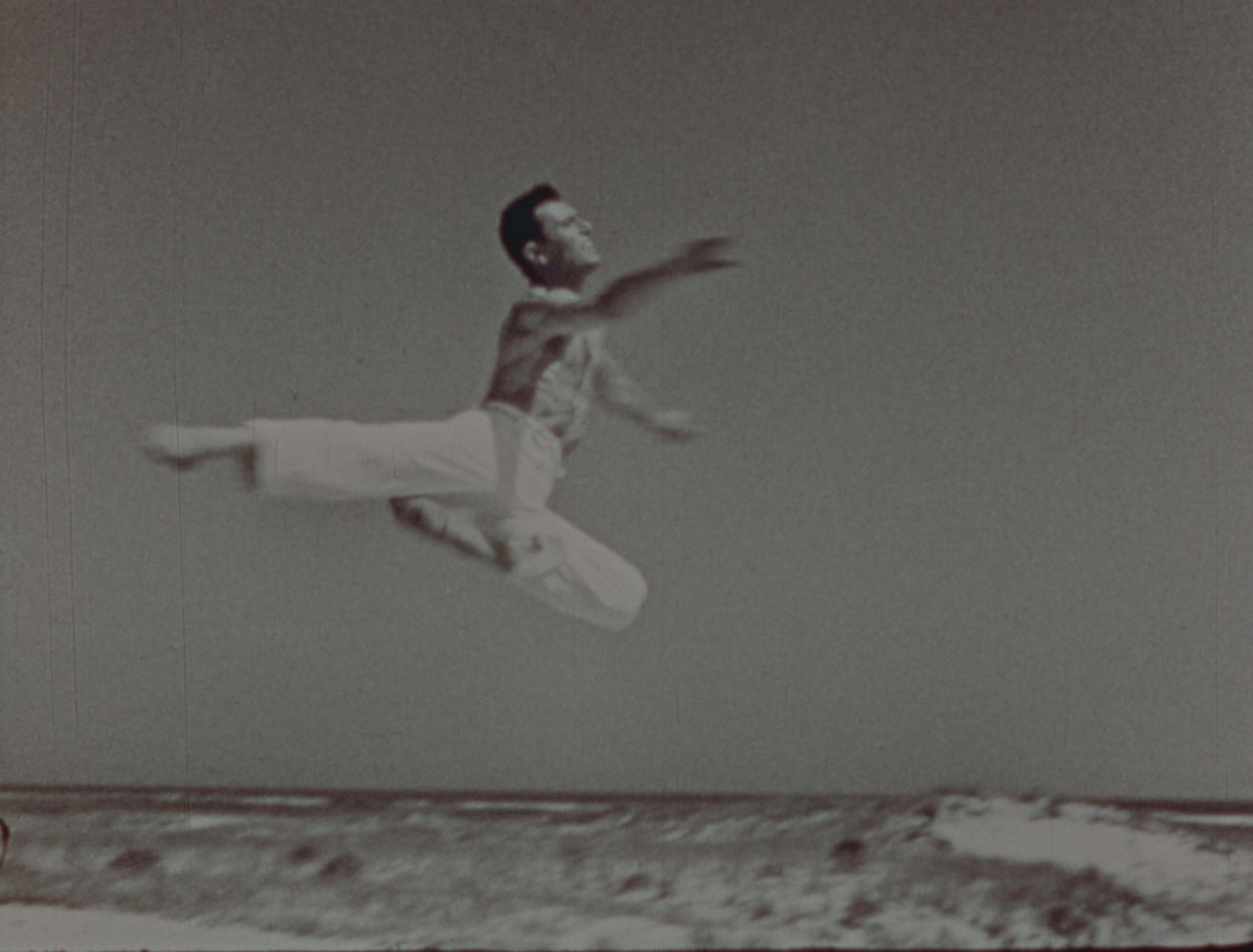
Daniel Nagrin in “Dance in the Sun” – Film by Shirley Clarke – Still courtesy of DCW.
1. Dance in the Sun (6:47, 1953) featuring choreographer/dancer Daniel Nagrin. This was referred to as Clarkes’ first film and as such, it is a fantastic excursion into the realms of fantasy that Dance and Music can take us. It begins in a small studio where we see Nagrin and an accompanist rehearse a piece. We have a foreshadowing when he takes a conch shell out of his bag and turns it over in his hand thoughtfully. During this rehearsal we see Nagrin transported to a seaside beach reminiscent of Martha’s Vineyard. It is here in this liberating, natural setting that his choreography and movement transform. He takes us there with him through his port-de-bras and big jumps engulfing space and hanging in the air. This reminded me very much of a section in the “The Red Shoes”, a 1948 British dance drama film written, produced and directed by the duo of Michael Powell and Emeric Pressburger. When Moira Shearer is lifted in the ballet, she is also transposed as a cloud in the sky much like Nagrin. The imagery is surreal but perfectly suited to the poetry of ballet and what it can conjure forth. Clarke captures this aspect beautifully through Nagrin’s powerful dancing.
2. 24 Frames Per Second (2:57, 1977) commissioned by LACMA to complement an exhibit on Persian art. The editing here was fast and furious and was indicative of an amazing amount of work. The music was a cacophony to accompany the myriad images of Persian paintings and perhaps a tapestry or two. The colors vivid and popping out as the frames flip every tenth of a second or so. It was a kaleidoscopic trip all fragmented by split screen cutouts of the paintings. I am assuming that it actually was 24 frames per second as my senses could not follow the images of the paintings that quickly. Thankfully, it was just under three minutes and so no sensual overload occurred, however, It was compelling to watch and satisfied a voyeuristic trait of wanting to always see more of the whole.
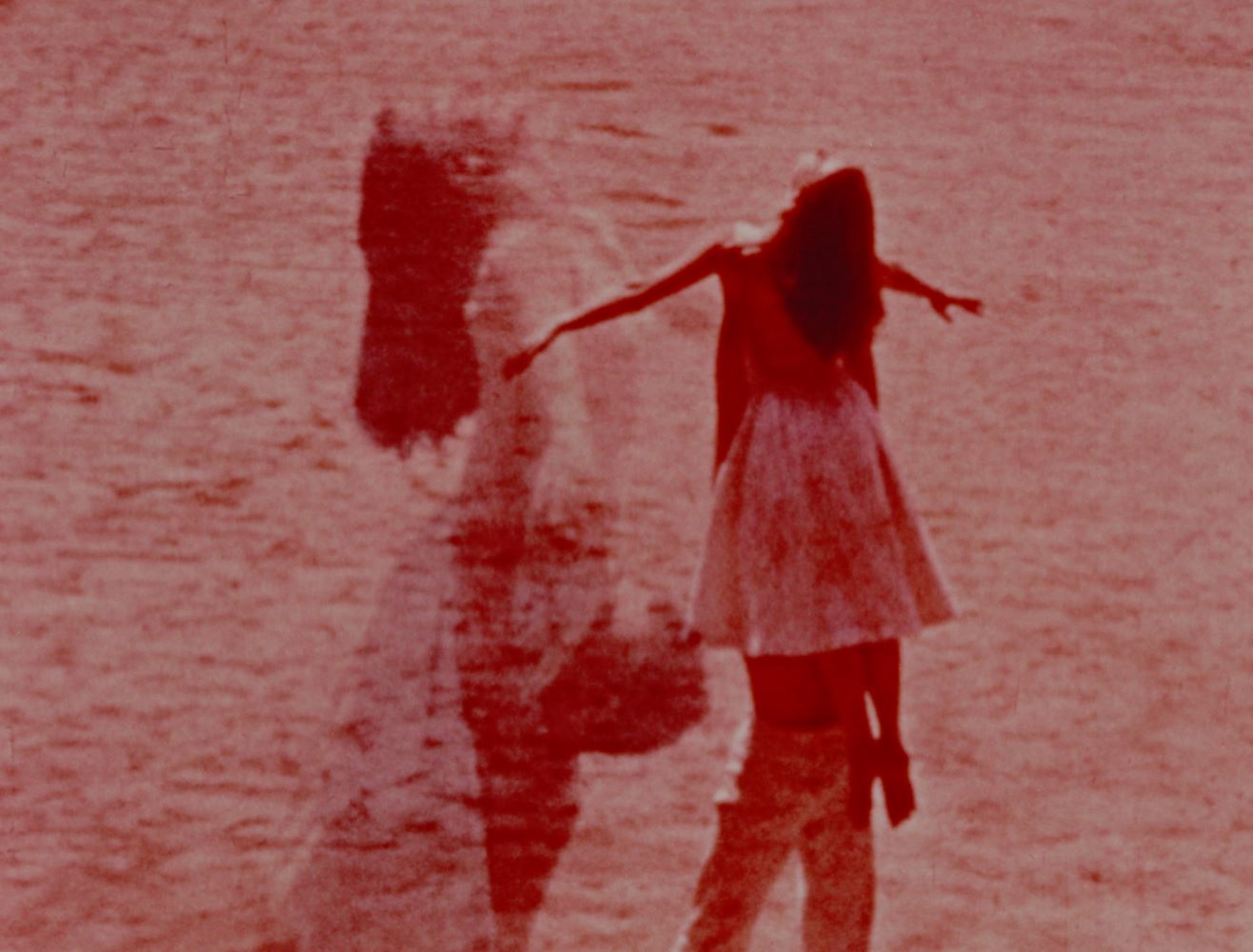
“A Moment in Love” Choreographed by Anna Sokolow – Directed by Shirley Clarke – Still courtesy of DCW.
3. A Moment in Love (9:08, 1957),choreographed by Anna Sokolow and featuring Paul Sanasardo. This was a lovely film based in a window of time when the feelings of love are new. The film then shows us the pathway of the couples’ love as they move apart. Time passes and we see them missing each other, unconnected, perhaps arguing and fighting as the relationship matures and they grow apart. Then, we are swept back to that beginning moment at the start of the film when the man gives the woman a flower stating his love for her. Sanasardo was tall and a very good mover. He also partners very well in all of the lifts and supported contractions, etc. I actually met him a few times as one of my teachers, Janet Panetta was in his Dance Company. I also met Anna Sokolow and was invited to watch a rehearsal of hers. She was very compassionate but exacting in her work and was interested in the underlying reasons for a movement rather than its effect on an audience. She was intense. Her choreography here was every bit as challenging. Sokolow’s choreography manages to move through the natural settings without any entanglement. Clark captures it all without getting in the way.
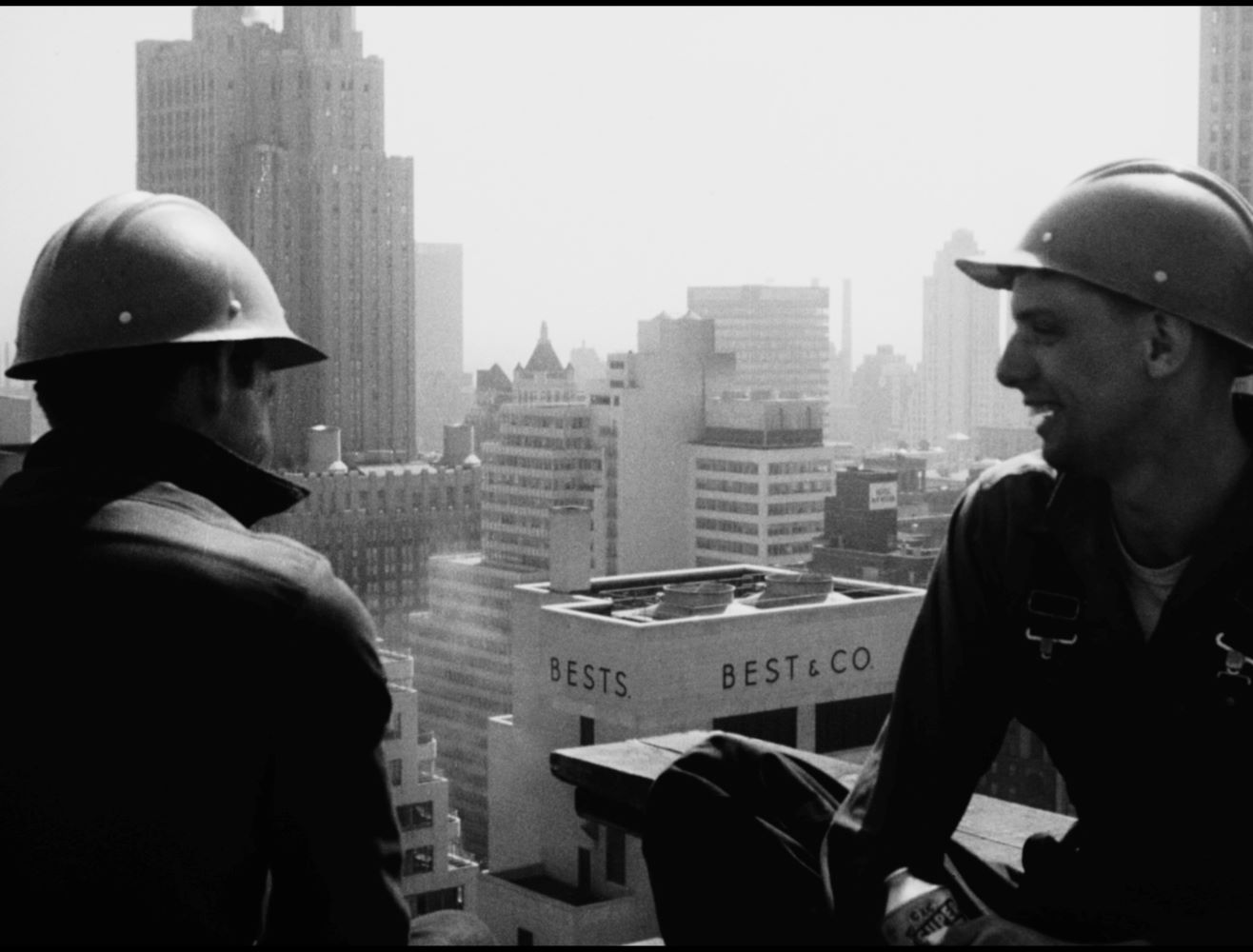
“Skyscraper” by Shirley Clarke – Still courtesy of DCW.
4. Skyscraper (21:05, 1959), a documentary re-imagined as a musical. This film is simply brilliant in its use of voice-over and song which illuminates perfectly the awe-inspiring aspect of building a Skyscraper from the ground up. All told through panoramic shots of surrounding Skyscrapers and the close-ups of the people working on this one, we see firsthand the incredible amount of coordinated work that must happen to make these buildings possible. Also, the fact of building straight up in a city as packed together as New York is a feat in itself. None of the materials for the building can be left out in the street or the sidewalk but must be utilized on the day of their delivery making a logistics nightmare for the foremen and delivery truck drivers en route. Interestingly, this building at 666 5th Ave. is where I worked for more than a year when I was Captain at the “Top of The Sixes”, a restaurant at the top floor of this very building! How lovely to see how it was constructed! Clarke uses the camera as a purveyor of set design. We become amazed at the details and complications involved in such a massive project. When she adds music and song to the soundtrack it becomes a musical in a very real sense. The actors working and commenting while the set changes and grows. The shots are nothing short of astounding. The riveters 40 stories up are performing their own ballet on the girders exposed to the ground below. It is frightening and exhilarating all at once. What could have been a dry documentary about a Skyscraper being built has been transformed into its own musical testimony to the genius of all the different skills necessary to create something so spectacular.
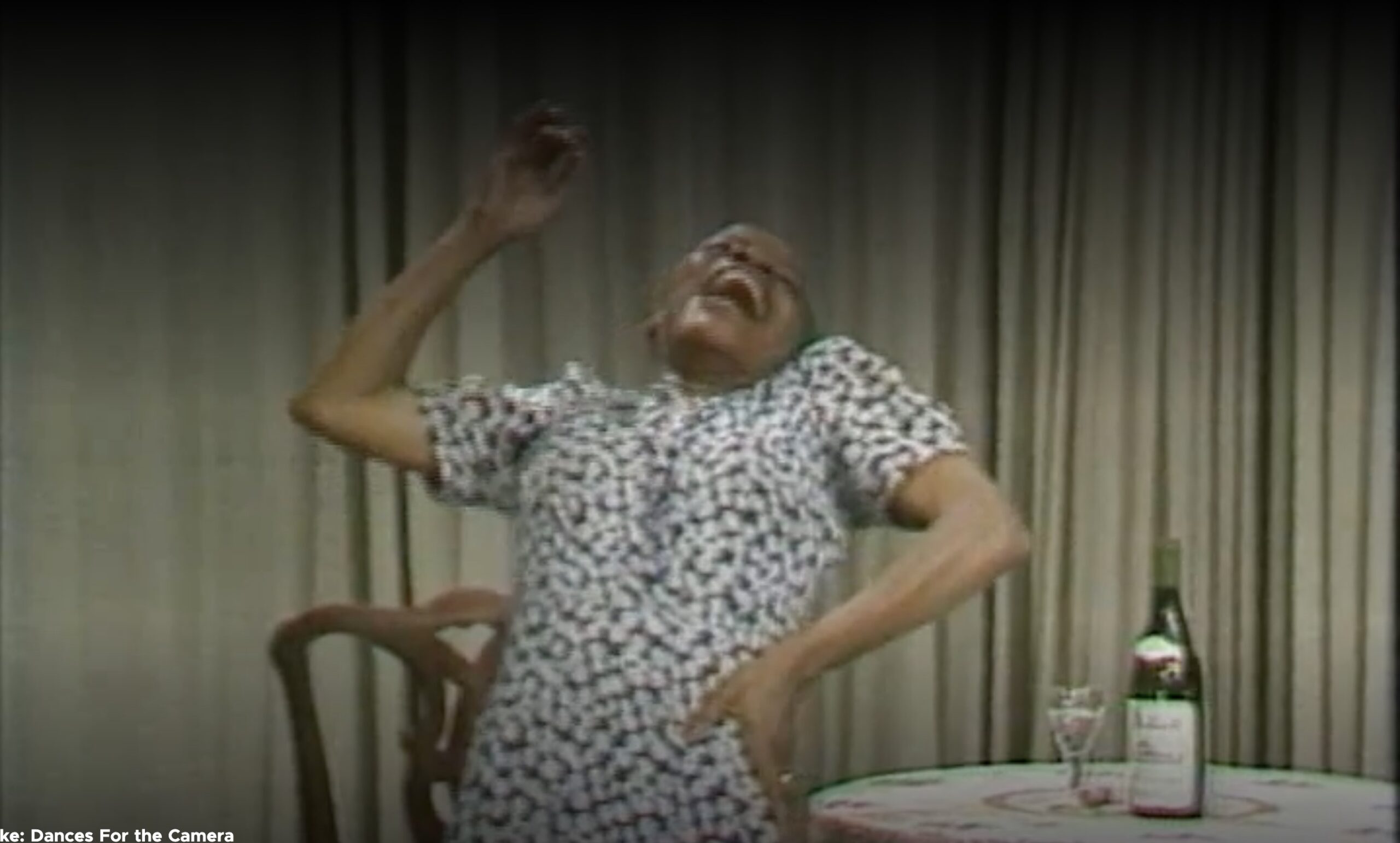
“A Visual Diary” Choreographer-Performer Blondell Cummings – Directed by Shirley Clarke – Still courtesy of DCW.
5. A Visual Diary (6:06, 1980), featuring Choreographer-Performer Blondell Cummings. The entirety of this film took place at a plain kitchen table where we see Cummings pour herself a glass of wine and slowly bring it to her lips as she ponders some event in her life. We watch her emotions overtake her and see the physical price of her lament. She cries and contorts and gives full vent to her pain. And just as quickly her mood changes and she is shaking with laughter at the table again. It is an exercise in acting made clear by the intimate gaze of the camera, and deftly so.
6. In Paris Parks, (13:36, 1954 /2014) featuring Wendy Clarke at age 4. This is the daughter of Shirley Clarke. The film opens with a view of the Eiffel Tower in the distance as the city of Paris awakes and begins to move. Children are descending on the neighborhood park in order to play and jump on the rides offered there. Old and young are equally portrayed as they inhabit the park for the day. A Marionette show a’la “Punch and Judy” has the children riveted. The excitement and emotion play across their faces and indeed animates their whole bodies. It is fantastic to watch the purity of joy, wonder, shock and interest wash across their features as the show happens a few feet in front of them. At the end we see the sun setting as the park is closing and the children take their leave in shadow with the view of the Eiffel Tower in the background.
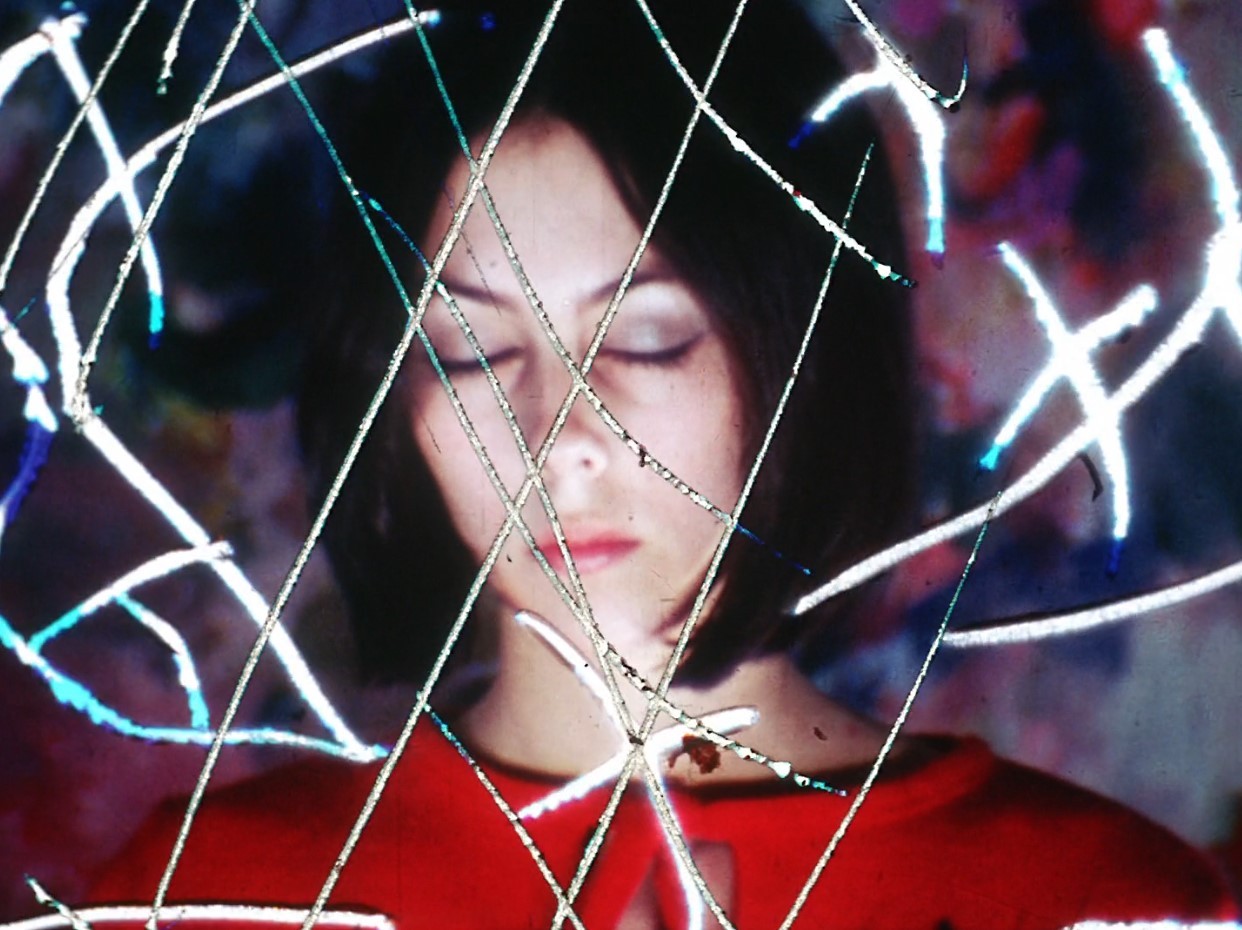
“Butterfly” – Directed by Shirley Clarke featuring Wendy Clarke – Still courtesy of DCW.
7. Butterfly (3:40, 1967), an anti-war protest film with Wendy Clark. This film was along the same lines as “24 Frames Per Second” in its intensity and degree of editing and frame change. It begins with a scribble of connected X’s all moving incredibly fast due to the editing of the drawings on a solid black or blue background. This renders them as butterflies flitting about the screen as only they can. Then there is a soundtrack superimposed on the visuals. At one point a baby crying and needing attention, at another machine-gun fire. We see a single female figure dancing and then back to the butterfly scribbles and machine-gun fire. The images juxtaposed to shock our awareness. It worked.
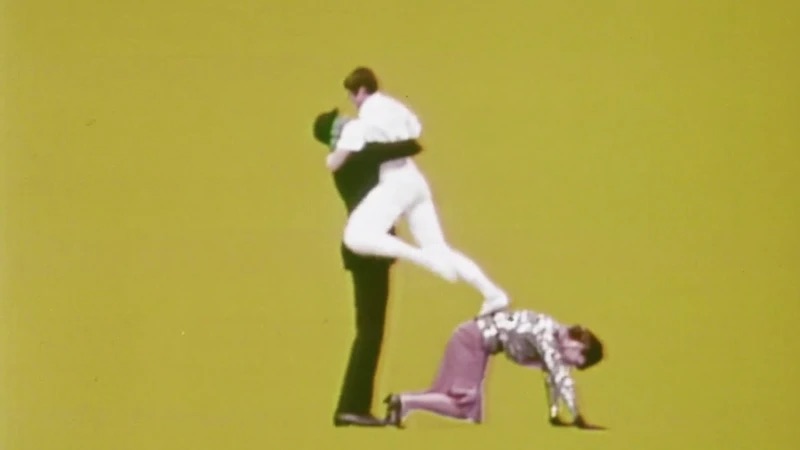
“One” Directed by Shirley Clarke – Still courtesy of DCW.
8. One-2-3 (8:18, 1978), featuring former Bella Lewitsky dancer Lynda Davis and Clay Taliaferro (Duke Professor Emeritus). This film had a sound score that was based on variations of the waltz. The three dancers who were engaged with a physical representation of the rhythm also spoke the words in counting or singing the tempo. As it went on it became a tour-de-force of concentration and focus. The dancers were two women and one man who partnered both in myriad permutations. He had a veil over his face so we could not see who he was. His costume was a tailored English suit and bowler hat. The women had no disguise and were vying for his attention. At the end after dancing different groupings of the waltz theme they all stop. The man reaches up to unveil himself and reveals that he is Black. The women react as one looks away from him and another stares in shock. This is Clarke calling attention to the racism she was so acutely aware of.
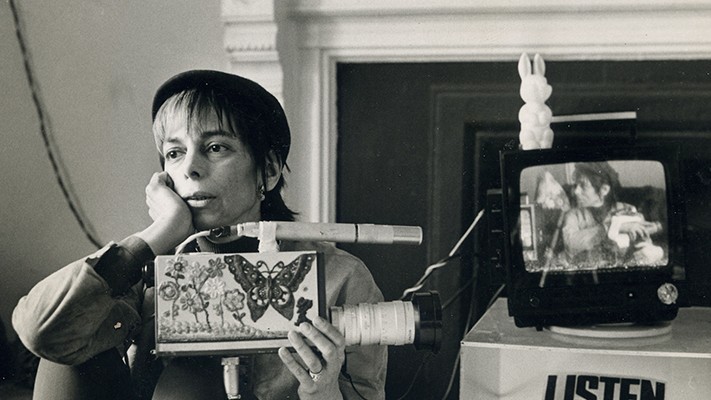
Shirley Clarke with a Portapak camera – Photo courtesy of DCW.
In all of these films Clarke’s dancer’s eye was easy to trace and follow. The training for a dancer easily lends itself to editing, direction and musicality in movement as well as acting. I had another teacher, Brynar Mehl from the Merce Cunningham Company who said that dance training could help you if you wanted to become a Bank Teller. All those hours on your feet and all the time sitting behind the windows could be made more bearable by dance training. His point was that any job, any profession, would benefit by training to be a dancer because of the spatial and rhythmic awareness, not to mention the physical strength garnered by such training. Shirley Clarke is living proof of that theory. Her films move, and they move us as we watch them.

Karen Pearlman – Photo courtesy of DCW.
For more information about Dance Camera West, please visit their website.
Written by Brian Fretté for LA Dance Chronicle.
Feature image: “A Moment in Love” Choreographed by Anna Sokolow – Directed by Shirley Clarke – Still courtesy of DCW.