“The FitnessGram Pacer Test is a multistage aerobic capacity test that progressively gets more difficult as it continues.”
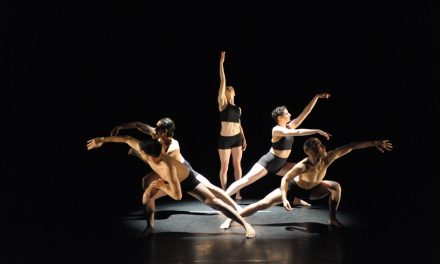
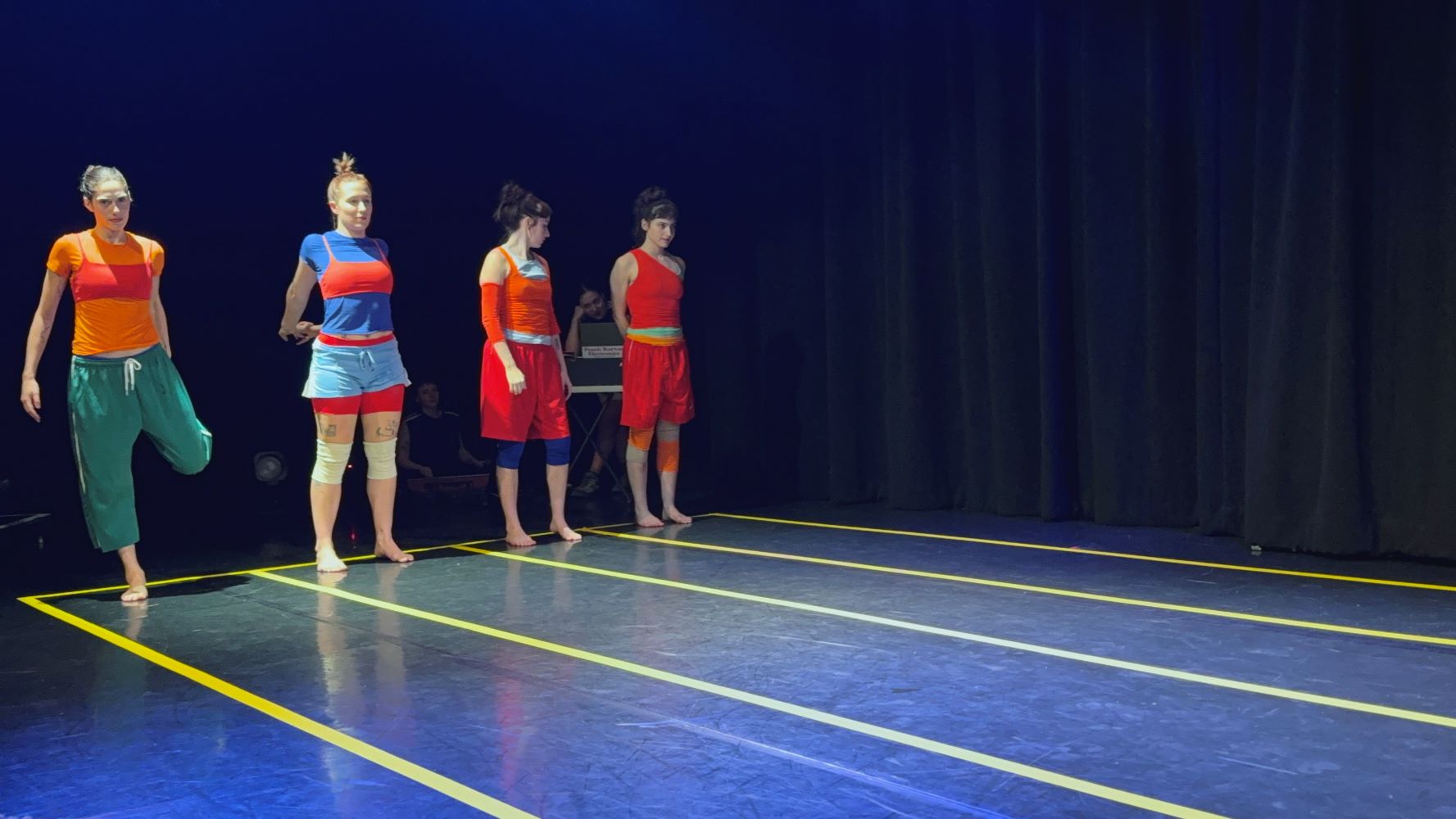
The audio rings through Highways Performance Space. Performers Mandolin Burns, Eliza Loran, Lena Martin and Scout Nankin stretch. “The 20-meter pacer test will begin in 30 seconds,” the voice continues. “Line up at the start.”
“Free All Night Long,” choreographed by Mandolin Burns and Lena Martin – Photo by Patrick Kennelly, Highways.
The quartet lines up on a mock track taped on the ground. The difficulty promised in the initial statement is imminent, but how difficult could it get? A chime plays.
The pacer test was developed in 1982 by Luc Léger through the Cooper Institute. The test’s beginnings, however, stemmed from the desire to create a physical fitness “report card.” In 1977, Charles L. Sterling, the Director of Health and Physical Education in Richardson, Texas, initiated the first iteration of the test, the Texas Physical Fitness—Motor Ability Test, to assess students’ physical fitness and codify the process. During the test, participants must complete a 20m shuttle by the time the timer beeps. With each round, the beeps get closer together.
“Free All Night Long,” choreographed by Mandolin Burns and Lena Martin – Photo by Patrick Kennelly, Highways.
In “Free All Night Long,” created and directed by Burns, Martin and Celeste Ollivier, the beeps represent the same urgency with higher stakes. As the dancers complete each round, their run alters into representations of capitalism and the societal pressure to climb the economic ladder. The full title of the work — “Free All Night Long is an Opera About Endurance (we decided to call it an opera because we heard opera gets better funding)” — further exemplifies this message. Although the test was proven to increase cardiovascular endurance, the concept of a “report card” perpetuates the same rigid container and pressures as capitalism. How does each participant compare? Who is the best? How do we measure effort? Numerically in monetary terms or in the time spent? The parallel in “Free All Night Long” presents the consequences of comparison and the false promise of the American Dream in a daunting, and often comical, dance along the pacer track.
“Free All Night Long,” choreographed by Mandolin Burns and Lena Martin – Photo by Patrick Kennelly, Highways.
The performance and the pacer test aren’t meant to be a competition, but that is how these things play out. The performers set this up subtly at the start, looking at each other and finding another person to go toe-to-toe with. The element of competition in the choreographic score speaks to a seemingly throw-away line about crabs in a bucket. The metaphor refers to the behavior of crabs. If one tries to climb out of a bucket, the others will pull them back in to make their own escape. The work is riddled with these small thematic moments that perfectly build upon each other as the pacer test continues.
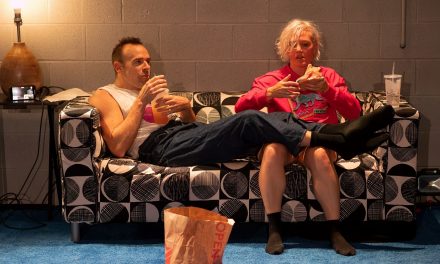
Their environment and fellow competitors fade away as the pacer test becomes a test of persistence. The movement drifts from athletic aerobics to mimicked actions of labor, including folding napkins, setting up a restaurant reservation and making cups of coffee. The service industry provides a sharp look at the toll of capitalism, both physically and mentally. They each become fixated on their individual task and, as the action repeats, the work becomes exhausting. It is no longer a competition with each other, but a competition with labor.
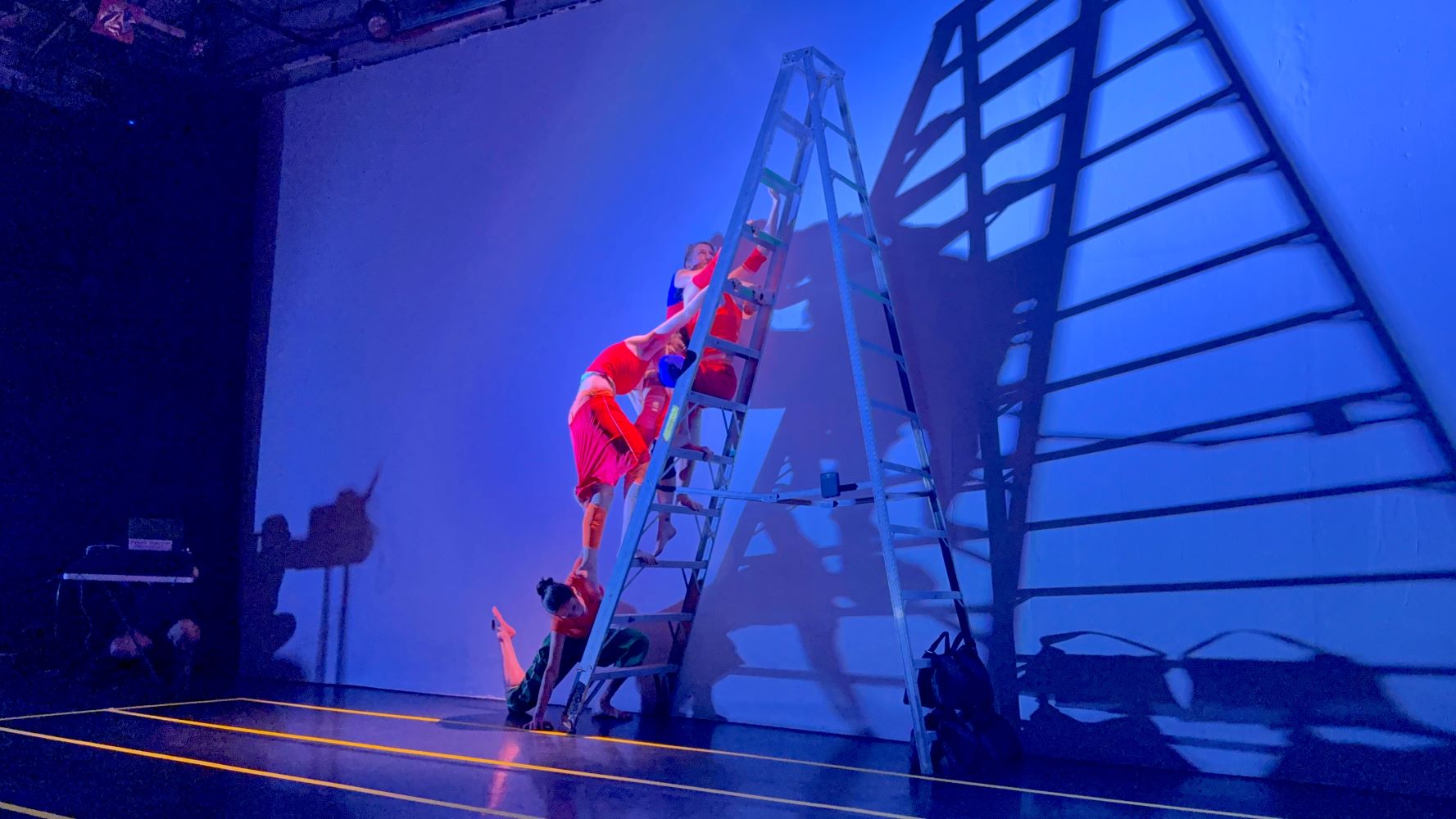
“Free All Night Long,” choreographed by Mandolin Burns and Lena Martin – Photo by Patrick Kennelly, Highways.
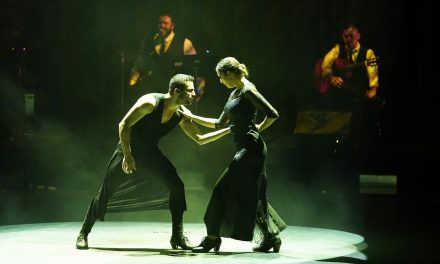
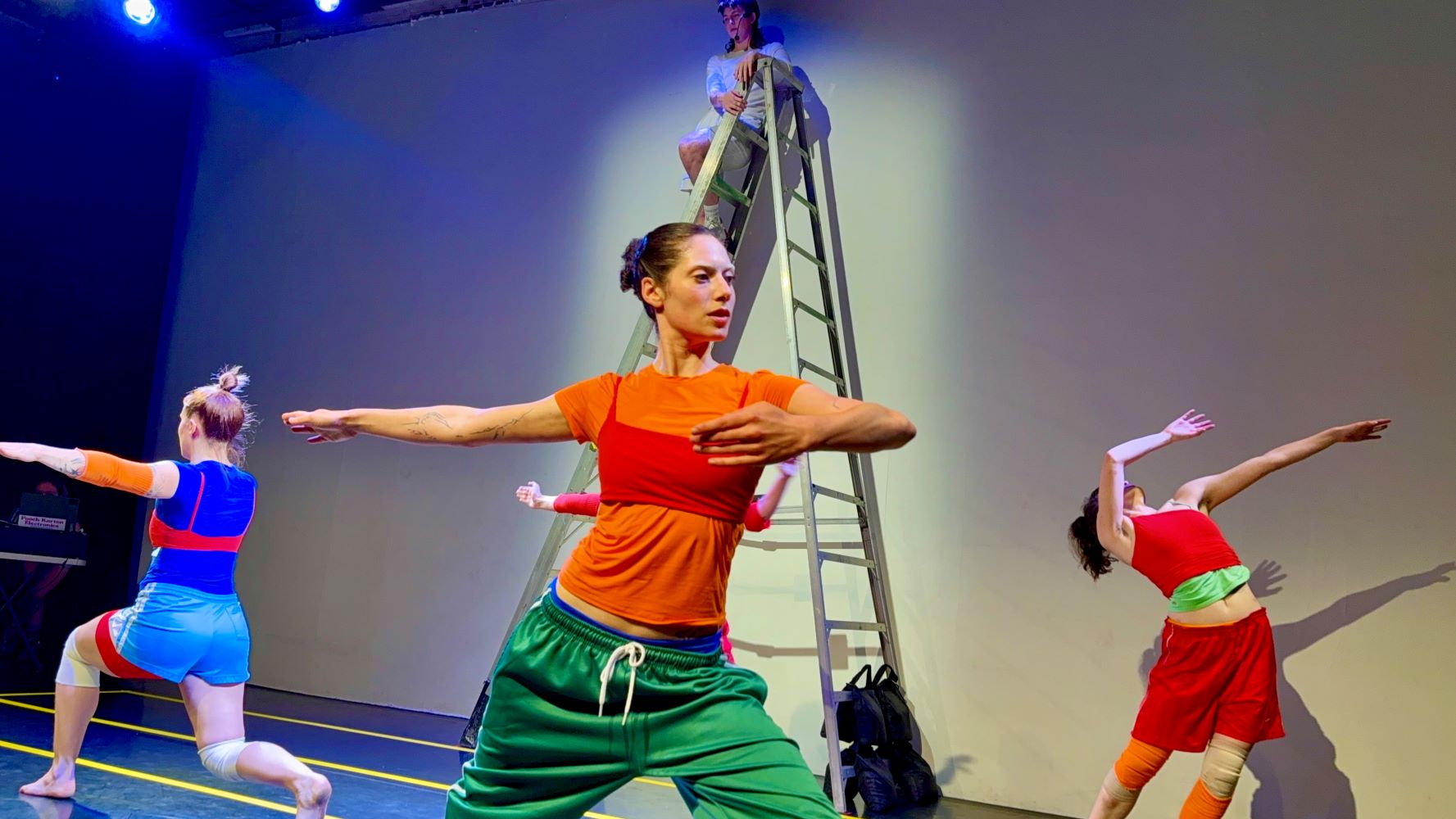
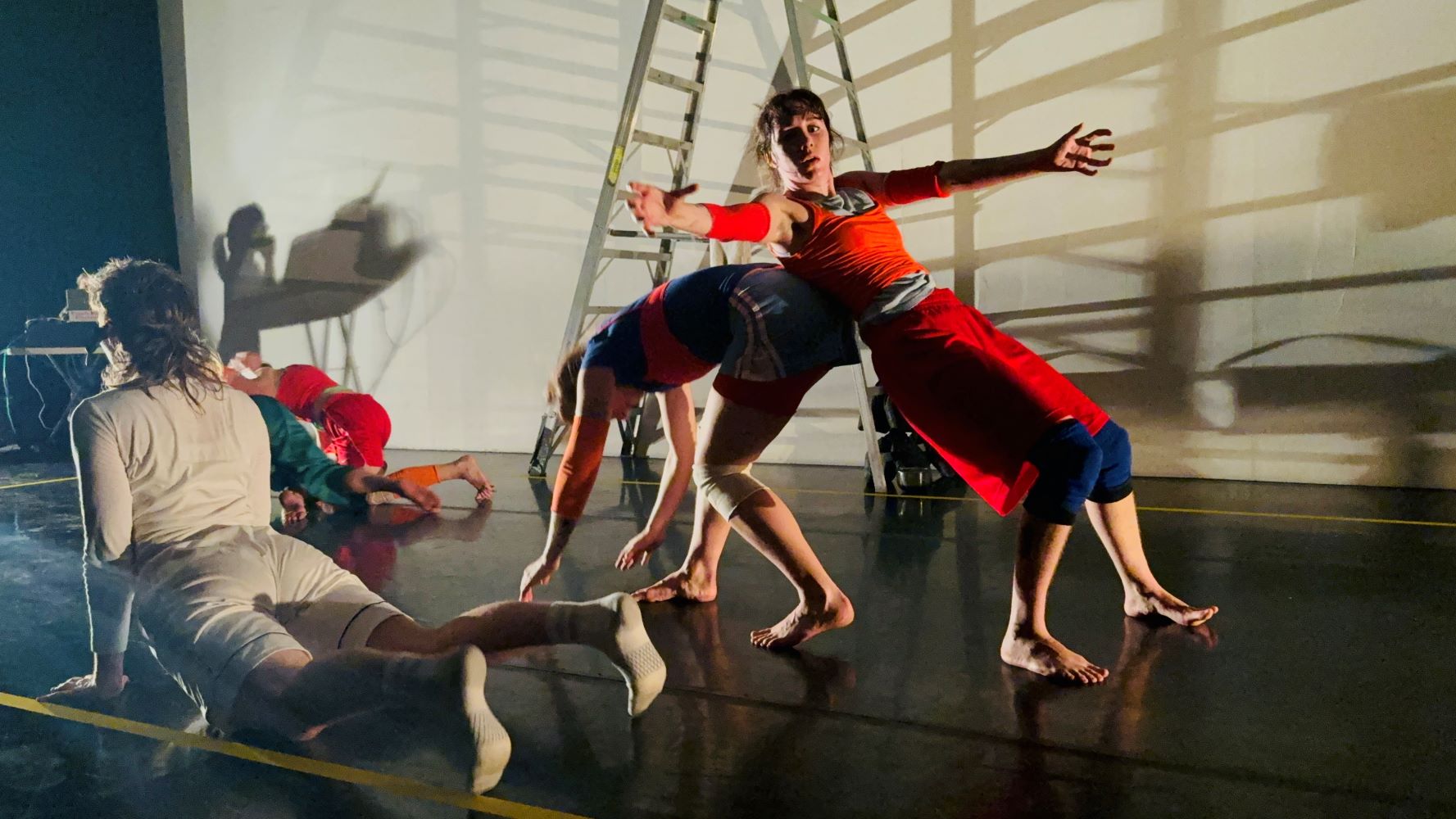
Mason Rose Gray enters as the fitness instructor, a semi-comedic relief when they aren’t pushing for more sets and a longer workout. They turn to both the audience and the performers to demand more. Gray brings out a ladder, and the crabs-in-a-bucket metaphor becomes literal. The four performers in the pacer test start climbing over each other, racing to the top in slow motion. The live score by Peyton Ellis increasingly gets more chaotic. The lighting design by Rory James Leech pulls your attention to the ladder, as if it were a shiny trophy to be won.
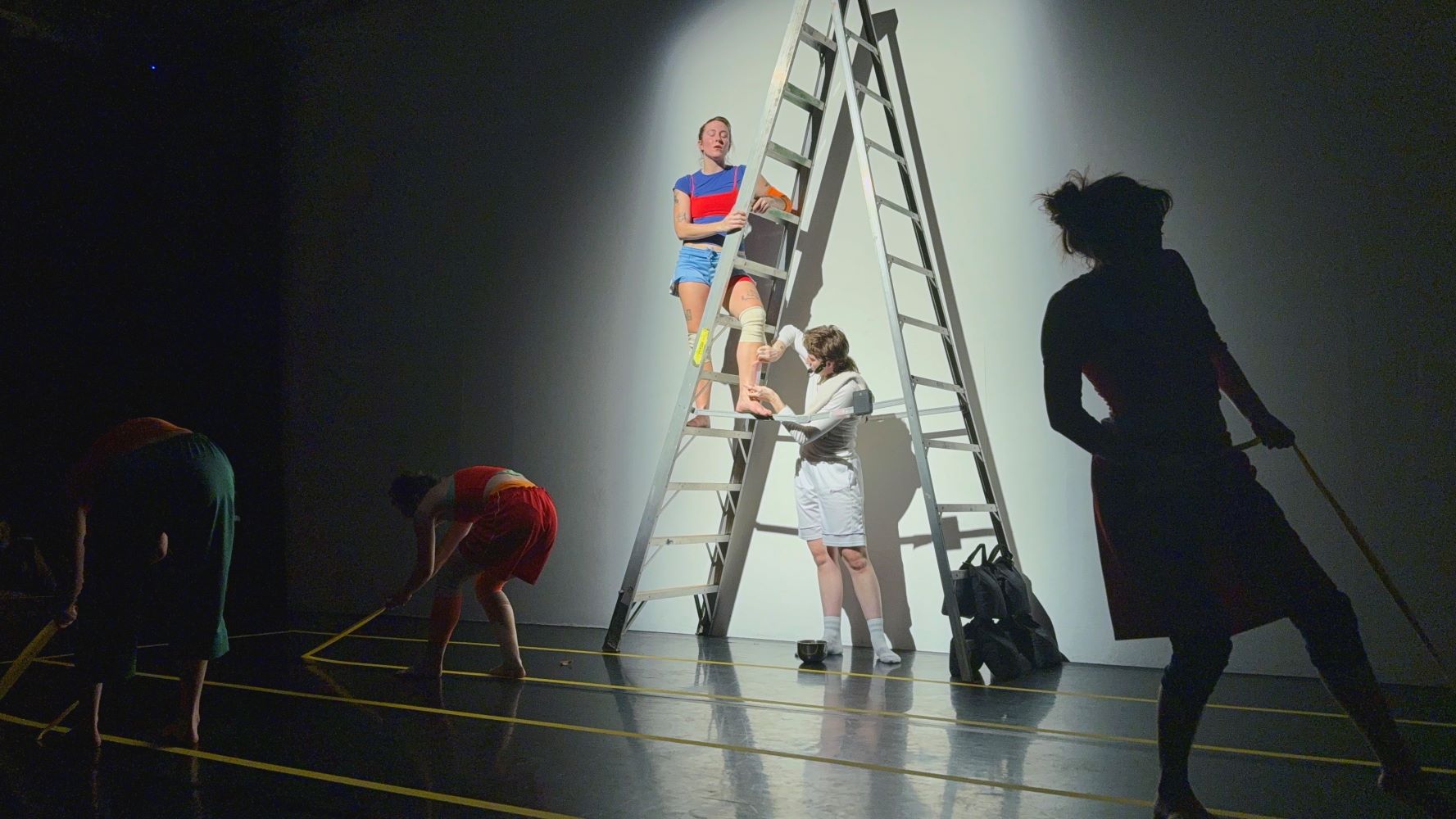
“Free All Night Long,” choreographed by Mandolin Burns and Lena Martin – Photo by Patrick Kennelly, Highways.
The imagery in “Free All Night Long” is mesmerizing, transforming the pacer test into a deeper interrogation of our everyday lives. The work requires attention and the ability to sit in discomfort as it wittily addresses the questions that we ask ourselves at the end of a long shift. As the piece reaches its end, the lines of the track are ripped off and the performers in the middle of a pacer test must find new ways of competing. This latter section of the work is where Burns, Martin and Ollivier offer possible solutions. Without the container of the pacer test, this effort feels aimless.
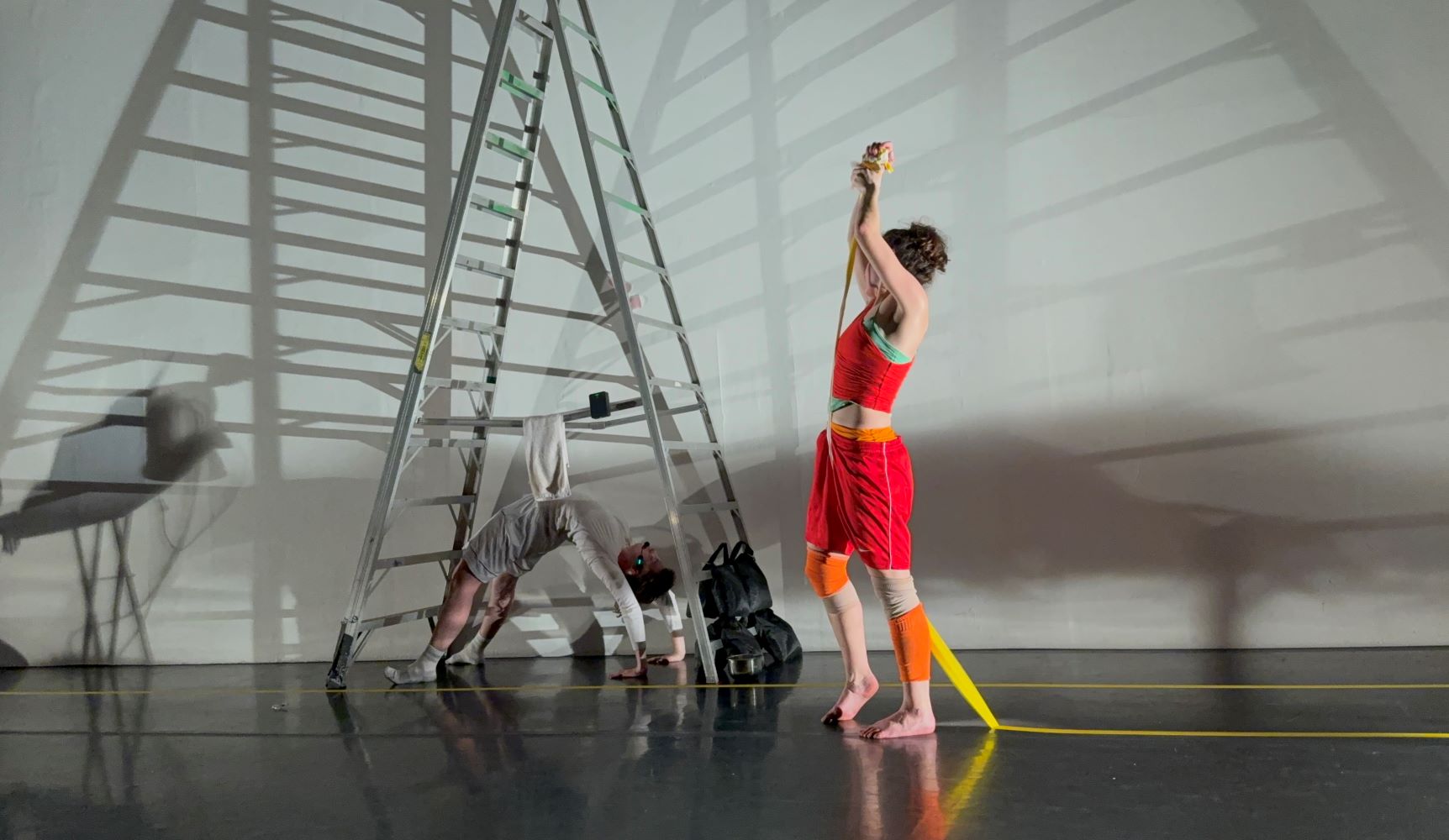
“Free All Night Long,” choreographed by Mandolin Burns and Lena Martin – Photo by Patrick Kennelly, Highways.
According to the National Low Income Housing Coalition, in 2025, a full-time worker must earn an hourly wage of $28.17 to afford a modest one-bedroom rental. Meanwhile, the federal minimum wage is $7.25 per hour, and the L.A. County minimum wage is $17.81 per hour. It is clear our efforts of working and keeping up with the pacer test of capitalism are aimless. What’s the purpose without promise of success? The performance takes on a more free-form approach as the movement motifs return as echoes of the past in this unfamiliar new normal. Martin and Burns slowly make their way to each other while the others burn themselves out. Exhaustion creeps into their movement. Persistence wanes.
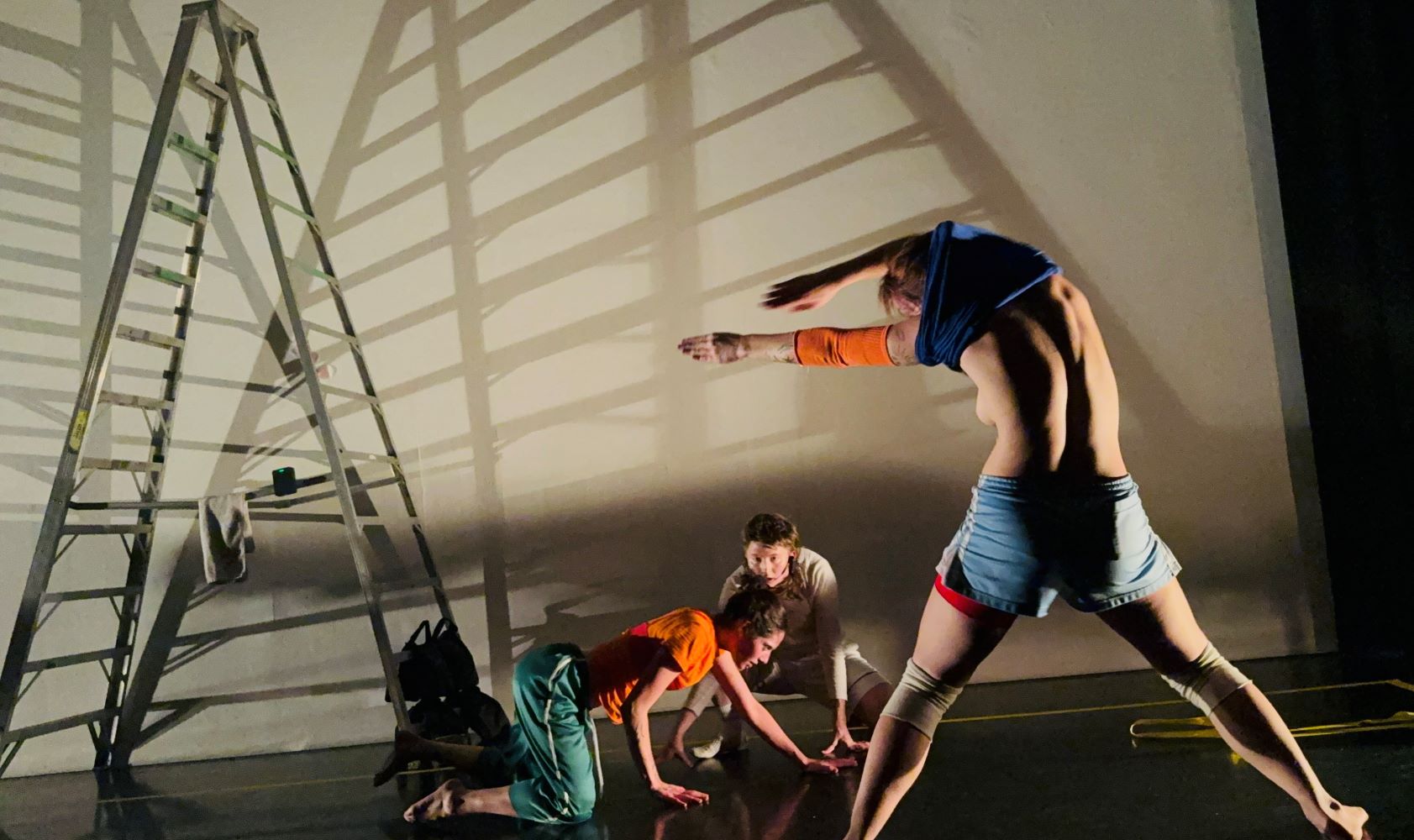
“Free All Night Long,” choreographed by Mandolin Burns and Lena Martin – Photo by Patrick Kennelly, Highways.
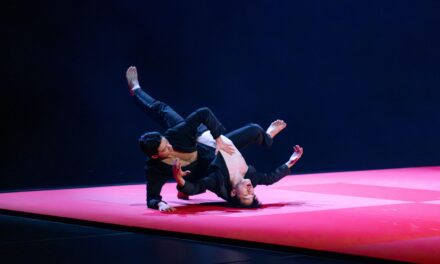
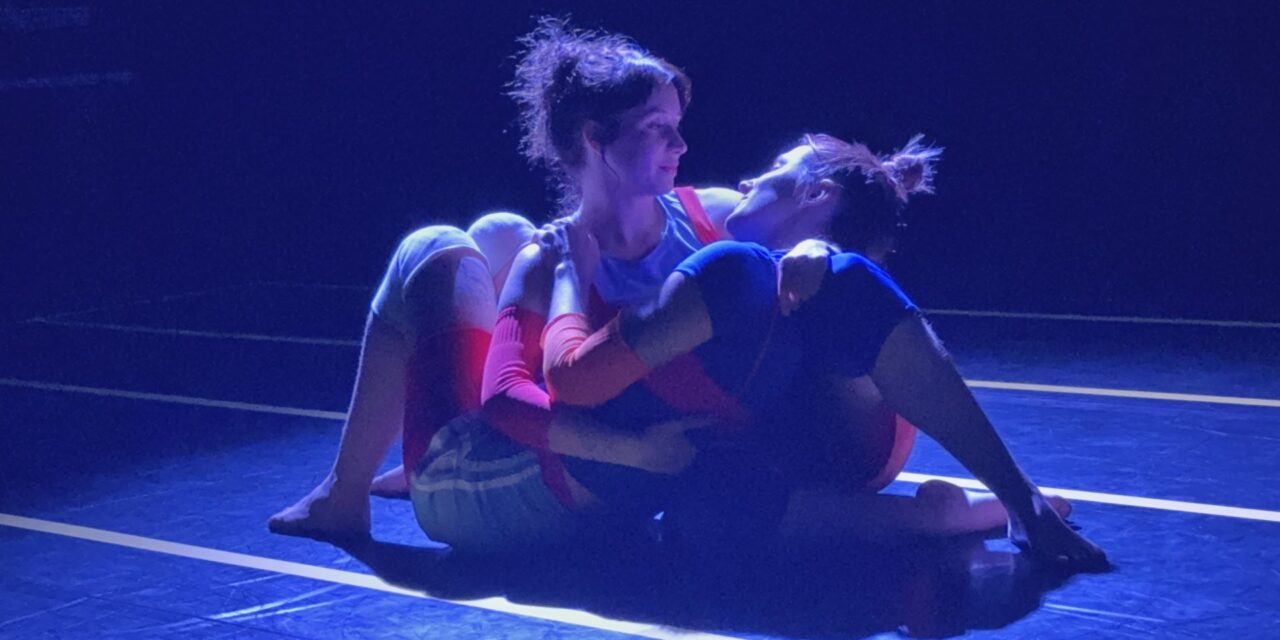
The two come together, offering a radical solution to the hellscape of labor: community. As two people caught in the same cog find each other in a romantic embrace, the pacer test feels distant and insignificant. There’s no way of turning the value of connection into a score on a report card.
To learn more about Highways Performance Space, please visit their website.
Written by Steven Vargas for LA Dance Chronicle.
Featured image: “Free All Night Long,” choreographed by Mandolin Burns and Lena Martin – Photo by Patrick Kennelly, Highways.