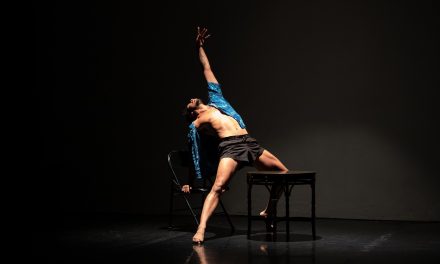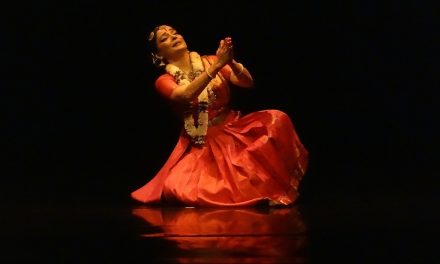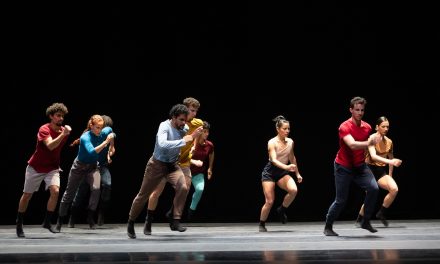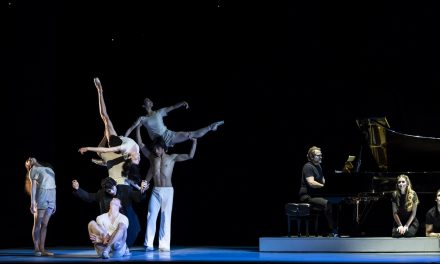
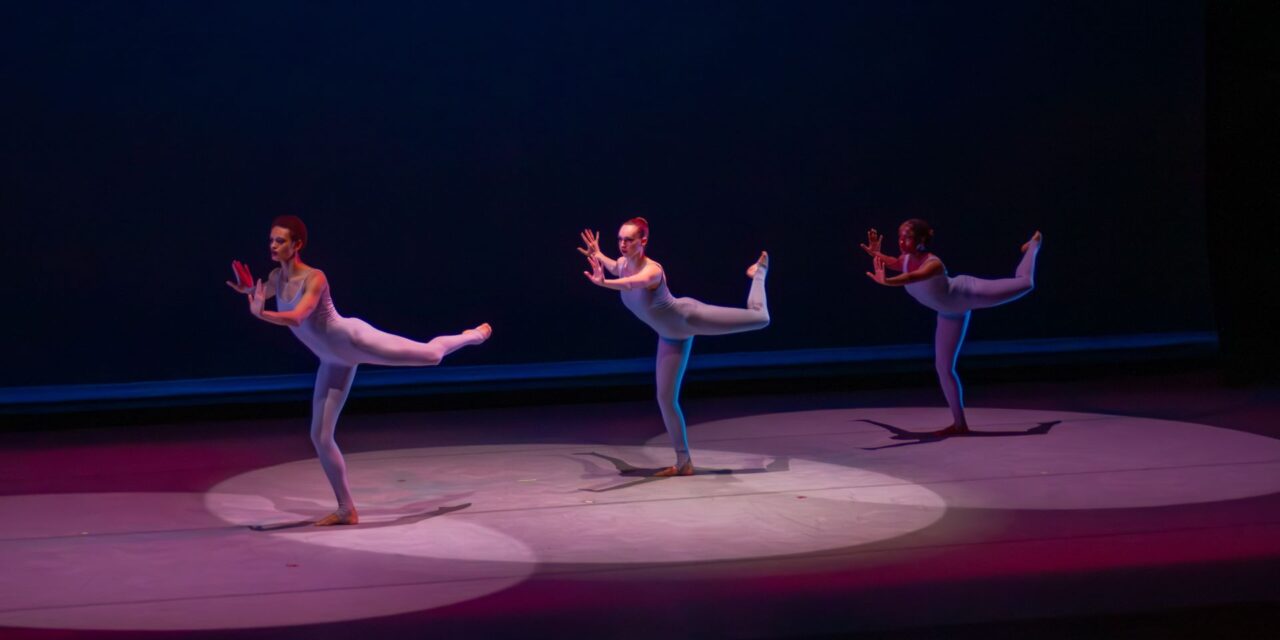
On Sunday, February 1, 2026, at the Lisa Smith Wengler Center for the Arts at Pepperdine University, I enjoyed getting to see future stars take the stage with Ailey II’s performance. Ailey II is a two-year apprenticeship program, with many of the dancers joining the Ailey company after their stint. The dancers’ technical skills were apparent throughout the evening. The most dynamic performances came in Houston Thomas’ “Down the Rabbit Hole,” created by this newer choreographer for the company.
The first piece of the evening was “Streams” choreographed by Alvin Ailey in 1970. In this work, the dancers ebb and flow on and off the stage in various groupings, representing the different forms taken on by water.
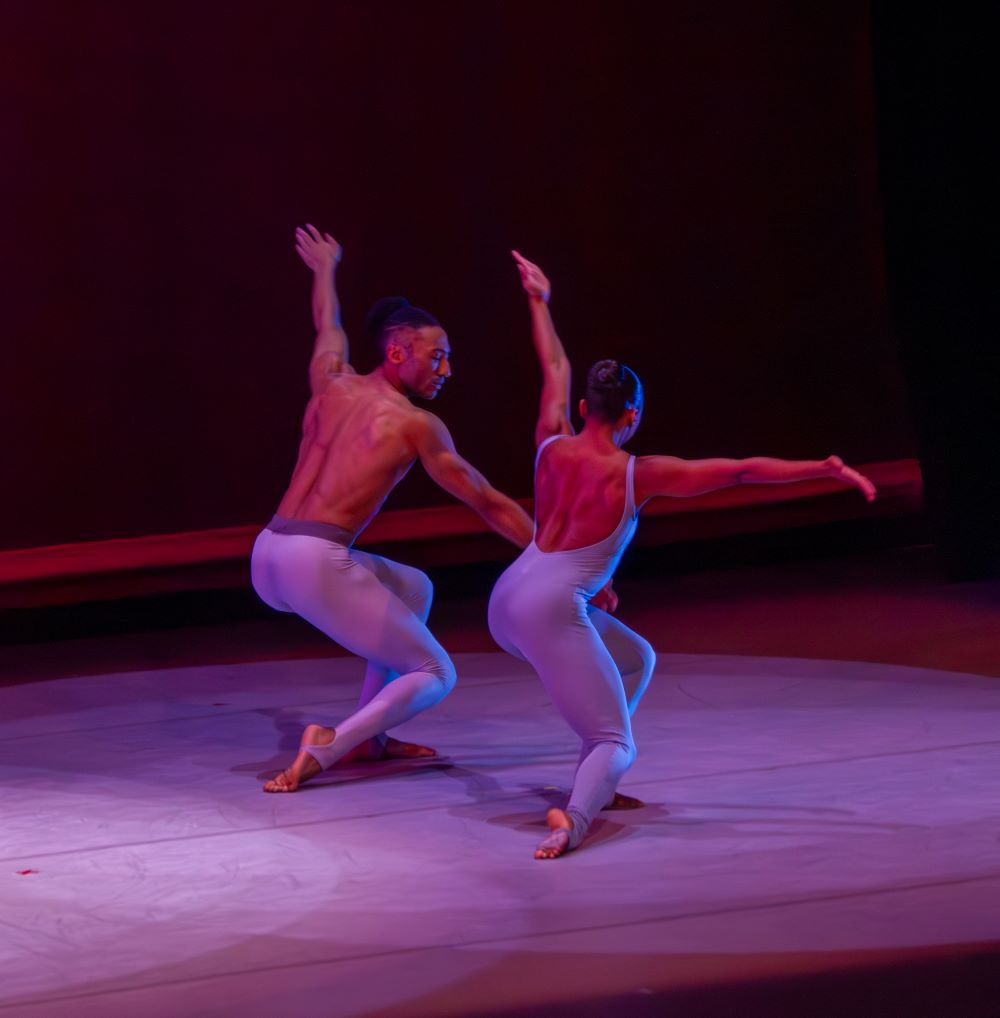
Ailey II in STREAMS, Choreography by Alvin Ailey – Photo by Blaine Jacquez.
The beginning group section featured slow-moving diagonal pathways with lots of attitude positions and extended legs. It was extremely revealing of the dancers’ technique, and their execution was strong. Particularly in some of the larger group sections like this, I wanted more out of the dancers’ performance. For example, in this opening, it would have been nice if the dancers brought the peaceful calm feeling of a gently flowing stream to life more. In some of the smaller groups, as they darted and wove around each other, the dancers found more intention and connection in their performances.
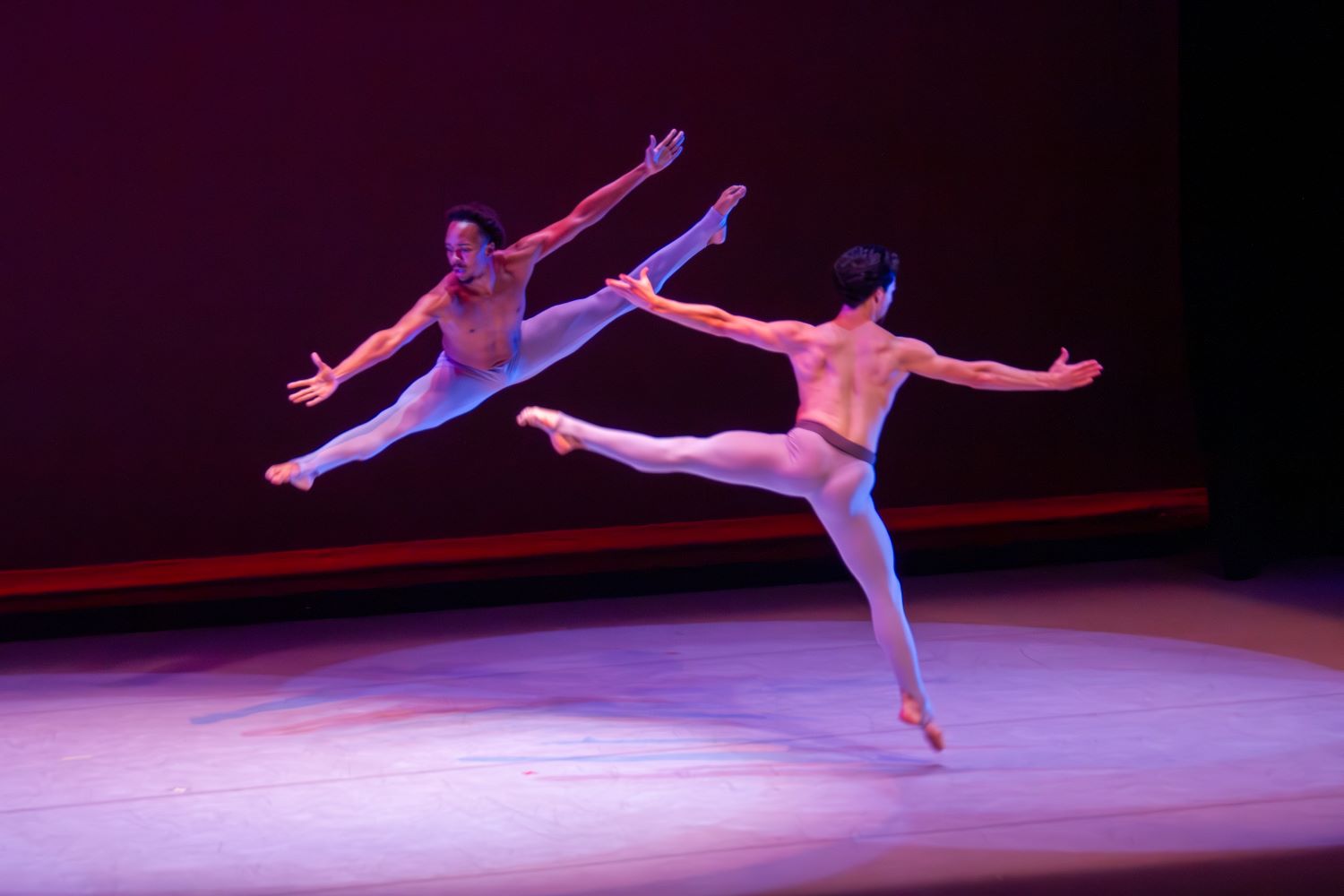
Ailey II in STREAMS, Choreography by Alvin Ailey – Photo by Blaine Jacquez.
Meredith Brown and Jordyn White each had solos that were especially memorable. Brown showed immense control as she rolled on the floor into balanced leg extensions on one knee, and White’s exquisite long extensions were beautiful to behold. Choreographically, I enjoyed the “Danza” section in particular, featuring Carley Cruzat Brooks, Jennifer M. Gerken, Adanna Smalls, Jada Ammons, Darion Turner, Kamani Abu, and Christian Butts. The movement featured sharp details of the feet and wrists and seemed to show a competition between the male and female groups. It culminated in an entrancing section of overlapping duets that felt like all the different streams coming together. There was strong partnering which often featured supported leans and rippling arms. With the gendered groupings earlier in the section, I appreciated seeing some same-gender partnering too.
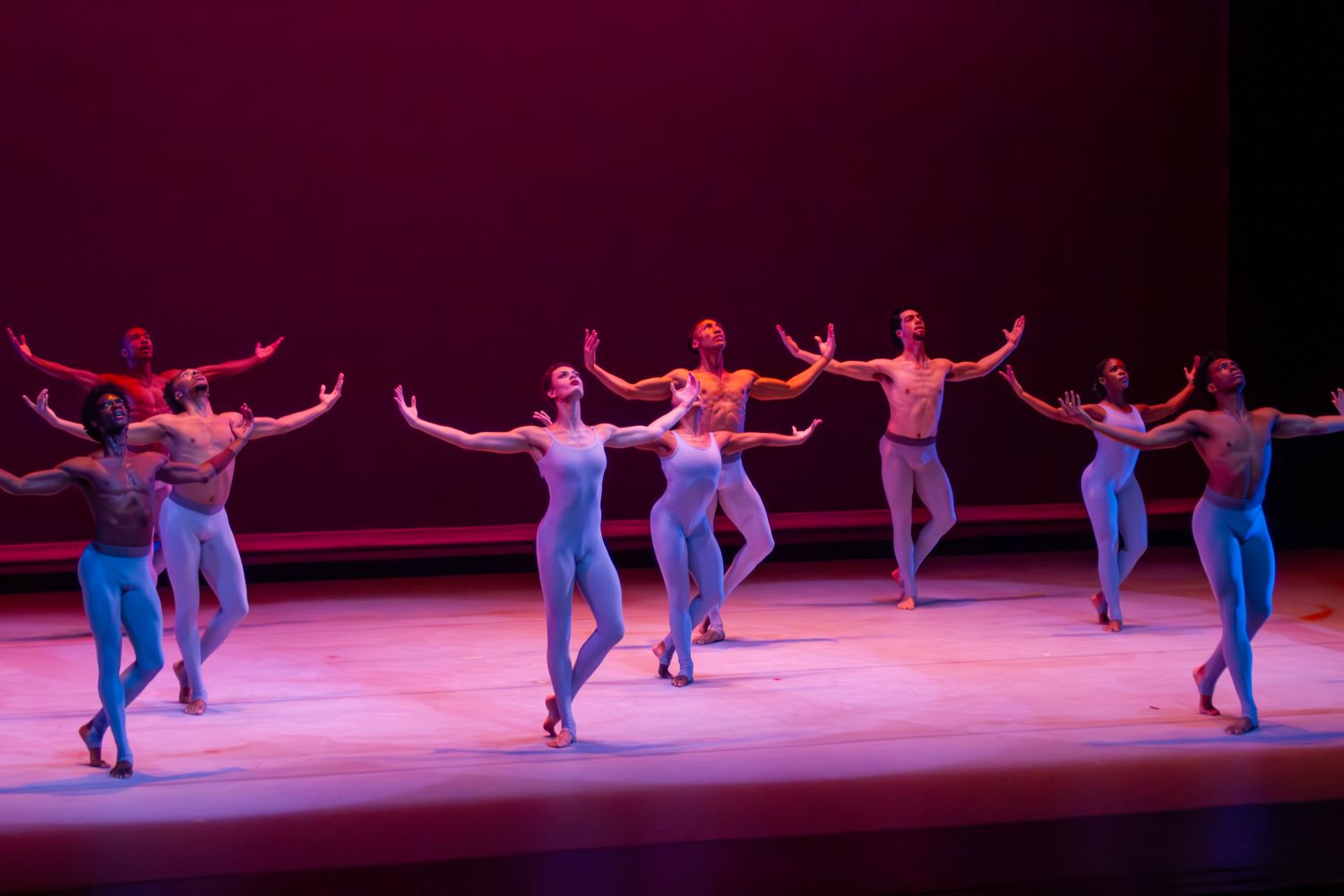
Ailey II in STREAMS, Choreography by Alvin Ailey – Photo by Blaine Jacquez.
Like most of Ailey’s work, Horton technique was prominently featured, and the challenging control showed the dancer’s technical chops. Of the works of Ailey’s that I’ve seen, I did find this to be less emotionally captivating with this more abstract topic. In addition to the previously mentioned dancers, the cast also included Xhosa Scott, Xavier Logan, and Eric J. Vidaña.
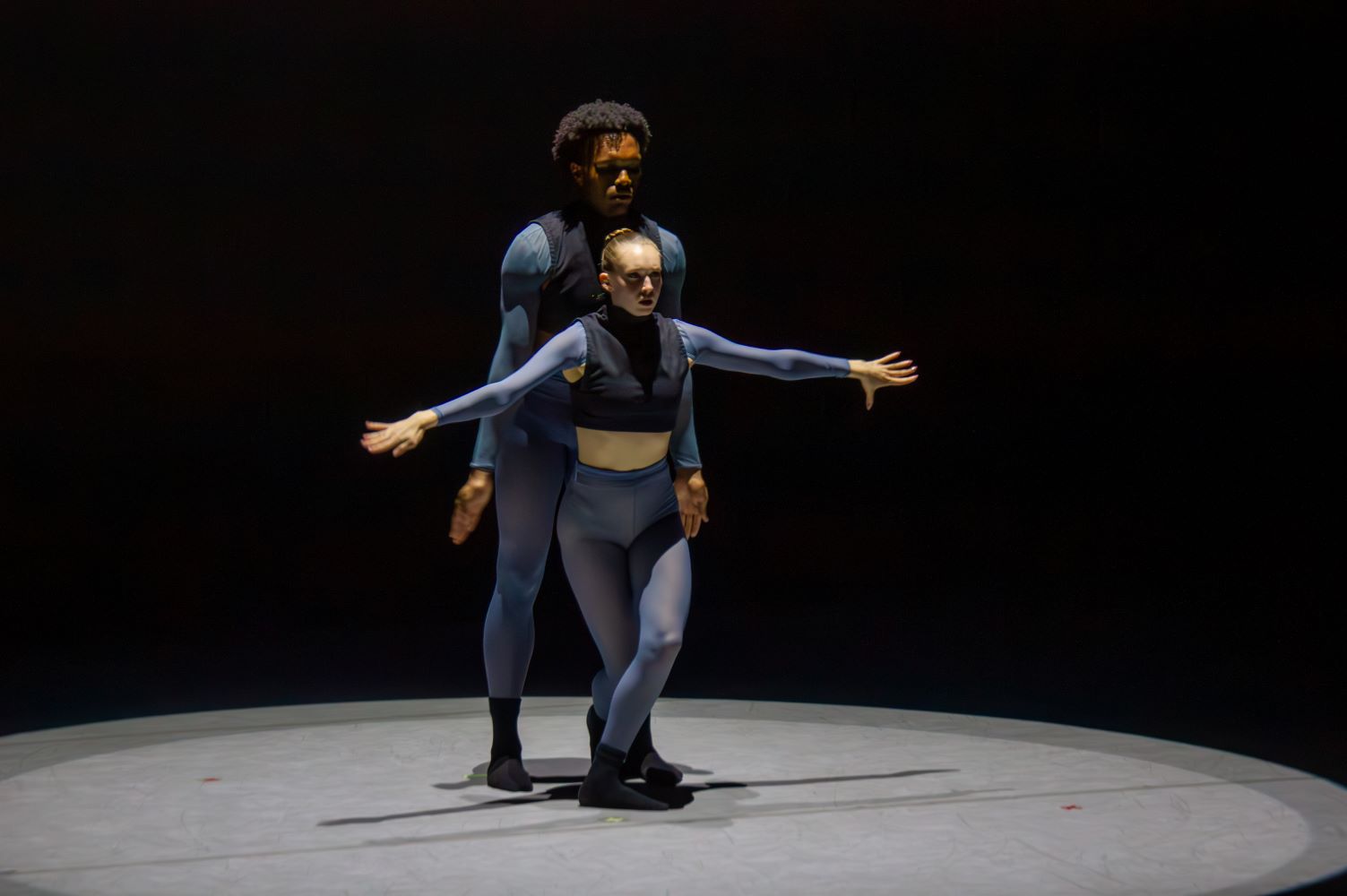
Ailey II in DOWN THE RABBIT HOLE, Choreography by Houston Thomas – Photo by Blaine Jacquez.
The second piece of the night, “Down the Rabbit Hole” was set in 2024 by Houston Thomas, a newer choreographic voice. This piece touched on themes of technology, and had a futuristic sci-fi feel to the costuming, lighting, and music. Thomas used the immense athleticism of the dancers well as they darted and swiveled on and off the stage. His movement featured sharp twists, rebounds, flexed feet, and swiveling hip actions. I loved the contrast between big jumps and smaller gestural details.
The costumes, designed by Jasmine Schulter and Thomas, were gender neutral grey and black. The lighting design by Aja M. Jackson was excellent. Instead of the subtle shifts in lighting that often accompany dance, the lighting would suddenly change from a more neutral-toned scene to a bold teal full stage wash and then back. It felt like we were jumping dimensions or realities. I
didn’t necessarily follow a storyline of why and when these shifts would happen, but that felt intentional and made each shift surprising. In another section, there was a large center spot, but the trio of dancers onstage danced outside of the spot, visible but obscured, which was a cool choice to make with the staging.
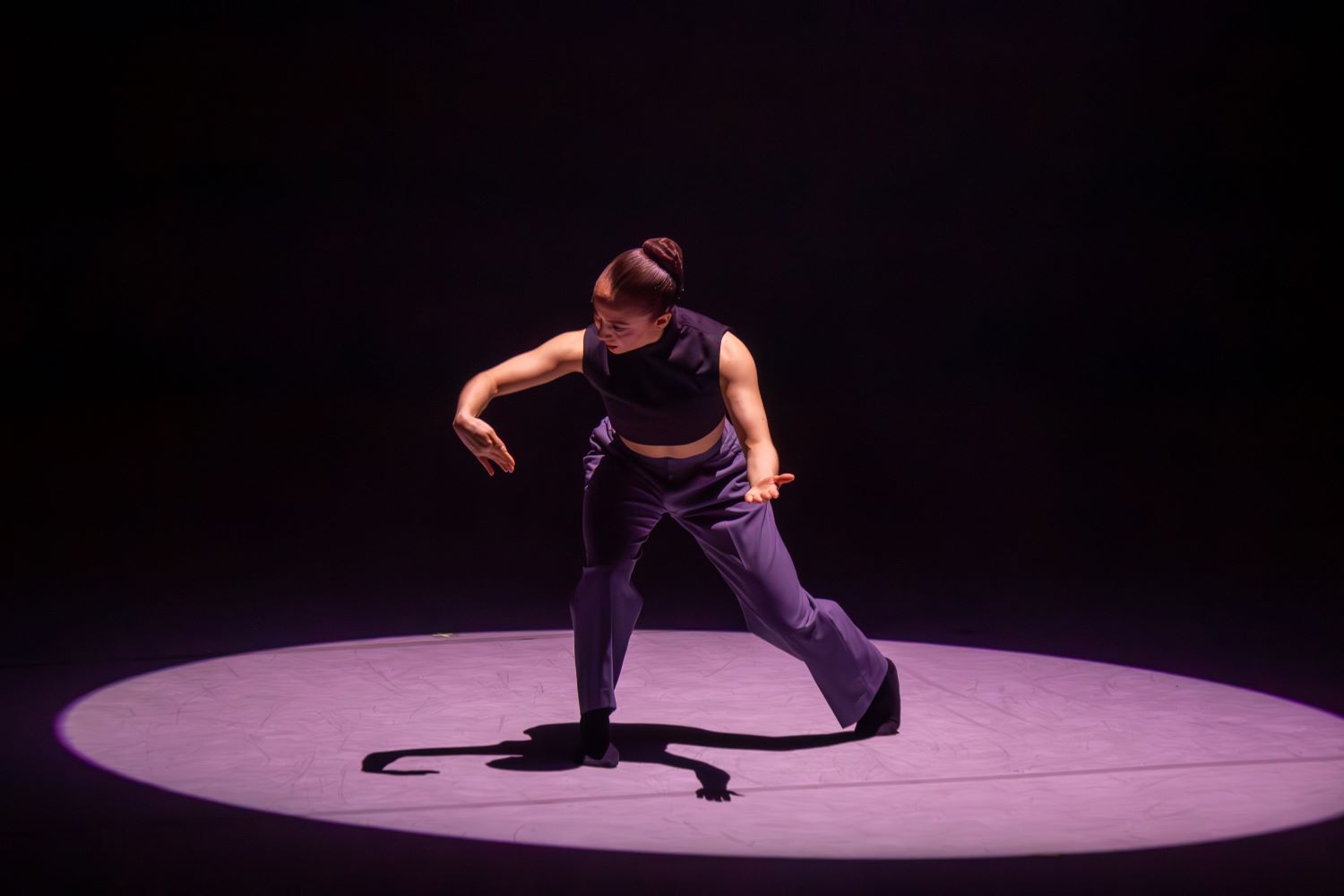
Ailey II in DOWN THE RABBIT HOLE, Choreography by Houston Thomas – Photo by Blaine Jacquez.
The sections of the dance all flowed into each other, with various groupings and dynamics happening. At times, I felt like maybe I could identify a white rabbit character or a protagonist, but it was mostly abstract, which I didn’t mind. As the piece came to an end, dancers sprinted across the stage, until one stopped in a spot. The light hauntingly flickered and blacked out as he fell to the ground for a dramatic finish.
The dancers in this work were Jennifer M. Gherkin, Xavier Logan, Carley Cruzat Brooks, Xhosa Scott, Jordyn White, and Christian Butts.
Rounding out the program was the all-time classic: Alvin Ailey’s “Revelations.” This work, set to African American spirituals, touches on themes of the struggle, sorrow, hope, and joy that are part of African American history. The dancers performed admirably, showcasing energetic dancing and strong technique, though there were some sections that felt that they required the maturity of an older dancer. Having seen the main company perform “Revelations” countless times, it is hard not to draw comparisons.
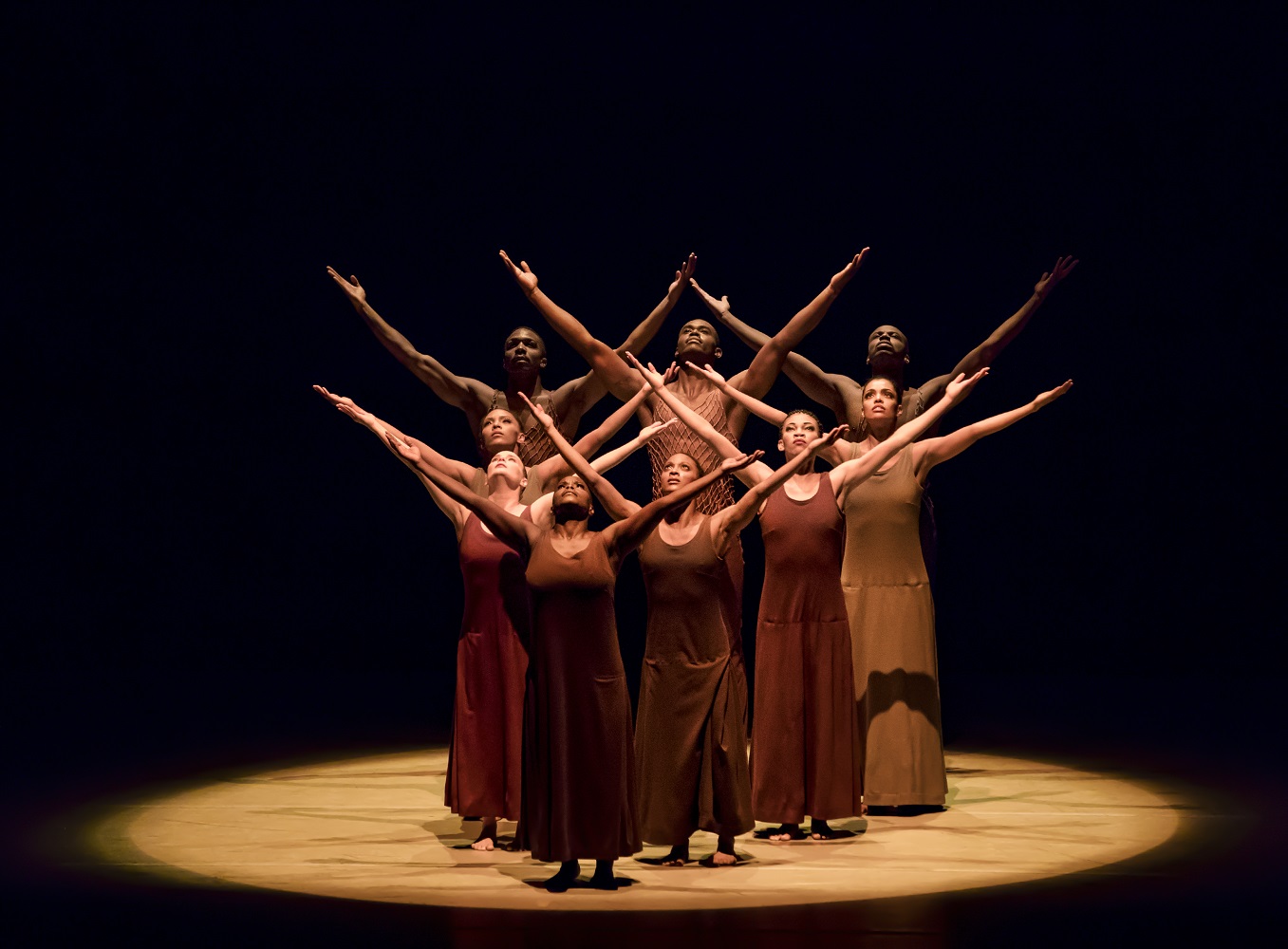
Alvin Ailey’s “Revelations” – Alvin Ailey American Dance Theatre – Photo by Paul Kolnik
The opening section, “I Been ‘Buked,” was performed beautifully by the full company of twelve. This section features yearning, reaching arms as the dancers clump together in a spotlight, contrasted with moments of bursting out as the light fills the stage. In “Fix Me Jesus,” Jordyn White and Christian Butts showed strong partnerwork, and White executed the slow tilt extension promenade with control. Near the end, she executed a lovely layout with poise despite her foot getting caught in her long dress as she lifted it. This was one section where I found myself wanting more emotional depth to match the song’s yearning for help, and in the more technical moments some of that performance didn’t come through.
The second group of dances in “Revelations” feature the dancers in white, baptismal costuming. I especially enjoyed some of the solo moments in “Wade in the Water,” where dancers powerfully executed the undulations and quick turns, sometimes bearing flags and umbrellas.
Xhosa Scott had a strong technical performance in the solo “I Wanna Be Ready,” as he moved slowly on the floor and in controlled hinges to stand. This section, about being ready for death, felt like one that would’ve been hard for any dancer of Scott’s age. The section is simple, and when I’ve seen it done best, the dancer channels more of their energy into tension and resistance rather than just doing the actions so that we feel the heaviness of this conversation about mortality.
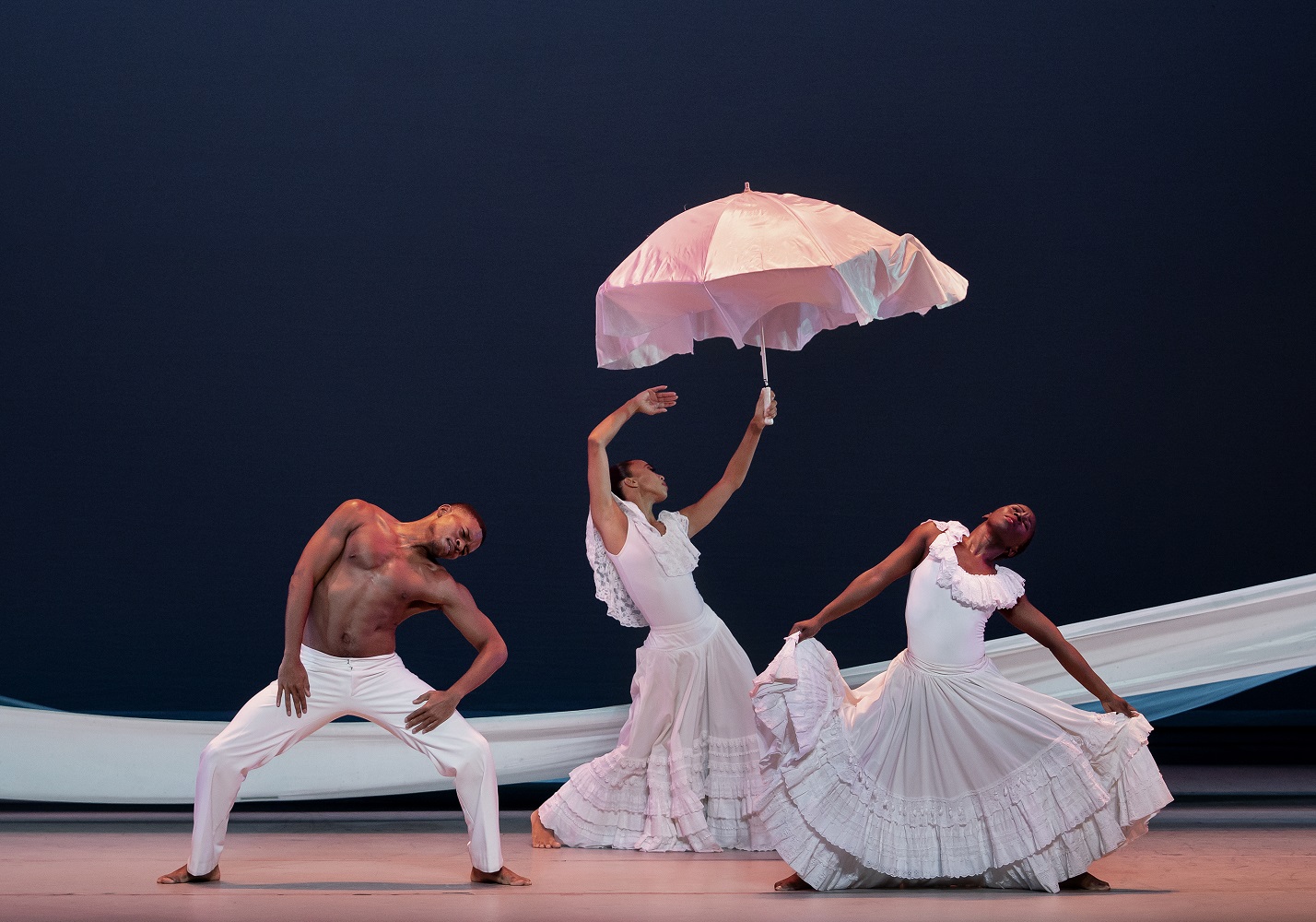
Alvin Ailey American Dance Theater – Solomon Dumas, Constance Stamatiou and Yazzmen Laidler in Alvin Ailey’s “Revelations” – Photo by Paul Kolnik.
Always a highlight, but especially for this youthful group was the high-flying “Sinner Man.” Christian Butts, Xavier Logan, and Eric J. Vidaña kicked, spun, crawled, and flew across the stage. In this fast section, there were times that I felt they could reach out more through the arms to generate more momentum as they moved, rather than relying on pure strength, but they impressed overall.
The full company of twelve showed off dynamic acting as they came together for the finale, “Rocka My Soul in the Bosom of Abraham.” Despite the smaller cast than when the full Ailey company performs, they brought the energy and performance. One of my all-time favorite choreographic moments is in this section. The dancers first all pulse and point to the corners of the audience and then group by group they join a circular walking pattern until everyone is together again. At times, choreography is most exciting when it is complex and unexpected, but sometimes, the best moments are simple ideas that are just visually satisfying. As the dancers went into the signature encore, the crowd clapped along with enthusiasm until the big finish.
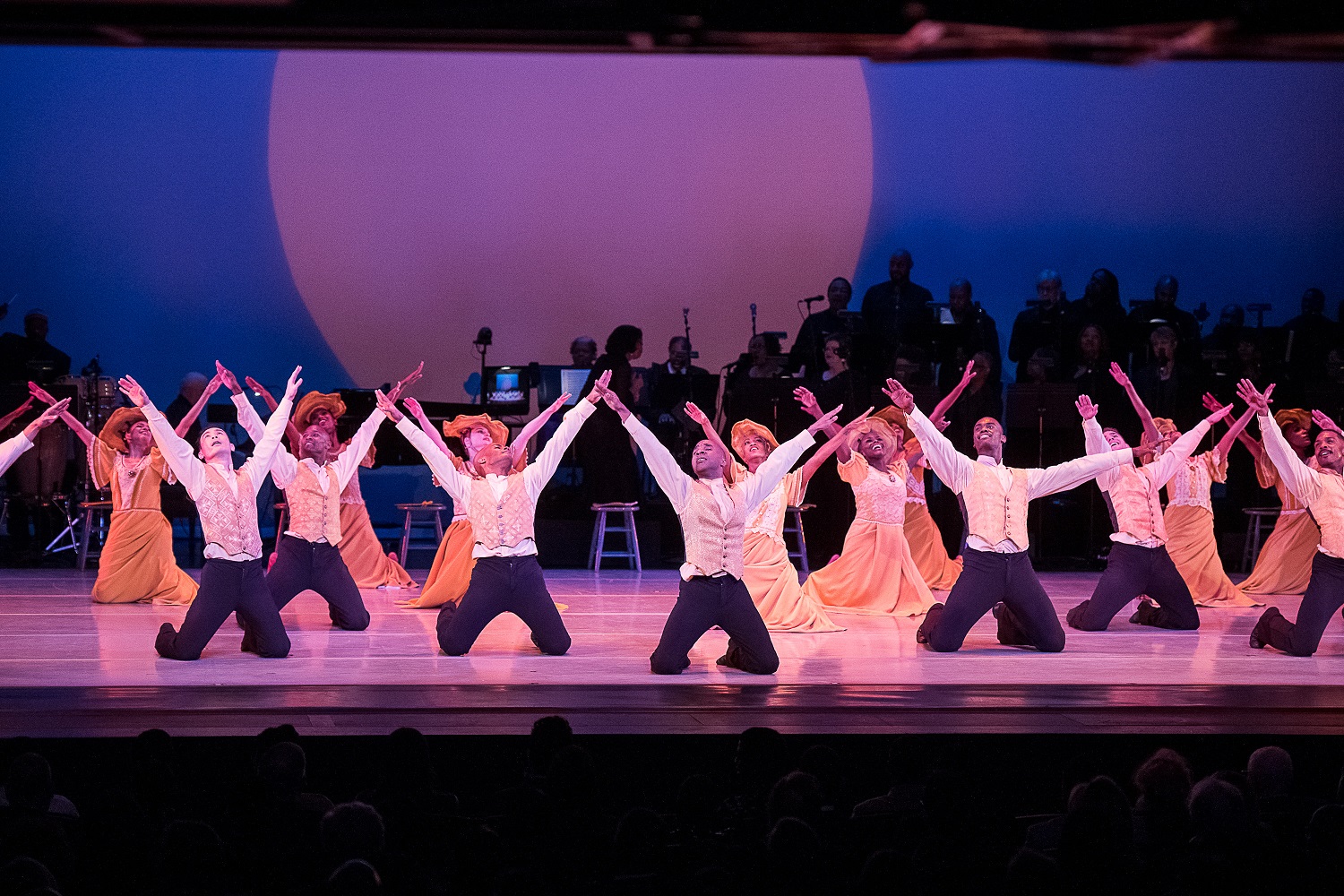
Alvin Ailey American Dance Theater in “Revelations” choreography by Alvin Ailey – Photo by Christopher Duggan.
I loved the chance to see these dancers of the future in action, and would certainly check them out again, especially if given the chance to see more collaborations between emerging choreographers with the company. Ailey II is a great vehicle for starting the careers of these dancers, and it could also become more of an avenue to offer a platform to new voices in choreography.
To learn more about Ailey II, please visit their website.
Written by Rachel Turner for LA Dance Chronicle.
Featured image: Ailey II in STREAMS, Choreography by Alvin Ailey – Photo by Blaine Jacquez.