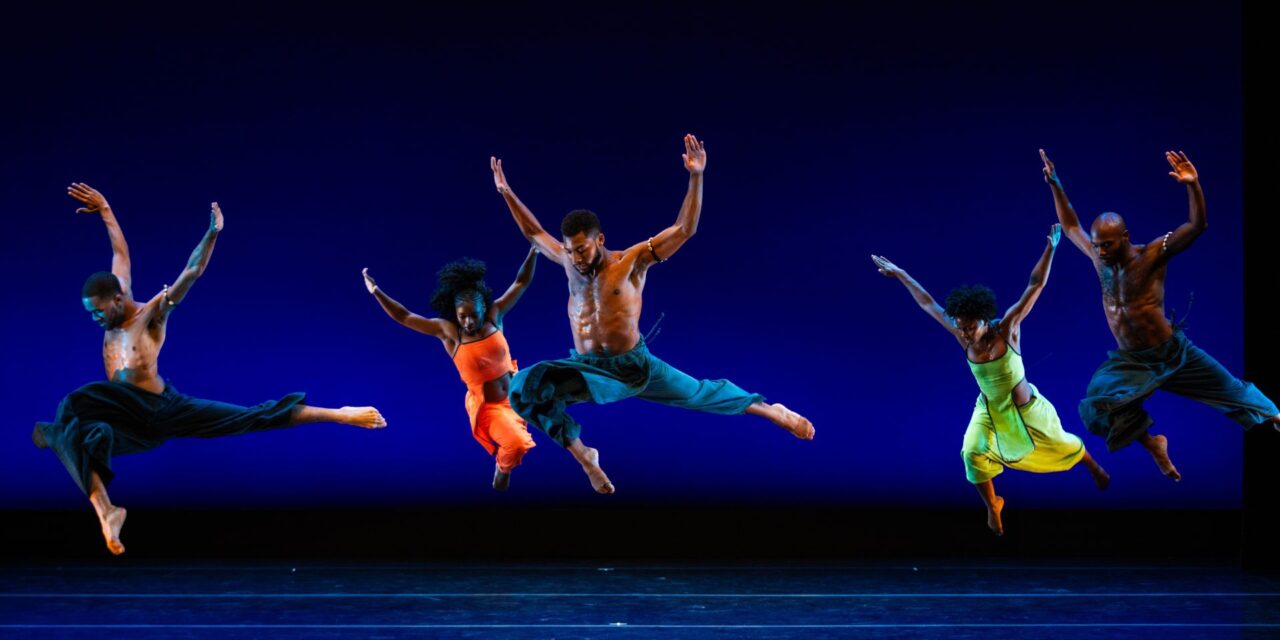
One of America’s most sought-after choreographers, Ronald K. Brown launched his company EVIDENCE just two years after his high school graduation in 1985. This world renown company will be performing for three nights only at the Wallis Annenberg Center for the Performing Arts, Thursday through Saturday, October 8-10, 2026 at 7:30 pm. The program will include four of Brown’s works: Tender Warriors, Clear as Tear Water, Come Ye, and his signature piece Upside Down. Tickets are on sale now!
In 2024, EVIDENCE celebrated its 40th anniversary performing Brown’s outstanding works that are filled with Brown’s diverse movement vocabularies influenced by American modern dance, Senegalese Sabar and other West African movement vocabularies, Afro-Caribbean dance, and contemporary urban dance from around the world.
Brown’s choreography has been commissioned by Alvin Ailey American Dance Theater, Ailey II, Cleo Parker Robinson Dance Ensemble, Dayton Contemporary Dance Company, Jennifer Muller/The Works, Jeune Ballet d’Afrique Noire, Ko-Thi Dance Company, Philadanco, Muntu Dance Theater of Chicago, Ballet Hispánico, TU Dance, and Malpaso Dance Company. He has collaborated with such artists as composer/designer Omotayo Wunmi Olaiya, the late writer Craig G. Harris, director Ernie McClintock’s Jazz Actors Theater, and composers Jason Moran, Arturo O’Farrill, Meshell Ndegeocello, Robert Een, Oliver Lake, Bernadette Speech, David Simons, and Don Meissner. You can read his full bio HERE.
Recently, Brown agreed to a telephone interview with dance writer Jeff Slayton.
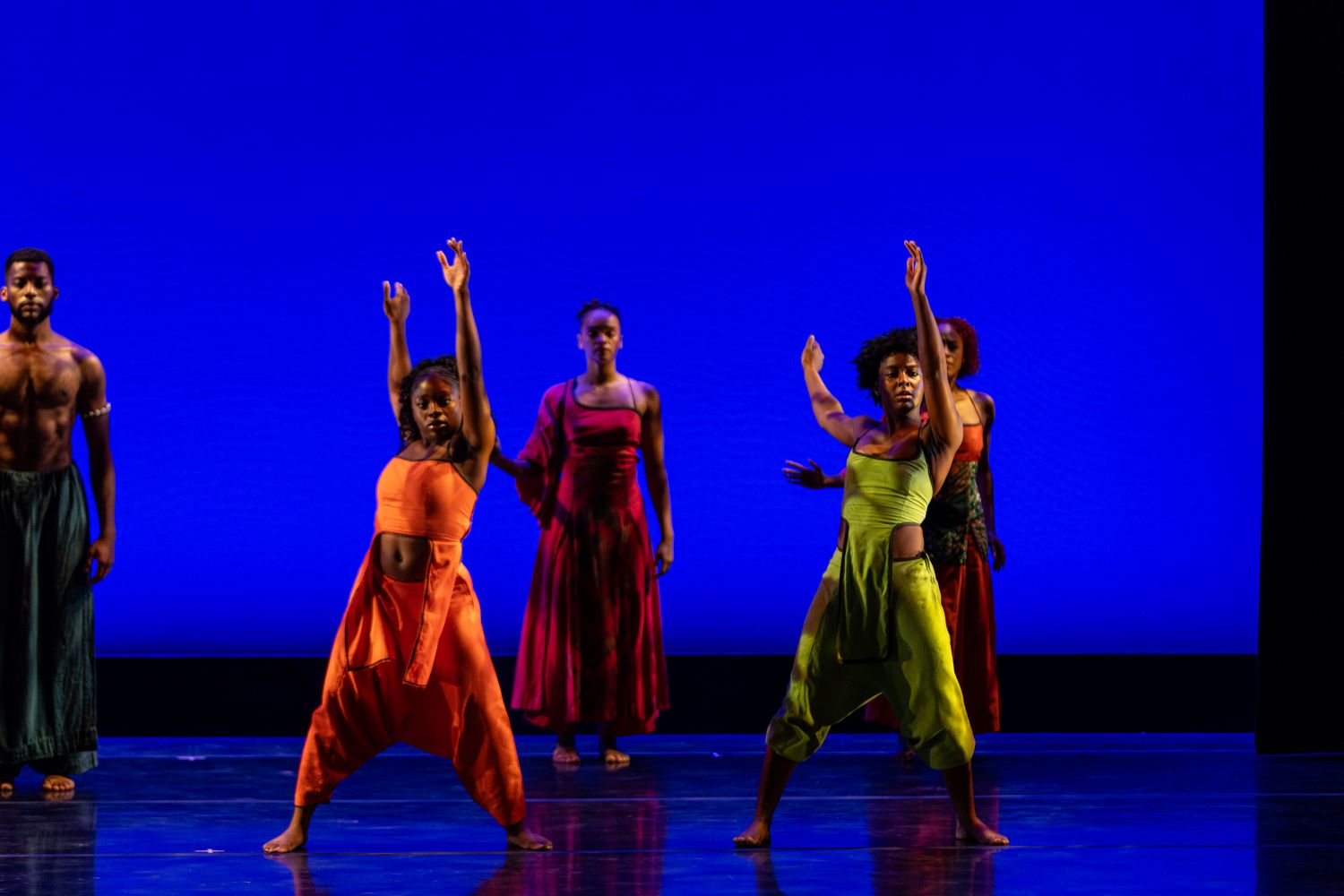
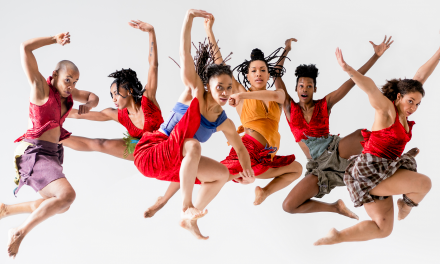
Ronald K. Brown/EVIDENCE – Spirit Priester, Aaliyah Fisher, Malcolm Young, Amina Vargas, Samiyah Lynnice in “Upside Down” – Photo by Quinn B. Wharton.
When Brown was 8 years old, his mother took him to see a performance of the Alvin Ailey American Dance Theater. That performance inspired this 2nd grader to tell his mother that he wanted to dance. She agreed and enrolled her young son at Bed Stuy Restoration, a local community center that today Brown oversees as its Co-Artistic Director. That passion for dance has never left him.
“I think it made me want to choreograph,” Brown said. “I saw that you could make a dance about church and people.”
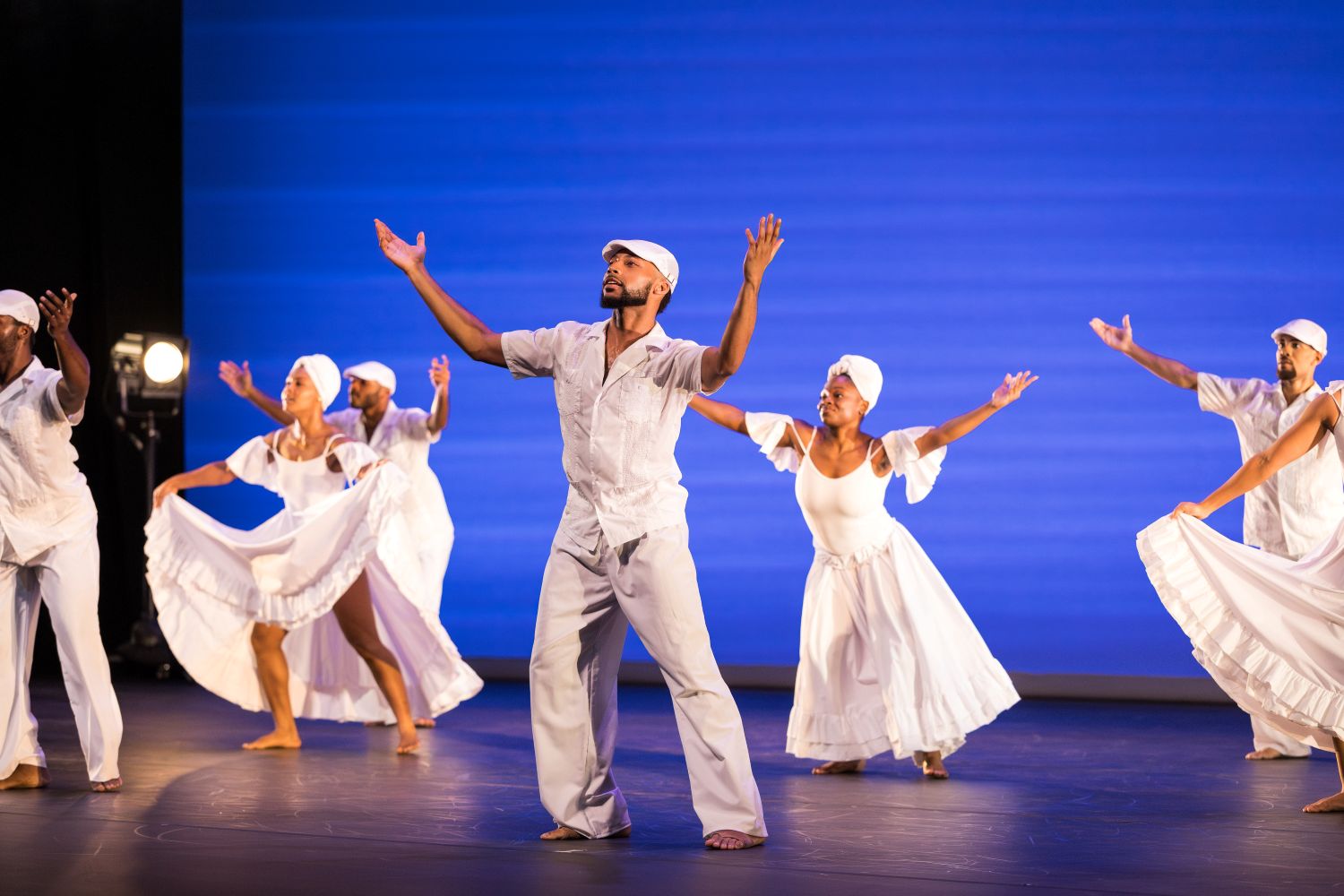
Ronald K. Brown/EVIDENCE – Photo by Studio Aura.
After graduating from high school Brown was given a partial scholarship at the Mary Anthony Dance Studio where he studied the Martha Graham Technique, Ballet, Jennifer Muller technique and composition.
Starting a dance company is never easy and I asked Brown what lead him to form his company EVIDENCE at such a young age.
“In the composition class I had to show something, and I said that I had two things that I wanted to show,” he stated. “At the same time I’m thinking, I really wanted to become a choreographer so I’m going around looking at every showcase I can.” This was in the early 1980s and Brown admitted that he did not truly understand what was going on with modern dance. “I knew that modern dance was supposed to be about people, but I really didn’t get it.”
He also wanted to be a playwright, so Brown began focusing on his writing and joined a circle of Black writers. One of those writers asked him, ‘Well, who’s going to tell your grandmother’s stories?’ He decided if he did not see the type of dances on stage that he wanted, then he must create it. He quoted the famous poet Audrey Lorde’s question that she often posed to her audiences, ‘Are you doing your work?’
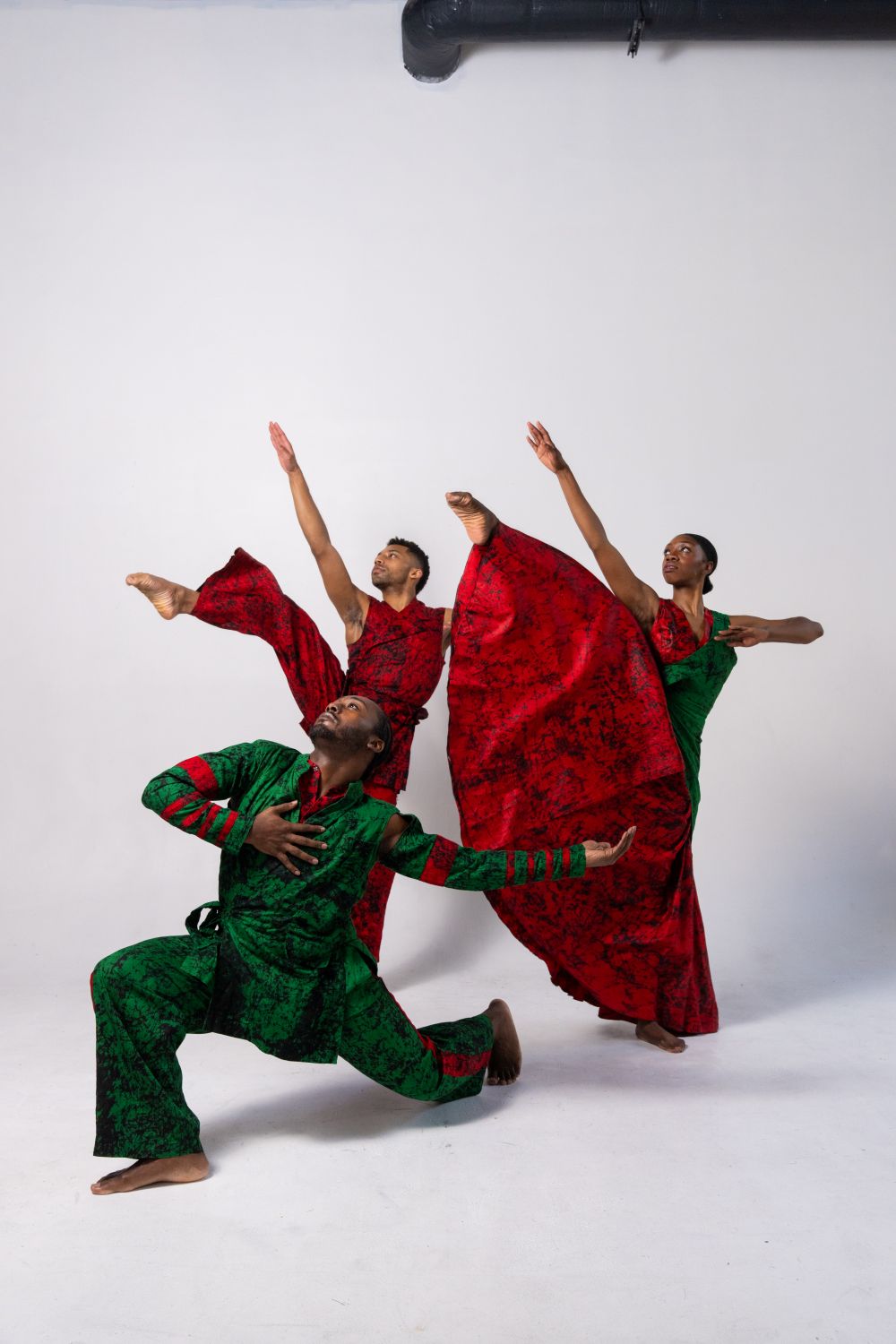
Ronald K. Brown/EVIDENCE company member in “Tender Warriors” – Photo by Quinn
B. Wharton.
“At 18, I’m asking myself, ‘are you doing your work’,” Brown began. “So after those conversations about who is going to tell your grandmother’s stories and are you doing your work, made me think, ok maybe my work was in dance.”
The Black writers he knew were not only creating works but talking about establishing their legacies, stating that they had to leave proof that they were here. “Because of that work that these black men were doing made me think that I could leave a legacy and EVIDENCE could be it. And it can represent a family that teaches about our ancestors and audiences that come to the theater can see evidence of themselves on stage.”
“So, two years after studying at the Mary Anthony Studio, I said let me start this company, call it EVIDENCE and it was just before I turned 18. I couldn’t believe it.”
Brown studied the African-based dance techniques at a small studio in lower Manhattan called Fareta School of Dance and Drum which teaches dance across the African Diaspora from West Africa to the Caribbean. It is an organization that has become better known because of its annual continuation, Camp Fareta, a residential West African dance and drum immersion program in New Fork, California. After Brown began teaching at the Fareta School, he started playing around with these different rhythms. He was adamant that he did not want to copy the steps that he was learning or bastardize the dances that used those rhythms.
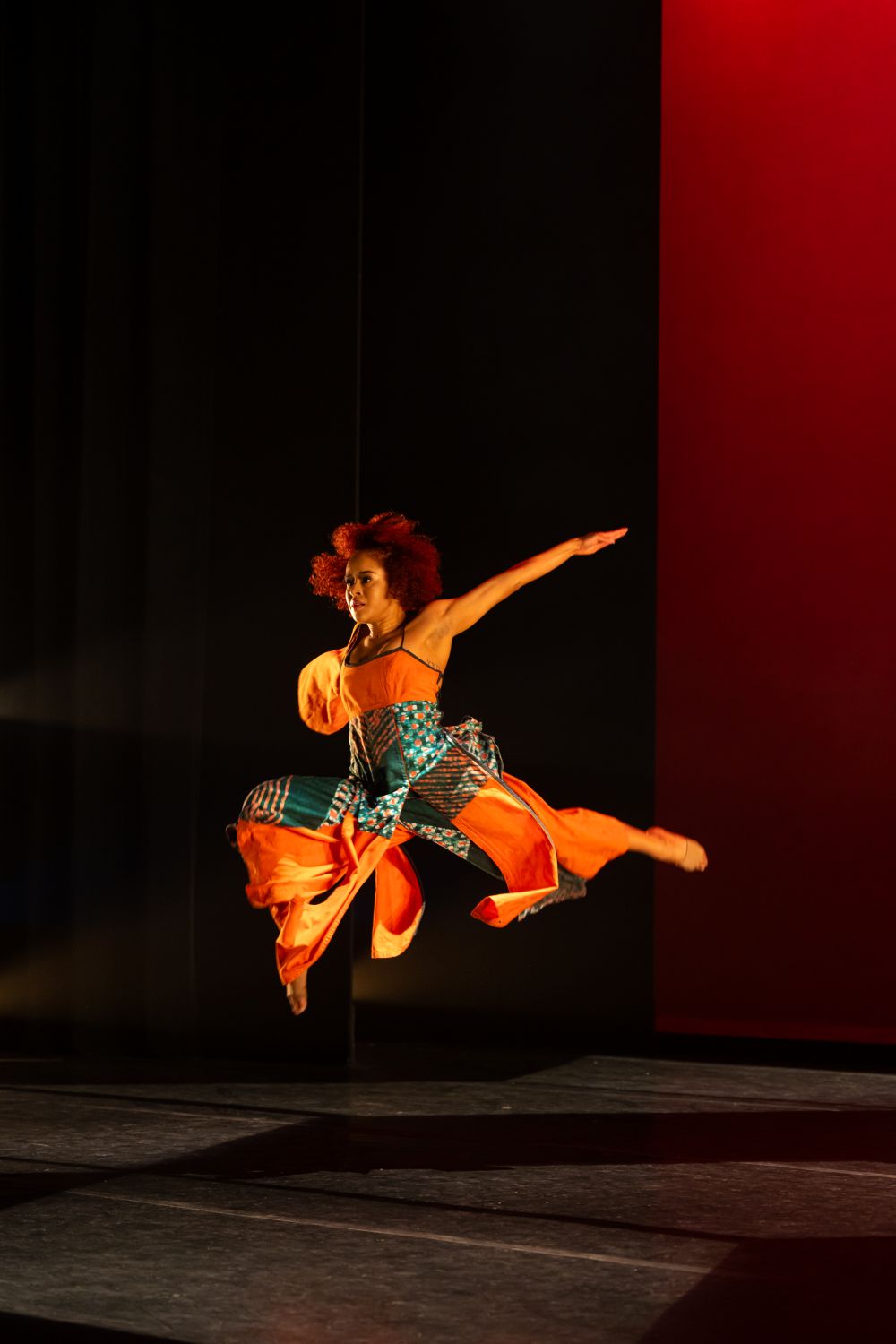
Ronald K. Brown/EVIDENCE company member – Photo by Quinn B. Wharton.
While teaching at the American Dance Festival (ADF) in Durham, NC he bonded with a young African woman, Rokiya Kone who was taking his class. At the end of the six weeks, she showed Brown a solo that she had created, one that greatly impressed him. When asked where she learned those movements, she told him that they came from his class. “Ron, you are doing something that is making dance speak,” she told him.
In 1995, Brown traveled to Côte d’loire (Ivory Coast) to teach. “There I learn dances from Guinea because I wanted to make something that made sense from their village,” he said. “Learning those dances kind of changed my life.”
Again Brown was worried about bastardizing the movement he had learned but a friend convinced him that as an American when he touched that movement, it was already something different and that he should just choreograph and that whatever came out would be his. Doing so, Brown said, aided him in understanding where he stood in the “continuum of Afro-American Dance”.
Press releases have stated that Brown’s work is both “grounded and spiritual” and that “EVIDENCE creates performances shaped by rhythm and history” I asked him what in his life inspired him to create work that resonates these descriptions.
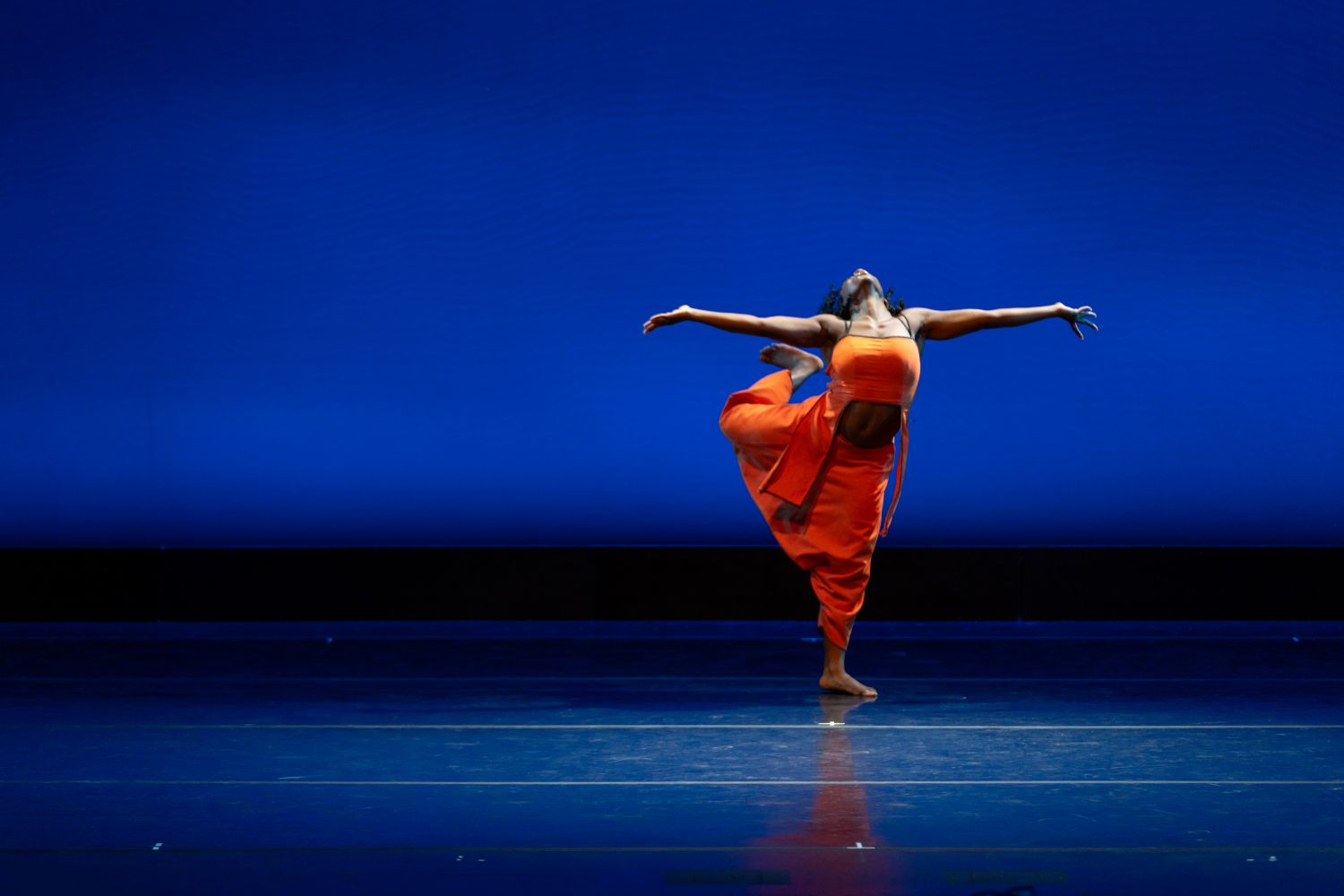
Ronald K. Brown/EVIDENCE – Spirit Priester in Brown’s “Upside Down” – Photo by Quinn B. Wharton.
“When we study contemporary and modern dance, we have to put the intention on top of it,” Brown said. “An arabesque can say ‘I love you’ or ‘I hate you’ but the form has not changed. In traditional dance, the intent and purpose is already ingrained in the movement, the dance. So that is what I gravitated to. There was already a purpose; you didn’t have to put it on. You just had to understand the integrity of the movement.”
Brown was raised Pentecostal Christian and his family’s church in Brooklyn, NY did not allow dancing, but his family church in North Carolina did.
“I think that I was interested in showing people the spiritual connections of dances around the world – from the US, to the Caribbean, to Africa. So that became a part of my work,” he explained.
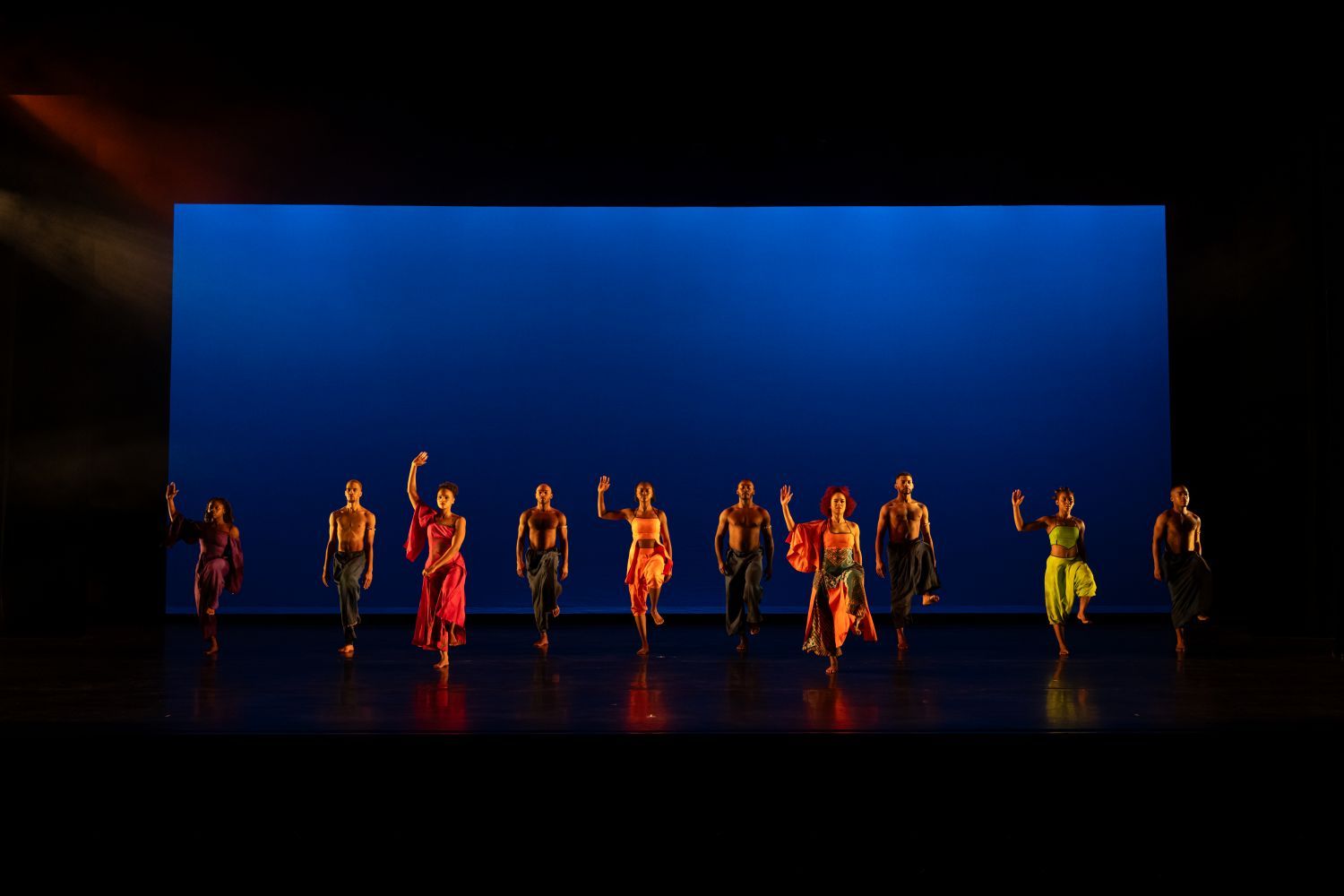
Ronald K. Brown/EVIDENCE in Brown’s “Upside Down” – Photo by Quinn B. Wharton.
I never ask artists to explain their work. I leave that interpretation up to the viewer. But I am interested in what inspires an artist to create a certain work so I asked Brown to describe what inspired him in each of the four works being shown at The Wallis.
“Tender Warriors came as an assignment from the a colleague who was working with the Max Roach family to celebrate his 100th birthday,” Brown began. “It came with the assignment to choreograph the “Percussion Bitter Sweet” that Roach wrote after a trip to Cuba.” The album “Percussion Bitter Sweet” was released in 1961 on Impulse! Records.
The album is very long and Brown knew that he could not choreograph the entire body of work so he and his partner and Associate Artistic Director of EVIDENCE, Arcell Cabuag, decided that he would create a 30 minute dance. One of the songs on the album that really spoke to them both was titled “Tender Warriors,” which then became the title of Brown dance.
“Clear as Tear Water I choreographed on Toni Pierce-Sands when she got a McKnight Fellowship in Minneapolis,” Brown said. He had never worked with Pierce-Sands but was a fan of her dancing. He had written a poem about love and after a discussion with Pierce-Sands, Brown created a solo that involved a woman on this Earth who was in love.
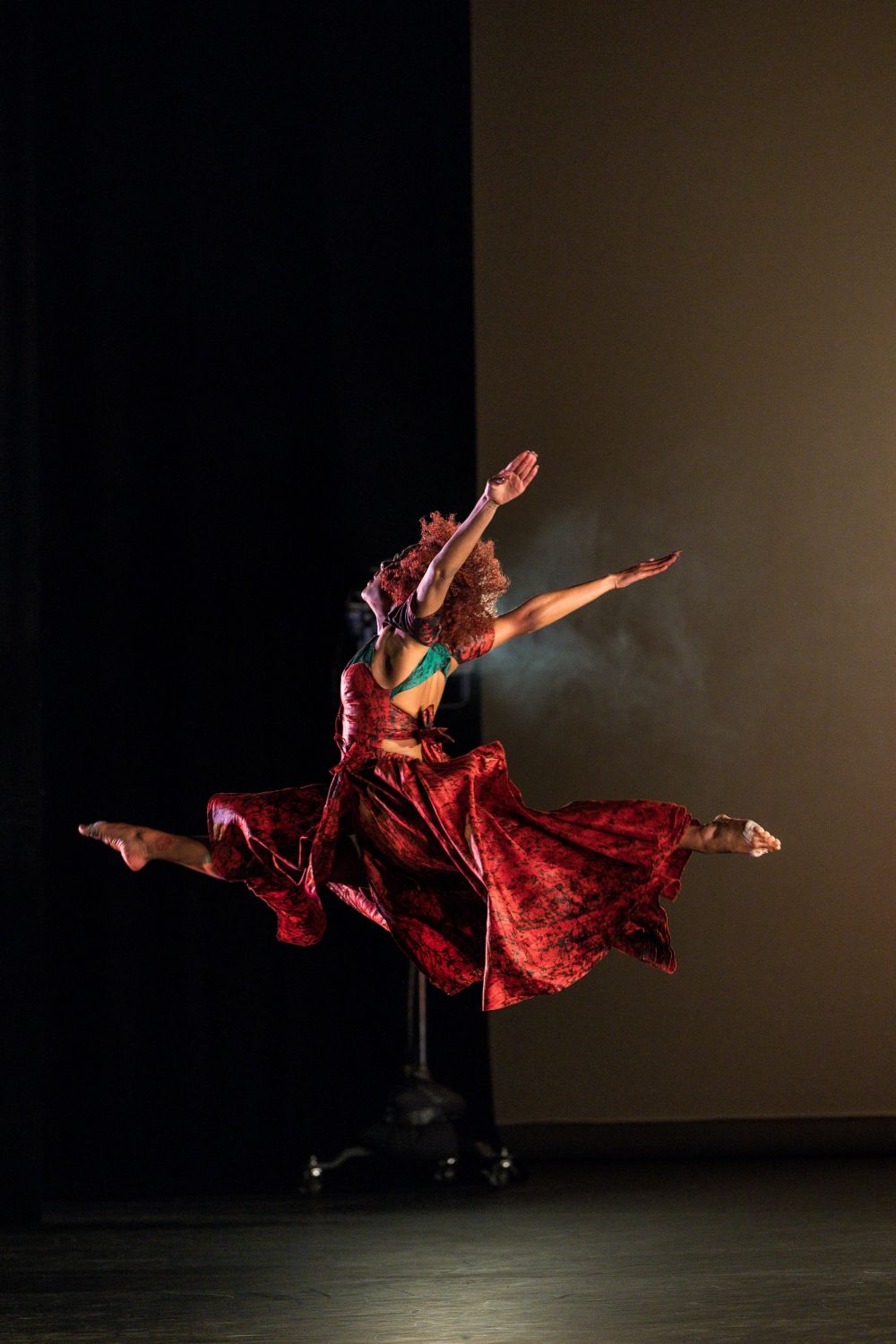
Ronald K. Brown/EVIDENCE – “Tender Warriors” – Photo by Studio Aura.
“Upside Down is a piece that I began working on when I was working in Côte d’loire,” he said. “So there was my dancers in Brooklyn and Rokiya had started a company, so I choreographed a dance on my company and her company with the idea these two pieces would come together. That these two companies would come together.”
He spoke about a song called “Upside Down” which talks about how your life is upside down and that you don’t know where you’re going. Quite an image for a dance.
On the EVIDENCE website it reads, “Upside Down is an excerpt from the evening-length work Destiny. The full evening work was created in collaboration with Rokiya Koné of the Ivory Coast and her company Jeune Ballet d’ Afrique Noire and premiered at Aaron Davis Hall in June 1998.” Jeune Ballet d’Afrique Noire is a prominent dance ensemble created and directed since 1995 by choreographer Rokiya Koné, who is also known for her work with the Kotéba ensemble.
Ronald K. Brown/EVIDENCE in “Upside Down” – Photo by Quinn B. Wharton.
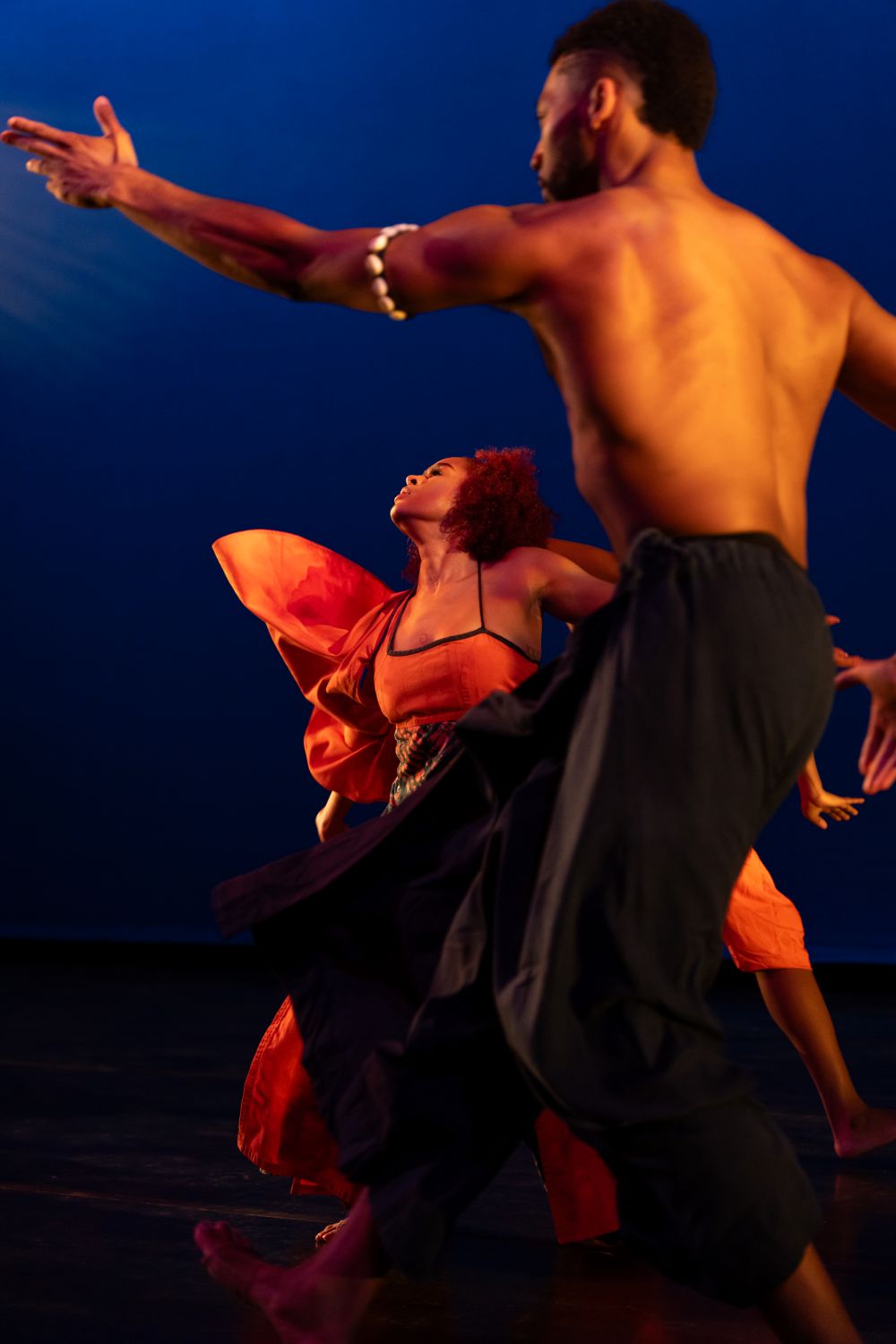
Ronald K. Brown/EVIDENCE in “Upside Down” – Photo by Quinn B. Wharton.
Brown believes that Upside Down has his signature piece because “in it you see all the things that we are. You see the contemporary dance, you see the traditional dance. You see all of it. It was kind of life changing when I was able to put that piece together.
“Come Ye was a piece that just came to me. I knew it was inside of me, but I didn’t know what it was,” Brown said. “The country had just gone into Afghanistan and EVIDENCE was traveling a lot. In Airports, we would see young people in uniform about to go overseas playing portable video games.”
He was very grateful that these young people were going to fight for us but hated the idea of their being killed. One day while listening to music and cleaning his apartment, an old song by Nina Simone came on the air. Brown decided to make a dance to the live version of Simone’s “Revolution” (1969) written by her and American composer, playwright, poet, pianist, organist, and keyboardist, Weldon Jonathan Irvine, Jr. He said that Come Ye was inspired by the music and sociopolitical legacies of artists/activists Nina Simone and Fela Kuti.
Fela Kuti was a Nigerian musician and political activist and thought to be the principal innovator of the Nigerian music genre called Afrobeat. His mother, Funmilayo Ransome-Kuti, was a women’s rights activist who died of injuries sustained when military raiders attacked their family home and through her out the window.
“The song is so full of prayer,” Brown said. “Calling out to Jesus. Calling out to Allah. It speaks to tragedy. How did he [Kuti] create this song that is so full of prayer after his mother was thrown out a window?”
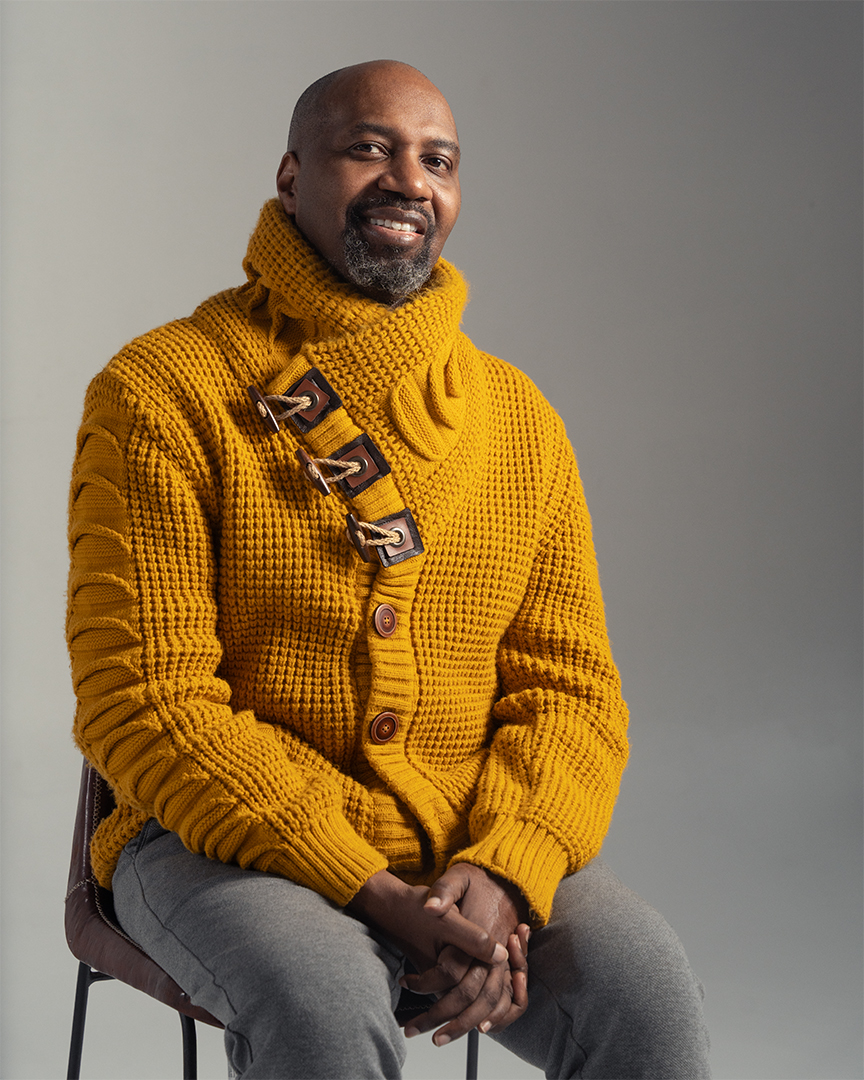
Ronald K. Brown – Photo by Quinn B. Wharton.
Brown wants readers to know that there is grief in his dances but there is also joy. He said that his work expresses the entire range of human emotions. “There’s really life,” he said. We speak to the joy, determination, persistence, the care that we have for one another. So they will get to witness all of that onstage. They will see what they need, hopefully.”
Ronald K. Brown/EVIDENCE performs at The Wallis in the Bram Goldsmith Theater Thursday through Saturday, October 8-10, 2026 at 7:30 pm. For more information and to purchase tickets, please visit their website.
Written by Jeff Slayton for LA Dance Chronicle.
Featured image: Ronald K. Brown/EVIDENCE in Brown’s Upside Down – Photo by Quinn B. Wharton.