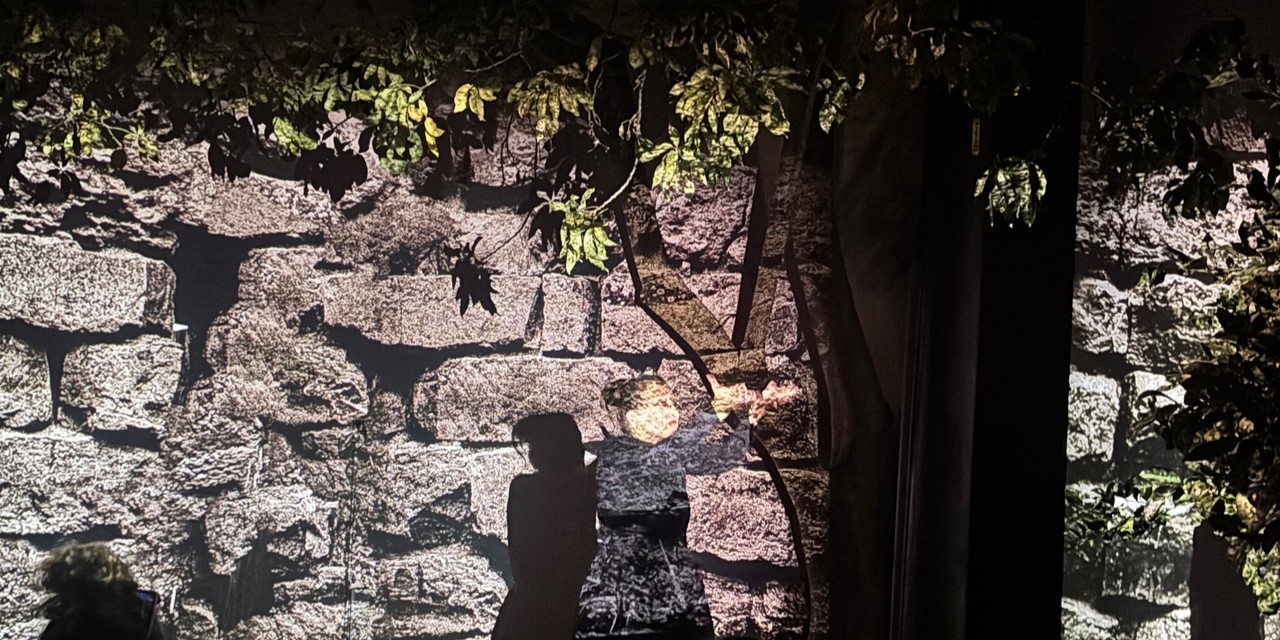
Elizabeth Yochim’s fledgling art space, called YA!, is nestled into a small corner of Culver City, a gallery room and courtyard built into her home for gathering and sharing artwork. Guests filtered in and out through the front patio on Saturday night, discussing the show on display: Yochim’s collaboration with Sardinian photographer Domenico Cortese titled Between Earth and Sky: Nuraghe Piscu, Sardinia.
The mounted images featured Yochim, decorated in all black, walking and moving across the site of an ancient Sardinian structure at sunset — an expansive pair of custom feathered wings strewn across her back and enveloping her arms. The structure itself, called the Nuraghe Piscu, is one of many nuraghe left behind by the Nuragic people from the Bronze Ages, built from dry stone and said to be a gathering place or watchtower. In Cortese’s photographs, Yochim looks out over the horizon and communes with the stones.
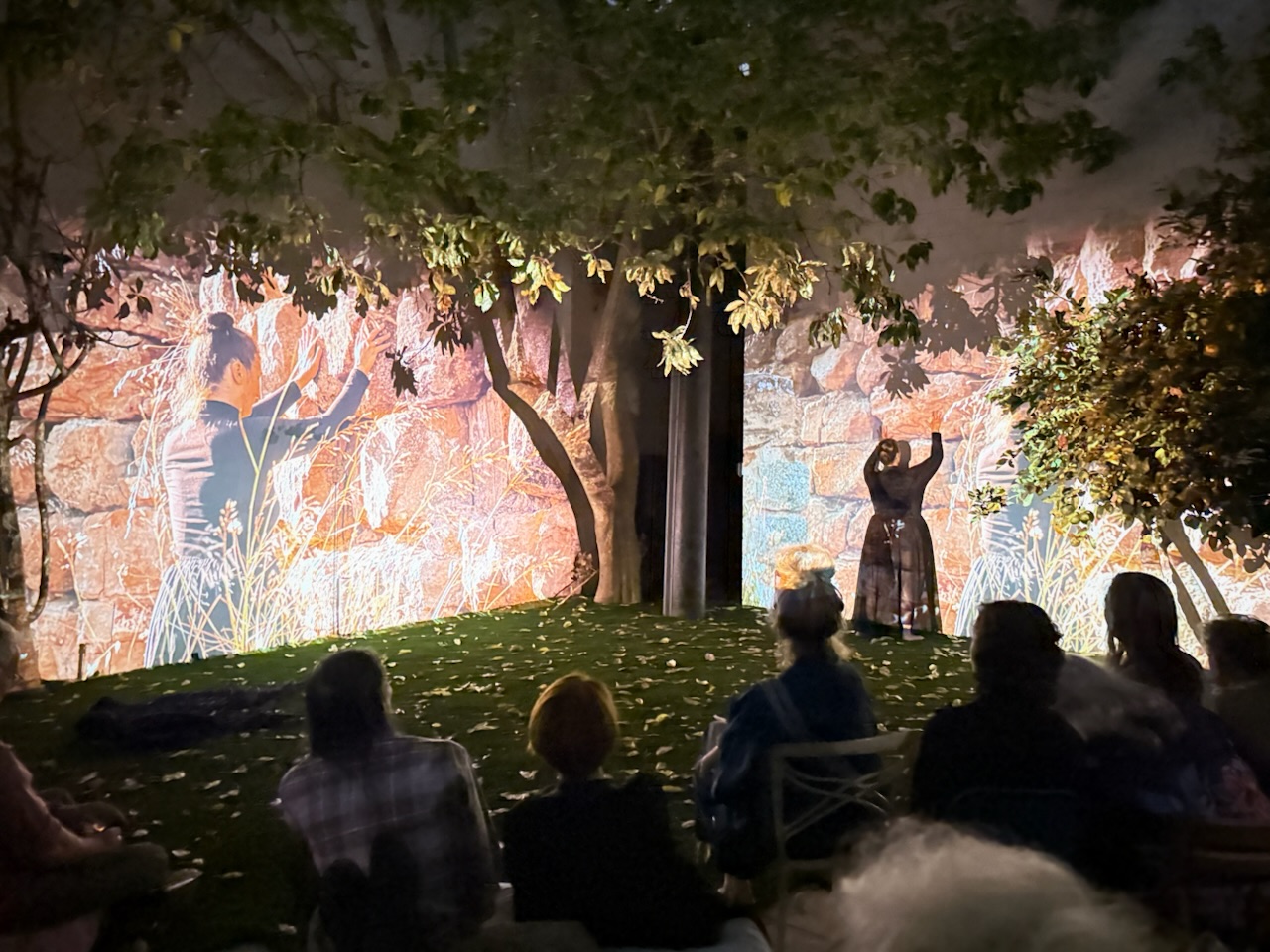
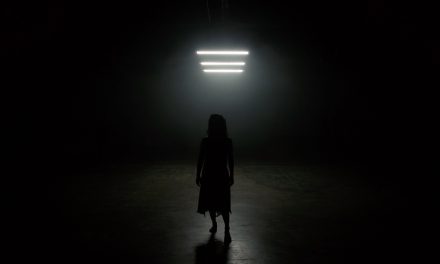
“Between Earth and Sky: Nuraghe Piscu, Sardinia” by Elizabeth Yochim – Photo by Todd Felderstein.
She explained before her performance that the passing of her childhood friend coincided with a trip to Sardinia, where she found Cortese on social media. He suggested the Nuraghe Piscu as a site for their collaboration, and there she felt the presence of her late friend as she moved. She described the work as a beginning, despite the presence of grief, and then welcomed us into the courtyard for a performance.
There, the images displayed in the gallery were projected onto the two back walls, framing Yochim into the corner as she began to trace the stones. She moved with reverence, donning her wings and wrapping herself in them, vocalizing for a brief moment before inviting the audience to sing with her.
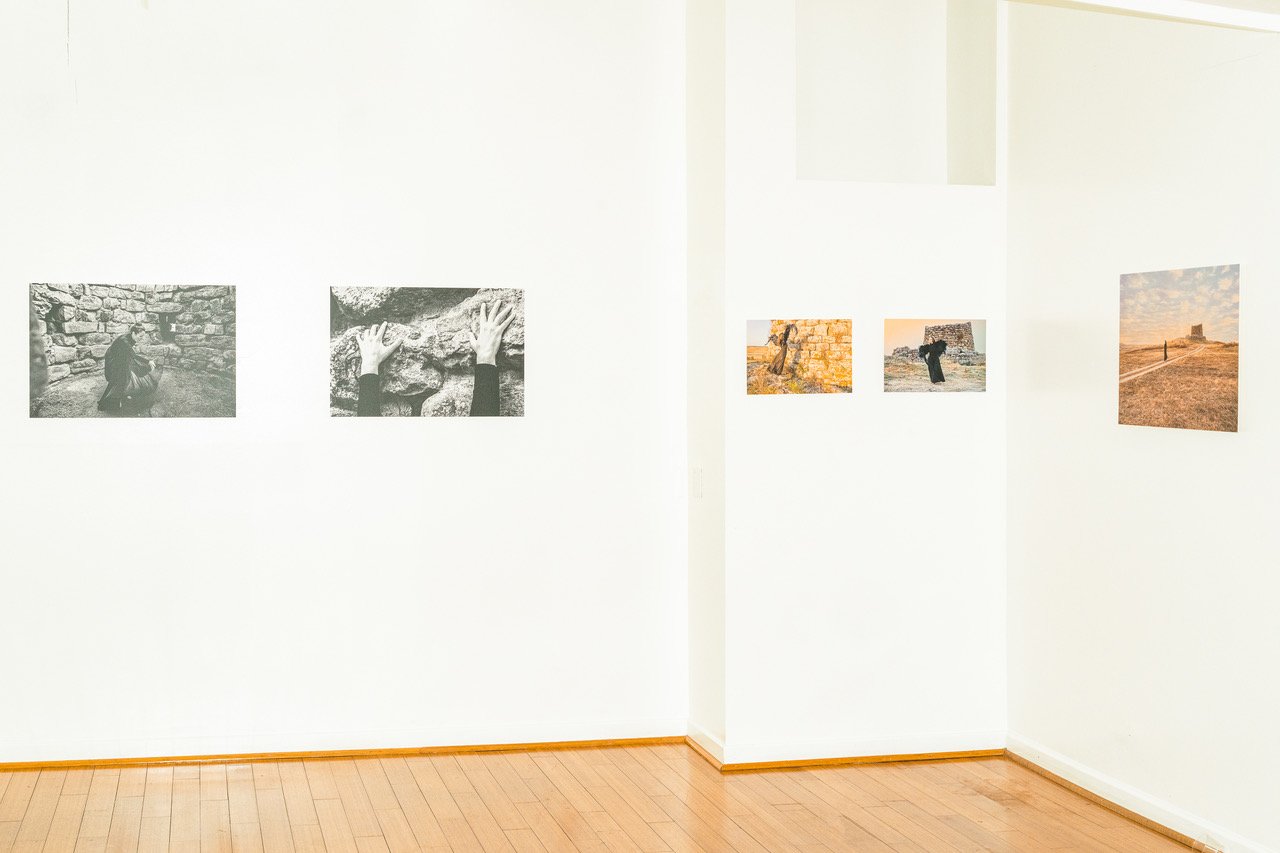
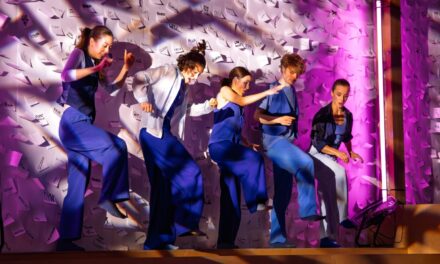
“Between Earth and Sky: Nuraghe Piscu, Sardinia” by Elizabeth Yochim – Exhibition photo by Domenico Cortese.
While I think any expression of creativity is a worthy outlet for grief, for me, this performance fell short of its description. An art appraiser herself, Yochim employed industry-savvy terms like “research,” “practice,” and “ritual,” in the gallery text, saying the work “consider[ed] how archaeological places continue to shape human experience—not simply as historical sites, but as living landscapes capable of transforming perception, memory, and presence.”
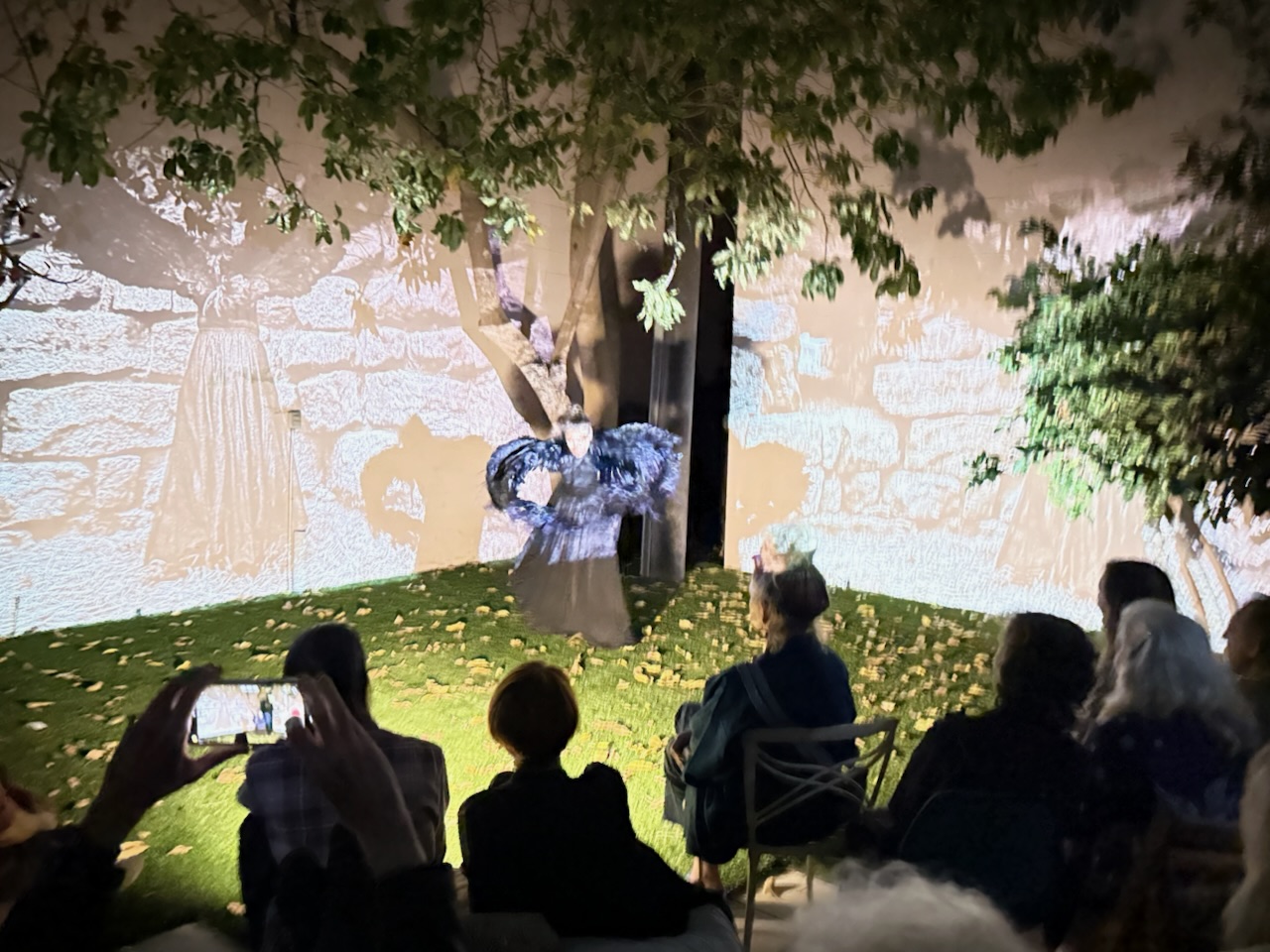
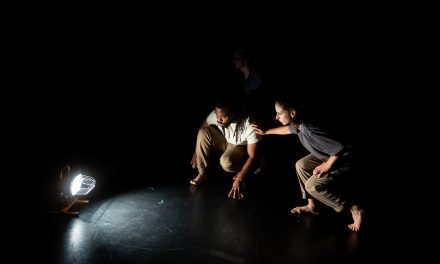
“Between Earth and Sky: Nuraghe Piscu, Sardinia” by Elizabeth Yochim – Photo Wade Burleson.
Though I feel she considered this concept in her meditations, I didn’t feel the meaning or observation imbued in her delivery. I wasn’t sure what the ritual itself actually was, or how it took place at the site or in the courtyard. I wanted to know what resulted from the consideration of archaeological places as makers of experience; I wanted more specificity and intention in her movement, or clearer structure. I wanted to understand what she found; to learn how the nuraghe transformed her perception, her memory, her presence.
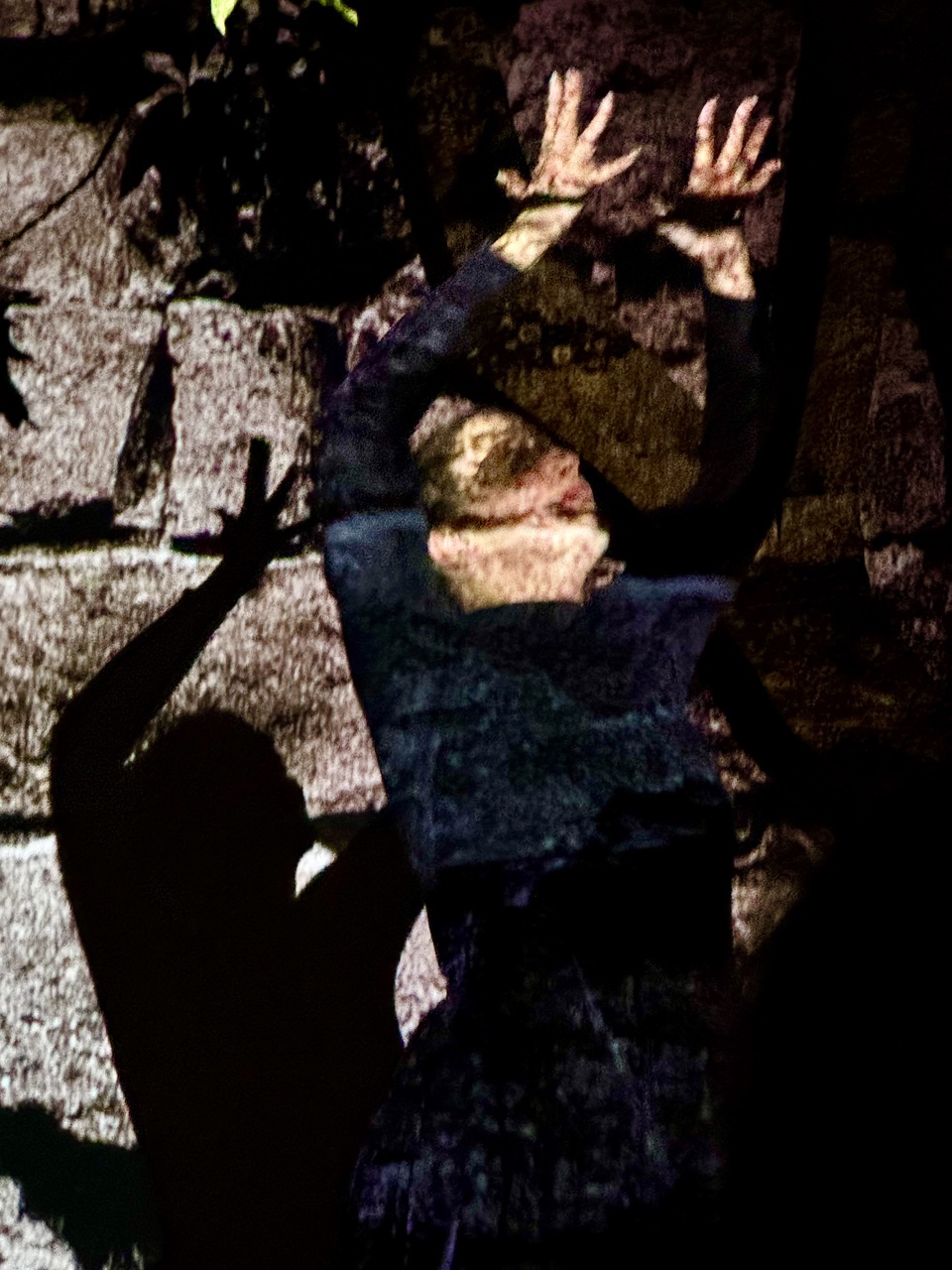
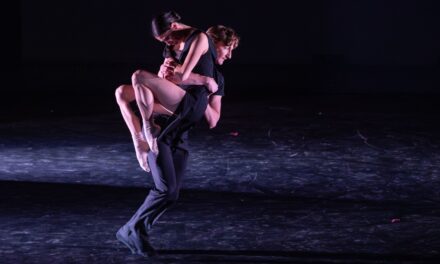
“Between Earth and Sky: Nuraghe Piscu, Sardinia” by Elizabeth Yochim – Photo by Joanne Warfield.
To be clear, I do think there is validity in repeating a multimedia practice as meditation: but for such emotional subject matter, the assembly seemed formulaic and a bit hollow to me. From what I read two weeks ago in Denali Huff’s review of Yochim’s Human Geography, this work was set up with almost the exact same structure. And though it’s not my place to dictate how one grieves, I felt that there could be a way to present the two as companion pieces without them having the same exact cut-and-paste configuration.
That said, at the core of this work is Yochim’s sincerity, which I felt throughout the evening. I just wondered what would happen if she sat with the content longer, sculpting more distinct features from the material, meditating on what the ritual itself is what it truly means to her, to Nuraghe Piscu, and to the people who experience it through her performance.
For more information about the YA! space, please visit their website.
Written by Celine Kiner for LA Dance Chronicle.
Featured image: “Between Earth and Sky: Nuraghe Piscu, Sardinia” by Elizabeth Yochim – Photo by Todd Felderstein.