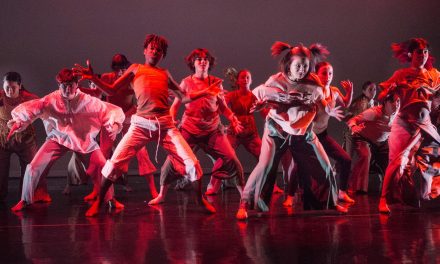
Our Simone had a unique mind with a capacity for brilliant, original ideas that sprang to it. A genius. Huddle, as many in the dance world know, is Simone’s signature work, and one of her Dance Constructions- a work born of a powerful desire to climb, and to use her muscles, a yearning she felt after leaving the forested outdoor studio of Anna Halprin in northern California, upon arriving in 1960 to the cement and steel of New York City. In Huddle, people form a mountain and take turns climbing over it, a simple, structured improvisation with a democratic nature. Our Simone was a very generous person; she gave Huddle to the world in workshops throughout her life on almost every continent. For decades, Huddle* has been passed on and repeated as a practice in cooperation, or as a spontaneous social activity, a flash mob; perhaps a democratic demonstration.
[*Huddle for performance must be borrowed from MoMA.]
Simone describes atmosphere of the era when Dance Constructions were created. [Video 8 min.]
This generosity is a family trait; in 1920, her great-grandfather Beniamino Forti built an entire village, La Briglia, for the workers and their families around his wool factory near Prato, Italy, which included housing, a kindergarten, a day school and an evening school, a church, a library, a public health center and an emergency room, a fire station, a theatre, public restrooms, and more; social institutions that were unheard of for laborers of that era. And in kind, Simone was herself a publicly known donor to the Los Angeles Regional Food Bank and other foundations until her death.
Beyond Simone’s very first opus, the unanticipated and revolutionary Dance Constructions of the early 1960’s that rocked the definition of what could be termed dance, but also of sculpture and sound, Simone’s greatest gift to us is her practices. During the decades following Dance Constructions, she continued with her now famous notebooks, became deeply involved in her Body-Mind-World workshops- laboratories of movement exploration that she adored teaching; and began numerous collaborations with individuals, environment-based group projects such as Simone Forti & Troupe; and her animal studies, the seeds of which were planted in her 3-year old mind upon seeing captive bears in pits in Bern, Switzerland, and which later intensified when visiting the Bronx Zoo, and the Rome Zoo in the ‘60s and beyond.
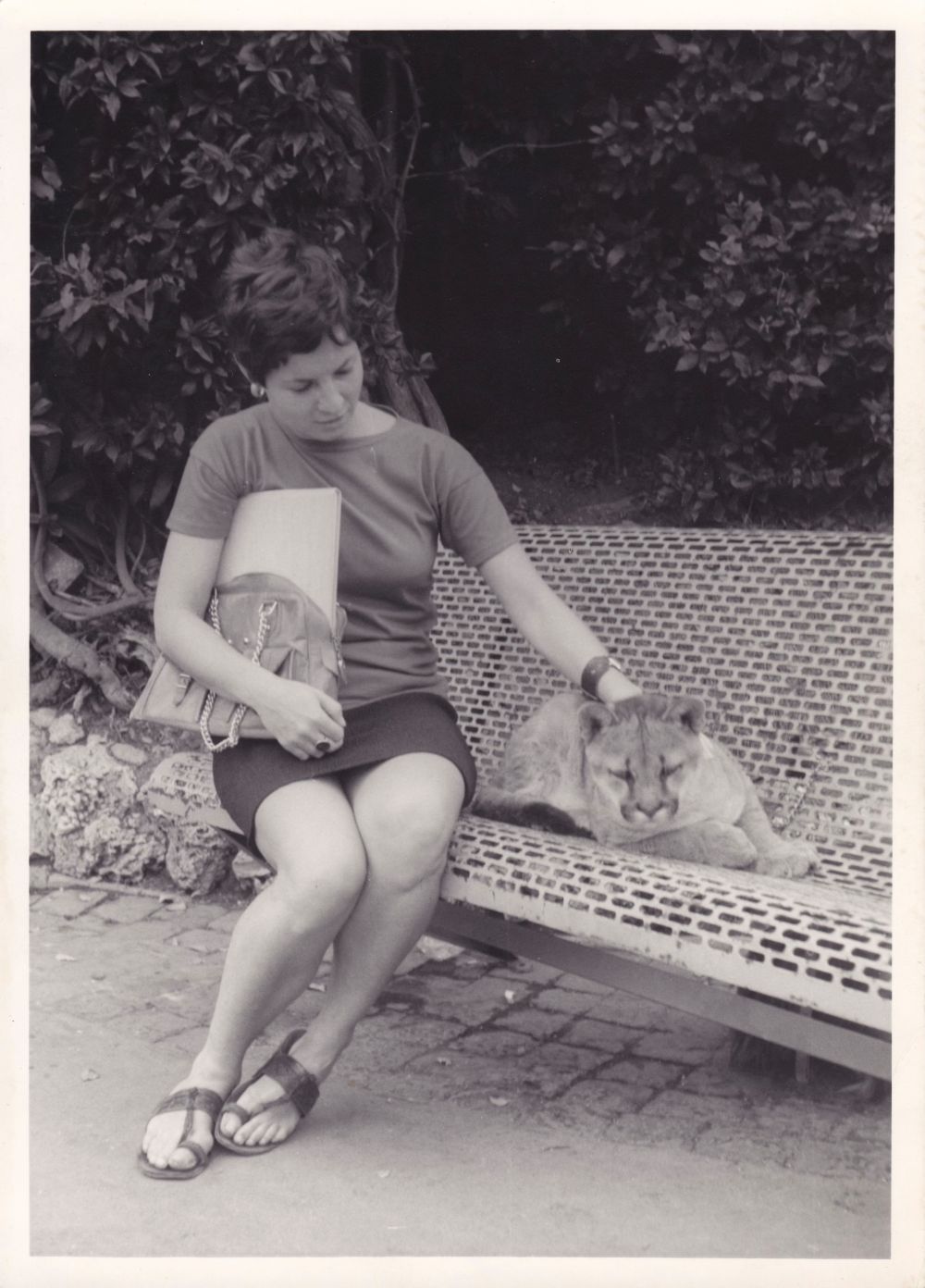
Simone with lion cub, Rome Zoo, 1968. Photographer unknown.
These studies became important structured solos such as Zoo Mantras/Sleepwalkers-about which she observed, “It was the only piece of choreography I ever did,” Striding Crawling, and Solo No. 1, all demonstrations of her deep investigation – not of imitation – but of how an animal moved, and how that felt in her own body.
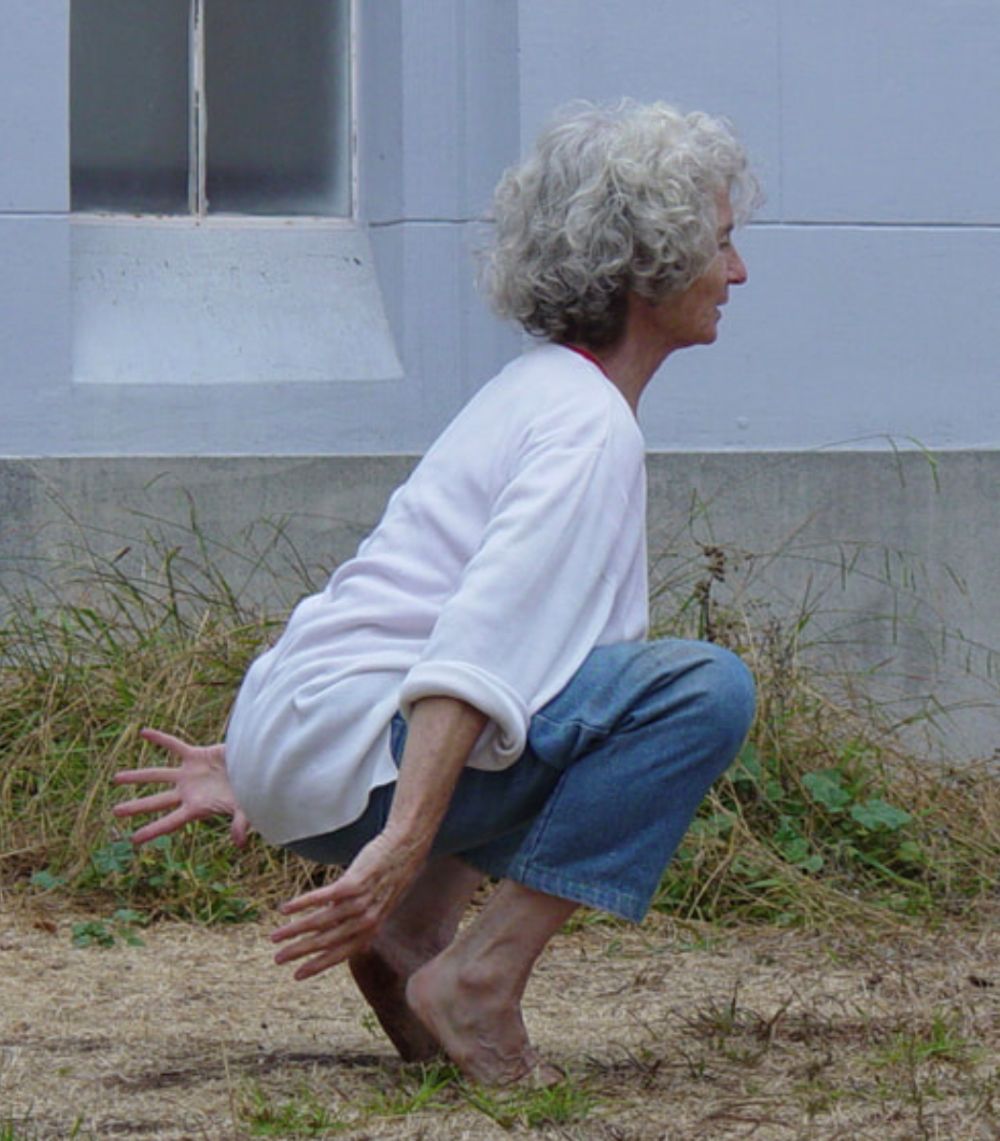
Duck, 2004. Beyond Baroque Literary Center. Photo by Sarah Swenson.
Simone was a self-defined movement artist, not a choreographer, and while she moved between and with other forms and mediums- all of her performance pieces notably involved sound- sometimes an intentional element and sometimes a consequence, but never a secondary component. In the hypnotic Illuminations, for instance, her improvisatory collaboration with composer-musician Charlemagne Palestine beginning in the ‘70s, his droning and chanting has equal importance with her circling and yielding to centrifugal force, one integrating with the other to create a new whole.
Charlemagne Palestine: Simone Forti and I began our collaboration Illuminationsssssss in 1970 and performed the first one together at the Pasadena Art Museum in Los Angeles in 1971. It began as a ritualistic duett of Simone’s movinggg and singinggg and soundinggg and of Charlemagne’s singinggg and playinggg and movinggg so that the differentiationsss between sounds and movements were in constant evolution and dialogue between 2 shamanistic animals, in a red hypnotic universe. During the 45++ on and off years that we performed we rarely rehearsed,,,,,we just begannn and let the mommmenttttsss decide the flowwwsss and howwwsss and wheresss that would proceeddd into the nowwwsss!!! We created a unique red templesque cosmosss like no other duo had ever devisedd from thennn till nowww!!!
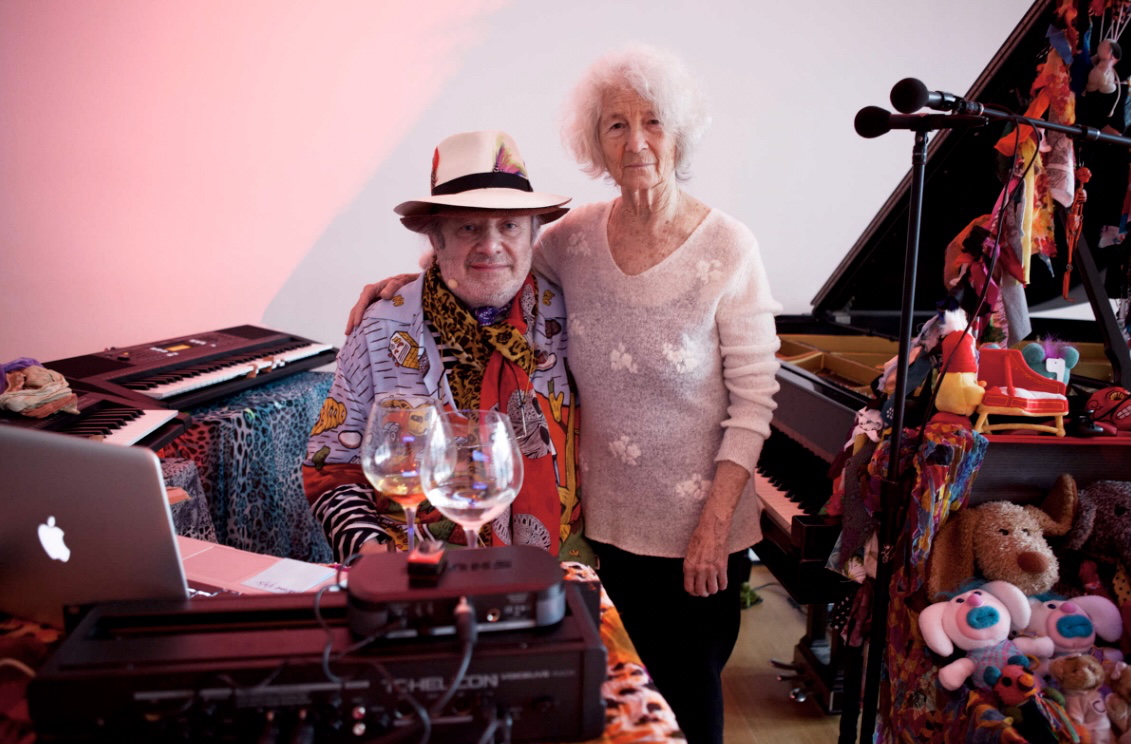
Simone with Charlemagne Palestine. Photo by Daniele Molajoli, 2014.
*
Sound retained its importance for Simone throughout her life, and returned often to her cherished Molimo, a horn instrument of the Pygmies of Democratic Republic of Congo. It has many traditional uses, but Simone was attracted to that of bringing balance to the forest, or to any environment. Simone’s Molimo form was a length of gas tubing that made a whistling, flute-like sound, and she played it often, at home and as an element of performance, such as at her last appearance in A Day of Simone Forti, November 2024 at Highways Performance Space.
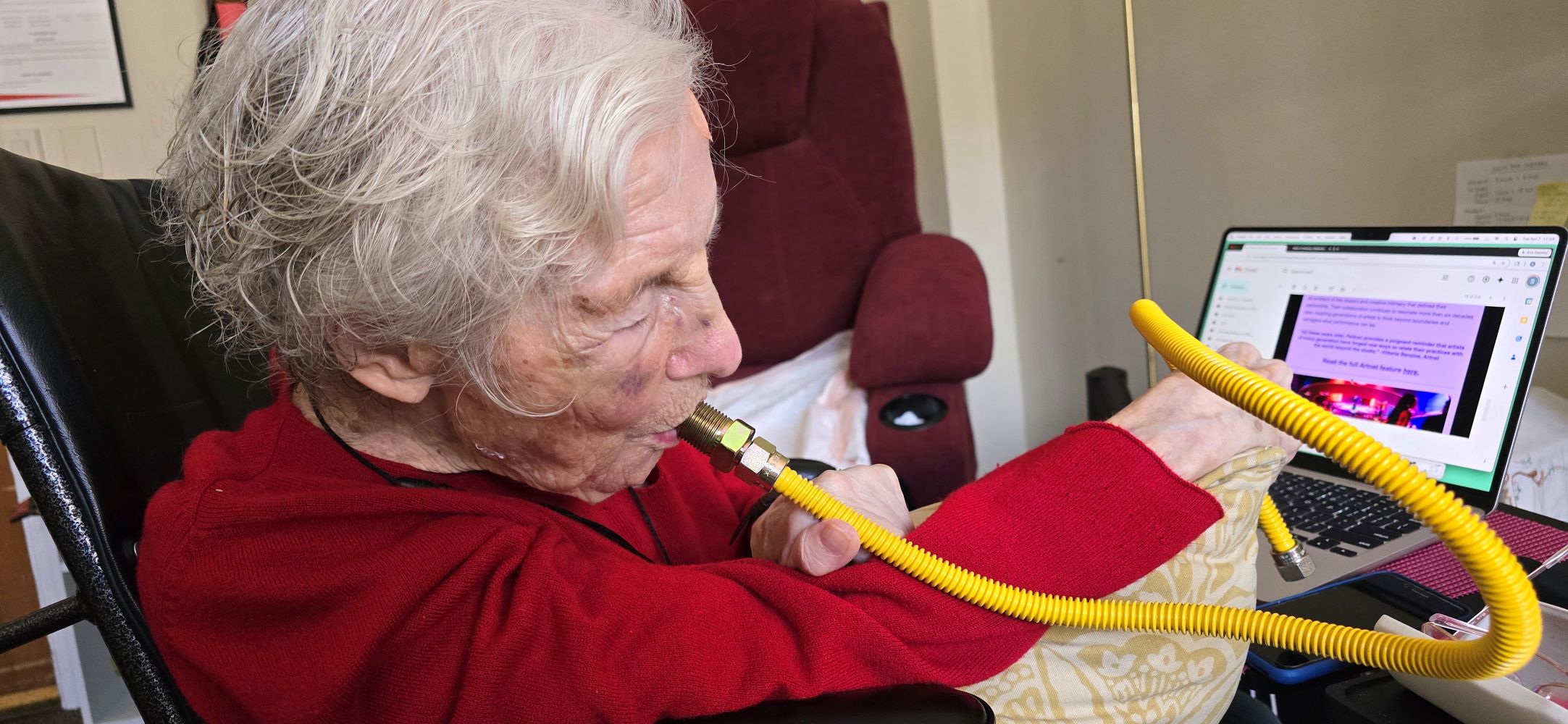
Simone & Molimo April 2026. Photo by Sarah Swenson.
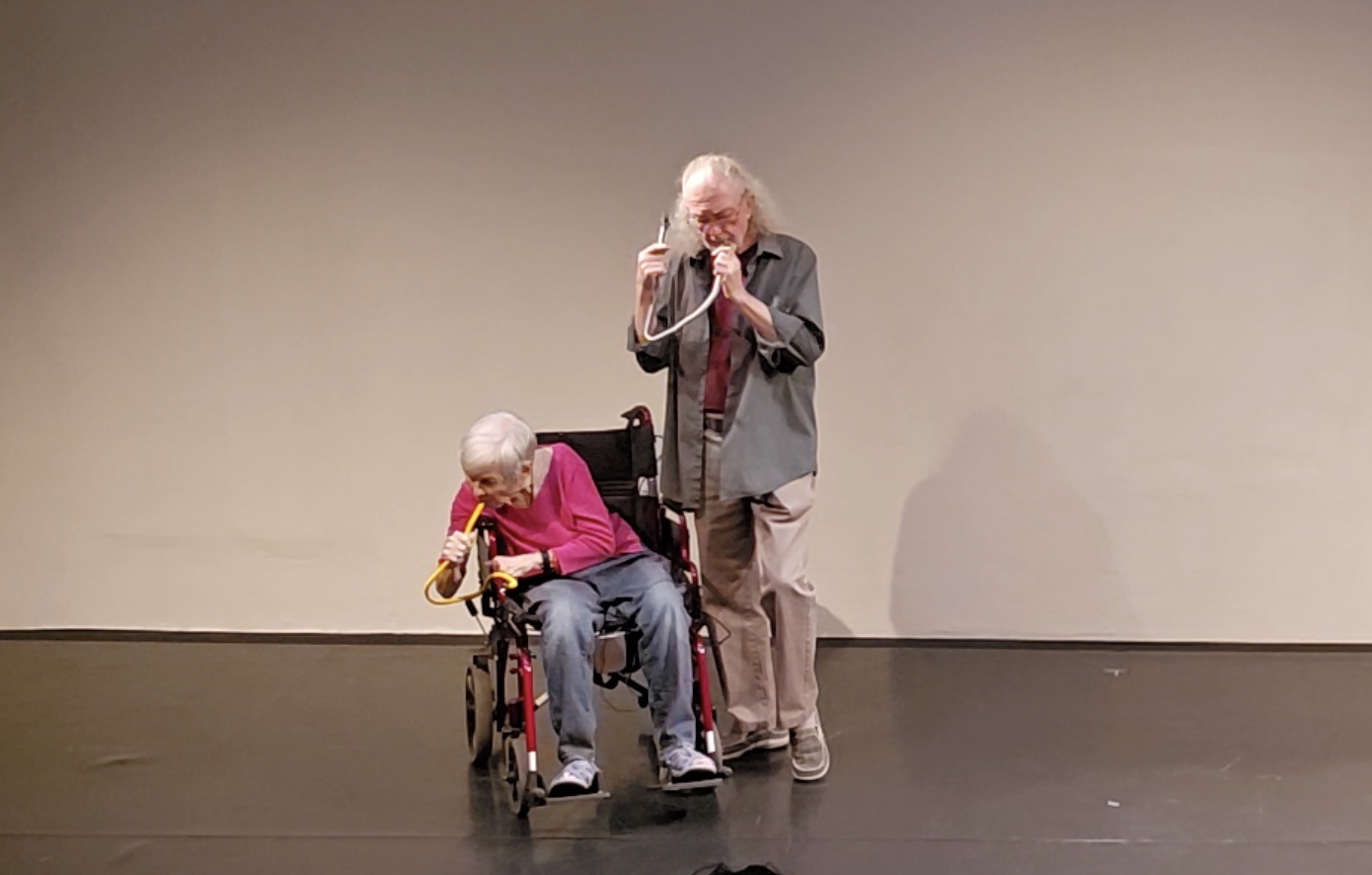
Simone and Terrence Luke Johnson in Molimo duet, Highways Performance Space, November 10, 2024. Photo by Sarah Swenson.
One connection retained across the coasts was that between Simone and Tashi Wada, son of the late Fluxus artist Yoshi Wada, who grew up in the early ‘80s across the hall from Simone in her Broadway loft.
Tashi Wada: Simone and I worked together in a variety of contexts over the years, and I always learned from the process. Sound was integral to her work and was often the basis, or at least the starting point, of our collaborations. However, what I absorbed most deeply from these experiences was how she worked and went about things. Simone was always searching as both an artist and a human in the world. She could re-see things in the moment and was open to whatever was needed in a given situation, a kind of grace that wasn’t bound by one way of thinking and dealt on an elemental level. She also loved to shake things up. As a result, Simone worked fluidly across and between art forms: movement, sound, sculpture, drawing, writing. Each sensory mode was in play and allowed to emerge. Similarly, each person in her world was given equal standing and encouraged to carry on the search with her.
*
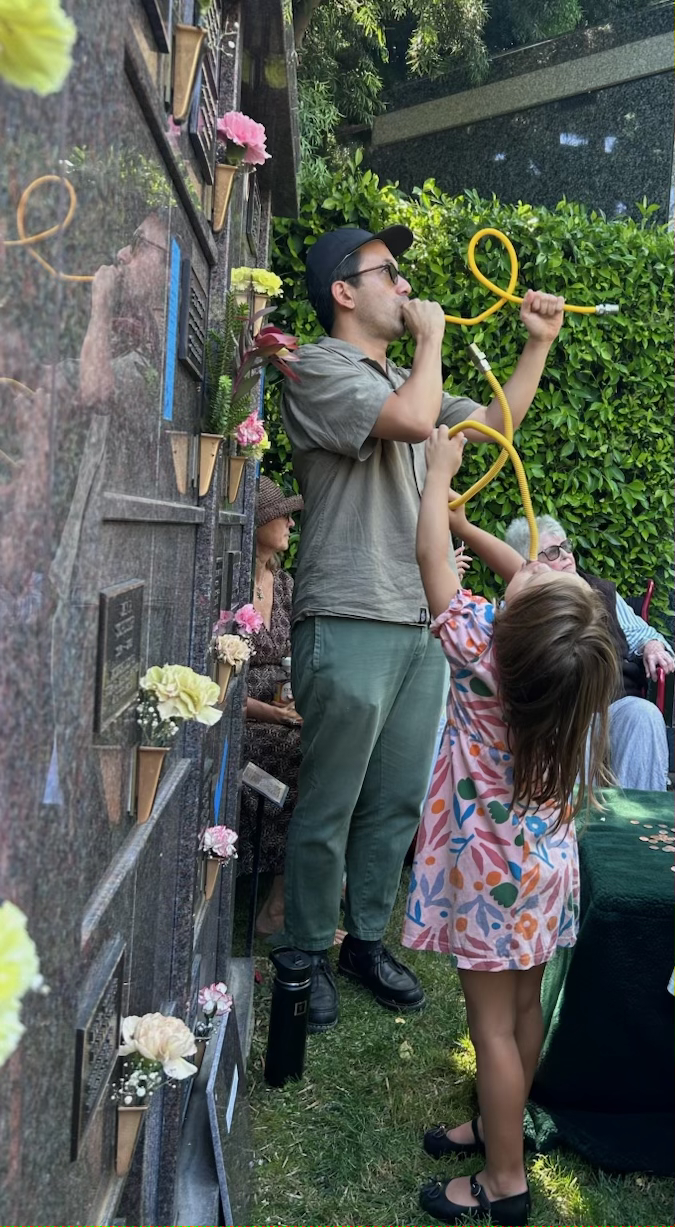
Tashi & Simone Wada playing Molimos, 2026. Photo by Emily Mast.
Simone’s landscape and environment-based collaborations began with Simone Forti & Troupe in the mid-80s New York.
K.J. Holmes: I was a member of Simone Forti and Troupe from 1986 – 1991 with dancers Lauri Nagel, David Rosenmiller, and David Zambrano, and subsequently with Eric Shroefer. We created pieces in various locations in the northeast of the U.S. The work created came from sourcing the particular site we were working in from geological, historical, natural, human and poetic focuses. We would listen to and explore the area with all our senses, see what remained from the past and engage with the nature of the present. All of these observations from the outside were then transformed into studio rehearsals to create movement scores for improvisations as well as set material. Many things I learned from Simone while part of Simone Forti and Troupe, and through my many different experiences with her at Madbrook Farm in Vermont, and in New York City at her loft; as well as witnessing her work for many decades. It all was about relationships and connection to nature, to having strength to gain wisdom from experience, especially through embodiment, and also to awaken me to our abilities to make change and be in a new world with our creative and spiritual and heartfelt energies. Simone is always in my creative life, my personal life, my life in the world. She is most certainly in my heart.
*
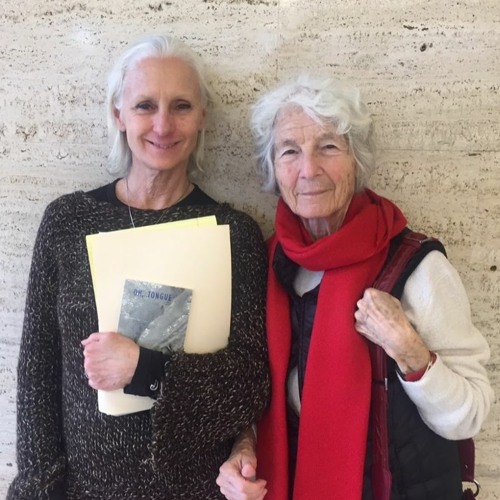
K.J. Holmes & Simone Forti, 2018. Photo courtesy of New York Public Library, Jerome Robbins Dance Division.
Speaking and moving improvisations became a major focus, what she first termed Moving the Telling, but later came to call Logomotion: logo- meaning word- and motion, which she said was best described as “a focused stream of consciousness.” The Logomotion process usually included timed writings of various lengths, often prompted by a word or two selected by chance from the dictionary. These writings became the primary impulse that launched a speaking and moving improvisation, with thoughts compelling movement, but also of movement triggering thoughts. Like her old friend, Steve Paxton, originator of Contact Improvisation, she refused to copyright Logomotion and the teachable skill set that serves it, saying “I don’t want it to become a thing”, but nevertheless left it as a living practice, open to exploration and expansion, under the tutelage of its practitioners.
Simone’s use of language emerged after the death of her father, Mario Forti, in 1983, who habitually read the newspapers. In his memory, she, too, began to read the papers. Significantly, in Florence, where Simone was born, Mario had read about the coming danger to Italian Jews, [whose most likely destination under Hitler’s alliance would have been Auschwitz] and in 1938, escaped with his family first to Bern, Switzerland, and then, when Simone was just 4 years old, to America and California, where she flowered. Simone remained aware of this fortunate escape her entire life, and I believe this contributed to her generous attitude in sharing her work with others.
Carmela Hermann Dietrich: One of the many gifts Simone Forti gave me as a young artist at UCLA in 1998 was her improvisational moving/speaking practice called “Logomotion”. She referred to it as “moving the telling.” Creating dances while speaking. Originally, she developed this work as a way to understand her relationship to the news. This expanded to include her garden, places she’d visited and numerous other subjects. During her classes we covered hundreds of topics. As a dancer who felt cut off from speaking, learning to find and use my voice was profound. Logomotion allowed my imagination to be communicated through spoken language in a deeply physical way; ways I don’t experience in day-to-day conversation. She also taught me the art of performing improvisation, how to make a piece take shape just as one would craft a piece of choreography. She talked about how the stage is a canvas; we dip our brush and when we are onstage, every move, every image makes the painting. I performed Logomotion with Simone many times in duet form. We sometimes used the cities where we performed as inspiration. We would spend several days wandering a city and then improvise our impressions in performance. Pieces included “Seattle”, “Los Angeles” and “New York”. I also continue to perform a solo structure I learned from Simone; I bring a dictionary into the audience and ask them to pick three random words which become the inspiration for an unplanned performance piece. As a choreographer, I use Logomotion to generate movement and text ideas for my dance theater works. I am deeply grateful for Simone’s generosity as a mentor and performer in sharing Logomotion with me and helping me find my voice. At a time in our world where many of us find ourselves speechless, Logomotion still gives us a place to speak.
*
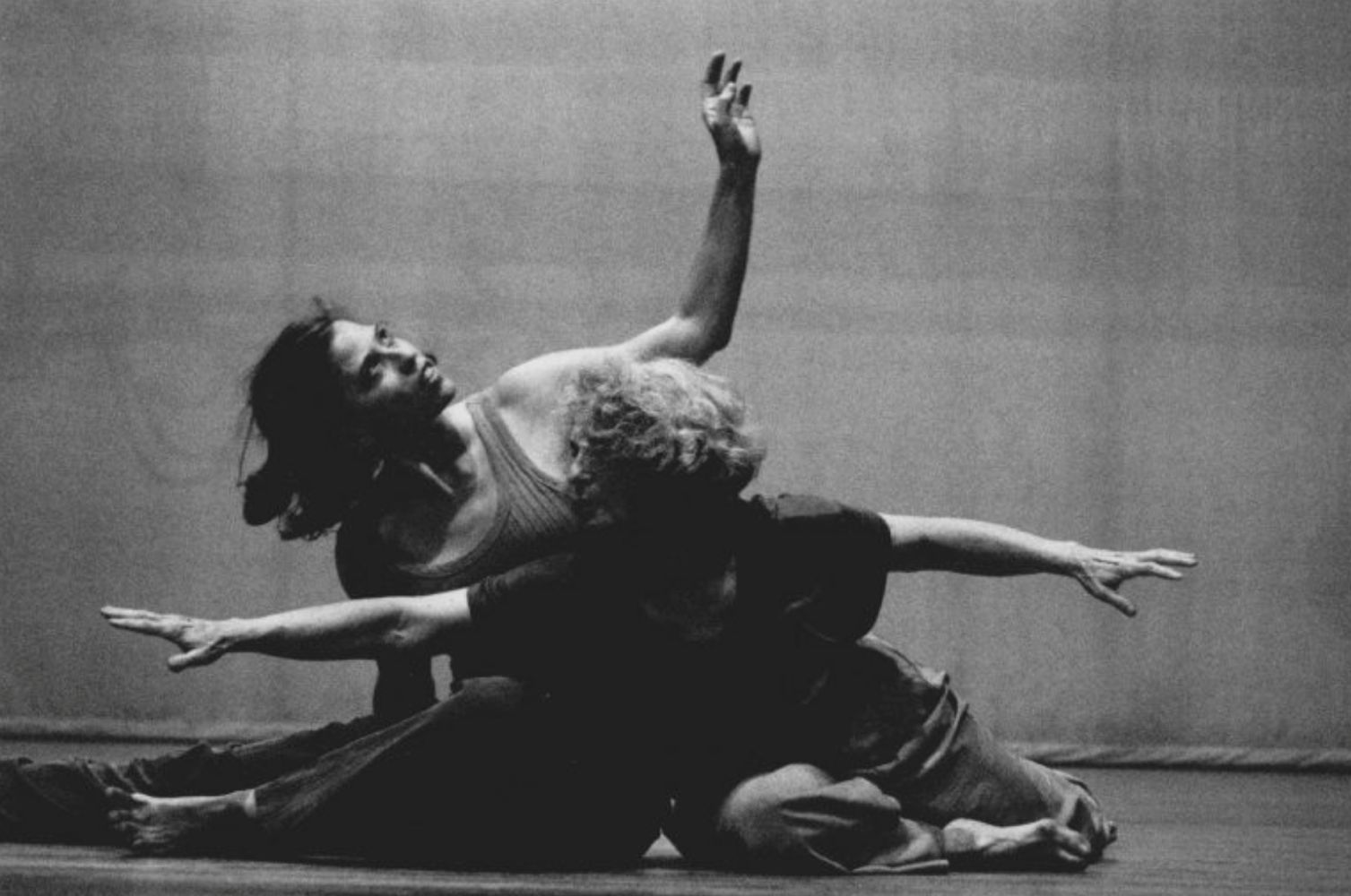
Carmela Hermann Dietrich and Simone in “Los Angeles.” Photo by Carol Peterson (1998).
Megan Metcalf: Simone’s Saturday morning UCLA classes were the highlight of my week for three spring quarters in a row. She taught me to see things as if I’d never seen them before and respond according to my body and especially my guts, trusting that my brain could get out of the way for a while. Now, as a teacher, I marvel at how Simone managed the social and emotional currents in rooms full of students, turning up the volume on some and turning down the volume on others. All so that we could move through it together, laughing.
*
Claire Filmon: Simone, how to thank you for 30 years of sharing time, performing your work, teaching, walking, talking, exploring, laughing, discovering each other in France, Switzerland, Germany, Belgium, Netherlands, and USA? Thank you for your generosity, your trust, your depth, your support. Our fathers met in our duet, “Mario and François”. Gratitude. You will breathe and dance in me forever.
*
Logomotion then birthed News Animations – a Logomotion improvisation with a potent political bent. The News Animations became a regular performance practice for Simone, many of which were videotaped, leading to a substantial collection, often requested for screening in galleries and museums around the world.
Batyah Schachter: Simone, we were in Holland in 1988 when you invited me to perform together in Moving the Telling- a conversation in movement and speech about the Israeli-Palestinian conflict. You stepped into the studio and said: “Tell me your story.” That was the first time I told you, and myself, through dance and words, what it means to grow up in a war zone. I danced a dance for you that revealed to me these materials embedded within me, shaping who I am. And you said: “Let’s do a performance, I’ll interview.” And so the first performance was born, and performed again from 2010 to 2017 in Los Angeles, New York, Stockholm, and Berlin. “Working together” was spending time, talking about everything and anything. Finding out facts about what we each thought- particularly about the Israeli-Palestinian situation, but NEVER talking about it before performance. Simone always wanted to keep the real discussion for the live event- on stage. The only pre-planning was who will do the first solo. And then, once at the wing before entering, Simone said to me, “You know, I won’t do that one thing we agreed about.” So working with Simone was an ongoing journey of trust, of myself and our connection in real time, that created our collaboration. The open dive into moving and talking often revealed things none of us had thought about before. It was a real-time process of creation and revelation. Body moving thoughts moving words moving opinions moving each other, with each other. From Simone and with her, I learnt that dedicating ourselves to performing improvisation was a sacred act. She taught me the blessing she said before going on stage “May something good come out of it even in ways we do not understand.” This is a treasure I take with me always. The prayer and the humility that is asked when entering the sacred space of stage. Infinite thanks to you, Simone, for being in my life, and for the fact that you always will be.
*
More recently, Simone made what I’d call visual News Animations that were intentionally filmed, not as historical documentation, but specifically for the camera. News Animations in which she did not speak- but clearly political, such as Zuma News (2013), Flag in the Water (2015), and A Free Consultation (2016), all videographed by Justin Underhill.
Jason Underhill: I met Simone at CalArts, where I took a one-day movement workshop with her during the first year of my undergraduate coursework. Almost a decade later, when she opened the door for our scheduled interview (I had heard she needed help organizing an archive one afternoon per week) in March 2010, the sun was in her eyes. She squinted, then with a smile of recognition, said ‘We’ve met before.’ Over the next sixteen years I had the honor and pleasure of working with Simone as her studio manager and frequent collaborator, filming her videos and performing together on occasion. I will continue legacy work as the Trustee of the Simone Forti Art Trust. I cherish the time we had together.
*
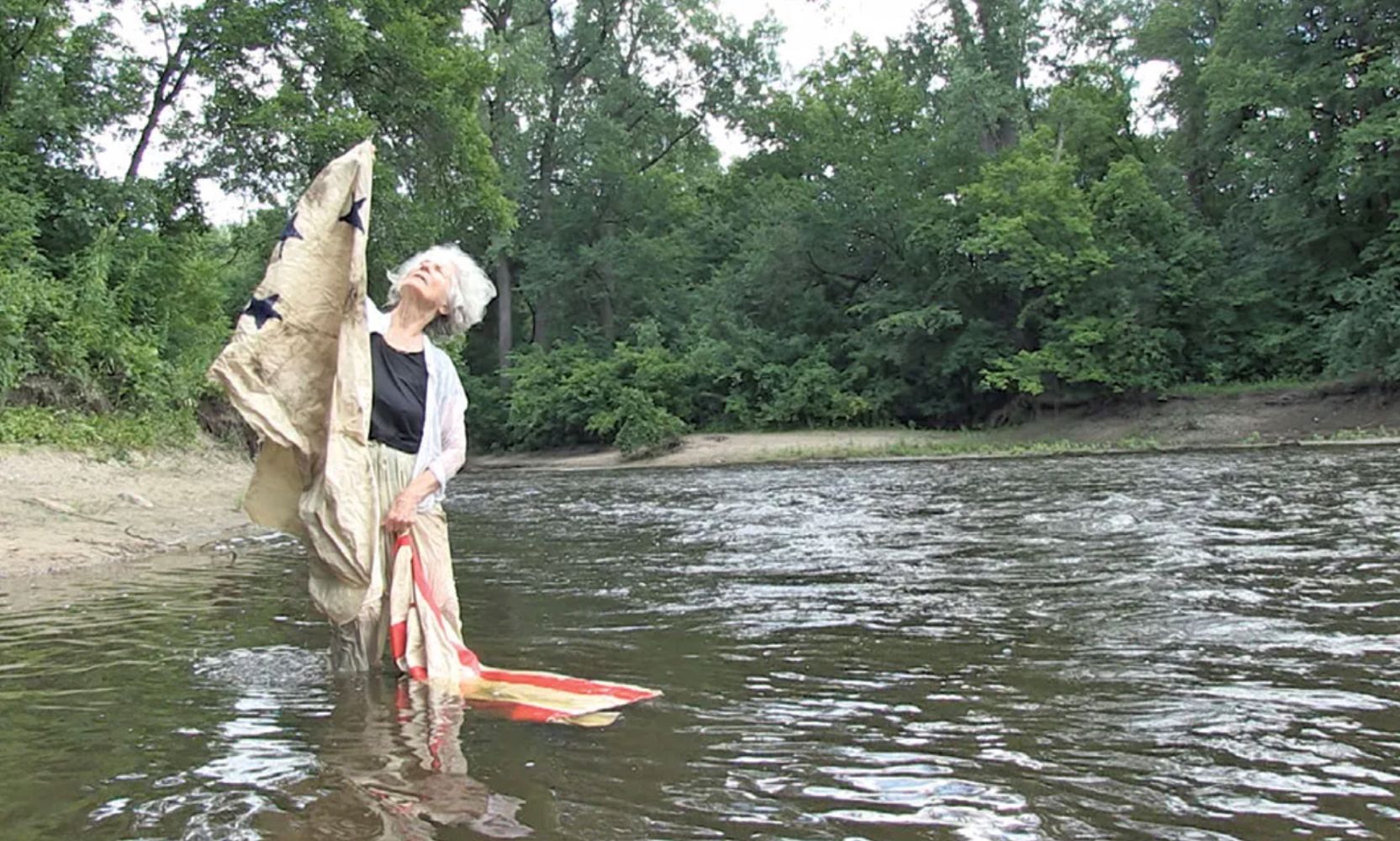
Flag in the Water, video still. Jason Underhill (2014).
When Simone left her Madbrook Farm home in Vermont in 1998 and returned to Los Angeles, she began teaching improvisation at UCLA, started a weekly Friday workshop at the Church in Ocean Park, Santa Monica, and continued group work.
Luke Johnson: I met Simone at a contact improvisation jam at Dancehome in Santa Monica in the late ‘90s. After I had known her a few months, I asked her to be in a piece made with myself and my friend Dale Eunson from improvisation about each of our memories of World War II, called War & Variations. Dale and I worked in the improvisation tradition that came from Chicago, Paul Sills, and the Second City group. When Dale, Simone, and I sat down to work, we discovered differences between Simone’s tradition and ours. In Simone’s tradition of group improvisation, each person owned the information that they came up with, and the other people would support them, but not use that information on their own. In the tradition that Dale and I came from, “Yes And” was the important rule. One person would start something, and the others would agree and then adding various “ands” to the idea. The three of us came up with a compromise where each person would have a narrative that lasted throughout the piece, but the others would support by saying “yes,” but sometimes also saying “and” and adding to the original material from their own point of view. When Simone started her own quartet, Unbuttoned Sleeves, of Sarah Swenson, Douglas Waddle, herself, and myself, Simone and I had by that time come up with a working compromise of the two styles which continued through developing all five of the pieces created by the quartet.
*
Deborah Cohen: I remember that Simone and I and figured out our improvisation with the percussive Cage music, ‘In a Landscape’, for the CalArts Cage Festival in June 2002. That’s when I realized I wanted to draw while she danced. That piece I drew on the floor on a huge role of white construction paper using black markers, no color involved. The sound permeated the whole space, and people could walk around and watch both of us ‘doing our thing’’ because while I was drawing with my feet, those images were being video’d and projected onto the walls. But I first met Simone in 1999 at her dance workshop class at the Church in Ocean Park, Santa Monica. I had heard through word of mouth I learned about her as an important dancer extraordinaire when I taught Dance and Meditation at Naropa Institute’s 1974 inaugural Summer Session in Boulder, Colorado. I went to Simone because I wanted to learn her view of ‘contemporary,’ of’ improvisation.’ I wanted to perform again, to find my own way. And, oh my, that’s what I got; and that’s what she offered everyone who showed up to her classes. It was the most inclusive dance environment I’ve ever experienced. She offered techniques for the body, the mind, the spirit. Automatic writing to let those words flow and become embodied; small walking jaunts to the beach to observe, smell, touch and feel things; the idea of creating ‘scores,’ i.e. notations that articulate one’s intent, boundaries, guidelines to manifest something or other. And there were the opportunities to work in duets, and groups or singularly; and the chance to give and take feedback from anyone and everyone who was there. Almost invisibly overseeing it all was Simone, a woman seven years my senior, who had the patience, and an innate confidence to let everyone have their say, their way and experience, while skillfully sharing her experiences, observations, using a of choice words, filled with insight, humor, and more inquiry. It was sobering, empowering, and met with genuine appreciation by everyone. Later she and I became friends, feeling mutual respect, though I know she had been operating on another plane. Able to commune and communicate with an array of individuals of all ilk and mark; from different cultures, different generations, from around world with an ease, which is quite honestly, jaw dropping. Her commitment to art is best described in her quote emblazoned on a T-Shirt commemorating her work, “Art Keeps Me Strong.” Thank you, Simone!
*
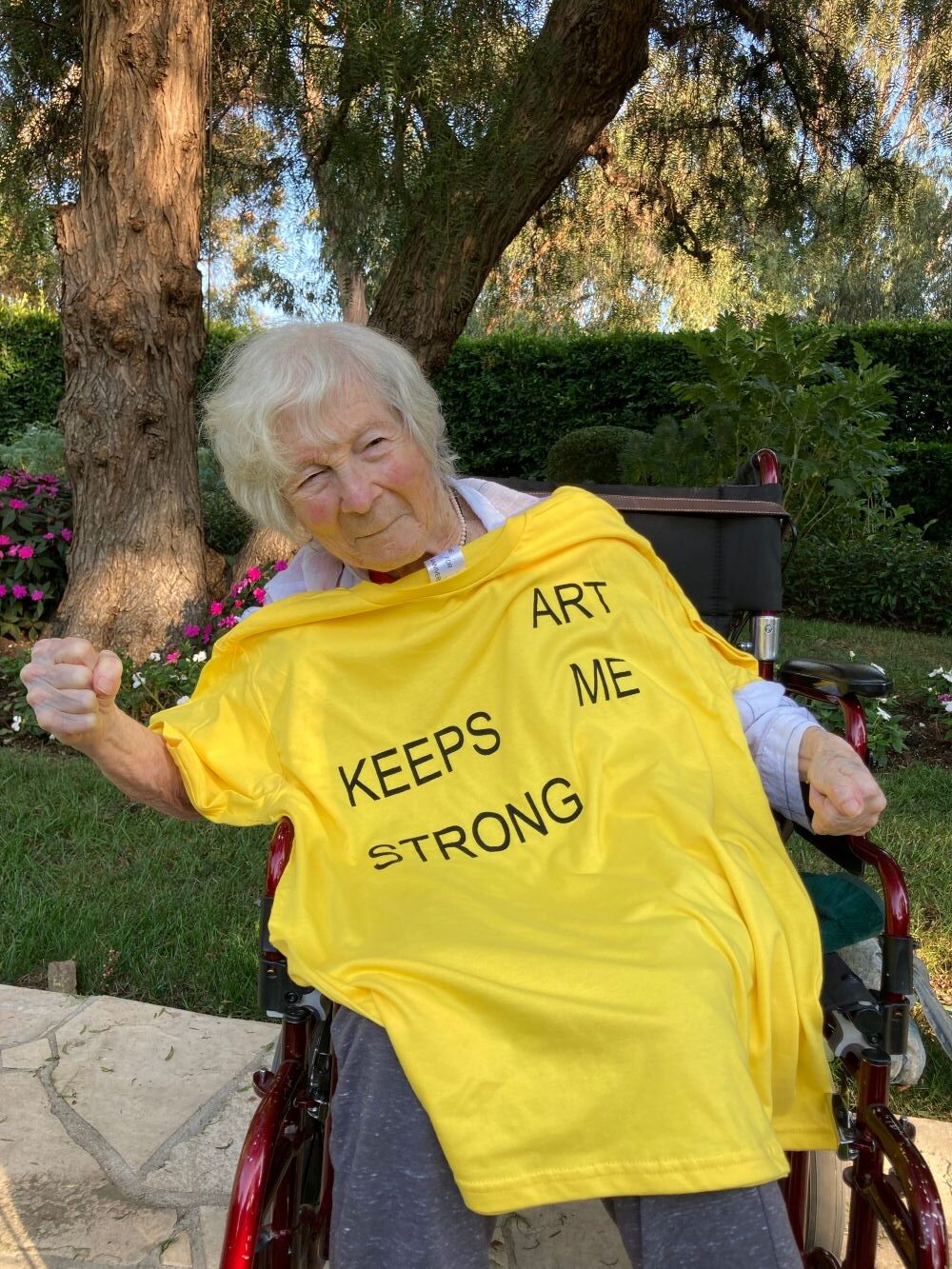
Simone Forti “Art Keeps Me Strong”. Photo by AJ.2025.
Dana Hirsch Laiser: I met Simone in 1998. I was a young dancer from Israel, with a passion for improvisation. Luckily she started facilitating a weekly class at Church In Ocean park which became for me a fascinating laboratory for Logomotion. From that moment on, writing became both a therapeutic and artistic channel of expression. These workshops, which I attended for 3 years, fostered colorful experiences that evolved into personal, poetic, and political content. Her child-like nature and playfulness with a zen calm and centered presence planted the seed for my path as a performer and artist. Simone’s warm and free spirit personality wove a tight and intimate community of creative people with passion for experimental dance. A family. Simone’s attentive loving mentoring and encouragement was an essential gift and inspired me to push the boundaries of dance in LA and in Israel.
*
Jeremiah Day: One night in 2001, after 9/11, in her small apartment Simone Forti shared with me a video of her improvising with newspapers. It was like a light went off in my head, or a key was presented to me to open a door: a political art that was not didactic or one-sided because it was busy with questions, deliberations, reckonings and wrestlings (literally). I had been doing her Logomotion with her, even performing a few times, but the thinking+poetics of the News Animations changed my life and became central to my own work in the decades that followed. As a teacher (or perhaps facilitator?) Simone introduced me to the principle of the “score” as a way to share complicated principles in simple exercises that could transmit serious work in a light and generous way (much as Steve Paxton, and Anna Halprin did) as a kind of democratic cultural ethos and method. I once asked her if she would make a book of these scores, and she said “it would be counter-productive. The point is to get the work into the people’s lives, not their minds.” The use of the term “the people” is, I believe, non-generic, and Forti had the vision of an art, like Lincoln said, “of the, by the, for the people.”
*
In the early 2000s Simone gathered three people to work with her in ensemble: Terrence Luke Johnson (writer and improvisation artist), Douglas Wadle (composer and trombonist), and myself (choreographer). ‘The Sleeves’, as we came to call ourselves, borrowing from the title of our first collaborative piece, Unbuttoned Sleeves, worked together from 2004 to 2011, creating five evening-length works that we performed in different venues around Los Angeles. Simone’s premise was that these 4 very different artists and individuals could work together on a theme, each bringing scores and processes that we worked on together over the course of a year, our differences producing a new coherence. Logomotion solos and duets, sound scores, musical instruments, games, choreographies, writings, improvised movement and other elements and combinations were arranged on index cards, and sometimes rearranged for multiple performances. Here’s an excerpt from To Borrow Salt (2009), in which Simone and I perform a solo I created for her based on her own movement language, responding to the words joy and land. We try to stay attached, or what she calls “glomming,” while Luke and Douglas discuss the poet Paul Celan. joyland (video 9 min.)
Douglas Wadle: Each of the Sleeves’ pieces resulted from a long, patient exploration – guided gently, and with great wisdom, by Simone – in which personal and artistic bonds between these four very different people were nurtured and allowed to develop organically. Of the many lessons I learned through these experiences, the most important is that, in art (and life), the best results come from attending to the strengths and weaknesses of those present, understanding when to lean into this weakness or that strength, and knowing how to do that with love and respect. Simone’s life embodied that lesson as an artist and as a friend.
*
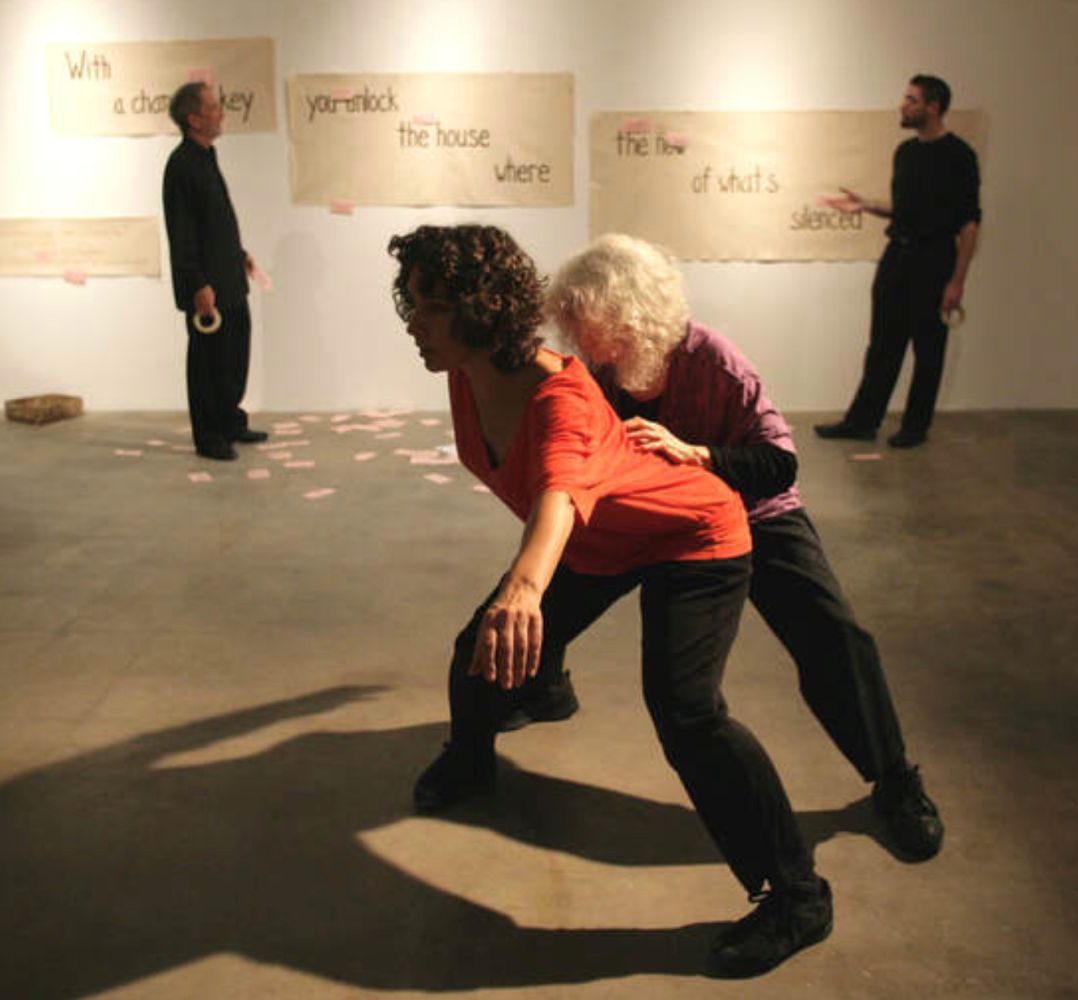
Luke Johnson, Sarah Swenson, Simone Forti, and Douglas Wadle, in “To Borrow Salt,” The Box Gallery Chinatown, Los Angeles, 2009. Photo by Ann-Marie Rounkle, ©The Box LA.
Luke Johnson: One of the first things that I found out about Simone is that she was born in 1935, four years before me. I decided at that moment that she would be my mentor in getting older and she was a mentor until she died. As her physical abilities diminished and her ability to speak failed her, she remained Simone until she lapsed into a coma. My Simone was smart, creative, and somewhat unpredictable. I was always amazed that of all the people in the world, or at least in Los Angeles, that she chose me to be one of her quartet, and after the Sleeves disbanded I was one of whom she counted on. When her voice began to fail her, I would read with her at her readings. She would read until her voice failed and then I would take over. Or would we divide the text before we began and we would alternate. She established the quartet, Unbuttoned Sleeves, and we created five pieces. Even more important than the quartet work was her teaching. When she came to Los Angeles to take care of her mother, she started teaching on Friday afternoons at the Church in Ocean Park. These classes were always well-attended, and through them her influence spread around the world. I worked with people in Berlin who had attended the Friday classes and continued doing her Logomotion work in Germany. During the quartet work, while she had the last word on decision making, she listened to the group and output from each of us would appear in the final pieces. Her process called for us to take walks, either alone or in pairs, and then come back and do a timed, non-stop writing. Then we would begin to improvise. We would start by doing solos, then work in duets and end with everyone in the space improvising together. At one time, she came up with the practice of “moving while thinking.” I found this helpful in the group improvisations. At the end of “To Borrow Salt (2009),” after we all had been doing work apart, we came together for a final improvisation, and I found that doing “moving while thinking,” allowed me to quickly become one with the quartet. The first piece we did was at the first NOW Festival at RedCat.
*
Sarah Swenson: When I first attended Simone’s newly formed workshop in Santa Monica 1998, I had heard of her, but had only a dim understanding of post-modern dance history or of her place in it. I was a hard-core classical modern dancer just arrived from New York, in my first year of graduate school. To say my mind was blown would be an understatement. That day, I was unable express clearly to her what had happened to me during those 3 hours. What I was trying to say was, I had the peculiar feeling I had finally remembered something profoundly important- something I already knew, but that had kind of been asleep in my psyche. That was a turning point, and it’s not an overstatement that our connection changed my life forever. Especially through our work in The Sleeves, I had found myself, my voice, my other way of moving, and soon, a deep friendship that endured, and later, an extended and joyous creative bond that lasted til the day she died. This story of change and impact is shared by countless people who experienced Simone as a friend, collaborator, or teacher.
*
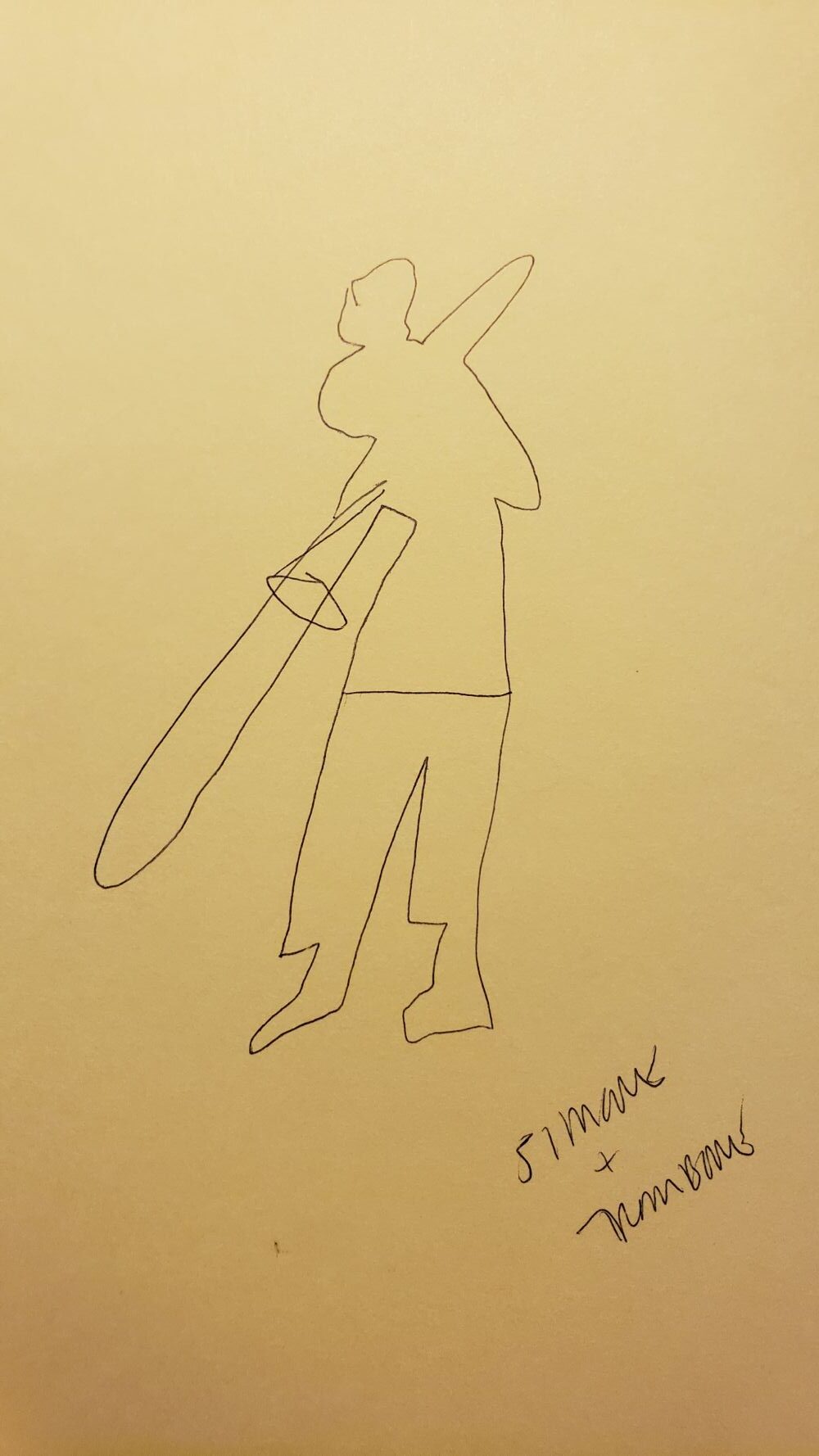
Simone + Trombone, drawing by Sarah Swenson, 2004 rehearsal.
The Simone that most of us knew was someone who evaded attention, the spotlight. She was self-conscious about her fame, but on occasion took a bow and rose to her stature, accepting how much she had moved others with the profound simplicity of her art. I’m reminded of one extraordinary day near the end of the MOCA exhibit, Simone Forti, of 2023, where she rose from her wheelchair and raised her arms in the air, eliciting screams and tears from us who surrounded her. I recall that day being heartbreakingly conscious of her mortality.
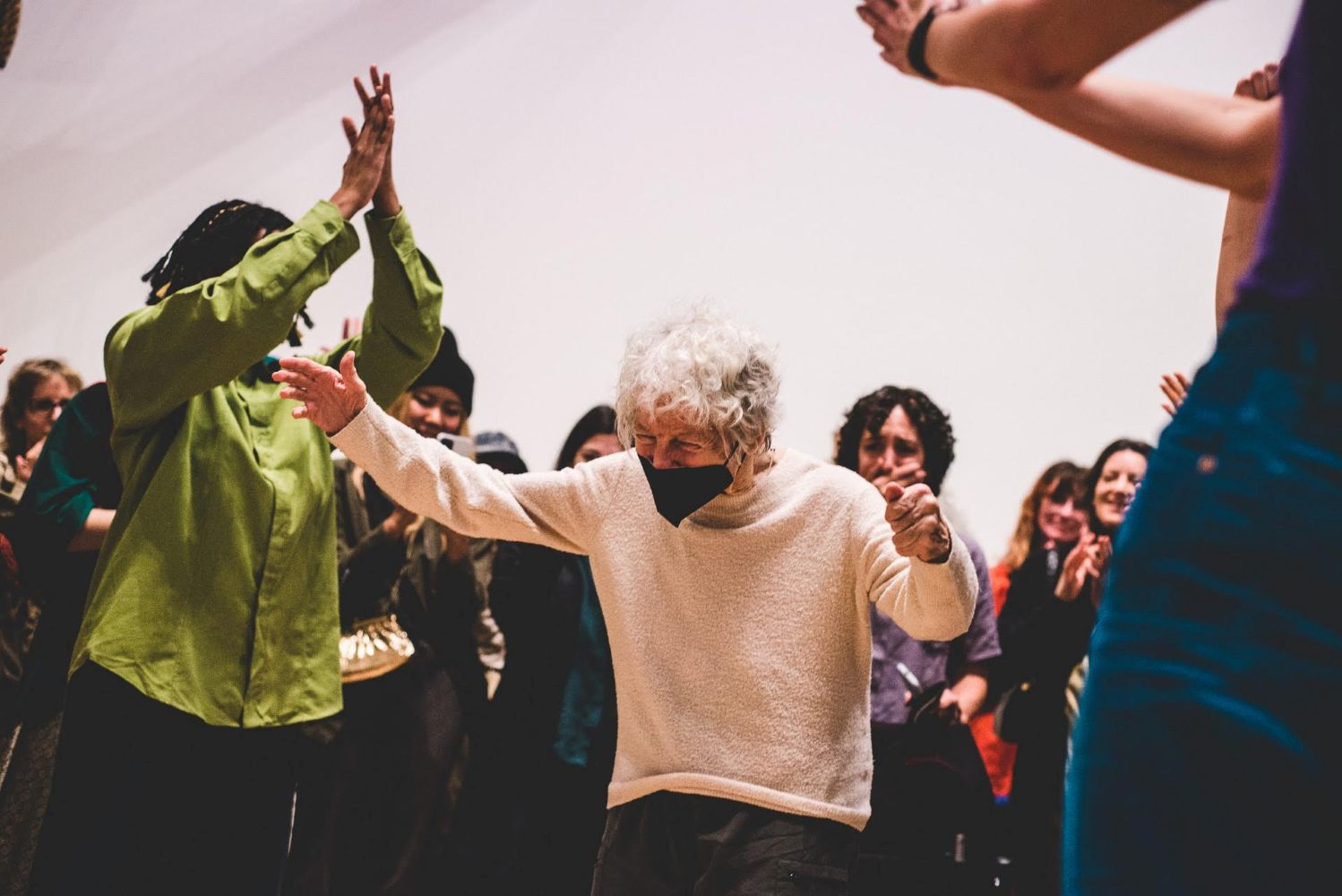
Simone taking a bow at MOCA 2023. Photo by Hon Hoang.
We deeply miss our Simone. Her humble manner and wisdom, her wit and wicked sense of humor that contributed to her unique Simone-ness. Her simplicity. Her interactions, especially with Los Angeles and New York collaborators, and the decades of workshops she conducted with students have created a kind of diaspora, a family tree of influence upon countless artists of all kinds who are now working all over the world. Now, we as second-generation teachers of her practices, have a great legacy to sustain, and do so with joy and tender memories of our years with Simone.
Simone cared more deeply about that influence she hoped to have than any kind of exact transmission of her work; a trail for others that could lead to unanticipated creation. I think she knew she was successful in this because of the 2023 acceptance poem she wrote (but never delivered) for the Golden Lion Prize for Lifetime Achievement from the Venice Biennale Danza, which she publicly accepted only on behalf of the worldwide dance community:
Help! They’re giving me a big prize
I who don’t like to wash dishes
Or take care of business
We live to make footholds for each other
Now I want to live
And that feels like home
*
Other articles about Simone Forti at LA Dance Chronicle:
A Conversation Between Steve Paxton and Simone Forti at REDCAT
This article was edited on 9/14/2026 for clarity.
Written by Sarah Swenson with contemporary remembrances by friends and collaborators.
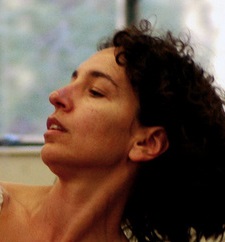
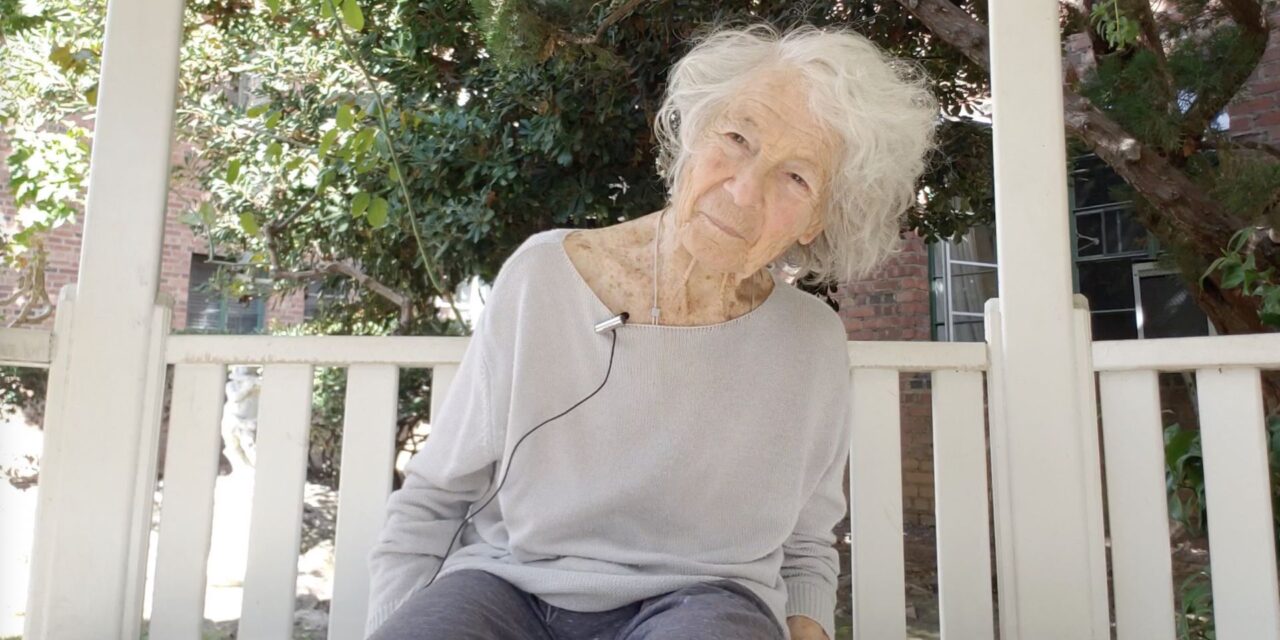
Featured image: Simone Forti in Gazebo – Photo courtesy of Sarah Swenson.