On Friday, July 3, 2026, Brazilian dance maker, teacher and researcher Cora Laszlo shared Gambiarra: Imaginary Solutions for Love as part of Dance at the Odyssey, The Summer Edition, curated by Barbara Müller-Whitmann. This dreamy hour-long solo featured sound and scenic design by Christian Laszlo and striking lighting design by Eduardo Albergaria.
As the piece begins Laszlo stands on a wide low table in dim light, braiding one leg over the other in a soft, crisscrossing march. The space is otherwise empty except for a small wooden platform downstage left, the size of a footstool. Like Chekov’s gun, this footstool (we’ll call it that for ease) remains untouched for most of the dance.
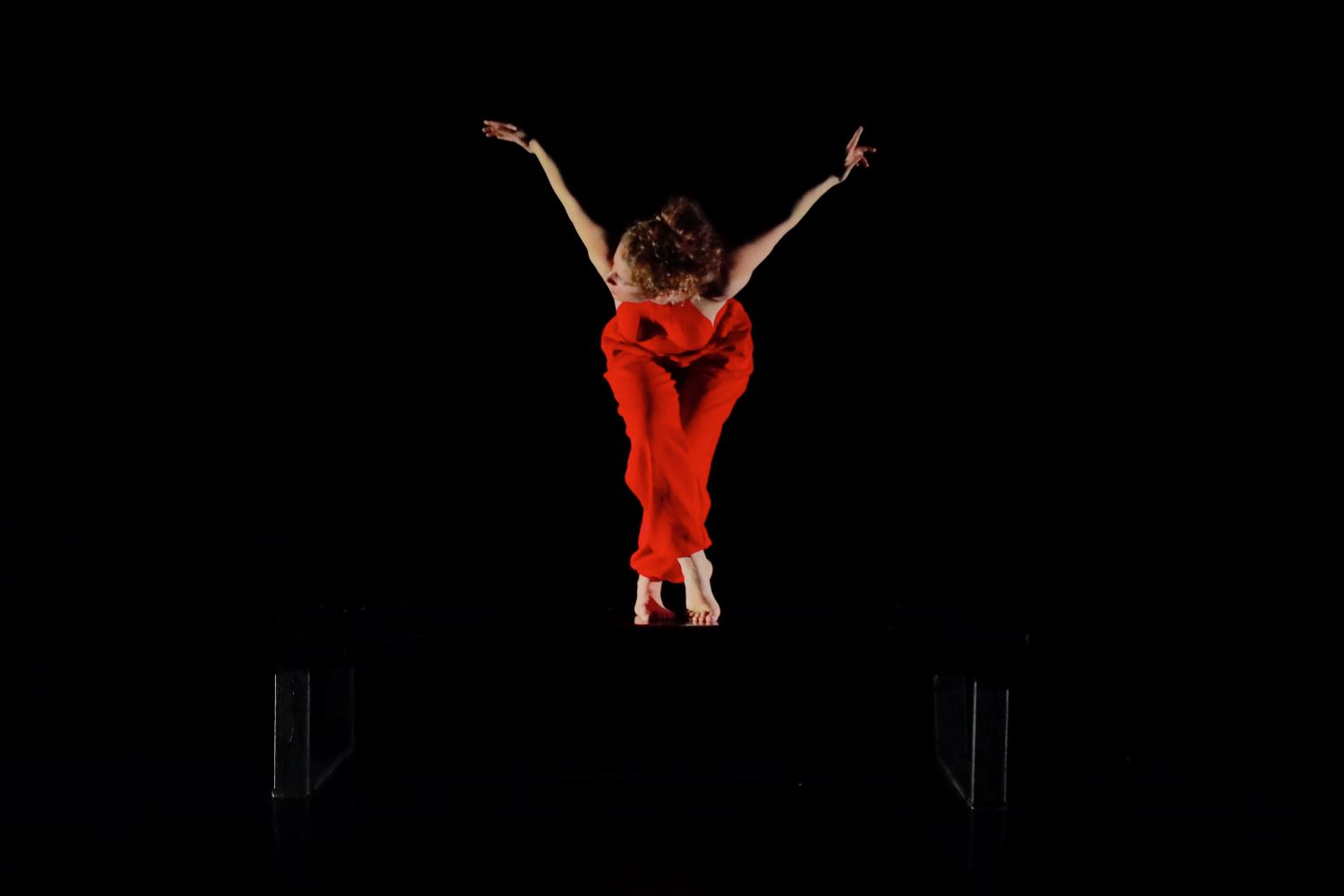
Gambiarra: Imaginary Solutions for Love – Choreographed and Performed by Cora Laszlo – Photo by Gunindu Abeysekera.
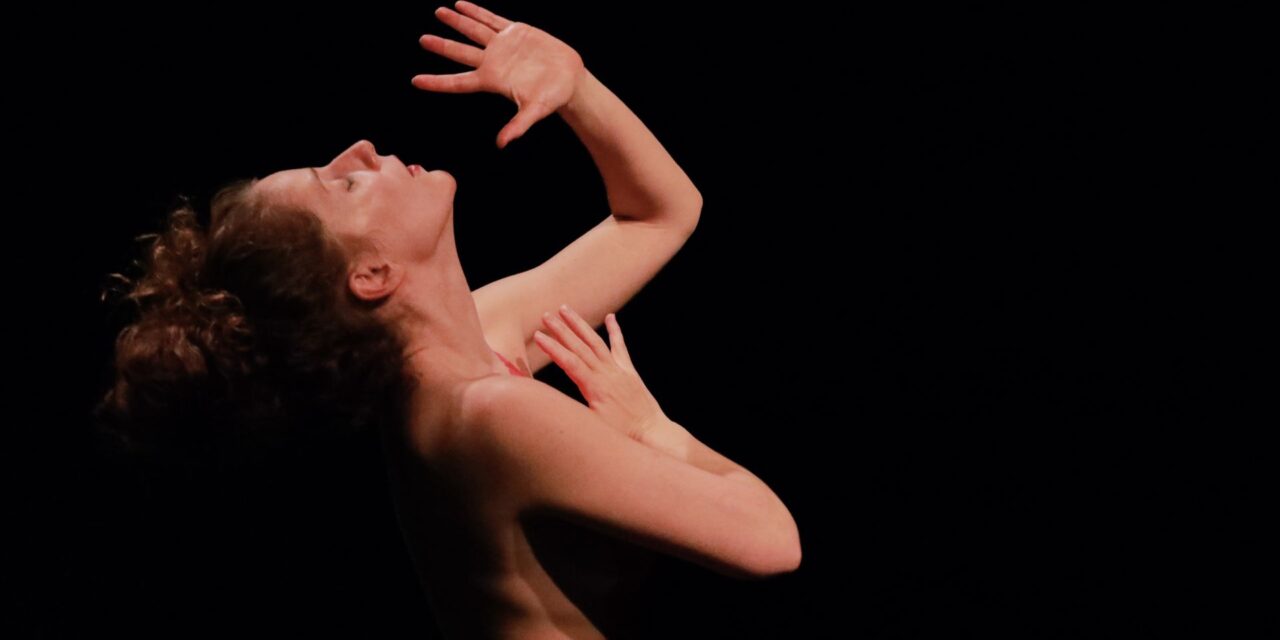
The beginning is patient, which allows a hush to gather in the room. Laszlo’s physical form pops against the austerity of the black box theater. She wears red sweatpants and red body tape that covers the front of her torso but leaves her back exposed. With long red hair, she looks like she walked out of a pre-Raphaelite painting and got dressed in 2026.
As the opening motion evolves, Laszlo stares at the audience and touches her breasts, her neck and her hair with hyper-sensory presence. It’s hard not to read the self-touch as erotic. At the same time, I wonder how much perception is informed by social norms. The United States is – at least historically-speaking – a sexually puritanical culture. So, I wonder when Americans (including this one) may be more likely to read sex where people from other places would not.
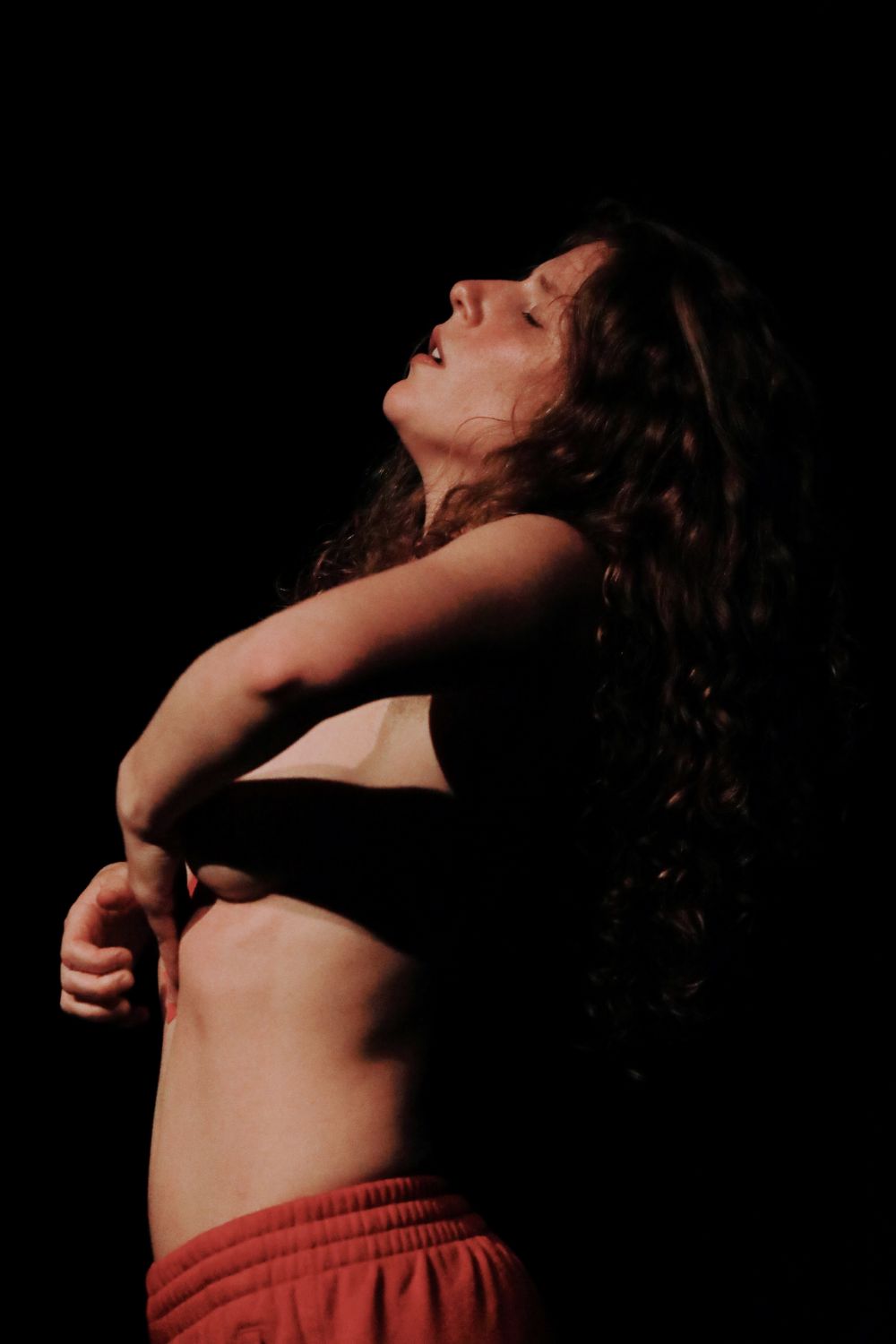
Gambiarra: Imaginary Solutions for Love – Choreographed and Performed by Cora Laszlo – Photo by Gunindu Abeysekera.
From the beginning, this work feels like watching a series of moving paintings. At times the lights drop to a full black-out and when they come up, Laszlo is located in an entirely new place on stage, creating an image and then animating it. At one point, for example, the theater goes dark and then the lights come up on Laszlo, lying on her back under the low table, illuminated in red light. The image looks like a closed coffin with a living spirit inside of it. Laszlo stretches and reaches on her back and then there is another black out. When the lights come up she’s standing on top of the table again.
Certainly there are moments of wild, full bodied dancing. Toward the beginning of the dance, Laszlo swirls and skids, tossing her limbs, and sliding in and out of the floor for what feels like at least five minutes without stopping. But what reverberates in the aftermath of the performance are the images and the feeling tone, much more than the movement vocabulary.
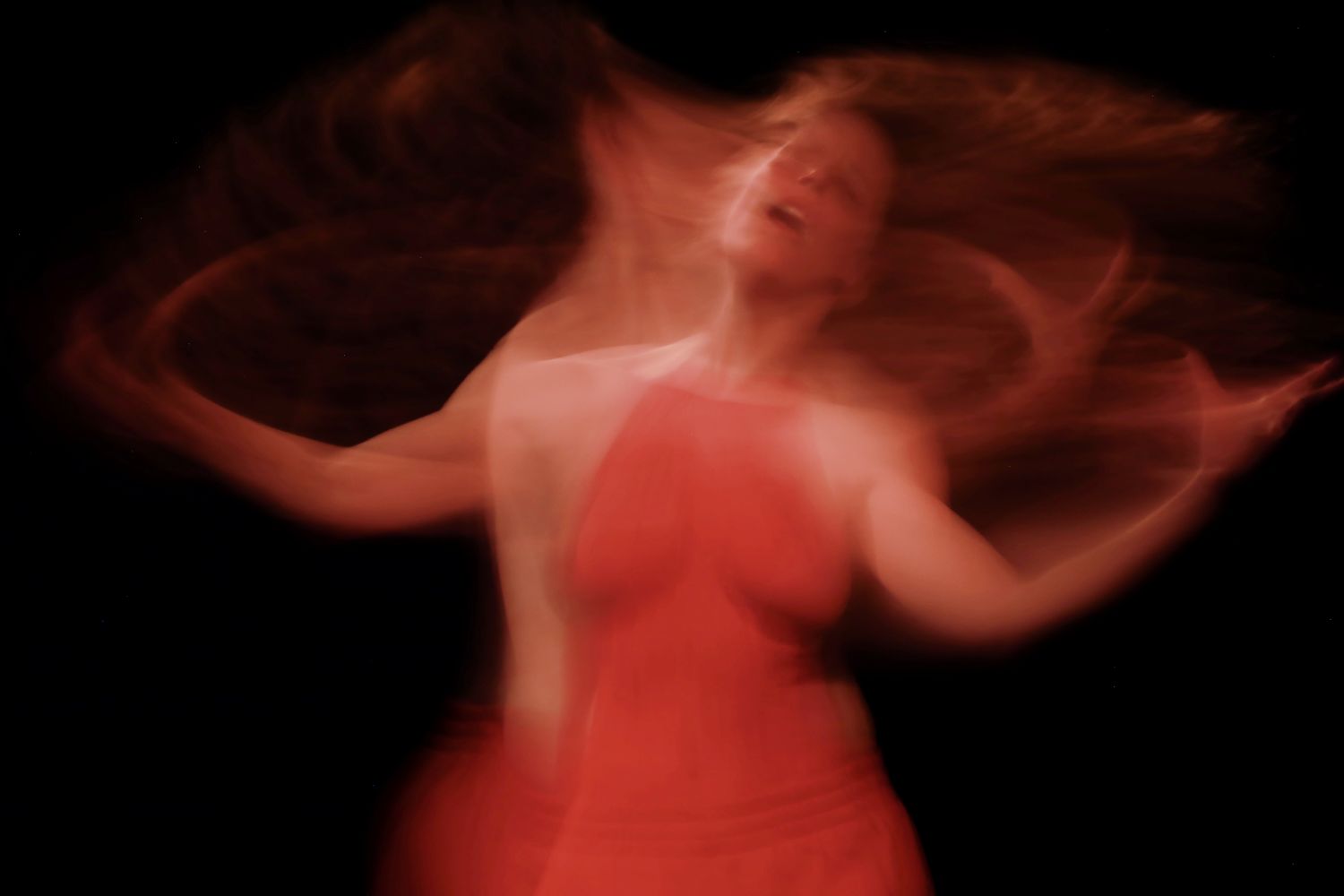
Gambiarra: Imaginary Solutions for Love – Choreographed and Performed by Cora Laszlo – Photo by Gunindu Abeysekera.
Laszlo describes this work as an investigation of “what love moves, and how to move with love. The dance emerged from exploring the connection between dance improvisation and everyday Gambiarra, a word in Portuguese for inventive and unconventional ways of solving/fixing things.” I wonder if this description is tied to current affiliation with the academy where artists are often asked to explain the inexplicable. (Laszlo is a PhD candidate in Cultures and Performance at UCLA.) If alignment between artist statement and stage performance matters here, I’d ask the writing to specify what type of love we’re talking about – or, if opacity is important – to find another way to say the thing. This dance does not feel like it’s about the type of love we feel for a child or an elder.
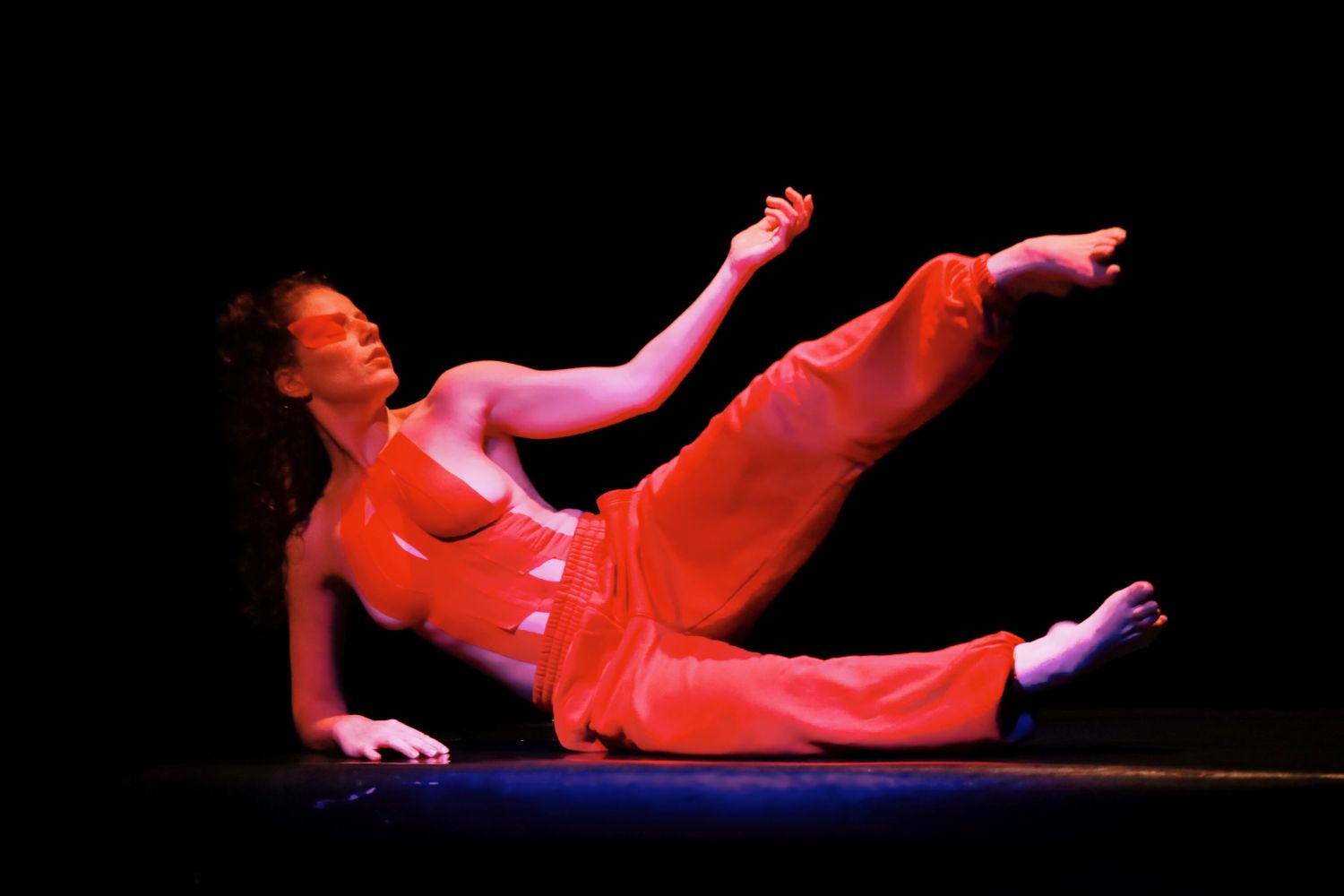
Gambiarra: Imaginary Solutions for Love – Choreographed and Performed by Cora Laszlo – Photo by Gunindu Abeysekera.
When the little wooden stool finally gets used, Laszlo cuts pieces of tape off of her torso and places them on top like she is setting the table. For the first time she speaks. “This is a table” she says holding up a piece of balled up red body tape, “Our table.” And then, with another piece of tape in hand, “This is a bed. Our bed.” She proceeds to narrate a domestic scene in which imaginary (and invisible) figures inhabit this tiny, metaphorical space, and have tea either in bed or at the table, day after day. Next Laszlo sticks a straight piece of tape to the floor and says: “This is the future.” And then another with the line: “And this is all the futures,” which I interpret as something about finite possibilities. Reading a dance is not necessarily important, but this scene – the only one in which Laszlo speaks – feels like some kind of clue or key to the deeper motivations beneath the composition. Maybe she is thinking about the confinement of domestic life juxtaposed against the expansiveness of fantasy. Maybe she is thinking about the limitations of free will. Maybe neither.
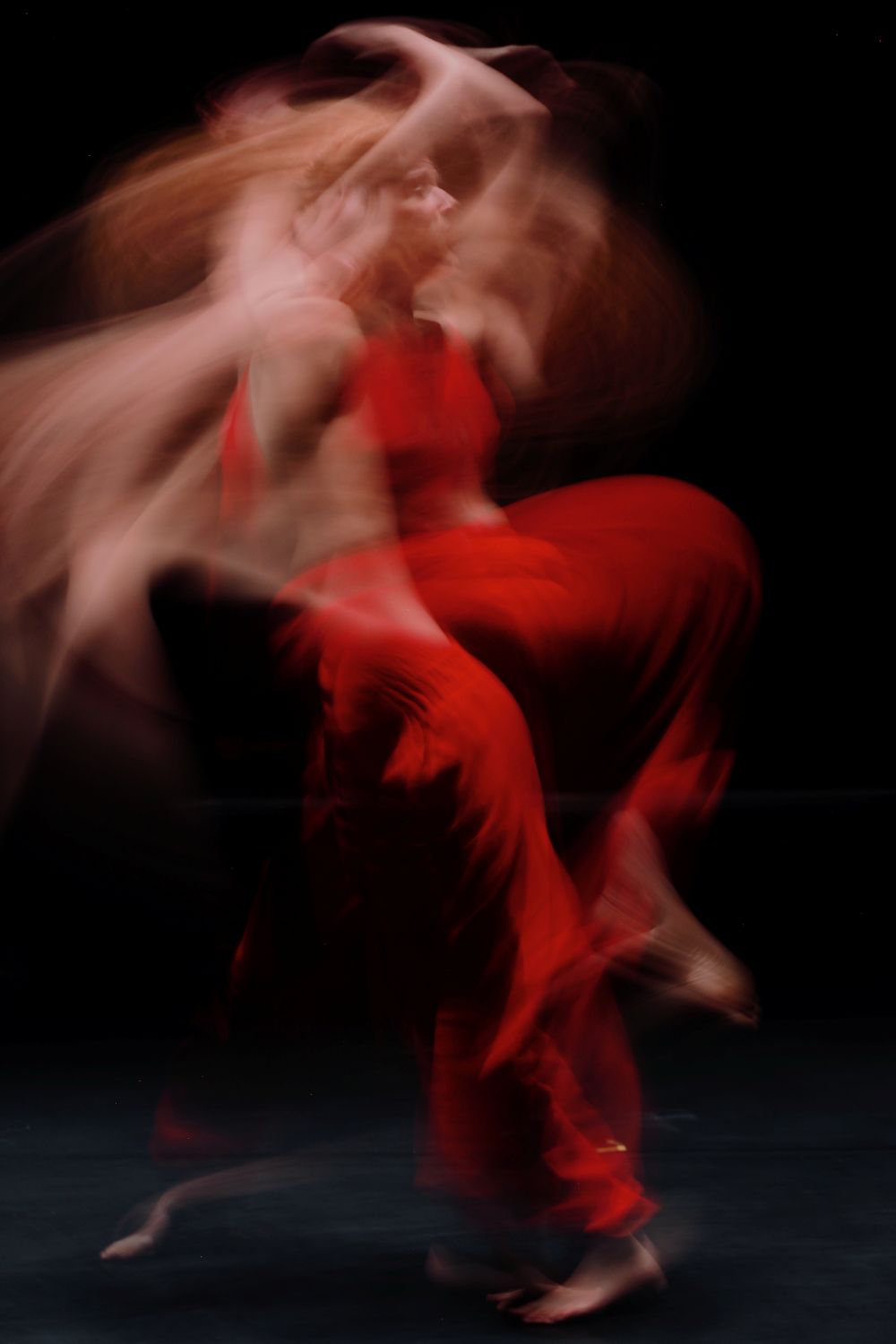
Gambiarra: Imaginary Solutions for Love – Choreographed and Performed by Cora Laszlo – Photo by Gunindu Abeysekera.
Laszlo has a keen sense of pacing and flow. Although the solo lasts an hour, it feels shorter because of how she locks our attention inside the current moment. And even though it has the quality of one long dream sequence, it also feels like it has a clear beginning, middle and end. In the final section, Laszlo removes all the body tape to reveal her naked torso and then repeats the self-touch motif from the beginning of the dance, holding her own naked breasts. As the audience applauds, she returns to bow in a white tank top, and when the applause settles she thanks us, the venue and the technicians in her slight Brazilian accent. Her persona is strikingly different from the character in the performance. I only wished she had let the dream state hover for a while longer without breaking the fourth wall, so we could digest the experience before re-entering the world.
Production: Gunindu Abeysekera
Creative Consultant: Jussara Miller
Poem and voice: sadé powell
Graphic design: Elis Laszlo
For more information about the Odyssey Theatre Ensemble, please visit their website.
Written by Annie Kahane for LA Dance Chronicle.
Featured image: Gambiarra: Imaginary Solutions for Love – Choreographed and Performed by Cora Laszlo – Photo by Gunindu Abeysekera.