
When Katherine Barkman, a San Francisco Ballet 1st soloist, was paired with principal dancer Joseph Walsh as the leads when Yuri Possokhov created a new full-length Eugene Onegin, her selection for a world premiere season opener ignited already simmering speculation that her promotion to principal dancer was imminent.
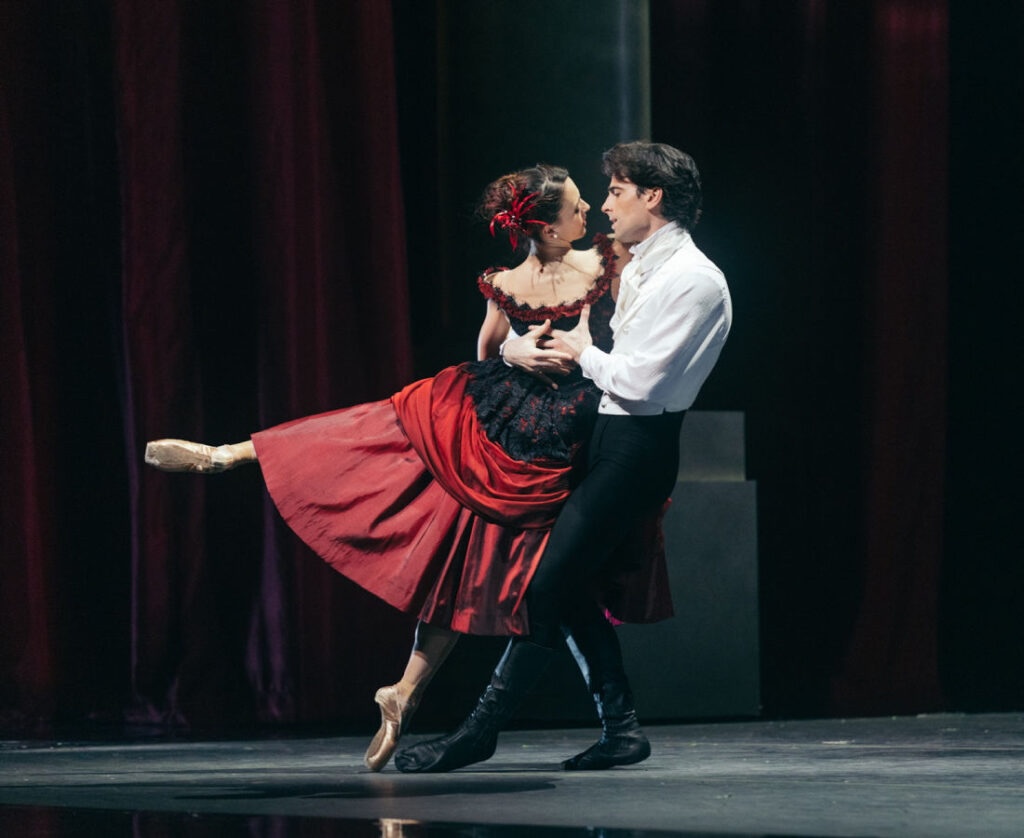
Katherine Barkman and Joseph Walsh in San Francisco Ballet’s “Eugene Onegin” – Photo by Lindsey Rallo.
The promotion came–not after Onegin at the start of the season, but near the end when Barkman danced Kitri in Don Quixote.
Per the reinstituted tradition, as Barkman and the cast were taking their final bows, artistic director Tamara Rojo strode onstage with an armload of flowers, recounted Barkman’s many accomplishments and the qualities that led to casting her in many principal dancer roles, she would now be dancing officially as a principal dancer.
On paper, Barkman’s rise from a small studio in Pennsylvania, initially appears to follow a straight trajectory from ballet classes to competitions to a professional career. But then, a fuller resume includes Manila Ballet in the Philippines, and other atypical stepping stones. Encouragement for dancers who don’t quite fit into ballet’s usual expectations.
In a recent interview with dance writer Ann Haskins, Barkman discussed how she applied lessons learned creating Tatiana in for the new Eugene Onegin when she was preparing to dance Kitri in Helgi Tomasson’s Don Quixote, the role Manilla Ballet played in her career, and how her teachers, three female artistic directors, and Barkman’s own grit have shaped her career steps to principal dancer. The interview has been edited for length and clarity.
Haskins: This season, you were the first ever to dance Tatiana in Possohkov’s new Eugene Onegin and later you danced Kitri in Don Quixote. Is there a difference in how you prepare when you’re dealing with a role like Tatiana in a new ballet and returning to a familiar role like Kitri in Don Quixote.
Barkman: Well, I think that there are ways that I approach them similarly and obviously some nuances that are different. Tatiana is a role that exists in other ballets based on the Pushkin book, but Yuri created a new ballet with a different perspective on Tatiana. It was an eye opening experience for me as an artist, because it was the first time I think I’ve done something new of that magnitude for a full evening. I did my research and made sure that I really read the book so I could truly understand what Yuri wanted for her. Every single day I headed into the studio as it was being created, as a kind of open vessel with a lot of knowledge to adapt and create steps with Yuri that expressed Tatiana as purely as possible. It would start from a place of emotion, then what that emotion creates physically, and then how does that physicality translate into ballet steps?
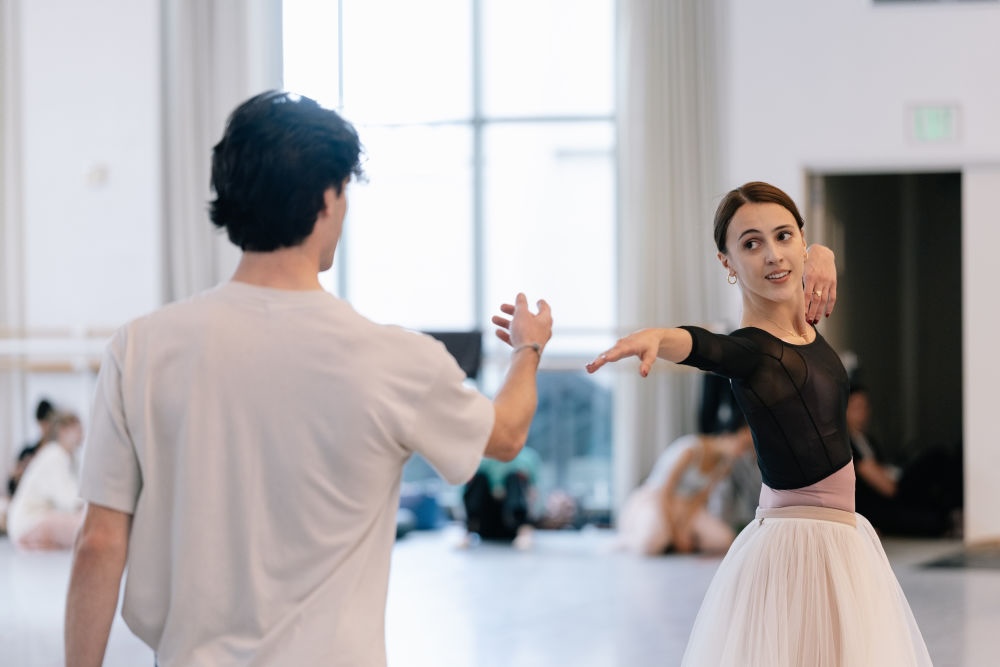
Katherine Barkman and Joseph Walsh in rehearsal – Photo by Lindsey Rallo.
Haskins: Having experienced creating something new, did that experience inform or maybe re-inform your Kitri in Don Quixote?
Barkman: I’ve done the Kitri Act 3 pas de deux many, many, many, many, many times, and I’ve done the full length before, but this was my debut with San Francisco Ballet in Helgi Tomasson’s version. Preparing for Kitri, after developing a new Tatiana in Onegin, I wanted to bring some of that same emotional capacity and emotional intelligence to something I had done a lot and maybe Kitri would become something completely different. And I feel like that happened. When I approached familiar steps for Kitri with the same openness that I had approached creating Tatiana, I found new things in Kitri. That was a really interesting experience, and doing Kitri this time was so different, so fresh, and ultimately, more authentic than putting on a character that has already been danced.
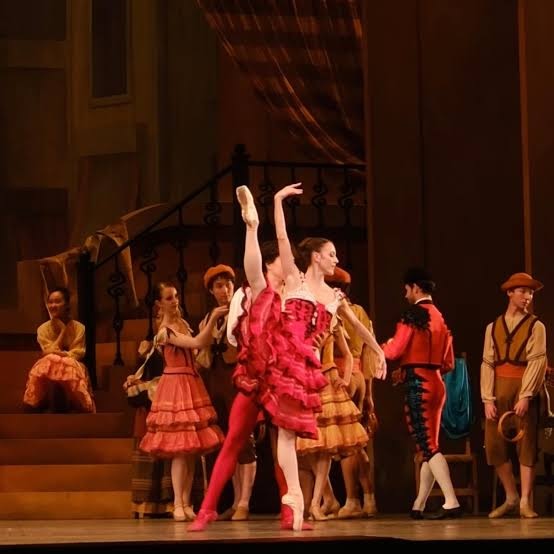
Katherine Barkman in “Don Quixote” – Photo courtesy of the artist.
Haskins: Was there a part or a moment in Don Q that shifted when you applied that thinking?
Barkman: I felt that Act One particularly shifted for me. I had always thought of Kitri as very fun, very light hearted, kind of a comedian. “Life of the Party” comes to mind when people talk about her with these stereotypical nuances that already exist about the character. Also, Tamara coached me a lot for this role and something that came up in our conversation about Kitri was this is a woman who wants Basilio to love her and to be the man of her dreams. And in most of Act I, he’s not acting that way. Part of her is thinking “I know exactly who I am and are you good enough for me? Maybe you should just do better.” This was a different take than I had previously tried. It felt closer to my heart and like more of me as a woman was coming out in my dancing. Also, dance-wise, it became this very fun back and forth with my partner. It was like a challenge, “show me what you’re made of.” It almost became a competition in Act One that ultimately resolved itself into “Okay, yeah, you are my match.” It was really interesting how it changed the dynamic of the whole first act, and that obviously changed the dynamic of Act 2, when they have run off and things become more intimate between Kitri and Basilio, and she allows him to approach her in a more vulnerable way. And then in Act III you know, they get married.
Haskins: You started studying ballet in Pennsylvania, and from the biographical summary, it looks like you did a lot of the competition route before your professional career, initially with Manila Ballet in the Philippines. And I understand a competition was where you met Julie Kent and you joined Washington Ballet, and then San Francisco Ballet. How did competitions factor into your professional career?
Barkman: Well, I actually had a very unconventional start into the world of professional ballet. I did recreational dance until age 14, then I started at a very small ballet school in Pennsylvania with a Russian coach and basically had to start over and learn ballet. Because I was from such a small school, I didn’t do competitions as competitions, but as the only time that I got onstage. And my teachers ingrained in me from a very, very early part of my training that competitions were purely stage experience. They said they didn’t care what I came home with. In fact, they actually warned me that I probably wouldn’t come home with anything, which is exactly what happened, but the competitions got me on stage and doing classical variations. Approached this way, I think they can be good for a student who doesn’t have a lot of stage time or is at a school that doesn’t offer performances. A competition works on your ability to perform under pressure and to handle nerves. It teaches you classical repertoire. There are a lot of positives to doing it. There are also a lot of negatives if your head is not in the right place. Later on, I did more competitions in the senior division, after the contract with Manila Ballet in the Philippines.
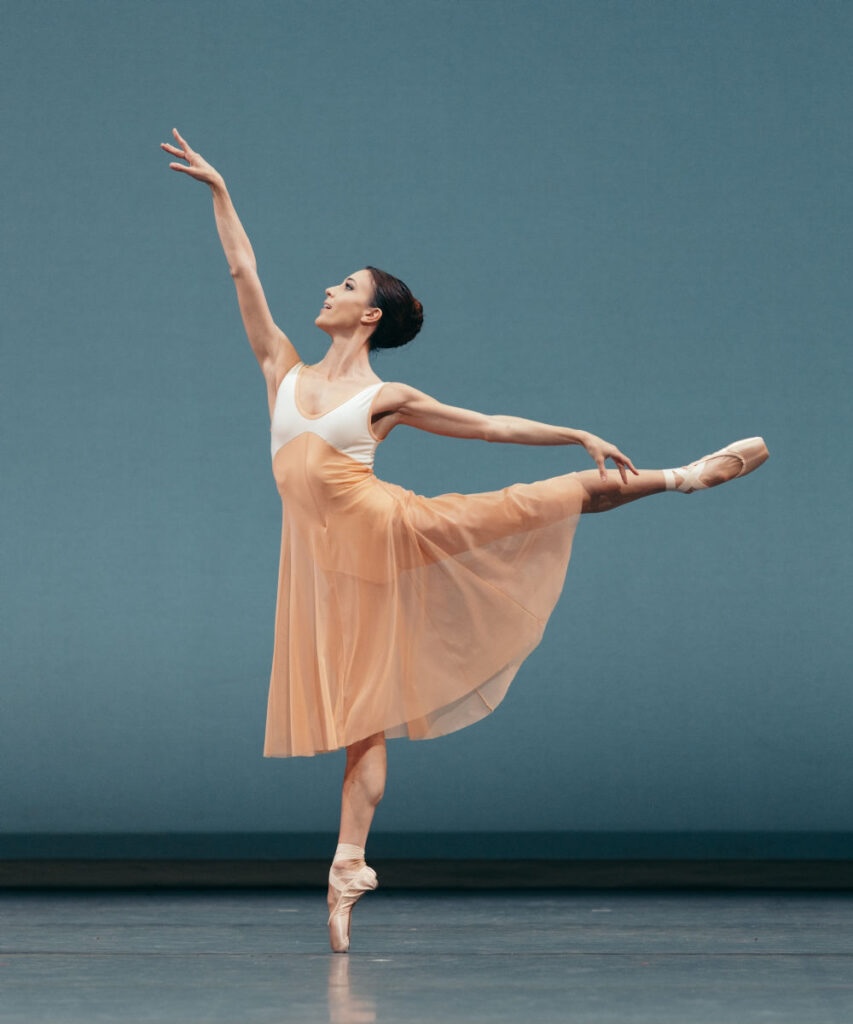
Katherine Barkman – Photo courtesy of the artist.
Haskins: How did you come to join Manila Ballet?
Barkman: At 18, I sent my resume everywhere. Didn’t get a lot of offers. I’m very small, so a lot of people were like, don’t even bother auditioning, that kind of thing. I’m five foot one-ish, almost five two. There was a lot of rejection over that point when I was 18. My teacher in Pennsylvania knew the director of the company in the Philippines from the Kirov Academy. It’s now the Mariinsky Theater, but it was called the Kirov Academy at the time when they knew each other in Russia. The director in the Philippines intended to retire and wanted someone she could coach and train to do the whole classical repertoire. My teacher and I felt like joining Manila Ballet as a principal dancer was the right call, although others heavily advised against it. Many, many people thought it could be dangerous or that I would be stuck there if it did not work out. But gut wise, and I’ve always gone with my gut, it was a 100% right call for me at that moment, given my late start and how much more training I still needed. So I moved to the Philippines at 18.
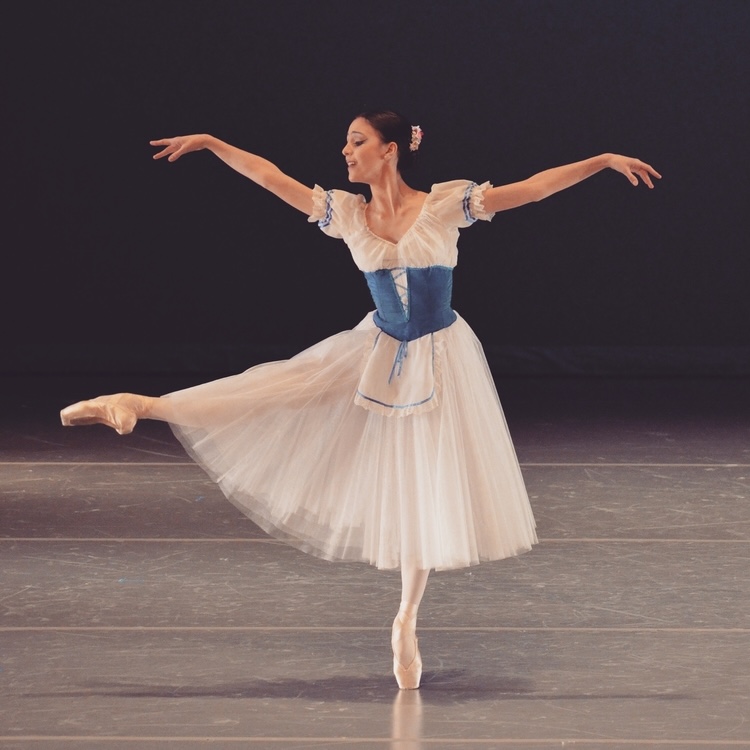
Katherine Barkman in her debut as Giselle with Manila Ballet – Photo courtesy of Manila Ballet.
Haskins: How was that experience?
Barkman: It was a really tough three years there, but I did dance everything. I actually do like teeth-grinding kind of work. Still, it was like boot camp. 100 degree weather, long rehearsals, getting thrown into big shows, doing the Rose Adagio in basketball courts. I did so much there. Also, the director Lisa Macuja-Elizalde would send me to galas including in Russia and Australia. It was invaluable to have someone who just wanted me to do well. She is one of the most generous people I’ve ever worked with and ever worked for, and she is still in my life.
Haskins: Why did you leave Manila?
Barkman: After about three years with her, there was still so much repertoire that I wanted to do. It was time for me to go somewhere bigger, and a good way to do that would be to join the Jackson and Varna competitions. The director coached me and in one summer, I went to competitions in Jackson and Varna. I was already a professional and in the senior division at that point, very different from when I did competitions as a kid. I won silver medals in both. It was nice to get silver medals, but I was going for a job, and I got a job with Julie Kent at Washington Ballet.
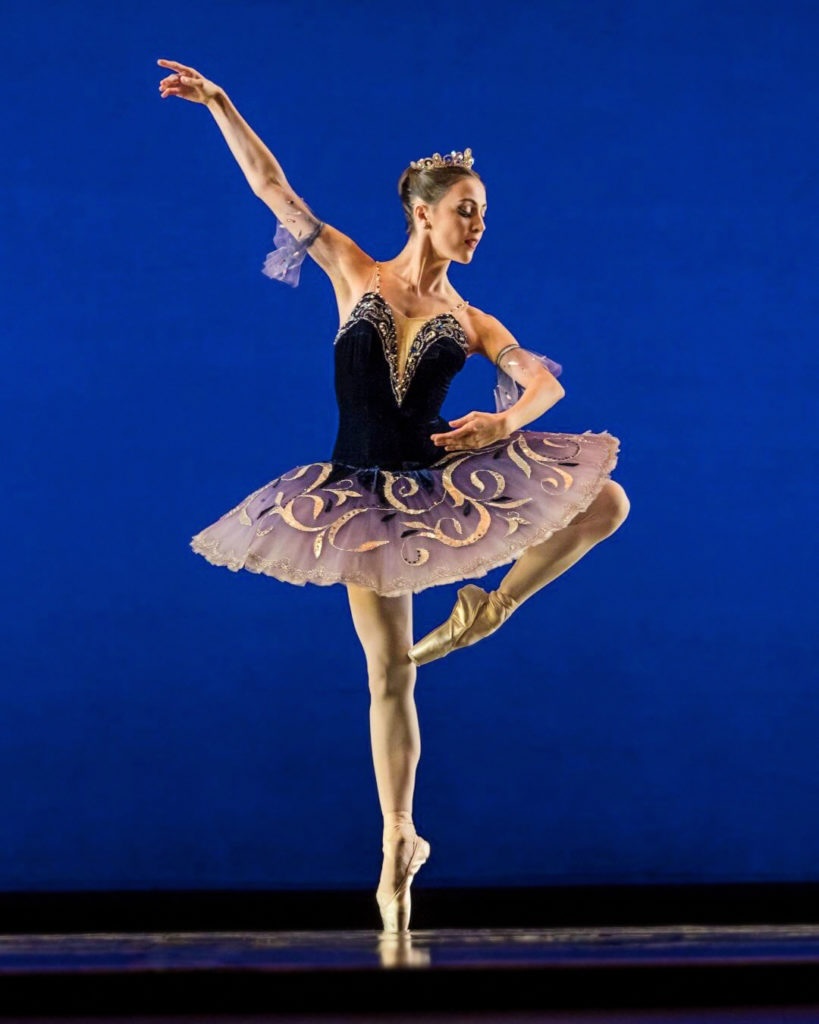
Katherine Barkman in 2018 USA Ballet Competition – Photo by Richard Finkelstein.
Haskins: You went to Washington Ballet, just before the pandemic. I understand during the shutdown you returned to Pennsylvania.
Barkman: The Covid shutdown was so difficult. It felt like the whole world was crumbling so I went back to Pennsylvania. To be honest, I slowed down for the first time in a long time and I had time with my family. When I was in the Philippines, it wasn’t easy to get home, no more than once a year, and I had missed so much. Being home during the pandemic gave me time with my mom, dad, and sister that I just didn’t get before. I reconnected with them, and spent a lot of time reading, being outside in the woods, really wholesome things. But the other thing was I had the small studio that I had grown up with in Pennsylvania. My teacher was gone and it had a new director who rented the studio to me for the mornings. I would drive alone to this little studio where I had started training. It felt like going back to the beginning and a chance to touch where I had started. I spent the mornings there training myself, then a mutual friend connected me with Leann Benjamin, principal coach with the Royal Ballet. She was at home. I was at home. When she offered to teach me a class on Zoom, I said I would love to. Later she asked if I would like to work on repertoire. And for a couple months we were working together via zoom on all of this classical rep. It was very random and very spontaneous, but Leann was an important figure for me during the pandemic, because she kept my mind hungry. And it was just training, just coaching. There was no performance in sight. It wasn’t for anything. It was just for the sake of literal knowledge and learning ballet. And it was really, really special. I look back on that time with a lot of gratitude for Leanne.
Haskins: Please talk about the move from Washington Ballet to San Francisco Ballet.
Barkman: I loved my time at Washington Ballet after the pandemic. Julie Kent is a wonderful mentor, such a wonderful coach and director, and I was very sad to leave Washington Ballet. I just felt that I could try for a bigger pond. Again, I’m very repertoire driven and San Francisco Ballet was always on my mind because of the diverse repertoire and how many shows there are in the Opera House. San Francisco Ballet has such a unique structure, and we get to dance a lot and that’s really, really important to me. The transition was very quick, quite last minute. Helgi hired me shortly before he left and right as Tamara was coming in. Tamara also was a big factor in my wanting to go there. I love the repertoire that she does. At first it was a lot of “no” from Helgi for about a year, and then all of a sudden it just happened really, really fast. I think as dancers, we want things so instantly, but I think a lot of the great things that I’ve been able to experience in this career have happened through painstakingly slow movements and putting things in place, like seeds. You plant seeds and then you don’t always know when they’re gonna sprout, but then they do, and it is great.
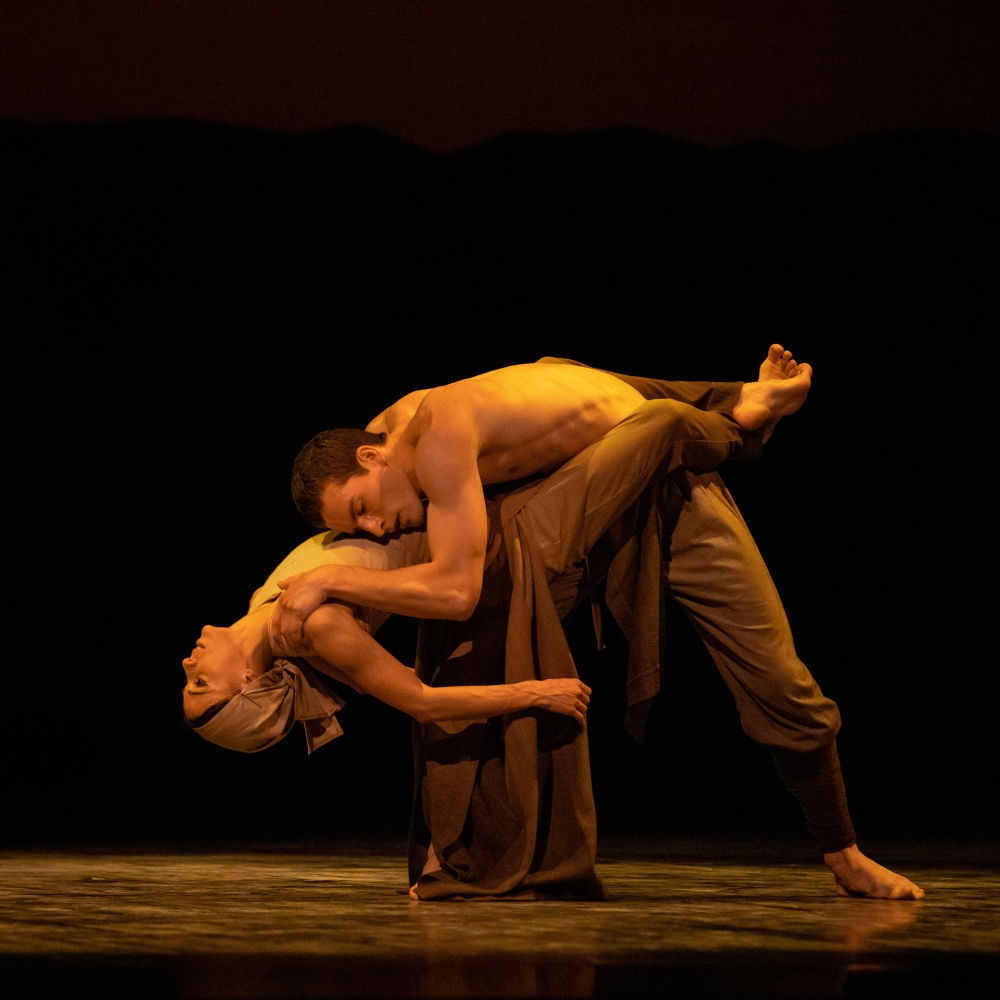
Katherine Barkman with Benjamin Davidoff in Akram Khan’s “Dust” – Photo by Reneff Olson Productions.
Haskins: You mentioned how your height was an issue at the start of your career. Do you find it still an issue or has ballet loosened up?
Barkman: It’s interesting. Every once in a while I’ll come across a comment that’s like, “Oh god, you’re just so small.” And I’m like, “Well, you haven’t seen me on stage.” It’s usually from people who haven’t seen me dance. It’s not something I battle with, but something that I definitely factor in. I feel lucky to have partners like Esteban Hernandez and Joe Walsh, who are not like super tall men, but we complement each other really well. It’s always nice to find partners who you look your best with. That’s really important visually on stage. Also, I’m always aware that certain poses or certain choices that might have looked really good on a taller individual might actually make me look a lot smaller. So I’m always a little bit conscientious of small, I mean really small things, just to give me a little bit more length on stage.
Haskins: There’s a point for dancers who go into professional ballet ranks, and especially ones who rise to the level you have, where you know that you’ve got something, that the ‘force is with you,’ to quote Star Wars. A dancer looks around and can see there’s something elevated going on. Did you have that feeling at some point? And if so, when, not as an ego thing, just that awareness?
Barkman: That’s a really interesting question, because I know what you mean. I think, Oh, God, it’s not an ego thing, because I don’t love it when people use the word energy, but I’m going to use it in a very physical sense. I feel I’ve always seen in my mind that it was possible. And there were a lot of smaller moments when reaching a certain level felt impossible given a circumstance, like when I got injured, when I didn’t get a contract. There were a lot of moments where I wondered if I was going to be able to reach the level that I see in my mind as possible. I think at the end of the day, it’s not something that’s outside of yourself. It’s really you. I feel like everyone has it and it’s how tapped in to it you are. That’s really what I think. I do think that everyone has something to give and something to share and can reach their greatest potential, whatever that is, I think for myself, what I’ve learned is that the force has to be used completely unadulterated, completely pure. So it is like the stripping of ego to allow that force to come through, because there’s nothing worse, in my opinion, seeing someone on stage who’s trying to dance to impress you or people who have something to prove, and they might not even know that they’re doing it. I feel like there’s a tipping point that you reach where you understand that you have this power, this force, or something that you want to say, or something that you want to share, and you literally strip every piece of yourself out from in front of it, and it’s not for you or about you at all. It’s absolutely to give it away. It’s absolutely to share it. So I try to be very self-aware where things like ego could be getting in the way of me sharing what it is that I think is important to share in the purest way possible, if that’s a fair way to say it. Does that answer your question at all? I felt like I went on a tangent. I’m sorry.
Haskins: No worry. I loved it. Your answer went where it needed to go.
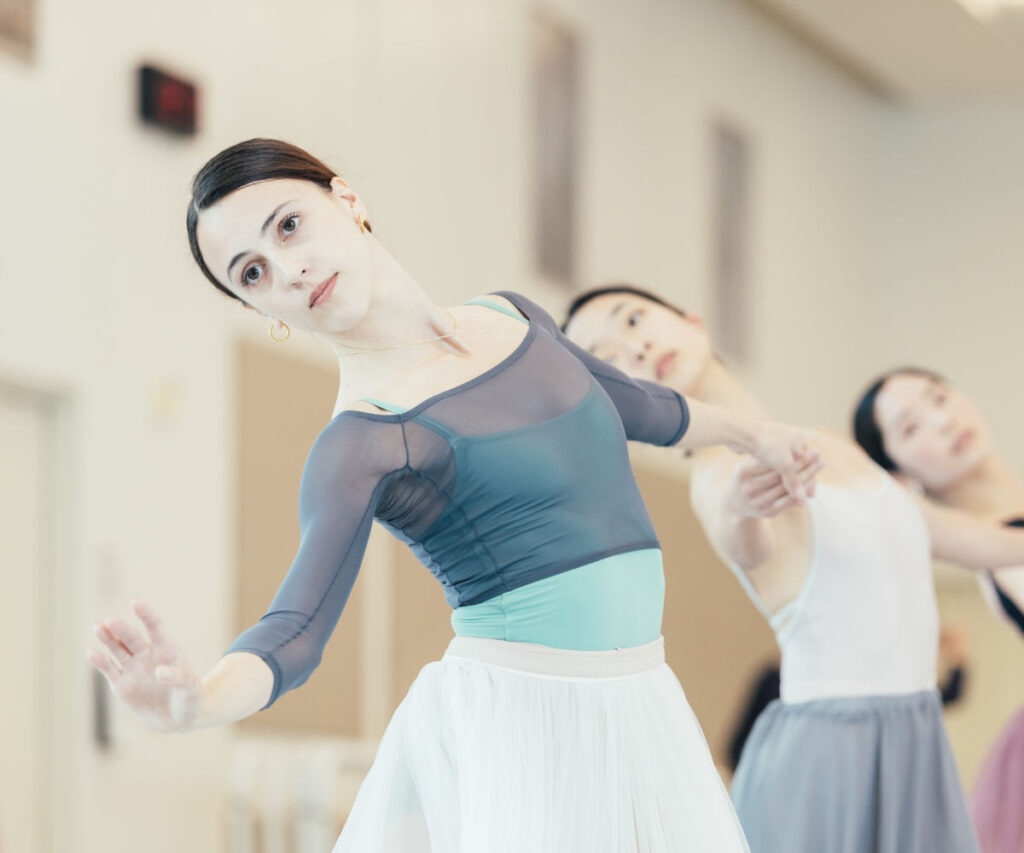
Katherine Barkman – Photo by Lindsey Rallo.
Haskins: You’ve been a principal dancer at other companies, but you’ve only become a principal dancer at San Francisco Ballet. Is anything different yet?
Barkman: Not really. I go to class. I do my strength and conditioning getting ready for the next shows. It is a huge honor and has been a huge dream of mine to reach this level. I’m still processing it, and I’m definitely not someone who processes things quickly. I’m very, very aware that reaching this point is a wonderful recognition, but because of the relationship that I have with my work and the art form itself, I’m also very aware that there are a lot of challenges ahead of me, which is really exciting for me. I don’t think much will change my day to day. It will probably get harder, and that’s good. That’s really good. I’m ready for that. I feel like I’ve worked hard, mentally and physically these last couple years to take on the workload of a principal dancer in the company, and at San Francisco Ballet that’s a very, very intense workload because of how we perform and how condensed our season is. We are in a very heightened state of intensity for a long period of time. I feel I’ve learned how to handle that.
Haskins: Thank you for your time and congratulations on your promotion at San Francisco Ballet

Katherine Barkman – Photo courtesy of San Francisco Ballet.
.
More on Katherine Barkman at her official website Katherine Barkman.
San Francisco Ballet is on tour this summer. Jacob’s Pillow Festival in Becket, Massachusetts, Aug. 5-9 SF Ballet at Jacob’s Pillow, the Scotland’s Edinburgh, International Festival, Aug. 28-30, SF Ballet in Scotland, and London’s Sadler Wells, Sept. 9-12 SF Ballet in London. Full tour details at SF Ballet 2026 tour
In December, San Francisco Ballet opens its 2026-2027 season with the Nutcracker. The repertory season runs from January to May 2027. Performances at the San Francisco War Memorial Opera House, 301 Van Ness Ave., San Francisco. Casting is posted on the website approximately two weeks before performances. Full season details and ticket information at SF Ballet 2026-2027 season.
Written by Ann Haskins for LA Dance Chronicle.
Featured image: Katherine Barkman – Photo by Tina Krohn.