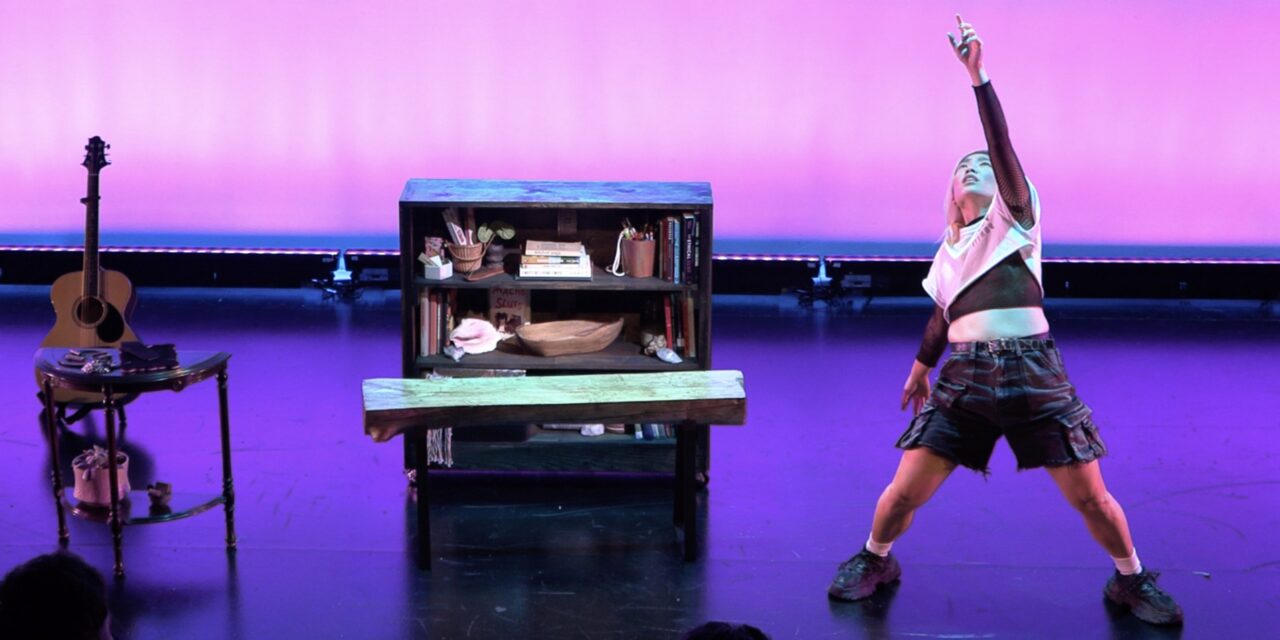
On the evening of June 27th, 2026, I attended “BUTCH BALLET” at the Outside In Theatre, and this poignant, funny performance was a perfect way to celebrate the last weekend of Pride. Created by gina young, substantial Movement Architecture by Codi Gentle, and presented by SORORITY and Outside In Theatre, “BUTCH BALLET” was a collection of vignettes using dance, theater, and music that explored themes of queerness and identity. Anna Moceri, Denise Jones, María Jurado, Maze Felix, and Rae Eubanks were outstanding performers, each bringing vulnerability and personality to the stage.
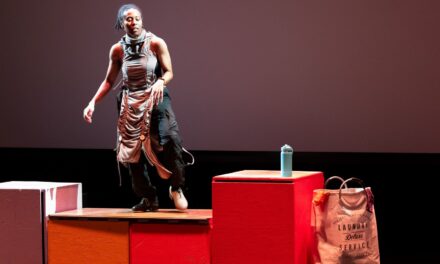
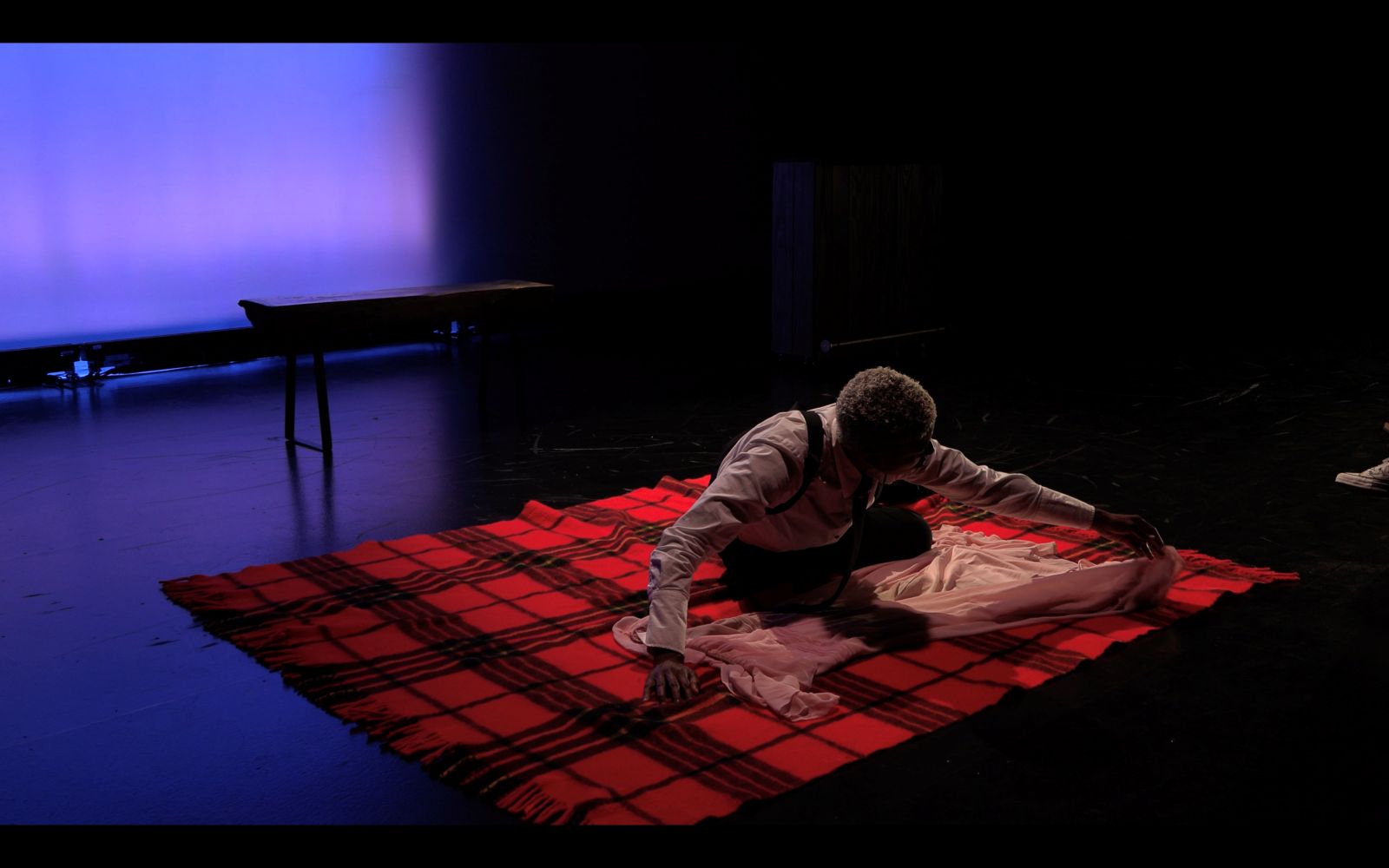
The piece started with the dancers entering the stage in masculine sports attire and striking a pose. Recognizable to any ballet fan, the four little swans music began to play as they bumped and high fived, contrasting the typical movement accompaniment to this song. This was the first of many scenes that utilized stereotypically masculine motifs. Here, they slapped each other with towels as they played out a locker room scene, and later they used tools to deconstruct and reconstruct benches. Near the end, embodying a Cowboy Americana vibe, they drank beer by a fire in red flannels. Often, there was some contrast or unexpected element, like the beer labels reading “Butch Light” instead of “Bud Light.” In the locker room scene, an unexpected moment was when one performer gently helped another put on a chest binder. At the end, in a humorous twist, the five emphatically grabbed hands and hopped off the stage like the little swans who typically dance to the song.
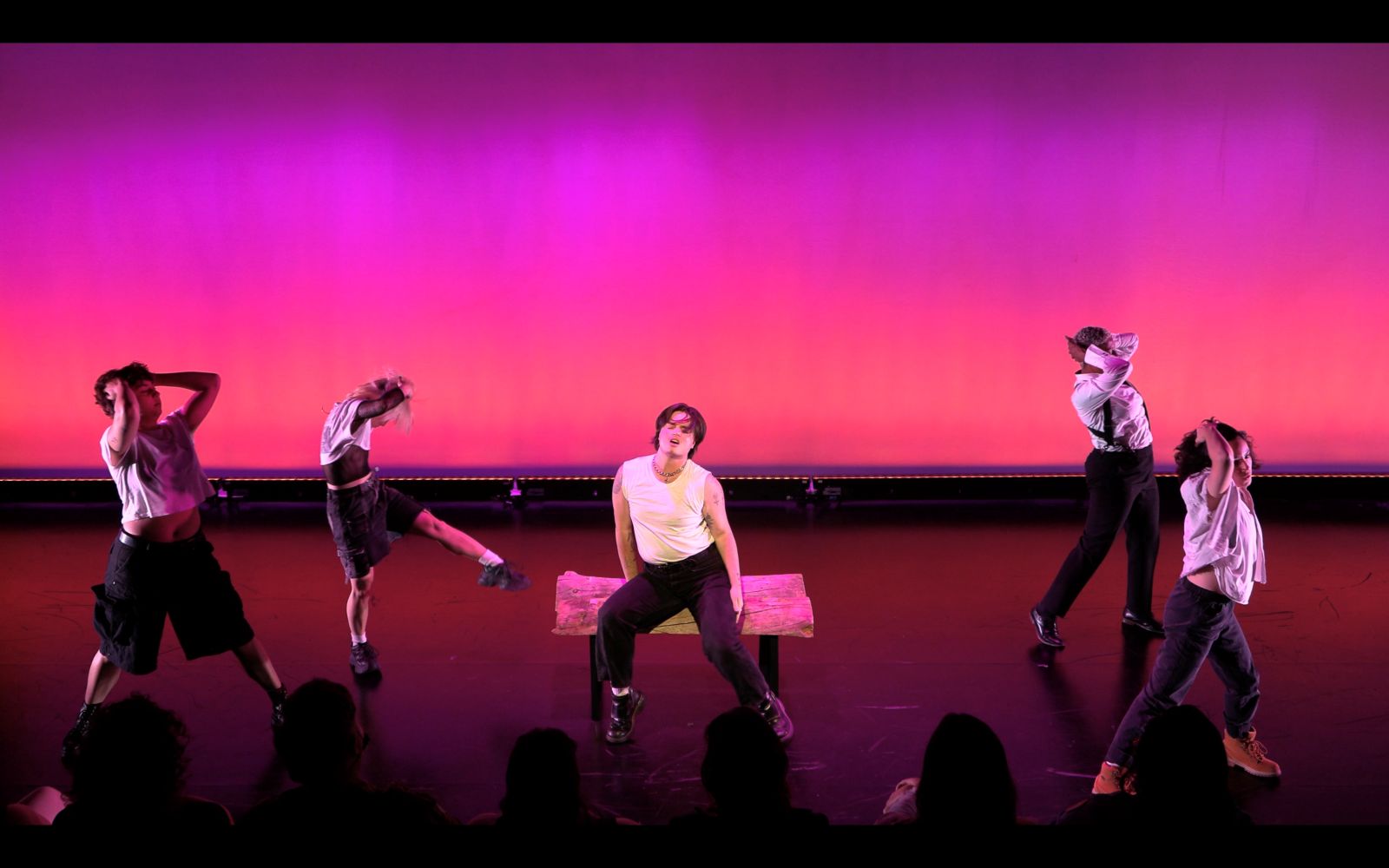
“Butch Ballet” – Rae Chanting – Photo by Melissa Yu.
After they left, simple lighting was accompanied by voiceovers of the performers talking about parts of their own identities. I liked that these were voiceovers, as it felt more universal to not pair the statements to an individual standing in front of us. It made it feel like more than just five perspectives were being shared, and it allowed the audience to freely connect with various points of view. In another section of voiceovers, they spoke about their own feelings and anxiety regarding bathroom use with their gender presentation and identities. Prior to the show, I had used the bathroom at Outside In Theatre, which was gender neutral and open to all. A shoutout to this new theater space on their inclusivity in action and going beyond presenting the work of queer artists. It felt important that the complexity and fear of choosing the right bathroom or avoiding the experience wouldn’t exist in this space.
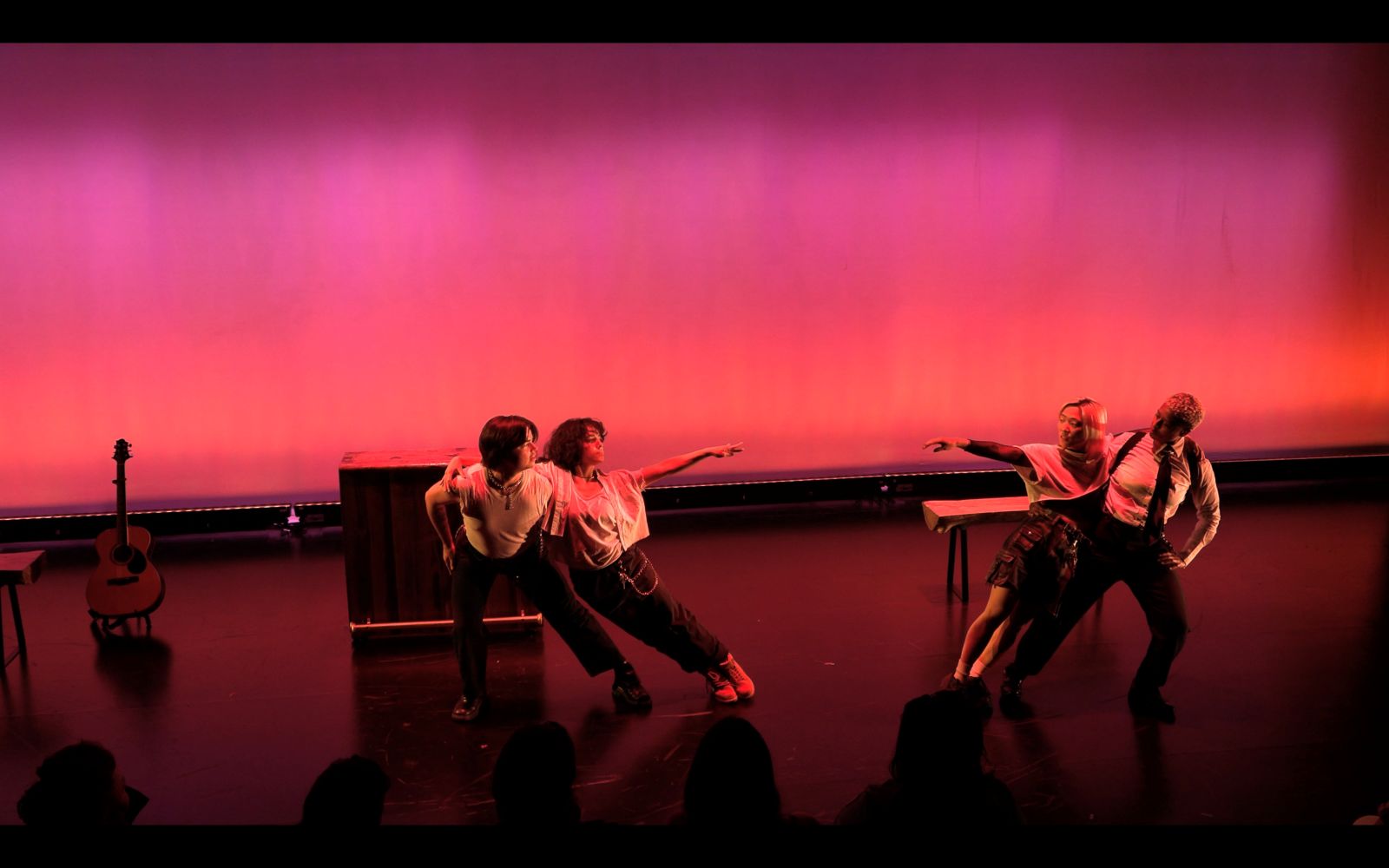
“Butch Ballet” – Chavela – Reach – Photo by Melissa Yu.
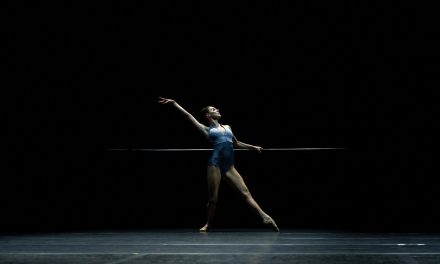
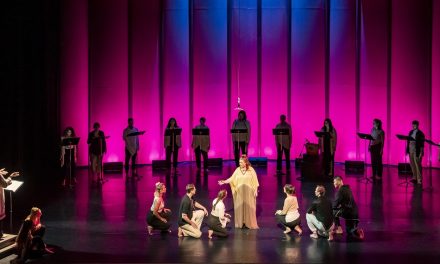
Dance and movement were woven in throughout the show as content and as the topic of discussion. The first connection to dance came with the use of the little swans song, a traditionally female dance. As the dancers jumped in their athletic attire, the contrast and slight discomfort was clear. Later, during a beautiful singing performance by María Jurado, the rest of the cast entered to dance, and they moved in a way that felt more like male danseurs. They dramatically ran and knelt to the floor with sweeping arms, and even humorously jingled keys hanging on their hips to accentuate a moment of the music. It felt like a chance to embody and claim the style of ballet that felt more comfortable, rather than try to fit into the roles that ballet forced upon them when they were younger.
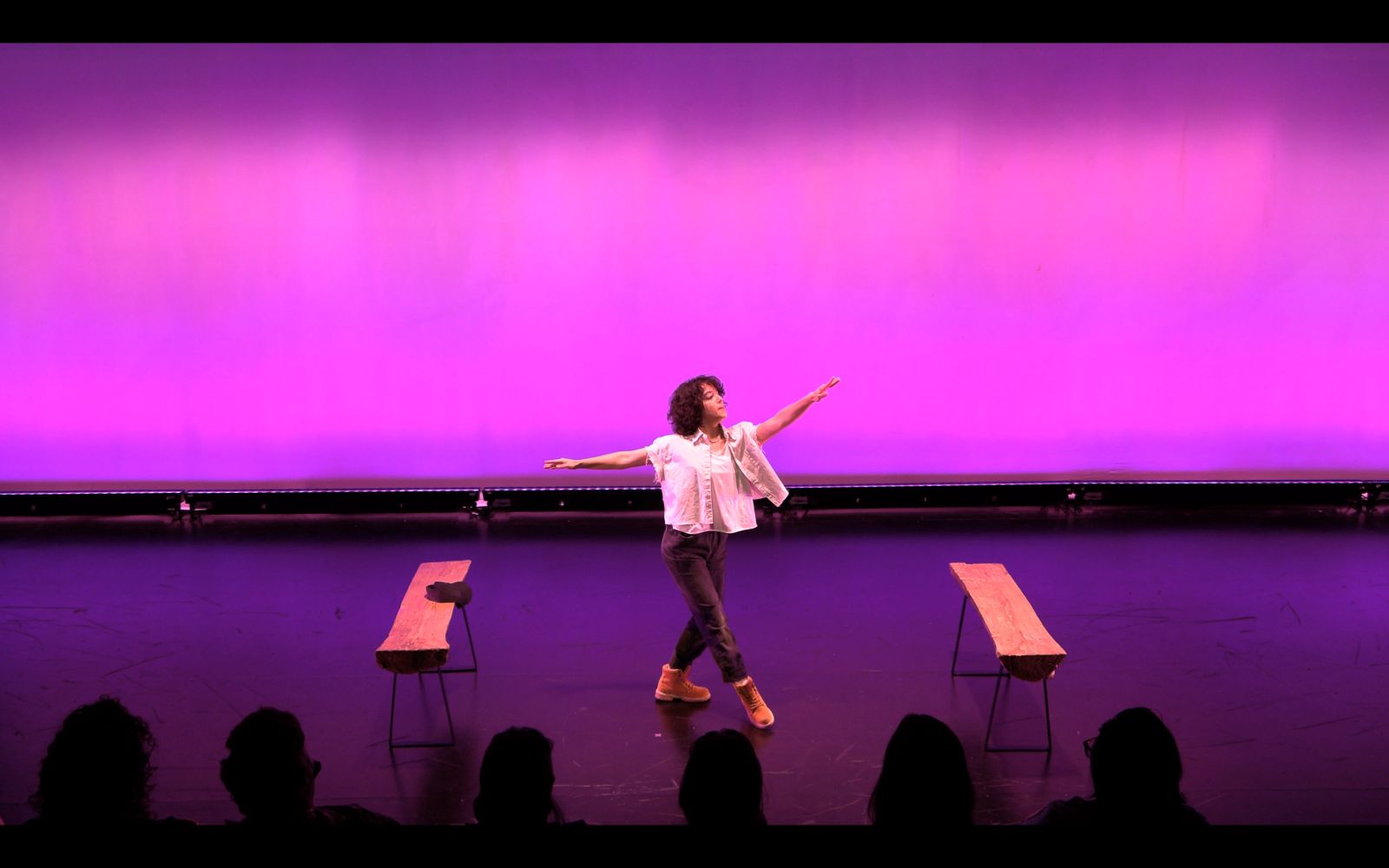
“Butch Ballet” – The Mirror – Photo by Melissa Yu.
One of my favorite scenes was a monologue given by one of the dancers. They read out woven together statements from all of the performers about their specific relationships with ballet. Like with the voiceovers, I liked that it was not just the five performers telling their stories. There was a level of mystery since we didn’t know who felt what and which statements even went together. At times, there would be a funny contrast when the perspective shifted, like negative statements being quickly followed by “I loved ballet.” The result was poignant but not too heavy, with the shifting perspectives giving moments of levity.
“Butch Ballet” – The Bills – Photo by Melissa Yu.
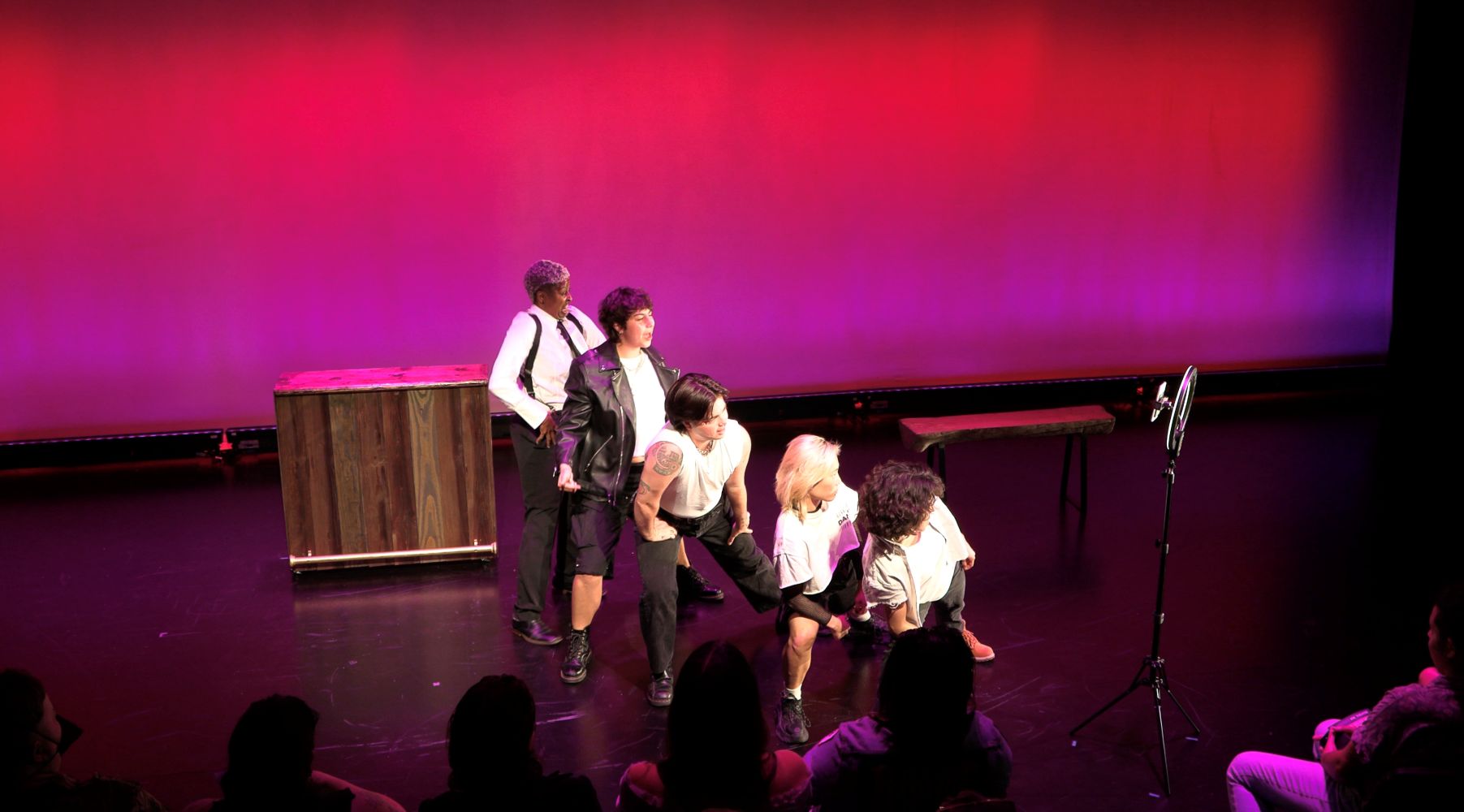
There were also moments of dance that seemed to represent freedom and self-expression in less balletic terms. “Here’s how I would dance if I were only dancing for myself” stated one of the dancers as they moved freely with a loose spine and tossed limbs. In another moment, the dancers lined up behind a phone on a tripod with a Ring light and took turns performing for the camera, showing off another style of movement while making funny references to trends of Tik Tok dances.
Later, two notable dance sections brought us towards the resolution of the show. In one, one of the performers rapped a sequence of labels and terms starting with butch and masc and ending with words like limitless and boundaryless. As they spoke percussively, they seemed to gain confidence and to be reclaiming these words that may not have always been said nicely. The rest of the cast entered and danced to the mix of beats and words. They swayed and spun, with motifs like push-ups and bicep curls mixed into the vocabulary as they danced for themselves.
“Butch Ballet” – The Lens – Photo by Melissa Yu.
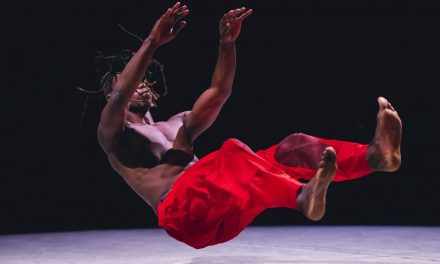
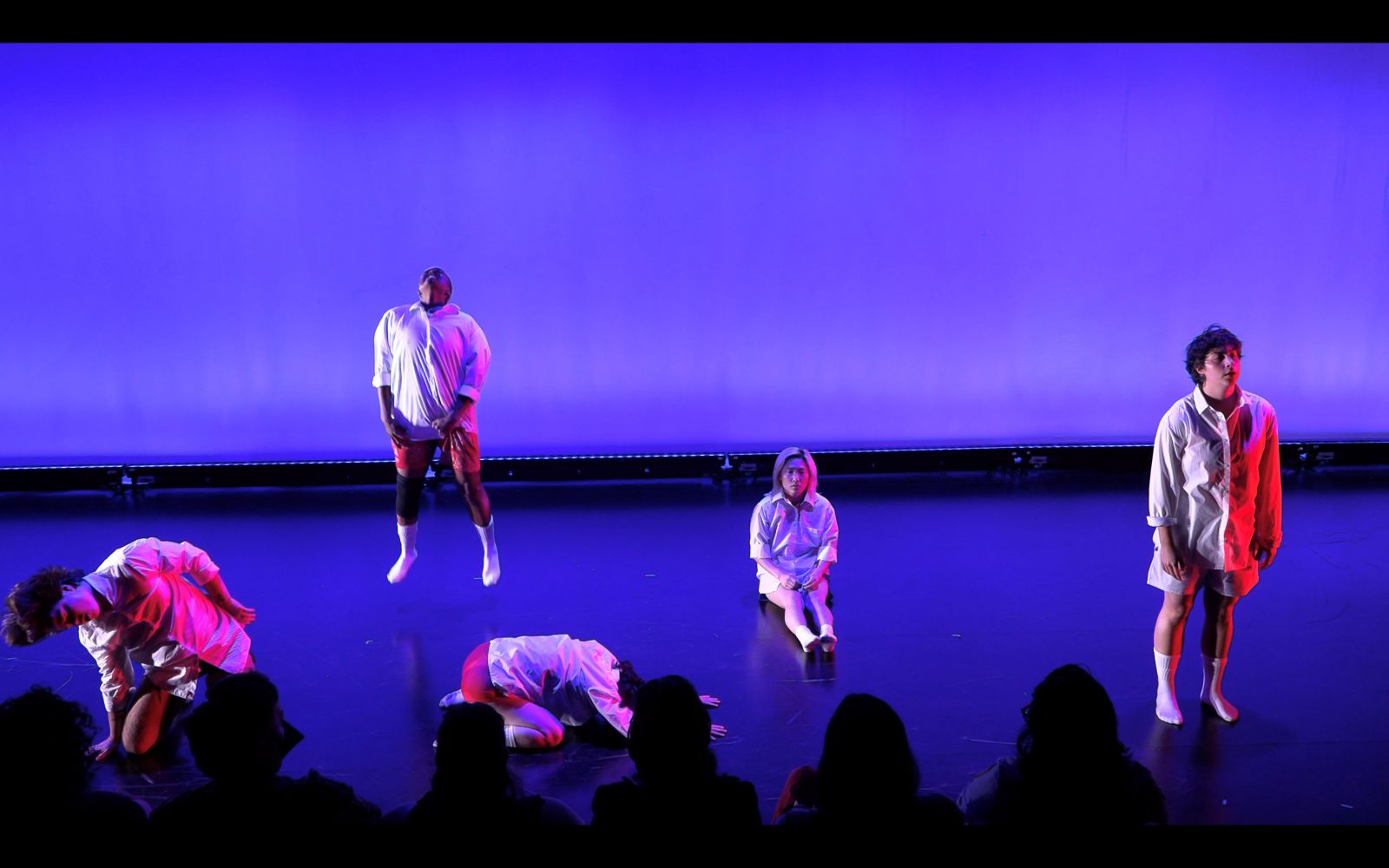
After a transition of recorded voices, the dancers entered and stood in a line, dressed in oversized white shirts. The sound consisted of wave sounds mixed with voices naming the immense number of House and Senate bills that target members of the LGBTQ+ community. They undulated and gestured, breaking from the formation as the waves became louder. It felt like they were being thrown around by these waves. The dancers threw themselves at the ground and removed their shirts to reveal tops, bras, and shorts in red, white, and blue. Eventually, the movement shifted to swimming actions, seeming to represent taking control and trying to stay afloat. The struggle and frustration showed in their faces, and the waves became louder and louder as the dancers left one by one. This piece was powerful in the context of the show and could have functioned as a meaningful standalone work. The patriotic colors of their costumes contrasted the ways the government is actively seeking to limit their existence as members of the queer community. After many of the vignettes, shifting from past to present, this section felt solidly in the present day.
“Butch Ballet” – The Picnic – Photo by Melissa Yu.
I thought the transitions of the show were well-managed. Set pieces were moved on and off by the performers with intention or even in character, and things like the voiceovers gave time for changes. The simple set pieces, two benches and a bookshelf, were set up in various ways to set different scenes in the black box space. The lighting, done by Erica Ammerman, also functioned well to bring us to these different settings and keep the momentum going through the transitions.
“BUTCH BALLET” was a meaningful and well-structured work. The vignettes and moments came together to create a mosaic of various experiences. Soft moments were juxtaposed with humor and joy. The cast of five represented a shared identity of “butch” while also having their own nuanced identities as trans, lesbian, or non-binary, and their journeys reflected both the shared and unique facets of their journeys. It was a touching and funny work, bringing queer art, queer resilience, and queer joy to life onstage.
For more information about gina young, please visit her website.
For more information about Outside In Theatre, please visit their website.
Written by Rachel Turner for LA Dance Chronicle.
Featured image: Butch Ballet – Levity – Photo by Melissa Yu.