
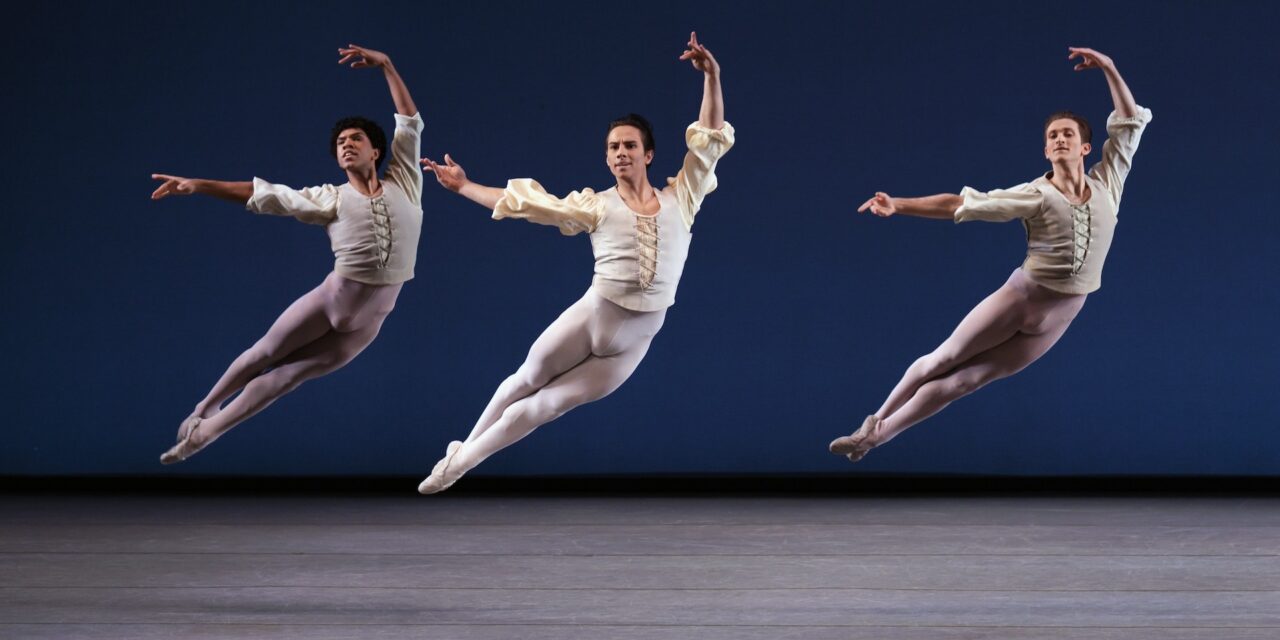
Twenty years … is a long time…Long enough for dancers to become legends, for artistic directors to come and go, and audiences to wonder whether memory had made the company larger than life.
From June 24 through 28, Glorya Kaufman Presents Dance at the Music Center welcomed New York City Ballet (NYCB) back to Los Angeles for its first appearance in two decades. Dividing the engagement between contemporary works and classics, the company offered two distinct programs designed to satisfy devoted balletomanes while introducing a new generation to one of America’s most influential dance institutions.
The anticipation at the Dorothy Chandler Pavilion was unmistakable….So too, was the skepticism.
Could this company—whose reputation was built by George Balanchine, Jerome Robbins, and generations of remarkable artists—still live up to its own extraordinary legacy?
Founded in 1948 by Ballet Russes’ George Balanchine and Lincoln Kirstein, New York City Ballet forever altered the course of American ballet. Under Balanchine, ballet became leaner, more challenging, more musical, and unmistakably American. Robbins expanded its emotional vocabulary, while Peter Martins guided the company through nearly three decades following Balanchine’s death. Today, Artistic Director Jonathan Stafford and Associate Artistic Director, the remarkable Wendy Whelan inherit not only one of ballet’s greatest repertoires, but the responsibility of keeping that legacy alive.
After years of waiting, its offerings in Program A proved a surprisingly uneven homecoming.
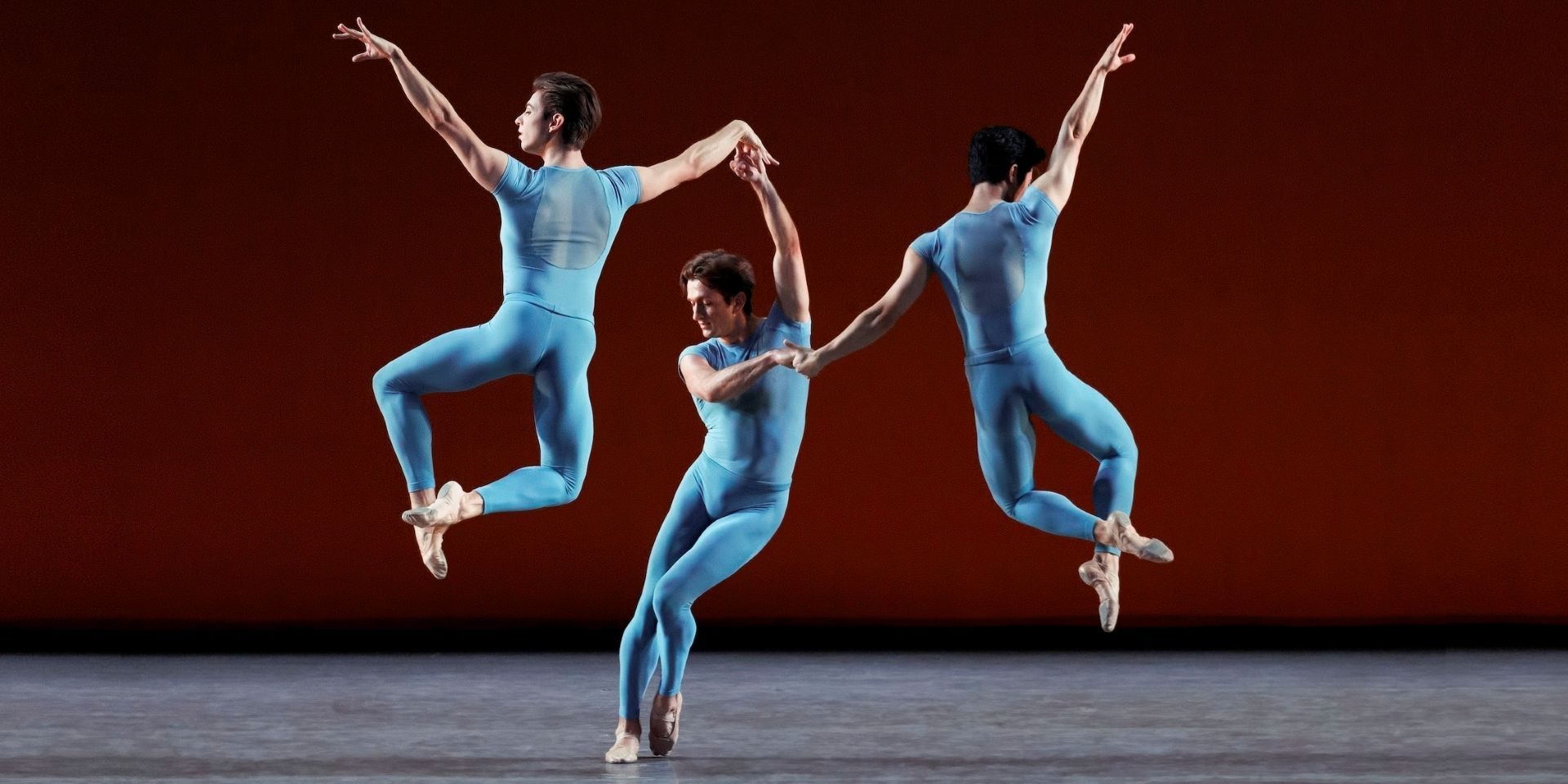
New York City Ballet in “Signs” by Gianna Reisen’s – Photo by Erin Baiano.
Program A opened with Gianna Reisen’s Signs, originally created for students of the School of American Ballet. Set to Philip Glass, the work never seemed to discover its own center with its unfettered arm movements, amoeba-like formations and misguided direction. Despite a vibrant corps member, Olivia Bell’s, the piece’s focus never quite caught fire, leaving barely a hints of the vitality one associates with the company.
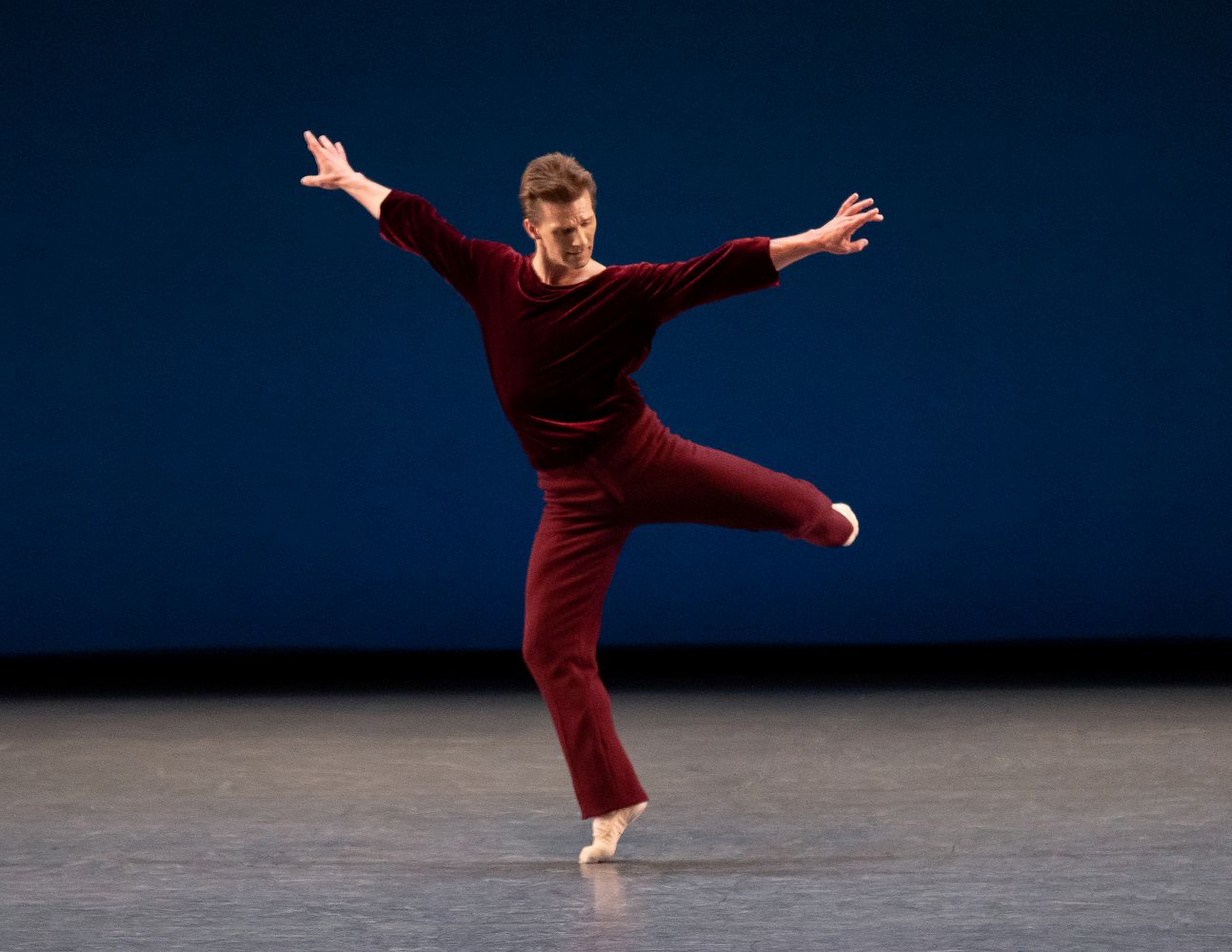
NYCB – Daniel Ulbricht in Jerome Robbins’ A “Suite of Dances” – Photo by Erin Baiano.
Jerome Robbins’ A Suite of Dances, was originally created for Mikhail Baryshnikov who exuded such lilting warmth and playful artistry. The piece allowed moments to glide, to skim with effortless simplicity, virtuosity and meaning, and covering the empty stage with clear intent that rarely presents itself.
In Program A, Bach’s selections from the Six Suites for Solo Cello, paired cellist Hannah Holman with soloist Daniel Ulbricht. Dressed in the traditional deep mauve pants and shirt, Ulbricht danced with characteristic ease, yet the humanity that made Robbins’ original creation unforgettable never fully emerged.
Then came Ulysses Dove.
While the first and third works left only a memory of the brilliance of an earlier New York City Ballet, Ulysses Dove’s Red Angels (1994) finally reignited it. A choreographer celebrated for his dramatic clarity and fearless imagination, Dove (1947–1996) created a work that remains as fresh and electrifying today as when it premiered.
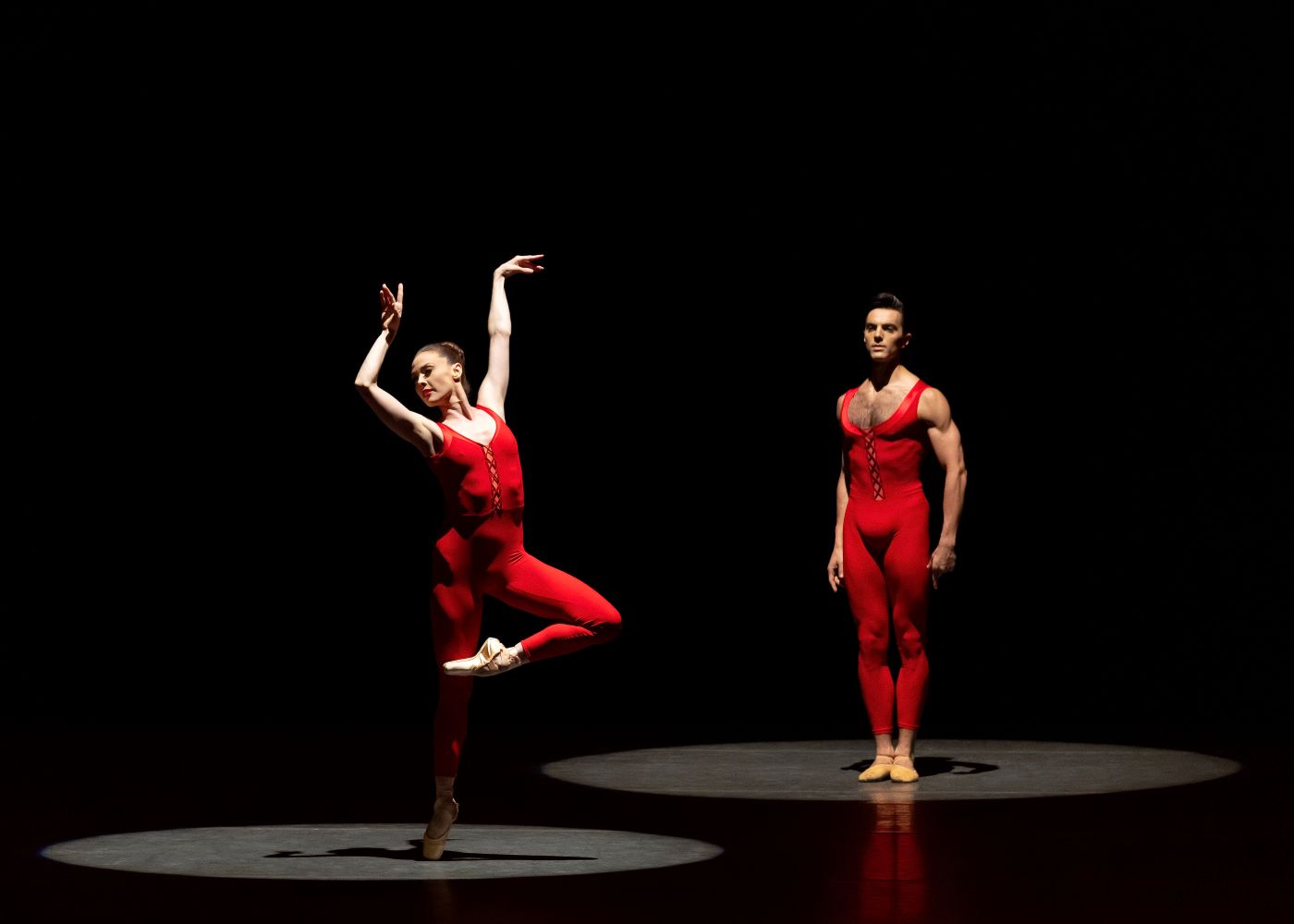
NYCB – Emilie Gerrity and Davide Riccardo in Ulysses Dove’s “Red Angels” – Photo credit Erin Baiano.
From its arresting opening, with Emilie Gerrity and Joseph Gordon emerging beneath stark lighting by Mark Stanley, with Holly Hynes’ striking crimson unitards, there was nowhere to hide. Technique, musicality, and commitment were demanded from each dancer. Gerrity, Gordon, Ruby Lister, and Davide Riccardo met those demands with thrilling confidence. A particular surprise was corps member Ruby Lister, whose commanding performance suggested an exciting artist to watch for.
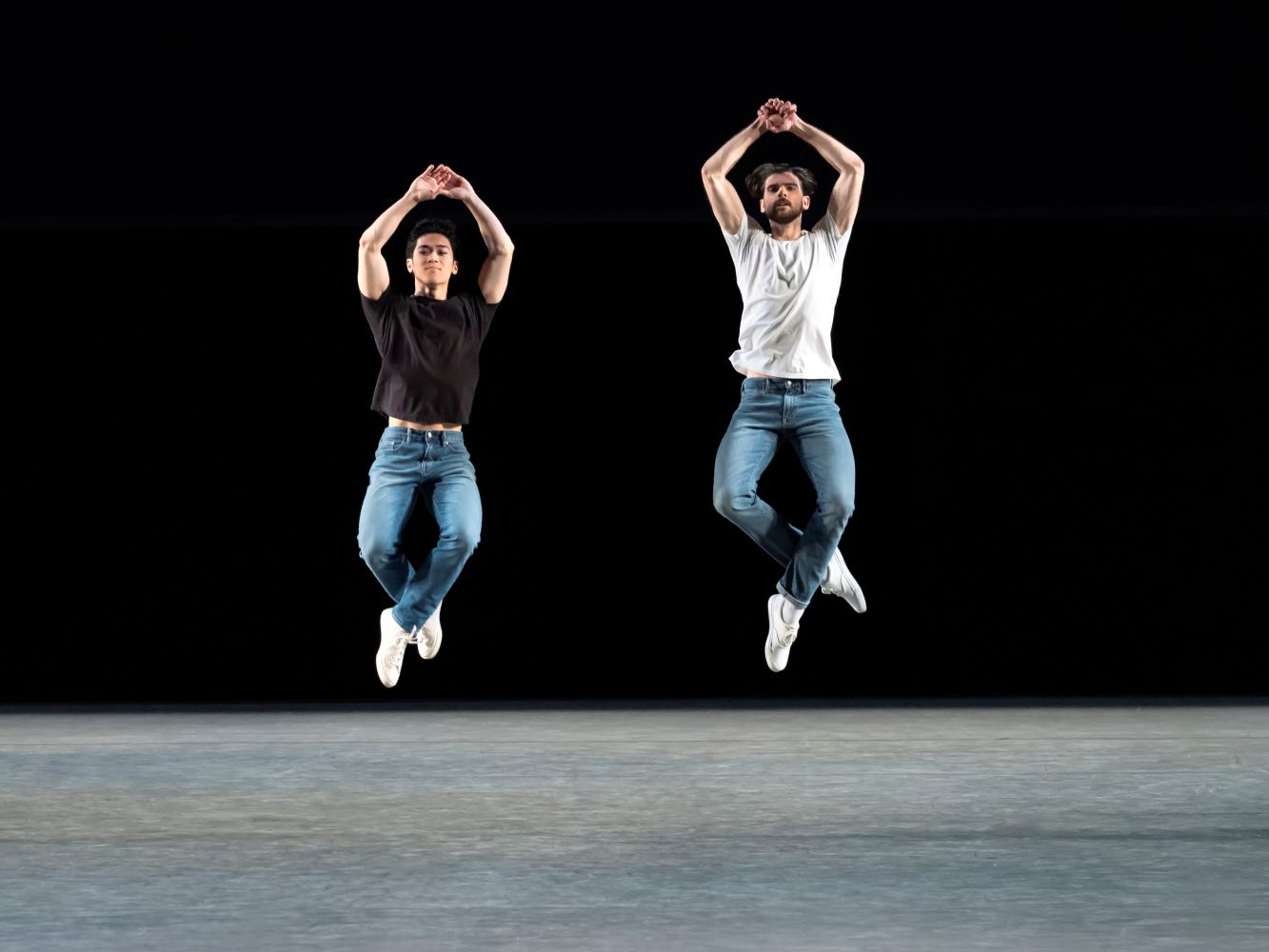
NYCG – KJ Takahashi and Peter Walker – “The Times Are Racing” by Tiler Peck – Photo by Erin Baiano.
After that…Justin Peck’s Times Are Racing closed the evening with restless contemporary energy. At times the work felt deliberately curious, its bustling groups suggesting everything from urban tribes to an enclave of witches. The mysterious gatherings never revealed a clear dramatic intent. Yet from within that organized chaos emerged two irresistible personalities. Tiler Peck’s radiant ease and natural rapport with the audience reminded us why she has become one of ballet’s beloved and brightest stars; while K.J. Takahashi’s wit, fearlessness, and infectious charm transformed every entrance into a spirited scrappiness that made the section live.
Then came Saturday — Program B…and everything changed…
New York City Ballet was back…
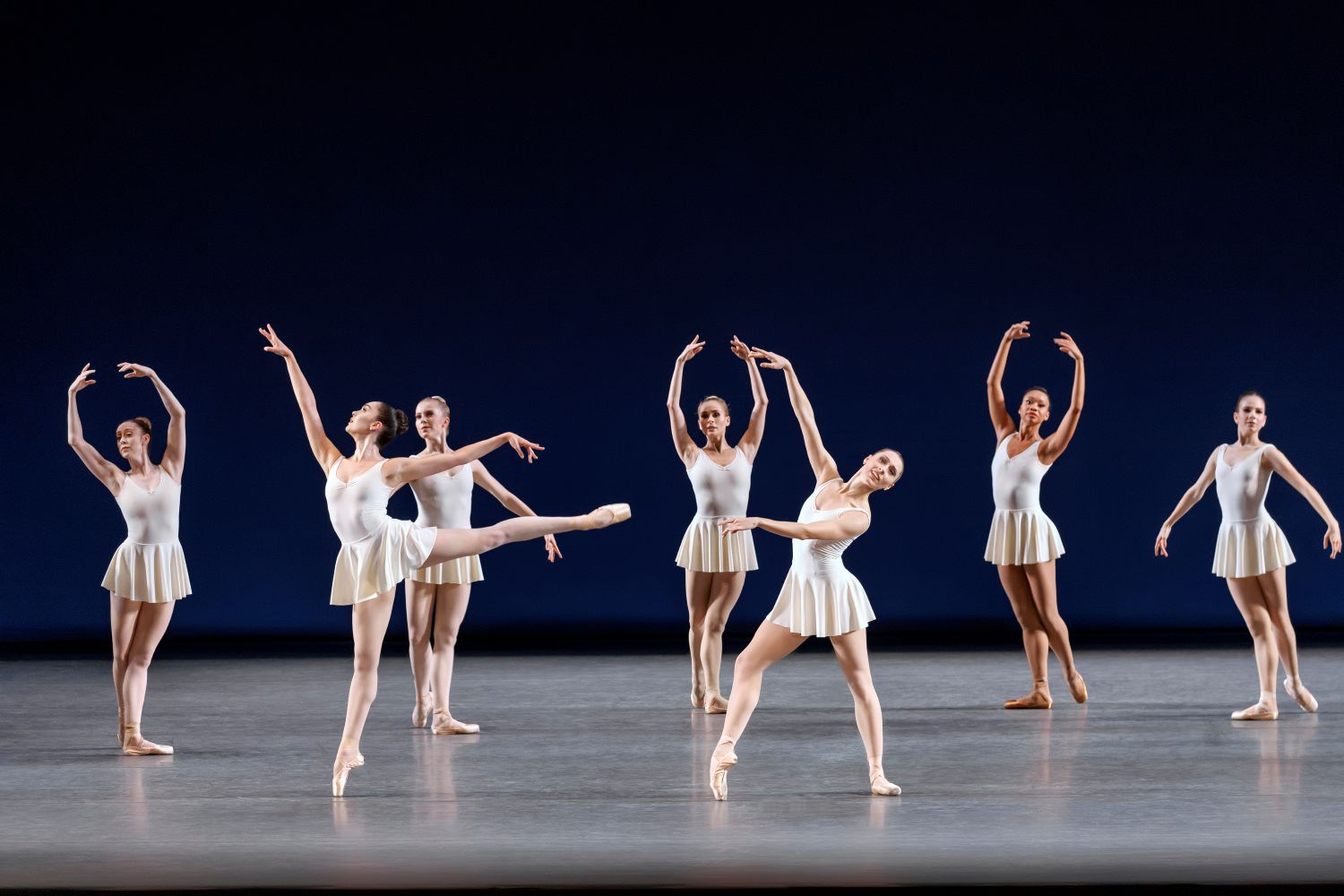
NYCB – Mira Nadon, Isabella LaFreniere, and New York City Ballet in George Balanchine’s “Concerto Barocco” – Photo credit Erin Baiano.
Saturday’s Program B, was like a different company. From the Balanchine Trust, the program began with the brilliant Concerto Barocco. Conceived as an exercise for the SAB’s students, it celebrated the opening of The New York City Ballet in 1948.
Suddenly, the company I remember took center stage. Balanchine’s legacy came forward with the full power of his musicality and physical creative brilliance.
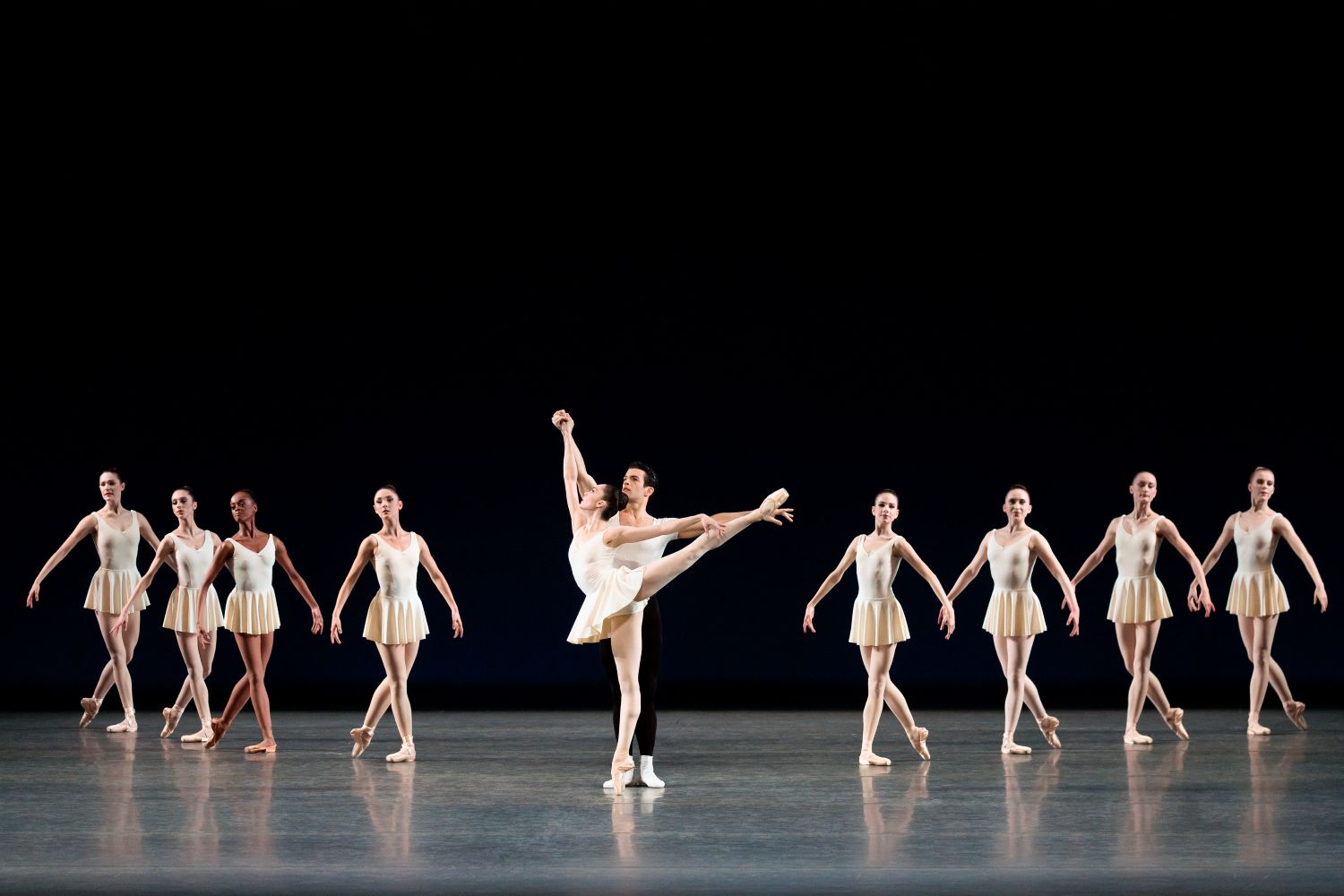
NYCB – Mira Nadon, Gilbert Bolden III, and New York City Ballet in George Balanchine’s “Concerto Barocco” – Photo credit Erin Baiano.
Soloists Isabella LaFreniere, and Mira Nadon’s expertise, as first and second violins of Bach’s Double Violin Concerto in D-minor gave way to Gilbert Bolden III’s partnering. They all enjoined the wonderous ever-present corps of eight dancers and Bach came alive before our eyes.
The artistry of Violinists Kurt Nikkanen and Dennis Kim encouraged the audience to hold their collective breath as they experienced Balanchine’s personification of the instruments. He did not rely on simple, beat-for-beats, but mapped out spatial designs to match the rhythmic vitality, counterpoint, and polyphony of Bach’s structure. He played with the intention that would be the neoclassic future of ballet. And the ever-present quote “Hear the dance, See the Music” was born.
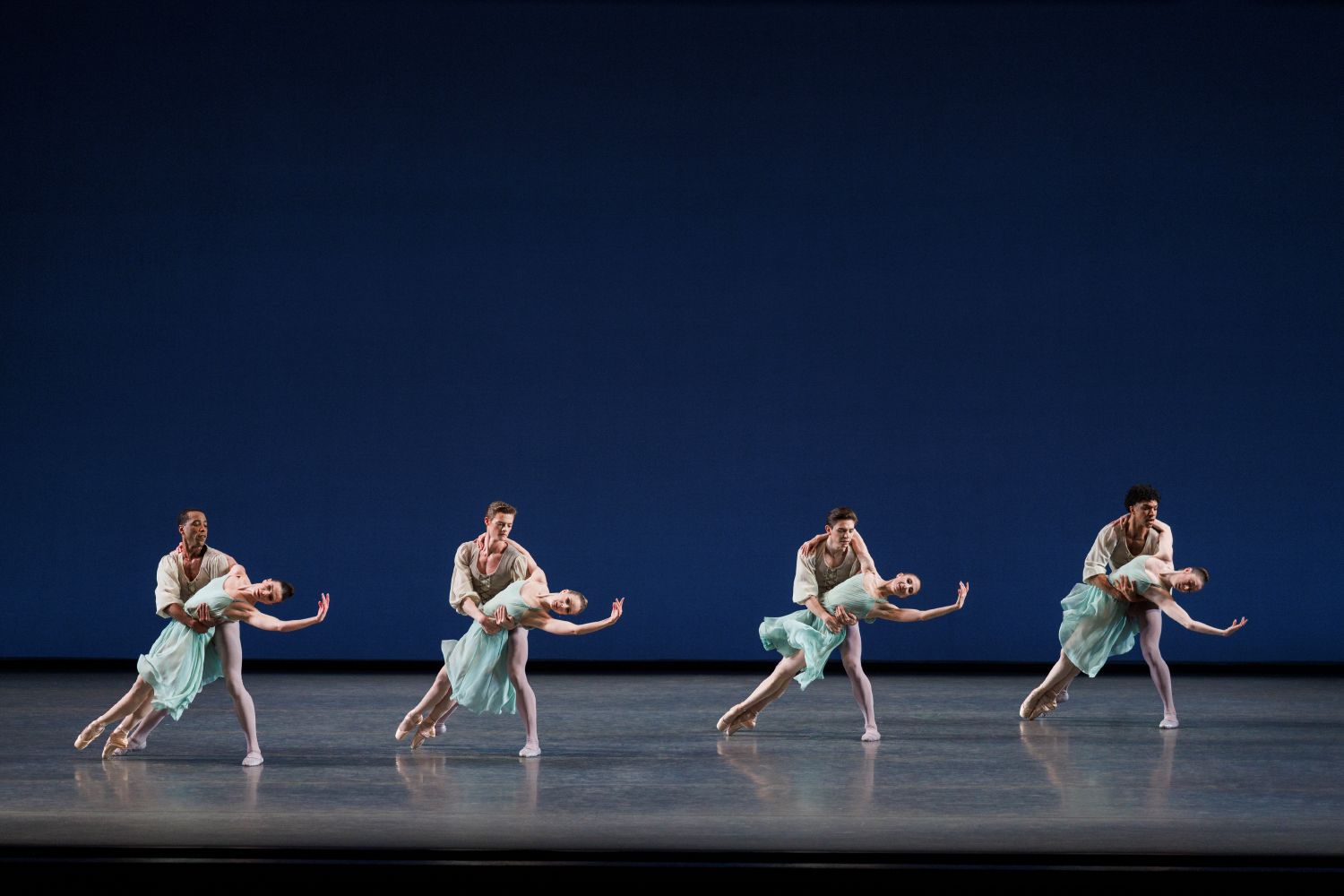
New York City Ballet in George Balanchine’s “Allegro Brillante” – Photo credit Erin Baiano.
Next, the quick moving lyricism of Allegro Brillante composed by Peter Ilyitch Tschaikovsky, was one of Balanchine’s early works (1956) for Maria Tallchief and Nicholas Magallanes. The petite fleet-footed Indian Woodward, reminiscent of Patricia Wilde, was partnered by the equally technical Joseph Gordon. The excellent corps supported the two soloists with equal aplomb. Karinska’s flowing costumes of mint green, peach and white, moved like the wind, matching Woodward’s ability to travel the space with sheer nimble delight. The classic, played by piano soloist Hanna Hyunjung Kim, drove the speed and effortless complexity of the dancers to the last chords.. lifting the audience out of their seats.
Then…a pause to move onto a very different mood.
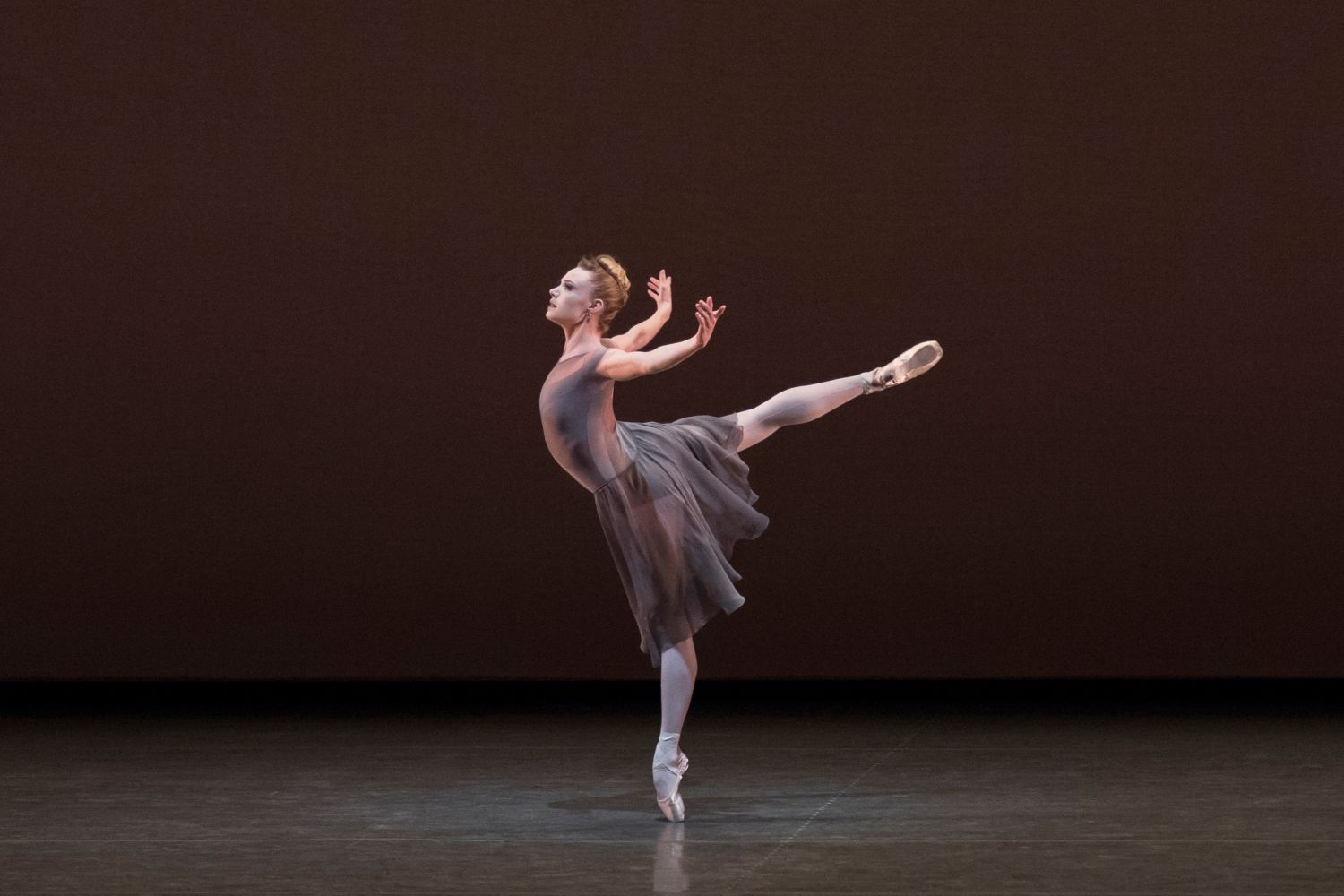
NYCB – Sara Mearns in Christopher Wheeldon’s “This Bitter Earth” – Photo credit Paul Kolnik.
This Bitter Earth, was done in a mashup of music by Max Richter and Clyde Otis with vocals by Dinah Washington. The deeply moving piece by Christopher Wheeldon unveiled an emotional narrative that swept me away. Sara Mearns with Gilbert Bolden III, dressed in muted nude hues, with costumes by Reid Bartelme, flowed with every move. Mary Louise Geiger’s dramatic low lighting whispered the essence of the piece. Mearns extraordinary presence needed only to stand. Her effortless line and technique, with strong support by Bolden, brought her full artistry to the fore. This exquisite work hit deeply in the soul, leaving the want for more.
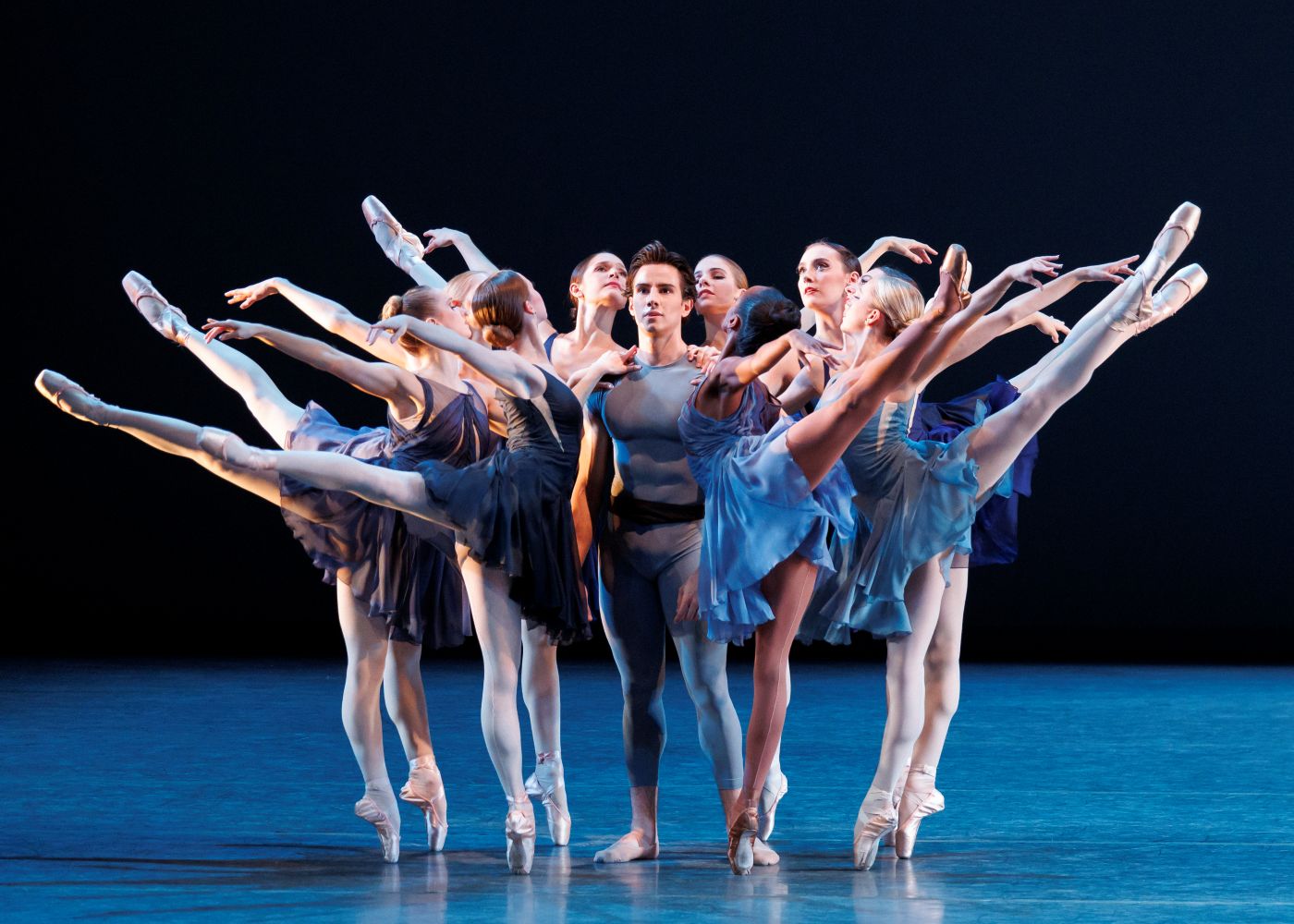
Roman Mejia and New York City Ballet in Tiler Peck’s “Concerto for Two Pianos” – Photo credit Erin Baiano.
After the intermission, Tiler Peck’s Concerto for Two Pianos, set to Francis Poulenc’s exhilarating score, brilliantly performed by Hanna Kim and Stephen Gosling, closed the program we wished would never end. The ballet unfolded as a succession of thrilling surprises, revealing a choreographer with a sophisticated understanding of structure, musical timing, and theatrical pacing.
Peck has long proven herself one of ballet’s finest dancers. Here, however, she demonstrates something more: an emerging choreographic voice where instinct, intellect, and imagination meet. Concerto for Two Pianos is technically daring yet emotionally generous, balancing bravura with moments of remarkable subtlety.
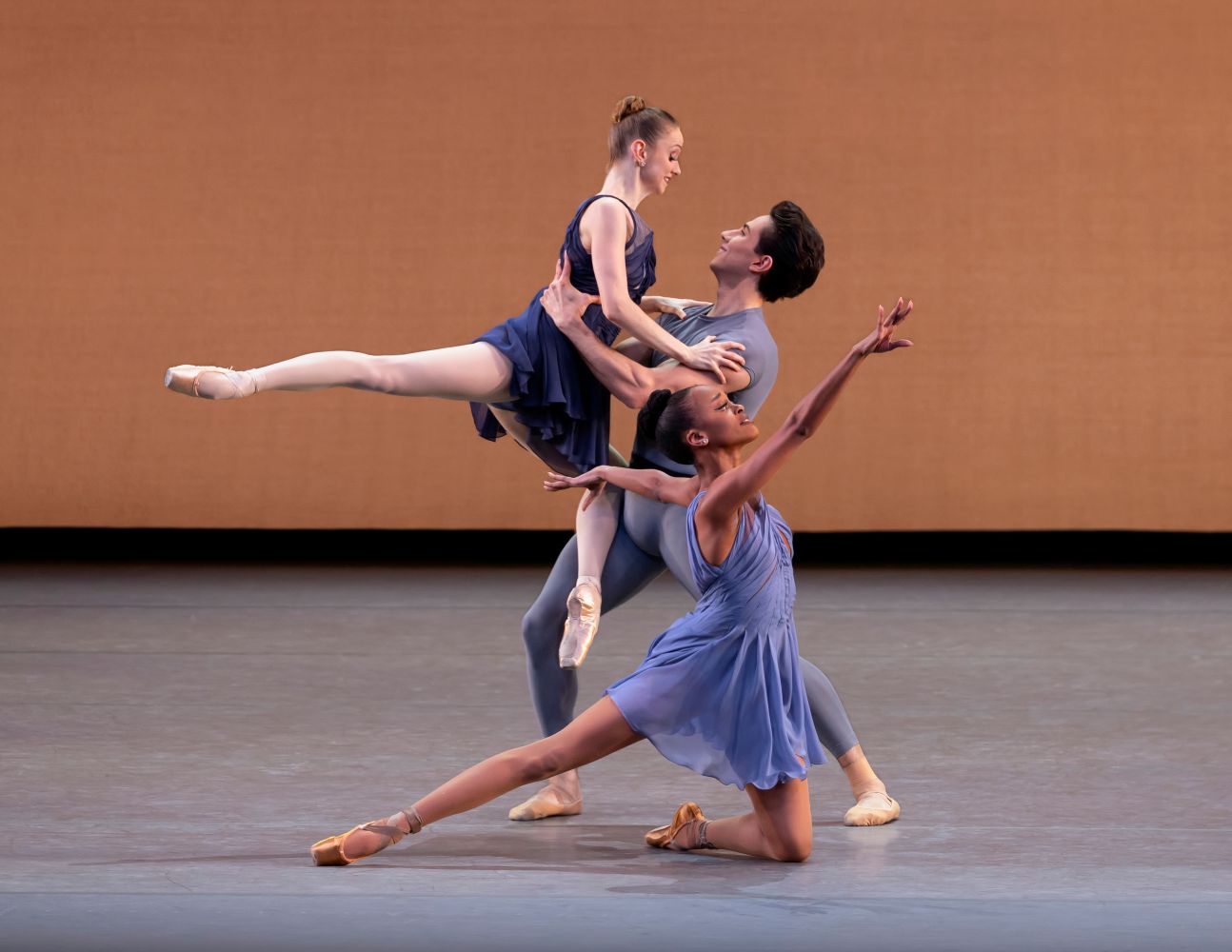
NYCB – Emma Von Enck, India Bradley, and Roman Mejia in Tiler Peck’s “Concerto for Two Pianos” – Photo credit Erin Baiano.
Roman Mejia, is astonishing. He captured the audience from the instant he stepped onstage with his transcendent technique and wholehearted commitment. Owen Flacke partnered with assurance and elegance. The lovely surprise was Peck’s choice as lead ballerina. Elevated from the corps for this role— Kloe Walker brought luminous line, musical and emotional sensitivity, with quiet authority to the ballet’s center. Clad in Zac Posen’s flowing mauve design, supervised by Marc Happel, she became the visual focus around which the ballet revolved.
Brandon Stirling Baker’s rich lighting heightened the shifting costume palette, from muted greys of the corps, to vibrant blues embracing the soloists Emma Von Enck and India Bradley. Von Enck sparkled with joyous speed and crystalline footwork, while the long-limbed Bradley commanded the stage with expansive extensions, impeccable timing, and elegant presence. Throughout, the corps functioned almost as a Greek chorus, framing Walker’s more introspective, Lorca-like character. The contrast created dramatic tension while preserving the remarkable unity of Peck’s choreographic vision.
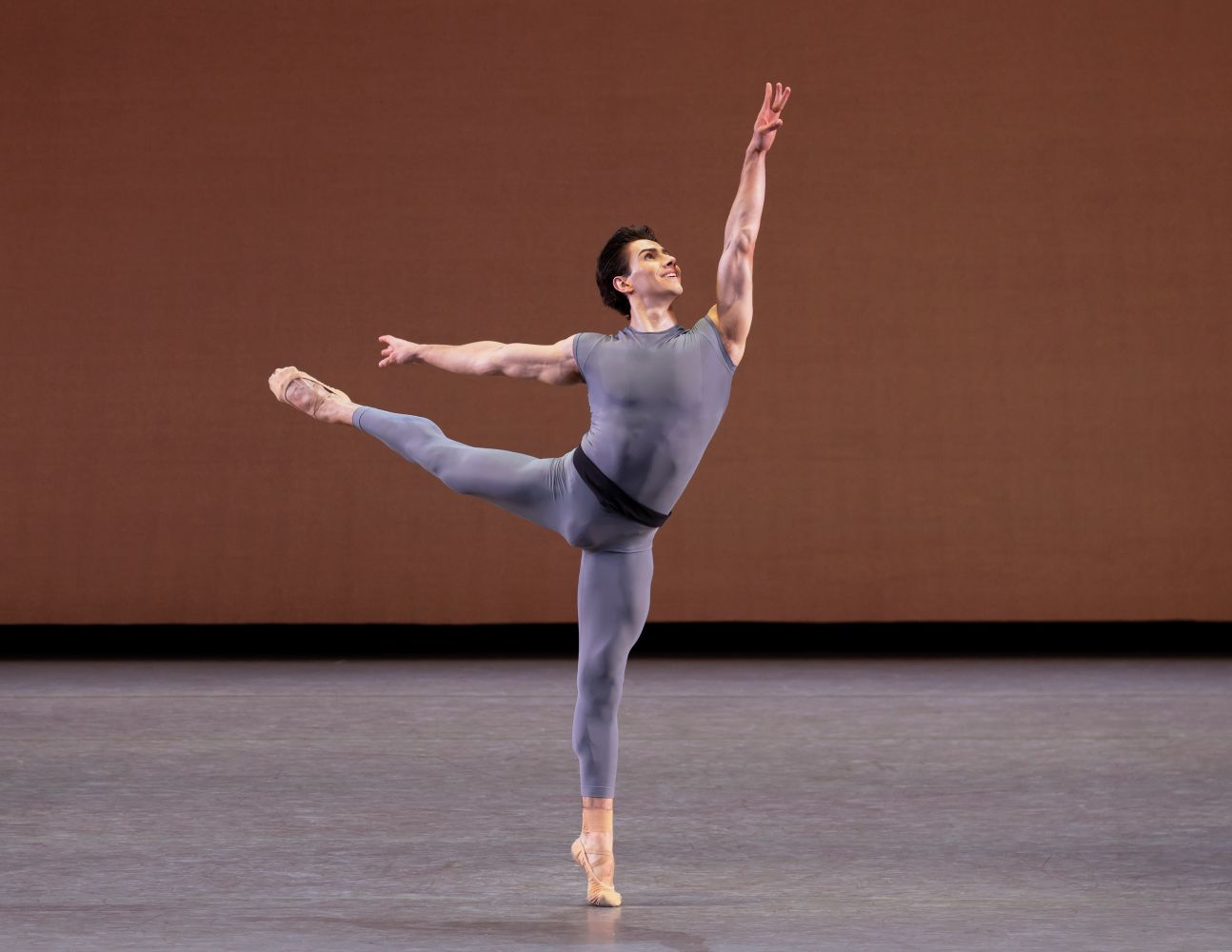
NYCB – Roman Mejia in Tiler Peck’s “Concerto for Two Pianos” – Photo credit Erin Baiano.
So, when New York City Ballet arrived in Los Angeles, I wondered whether memory had made the company larger than life.
After Program B, I had my answer.
Balanchine’s vision still pulses through this company—not as a museum piece, but as a living, evolving art. More importantly, artists like Tiler Peck are proving that the story did not end with its founders. They are writing the next chapter.
Was it worth the twenty-year wait?
I think so.
Post note: Such a fitting gift to honor Stephen Peck (1947 – 2023), Tiler’s beloved father. For all his love and support…she did him proud.
For more information about New York City Ballet, please visit their website.
To learn more about Glorya Kaufman Presents Dance at the Music Center, please visit their website.
Written by Joanne DiVito for LA Dance Chronicle.
Featured image: NYCB – Roman Mejia, with Victor Abreu, left, and Harrison Coll in George Balanchine’s Allegro Brillante – Photo by Erin Baiano.




So sorry to have missed this show! I thought I’d purchased tickets, but actually didn’t. Argh! Damn this old brain! How lovely to read a review where I can almost picture the work presented because of the way the dance is described and where I have confidence that the reviewer is knowledgeable and appreciative of dance in its breadth.