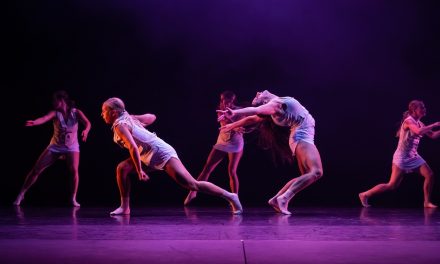
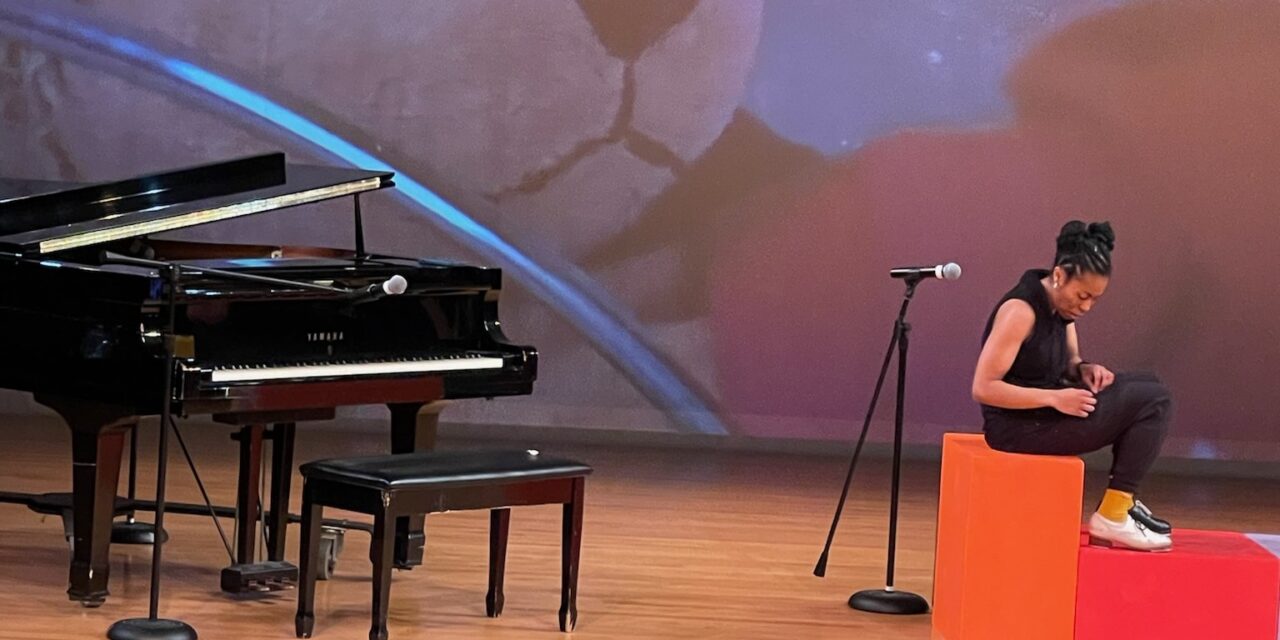
We Cool, the multidisciplinary autobiographical coming-of-age story created by and starring Kyreeana Breelin Alexander will be presented at The UCLA Nimoy Theatre on Saturday, February 21, 2026, at 8p.m. Rhythm rules as Kyreeana’s childhood diary is brought to life by her forever plushy friends, O.T. Bear, Murray Huggy-Bear, and Marcus Bearison. It is a solo performance that you do not want to miss! Tickets are on sale now.
I had the opportunity to sit down with Kyreeana at Debbie Allen Dance Academy on January 26, and I was amazed at all her accomplishments. This petite dynamo has never stopped pursuing her craft, and her unwavering commitment to creating art is inspiring.
Leah: Tell me about the origin of your name and its interesting spelling.
Kyreeana: I have a cousin named Kyra and I guess my mom was taking from that and came up with Kyreeana. I found out recently that Kyreeana means the Lord’s grace and Alexander means defender of men. My mom just felt like Kyreeana should be my name; there’s no huge story.
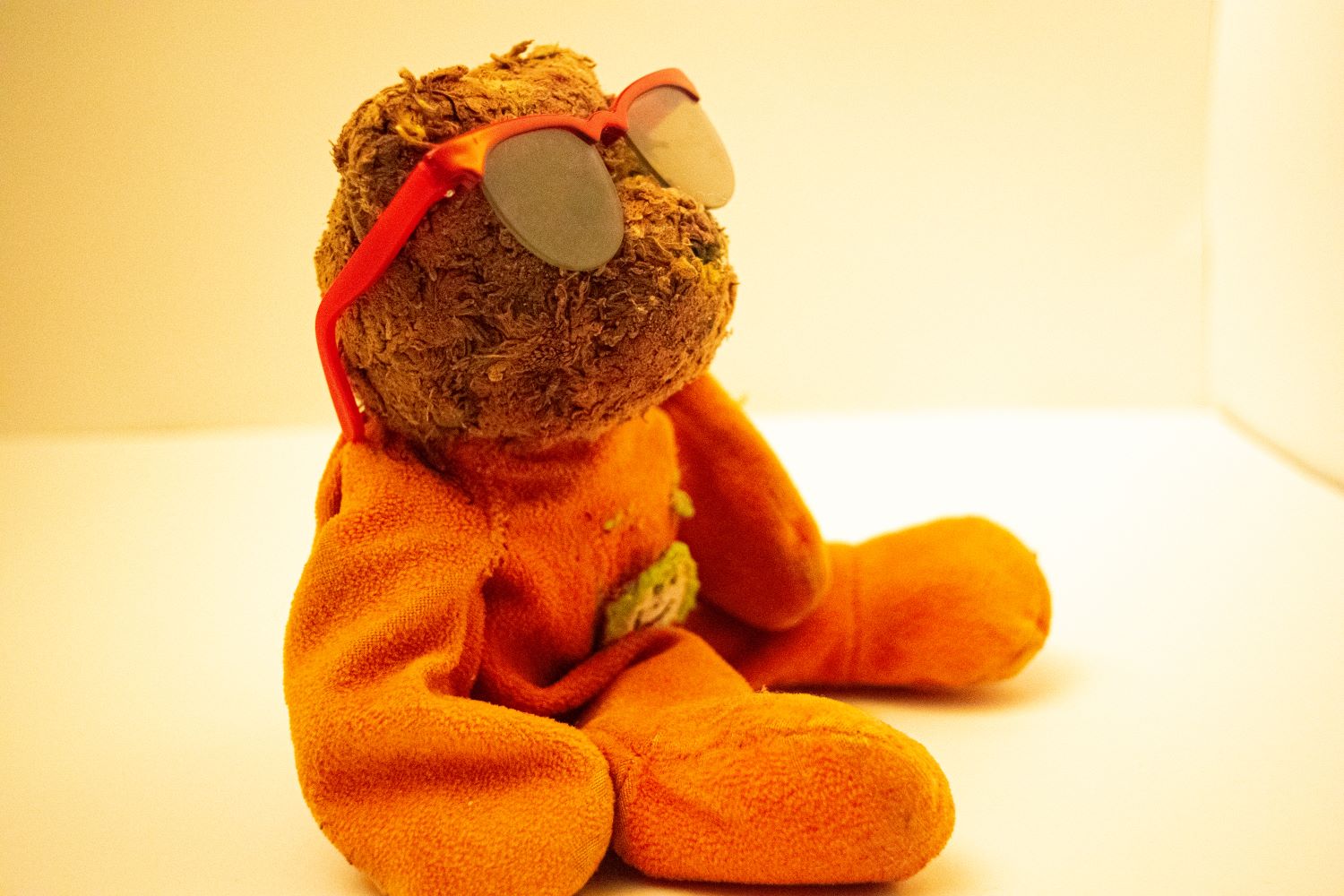
Teddy Bear that appears in “We Cool” – Photo by Kyreeana Breelin Alexander.
Leah: When and where did you start dancing?
Kyreeana: I was born in Salt Lake City, Utah. It was important for her to make sure that we had a sense of identity. My Dad, from Salt Lake City, was an army brat and they met through church. My mom, who is from Jackson, Mississippi, can you imagine navigating, maybe the culture shock of going to a place like Salt Lake City, Utah? So she went to the place that felt more like home, which was the black church. France Davis has one of the biggest black Baptist churches in Salt Lake City, Calvary Baptist Church, and that’s where we went.
Leah: Do you see yourself as religious?
Kyreeana: I don’t know if I would say that I am religious by maybe the definition of religious, but I do love Jesus and I do have a personal relationship with him yeah and looking for church home, currently navigating that.
Leah: OK, finish telling me about your dance.
Kyreeana: My mom went to Calvary Baptist Church, where she eventually met my dad. My mom was at the University of Southern Mississippi and Ririe-Woodbury * were guest artists there. One of the dancers from Ririe-Woodbury was leaving and my mom learned one of their repertory pieces and they put her into an exchange program so that she could get a scholarship to go to University of Utah and work with Ririe-Woodbury. My mom transferred to the University of Utah.
Leah: University of Utah is an internationally recognized leader in dance and arts education, and I am familiar with the work of Ririe-Woodbury. Your mom must have been quite a dancer.
Kyreeana: So, she had a connection with the University of Utah. In order to solidify our roots and keep my brother and I grounded; she founded this youth ensemble called Colors of Life through our church. The University of Utah allowed us to use their spaces so that we could make dances. It wasn’t necessarily a liturgical dance group, but it was steeped in modern dance. We had Kaye Richards, who had a background in Graham technique, and then a blend of other techniques including Limón, I think. So that’s how I got my start. That’s where I started dancing. We put on performances at the Capitol Theater in Salt Lake City.
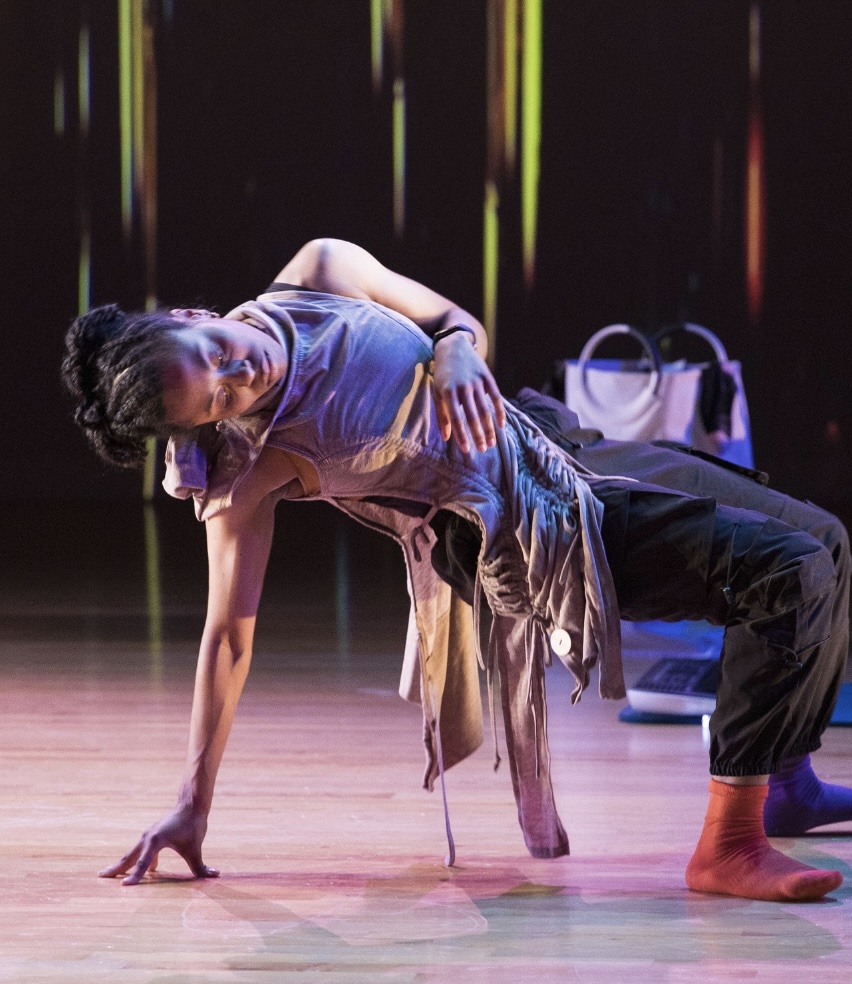
Kyreeana Breelin Alexander – Screenshot by Nina Schmidt (UCLA School of the Arts and Architecture).
Leah: So, who did you study with? Where did you actually train?
Kyreeana: Kingsbury Hall …a local dance instructor, Janet Gray saw us performing and offered scholarships to some of us within Colors of Life and my brother and I began studying tap with her. Janet Gray had studied with Eddie Brown, learning his scientific rhythms and sharing them on to us. We just kept practicing all of the rudiments and time steps, and other things she was teaching us. I suppose it might be significant to mention that I was really interested in Savion Glover, at that time he was big. He was doing “Noise Funk”.
Leah: Please finish telling me about your training.
Kyreeana: The 2000 Winter Olympics were in Salt Lake City, and I believe he had a show called “TiDii”** and I think Michelle Dorrance was in it. He did a performance and I think it was on the ice. I was very young, so I want to make sure I’m getting this right. It seems like he also did a piece later in the year and I don’t know if it was a part of the Olympics, but it was with his tap group “TiDii” and I was really like intrigued watching Savion Glover. The story is that my mom went to take a picture of me, Savion and Michelle Dorrance, but she was flustered and forgot to take the lens cap off. She said, “When we see Savion Glover again, I promise I’m going to get a picture, and you’ll actually see it.” A few years later, I think it was 2003 that he had a performance in Denver, Colorado, Noise Funk***. We drove from Utah to Colorado to watch him perform his noise funk and that’s when I had a big moment of wow. It was the way that he was able to express so much with just the sound of his feet. Obviously, he’s a virtuosic performer. I appreciated it in a way that I don’t know if I could have articulated my feelings at 8 years old. There was a deep sense of honor and respect and probably spirituality that seemed to be informing his feet. I felt like he was going beyond just the steps. It really seemed like he was holding something so special. It seemed like tap is really serious and an art form to be taken seriously. I think as a kid that impressed me. He was really bearing his soul. His tap dancing sparked a real serious feeling in my mind… I want to pursue dance. It’s significant that during that same trip, in the newspaper, there was an article or an advertisement for the Denver School of the Arts (DSA). It was at our hotel for some reason.
Leah: Is that Cleo’s [Cleo Parker Robinson] place?
Kyreeana: No, it’s not Cleo’s place, but they did have a long-term affiliation with her. So we went back to Utah and then I made a decision that I wanted to go to the school of the arts, but it didn’t start until the 6th grade, and I was only in the 4th grade. I was home schooled from the end of first grade to about fourth grade, so the next 3 1/2 years, if I can count, actually was a really good time for me.
Leah: Why was the choice made to homeschool?
Kyreeana: As I mentioned, we were in Salt Lake City, Utah. It was a difficult adjustment for my brother and I, trying to acclimate to the culture that was established in Salt Lake City. I think we were maybe one of four or five black kids in the whole school, and I was just having trouble. I think the chaos of the classroom and also adjusting, I wouldn’t really say socially or academically, was difficult. I just felt very uncomfortable or even, in some ways, unsafe. Being immersed in an environment like that, plus my brother was often mistaken for another black student who may have been getting in trouble. My mom was also back and forth with the teachers in terms of the curriculum and some of the historical accuracies taught. Being young and fresh out of Jackson, Mississippi, it could have been that she was quite impassioned. Also, as a mother wanting to make sure that we were informed and aware of who we were.
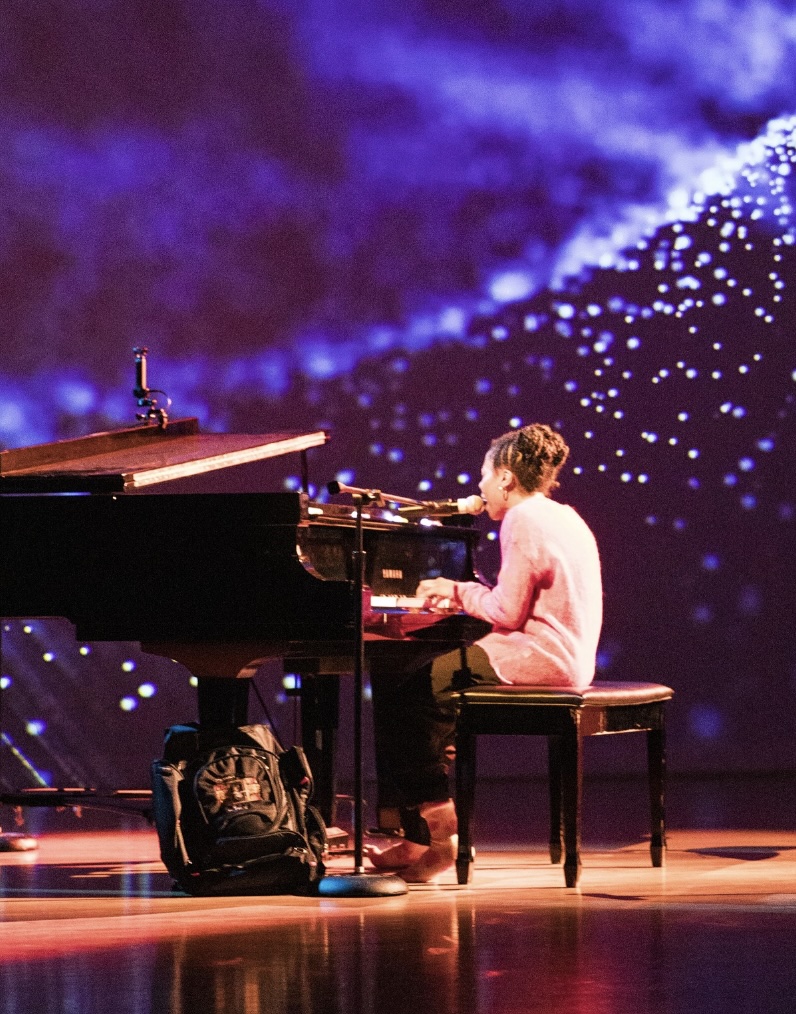
Kyreeana Breelin Alexander – Screenshot by Nina Schmidt (UCLA School of the Arts and Architecture).
Leah: I understand. Please tell me about your training in Denver after your home schooling and studying with Janet Gray.
Kyreeana: I auditioned and got in. They had theater and visual arts and all of those things, and it was a 6th grade through 12th grade school.
Leah: So, you were going to be living in Denver and living at school and…
Kyreeana: No, not exactly…We just wanted to go somewhere else as a family. My dad had his own business. Early on he was in construction, and I think he felt that he could have some success in Denver, so we went as a family to pursue that. I went to a regular elementary school and then 6th grade came and I was able to get into the 6th grade at DSA (Denver School of the Arts) under the direction of Alicia Karczewski and Michael O’Banion. We got exposed to all kinds of dance forms like west African and flamenco. 6th grade year they kept us in cohorts by grade and with each year we learn a different style, or we have an emphasis on learning a different style. I also got exposed to other parts of the curriculum. You need to take ballet and modern dance more regularly and that gave me more to add to my dancing palette. We had Miss Robin and I believe she taught Vaganova ballet technique. I went to after school programs where you can take your homework sheets and fulfill required hours. You can fulfill them any way you want so I went around Denver, and I went to the Arvada Center, Longmont Dance Theater which specialized in the school of American ballet style.
Leah: Where else did you study in Denver? What else did you study?
Kyreeana: I went to take at Cleo’s through the span of 6th through 12th grade. I did a program through the Denver School of the Arts that went through all five points of Denver. Community is really big for Cleo Parker Robinson, and she is a very heartfelt person which I feel she established that focus early, even on me as a 6th grader. There is a culture of social responsibility that is a part of dancing. Her company members would come to DSA and give us master classes. I remember Nijawwon Matthews who was a strong influence, and Cecilia Webster Jones. The other thing that was cool was to me as a 6th grader, was that we would take field trips to theaters and we would watch the company dancing so we could see what we were aspiring to be. I was really impressed by that and that’s stayed with me. You get to see what you’re working towards, and that’s nice. I progressed through Denver School of the Arts, and Mr. O’Banion had us interested in becoming artists. It was a time when competitive dancing was becoming more in the foreground, but he wanted us to remain artists. I’m grateful he instilled an awareness and value of artistry in us. “Don’t just throw your leg up to throw your leg up!” or “Why are you wearing this costume?” “How does this all feed what you really want to say and how you want to present yourself out in the world?” He was big on communication and he required excellence. He wanted us to carry ourselves in a certain way and honor the art form. He and Ms. K. were a great team. I want to say Ms. Karczewski really made tap fun, and she was really caring. From 6th grade to 12th grade we were with both of them in this space and we learned the craft of dancing and the craft of choreography. We had a lot of opportunities to choreograph senior projects and 9th and 10th grade final showings and things so that I could kind of plan my vision as an artist.
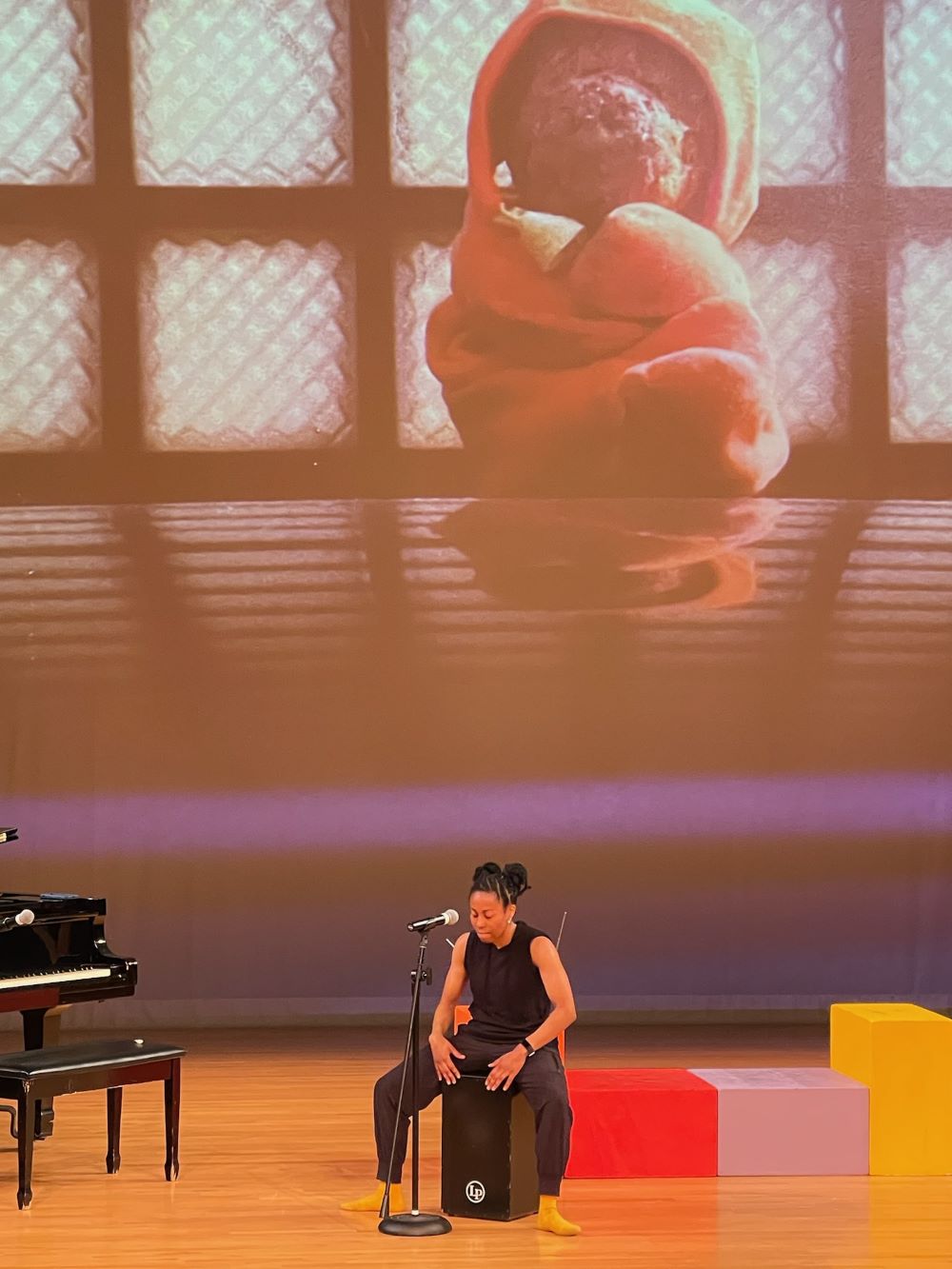
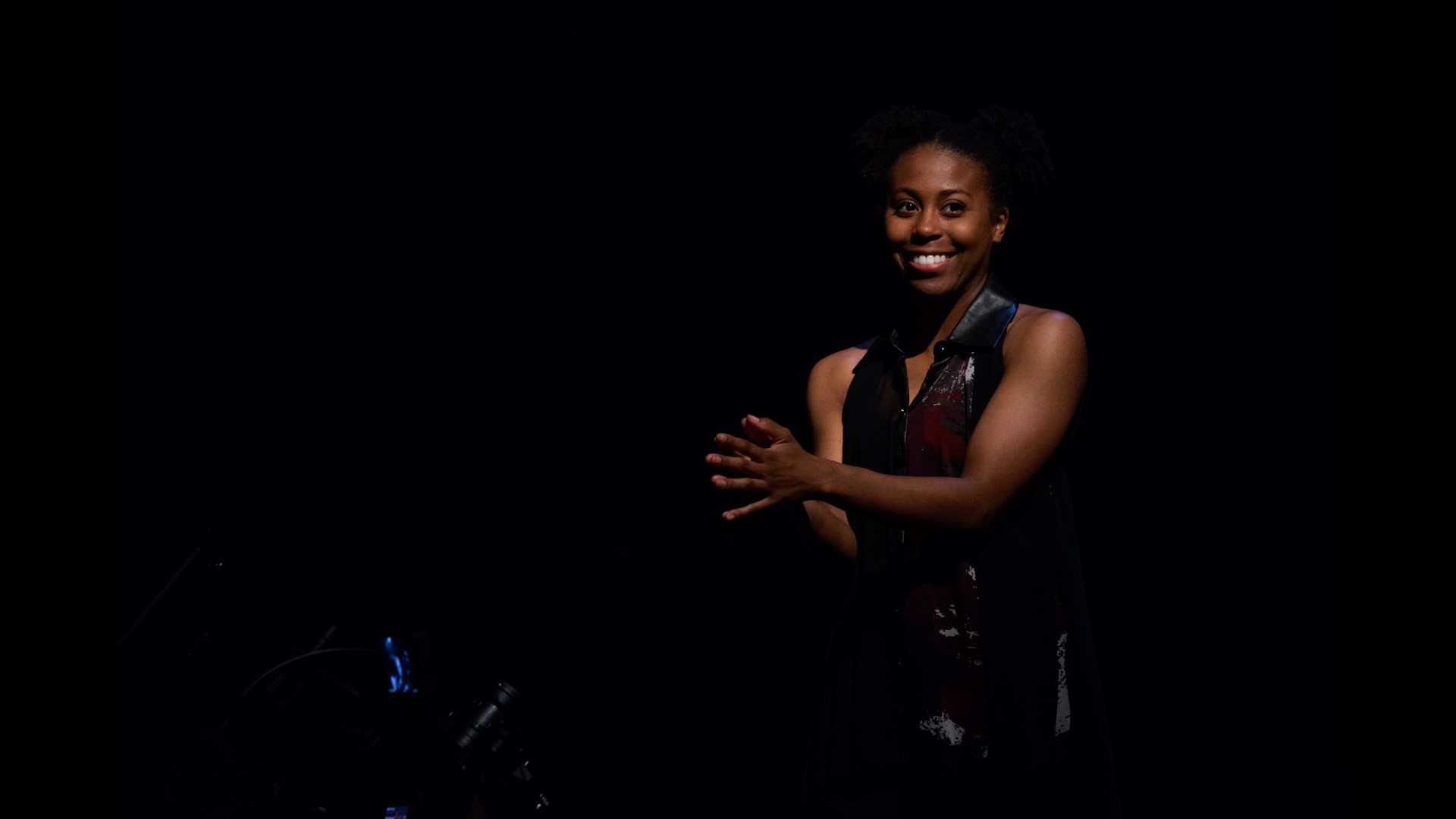
Kyreeana Breelin Alexander in her solo “We Cool” – Photo by Gurmukhi Bevli.
Leah: Wow! You do everything, so I want to know how you ended up doing everything?
Kyreeana: We learned a lot of styles at DSA and we had to, but I think mainly the thing that maybe helped me graft everything together was also an emphasis on improvisation. I wasn’t regimented like this is this, and this is that I started to sort of blend styles early, especially because we had opportunities to self-choreograph and choreograph on others and learn how to work with the different range of possibilities. I think that early on that expanded my idea of what dance could be and how it could take shape and form. So senior year they want you to pursue dancing for undergraduate and on. California School of The Arts (Cal Arts) came to visit, and they gave us an audition. Senior solos were part of our DSA curriculum, so we already have them prepared for auditions. We had several universities come to give audition classes, and CalArts was one that appealed to me. I had only come to California maybe twice, and it was to Debbie Allen’s dance studio to take classes at the LA Tap Festival. I came in 2008 and then I went in 2010. I had an intern scholarship with Chloe. 2 summers, that was my only introduction to California prior to our move. My parents split up so my mom was looking for a new start for me and my brother.
Leah: I saw you in Brea. How did you end up in Brea?
Kyreeana: We came out to California and ended up in Brea. My mom was working for JCPenney’s and applied for a transfer. She just picked out of a hat and found the big JC Penney’s and then found the Brea mall…that’s another story because I can’t do that justice in a short time.
Leah: Tell me more about your time at Cal Arts. They used to have a program partnering with schools involving residencies. Did you participate in any?
Kyreeana: Yes, I did CAPSA [Cal Arts Community Arts Partnerships] when I graduated and taught in high school. CalArts, it was a struggle, life was…but we ended up in Brea because there was an affordable housing unit in Brea. We didn’t really have great transportation, so my mom needed to be able to walk to work. It just happened that we just walked in at the right time to an apartment that had an 8-year waiting list. It was a nice little moment.
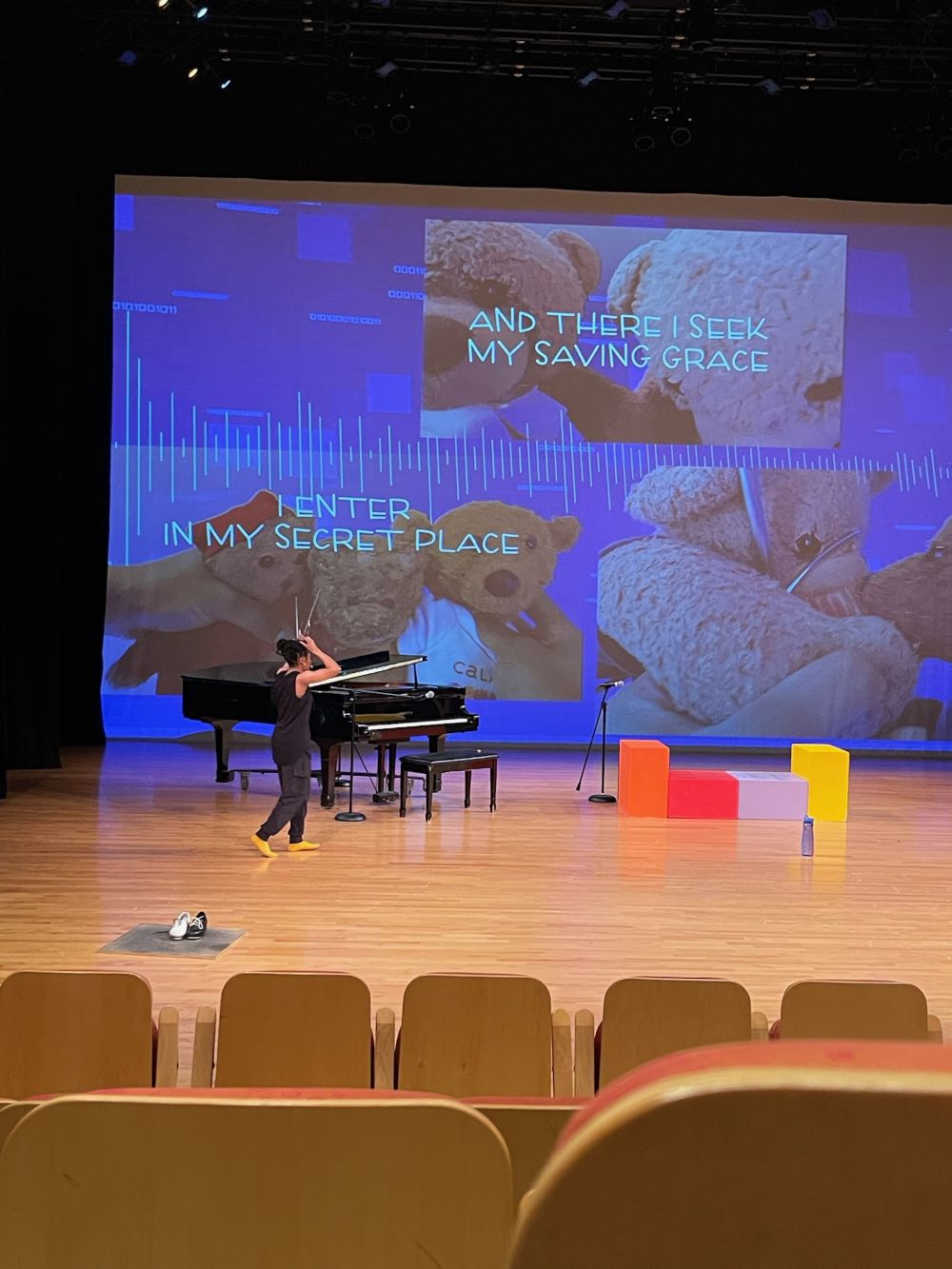
Kyreeana Breelin Alexander in her solo “We Cool” – Photo by Gurmukhi Bevli.
Leah: CalArts? Did you have Nina Flagg as a teacher? Who were your teachers? What did you learn while you were there? Was it good for you?
Kyreeana: Nina flag came after I graduated. We had Andre Tyson, Lawrence Blake, Cynthia Young, Colin Conner, Glen Eddy, and Rosanna Gamson. Honestly, in terms of having freedom and access to studio spaces after hours, it was a good experience. I wasn’t able to hone my tap skills because there’s no tap program.
Leah: So why did you choose it?
Kyreeana: At that time, I was interested in going into dance and film and I heard that they had a good dance film program lead by Francesca Penzani. I also thought that it would be a good place for me to develop my artistry from the reputation that they seem to establish with the Denver School of the Arts. In their audition classes, they seem to align really closely with what I was already on track to do. It just seemed really cool and like this would be a great place for me.
Leah: Ok, 4 years and a BFA …what did you leave with? What skills did you hone there?
Kyreeana: A lot of skills that would enhance my artistry later on. I did have a lot of opportunities to choreograph so I’ll say that I learned myself and my choreographic process. We had the opportunity to make music for dancers, and I had a digital arts minor that allowed me to explore my music making skills. I also had the opportunity to work on film editing and making dance films or writing. I did a lot of writing, and these things were outside of the actual curriculum of the dance program. CalArts was a place where I could voice my feelings and because they are so large and self-expression is valued, I didn’t suffer some of the penalties I would have suffered had I been so vocal in another institution. Also, Michelle Dorrance came to CalArts my third year there. She came here to set a tap piece in the sound space. I met a lot of peers who at the time needed to just go and be creative in a space where you can be in the studio late at night and do those kinds of things. I think CalArts was for me to think and develop as a person. It was a time for me to understand what I was interested in and what I wasn’t interested in and maybe even what I would accept and what I wouldn’t accept. It allowed me to use my voice in a way that I felt empowered. CalArts offered a creative entrepreneurship residency which was the same summer that I did CAPSA. These things started to help me hone in and shape what I wanted to be and my artistry. I didn’t know I had an interest in teaching until I did CAPSA where we would teach dance to high schoolers who wouldn’t normally have exposure to the dance programs. That was significant! I didn’t know my skill set but it came forward. I didn’t resonate with some of the experiences the students were going through, and I didn’t fully see, but I got to see first-hand the power of the arts and the power of arts education. We had a small cohort, so we had the opportunity over the six-week program to see the transformative nature of the arts and education. I started teaching and I was a guest choreographer at Chadwick school and then that led to more guest opportunities to teach at other schools. I also started teaching at CSARTS (California School of the Arts, the affiliate sister school of OCSA) (Orange County School of The Arts). I attended a conference at OCSA, but I don’t remember what it was called, but Debbie Allen was a guest speaker. I was a part of a short-lived program, a leadership Academy, to train us to be the next generation of teachers.
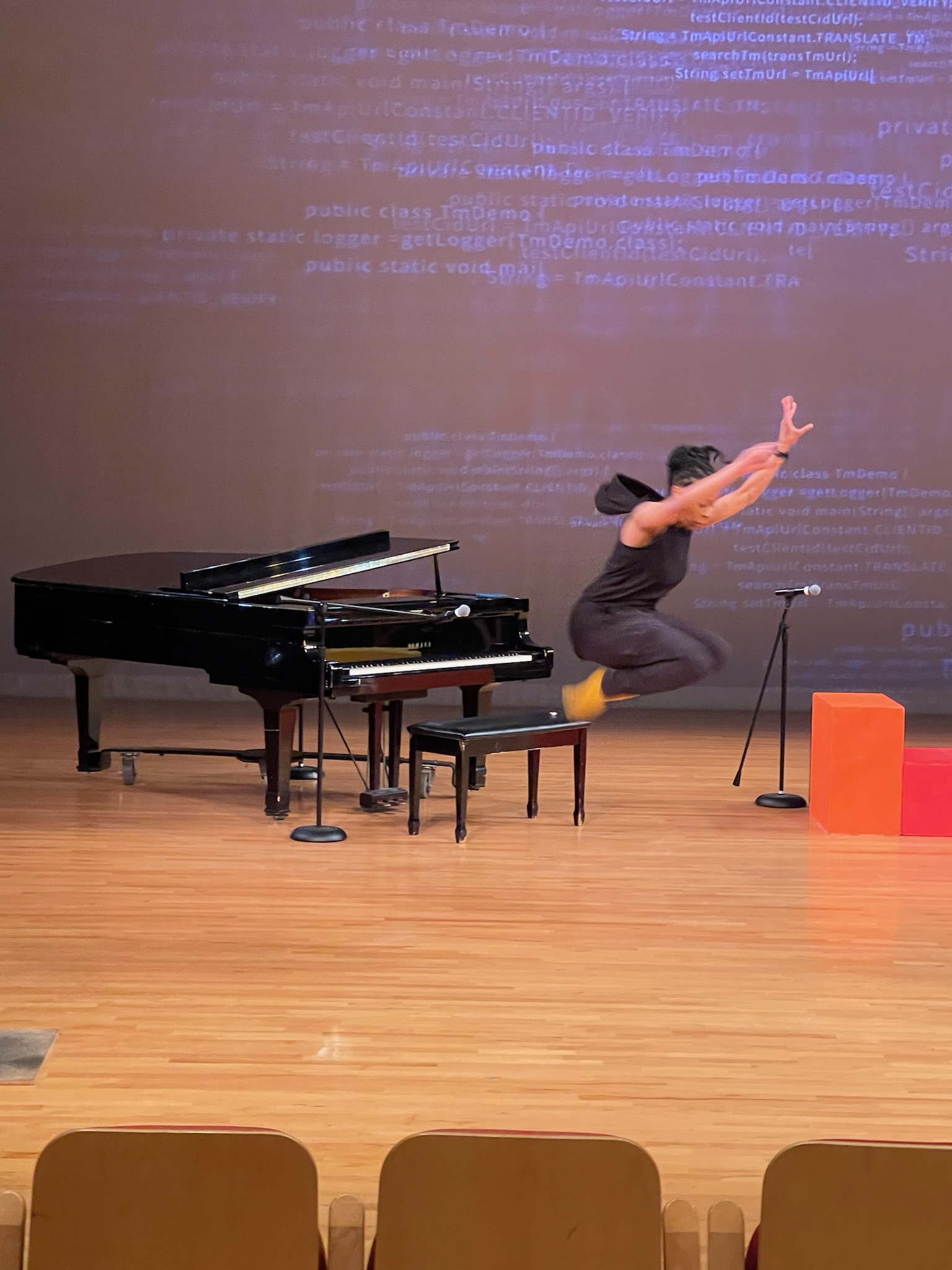
Kyreeana Breelin Alexander in her solo “We Cool” – Photo by Gurmukhi Bevli.
Leah: Do you want to teach?
Kyreeana: I wanted to teach then. I don’t want to teach in elementary school. I was teaching a PE class, and I had a “Why am I teaching this class?” moment. I think CSArts was a brand-new school, and it came with a lot of, “you can build your own curriculum” and a lot of promise but then you kind of get in this third, fourth, year and your role becomes a little tricky. We had just gone through the pandemic, and I think there was just a shift. I was sitting in PE class, and I had 30 Kids in a hot gym, and I realized this isn’t really what I want to do. I wanted to go back to pursuing dancing, and I want to see if I can fully pursue the art that I wanted to pursue. I like teaching but I felt like I didn’t finish. But I did enjoy teaching at CSArts.
Leah: So, what did you do with David Roussève? What made you go to grad school?
Kyreeana: He taught our choreography class. I had an idea before I knew exactly what it would be. I had done a program at REDCAT. After I graduated, Francesca had an idea for tap dancing and bass, that’s how I met Nedra Wheeler. We made a piece called Double Up which she submitted to lots of film festivals, and it did well. I don’t know offhand all our credits, but we premiered at the Vision Festival in Taiwan and then we got best short and best film . This was tap and bass, and it was supposed to be a conversation between musical instruments but also a connection of generations. It was interesting and worked well and in two weeks we found our footing and just went with it. My brother was helping us with the boards and things like that. He also helped with the sound for the film. He and Nedra, she’s a funny person, hit it off. So, it was in the air that maybe we could do a piece together. Nedra was really generous and very kind, and she put together this piece that we used for REDCAT in 2018 for the spring series, and it kind of had elements of the work I’m doing now but just in a very early stage. It featured me with Nedra and then Nedra with my brother as a spoken word hip hop artist.
Leah: OK, so finish telling me why you went to grad school.
Kyreeana: I wanted to elaborate on those ideas that I had just done in 2018. I thought I could test this out in a safe space and read and elaborate on that piece while trying to create. I went to visit UCLA, and I thought to myself, ‘well this was a nice campus’ and I could see myself here but maybe not now maybe in Graduate School. Years later, it’s not that UCLA was the only option it just made sense. I knew that UCLA, at some point, even if not when I actually went, had a history of having a tap dance program. At least they have a studio for it and that was good enough for me, so I applied and then I got accepted.
Leah: Hip hop is a part of your show, and you haven’t mentioned where or if you studied hip hop.
Kyreeana: I haven’t mentioned that yet because I guess I haven’t formally had hip hop classes. I mentioned that at DSA we had a lot of guest artists.
Leah: It’s integral to your show. You obviously are comfortable enough with the dance genre to choreograph and insert it in your work.
Kyreeana: It’s probably because of my mom and my brother. I think that’s about it. I can’t say I’ve studied hip-hop, but my mom used to throw a lot of house parties (Kyreeana laughs).
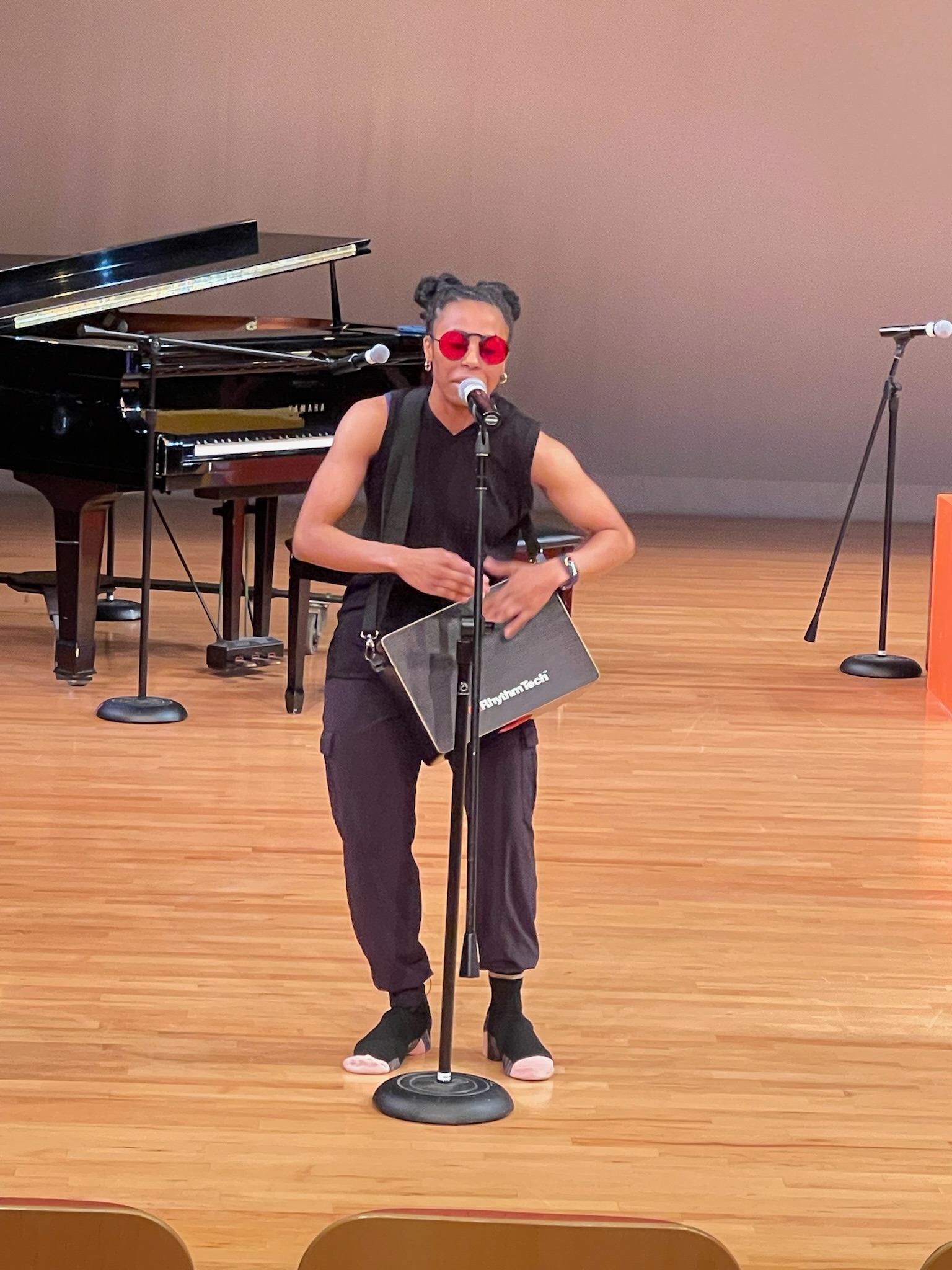
Kyreeana Breelin Alexander in her solo “We Cool” – Photo by Gurmukhi Bevli.
Leah: Have you gone to any summer intensives other than the tap intensives? We Cool has everything. I was amazed watching you play piano, sing, tap, do hip hop, and modern dance.
Kyreeana: Yes, I went to ADF and ISD. I did not go to Jacob’s pillow.
Leah: Tell me about your diverse artistic background. How did it happen that you dance, sing, play piano and write music? How did that happen? You told me your mother was a dancer, and you’ve also told me your brother was a spoken word artist. Where did he go to school?
Kyreeana: He went to school in Arizona, the Conservatory for Audio Engineering. We grew up in church, and we were in the choir. It is part of our daily life. Also, during my formative years, I was exposed to an art school where I had access and an opportunity to study piano. In middle school, 7th grade and 8th grade, I took electives in vocal music and piano. Then more vocal training would have come from church. I also did the all school musical at DSA.
Leah: Do you have a favorite art form? Which one of the three is your favorite and why is it your favorite?
Kyreeana: Dance and tap dancing is my favorite, but the reason is because rhythm and tap dancing has informed me how I approach everything else. The rhythm, I mean the piano, is a percussive instrument so all of those things that have informed me. I guess tap is expressive so has allowed me to articulate and process so that I can translate that in various ways. Tap dancing is still #1.
Leah: Who inspires you? What artists currently inspire you and why?
Kyreeana: I’m still inspired by Savion Glover. I think watching the way his career has evolved. I saw SoLe Sanctuary* *** and I also know of another one of his pieces. I don’t know everything about him but at least from what I do know I really respect how much honor he gives to the legacy of tap dancers including the legacy of the Hoofers Club and what it represents. He’ll tap dance with their pictures around him. He’s a very thoughtful, careful artist and that’s not just in his dancing, but it’s expressed in his way of being. I saw him at an award show or something and he was on the carpet, and somebody asked him, “Who are you here with?” and he said “I’m here with my mother. I’m here with Gregory Hines. I’m here with Sammy Davis Jr.”. I love that. I really respect that.
Leah: Who else inspires you? What about the other art forms? Do you have other artists that inspire you to create multidisciplinary pieces and pieces that you have control over?
Kyreeana: I was really inspired by Richard Smallwood. I read his autobiography. I know that he was a pianist, but he was also a songwriter and a musician, and his blend of music comes from his classical piano training but also, he was influenced by R&B records. I think a conglomerate of styles. I mean he was blending musical styles, the way I wanted to blend dancing styles. Prior to my time making, We Cool I was really influenced by Gordon Parks because he had such a range of artistic expression, and I think he calls it being restless. He wanted to be a photographer but he’s also a musician and I love that he’s not a conventional artist. He picks up the camera, and he makes it work and he’s writing music, but he might not write it with its proper form, but he’s getting his messages across because he’s taking his information from within and communicating out into the world. I guess the current artist who I can appreciate the heart of, especially in her earlier work, would be Alicia Keyes. I think that she inspired me to play the piano and to write that’s for sure. The last one I listened to was “Keys”. I appreciated that she had 2 albums in one album. I like her. I like her commitment to the community, so I’m always going to love Alicia Keys. I also watched Carlos Santana’s master class. Carlos Santana taught a master class on masterclass.com. Although I’m not a guitarist but hearing him talk about his approach to his artistry he says not practice it’s an offering. He is a very spiritual person, and I appreciate that because it’s not about notes. He wants you to feel what he’s conveying with his instrument, and his instrument happens to be the guitar. I can relate a lot to that. I guess there’s an alignment with Savion Glover. It’s starting to transcend the art from. Also, David Roussève, in my time, especially at UCLA. He taught us a lot about how you say something without saying it and I recently went to Dance Camera West when they honored him and I got to see his work overtime. I got to see young David in the 80s. He’s an artist who’s really great at metaphors and at conveying images through movement. He’s also a multidisciplinary artist who uses projections. He’s a filmmaker and he’s a writer, so you get a multifaceted experience but watching his work and just having him as a professor was impactful. He’s also an autobiographical artist. The art that he makes is great. It’s good to see how one idea can take multiple forms and how he can distill all those ideas to evoke one feeling or say one word to create one message without just literally telling you what it is.
Leah: Tell me about the process for creating We Cool.
Kyreeana: Well, I started the MFA program at UCLA, and they give you these studies each week in your 211 series or choreographic comp and you have 4 different teachers or professors and they each get you to think and home in on who you are. I started with Lionel Popkin and then I had David Roussève, then I had Vic Marks and finally Miguel Gutierrez. I got to see different sides of myself through artistry making. They gave you these assignments, and I had an idea of what I was interested in, but I now had time, direction, and a space. I also had time constraints that would force me to elaborate on each idea, and I guess as you keep elaborating over the course of two years you kind of start to find a core theme. I started to unveil some of my deeper interests. In Lionel Popkin’s class I had to write a research paper on my interests, and I talked about tap dancing that’s when I feel I tapped into why I would appreciate an artist like Savion Glover. I also started to research how rhythm translates throughout other artists that I had I liked and so, with each iteration and each stage, I started to build a platform starting with tap. Then I said, “How do I tap dance but tap dance with just my movement?” I did that a lot in David’s class. He has this thing where you take layers and then he says make an interdisciplinary piece, so I made a piece and I had projections, but I didn’t know what to project. I had already started establishing this idea with the teddy bears, so I projected the teddy bears behind me as I was tapping and at first it was just the images.

Teddy Bear from “We Cool” – Photo by Kyreeana Breelin Alexander.
Leah: I have a question for you about the teddy bears? Why don’t you have the teddy bears actually talk or animate their mouths?
Kyreeana: I wanted to stay consistent to what I was doing when I was 7, 8, 9, 10 years old. I used my hands to make them talk. You could see my hands, and you could see them in the projections. It’s intentional it feeds the imagination of the artist. A lot of times when I was doing it you come in and out of it but you eventually get lost in your imagination because that’s how kids play. It’s very intentional and tactical. It has to do with the imagination and evoking that sense of childhood. Basically, it developed through the 211 series, doing trial and error.
Leah: You have mentioned your supportive family, especially your brother and mother. Tell me more about that. Is your brother your artistic partner? What’s his name?
Kyreeana: My brother’s name is Shannon Vinci Lewis. My brother and I first started tap dancing with Janet Gray. My mom has always been very adamant that we stick together because that’s your sibling, we’re family. She would say he’s Big Brother all the way. He’s very protective. He’s very like you do your thing. When we were learning tap dancing, my mom would say go down in the basement and you teach her and you make sure she has it. He is protective but he also inspires me because he’s extremely talented and is a multidisciplinary artist with a lot of range in different ways. He has his own film company. He also does lighting for special occasions in addition to his own artistry of being a hip hop spoken word artist, Vinci Lewis. The Bears are iterations of his personality.
Leah: You mentioned your father early on. What role does he play in your artistic development?
Kyreeana: It’s complicated. My parents divorced but he never discouraged me from doing anything. He would come early on, but he has not seen We Cool. From the very beginning my mom has been really supportive and big on family values. My brother and I are very close. He’ll be silly you know. We have worked together. We did a piece a while ago called Derision, and we talked conceptually about it. He would say, “Well, what if you did this?” We collaborated that way in terms of creating the atmosphere. Sometimes he designs the sound for me as well as for my work. They, my brother and my mother, keep me grounded and level. It was definitely difficult making the commute to UCLA, and I was also doing Berklee online at that time too.
Leah: Berklee College of Music? What?????? You didn’t mention that …that’s a big deal! Do you have a degree from there too?
Kyreeana: Yes, in songwriting.
Kyreeana Breelin Alexander – Photo by Neil G. Philips.
Leah: You are amazing! So many rich experiences in such a short time. You’re inspiring. Is a doctorate next????? What are your greatest challenges in continuing to grow as an artist and maintaining your artistry? What are your greatest successes?
Kyreeana: I’m not sure yet. I would say not compromising in the way of standing on what I believe in as an artist but also not compromising because you do need to make room for or make space for your artistry while also trying to maintain your responsibilities and well-being as a human being. I think my greatest success probably one of them would be not giving up and persevering despite what I’m going through. In any program in college or graduate school and even undergraduate degrees you are faced with many justified reasons to call it quits. Seeing purpose and intentionality in why I was there which was to pursue my art and my craft. I believe in not letting the little things that can become big things get in the way of finishing my pursuit because that means I’m still on the right path with what I ultimately want to do and with what I want to say.
Leah: What do you suppose the future holds for you? What’s next?
Kyreeana: I have a vision of creating more work and welcoming collaborators I hope to work with. I remember during the pandemic Jon Batiste went out, and he just gave music to the community to just help boost people. I love that. I hope… I want to do something like that and I’m hoping to go back to my educational roots. I mean teaching as an educator and blending the performing arts and teaching and providing arts for people as a means to advocate and then also just encourage people.
Leah: Is there anything you want to add or tell me about?
Kyreeana: I should mention my grandma. My grandmama because she’s an inspiration. She’s definitely an inspiration. Her name is Elzetta Davis. She taught us all how to persevere she says keep your hand in God’s hand and she reinforces having integrity to not feel like you have to push out other people or step on other people to get where you wanna go and I know that we are here because of her prayers.
Listening to the evolution of this wonderful artist was a gift! In this crazy political climate, where the arts are losing funding and The Kennedy Center is looking at closure, Kyreeana Alexander gives me hope. She has made it very clear that she is committed to creating thoughtful, life-changing, honorable art that speaks loud and strong and brings comfort to those in need. She is hope and inspiration personified. I reiterate, you do not want to miss We Cool, a creative exploration of rhythm and movement by and starring Kyreeana Breelin Alexander.
——————————————–
Ririe-Woodbury* Dance Company is Utah’s most established institution for contemporary dance. It was founded in 1964 by two Utah women, Joan Woodbury and Shirley Ririe, who were both professors of dance at the University of Utah. Their passions included performance, choreography, and pedagogy.
Ti Dii** The Cannes Film Festival was the premier of Savion’s new group, Ti Dii, pronounced Tie Dye for its co-ed makeup with multiple ethnicities. Nemr became a core member while also teaching at the Broadway Dance Center. Savion encouraged each of the eight dancers to let their tap patois bleed through the choreography.
Noise Funk***Bring in ‘Da Noise, Bring in Da Funk is a Tony Award winning musical revue that tells the story of black history through tap dance, rap and funk music. Conceived and directed by George C. Wolfe, with choreography by Savion Glover,
SoLe Sanctuary* *** A production conceived, choreographed, and performed by Savion Glover honoring the history and development of tap focused on the rhythmic and expressive aspects of tap, described by the New York Times as a “deeper exploration of the idea of a dancer as an instrument.”
Kyreeana Breelin Alexander’s “We Cool” will be presented at The UCLA Nimoy Theatre on Saturday, February 21, 2026, at 8p.m. For more information and to purchase tickets, please visit the CAP UCLA website.
Written by Leah Bass-Baylis for LA Dance Chronicle.
Featured image: Kyreeana Breelin Alexander in her solo “We Cool” – Photo by Gurmukhi Bevli.