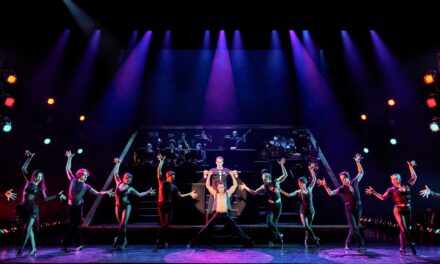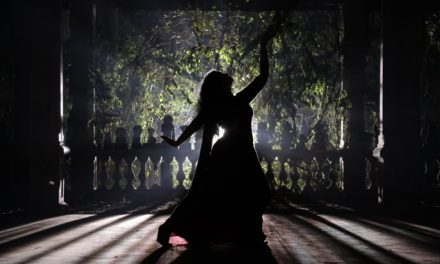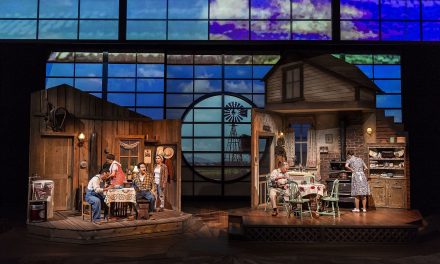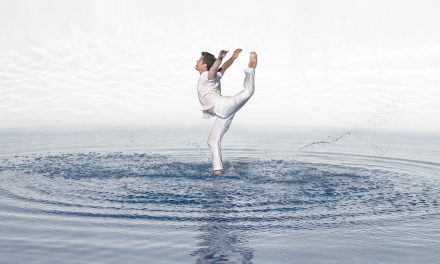
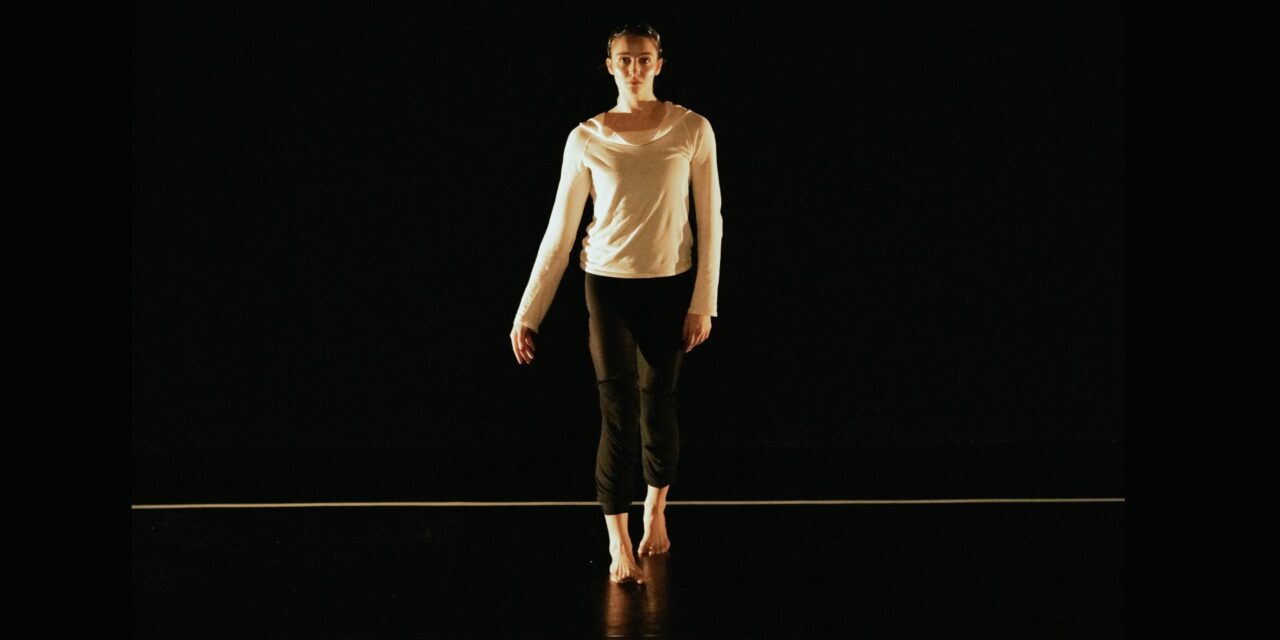
It begins with a solo, and then a monologue… wait, no. Was it a jazz funk number? No. Let’s start again. TAQ Dance’s “Cue” transports you into the mind of a dancer still in rehearsal, jumbled memory included. As dancers, there’s plenty of drilling and exploration that goes behind the final product presented on stage. Behind the façade of perfection is a messy process seldom witnessed by the outside world, but choreographer Sasha Marlan-Librett challenges this status quo.
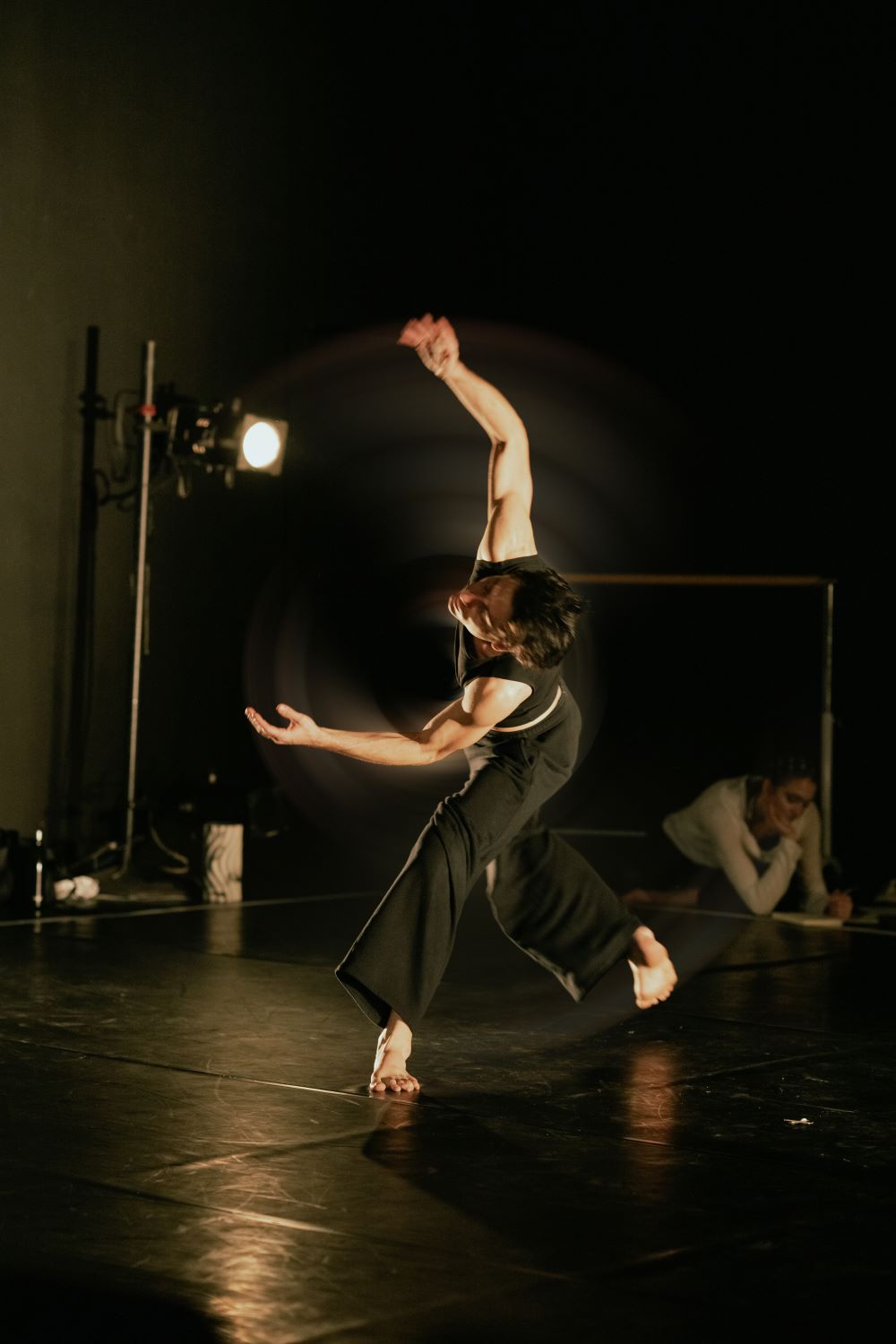
Dance at the Odyssey – TAQ Dance – “Cue”, choreography by Sasha Marlan-Librett – Photo by Jonathan Young.
“Cue,” which had its West Coast premiere at Odyssey Theatre Ensemble’s Dance at the Odyssey festival Jan. 22-24, 2026, is a meta, theatrical dance piece immersed in a rehearsal with four dancers: Audrey Allen, Joe Tennis, Madison McGain and Megan Siepka. As they run through their lines and movements, the set choreography gets muddled. The work challenges them to improvise or find the precise steps deep in their memory. Watching this quartet comically fumble and problem-solve is only part of the work’s magic. Beneath the hiccups crafted by Marlan-Librett is a message of persistence, trust and accountability.
The work first fulfills the expectations of a dance performance; the music plays, and a performer moves through the steps center stage. It’s easy to become dissatisfied in the first few minutes of “Cue” as McGain performs her solo, which later becomes a revisited motif. The execution is dry, as if she’s simply going through the motions, but that’s the point. The music ends, the lights go up and McGain paces the stage trying to remember the choreography. This is the real show. Marlan-Librett smartly creates an illusion of reality, subverting our preconceived notions of a dance performance’s DNA. It’s masterful world-building that gets more and more complicated as the show (and performers’ indecision) continues.
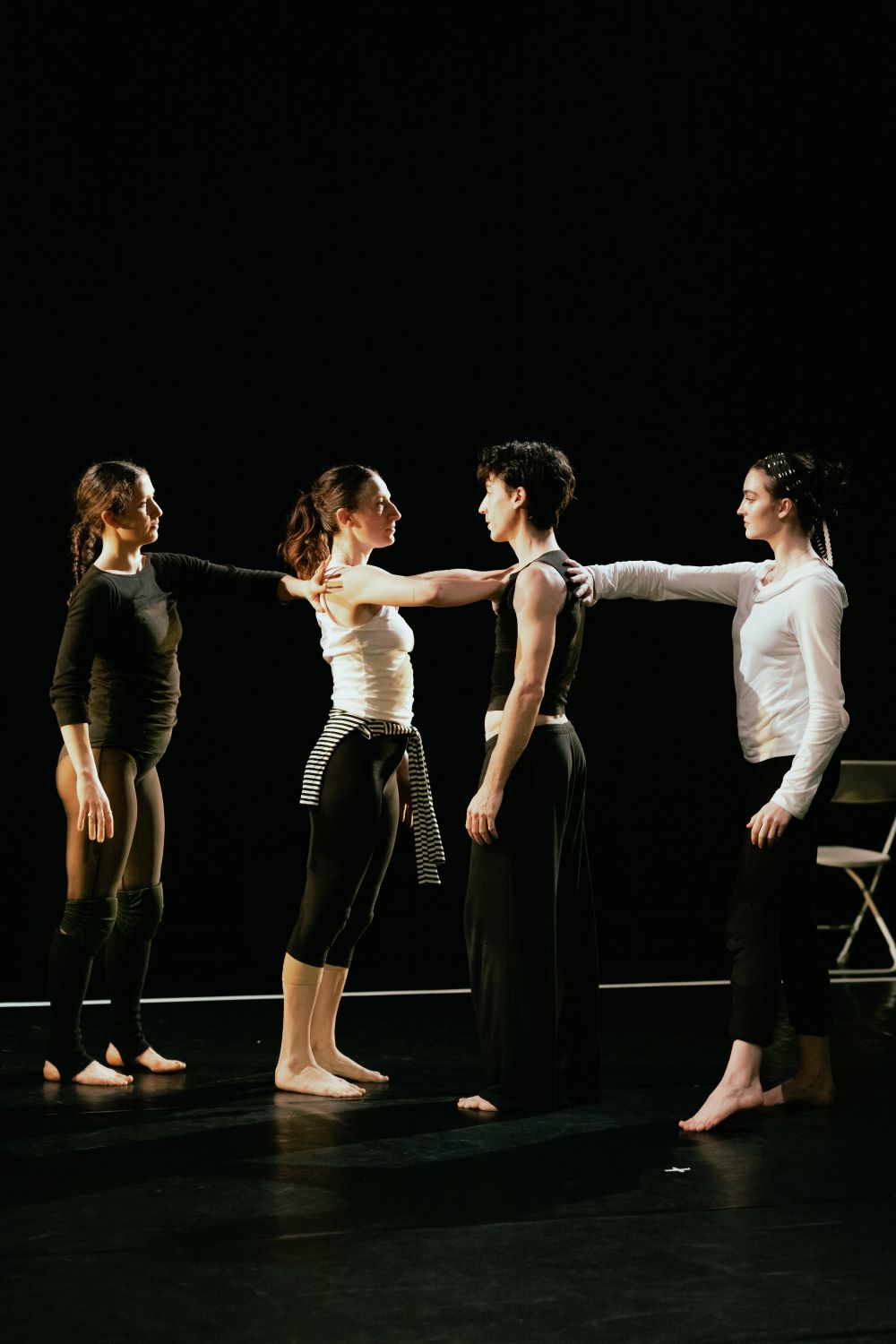
Dance at the Odyssey – TAQ Dance – “Cue”, choreography by Sasha Marlan-Librett – Photo by Jonathan Young.
The dancing stops, and the performers transition into discussion. The scripting of the work amplifies the relationships crafted in the choreography, giving each dancer a character with conflicting intentions. McGain wants to give the work a fresh take, but Allen demands that everyone not stray from the choreography (especially because she has the best memory of it and any deviation will knock her off her throne). Tennis is antsy to perform his TED Talk monologue, but the others interrupt him. When he’s not obsessed over his lines, he’s making romantic advances at Siepka, who couldn’t care less about anyone else because she is determined to shine. The dialogue is dramaturgically complex, weaving nonsensical statements — including a remark about how easy it is to perform in a group because you can rely on others to remember the choreography — into the narrative to highlight the central themes inside the humorous mayhem.
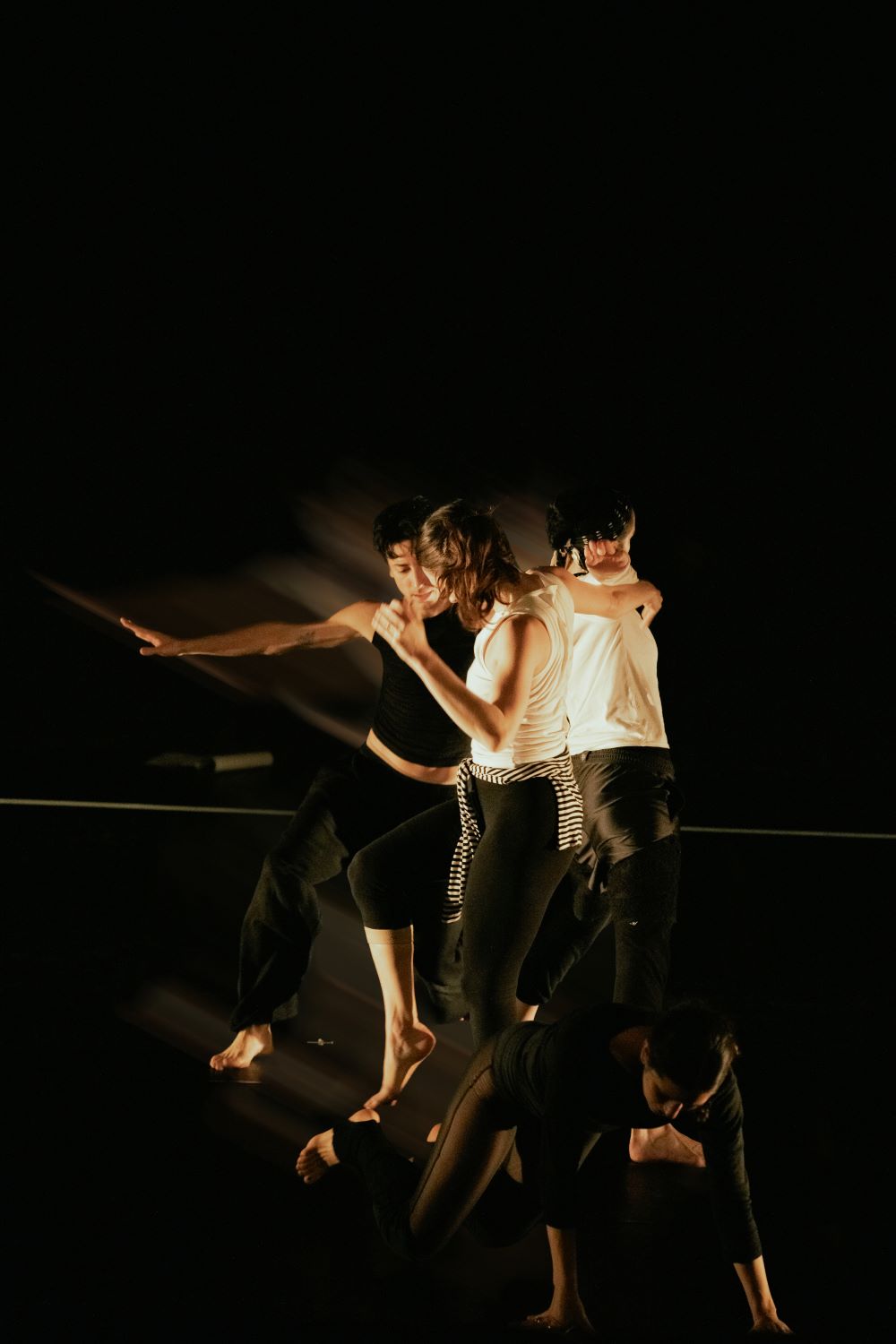
Dance at the Odyssey – TAQ Dance – “Cue”, choreography by Sasha Marlan-Librett – Photo by Jonathan Young.
The comedy in “Cue” is multilayered. Of course, there are incessant jabs and remarks about each other’s flaws, but in addition to these sprinkled quips, the choreography surrounding the humor embodies the character dynamics. For instance, when McGain suggests changing the choreography in the solo, Allen is so disturbed by the suggestion that she forgets to initiate the following cardio jazz section. Her lapse in perfection comes across on her face as she struggles through the initial steps. She’s off kilter, at least until she remembers she’s the best and continues the energetic routine with a smile on her face. Her dizzying emotions pull out a laugh, especially when McGain finally performs her ideas, and Allen quickly shifts from an open-minded smile to a dissatisfied, “No.”
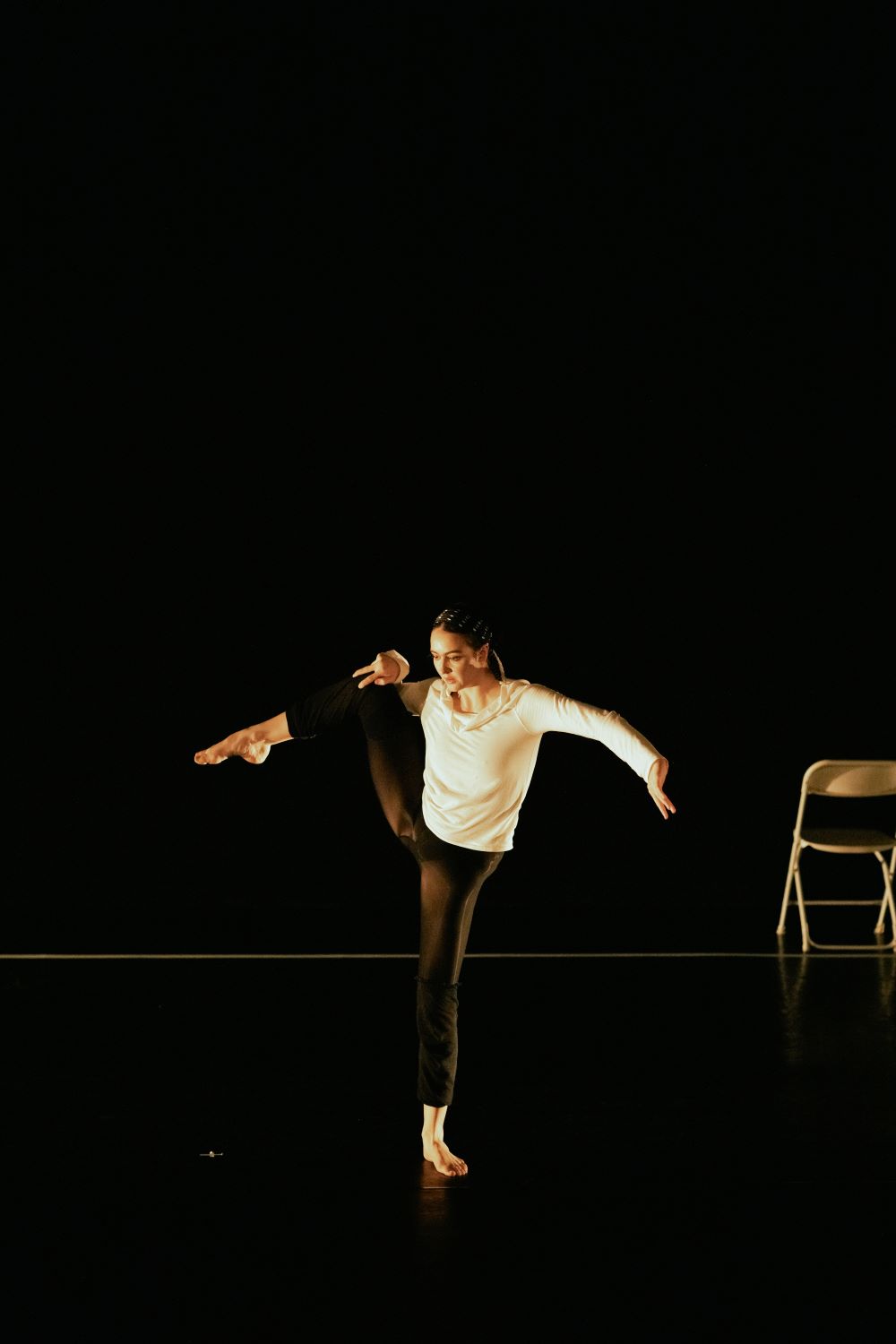
Dance at the Odyssey – TAQ Dance – Audrey Allen in “Cue”, choreography by Sasha Marlan-Librett – Photo by Jonathan Young.
During Tennis’s long-awaited TED Talk, the heart of the show surfaces. He talks about staying on course. At first, he interprets this notion as sticking to the plan, or in this case, steps. Siepka performs alongside his musing. As he witnesses her improvise out of a misstep, he crafts a new interpretation that emphasizes the importance of pushing through murky waters, even when the intended execution is forgotten. Siepka sustains a prolonged relevé — a feat on its own — as she tosses out the intended choreography and improvises.
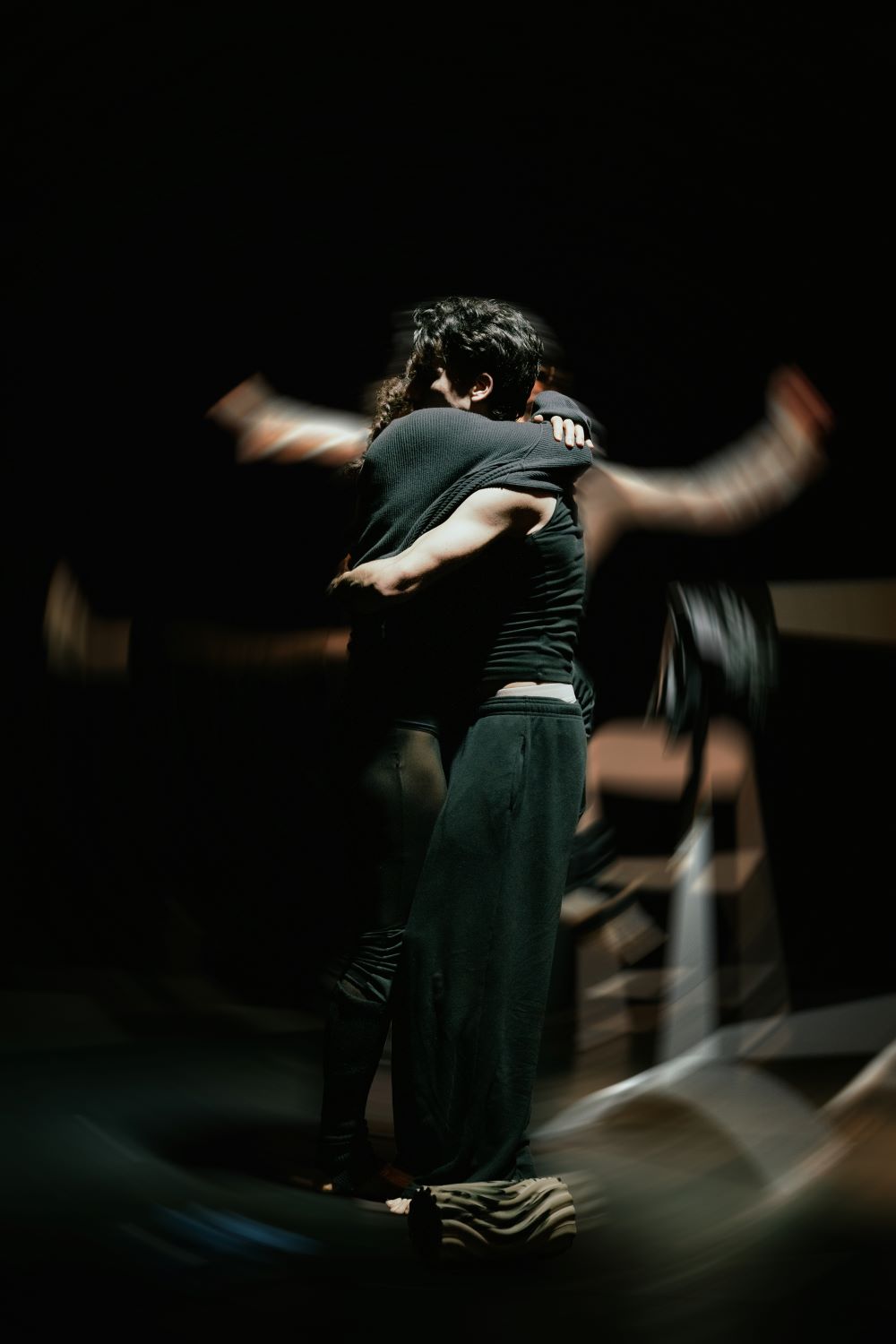
Dance at the Odyssey – TAQ Dance – “Cue”, choreography by Sasha Marlan-Librett – Photo by Jonathan Young.
After their first failed attempt at marking the work, they go back to the beginning. It is much more chaotic than the first iteration, but it is also much more captivating. Allen sticks out in her performance of the solo, discovering new textures by allowing her character’s emotions to impact the choreography. Once static moments are brought to life with a faster tempo or a slow, elongated swing of the arms. Various steps within the solo make their way into chaos. They mumble and groan, offering their own ideas on what the next step may be.
Tennis’s questions about what it takes to stay on course hover over their conflicting dance. They literally pile on top of each other and fall out of sync. They mutually agree to end the show with improvisation, doing what must be done to give the audience a show. The outcome is more than movement; it is a beautiful experiment in radical trust. As ensemble members stray from the performance space, trying to escape and disconnect from the group, the others pull them back in and keep them accountable to the group’s new mission.
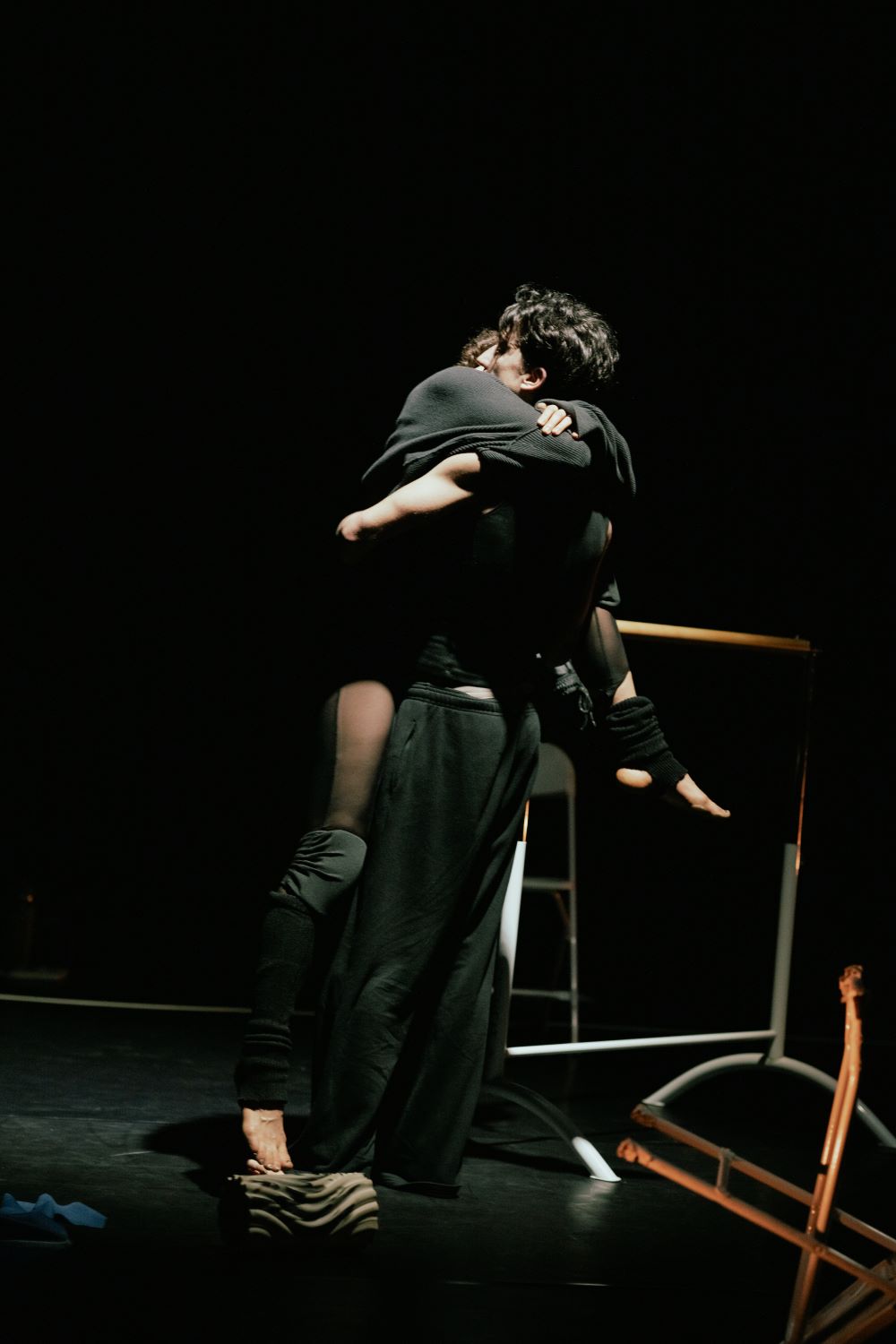
Dance at the Odyssey – TAQ Dance – “Cue”, choreography by Sasha Marlan-Librett – Photo by Jonathan Young.
“Cue” invites viewers to reflect on the decisions we make, whether to run or stay the course. The performance constantly negotiates with the consequences of giving in to pressures we have no control over, like our memory. Marlan-Librett posits that uncertainty is simply an obstacle, not an ending. By embracing the community and dancing together, these moments of distress are only temporary. After all, someone else will know the forgotten choreography. And if they don’t, there’s always improvisation.
Dance at the Odyssey continues through February 15, 2026. For more information and to purchase tickets please visit the Odyssey Theatre Ensemble website.
For more information about TAQ Dance, please visit their website.
Written by Steven Vargas for LA Dance Chronicle.
Featured image: Dance at the Odyssey – TAQ Dance – Audrey Allen in “Cue”, choreography by Sasha Marlan-Librett – Photo by Jonathan Young.