I last interviewed Arianne MacBean in 2019 as she prepared for the Fall Residency at the Ford Theatre of The Big Show Co.’s She/Her: Memory Trace, a dance-theatre piece exploring femininity and the military veteran experience. To say that a lot has happened since then would be quite an understatement. Ms. MacBean is now a licensed marriage and family therapist in private practice and has just released a new self-reflection & somatic journal, Tough Sh!t: the angry woman’s guide to embodying change.
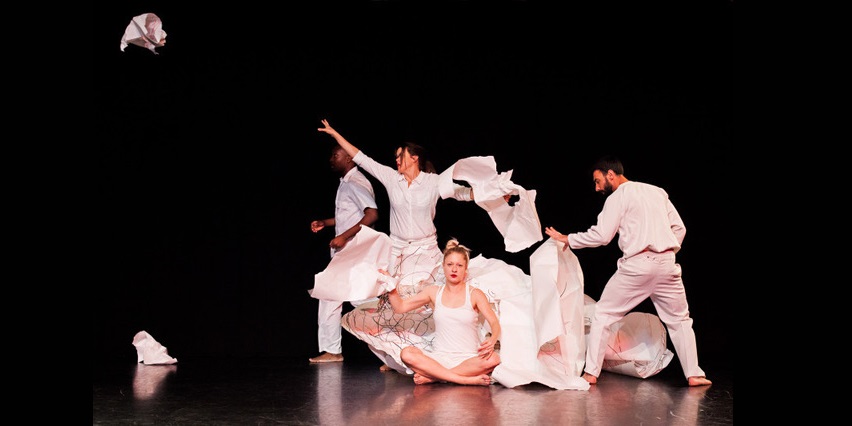
A multi-faceted artist and educator, Ms. MacBean founded The Big Show Co. in 1998, and the company evolved into a group of five core members. In addition to MacBean, the company included performers Angelina Schneider, Genevieve Carson Baker, Brad Culver, Max Eugene, and dramaturg Nathan Clum. The company created visceral dance-theatre, rooted in the emotional journey of each member. Through The Big Show Co., she developed and led Memory Writing & Movement Workshops for women in recovery from drug and alcohol misuse, and U.S. military veterans. It was in these workshops that she began to develop the idea of memory making as a performative and creative act. A result of that undertaking was The Collective Memory Project, a community performance initiative developed and presented by the Ford Theatre in June of 2018. The troupe was expanded with a group of veterans performing alongside the company members. She/Her evolved out of that initial collaborative process.
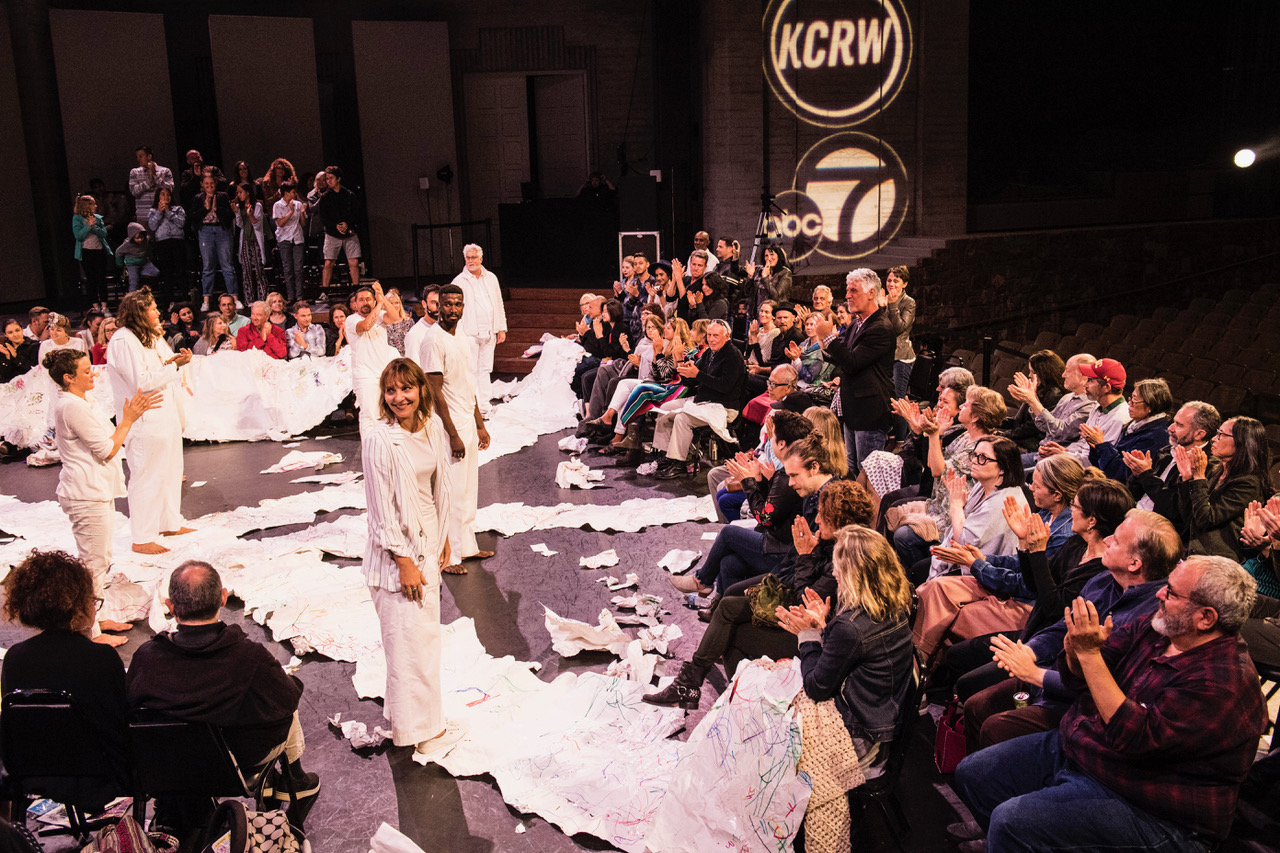
The Collective Memory Project 2019, The Big Show Co. – Photo by Dyanne Cano.
I started to think about creative problem solving… and wondered if I could codify it, to think of it not just as creating material for performance but as a way of processing life experience. That feels, to me, a little bit more authentic.
The Big Show Co. was one of a kind, different from all of the other companies in Los Angeles.
The Big Show Co. was really a unique animal in the ecosystem of avant-garde modern dance in LA because we did really rigorous work. It was conceptual and virtuosic, both emotionally and physically. But it was not necessarily technical, you know. There was a lot of confusion about it. Folks didn’t know how to place our work within the schema of dance. We didn’t have pirouettes and leaps and traditional partnering, even though it was highly physical; deftly physical. I always, always wanted to work with real people and put real issues on stage.
At the end of 2019, we had no idea what was in the wings: 2020 brought a complete realignment of our industry, our lives, and our priorities. Ms. MacBean, already a prolific creative and academic, shifted gears again. Even before the world shut down, she realized, during a writing session for She/Her, that she needed more skills to understand the therapeutic aspects of her creative work.
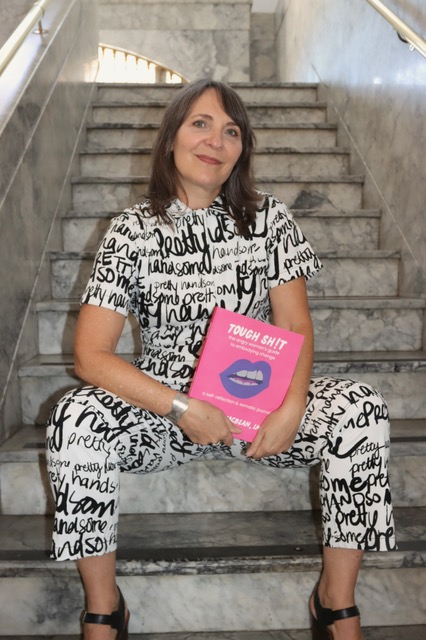
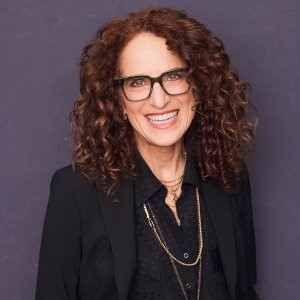
Arianne MacBean – Photo by Will Taylor.
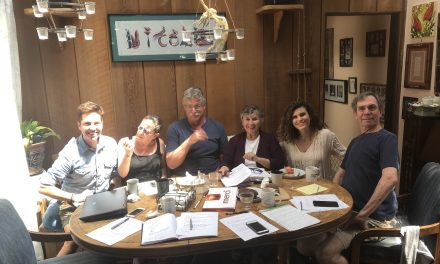
We had one final meeting in the conference room, and the question I asked for the writing prompt was, “What do you need for the next step of this project?” I did my own little writing session, and the sentence that stood out was “I need more skills and language to understand the healing that is going on here.” Because I knew, in my experience, and through what was communicated, that the work we were doing was therapeutic, but I didn’t really know how or why, or really how to contain it. That one sentence that I wrote, for some reason, triggered me. My mom is a therapist. I had been in therapy most of my adult life. I had never, ever thought of becoming a therapist until I read that little sentence. I went, “Well, yeah, if I need to understand what the healing is that is going on here, in the healing realm, I need to go to therapy school. It just started from there. I did a two-and-a-half-year master’s program at Pacifica Graduate Institute, which is very much oriented toward depth psychology, which was a perfect match for me. It was about the imaginal. It was about soul work. It was about dream work. It was about the feminine.
It’s a long process. You must have 3000 clinical hours before you can take the licensing exam. From June 2020 to March 2025, I have been completing my schooling and clinical hours. I worked at two different community health agencies. I worked at two different public schools. I eventually joined a group practice, and then I passed the exam in June, and I started my own practice, Synergy Somatic Psychotherapy.
The question arises: when did the idea of a book occur, and how was it possible to write it?
When I was in my last year, completing my hours, I came up with this idea during my supervision. I was like, “I think I’m going to write a journal for women, because it just feels like every time I have a female client come into the room, I tell them that their anger is okay”.
The book began as an idea to augment sessions, a tool to actively address the rage that can and does come up in therapy.
Let’s feel the anger, and then feel the heat, let’s go into the smoke, then go into the coals, and let’s go into the starter fluid. Trace the anger, through fear, sadness, and hurt, to the true self. Ironically, really, it’s not just for women. I literally did this today with one of my male clients, and it was revelatory for him. It’s not just for women, but women, in particular, are told that they cannot feel anger.
The book is a combination of self-help, journal, and how-to. It combines writing with somatic experiences to move through the emotional barriers that hold us all back.
The book basically has five sections. It starts with anger. There are writing prompts, paired with somatic experiences. You go from that section, and then do a page in the fear section, with the somatics there. Then you go to sadness, then you go to hurt, and then you land in your true self. In true self, the writing prompts and the somatics help you come into compassion and love for the small part of you that makes you understand your road of reactivity that you just came through – from the big, big blustery emotion to the small pencil tip pain point within you. From there, that consciousness helps you move forward to understand and have compassion for the part that gets activated. And from there, you can actually make productive choices.
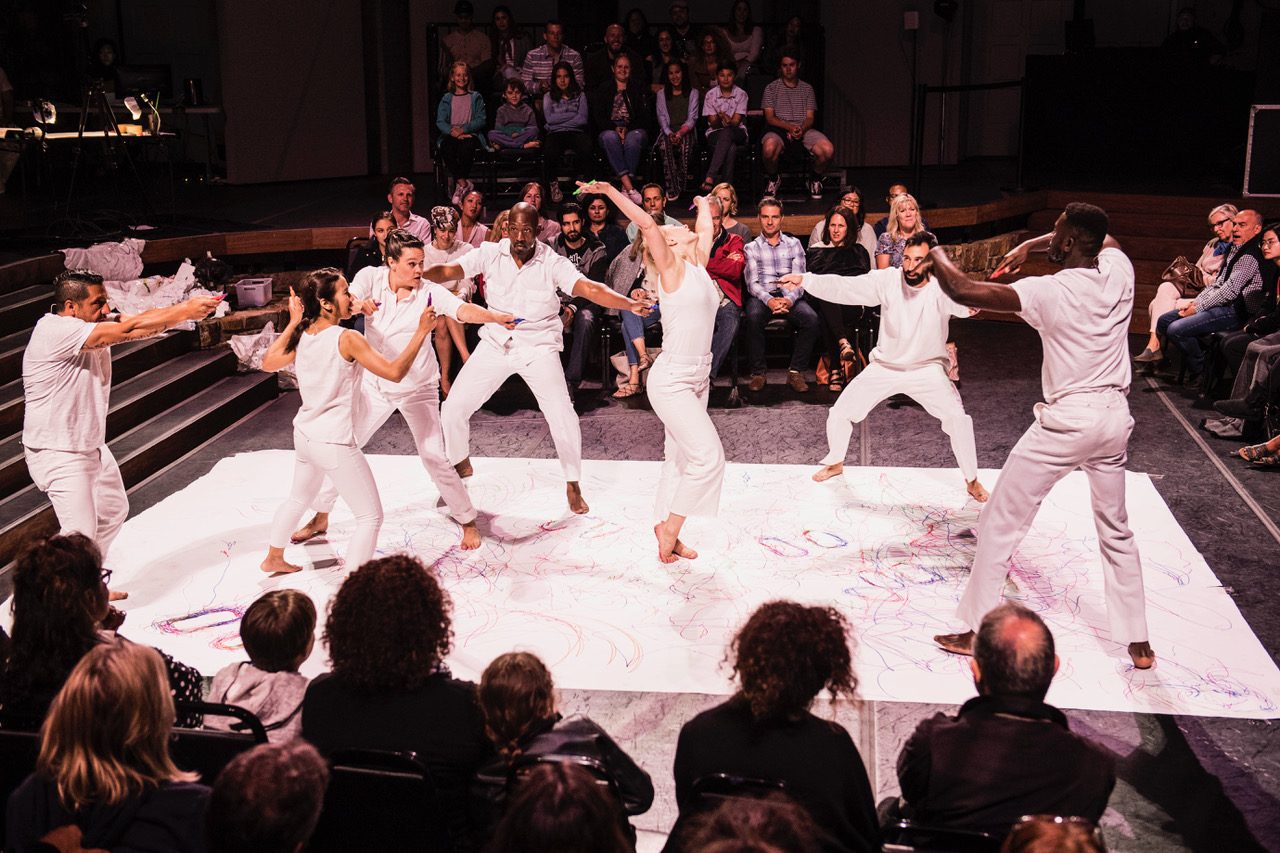
The Collective Memory Project 2019, The Big Show Co. – Photo by Dyanne Cano.
The way in which all of Ms. MacBean’s worlds intersect is extraordinary. Her therapeutic career is less of a shift and more of an expansion of her work and herself.
I was never like that traditional dancer that wanted to be seen, but not really be, not really exist. I wanted to BE. I wanted to have a voice. I realize that now, when I’m sitting in the room with my clients. I mean, I loved my time with The Big Show Co. I still look back at some of the things that we did, and I’m like, “That was fucking crazy and brilliant and funny and out there and important”. But I also think that what I’m doing now is almost like what I did with The Big Show Co., distilled down to the diamond: somatic psychotherapy. Did we stomp? Yes. We shook. We put our hands on our faces, and we held them for a long time. We stuttered our words. You know, there was a whole section in one of our pieces called “Present Tense” where the company spoke just the very beginning sound of a word, and then they passed the sounds around as if they were having a conversation. We do that in therapy sessions. We do all of that stuttering and bouncing off of each other. There are explosions, and there are implosions, but it’s just between two people. I loved presenting work because it felt very important to share. But of course, I knew that the real fire of what we were doing was in the process, was in the creative work. That was where people were transformed, where I was transformed, where the performing artists got to see themselves in different lights.
As an audience member who found The Big Show Co. a transformative experience, I had to ask: Is there a future where these two worlds reconnect? Thankfully, the answer was….maybe.
I’m coming back around. In fact, at the end of this month, I am going to Cal State Long Beach for a guest class. I kind of pitched it to them as, “I have this idea. It’s called somatic healing technique for dancers.” I mean, it’s been a long circle, and I’m really tentatively coming back. I’m like, coming in with my toes, and I’m really like, we’re just gonna play. We’re just gonna see what’s going on here around this idea. But the idea is to take the general structure of a western-style ballet/modern technique class, to take that structure and to subvert, to not be from the outside in, but from the inside out, from a somatic, sensorial sensibility.
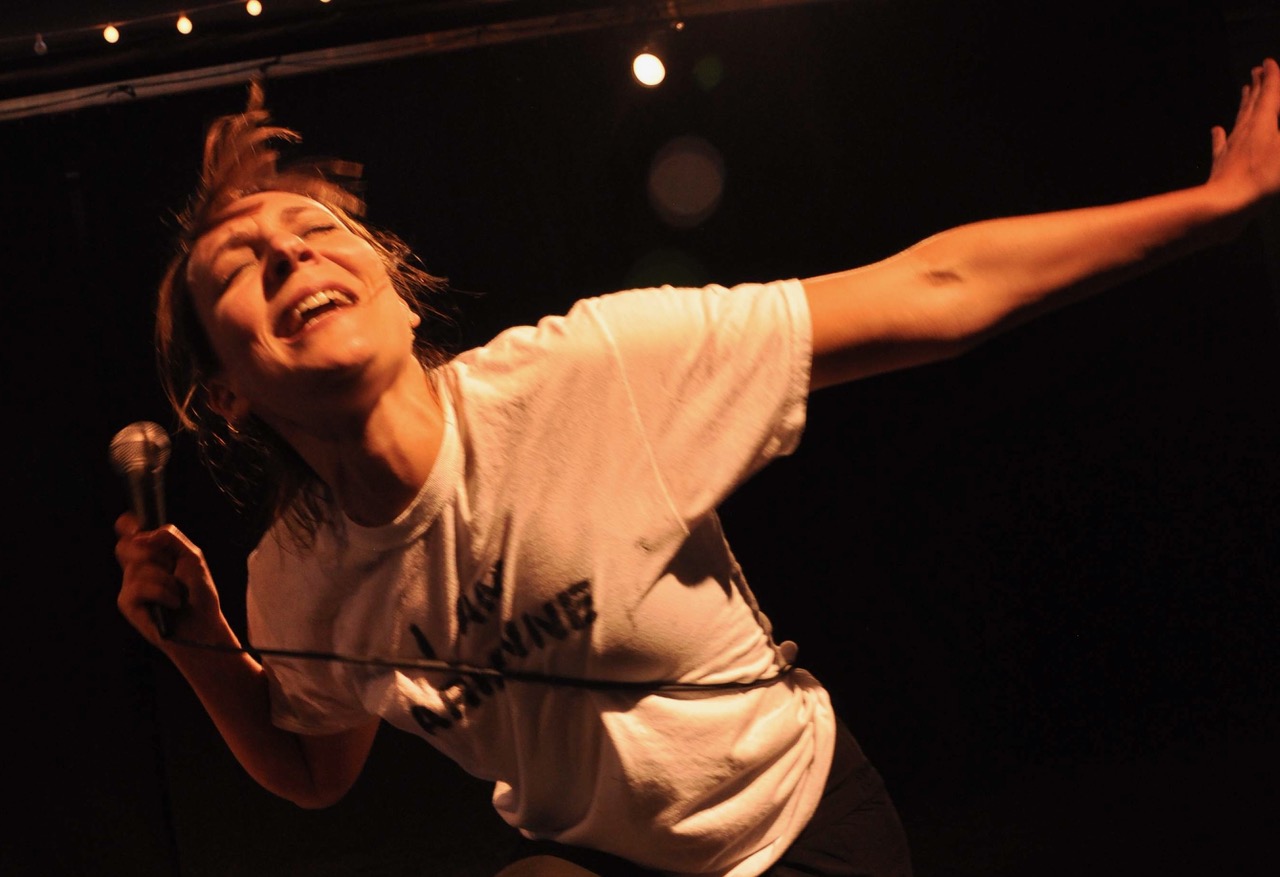
The Arianne MacBean Ballets – Photo by Angelina Schneider.
I don’t know if The Big Show Co. can come back exactly the way it was. Everyone is off in their own careers, and The Big Show Co. was the five of us, together. We get together and talk about the olden days, and what everyone’s doing now. Everyone’s involved in so many wonderful things. They’re such phenomenal artists in their own right. So I think that if The Big Show Co. comes back, it’s going to be in a different structure. It might be more of a community project, like I did with the veterans or women in recovery, or with just humans. You know, humans want to move! I’m getting back, and it’s starting to come around again.
There is something to leaving dance, too. Ms. MacBean is in a good place.
The dance hustle is fucking hard. Having to prove that performance is valuable. There is something really, really amazing about being in the position where I’m in now, where people are coming to me, and I don’t have to prove anything. The work proves itself.
If I did bring The Big Show Co. back, I don’t know if I’d ever do a performance. I think the performance really is the process. There’s something that happened with The Big Show Co. at the end. One of the things that got us to be able to reveal so much about what our truths were. It was for the greater good of the art form. You know, we kept saying, “Hey, reveal yourself for the greater good of the dance-theater piece.” The piece was, if you will, the client, if you were to put it in therapy words. The piece (the dance) deserved everyone’s realness, and so we gave our realness to the dance. So I’m not, I’m not sure how I can bring somatic psychotherapy into my creative process. I’m not sure if I can circle back. I don’t know. They might not need to be integrated.
Tough Sh!t was released on November 4, 2025.
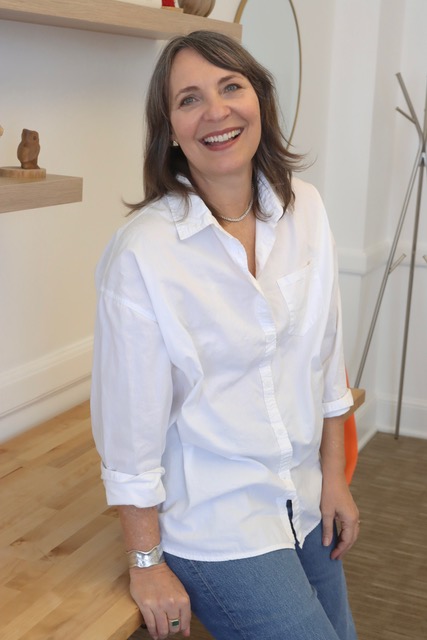
Arianne MacBean – Photo by Will Taylor.
It is published by Tehom Center Publishing, celebrating feminist, queer, and BIPOC authors. It’s a small imprint of Ingram, but they are beautiful, wonderful women, and they are really focused on supporting marginalized voices, and so it’s an honor to be a part of their mission.
Arianne MacBean has been highly successful in the dance world, a career that so often defines us. Moving out of it has been revelatory, and her success in doing so can serve as inspiration to others. As dance educators, we frequently emphasize that dance training is life training. Ms. MacBean proves the point.
I had always thought I was a dancer, that I was a dance-maker, and to have that moment where I went, Oh, there’s another option for me that still draws on everything that I know and love and believe in. It was so empowering, and I’m really grateful that I didn’t stay doing the same thing, because it’s opened me up to so many more parts of myself that I never would have come into contact with if I stayed.
Tough Sh!t can be purchased at your local bookstore, through Bookshop.org, or at any large-scale retailer. Discover more about Arianne MacBean and her practice here.
Follow her on Instagram and Substack.
Written by Nancy Dobbs Owen for LA Dance Chronicle.
Featured image: The Big Show Co. Photo by Dyanne Cano.